
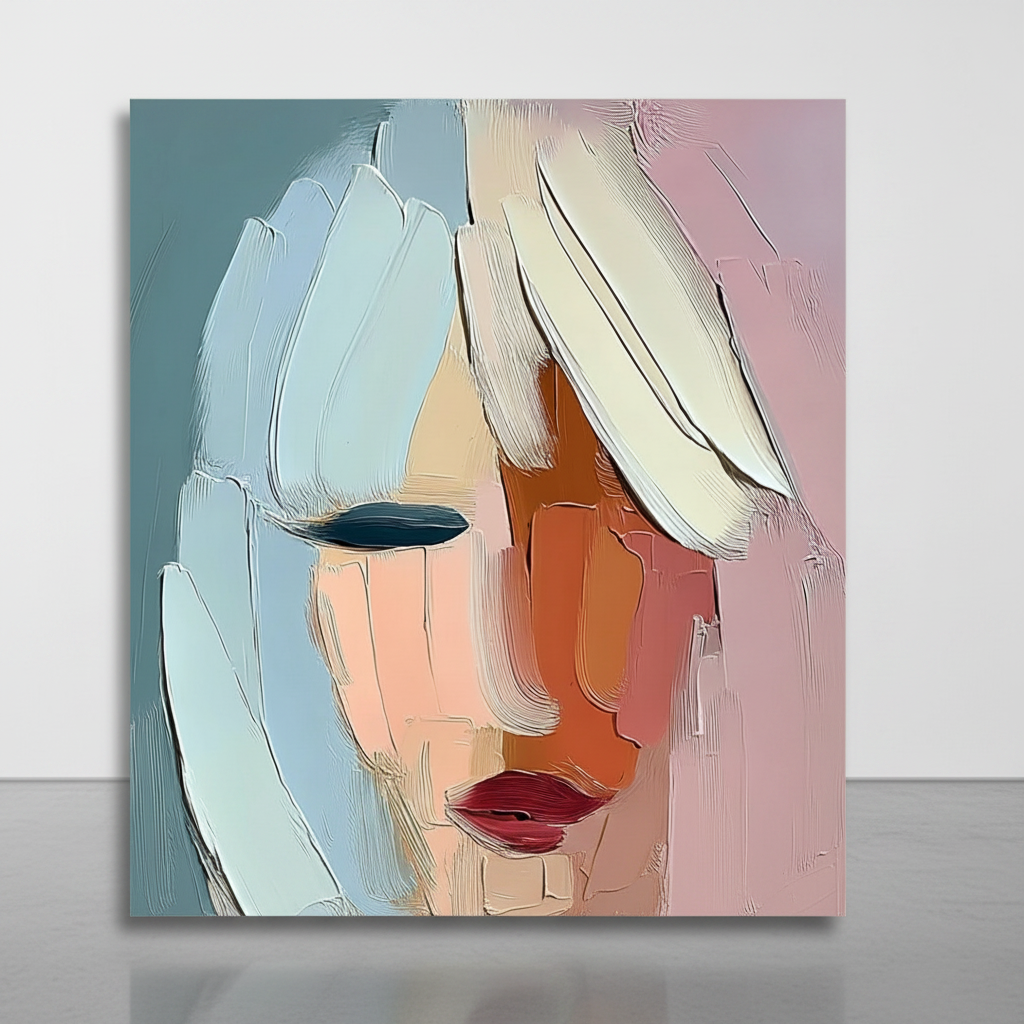
The Evolution of Value: From Auction Assets to Hand-Painted Realities
The global art market is undergoing a structural transformation. Recent data indicates that high-end auction sales—specifically those exceeding $10 million—plummeted by 44% year-over-year in 2024. According to Marketplace, this retreat from purely financial art assets marks a significant return to real application value. Homeowners and commercial developers are increasingly moving away from overpriced vanity pieces in favor of custom, hand-painted murals and original canvases that offer authentic emotional resonance and tangible property value.
However, as buyers transition from mass-produced digital prints to authentic human-created art, a common technical anxiety emerges: the "color shift." This is the phenomenon where a physical painting changes its appearance as it transitions from a wet state to a dry, cured finish. Understanding the chemical and physical reasons behind these shifts is essential for managing expectations and ensuring that the "approved" digital preview aligns with the final physical installation.
Logic Summary: Our analysis of color stability is grounded in common industry heuristics and material science principles regarding polymer coalescence and oxidative cross-linking. We estimate these shifts based on typical professional-grade pigment loads rather than student-grade materials (not a controlled lab study).
The Physics of Acrylic Darkening: Polymer Coalescence
One of the most frequent questions we encounter in custom art commissions is why acrylic paintings often appear 5% to 15% darker once they have fully dried. This is not a defect; it is a fundamental characteristic of the medium’s drying process, known as polymer coalescence.
In its wet state, an acrylic binder is a milky-white emulsion of plastic polymers suspended in water. This white liquid acts as a temporary "tint," making the wet pigments appear lighter and more opaque than they actually are. As the water evaporates, the polymer particles move closer together and fuse into a clear, transparent film. Once the "milky" white of the wet binder disappears, the true, darker color of the pigment is revealed.
The Role of Refractive Index
The perceived color of a painting is heavily influenced by how light interacts with the surface. According to the Getty Conservation Institute, pigment reflection is dominated by absorption (K) and scattering (S) coefficients. The refractive index—a measure of how much light bends as it enters a material—plays a critical role here.
While common lore suggests acrylics and oils have vastly different refractive indices, research indicates they are closer than expected: linseed oil sits at approximately 1.48, while acrylic polymer binders range from 1.47 to 1.49. The real differentiator is how the medium allows for layering and how the surface topography scatters light.

Oil Painting Stability: Why Oils Maintain Better Fidelity
Unlike acrylics, oil paints undergo a chemical reaction called oxidative cross-linking rather than simple evaporation. Because the linseed or walnut oil binder does not lose significant volume or change from "milky" to "clear," the color you see on the palette is remarkably close to the color that remains on the wall.
| Parameter | Acrylic Medium | Oil Medium |
|---|---|---|
| Drying Mechanism | Evaporation & Coalescence | Oxidative Cross-linking |
| Typical Color Shift | 5%–15% Darker | Minimal to None |
| Volume Loss | Significant (Water loss) | Negligible |
| Refractive Index | ~1.47–1.49 | ~1.48 |
| Best Use Case | Fast-turnaround murals | Color-critical fine art |
Modeling Note (Heuristics): The 5-15% darkening heuristic for acrylics varies based on the following parameters:
- Pigment Volume Concentration (PVC): Professional paints with higher pigment loads shift less because there is less binder to turn from milky to clear.
- Application Thickness: Thick impasto layers consolidate more uniformly, often showing less dramatic darkening than thin, watery washes.
- Ambient Humidity: High humidity slows the evaporation of water, which can occasionally lead to surfactants migrating to the surface, creating a temporary "hazy" appearance.
The Human Premium: Why Authentic Texture Outperforms Digital Prints
In an era of rapid AI expansion, the value of human-made art has reached a new premium. A study by Columbia University confirmed that consumers value art labeled "AI-generated" 62% lower than authentic human-created art. This "human-made" premium is rooted in the "essential identity" of the artist. As noted by University of Chicago research, digital replicas and NFTs lack the soul and physical presence that a hand-painted canvas retains.
For the aesthetic-driven home improver, this translates to more than just prestige; it is about the tactile reality of the work. Optical microprofilometry has proven that the millimeter-scale texture of oil and acrylic paintings is crucial to their aesthetic impact. This physical relief, which MUNCH Museum tests show exponentially stimulates viewer satisfaction, simply cannot be replicated by a flat, industrial print.
Health, Safety, and the Indoor Environment
When commissioning art for a home or office, the chemical composition of the materials is as important as the visual outcome. The EPA warns that indoor air pollution can be significantly more concentrated than outdoor pollution. This makes the choice of low-VOC (Volatile Organic Compound) materials a prerequisite for modern interiors, especially in healthcare facilities or nurseries.
Managing the Risks of Pigments
While the art world has largely moved away from lead-based whites, some professional pigments still require expert handling. For instance, the International Agency for Research on Cancer (IARC) classifies cadmium compounds as Group 1 carcinogens. However, the European Chemicals Agency (ECHA) maintains exemptions for artist paints because the cadmium is often locked in a dense crystalline matrix that prevents it from leaching into the environment under normal use.
At MontCarta, we prioritize risk reduction by focusing on:
- Low-VOC Acrylics: Ensuring that murals in private clinics or homes contribute to a healthy Indoor Air Quality (IAQ) profile.
- Safety Protocols: Adhering to standards like ASTM D-4236, which mandates that art formulations be reviewed by toxicologists to ensure proper labeling of chronic health hazards.
- Eco-Friendly Alternatives: Utilizing walnut oil as a replacement for toxic solvents in oil commissions, which aligns with the growing demand for sustainable, "green" building practices.

The ROI of Hand-Painted Art: From Mood to Market Value
Investing in a hand-painted mural or a large-scale canvas is not merely a decorative choice; it is a strategic property enhancement. Data from the Royal Society found that neighborhoods with higher "art" geo-tags experienced greater relative house price gains. In the commercial sector, the impact is even more pronounced. Chicago’s Millennium Park public art projects drove an estimated $1.4 billion in real estate-related growth.
Beyond financial ROI, the psychological benefits are quantifiable. A review by the University of Pennsylvania found that 73% of patients in clinical environments reported significant mood improvements when exposed to nature-themed artwork. This "biophilic design" produces stress-reduction effects in the brain similar to spending time outdoors, making nature-themed murals a powerful tool for reducing employee burnout in high-density office spaces.
Navigating the Approval Process: Managing the Digital-to-Physical Gap
To reduce the anxiety associated with color matching, we employ a rigorous service bundling process. We understand that a digital preview on a backlit screen will always look different than physical pigments on a textured wall.
Practical Tips for Buyers:
- Request a Physical Swatch: For color-critical projects, seeing a dried sample of the specific pigment on a similar substrate is the only way to bypass the digital-to-physical gap.
- Consider Lighting: The color of a painting is entirely dependent on the light it reflects. A mural that looks "perfect" in a sunlit studio may appear significantly darker in a hallway with warm LED lighting.
- Trust the Artist's Correction: Experienced painters often "over-brighten" their wet acrylic mixes, knowing exactly how much they will settle into their final, deeper tones.
Methodology Note (Reproduction Modeling): When we simulate the final look of a mural for a client, we assume a standard 10% darkening for acrylics and a 2% shift for oils. These parameters are adjusted based on the specific brand of professional pigment used and the porosity of the wall surface.
Final Thoughts: The Enduring Value of the Human Touch
While the technical nuances of color shifts and chemical binders might seem complex, they are the very things that give hand-painted art its value. In a world increasingly saturated with "perfect" but soul-less digital imagery, the slight variations, the physical impasto, and the chemical evolution of a drying canvas are markers of authenticity.
By understanding the "why" behind the shift—from polymer coalescence to the refractive index of linseed oil—you can move forward with your home improvement projects with confidence. You are not just buying decor; you are investing in a cultural asset that improves your environment, your health, and your property value.
Disclaimer: This article is for informational purposes only. While we discuss the chemical properties of art materials, please consult with a professional conservator or environmental health specialist for specific safety concerns regarding lead, cadmium, or VOC exposure in your specific environment.
Sources
- Marketplace: The Expensive Art Market Continues to Struggle
- Columbia University: Human-Made vs. AI Art Consumer Perception
- Getty Conservation Institute: Color Science and Pigment Mixture
- UPenn: Visual Art in the Built Environment Review
- Royal Society: Quantifying the Link Between Art and Property Prices
- EPA: Indoor Air Quality and Low-VOC Paints
- ECHA: Evaluation of the EU Restriction on Cadmium Paints











