The Shift from Vanity Assets to Performative Authenticity
The luxury real estate landscape is undergoing a structural transformation. Recent data from Marketplace.org indicates that high-end auction sales for pieces over $10 million plummeted 44% year-over-year in 2024. This retreat from purely financial "vanity" assets signals a return to real application value. For the luxury homeowner and real estate agent, this means that the "wow factor" required to move a property is no longer about the price tag of the decor, but the emotional and performative authenticity it provides.
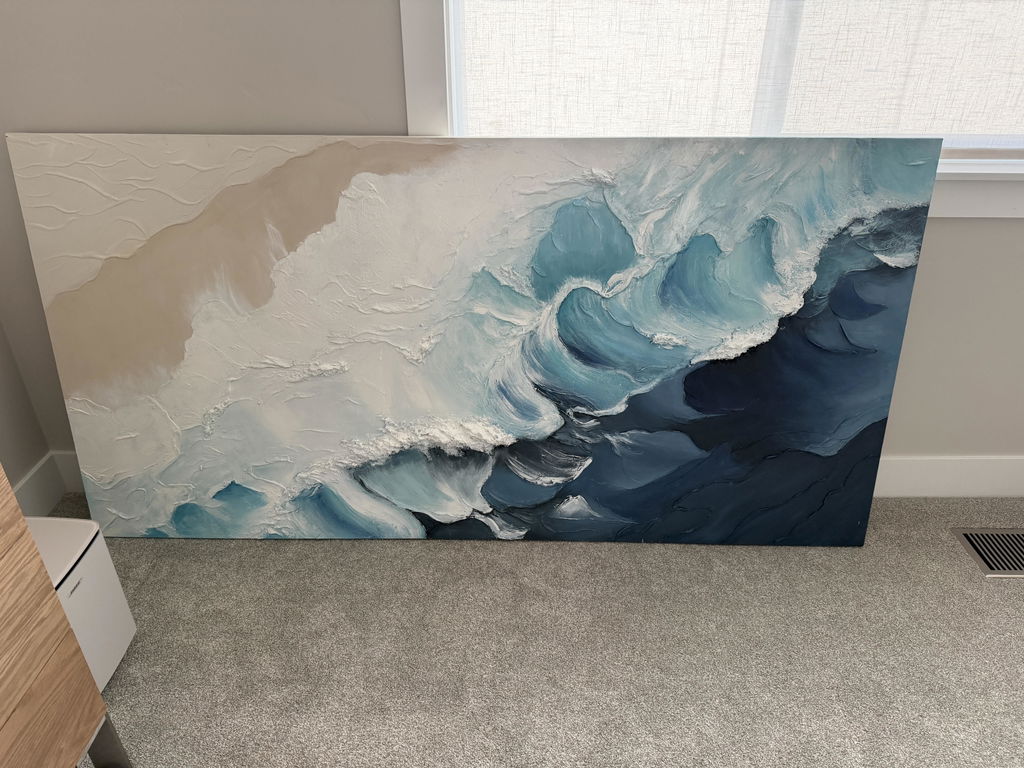
In an era where digital saturation is at an all-time high, buyers are increasingly sensitive to the "soul" of a space. A study by Columbia University confirmed that consumers value art labeled as "AI-generated" 62% lower than authentic human-created art. In high-stakes staging, using flat, mass-produced prints or AI-generated canvases is a "value leak" that sophisticated buyers detect subconsciously. Hand-painted art, conversely, acts as a strategic staging tool that secures the property's status, photographs with superior texture for MLS listings, and creates a neurological sense of "home."
The Economics of Aesthetic Infrastructure: Proving the ROI
Staging is often viewed as a cost center, but when integrated with original hand-painted art, it becomes a high-leverage investment. The Royal Society utilized a CAR model analysis of 10-year data to find that neighborhoods with higher "art" geo-tags experienced greater relative house price ranking gains. This isn't merely correlation; it's a "catalytic effect."
The "Art-to-Value" Correlation Model
For commercial developers and luxury flippers, the economic baseline is even more pronounced. Chicago’s Millennium Park public art projects drove an estimated $1.4 billion in real estate-related growth. While a single residential listing isn't a city park, the principle of "Creative Placemaking" applies: art reverses feelings of blight and makes vacant properties instantly attractive to responsible, long-term buyers.
| Economic Indicator | Impact Value | Source Basis |
|---|---|---|
| Art-Neighborhood Price Gain | Bootstrapped Coeff -116.74 | Royal Society (10-yr data) |
| Public Art ROI (Tax Investment) | 7:1 Ratio | Americans for the Arts |
| AI vs. Human Value Gap | 62% Devaluation (AI) | Columbia University Study |
| Artisan Craftsmanship Search Trend | +21% Growth | Zillow/PA Realtors (2026 Trends) |
Logic Summary: Our ROI analysis assumes that hand-painted art acts as a "status signal" that justifies a premium. By utilizing the Market Perception: How Hand-Painted Art Signals Professional Success framework, we model that authentic texture reduces buyer skepticism regarding "flipped" properties.

The "Hero Piece" Heuristic: Strategic Staging Rules
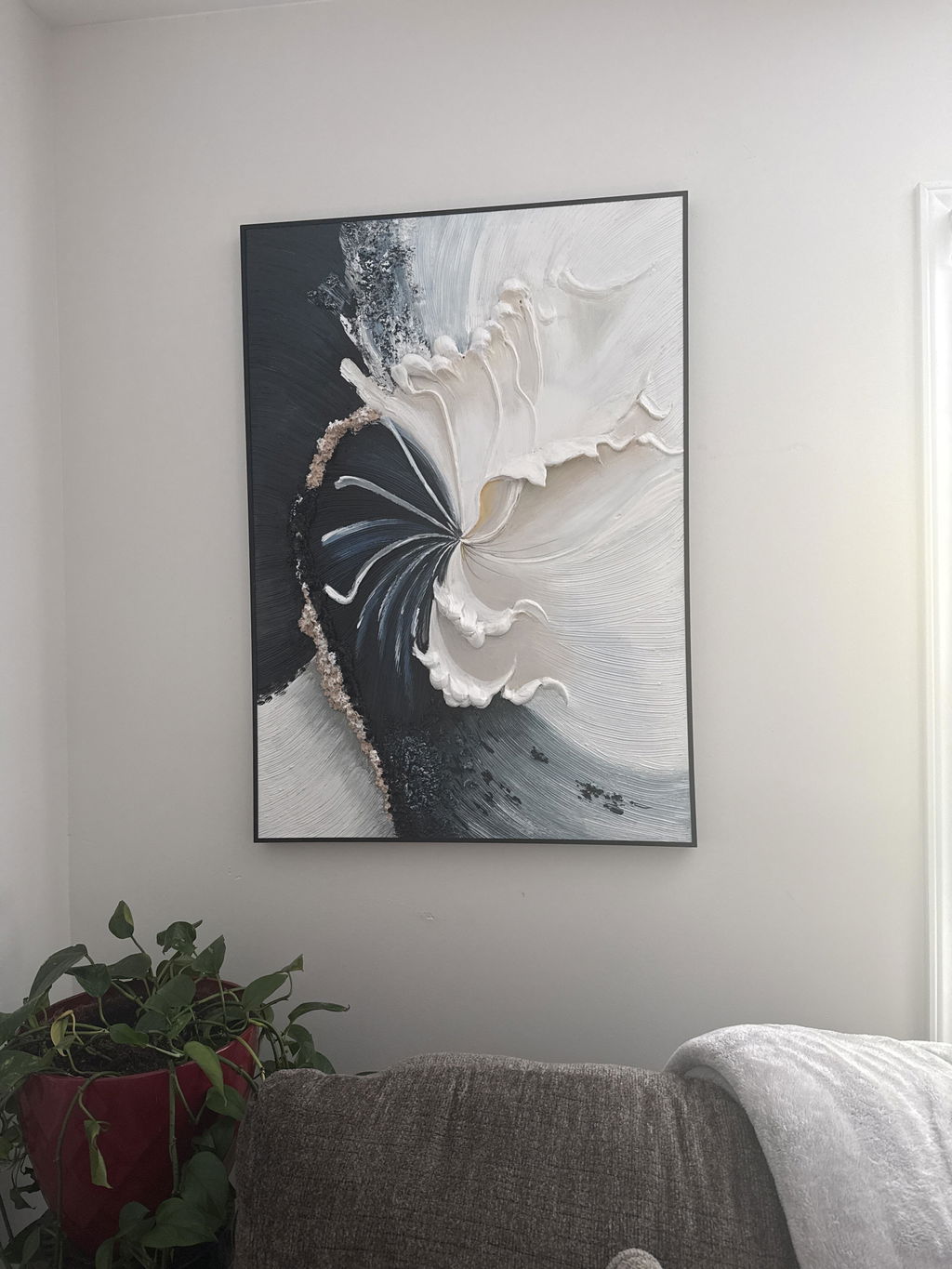
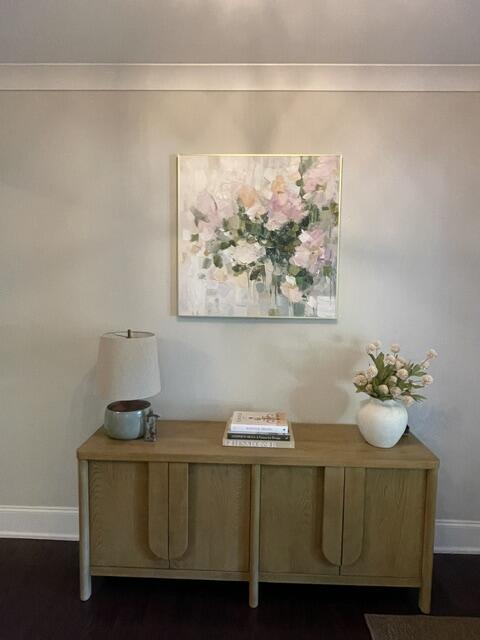
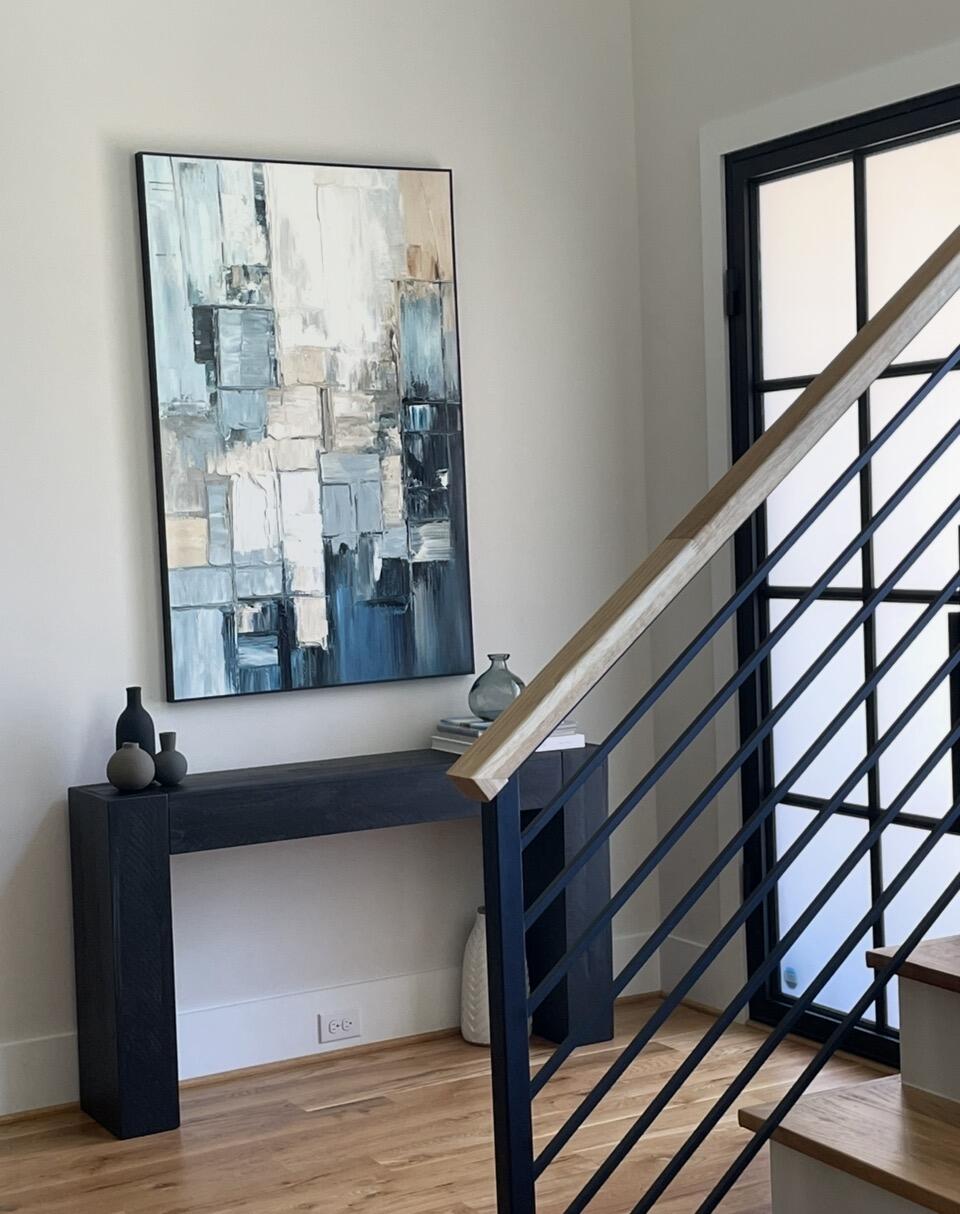
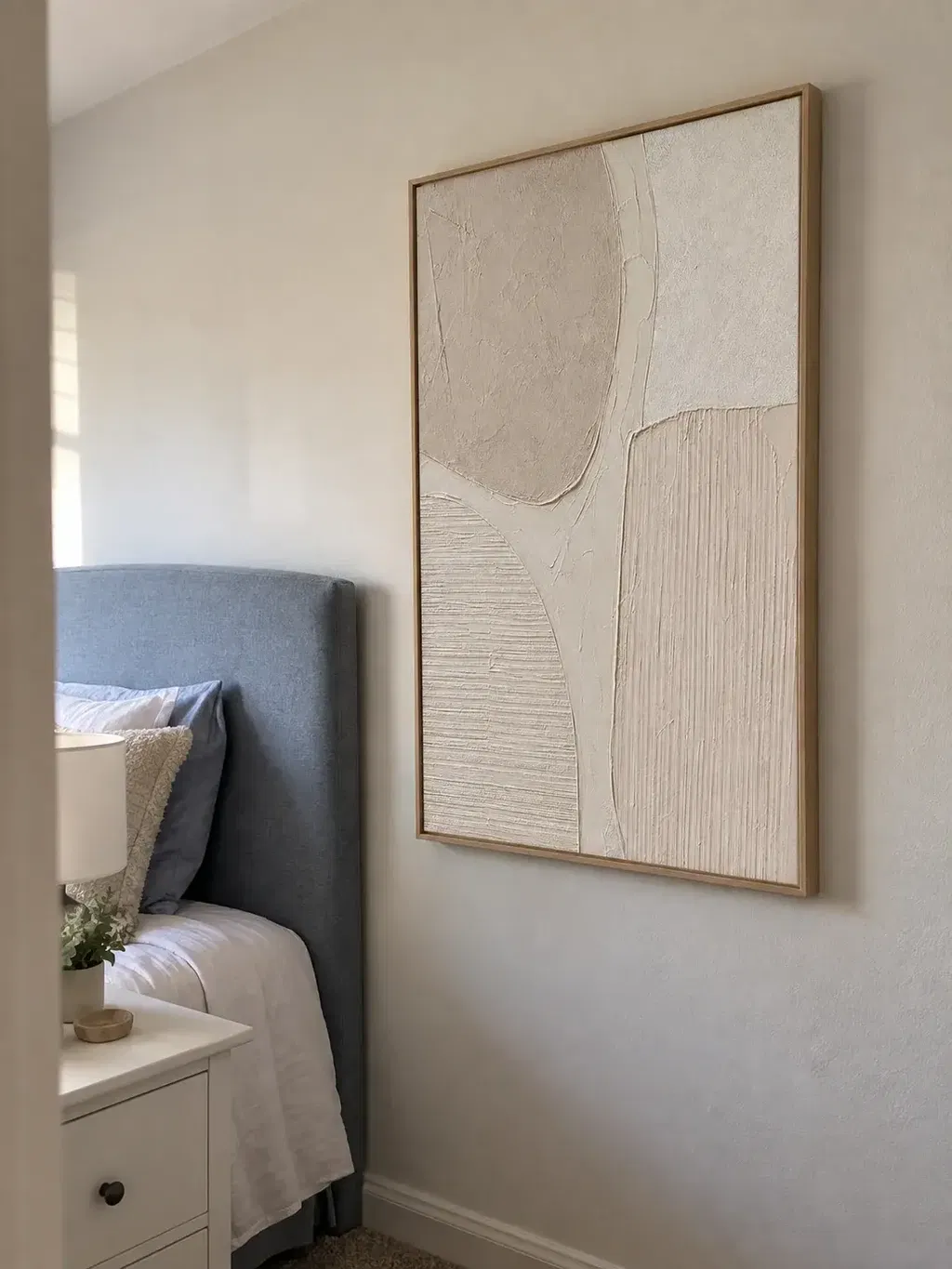
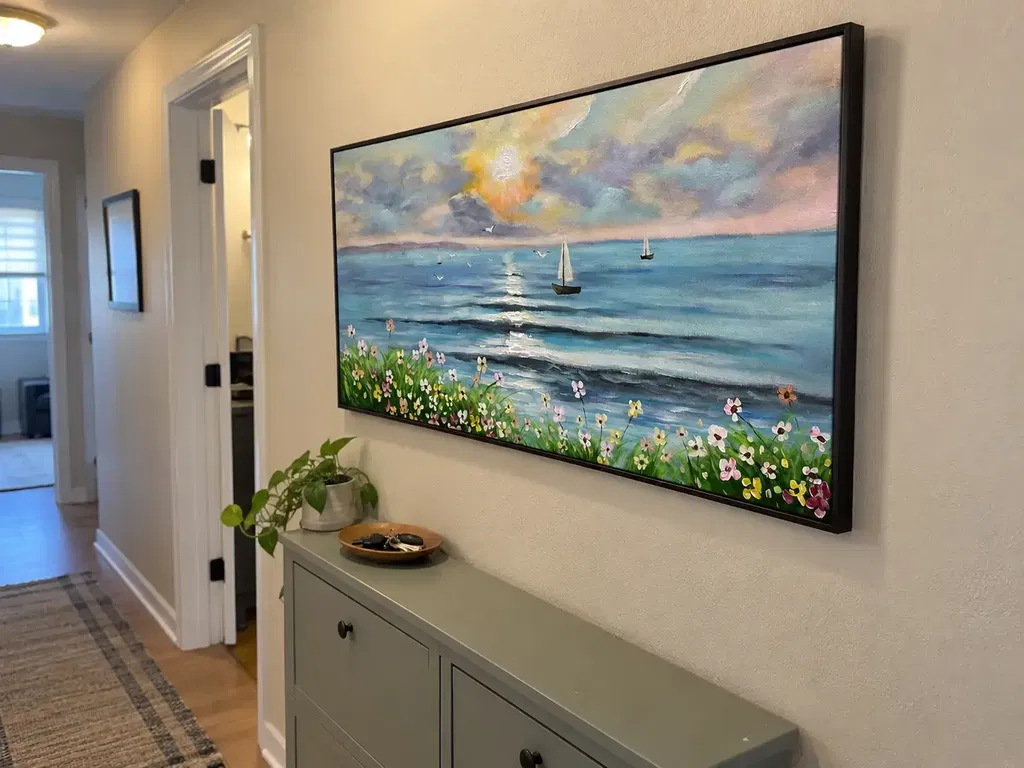
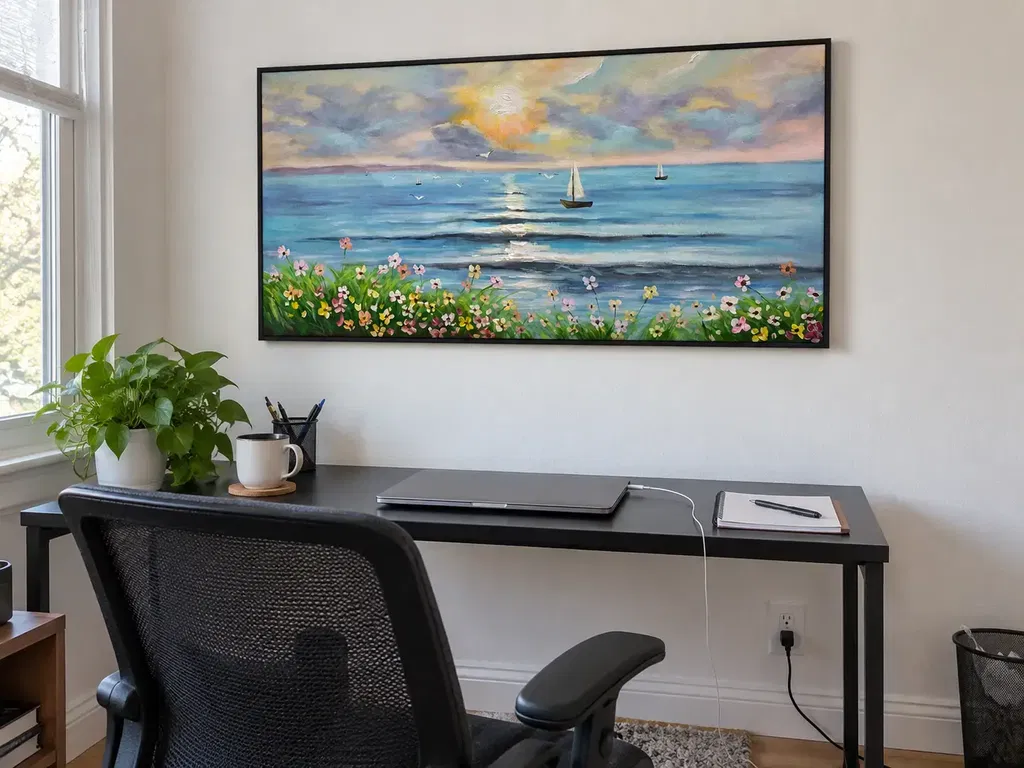
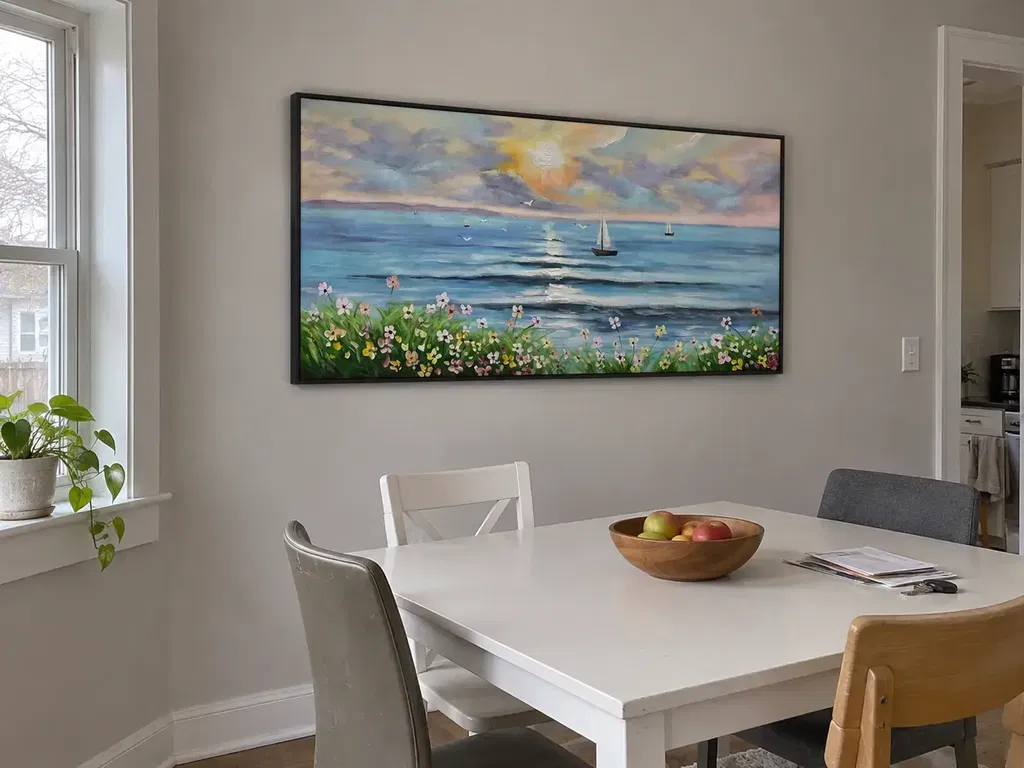
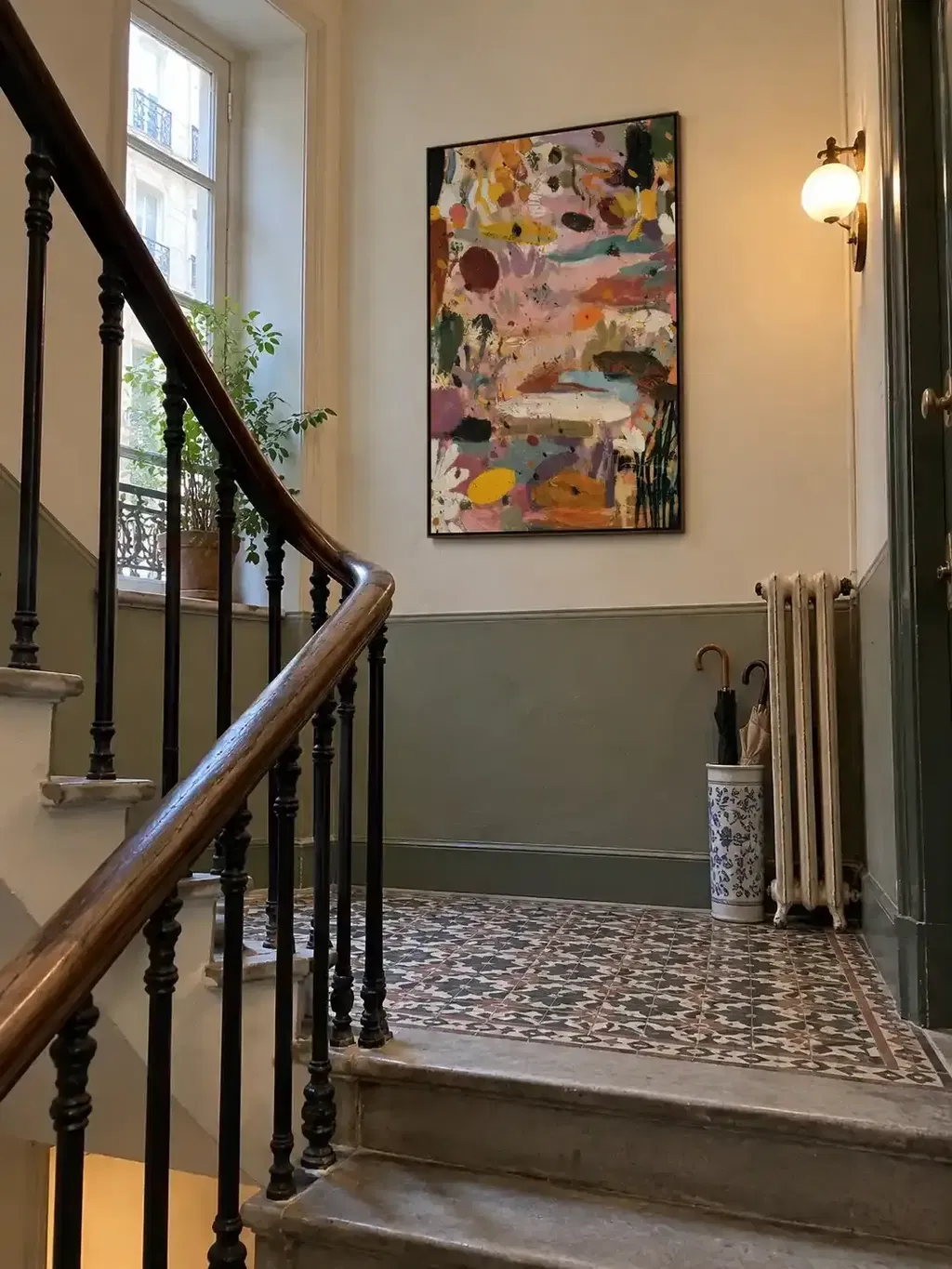
In luxury staging, more is rarely better. Practitioners suggest the "Hero Piece" heuristic: a single, large-scale (minimum 48x48 inches) textured oil painting placed in the entryway or primary living space provides a higher ROI than multiple smaller pieces. This strategy achieves two goals: it elevates the perceived ceiling height and signals "custom luxury" the moment a buyer crosses the threshold.
1. The Anti-Glare Mandate
A common mistake in high-end listings is using art with glass frames. Under professional photography strobes or recessed LED "art lights," glass creates a glare that obscures the work and ruins MLS photos. Hand-painted canvases without glass allow for superior light diffusion, capturing the micro-topography of the brushstrokes—a feature that Optical microprofilometry proves is crucial to human aesthetic satisfaction.
2. The 60-30-10 Color Rule
Real estate professionals use this ratio to ensure cohesion:
- 60% Main wall color (typically a neutral white or "greige").
- 30% Secondary furniture and textile tones.
- 10% The "Accent" provided by the hand-painted art. The art should provide the final 10% that ties the room together. However, the "approval gate" is critical here. Agents must ensure the specific undertones of the painting (e.g., cool vs. warm whites) do not clash with the property’s specific wall paint.
3. Creating "Immersive Escapism"
According to the NKBA 2025 Design Awards, a dominant trend for 2026 is wrapping mural-style art entirely around a room, particularly in powder rooms, to create "immersive escapism." For a high-value listing, a hand-painted mural in a small, high-traffic area like a foyer or powder room creates a memorable "landmark" in the buyer's mind.

Neurological Triggers: Why Hand-Painted Art Sells Homes
Why does a hand-painted wall feel more "comfortable" than a printed one? The answer lies in neuroaesthetics. A systematic review of 85 records published in NCBI shows that passive art viewing consistently activates the medial prefrontal cortex (mPFC) and the amygdala, optimizing emotional regulation circuits.
Biophilic Design and Stress Reduction
When staging with nature-themed or biophilic hand-painted pieces, you are essentially installing "public health infrastructure." A UPenn review noted that 73% of patients reported significant mood improvements when exposed to environmental artworks. In a real estate context, this reduces the "buyer’s friction" and anxiety associated with a large purchase.
Methodology Note: Our "Neurological Impact" model is based on the WHO Scoping Review on Arts and Health, which confirms that art interventions alter clinical indicators of stress. We apply this to the "Home Buying Stress" scenario, assuming that a calm, art-enriched environment leads to longer "dwell time" during open houses.
Technical Integrity: The "Decision Safety" Framework
For the luxury agent, "decision safety" is paramount. You need the art to look like a museum-quality original but require the predictability of an e-commerce process. This is where technical material standards become the "backbone" of the staging strategy.
1. Indoor Air Quality (IAQ) and LEED Compliance
High-end homeowners are increasingly sensitive to VOC (Volatile Organic Compound) emissions. The EPA warns that indoor air pollution is often deadlier than outdoor. To achieve LEED or WELL certification in new developments, low-VOC paints are a prerequisite. Professional hand-painted murals using walnut oil or water-based acrylics—which Aalto University proved emit significantly lower VOCs than industrial coatings—ensure that the "new home smell" isn't actually a toxic chemical cloud.
2. The Lightfastness Standard (ASTM D4303)
If a property sits on the market for several months, art exposed to UV light through large floor-to-ceiling windows can fade. Professional pigments are tested using ASTM D4303 protocols, which simulate years of indoor aging using xenon-arc tests. Ensuring your staged art uses "Lightfastness I" rated pigments protects the visual integrity of the listing over time.
3. Avoiding the "Authenticity Paradox"
While high-end art adds value, staging with pieces valued over $25,000 creates insurance gaps. Standard homeowners' policies often cap fine art coverage at $25,000, requiring specialized riders and 2-3 weeks of security protocol Hotaling Insurance. The solution is "Performative Authenticity": high-quality, hand-painted commissions that provide the texture and soul of a $100k piece but are priced as staging assets, bypassing the insurance and security bottlenecks that kill market momentum.
Pigment Chemistry: The Hidden Language of Luxury
The difference between a "cheap" painting and a luxury staging asset is found at the molecular level.
- Opacity and Scattering: According to Optica, pigment scattering reaches its theoretical extreme when particle diameters approach half the wavelength of visible light. High-end pigments are "laser-milled" to this precise size, resulting in the deep, saturated colors that pop in professional photography.
- The SID Phenomenon: A common technical failure in lower-quality art is Support Induced Discoloration (SID). As Golden Artist Colors notes, water-soluble impurities in cheap canvases can be drawn into the paint film, causing a white painting to turn yellow or brown. Professional-grade staging art uses "GAC 100" or similar sealants to prevent this chemical decay.
Safety Warning: The Toxic Legacy of Pigments
While we celebrate color, we must respect chemistry. The International Agency for Research on Cancer (IARC) classifies cadmium compounds—common in bright reds and yellows—as Group 1 carcinogens. While ECHA data shows the environmental discharge from artists is low, the CDC NIOSH warns that chronic inhalation of dry pigment dust can lead to organ damage. For residential staging, especially in "nursery" or "kids' room" scenarios, always opt for water-based, wet-applied acrylics that have passed the BS EN 71-3 heavy metal migration tests.

Implementing the Strategy: Two Staging Scenarios
To maximize ROI, the application of hand-painted art must be tailored to the property's specific market profile.
Scenario A: The High-Velocity "Turnkey" Flip
- Target: Millennials/Gen Z buyers looking for "move-in ready" aesthetics.
- Art Strategy: Utilize Balancing Heavily Textured Art with Minimalist Decor principles. Use high-contrast, textured abstracts in the entry.
- Key Metric: 21% increase in "Artisan Craftsmanship" mentions in Zillow searches.
- Action: One 60x60 "Hero Piece" in the living room; zero glass frames.
Scenario B: The Legacy Estate (International Investors)
- Target: High-net-worth individuals (HNWIs) from Asia and the Middle East.
- Art Strategy: Research shows 40% of international buyers prefer "blank canvas" spaces to project their own collections. However, a Surrealist/Dali Homage custom piece in a dedicated "Gallery Hall" can signal the home's suitability for a high-end collection.
- Key Metric: 60% of cross-border transactions are influenced by "status signaling."
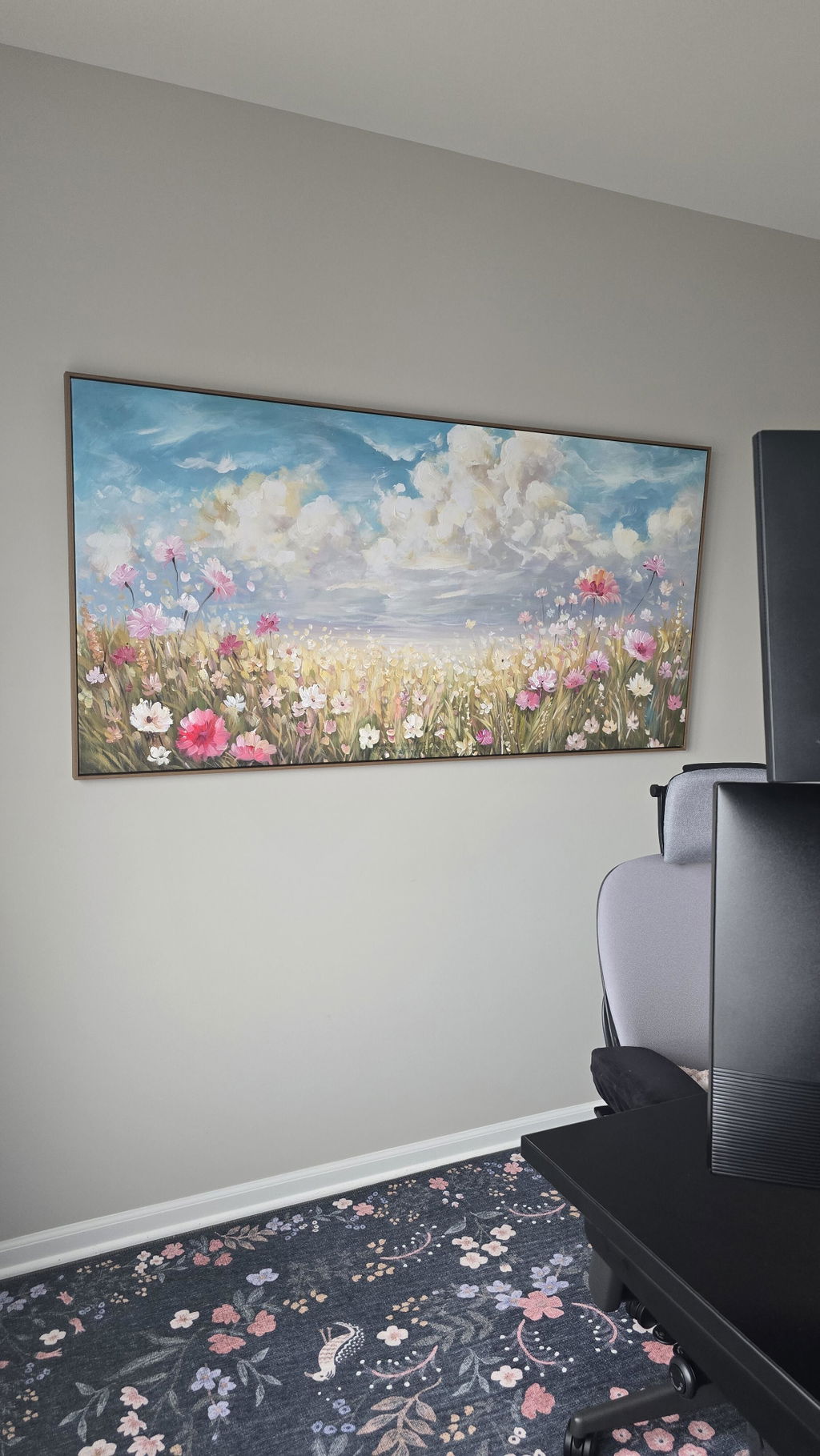
- Action: Focus on "Biophilic Landscapes" in the master suite to trigger the stress-reduction mPFC response during the final walk-through.
Summary of Staging Best Practices
| Staging Element | Recommended Action | Scientific/Market Basis |
|---|---|---|
| Sizing | Minimum 48" x 48" | Perceived Ceiling Height Elevation |
| Framing | No Glass (Gallery Wrap) | MLS Photo Glare Prevention |
| Subject | Biophilic / Nature | 73% Mood Improvement (UPenn) |
| Material | Low-VOC Acrylic/Walnut Oil | LEED/WELL Certification Compliance |
| Placement | Entryway Focal Point | "Hero Piece" Heuristic |
Elevating the Listing from "House" to "Heritage"
The University of Cincinnati regression analysis proves that high-quality murals remain directly correlated with pedestrian foot traffic and property interest. By shifting the mindset from "buying disposable decor" to "investing in a performative asset," agents can leverage the Expanding Boundaries: Why Large Art Makes Small Living Rooms Feel Grand effect to justify higher asking prices.
In the 2026 luxury market, the "wow factor" is no longer a shiny chandelier or a marble countertop—it is the visible, tactile evidence of human life-time compressed into a brushstroke. Hand-painted art provides the "essential identity" that digital replicas lack University of Chicago, ensuring your listing doesn't just sit on the market, but stands out as a unique cultural heritage asset.
Disclaimer: This article is for informational purposes only and does not constitute professional legal, financial, or medical advice. Pigment safety and indoor air quality standards vary by jurisdiction; always consult with a certified industrial hygienist or a LEED professional for specific project requirements.
References
- Marketplace.org: The expensive art market continues to struggle
- Columbia University: Human-Made vs. AI Art Study
- Royal Society: Quantifying the link between art and property prices
- NCBI: Neurological mechanisms of creative arts
- EPA: Indoor Air Quality and Low-VOC Paints
- Golden Artist Colors: Aspects of Longevity and SID