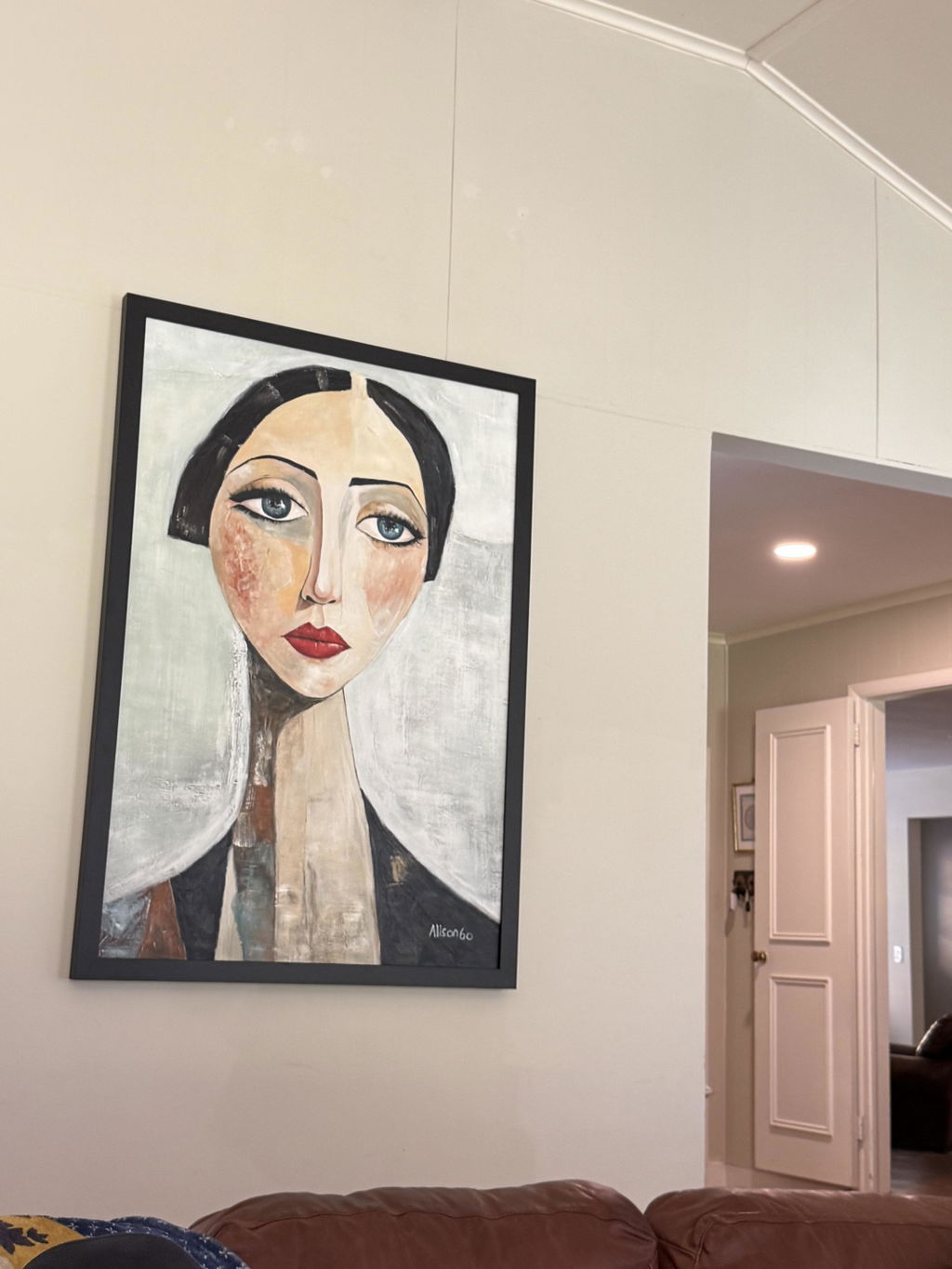
Choose hotel bedroom wall art from the room outward. Start with the headboard wall and usable wall area, review each option from the bed and entry, then evaluate the palette and surface depth against the installed finishes and lighting. Before release, verify material-specific care, mounting responsibility, delivery details, and a repeatable room record. This process helps designers and purchasing teams select artwork that looks intentional in a boutique guest room without relying on unsupported size ratios or assumptions about hospitality performance.
Choose Hotel Bedroom Wall Art by Room Proportion
The right piece fits the headboard composition, available wall zone, fixtures, and guest viewpoints as a whole. Use a room elevation and measurements before browsing, then document the approved placement so comparable rooms can follow the same standard.
Match the Artwork to the Headboard
Measure the headboard, bed wall, bedside elements, sconces, and other fixed features before comparing artwork. The usable wall zone—not the full wall by itself—determines whether a landscape, portrait, diptych, or other arrangement will sit comfortably above the bed.
Check the artwork's overall dimensions, including the frame or finished edge, against the headboard width and the visual space around it. Leave room for fixture relationships and the installation method specified for the project. A large wall art buying guide can support early comparisons, but the installed elevation should drive the final decision.

Do not apply a universal art-to-headboard ratio as an approval rule. If the piece appears too dominant, too far from the furniture, or crowded by sconces, test a different orientation or scale in the room mockup.
Check Bed and Entry Sightlines
Review the proposed piece from the pillow line, the foot of the bed, the doorway, and the main circulation path. A composition that looks balanced in a listing image may feel visually heavy, glare-prone, obstructed, or undersized from one of these positions.
Note the direction and intensity of installed lighting, reflective surfaces, artwork depth, and anything that interrupts the view. If a guest sees the work primarily from a low or angled position, judge its visual weight from that position rather than from a straight-on elevation alone.
Record the approved artwork orientation, viewing points, lighting conditions, and any fixture conflicts. This creates a clear, checkable reason for the selection instead of leaving the decision to a product photograph.
Set a Repeatable Room Standard
Create a placement record for each room type. Include the artwork's finished dimensions, orientation, centerline, mounting zone, headboard relationship, fixture locations, and any approved exception caused by a different wall condition.
For matching rooms, compare the record with the actual elevations before ordering quantities. If one room requires a different size or orientation, document why and identify the alternate rather than allowing room-to-room drift. This is especially useful when choosing oversized wall art for several bed walls.
Build a Palette That Supports the Guest Room
Choose color by comparing the artwork with the installed finish schedule and lighting—not by trying to match every surface. Approve a tonal range and acceptable alternates so the room remains cohesive when artwork is reordered or substituted.
Review the headboard, paint, bedding, casegoods, flooring, hardware, and lamps together. Then decide whether the artwork should recede, provide moderate contrast, or act as a controlled accent. Separate color approval from subject-matter approval: a calm palette does not automatically make every image suitable for the intended guest experience.

| Palette approach | Room relationship | Likely visual effect | Repeat-room approval check |
|---|---|---|---|
| Restrained tonal | Uses closely related values from the finish schedule | Quiet and integrated; surface or composition carries more of the interest | Record an acceptable value range and review it under installed lighting |
| Moderate contrast | Introduces a clear but controlled difference from the headboard or wall | Gives the bed wall definition without making the artwork the only focal point | Approve contrast boundaries and compare alternates in a room elevation |
| Stronger accent | Uses a deliberate color or value break | Creates a focal point and may shape the room's mood more assertively | Confirm that the accent works with bedding, lamps, photography, and adjacent rooms |
Screens and listing photography can change how color, texture, and contrast appear. For a final decision, review a scale-aware mockup, finish references, or a sample in the actual lighting context. Collections such as modern abstract artwork can help with discovery, while the project finish schedule controls approval.
Weigh Texture Against Access and Upkeep
Textured art is practical only when its surface, location, cleaning access, and documented care process fit the hotel's operating routine. Texture can add depth, but it also changes dust visibility, touch-point exposure, inspection needs, and the consequences of an unclear cleaning method.
Before approving textured hotel room art, separate what the supplier must document from what the room team must inspect:
- Surface and edges: Identify raised areas, recesses, exposed edges, fibers, porous sections, fragile finishes, and frame or backing materials that may collect dust or be vulnerable to contact.
- Access: Confirm that housekeeping can visually inspect and reach the artwork without awkward movement, moving guest furniture, or treating the piece as an exception to the normal room routine.
- Care instructions: Request written directions for permitted dusting, wiping, spot cleaning, solvents, moisture, and pressure. Modern or mixed-media paintings may not be safe to clean with water or other solvents, so do not assume that routine wiping is acceptable; conservation guidance on modern paintings supports confirming the material-specific method first. Additional preservation guidance is useful as background, but it does not establish hotel-use performance.
- Touch exposure: Look at likely guest contact points, especially near the bed, switches, luggage routes, and circulation paths. If the approved care process or contact risk is unclear, pause the selection.
- Finish sensitivity: Ask whether the surface, coating, frame, and backing have separate care limitations. A supplier's general description is not a substitute for product-specific instructions.
- Replacement handling: Record the piece, finish, care notes, and approved alternate so a future replacement does not force a new maintenance decision.
Use textured wall art as a discovery category, not as proof that any particular piece is hospitality-ready. The visual benefit is worth pursuing when access and care are clear; otherwise, a flatter or more easily documented surface may be the better operational fit.
Translate the Room Standard Into a Custom Order
A custom order is ready for approval only when the room standard becomes a written supplier brief covering size, finish, quantity, care, mounting, timing, and repeat-room documentation. Keep unresolved fields as approval holds rather than treating a promising image or style description as a completed specification.
- Measure and document the room. Send the supplier the relevant elevations, usable wall dimensions, headboard and fixture relationships, orientation, room count, installation constraints, palette references, and decision date. Include the approved viewing context so the supplier understands whether the artwork is judged from the bed, entry, or both.
- Define the visual brief. State the desired tonal range, contrast, subject direction, texture level, orientation, finished size range, frame or edge treatment, and acceptable alternates. If a visual reference is useful, link to discovery examples such as Earthen Strata artwork without treating the product page as evidence of custom capability or hotel suitability.
- Request specifications and care details. Ask for finished and unframed dimensions, depth, medium or support, finish, frame or edge treatment, backing, care instructions, mounting information, packaging details, and replacement or reorder identifiers. The American Art Museum collection-care record guidance supports recording framed and unframed dimensions, supplier details, medium or support, and installation information as a practical project record—not as a hotel legal requirement.
- Confirm timing and project requirements. Have the supplier confirm current production timing, packaging, delivery responsibilities, mounting scope, and any limits that affect the project. Route fire-safety, accessibility, insurance, venue, and installation questions to the responsible project professionals; do not infer compliance from a title, photograph, or general collection description.
- Approve the repeat-room schedule. Before releasing quantity, create one schedule containing the room type, quantity, artwork identifier, finished and unframed dimensions, orientation, finish, supplier, care notes, mounting responsibility, approved alternates, and unresolved hold points. A second team member should be able to use the file to compare, reorder, or substitute artwork without relying on verbal instructions.
Run the Hotel Room Artwork Selection Checklist
Use this hotel room artwork selection checklist as a release tool for design, purchasing, operations, and installation teams. It coordinates decisions but does not replace applicable authority, insurance, contractor, or qualified professional review.
- Room fit: Confirm the finished dimensions, orientation, headboard relationship, usable wall zone, fixture clearances, centerline, and guest viewing points against the approved elevation.
- Visual approval: Review palette, contrast, subject direction, texture, glare, and visual weight in the installed lighting context. Record approved alternates rather than relying on a style name.
- Operational review: Confirm cleaning access, written care instructions, touch-point exposure, frame and backing details, and the responsible person for mounting questions. Hold the order if the approved cleaning method is unclear.
- Repeat-room control: Match the item identifier, quantity, orientation, finish, supplier, alternates, and room-specific exceptions to the schedule. Keep the documentation usable for expansion and replacement.
- Receiving and installation: Photograph the work at receipt and before installation, and log visible scratches, losses, dents, abrasions, packaging damage, or other condition concerns. Collection-care record guidance supports this as a practical documentation step; it does not replace insurance records or a formal inspection.
- Release decision: Go ahead only when dimensions, care, mounting responsibility, delivery timing, documentation, and project-specific venue requirements are resolved or assigned to the responsible reviewer. If the work is damaged, materially uncertain, unusually valuable, or outside the approved room standard, pause and seek supplier or qualified conservation advice before installation.
The practical next step is to assemble the room measurements, elevations, finish schedule, lighting context, care requirements, quantity, alternates, and decision date before browsing or requesting custom hospitality artwork. That file gives your team a defensible basis for comparing hotel bedroom artwork and makes the eventual order easier to review, receive, install, and replace.
FAQs
These questions cover layout, documentation, remote review, and approval holds that may still need resolution after the room standard is set.
What Artwork Works Well in a Hotel Bedroom With Limited Natural Light?
Compare tonal range, contrast, surface reflectivity, and the direction of installed light rather than choosing a style by name. Review a scale-aware mockup or sample under the actual fixture conditions because a piece can read differently in a darker room than in a bright photograph.
How Do You Choose Between One Large Piece and Several Smaller Pieces Above a Hotel Bed?
Choose the layout that leaves the clearest relationship among the headboard, sconces, and cleaning access. Compare installation points, visual gaps, replacement complexity, and the approved room schedule before deciding.
What Should a Hotel Artwork Schedule Include for Replacement Orders?
Include the item identifier, framed and unframed dimensions, orientation, depth, finish, supplier, medium or support, frame or edge treatment, care notes, mounting information, room type, quantity, condition photos, and approved alternates. Add the date and location of any room-specific exception.
How Can Teams Review Artwork Color When They Cannot Visit the Room?
Send an elevation with scale, the finish schedule, headboard and bedding references, fixture specifications, and the lighting context. Use a mockup in position, note that screens can shift color and contrast, and have named approvers sign off on the same reference set.
When Should Hotel Artwork Be Rejected Before Installation?
Hold it when dimensions conflict with the approved wall zone, cleaning access is impractical, mounting responsibility is unclear, care instructions are missing, guest contact creates an unresolved concern, the work is damaged, or venue requirements remain unverified. Resolve the specific hold point before installation.