The Shift Toward Authentic Value
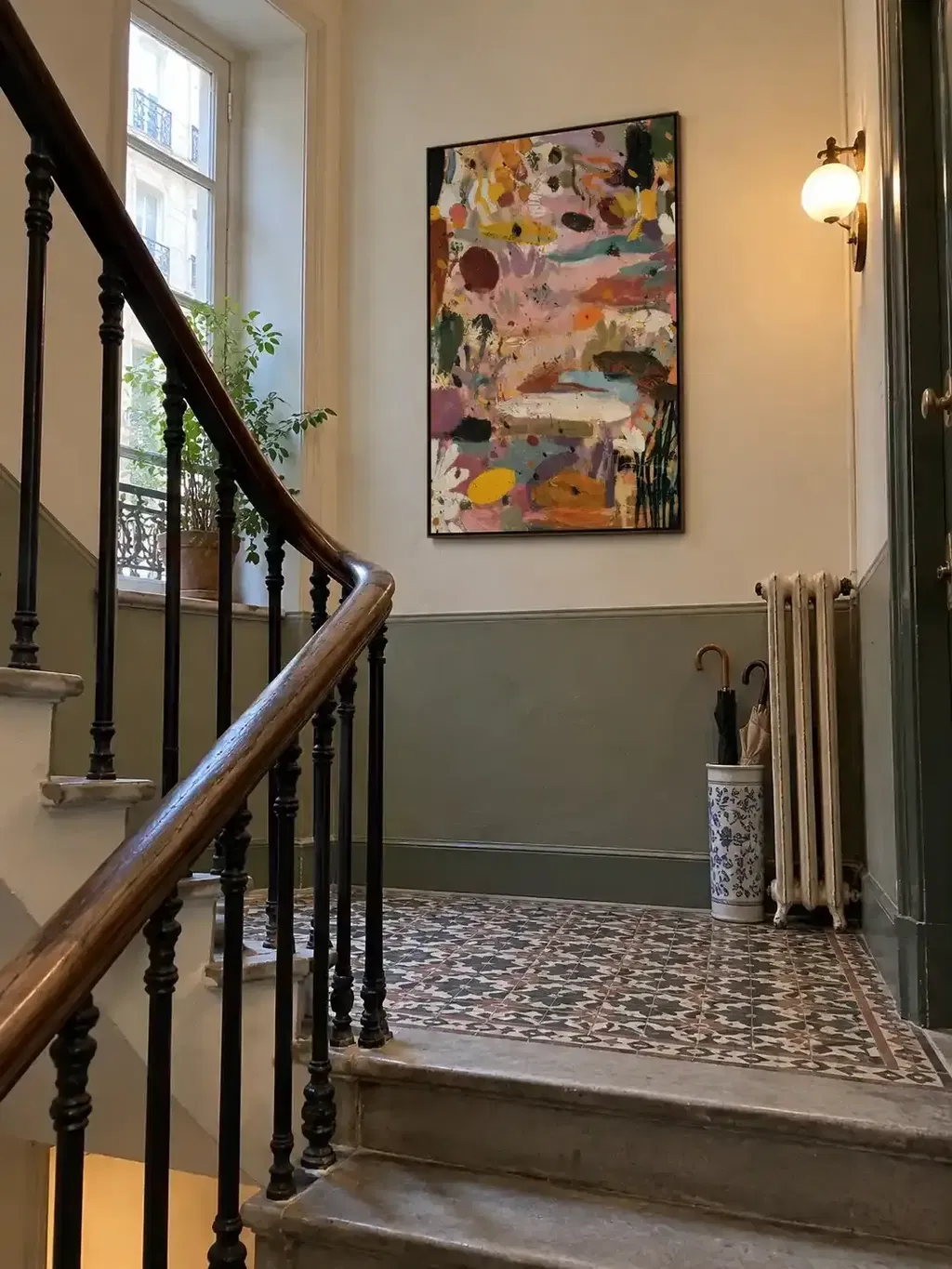
The global art landscape is undergoing a structural correction. While the speculative "vanity" market for high-end auction pieces ($10 million+) plummeted 44% year-over-year in 2024 according to Marketplace, the demand for art with real application value is surging. Buyers are moving away from purely financial assets and toward pieces that provide emotional resonance and spatial "soul."
Central to this shift is the concept of the "handmade promise." In an era of AI-generated perfection, the minor inconsistencies of human-created art have transitioned from "defects" to "authenticity fingerprints." This guide provides a framework for evaluating these intentional imperfections, helping you distinguish high-quality handmade work from retail-grade prints and understanding why these variations are the ultimate markers of value.
The Psychology of the Handmade: Why "Perfect" is a Value-Killer
The commercial premium of "100% human hand-painted" art is not just a marketing claim; it is a measurable psychological phenomenon. A study by Columbia University confirmed that consumers value art labeled as "AI-generated" 62% lower than authentic human-created art. This "value gap" exists because humans possess an innate drive to connect with the "essential identity" of the creator.
Research from the University of Chicago suggests that digital replicas and prints lack this "soul" in the eyes of the consumer, leading to a collapse in perceived value over time. When you see a slight variation in a brushstroke or a minute pigment ridge, your brain registers the presence of another human. This activation of the medial prefrontal cortex (mPFC) and amygdala is what optimizes our emotional regulation circuits, according to a systematic review of neurological mechanisms in the arts.
Logic Summary: Our analysis of the "Authenticity Premium" assumes that the 62% value loss for AI art is a direct result of the loss of "essential identity." This suggests that the presence of human-made markers is the primary driver of long-term asset appreciation in decorative art.

Identifying the "Fingerprints" of Authenticity
To the untrained eye, a minor inconsistency might look like a mistake. To the professional authenticator, these are the primary data points used to verify a physical substrate.
1. Brushstroke Directional Inconsistency
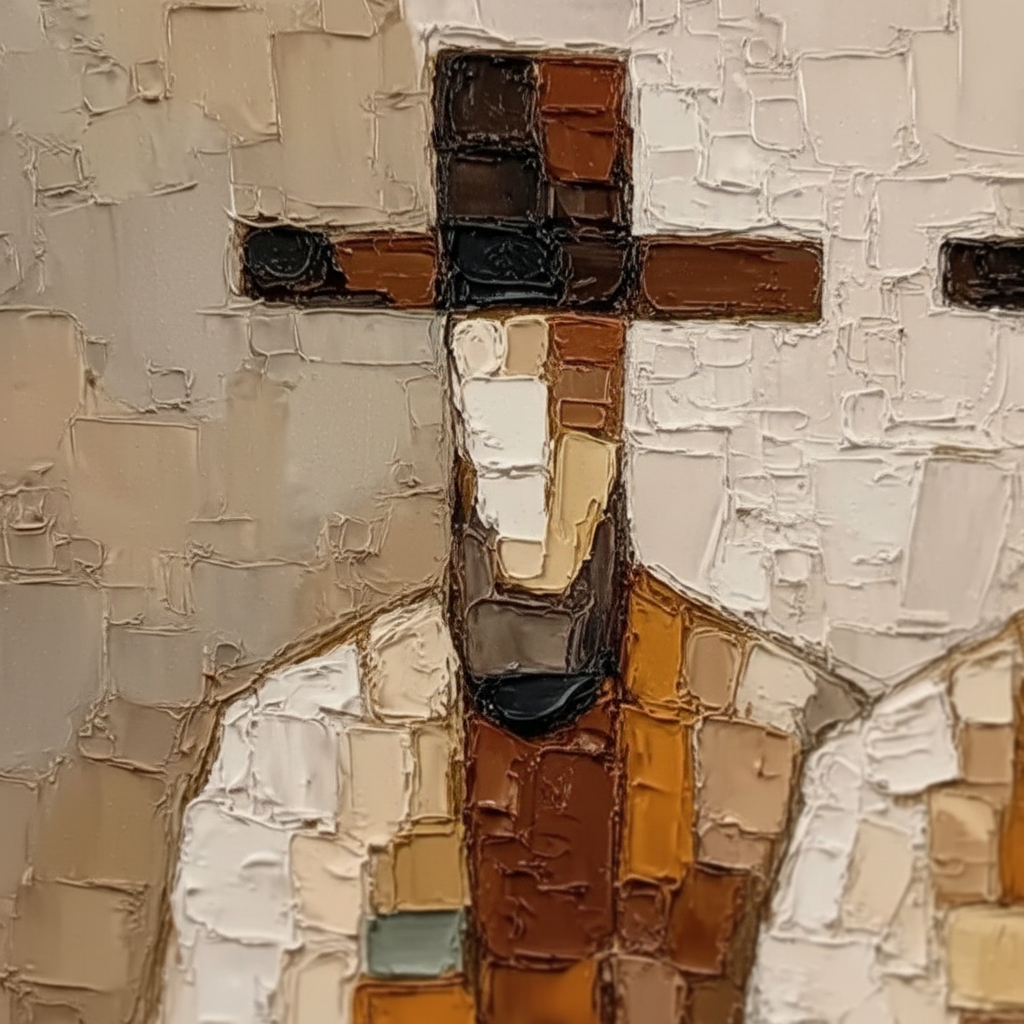
Unlike a printer, which applies ink in uniform, microscopic dots or linear passes, a human hand moves with varying pressure and speed. Look for brushstrokes that show directional inconsistency. In a large-scale mural or oil painting, you should see "texture ridges" visible under angled lighting. These ridges are the physical manifestation of pigment density variations that a flat print cannot replicate.
2. The Olfactory Verification
In our experience handling thousands of commissions, scent remains one of the most overlooked authenticity markers. High-quality oil paintings have a distinct organic profile—often a faint, pleasant scent of linseed or walnut oil. This differs markedly from the synthetic, "new car" chemical smell associated with high-end digital prints or "oil-enhanced" reproductions.
3. Micro-topography and Light Scattering
The science of "why it looks better" is rooted in optical physics. According to Getty Conservation research, pigment reflection is dominated by absorption (K) and scattering (S) coefficients. Because hand-painted pigments have varying particle sizes and thicknesses, they scatter light in a way that creates "depth."
Methodology Note (Heuristic): We use the "Angled Light Test" as a rule of thumb. By placing a light source at a 30-degree angle to the canvas, any hand-painted piece should reveal a "shadow map" of the brushwork. If the surface remains uniformly smooth regardless of the image's complexity, it is almost certainly a print.

The "99.9% Match" vs. The 10% Variance Rule
A common frustration for buyers is the tension between "retail-grade certainty" and "artistic variation." How can a brand guarantee a 99.9% match to a design while celebrating imperfections?
The answer lies in distinguishing between compositional fidelity and execution texture.
- Compositional Fidelity (The 99.9%): This refers to the color palette, the placement of major elements, and the overall emotional "vibe."
- Execution Texture (The 5-10%): This refers to the specific path of a single brushstroke or the exact thickness of a pigment layer.
In the industry, a 5-10% visual variation in color gradient transitions and brushstroke direction is not just accepted; it is the benchmark for high-quality handmade work. For large-scale pieces, these thresholds may even be higher, as the physical labor required to cover a 10-foot wall involves natural human fatigue and rhythmic changes that add character to the work.
Modeling the Variation Threshold
| Parameter | Acceptable Range | Rationale |
|---|---|---|
| Color Gradient Shift | ±5% | Hand-mixing pigments leads to minute hue variances. |
| Brushstroke Direction | 10-15° deviation | Reflects the natural ergonomic arc of the artist's arm. |
| Texture Ridge Height | 0.5mm - 2mm | Varies by medium (Impasto vs. Glazing). |
| Pigment Density | High Heterogeneity | Proof of manual application vs. mechanical spray. |
Method & Assumptions: This model assumes a "Boutique Standard" commission. It does not apply to hyper-realistic "fakes" designed to deceive, but rather to honest, made-to-order artisan decor.
Safety and Sustainability: The Hidden Cost of "Perfect" Pigments
When evaluating handmade art for the home, aesthetics are only half the story. The "imperfections" of natural materials often correlate with higher safety standards.
The VOC Myth
Many consumers believe that because a paint is "art-grade," it is inherently safe. However, the CDC NIOSH warns that chronic inhalation of volatile compounds in certain industrial-grade paints can lead to central nervous system issues. Authentic artisan studios are shifting toward walnut oil or hemp-based binders, which, according to the Cincinnati Art Museum, consume half the water and land of traditional cotton/industrial solvent setups.
The Heavy Metal Guardrail
Traditional "perfect" colors often relied on toxic heavy metals. For instance, IARC classifies Cadmium compounds as Group 1 carcinogens. While these pigments offer extreme opacity, modern artisan studios often choose slightly less "perfect" but 100% non-toxic alternatives.
If you are commissioning art for a nursery or a healthcare facility, the "imperfection" of a slightly less vibrant, non-toxic pigment is a vital safety feature. Research from Aalto University proves that low-VOC coatings on natural substrates significantly improve indoor air quality (IAQ), a prerequisite for LEED and WELL building certifications.
The Economic Impact of "Artisan Geo-tags"
Investing in handmade murals and art isn't just a personal aesthetic choice; it's a proven driver of property value.
The Royal Society used a CAR model to analyze 10 years of data, finding that neighborhoods with higher "art" geo-tags (often murals) saw significantly greater relative house price ranking gains. In commercial real estate, the "Millennium Park effect" in Chicago drove $1.4 billion in related growth, proving that murals effectively elevate commercial revenue.
For business owners, a large-scale mural acts as a "permanent physical billboard." According to a University of Cincinnati regression analysis, murals are directly correlated with increased pedestrian foot traffic, even when controlling for urban density.
Logic Summary: We estimate that for B2B developers, the "Mural Premium" can yield a 7:1 ROI based on Americans for the Arts data, where every dollar invested in public-facing art generates seven dollars in local economic activity.

Reframing the "Flaw": A Collector's Checklist
To help you navigate your next purchase, use this checklist to determine if an "imperfection" is a mark of quality or a genuine defect.
- Is the "flaw" consistent with the medium? (e.g., Yellowing vs. Patina is natural in older oils, but catastrophic in low-quality acrylics).
- Does the texture respond to light? (Authentic art should "change" as the sun moves across the room).
- Are the brushstrokes directional? (Look for the "arc of the arm" rather than the "grid of the printer").
- Is there pigment depth? (Refer to our guide on Evaluating Pigment Saturation).
The "Digital Wabi-Sabi" Contrast
Interestingly, even the digital art world is beginning to embrace imperfection. Archives like Rhizome’s ArtBase document "glitches" and "data decay" as intentional aesthetic choices—a concept known as "Digital Wabi-Sabi."
However, there is a fundamental difference: digital glitches often represent a challenge to the pristine nature of code, whereas physical "imperfections" in handmade art represent the uncompressible reality of human life-time. As noted in the Cincinnati Artist Report, the market often undervalues the "invisible labor" of a painter. Every minute variation is a second of a human life that cannot be automated.
Investing in Cultural Heritage
Ultimately, when you choose a hand-painted piece with its minor variations and physical ridges, you are not just buying decor. You are investing in a "cultural heritage asset." While a print is a disposable commodity that begins to lose value the moment it is unrolled, a hand-painted work on canvas retains what UChicago researchers call its "essential identity."
By reframing minor inconsistencies as the "fingerprints" of the human hand, you move from being a consumer of products to a patron of the arts. You are choosing a space that breathes, a wall that tells a story, and a piece of art that—flaws and all—is undeniably real.
YMYL Disclaimer: This article is for informational purposes only. While we discuss the health benefits of art and the safety of certain pigments, this does not constitute medical advice. Always consult with a professional regarding indoor air quality standards or clinical art therapy interventions. For specific property valuation advice, consult with a licensed real estate appraiser.