The Shift Toward Authentic Value in the Modern Art Market
The global art market is undergoing a structural correction. While total sales reached approximately $65 billion in 2023, according to the Art Basel and UBS Art Market Report 2024, the high-end auction sector—specifically pieces over $10 million—saw a staggering 44% year-over-year decline in 2024. As reported by Marketplace, this retreat from purely financial art assets signals a return to "real application value." Consumers are increasingly moving away from overpriced vanity pieces in favor of custom, hand-painted works that offer tangible emotional and aesthetic utility.
Simultaneously, the rise of Generative AI has flooded the market with high-definition digital prints. However, a study by Columbia University reveals a significant psychological barrier: consumers value art labeled as "AI-generated" 62% lower than authentic human-created art. This "human-made premium" is not merely sentimental; it is rooted in what researchers at the University of Chicago call "essential identity." Digital replicas and NFTs often lack the artist's soul and the physical "microtopography" that defines a genuine masterpiece.
For the modern home improver, the challenge lies in verification. How do you distinguish a 100% hand-painted oil work from a high-end print or a "hybrid" piece where AI-generated bases are thinly painted over? Understanding the technical markers of human logic vs. algorithmic patterns is the first step in securing a high-value asset.
Technical Markers: The Physics of the Human Hand
Distinguishing hand-painted art from sophisticated reproductions requires looking beyond the image to the physical behavior of the medium. Experienced art dealers utilize several heuristics that rely on the inherent "imperfections" of human biology.
1. Brushstroke 'Memory' and Intentionality
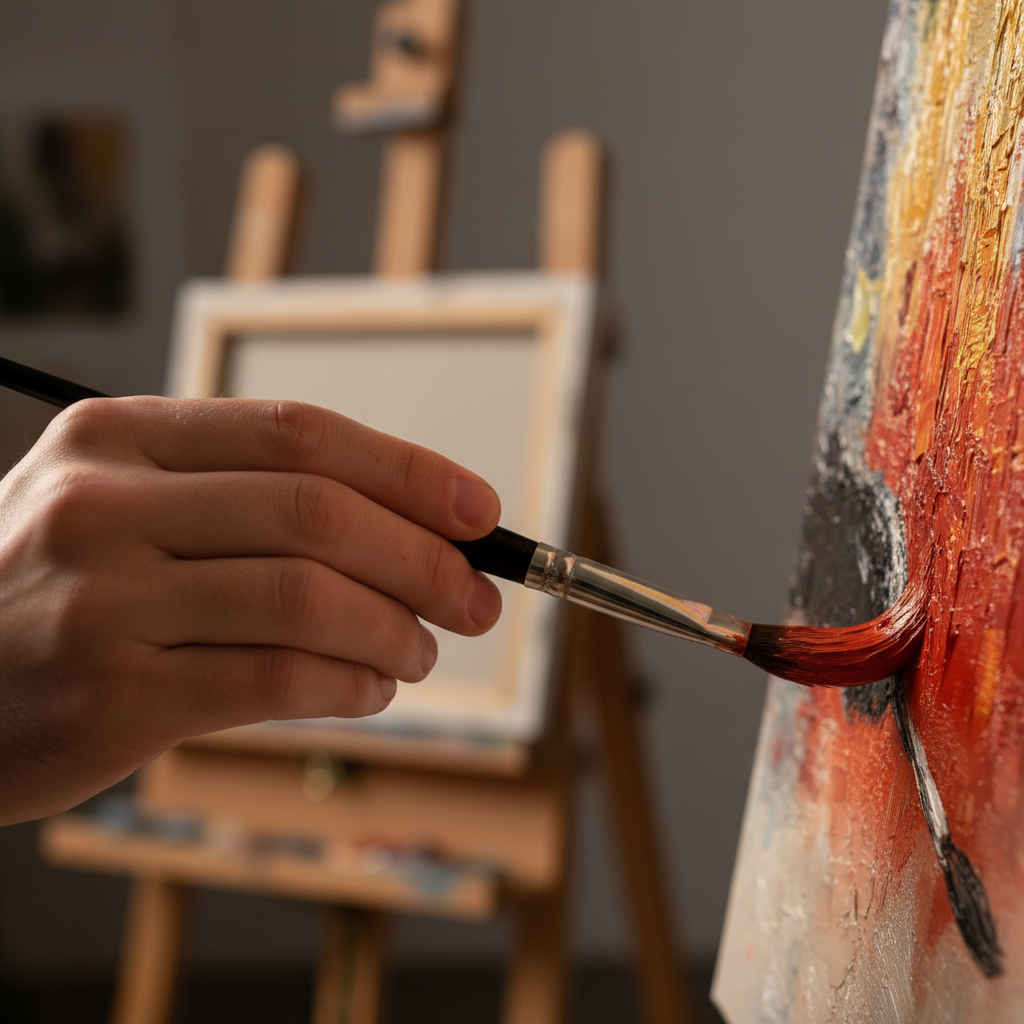
Human brushstrokes are characterized by pressure variation that correlates directly with compositional intent. An artist varies the speed and force of a stroke to create emphasis. Conversely, AI-generated strokes or robotic "paint-overs" often exhibit a uniform pressure distribution. According to research on Human-Delivered Brushstroke Characterization, human artists leave "intentionality signatures"—unique emotional fingerprints in the velocity and force of their work that algorithms fail to optimize.
2. Edge Inconsistency and Canvas Boundaries
Algorithms typically produce mathematically smooth transitions or perfectly clipped edges. Human artists, however, frequently leave intentional irregularities where strokes meet the edge of the canvas. These "edge inconsistencies" are a hallmark of manual labor. If the paint wraps around the sides of the stretcher bar with varied thickness, it is a strong indicator of a hand-painted process rather than a flat-bed print.
3. Pigment Depth and Oblique Lighting
To verify authenticity, we recommend viewing the artwork under oblique (side) lighting. Genuine oil paintings exhibit layered texture with subtle variations in gloss and opacity. This is due to the refractive index of different pigments. According to color science research from the Getty Conservation Institute, pigment reflection is dominated by absorption and scattering coefficients. In a hand-painted work, these coefficients vary across the surface. A digital print, even one with a clear "texture gel," will show a uniform surface characteristic and lack the geometric metamerism found in real pigments.

Logic Summary: These heuristics are based on the physical constraints of fluid dynamics and human motor control. While AI can mimic the look of a stroke, it cannot yet replicate the 3D microtopography resulting from the chemical "coalescence" of polymer emulsions or oxidative cross-linking in oils (JustPaint, 2024).
The Chemical Reality: Why Materials Matter
The "soul" of a painting is often a byproduct of its chemistry. Beyond aesthetics, the choice of materials impacts health, longevity, and the "essential identity" of the work.
The Problem with Prints and Low-Quality Synthetics
Many high-end prints use solvent-based inks that emit Volatile Organic Compounds (VOCs). The EPA warns that indoor air pollution can be significantly higher than outdoor levels, making low-VOC materials a prerequisite for healthy living spaces.
In contrast, professional-grade hand-painted works often utilize advanced, safer chemistries. For instance, research from Aalto University shows that coatings on wood with specific moisture levels emit significantly lower VOCs during curing. Furthermore, the industry is moving away from toxic historical pigments. While IARC classifies cadmium compounds as Group 1 carcinogens, modern hand-painted art providers are increasingly adopting eco-friendly alternatives like walnut oil or hemp canvases, which consume half the water of traditional cotton.
Microtopography and Tactile Satisfaction
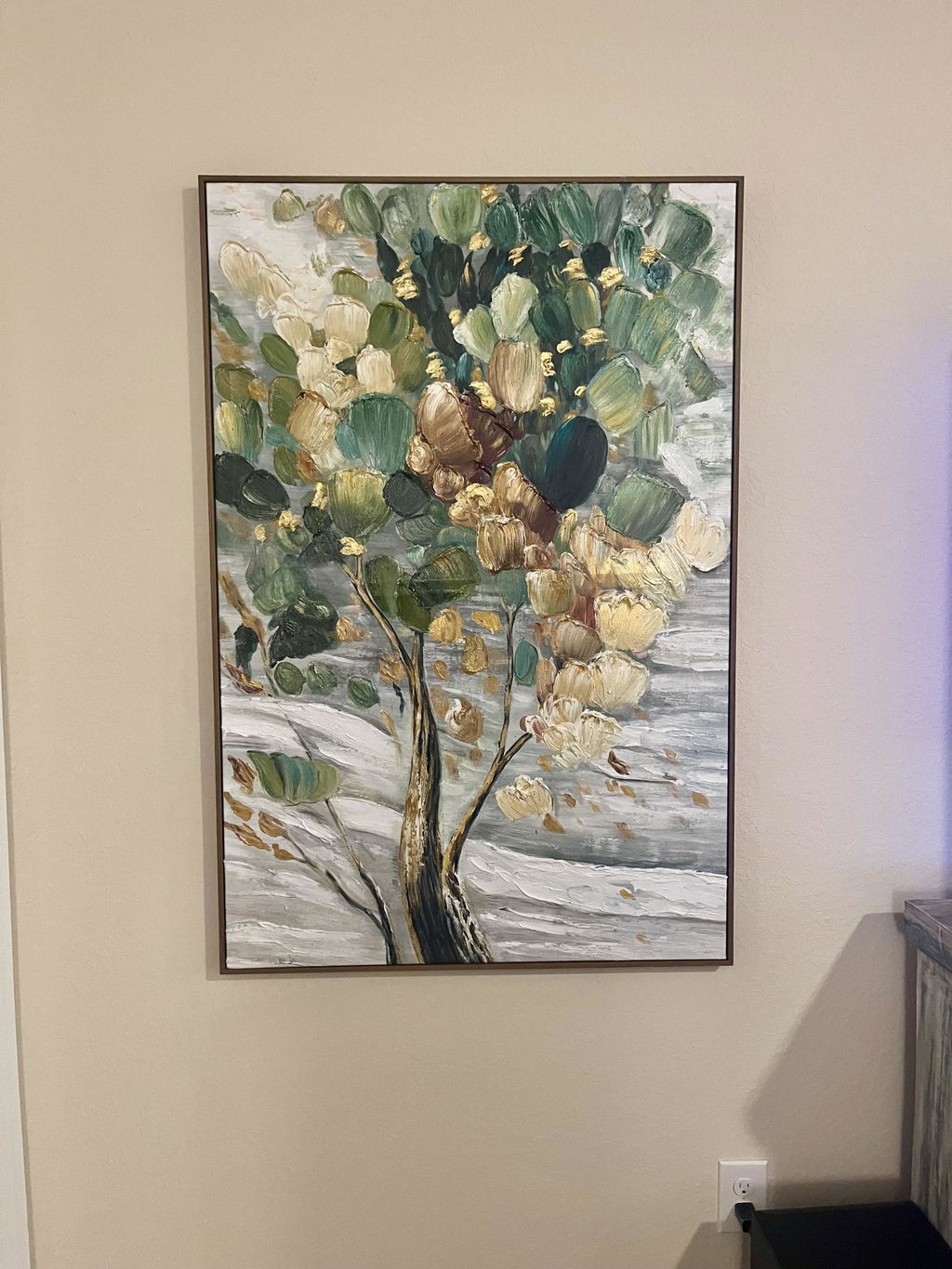
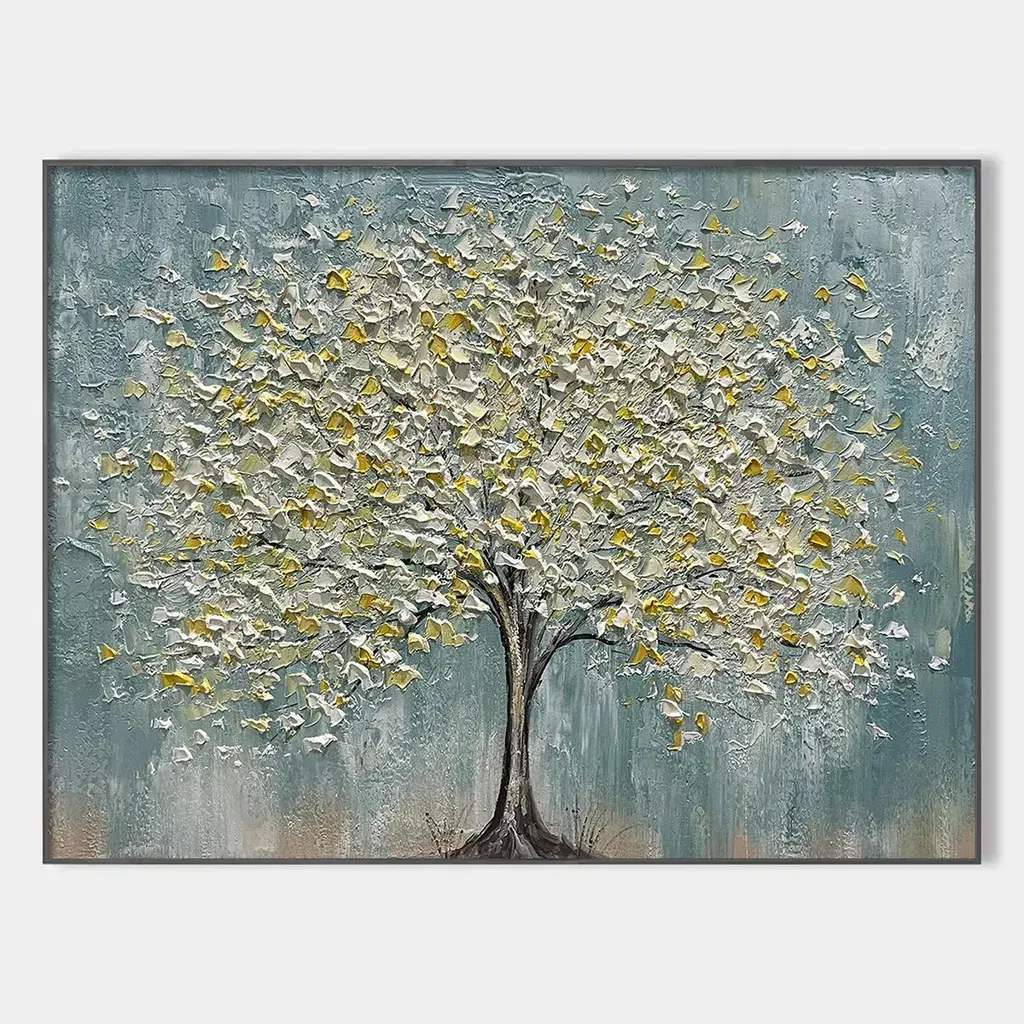
The physical relief of oil paint—the way it stands off the canvas—is a major driver of consumer satisfaction. Tests at the MUNCH Museum confirmed that interacting with art featuring physical relief textures exponentially stimulates intrinsic motivation and satisfaction in viewers. This tactile depth is missing from 2D prints.
| Verification Method | Hand-Painted Oil | AI/Digital Print | Logic/Source |
|---|---|---|---|
| Surface Texture | Variable relief (impasto) | Uniform or "gel" coated | MDPI Sensors (Microprofilometry) |
| Pigment Depth | Multi-layered, varied gloss | Flat, uniform sheen | Getty Conservation (Metamerism) |
| Olfactory Cue | Faint scent of linseed/walnut oil | Chemical/plastic odor or odorless | Industry Heuristic |
| Edge Detail | Irregular, paint on sides | Clean, white, or mirrored edges | Shop Practical Baseline |
| Micro-Analysis | Visible pigment particles | Halftone dots (CMYK) | Standard Microscopy |
The "Hybrid" Trap: Identifying AI-Generated Bases
A significant emerging risk in the art market is the "hybrid" piece. As noted in the 2024 study “Organic or Diffused”, forgers are now using AI to generate base images, which are then painted over by hand. These works can evade simple detection because they contain authentic brushstrokes.
To identify these, look for "compositional uncanny valleys"—areas where the underlying logic of the image feels mathematically optimized rather than artistically expressive. Human artists exhibit "intentionality signatures" where the flow of a gesture follows a psychological pattern. Hybrid works often show a disconnect between the complexity of the background and the simplicity of the manual paint-over.
Beyond Decor: The Biological ROI of Authentic Art
Investing in hand-painted art is not just an aesthetic choice; it is an investment in well-being and property value.
1. Neurological Impact
Passive viewing of authentic art consistently activates the medial prefrontal cortex (mPFC) and the amygdala. A systematic review of 85 records shows that this activation optimizes emotional regulation circuits. Furthermore, UPenn research indicates that 73% of patients in clinical environments reported significant mood improvements when exposed to environmental artworks.
2. Real Estate Appreciation
Art has a measurable "catalytic effect" on property values. A Royal Society analysis of 10-year data found that neighborhoods with higher "art" geo-tags saw greater relative house price ranking gains. In commercial settings, public art projects have driven billions in real estate-related growth, as seen in Chicago’s Millennium Park.

The MontCarta Approach: Predictability Meets Authenticity
For the risk-averse buyer, the primary fear is the "online transaction gap"—the worry that the piece arriving at the door won't match the quality seen on screen. This is where the MontCarta preview-and-approve process provides tangible evidence of authenticity.
By allowing buyers to inspect the physical texture and brushwork via high-resolution video or photography before shipping, the process eliminates the "mystery" of online art purchases. This model aligns with modern consumer habits; according to the Artsy 2024 Art Market Report, online art e-commerce grew 15% year-over-year, proving that buyers are ready for high-end digital transactions when transparency is guaranteed.
Ethical Sourcing and Artist Welfare
Authenticity also extends to the human labor behind the canvas. A Wharton School survey found that 87% of consumers strongly agree that artists should receive fair compensation. Choosing providers that guarantee fair trade practices ensures that the "essential identity" of the work is not compromised by exploitative labor.
Practical Checklist for Buyers
Before finalizing an art purchase, use this verification checklist to ensure you are receiving a 100% hand-painted work:
- Request a Texture Close-up: Ask for a macro photo taken at a 45-degree angle. Look for "peaks and valleys" in the paint (impasto).
- Verify the Scent: Upon arrival, a genuine oil painting should have a faint, earthy scent of linseed or walnut oil, not the sharp chemical smell of inkjet toner.
- Check the Edges: Look for "organic" paint drips or brush marks on the sides of the canvas.
- Examine Pigment Variation: Under bright light, different colors should have different levels of "shine." A uniform gloss across all colors usually indicates a printed topcoat.
- Review the Artist's Logic: Does the brushwork follow the form? In Identifying Authentic Brushwork Through Pigment Distribution, we explore how pigment settles in a way that AI cannot yet replicate.
Methodology Note: These recommendations are derived from common patterns in art restoration and dealer heuristics. They are intended as a practical guide for non-experts to reduce risk in the secondary and primary art markets.
Summary of Value
The transition from mass-produced prints to hand-painted originals is a return to quality and human connection. As the creative economy continues to grow—adding $1.2 trillion to the U.S. GDP in 2023—the value of human-made art remains anti-cyclical. By understanding the technical markers of authenticity, from the Role of Mineral Pigments to the physics of lightfastness (ASTM D4303), buyers can confidently curate spaces that offer both aesthetic beauty and long-term financial stability.
Disclaimer: This article is for informational purposes only and does not constitute professional appraisal, financial, or legal advice. Art materials can contain hazardous substances; always handle pigments with care and follow safety guidelines provided by manufacturers.