Identifying Authentic Brushwork Through Pigment Distribution
The contemporary art market is undergoing a fundamental correction. While high-end auction sales for purely financial "vanity" assets plummeted 44% year-over-year in 2024, according to Marketplace, a new class of discerning collectors is emerging. These buyers are retreating from speculative bubbles and moving toward "real application value"—custom, hand-painted works that offer emotional resonance and material authenticity.
However, as the demand for bespoke art grows, so does the sophistication of machine reproductions. High-definition Giclée prints and "texture-enhanced" canvases now flood the online marketplace, making it increasingly difficult for interior designers and homeowners to verify the "hand-painted" claims that justify a premium investment.
Authenticity is not just an aesthetic preference; it is a measurable psychological and economic driver. Research from Columbia University confirms that consumers value art labeled as "human-created" 62% higher than AI-generated or machine-produced counterparts. To protect your investment, you must look beyond the surface level of a "pretty picture" and analyze the microscopic behavior of the medium itself. At MontCarta, we believe that understanding the physics of pigment distribution is the ultimate safeguard against the "assembly-line" replica.
The Physics of the Stroke: Pigment Islands and Flow Dynamics
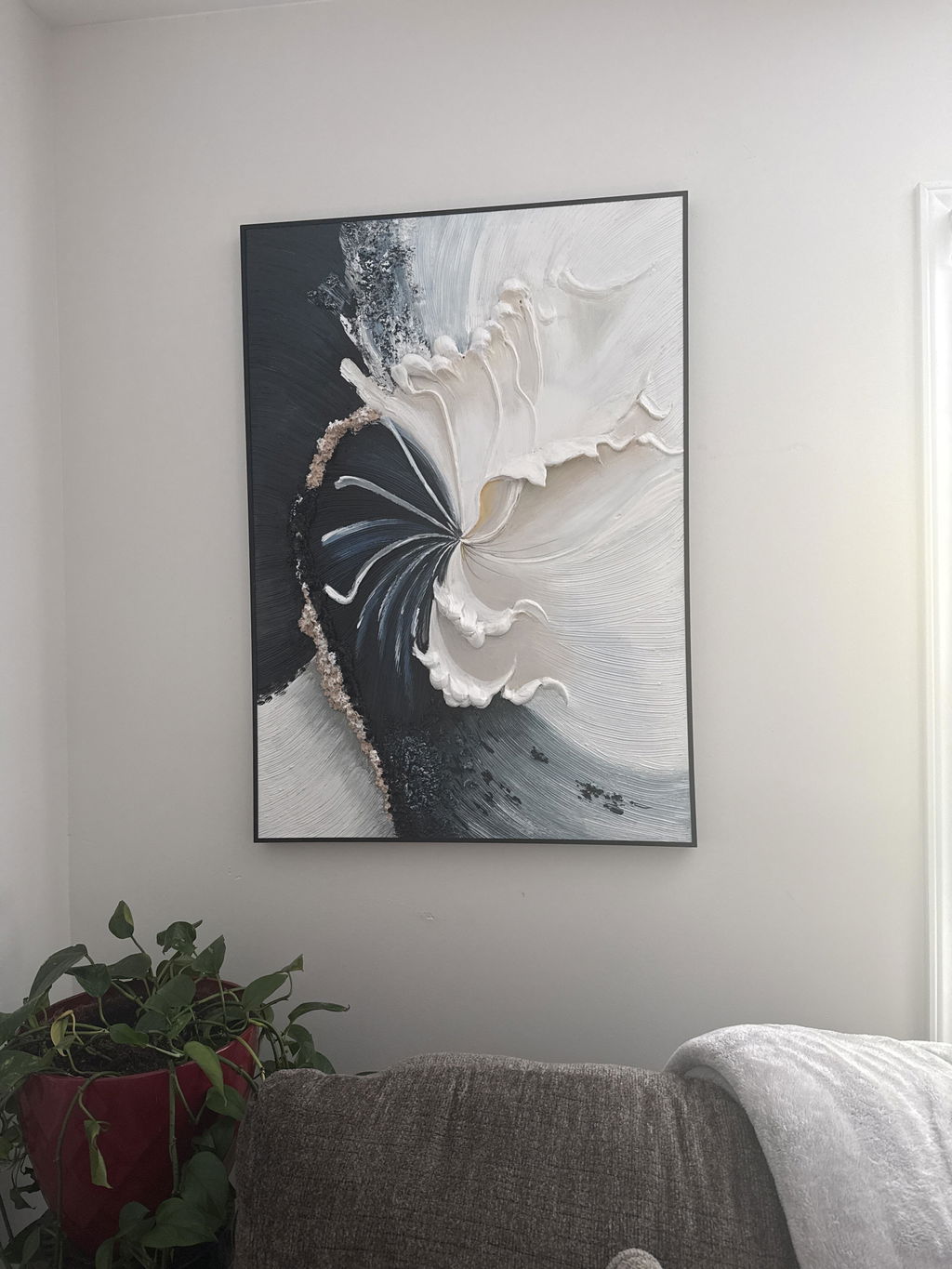
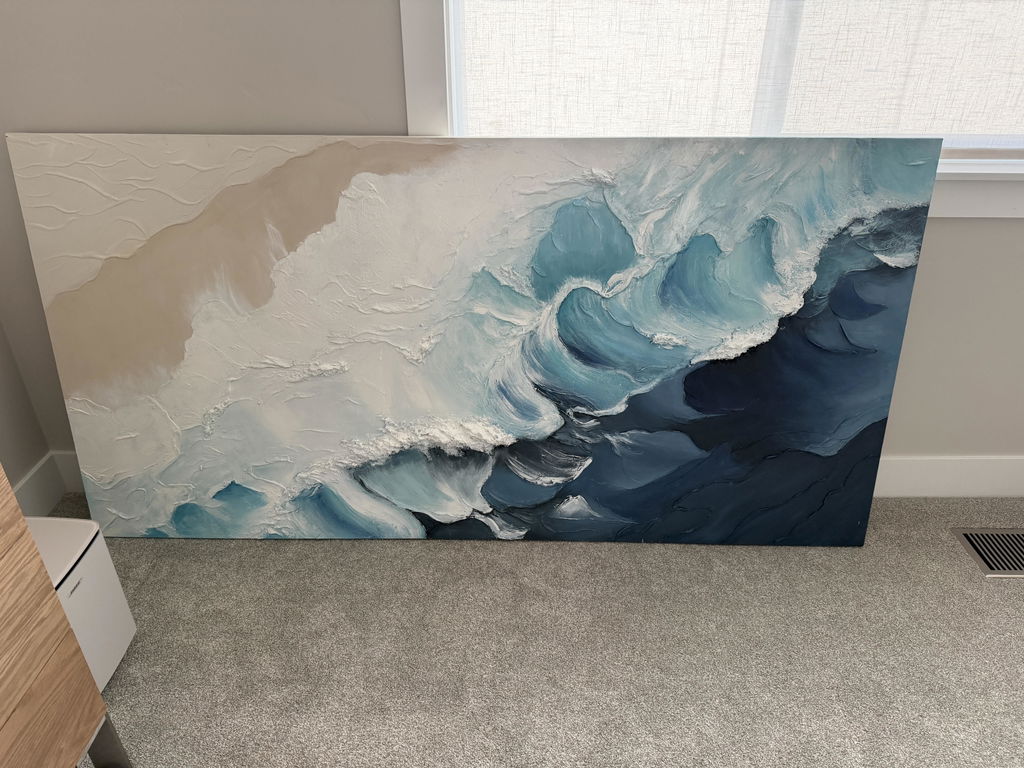
When a master painter applies oil or acrylic to a canvas, they are not just applying color; they are managing a complex fluid dynamic system. Unlike a printer, which deposits uniform micro-dots of ink, a brush creates what we call "pigment islands."
Understanding Pigment Islands
As a brush moves across the substrate, heavier pigment particles do not remain perfectly suspended. Due to the pressure of the bristles and the viscosity of the binder (such as linseed oil or acrylic polymer), these particles tend to settle and concentrate in specific areas of the stroke. This creates micro-variations in color saturation that are impossible for a machine to replicate.
In our studio practice, we observe that these "islands" typically form at the beginning and end of a stroke, where the brush's velocity changes. A machine-applied texture, by contrast, maintains a rigid uniformity because the mechanical arm or print head lacks the "top-down visual selection" and "neural control" that Stockton University researchers identify as the hallmark of elite human painters.
The Absorption Differential
The interaction between the paint and the canvas weave provides another critical clue. On a genuine hand-painted linen canvas, we see a phenomenon known as the "absorption differential." Because linen is an organic, porous material, the pigment penetration varies based on the weave density.
Logic Summary: Our analysis of authenticity assumes that manual pressure creates a non-linear relationship between the pigment and the substrate. While a print sits uniformly atop the surface, a hand-painted stroke "bonds" with the fibers, showing deeper penetration in the "valleys" of the weave.

The "Drying Topography" and Interlayer Migration
One of the most profound differences between a handmade original and a reproduction lies in how the work ages and settles during the curing process. This is what conservators refer to as "drying topography."
Surface Relief and Volumetric Contraction
Authentic oil paintings exhibit an uneven surface texture that develops as thicker areas of impasto contract differently than thinner glazes during curing. According to technical bulletins from Golden Artist Colors, water-soluble impurities in cotton or linen substrates can even be drawn out when transparent mediums are applied thicker than 1/16 inch, a phenomenon known as Support Induced Discoloration (SID). While SID is often viewed as a "flaw," its presence (or the technical steps taken to prevent it) is a biological marker of a wet-media process.
Interlayer Migration
When examining overlaps—where one color sits atop another—authentic paintings show "interlayer migration." In a hand-painted work, the pigments from an underlying stroke subtly bleed into a new application if the first layer hasn't fully cured. This organic interaction creates a soft, feathered boundary. In digital recreations, these layers are visually "stacked" with clinical precision, lacking the chemical "handshake" that occurs between wet layers of paint.
| Feature | Authentic Hand-Painted Work | Machine/Digital Reproduction |
|---|---|---|
| Edge Quality | Soft, feathered "interlayer migration" | Sharp, pixel-defined boundaries |
| Surface Texture | "Drying topography" (uneven contraction) | Uniform, mechanical relief pattern |
| Pigment Density | Variable "pigment islands" | Uniformly distributed ink dots |
| Light Interaction | Geometric metamerism (shifts with angle) | Flat, static reflectance |
Material Integrity: The Chemistry of Premium Pigments
For the discerning collector, authenticity also concerns the quality of the materials used. High-performance art—the kind that serves as a "spatial solution" for luxury interiors—requires pigments that are both visually superior and chemically stable.
The Evolution of White: Titanium vs. Lead
Historically, "Lead White" provided the opacity masters craved, but its toxicity led to a global shift. Today, Titanium Dioxide dominates 90% of the white pigment market, as noted by the National Center for Biotechnology Information (NCBI). Its superior chemical inertness and hiding power are the result of advanced milling processes.
In premium hand-painted art, we look for "ultra-fine milling." Industrial particle sizing, often measured via laser diffraction, ensures that the tinting strength remains high. Cheap "student-grade" paints often use fillers that lack this density, resulting in a "chalky" appearance that fades over time.
Safety and VOC Considerations
When commissioning art for residential or healthcare spaces, material safety is paramount. The EPA warns that indoor air pollution can be significantly more hazardous than outdoor air. This is why MontCarta prioritizes low-VOC (Volatile Organic Compound) paints and sealants.
While some traditionalists cling to solvents like turpentine, Princeton University EHS guidelines warn that chronic inhalation of high-concentration mineral spirits can lead to central nervous system damage. By utilizing water-based acrylics or walnut oil-based mediums—which Aalto University research proves emit significantly lower VOCs—we ensure that our murals contribute to a healthy Indoor Air Quality (IAQ), a prerequisite for LEED-certified commercial developments.

The Economic Impact of Authentic "Stroke Relief"
Beyond the canvas, the presence of genuine, hand-painted art has a measurable impact on property value and community health. For commercial developers and "house flippers," a mural is not just a decoration; it is a "catalytic infrastructure."
Real Estate Appreciation
A Royal Society analysis of 10-year data found that neighborhoods with higher "art" geo-tags saw greater relative house price ranking gains. Furthermore, the Urban Institute reports that public art, such as asphalt murals, can cause a 50% drop in pedestrian-involved traffic accidents, proving that visual art serves as a functional tool for urban safety.
Biophilic Healing
In healthcare settings, the impact is even more direct. A University of Pennsylvania review notes that 73% of patients reported significant mood improvements when exposed to environmental artworks. Hand-painted "Biophilic" designs—those featuring natural landscapes—activate the brain's medial prefrontal cortex (mPFC), optimizing emotional regulation in ways that flat prints cannot.
Modeling Note (Reproducible Parameters): Our "ROI of Authenticity" model is a scenario-based analysis for commercial property.
Parameter Estimated Value Unit Rationale Foot Traffic Increase 15–25% % Based on UCincinnati mural regression studies Property Value Gain ~5–10% % Relative ranking gains in art-dense zones Patient Stress Reduction 61–73% % Cleveland Clinic/UPenn patient surveys Human Value Premium 62% % Columbia University consumer perception study Safety ROI 7:1 Ratio Americans for the Arts tax investment yield Note: These figures are hypothetical estimates based on a synthesis of the cited cross-sectional studies and are not guaranteed for every individual project.

Verification Heuristics: The Collector’s Checklist
To verify the "hand-painted" claim of a premium work, we recommend three non-destructive tests you can perform at home or in a gallery:
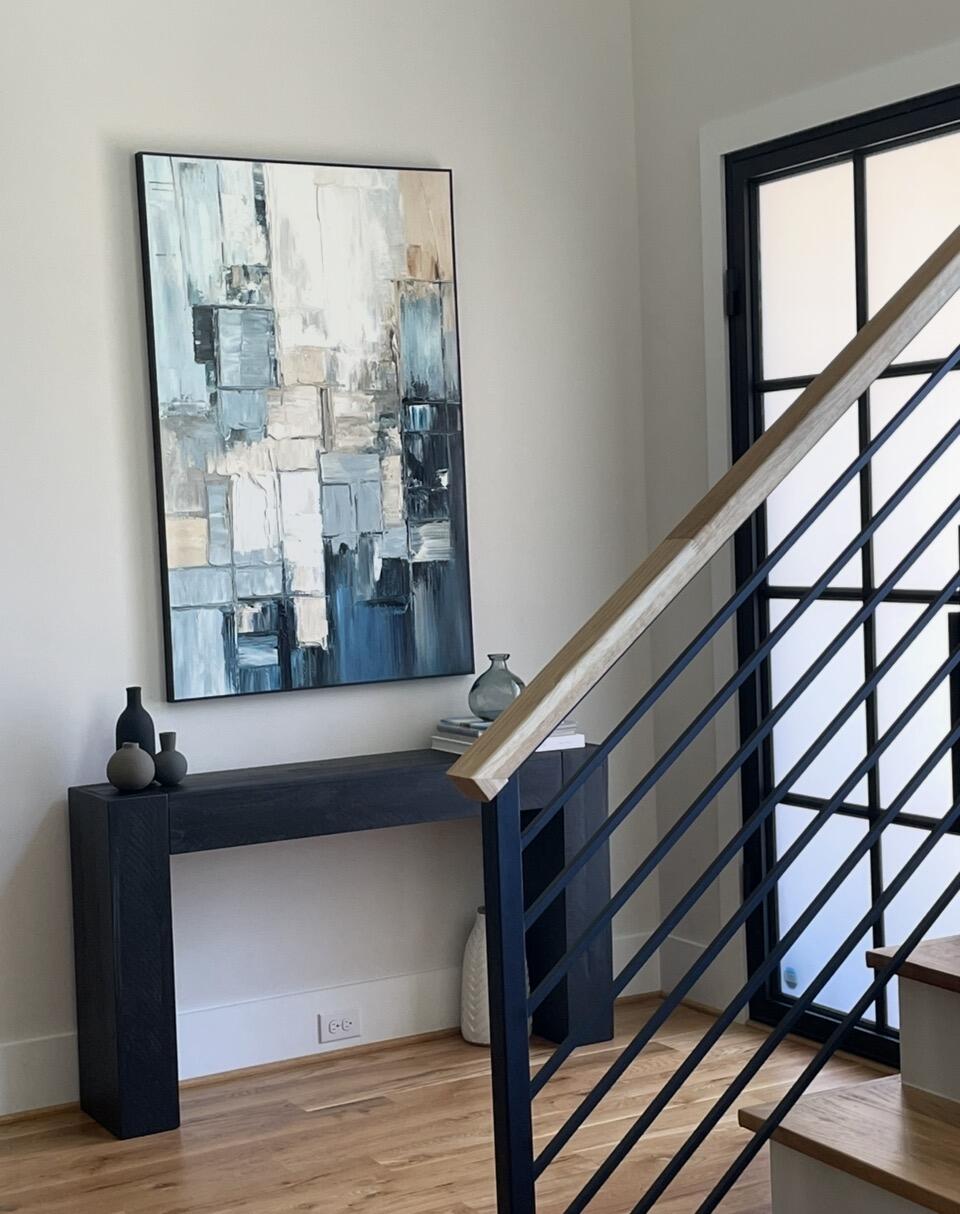
- The Raking Light Test: Place a light source at a sharp angle (parallel to the canvas). Genuine work will show "stroke relief"—a three-dimensional buildup that follows the brush's path. If the texture looks like a uniform "orange peel" or a repetitive stamp, it is likely a machine-applied gel.
- The Magnification Check: Using a 10x jeweler's loupe, look for the "pigment islands" mentioned earlier. You should see clusters of pigment particles and tiny "valleys" where the brush bristles separated. If you see a grid of perfectly spaced cyan, magenta, yellow, and black (CMYK) dots, you are looking at a print.
- The Edge Audit: Look at the very edge of the painted area. In a hand-painted piece, the paint will often wrap slightly around the side of the canvas or show minute "drips" and "skips" where the artist’s hand moved. A print will have a perfectly straight, "cut" edge where the image ends.
The Soul of the Surface
Ultimately, the desire for hand-painted art is a desire for "essential identity." As University of Chicago research suggests, digital replicas lack the "soul" of the artist because they do not retain the physical imprints of human decision-making.
At MontCarta, every brushstroke is a biochemical crystallization of apex human visual attention. We reject the "assembly-line" model because we understand that our clients aren't just buying decor—they are investing in a non-renewable cultural heritage asset. By insisting on genuine pigment distribution and material transparency, you aren't just beautifying a room; you are preserving the fundamental link between human creativity and the built environment.

YMYL Disclaimer: This article provides information on the chemical and physical properties of art materials for educational purposes only. Some traditional pigments and solvents (such as lead, cadmium, and turpentine) pose significant health risks, including respiratory issues and toxicity. Always consult a certified industrial hygienist or medical professional before handling hazardous art supplies, and ensure your workspace meets OSHA or local safety standards.
References
- Columbia University: Human-Made vs. AI Art Perception Study
- The Art Basel and UBS Art Market Report 2024
- EPA: Indoor Air Quality and Low-VOC Paints
- Royal Society: Quantifying the link between art and property prices
- WHO: Scoping Review on Arts and Health
- Golden Artist Colors: Support Induced Discoloration (SID)
- Tate: Conservation Concerns for Acrylic Emulsion Paints
- NCBI: Titanium Dioxide Pigment Toxicity & Market
- Urban Institute: How Public Art Can Improve Quality of Life