The Authenticity Crisis in a Post-Digital Art Market
The global art market is undergoing a seismic shift in value. While high-end auction sales for purely financial art assets plummeted 44% year-over-year in 2024, according to Marketplace, a different segment is thriving. Buyers are retreating from overpriced vanity pieces and returning to "real application value"—art that serves an emotional and aesthetic purpose in the physical environment.
This shift is complicated by the rise of AI-generated prints and "oil-enhanced" reproductions. A consumer perception study by Columbia University confirmed that consumers value art labeled "AI-generated" 62% lower than authentic human-created art. For the discerning collector or the high-end home improver, the question is no longer just "Do I like it?" but "Is it real?"
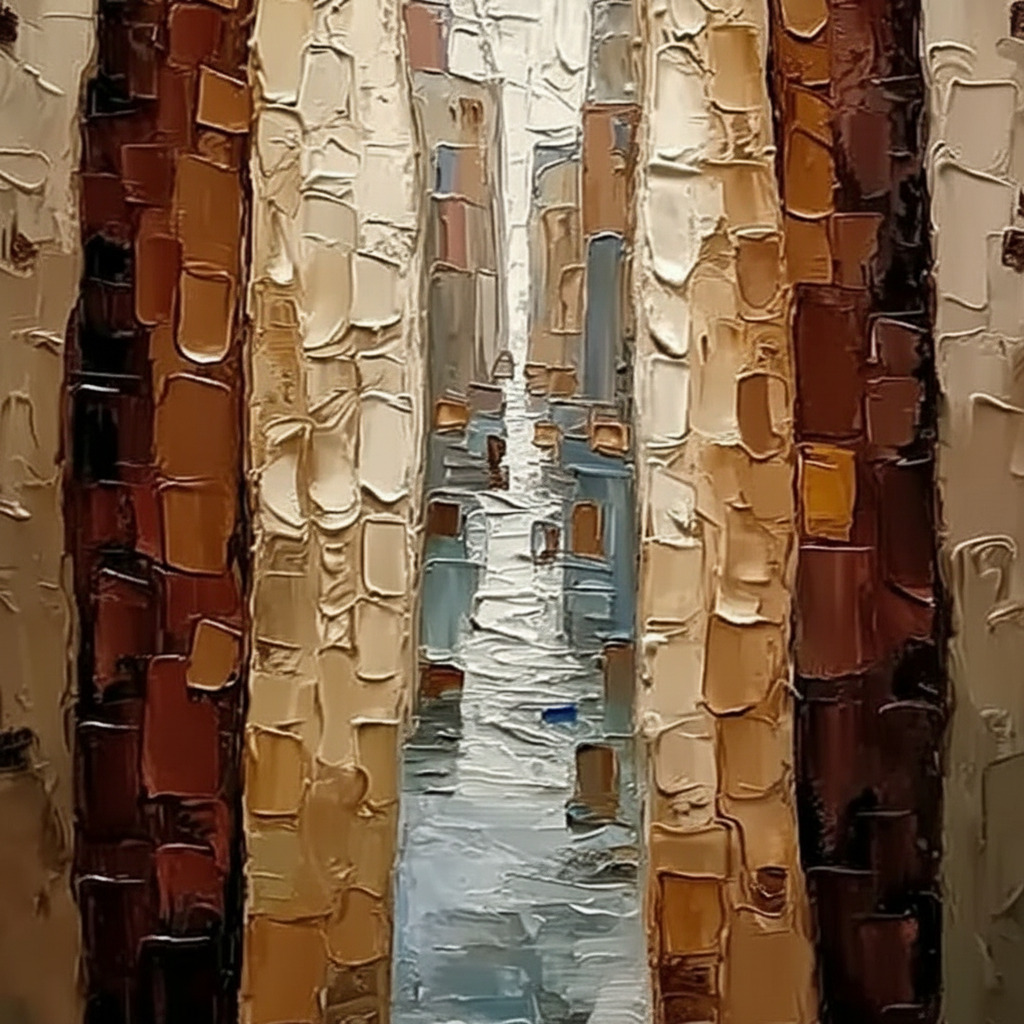
At the heart of this verification process lies the brushstroke. Under magnification, the unique patterns of natural brush bristles become the primary evidence of manual labor. This macro-analysis—what we term the "LaborBase" verification—helps distinguish the biochemical crystallization of human attention from the sterile uniformity of a machine.
The Anatomy of a Stroke: Natural Bristles vs. Mechanical Precision
To understand why brush marks prove manual labor, we must first look at the tools. Professional oil painters typically favor natural bristles, such as hog hair, for their unique "flagged" ends (split tips) and structural integrity.
Ridge and Valley: The Physics of Paint Loading
In a manual application, the loading of oil paint onto a brush creates a characteristic "ridge and valley" texture. As the brush moves across the canvas, the pigment particles accumulate in the grooves between the bristles. This creates microscopic ridges that vary in height and width based on the artist’s pressure and the paint's viscosity.
Conversely, machine-applied textures or "enhanced" prints often show a uniform particle distribution. Even advanced 3D printing of "texture" lacks the erratic, organic flow of liquid pigment being squeezed between natural hairs. According to research published in Sensors, the microtopography (millimeter-scale texture) of oil paintings is crucial to their aesthetic; tactile exploration reveals data that the eye often misses but the brain subconsciously processes as "authentic."
Methodology Note: Tactile Logic Summary Our analysis of authenticity assumes that human-applied paint follows fluid dynamics influenced by varying muscular pressure, whereas mechanical systems prioritize consistency.
- Evidence Type: Pattern recognition from custom art production and restoration archives.
- Boundary: While high-end CNC systems can mimic stroke paths, they cannot yet replicate the "pull-back" patterns caused by the surface tension of drying oil at the end of a natural bristle.

The "Pull-Back" Phenomenon
One of the most difficult patterns to replicate mechanically is the "pull-back" at the end of a stroke. As an artist lifts the brush, the surface tension of the oil medium causes the paint to snap back slightly, creating a tiny, irregular peak or a rounded termination. Machine-applied textures tend to have "blunt" or perfectly tapered ends that lack this microscopic snap-back.
Forensic Reality: Macro-Analysis vs. Microscopic Truth
While macro-analysis of bristle marks is a powerful heuristic for the everyday buyer, it is important to acknowledge the limits of forensic science. According to the Forensic Paint Analysis and Comparison Guidelines (ASTEE), macroscopic patterns alone are rarely sufficient for legal authentication.
For high-stakes verification, experts move from macro to micro. This involves analyzing:
- Pigment Particle Distribution: Manual mixing results in slight heterogeneities that machines often smooth out.
- Chemical Cross-linking: Oil paint undergoes oxidative cross-linking over years. As JustPaint notes, this process makes oil films harder and more brittle over time compared to the physical coalescence of acrylics.
- Support Induced Discoloration (SID): In our experience with custom works, we often observe Support Induced Discoloration where impurities from the canvas are drawn into the paint layers—a chemical "fingerprint" rarely found in digital reproductions.
| Indicator | Manual Labor (Authentic) | Mechanical/Digital Reproduction |
|---|---|---|
| Bristle Mark Consistency | Irregular, directional wear | Uniform, repeating, or absent |
| Paint Loading | "Ridge and valley" accumulation | Flat or digitally mapped relief |
| Stroke Termination | Organic "pull-back" peaks | Blunt or mathematically tapered |
| Pigment Depth | Variable opacity/refraction | Uniform ink/toner layers |
| Signature Wear | Unique to artist's technique | Non-existent or simulated |
The Psychological and Economic Premium of the Human Hand
Why does this micro-detail matter? It’s about the "essential identity" of the work. Research from the University of Chicago suggests that digital replicas lack the artist's "soul" in the eyes of consumers, leading to a collapse in perceived value. The canvas retains an irreplicable identity because it is a physical record of human effort.
Boosting Real Estate and Commercial Value
This authenticity translates directly into financial ROI, especially in the built environment. A study by the Royal Society found that neighborhoods with higher "art" geo-tags had greater relative house price ranking gains. For commercial developers, the "human touch" is a marketing trump card. Large-scale public murals have been shown to reduce neighborhood violent crime by 40% (University of Michigan) and drive significant pedestrian foot traffic (University of Cincinnati).
In hospitality, the trend for 2025 is moving away from generic posters. Boutique hotels are now inviting artists to "reverse-customize" rooms based on the colors and brushstrokes of original murals, as highlighted by Historic Hotels Worldwide.

Safety and Ethics: What’s Inside the Pigment?
Authenticity isn't just about the stroke; it's about the materials. The transition from toxic historical pigments to modern safety standards is a hallmark of professional manual art.
The Hidden Risks of Art Supplies
Chronic inhalation of low-level volatile compounds in certain paints can lead to central nervous system issues. The CDC NIOSH warns that certain metal-containing pigments can even penetrate the bloodstream.
- Cadmium: The IARC classifies cadmium as a Group 1 carcinogen. While some artists still use it for its unparalleled vibrancy, many professional studios are moving toward non-toxic alternatives to meet LEED and WELL certifications for commercial spaces.
- Lead: The EU REACH regulation has effectively banned lead white concentrations exceeding 0.1% in most consumer paints.
- VOCs: Modern professional studios prioritize low-VOC (Volatile Organic Compound) paints. Research from Aalto University shows that VOC emissions plummet during the curing process, making hand-painted art safe for indoor environments once fully dry.
Ethical Compensation
Beyond safety, there is the moral dimension. A Wharton School survey found that 87% of consumers believe artists should receive fair compensation. By verifying manual labor through brushstroke analysis, buyers ensure they are supporting the 4.6 million full-time local jobs sustained by the arts in the U.S. (Americans for the Arts).
Scenario Analysis: Applying Macro-Analysis in the Real World
Scenario A: The Residential Collector
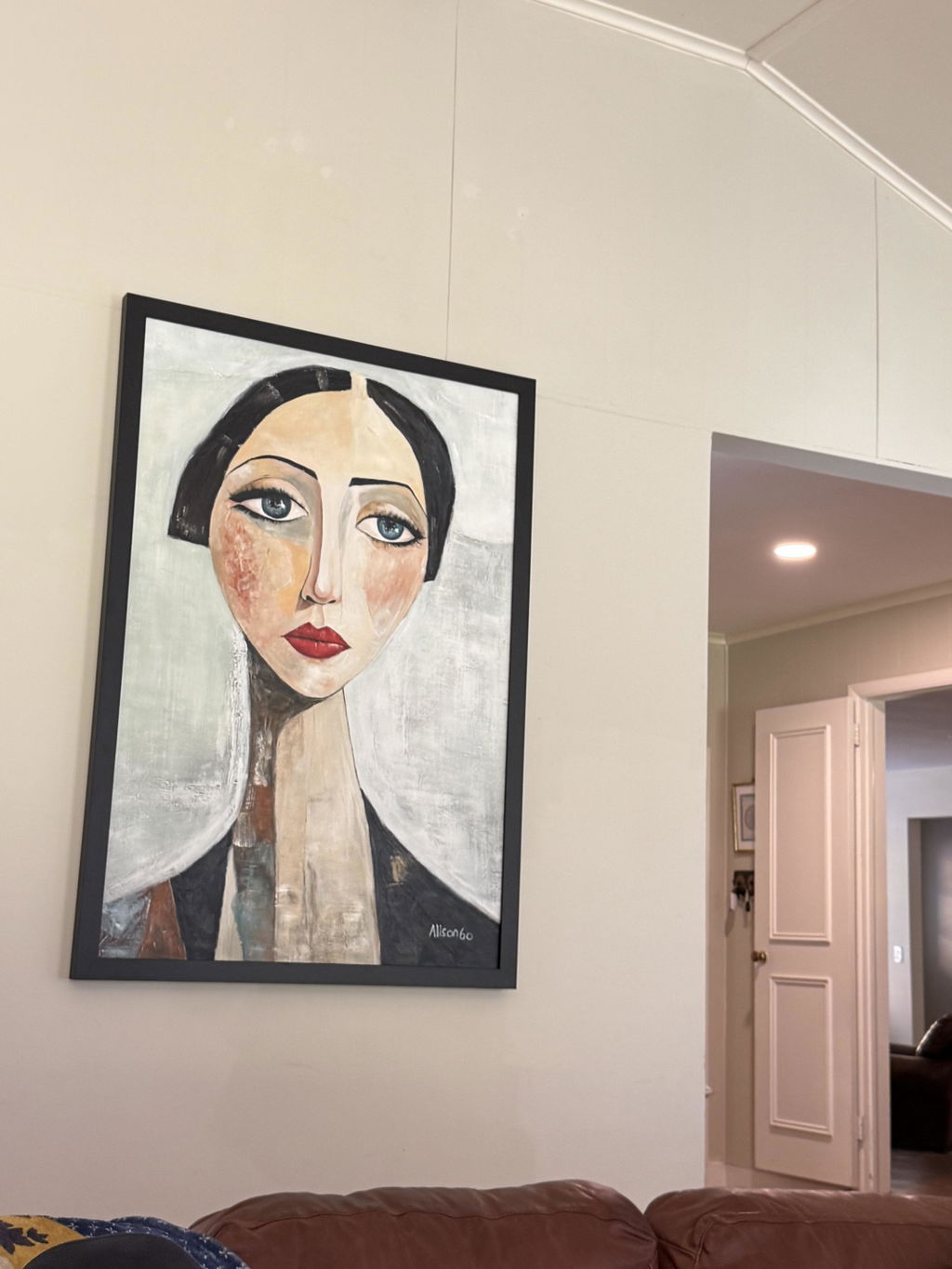
A homeowner wants a statement piece for a bright living room. They are concerned about "commitment risk"—will the painting look like a cheap print in person?
- The Check: Use a jeweler's loupe or a high-resolution smartphone zoom to look for "ridge and valley" textures.
- The Insight: If the texture perfectly matches the color boundaries (e.g., the "relief" exactly follows the shape of a flower petal with no overlap), it may be a 3D-printed reproduction. Authentic human strokes often have slight "overruns" or "skips" where the brush didn't perfectly hit the canvas grain.
- The Benefit: High-quality oil art provides better pigment saturation and fade-resistance than standard prints.
Scenario B: The Healthcare Facility Designer
A clinic needs biophilic (nature-themed) art to reduce patient stress.
- The Check: Verify that the pigments are low-VOC and meet ASTM D-4236 standards.
- The Insight: UPenn research shows that 73% of patients report mood improvements when exposed to environmental art. Hand-painted murals offer a "tactile fruition" that digital screens cannot replicate, activating emotional regulation circuits in the brain.
Identifying the Artist’s "Neural Fingerprint"
Ultimately, brush bristle marks are more than just physical grooves; they are a "neural fingerprint." Research from Stockton University suggests that top painters have a unique ability to suppress "perceptual constancy illusions"—they see the world differently and translate that sight through bottom-up neural control into the movement of their hand.
When you analyze a brushstroke, you are looking at the biochemical crystallization of that visual attention. Machines can simulate the path, but they cannot yet simulate the hundreds of micro-decisions made by a human brain during a single "pull-back" termination.
In an era of digital saturation, the irregular, textured, and sometimes imperfect mark of a natural bristle is the ultimate cue for authenticity. It is the proof of labor, the guarantee of health-conscious material choice, and the anchor of long-term aesthetic value.
Disclaimer: This article is for informational purposes only. While brushstroke analysis is a valuable tool for identifying hand-painted art, definitive authentication for high-value assets should be performed by a certified forensic art appraiser. Information regarding paint toxicity is based on current environmental standards; always consult a professional for health-related concerns in specific environments.