Choosing Between One Large Piece and a Gallery Wall
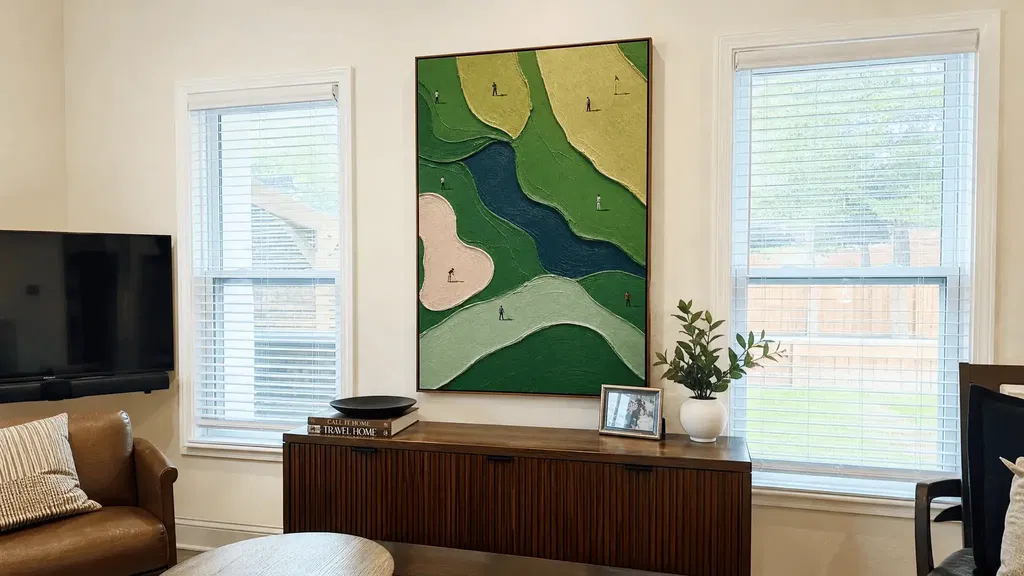
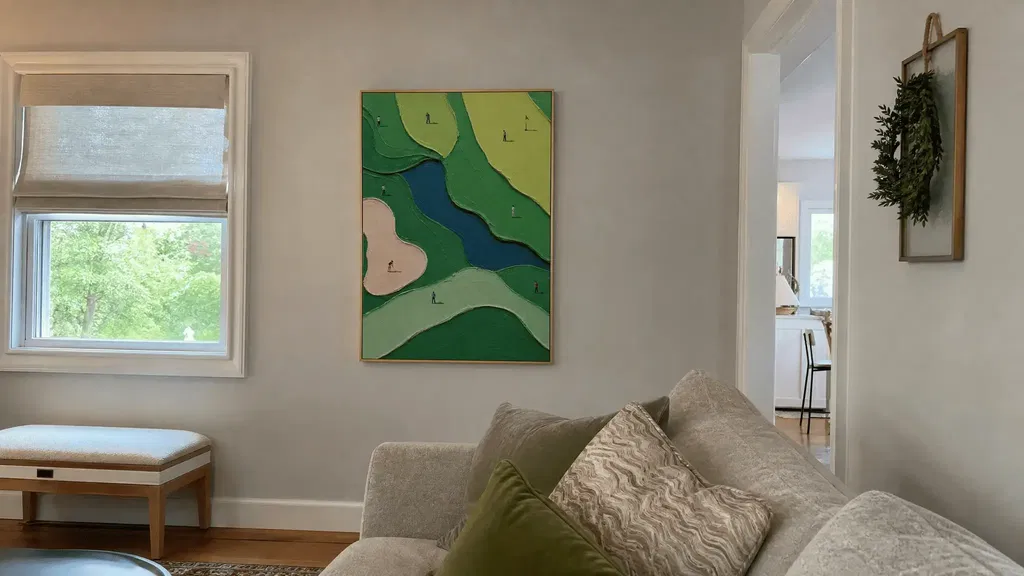
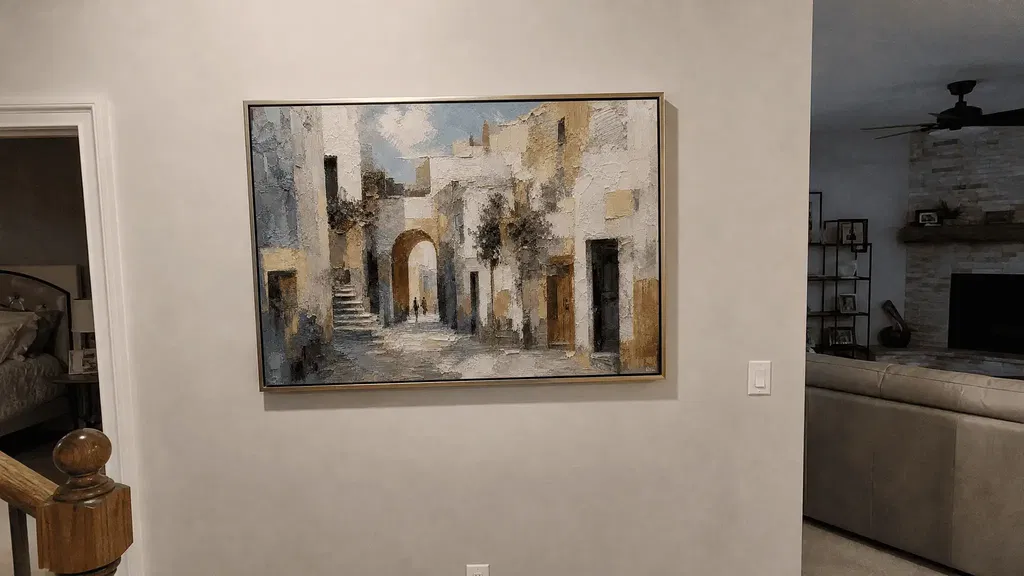
Determining whether to hang one oversized painting or several smaller paintings depends primarily on the architectural scale of your room and the specific atmosphere you wish to create. A single, large-scale piece serves as a bold, anchoring focal point that simplifies a space and makes it feel larger. Conversely, a gallery wall composed of multiple works offers a dynamic way to tell a visual story, providing flexibility in budget and theme.
The most direct way to choose between these two layouts is to evaluate the "visual volume" of your room. Large-scale art is ideal for rooms where you want to emphasize height or create a sense of calm through minimalism. Smaller pieces, when grouped, are better for walls that need to bridge various design elements or for collectors who want to grow their collection over time.
When to Choose a Single Piece
- You want to expand the space: A large, singular piece reduces visual noise, which can actually make a small studio apartment or a narrow hallway feel more expansive.
- You have a clearly defined focal point: If you are placing art over a fireplace or a headboard, one large piece provides a cleaner, more intentional look.
- Minimalist aesthetics: If your home features clean lines and neutral tones, a single piece of modern wall art reinforces that sophisticated simplicity.
When to Choose Multiple Pieces
- You have a collection of varied sizes: Gallery walls are perfect for mixing original canvases, framed prints, and even photography.
- You have an awkward wall shape: Stairwells and L-shaped walls often benefit from the staggered, flexible nature of several smaller works.
- Budget flexibility: It is often easier to source high-quality smaller works from local artisans or online stores than it is to find a single, massive investment piece.

The 60-75 Rule for Measuring Wall Art
One of the most common mistakes in interior design is hanging art that is too small for the wall. To avoid the "floating postage stamp" effect, professional designers rely on the 60-75 rule. This mathematical guideline ensures that your art—whether it is one piece or a group—occupies enough visual real estate to feel balanced.
The rule states that your art should cover roughly 60% to 75% of the available "blank" wall space. Blank wall space refers to the area not covered by molding, windows, or furniture.
How to Calculate Your Ideal Art Width:
- Measure the width of the wall you intend to decorate.
- Multiply that width by 0.60 (for the minimum size).
- Multiply that width by 0.75 (for the maximum size).
For example, if you have a wall that is 120 inches wide, your art arrangement should ideally be between 72 and 90 inches wide. If you choose one oversized painting, the canvas itself should fall within this range. If you choose several smaller paintings, the total width of the group (including the spacing between frames) should satisfy these measurements.
Sizing Art for Furniture and Beds
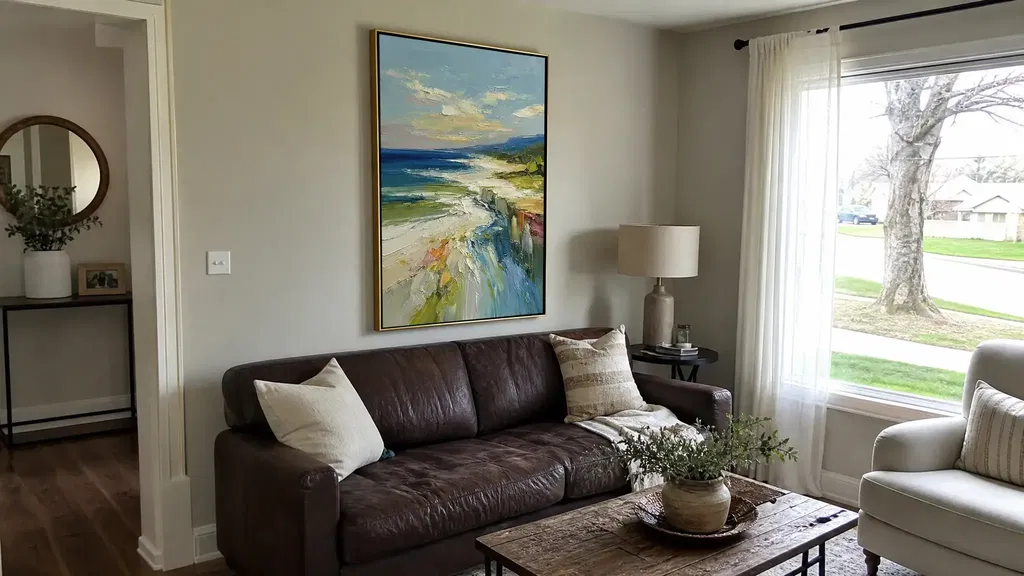
When hanging art above furniture, the rules shift slightly. Instead of measuring the entire wall, you must scale the art to the width of the furniture below it. This creates a vertical connection between the piece of furniture and the artwork, preventing the art from looking like it is "drifting" away.
Scaling for a Sofa
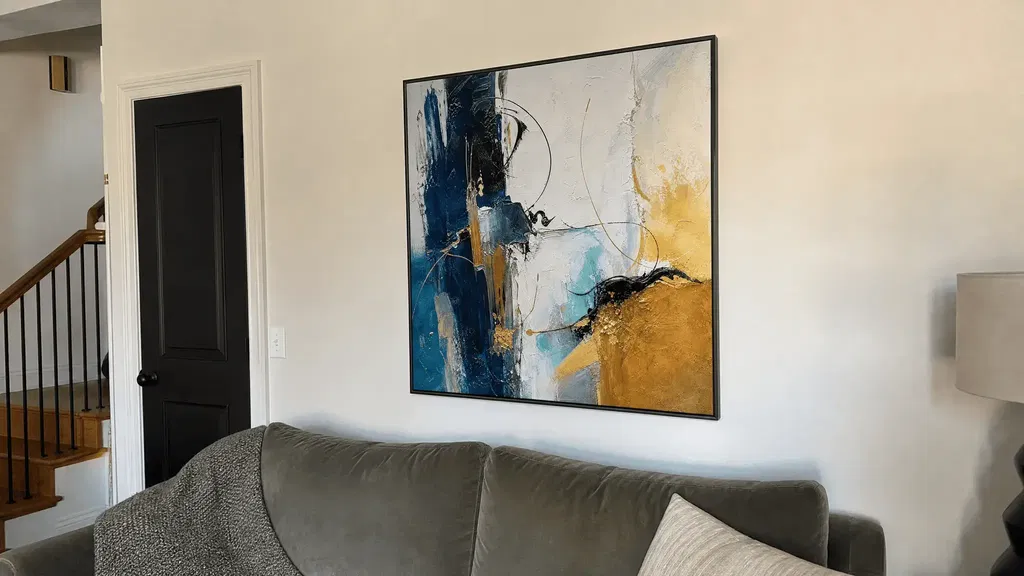
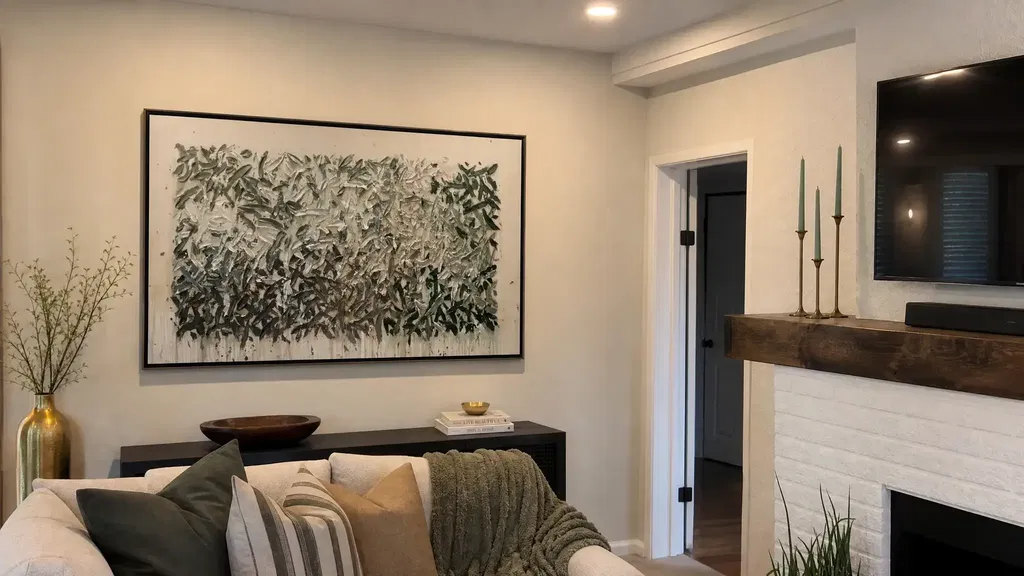
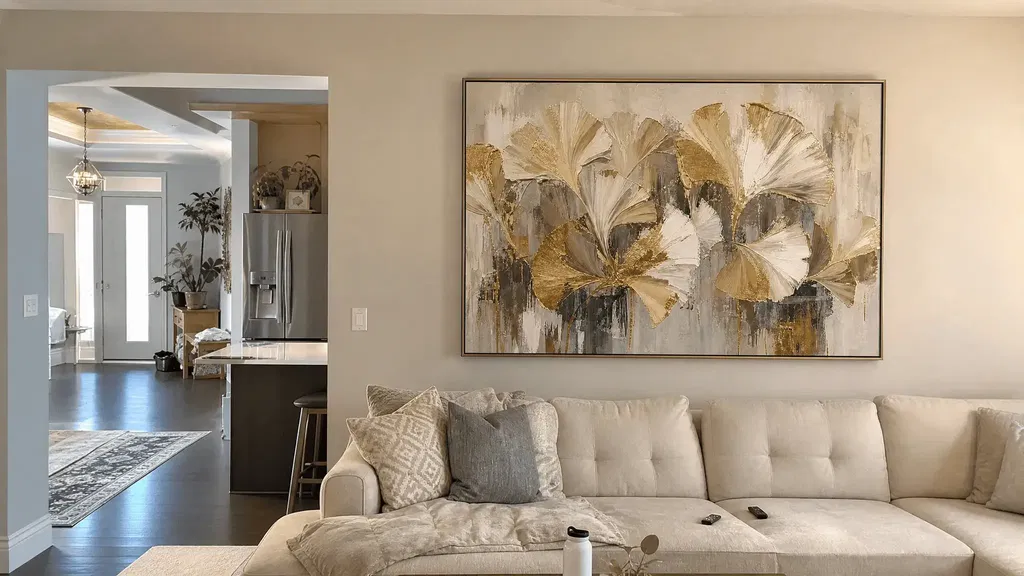
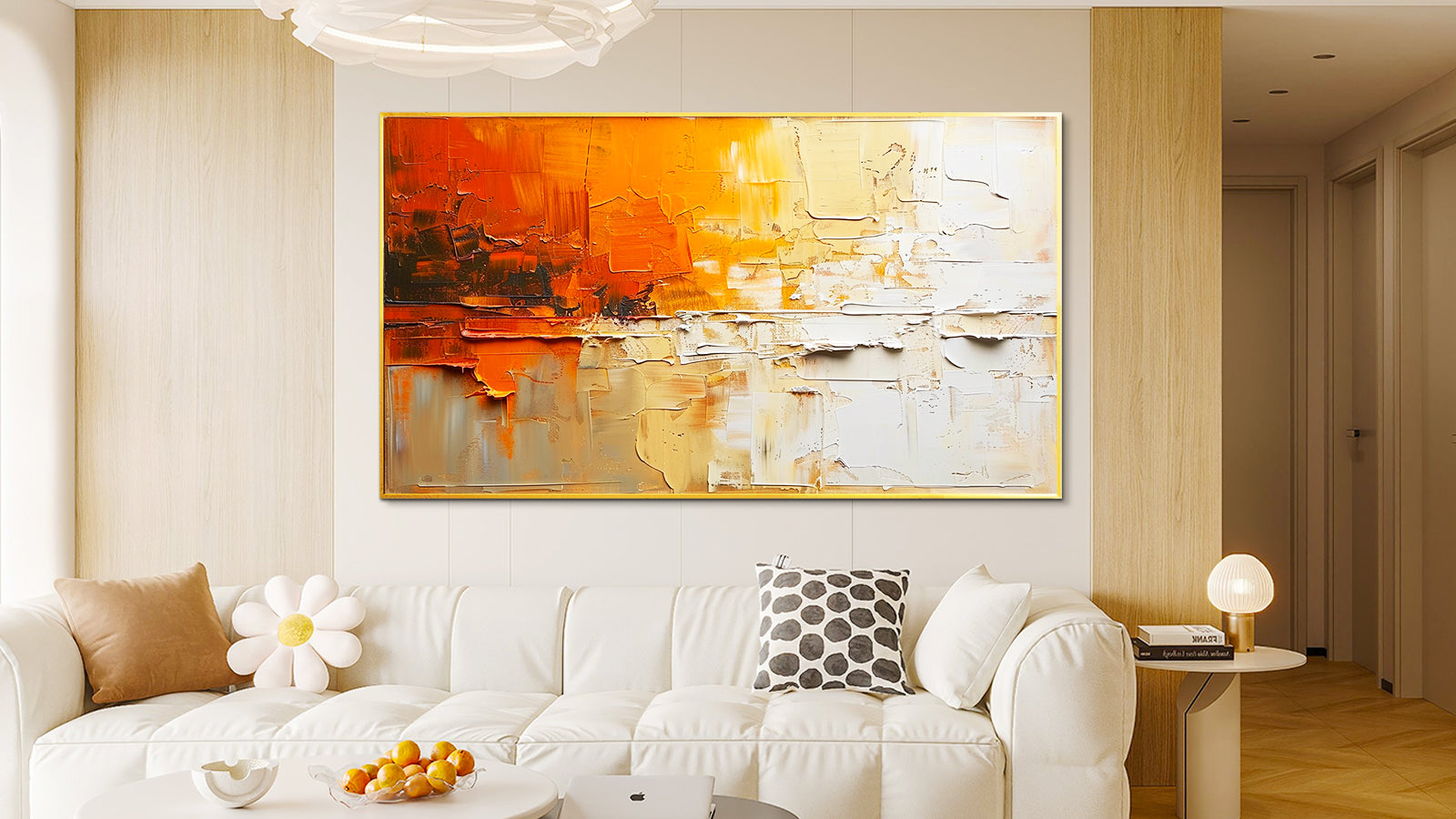
For a standard three-seater sofa, the goal is to have the artwork span about 2/3 to 3/4 of the sofa's width. If your sofa is 84 inches long, look for art or a gallery arrangement that is between 56 and 63 inches wide. Centering a single large abstract wall art piece within these dimensions creates a sense of stability in a living room.
Large Art Over a King Bed
A king-size bed is approximately 76 inches wide. Using the 2/3 to 3/4 rule, your art should be between 50 and 57 inches wide. While a single long landscape piece works beautifully here, many homeowners prefer a "triptych" (a three-piece set) of smaller paintings. This layout provides the necessary width while keeping the individual pieces easier to manage and hang.
Checklist for Furniture Placement:
- [ ] Art is centered horizontally over the furniture.
- [ ] Bottom of the frame sits 6 to 10 inches above the furniture top.
- [ ] The total width of the art is no wider than the furniture itself.
- [ ] Spacing between multiple frames is consistent (2 to 3 inches).
Oversized Art and the Illusion of Space
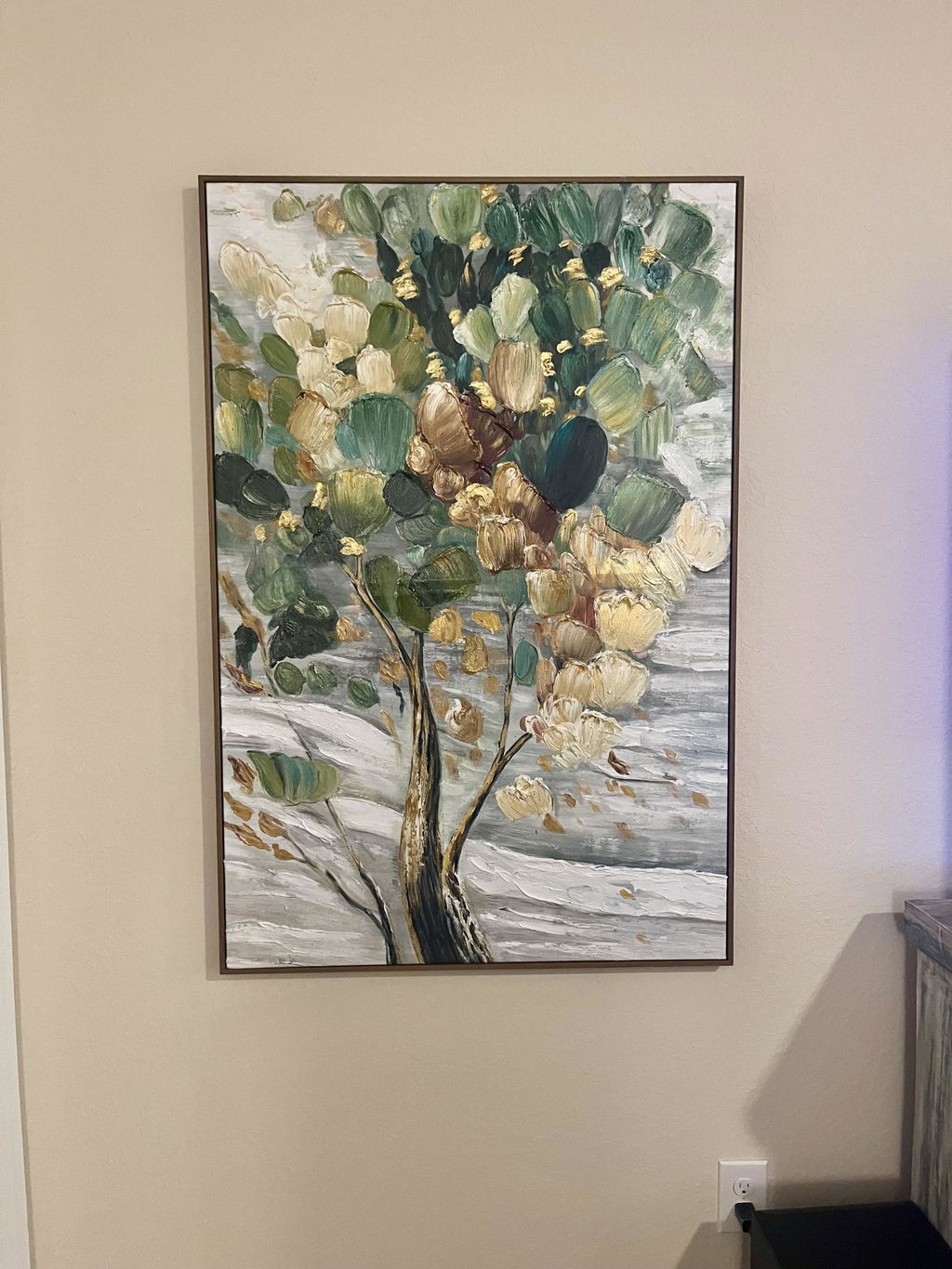
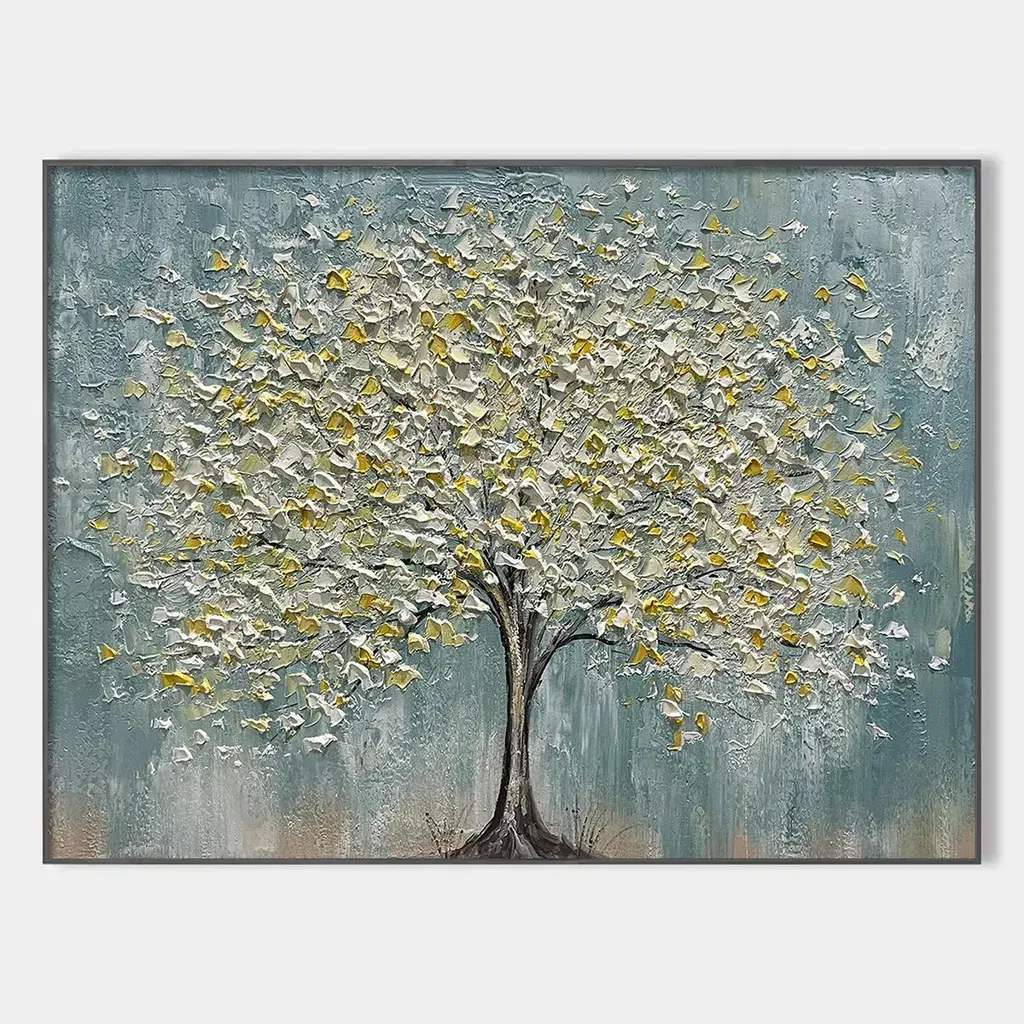
There is a common misconception that small rooms require small art. In reality, several small pieces can make a cramped room look cluttered. One oversized painting can have a transformative effect, acting as a "window" that draws the eye into the composition rather than focusing on the room’s boundaries.
In minimalist design, a large-scale work provides a clean focal point that prevents the eye from darting around to various small objects. This reduction in visual friction is why large-format art is a staple in high-end studio apartments and luxury modern homes. Beyond aesthetics, the content of the art matters; studies have shown that nature-themed art can produce significantly lower systolic blood pressure and higher perceived restoration, making large-scale nature scenes a functional choice for smaller living spaces.
How to Prevent a Gallery Wall from Looking Messy
While a single large piece is relatively easy to place, a gallery wall requires meticulous planning. The most frequent issue with multiple pieces is a lack of "rhythm," which leads to a messy, disorganized appearance. To create a professional abstract gallery wall, follow these structured steps.
Planning the Layout
Before hammer hits nail, plan your arrangement on the floor. Lay out your paintings and move them around until the visual weight feels balanced. If you have one piece that is slightly larger than the others, place it off-center and build the rest of the collection around it. This is known as a "salon-style" layout.
Using Grid vs. Dynamic Arrangements
- Grid Layout: Use identical frames and precise spacing (usually 2 inches apart) to create a square or rectangular block. This is best for a collection of prints from the same series.
- Dynamic Layout: Mix different frame styles and sizes but maintain a consistent "inner margin." As long as the distance between the frames remains uniform, the collection will look intentional rather than haphazard.
To ensure a clean finish, use a level and painters' tape to mark the outer boundaries of your gallery wall. Consistently spaced frames prevent the eye from getting distracted by gaps, allowing the viewer to appreciate the collective "story" of the art.

Practical Comparison of Installation and Costs
Choosing between one large piece and several smaller ones also involves logistics. The physical weight and the financial investment differ significantly between these two choices.
| Feature | One Oversized Painting | Several Smaller Paintings |
|---|---|---|
| Cost | Typically higher per piece; higher investment. | Lower per piece; budget-friendly options. |
| Installation | Requires heavy-duty hardware and often two people. | Easier to hang with standard nails or strips. |
| Flexibility | Fixed focal point; difficult to move or swap. | High flexibility; can be rearranged or expanded. |
| Visual Impact | Bold, dramatic, and minimalist. | Layered, personal, and storytelling. |
| Transport | Can be challenging; may require professional movers. | Easy to pack, carry, and ship. |
From a preservation standpoint, larger canvases require specific care. For instance, according to the Canadian Conservation Institute, all canvas paintings should have backing boards as a preventive measure to protect against punctures and environmental fluctuations. Furthermore, large panels or canvases should be carried by two or more people to avoid structural damage during installation.
Conclusion: One Oversized Painting vs Several Smaller Paintings
Ultimately, the choice between one oversized painting vs several smaller paintings comes down to the intended mood of your room and your practical constraints. If you crave a high-impact, minimalist sanctuary, a single large-scale work will provide the clean lines and focal power you need. If you prefer a home that feels curated over time with a rich visual texture, a gallery wall offers the flexibility to showcase your evolving taste.
Regardless of which layout you choose, remember to apply the 60-75% rule for wall coverage and ensure your art is scaled appropriately to your furniture. By balancing these mathematical guidelines with your personal style, you can transform any blank wall into a professional-grade display that enhances your home’s architecture and your daily experience of the space.
FAQs
How big should art be over a three-seater sofa?
Art should span roughly 2/3 to 3/4 of the width of the sofa. For an 84-inch sofa, aim for a width between 56 and 63 inches.
Can I mix large and small paintings on the same wall?
Yes. This is often called a 'hybrid' layout where a larger piece acts as an anchor and smaller pieces are arranged around it to create a dynamic gallery wall.
Is a gallery wall cheaper than a single large painting?
Generally, yes. Smaller prints and local artisan works are often more budget-friendly and easier to collect over time compared to the high cost of a single oversized original canvas.