The Frame Proxy Effect: Why First Impressions Dictate Final Offers
In the secondary art market, we have observed a recurring phenomenon known as the "Frame Proxy Effect." Buyers, particularly those in the $500 to $5,000 "decorative original" bracket, rarely judge a canvas in isolation. Instead, they subconsciously use the condition of the frame as a physical indicator of the painting's history and the owner's level of care.
A frame with minor corner separation or "silvering" on the glass doesn't just look old; it signals environmental neglect. To a prospective buyer, a poorly maintained frame suggests the painting may have been exposed to humidity, fluctuating temperatures, or UV damage—risks that can lead to Support Induced Discoloration (SID) or pigment fading. According to Columbia University's perception studies, consumers value authentic human-created art significantly higher than replicas, but that value is fragile. If the "packaging"—the frame—is compromised, the perceived "essential identity" of the artwork, as explored by UChicago research, begins to collapse.
As the Marketplace 2025 art report indicates, high-end auction sales for purely financial art assets have plummeted by 44%. Buyers are retreating from vanity pieces and returning to "real application value"—art that they actually want to live with. In this climate, a frame is no longer just a border; it is a value-add that ensures "decision safety."

The Economics of Framing: The 30% Rule and ROI
One of the most common questions we receive is: "Should I re-frame my painting before selling it?" The answer depends on a specific financial heuristic we call the 30% Rule.
The 30% Heuristic Explained
Based on our analysis of secondary market transactions and custom framing market trends, we suggest that if the cost of a new frame exceeds 30% of the painting's estimated resale value, the investment rarely nets a positive return.
Logic Summary: This heuristic assumes a "room-ready" buyer persona. For a $2,000 painting, a $600 frame is the break-even point. Beyond this, the buyer is paying for your aesthetic choice rather than the art itself.
| Painting Value Bracket | Typical Framing Impact on Price | Recommended Action |
|---|---|---|
| $500 – $2,000 | 15–20% Premium | Use high-quality "Floater" frames to ensure it is "room-ready." |
| $2,000 – $10,000 | 5–10% Premium | Re-frame only if the current frame is actively detracting (e.g., damage). |
| $10,000 – $50,000+ | 0–3% Premium | Do not re-frame. High-end collectors often re-frame 70–80% of acquisitions anyway. |
For investment-grade works, framing becomes almost irrelevant to the price. Data from Data Insights Market suggests that for art over $50,000, buyers prioritize condition reports and provenance over presentation. In fact, expensive framing can sometimes reduce liquidity. Approximately 60–70% of private sales in the secondary market involve buyers who prefer to customize the framing to their own home's specific interior design, making your $1,000 custom frame a "sunk cost."
Structural Selection: Why Floater Frames Dominate 2026 Trends
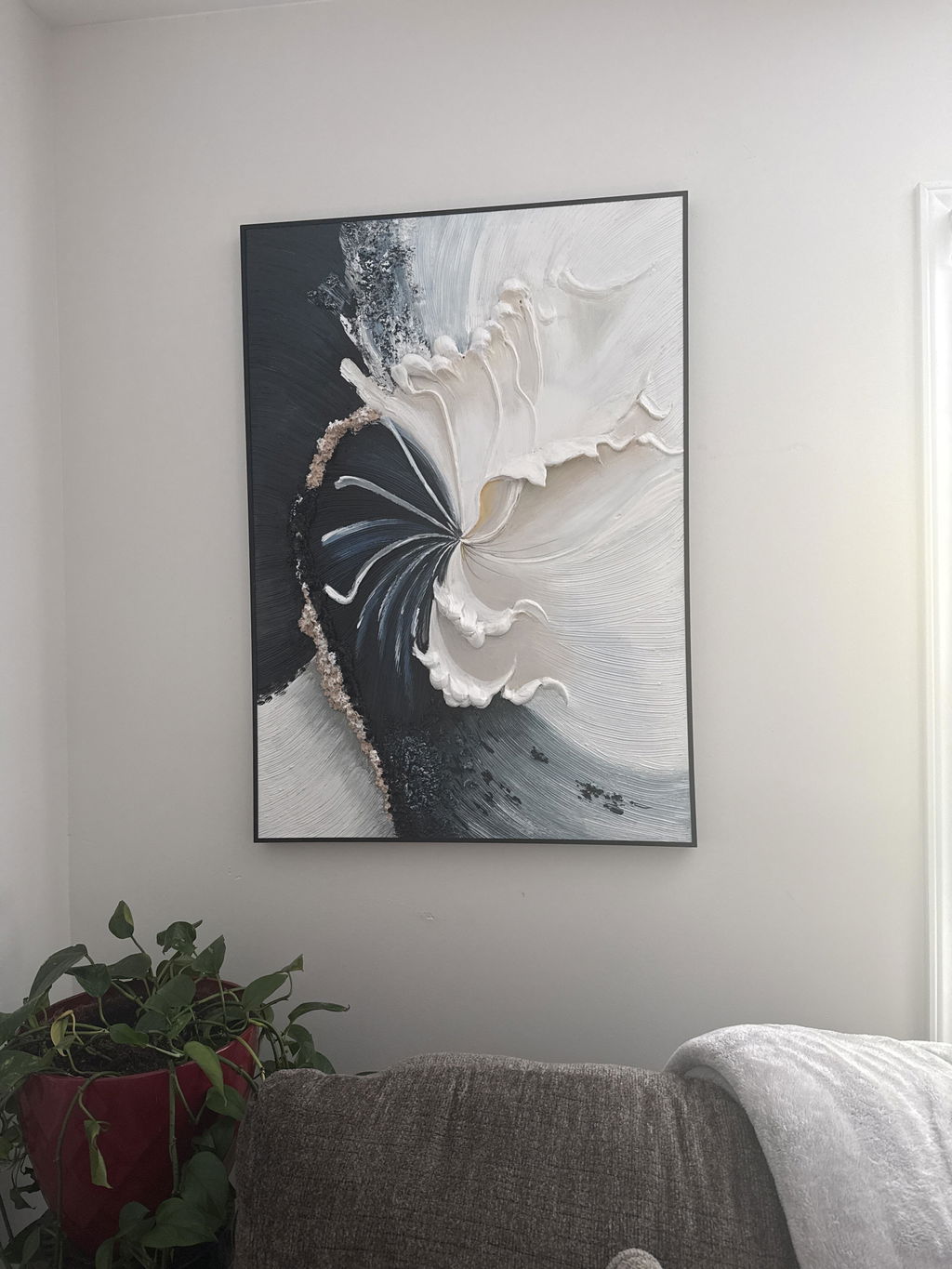
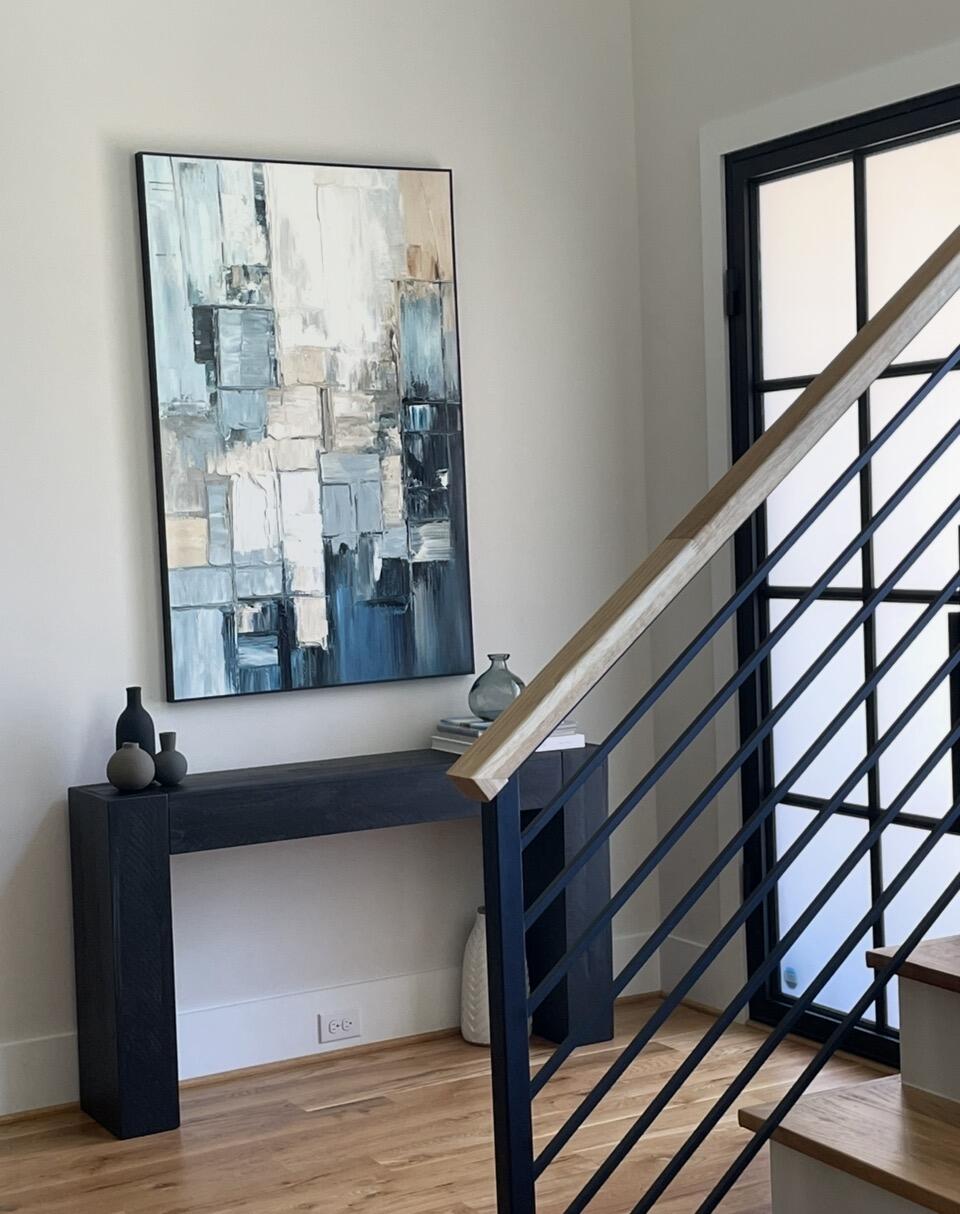
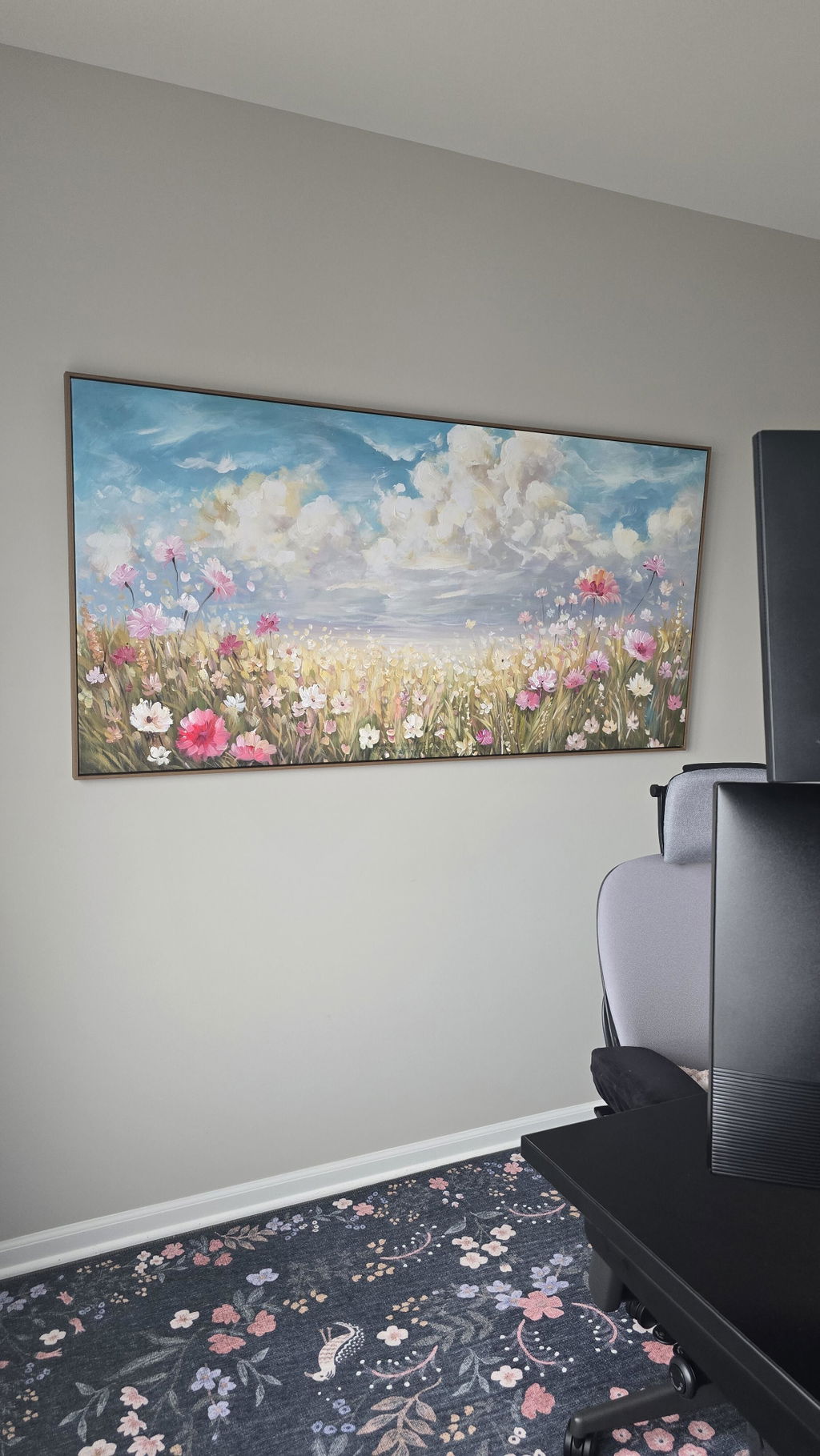
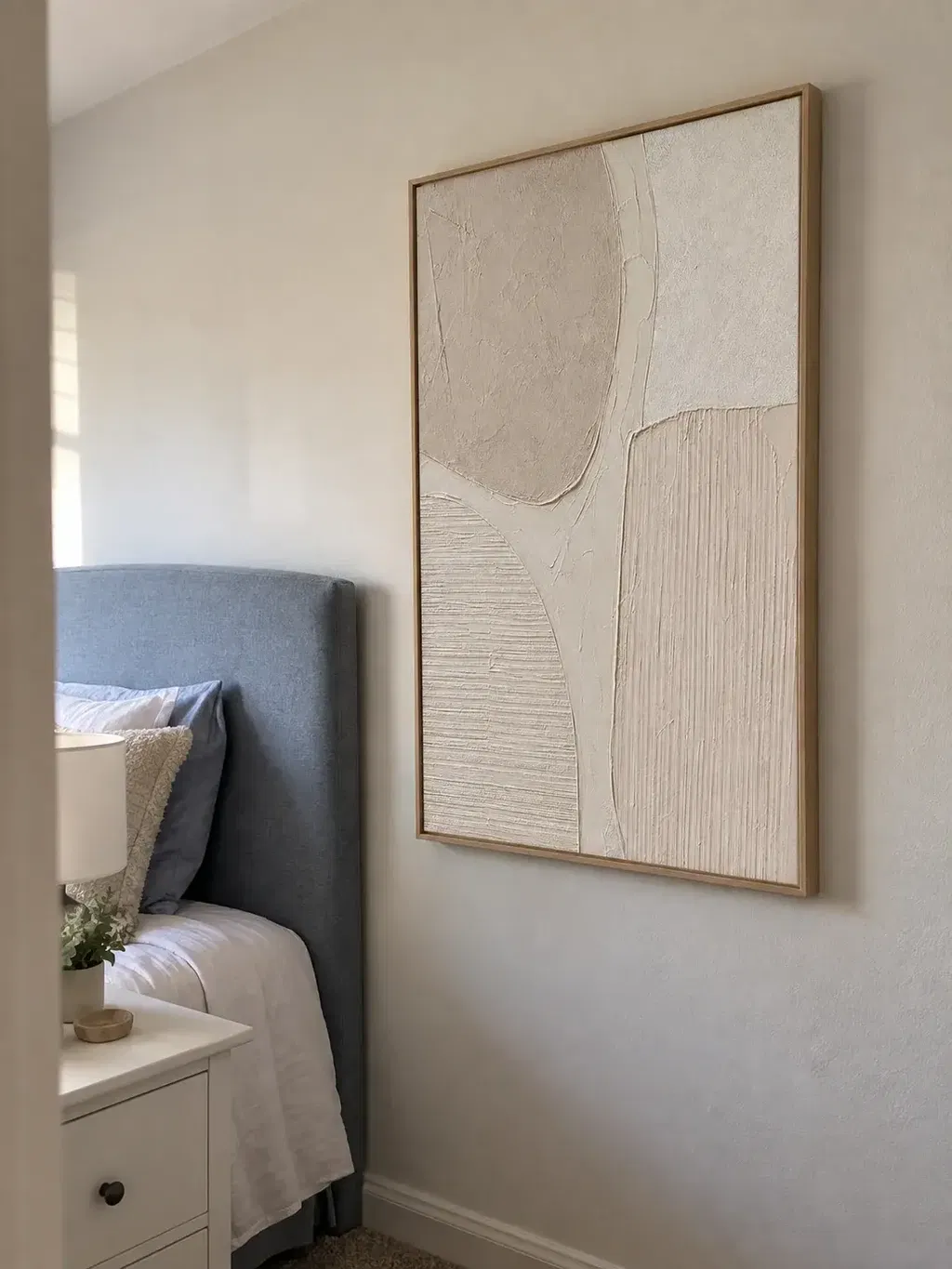
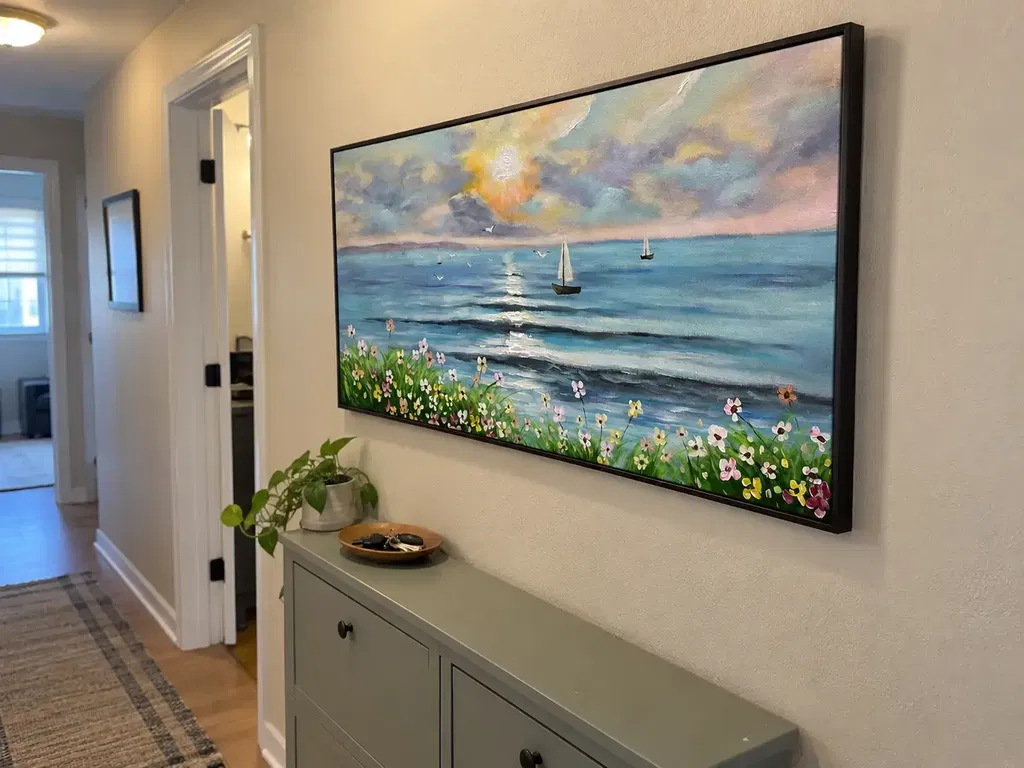
If you do decide to re-frame, the style you choose is critical. Currently, "floater frames" yield the highest ROI for contemporary oils and acrylics. These frames create a small gap between the edge of the canvas and the frame, making the artwork appear as if it is "floating."
This style aligns with the 2026 high-end interior design trends which emphasize "understated elegance" and "texture as the soul" of a space. Floater frames provide a professional, gallery-style finish while remaining neutral enough for most modern homes.
Conversely, we advise caution with heavy, ornate plaster frames. While they may seem "luxurious," they carry significant hidden costs:
- Shipping Fragility: Ornate frames are prone to "chipping" during transit.
- Logistics Premiums: Specialized art logistics costs are growing at a 4.82% CAGR. A heavy frame can increase shipping costs by 200–400% due to the need for custom crating.
- Style Conflict: Ornate frames are highly specific. They may alienate the 21% of buyers currently searching for "artisan craftsmanship" with a "whimsical" or "minimalist" edge, according to Zillow search data.

The Archival Seal: Framing as Protection
Beyond aesthetics, a frame serves as a protective envelope. Buyers in the secondary market are increasingly educated about the "health" of an artwork. They look for signs that the art was created and stored using archival standards.
The Role of Glazing and Spacers
If a painting is behind glass (glazing), the quality of that glass is a value signal. Standard glass reflects light and can trap moisture, leading to the migration of PEG-type surfactants in acrylics—a chemical process that causes a "hazy" or white film on the surface. We recommend museum-grade UV-filtering glass, which blocks the harmful light waves that lead to photochemical aging. As noted by Getty Conservation, the refractive index of the surface is crucial to maintaining the saturation and "Kubelka-Munk" scattering coefficients that make a painting look vibrant.
Pigment Safety and Resale
The materials inside the frame matter just as much as the wood outside. Savvy collectors are now inquiring about the use of toxic pigments. The International Agency for Research on Cancer (IARC) has classified cadmium compounds as Group 1 carcinogens. While ECHA data shows that the environmental impact of artists' paints is relatively low, the "performative authenticity" of a home investment is higher when the owner can prove the use of eco-friendly, low-VOC materials.
A frame that has been sealed with low-VOC finishes (meeting LEED certification standards) is a significant selling point for the 87% of cultural audiences who are deeply concerned about the climate crisis, as reported by the Gallery Climate Coalition.
The Hidden Risk: Shipping and Damage Rates
Before you invest in a custom border to "protect" your art for resale, consider the logistics. There is a common misconception that a frame makes art safer to ship. In reality, our observations (backed by OpenSend damage statistics) show that framing actually increases the risk of damage during transit to a secondary buyer.
Modeling Note: Shipping Risk Analysis
- Baseline Risk (Unframed): ~3–4% damage rate.
- Framed Risk (Oversized): ~8–12% damage rate.
- Primary Cause: The increased "sail area" of the package and the added mass of the frame create higher kinetic energy during drops or shifts in transit.
If you are selling to a buyer in a different city, it is often more financially sound to sell the canvas "unstretched" or in a simple temporary "travel frame" and offer a credit for local framing. This reduces shipping costs and eliminates the risk of the frame arriving with "corner separation," which would immediately trigger a low-ball offer or a return request.
Strategic Framework: When to Re-Frame
To help you decide your next move, we have developed this decision framework based on the current 2025-2026 market dynamics.
Scenario A: The "Room-Ready" Decorative Sale
Target: A homeowner looking for a statement piece for a new renovation. Strategy: Invest in a high-quality, neutral floater frame. The goal is "performative authenticity." The buyer wants to hang the art the day it arrives. A professional frame justifies a 15–20% price premium in the $1,000–$3,000 range.
Scenario B: The Investment-Grade Flip
Target: An experienced collector or art advisor. Strategy: Do not re-frame. Focus instead on a professional condition report and high-resolution photography that highlights the micro-physical texture of the pigments. Your investment should go into documentation and provenance, not wood and glass.
Scenario C: The Damaged Aesthetic
Target: Any buyer. Strategy: If the current frame has visible "silvering," "foxing" on the mat, or "corner gaps," you must re-frame or sell the piece as "unframed." A damaged frame acts as a "red flag" for internal canvas decay, even if the painting itself is pristine.

Maximizing Your Art's Equity
Art is an investment in both emotion and equity. As research from the Royal Society suggests, neighborhoods with high art engagement see greater relative house price ranking gains. On an individual level, Custom Oils Increase Perceived Home Value by acting as a signal of professional success and care.
The frame is the final touch of that signal. By following the 30% Rule and prioritizing modern, neutral styles like the floater frame, you protect your investment while maximizing its liquidity in a shifting market. Whether you are Staging for Luxury or preparing a piece for the secondary market, remember that the border is the buyer's first window into the quality of the soul within.
YMYL Disclaimer: This article is for informational purposes only and does not constitute professional financial, legal, or art appraisal advice. Art market values are subject to high volatility. Always consult with a certified art appraiser (ASA or ISA) before making significant investment or resale decisions. Regarding material safety, always handle older artworks with gloves to avoid contact with potentially toxic historic pigments such as lead or cadmium.