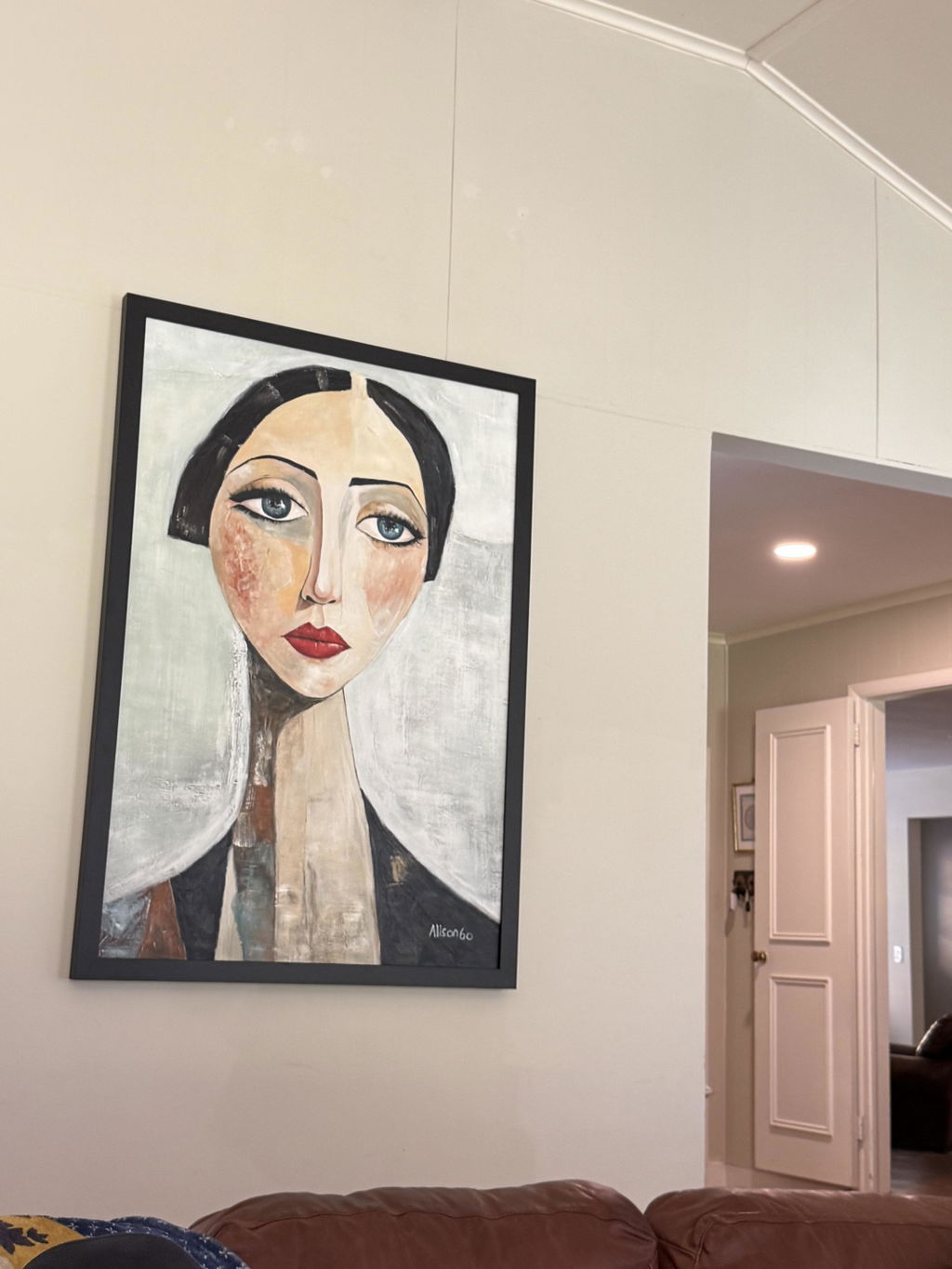
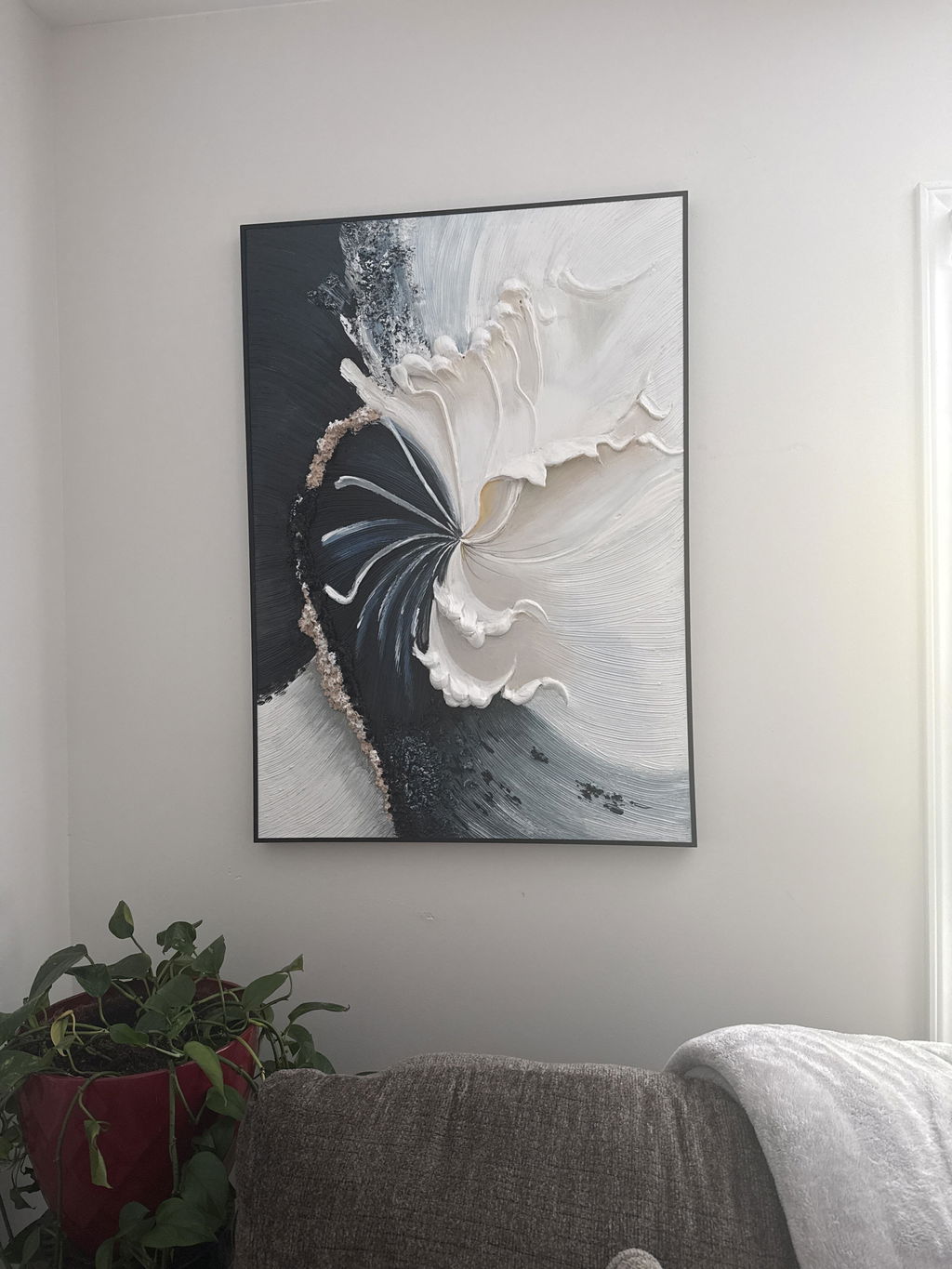
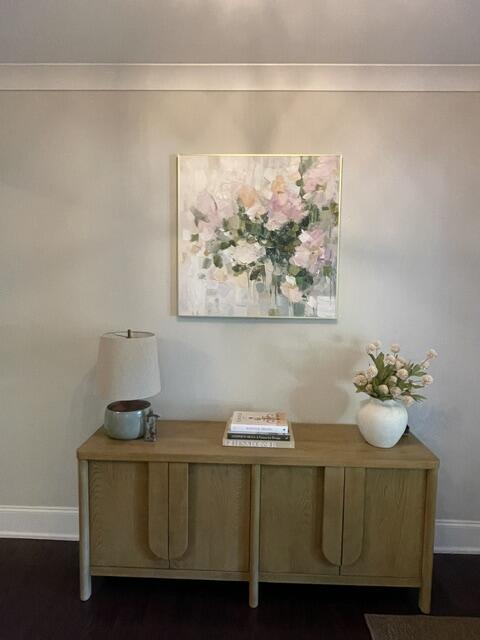
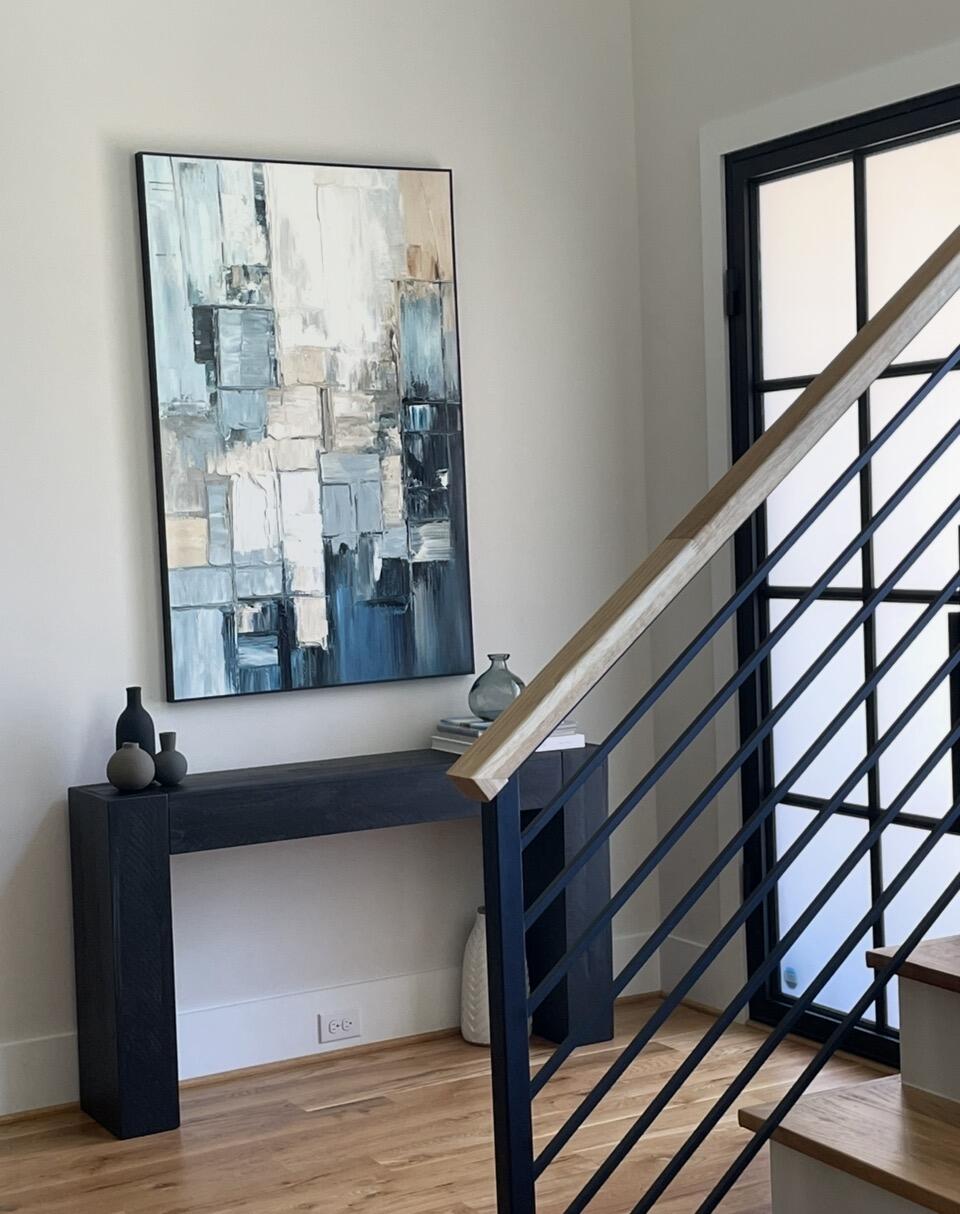
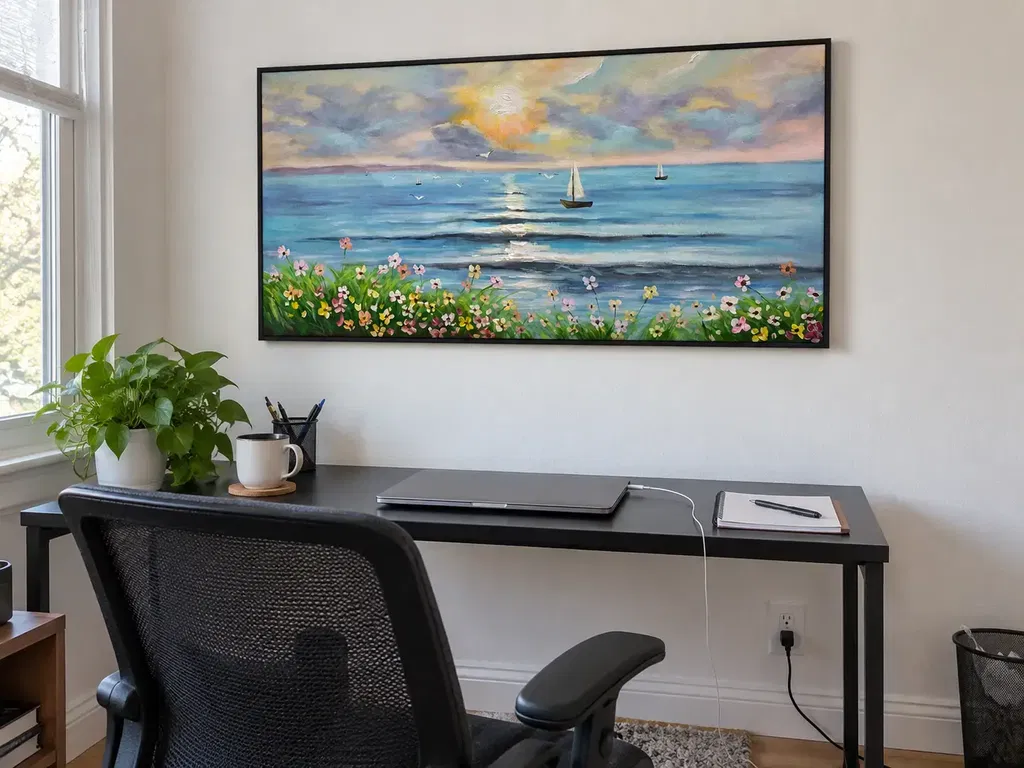
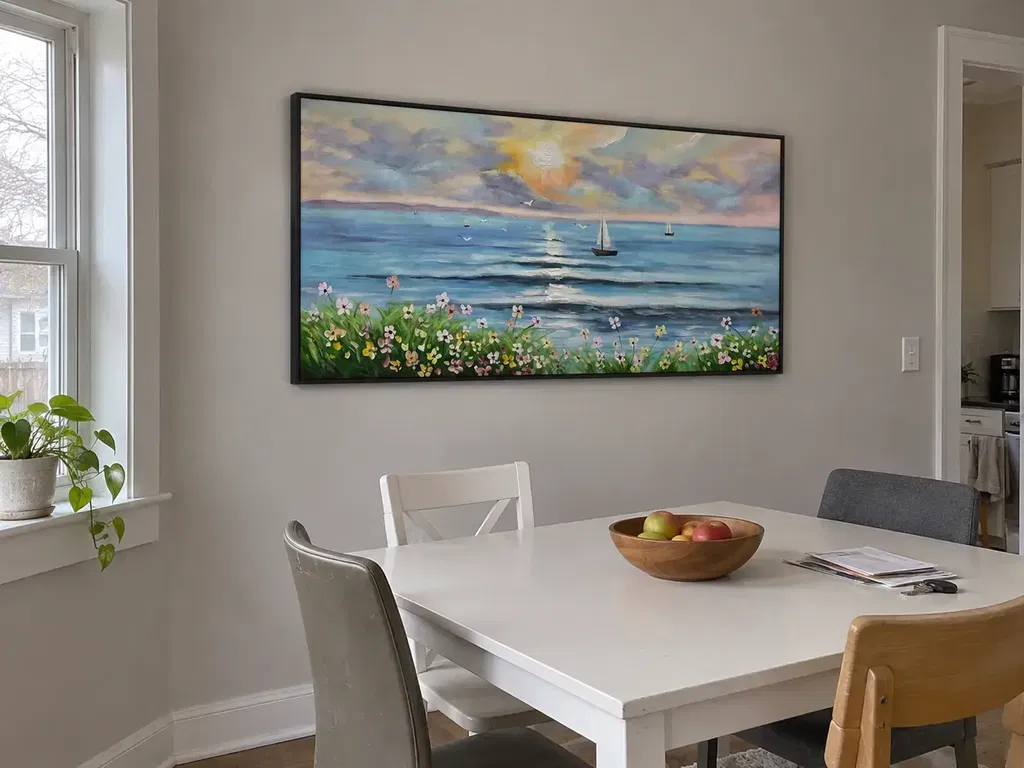
The Shift Toward "Real Application Value" in Art Collecting
The global art market is undergoing a profound structural correction. While high-end auction sales for vanity pieces—those exceeding $10 million—plummeted by roughly 44% year-over-year in 2024, the underlying creative economy remains a titan, contributing $1.2 trillion to the U.S. GDP alone. According to the Marketplace report on the struggling expensive art market, collectors are retreating from purely financial assets and returning to "real application value."
For the modern interior designer or home decorator, this means a pivot toward authenticity. We are seeing a rejection of the assembly-line aesthetic in favor of pieces that possess what University of Chicago researchers call "essential identity"—a soul that digital replicas and NFTs fundamentally lack. This shift is backed by hard numbers: a Columbia University study confirmed that consumers value art labeled as "human-made" roughly 62% higher than AI-generated alternatives.
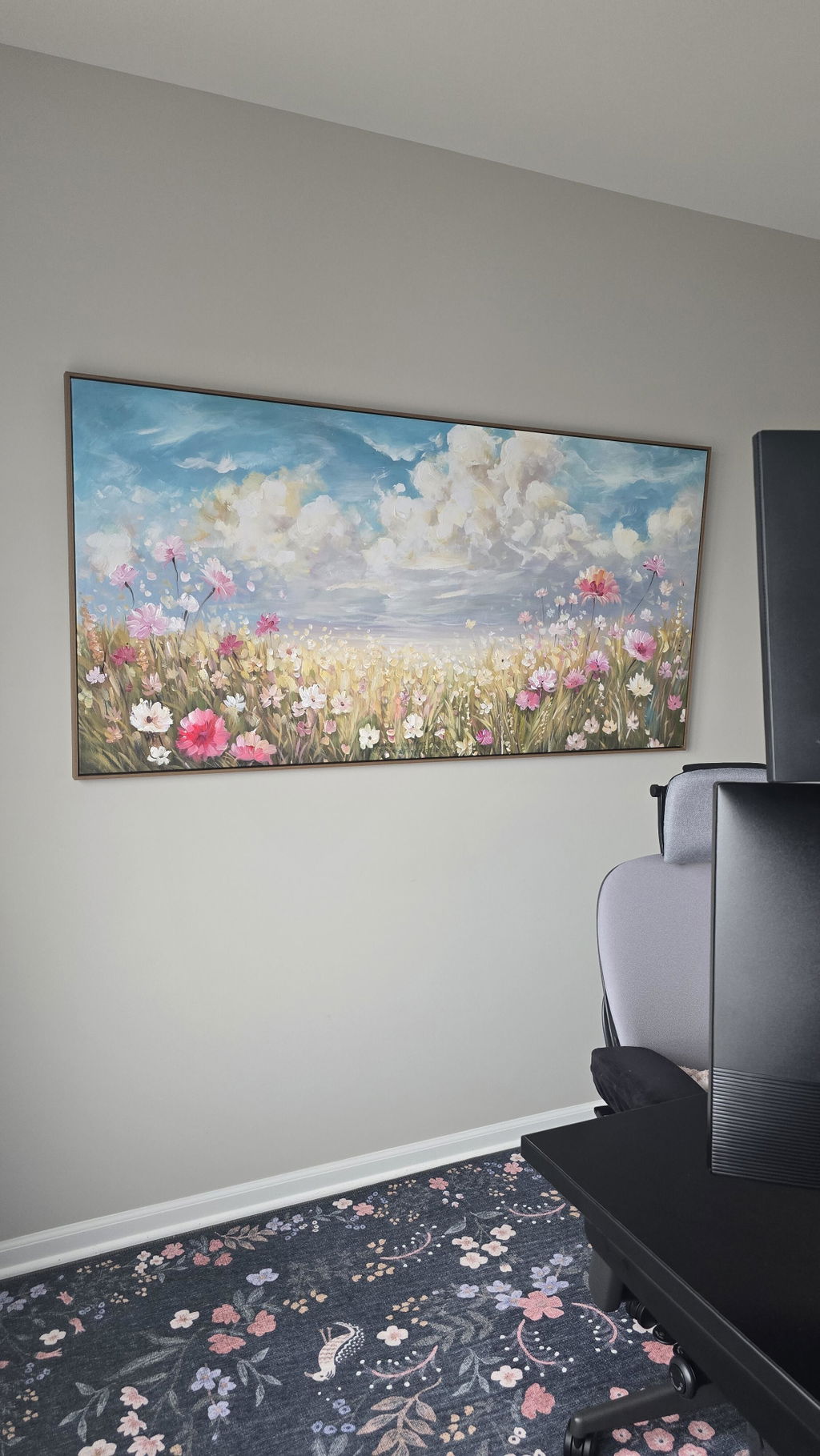
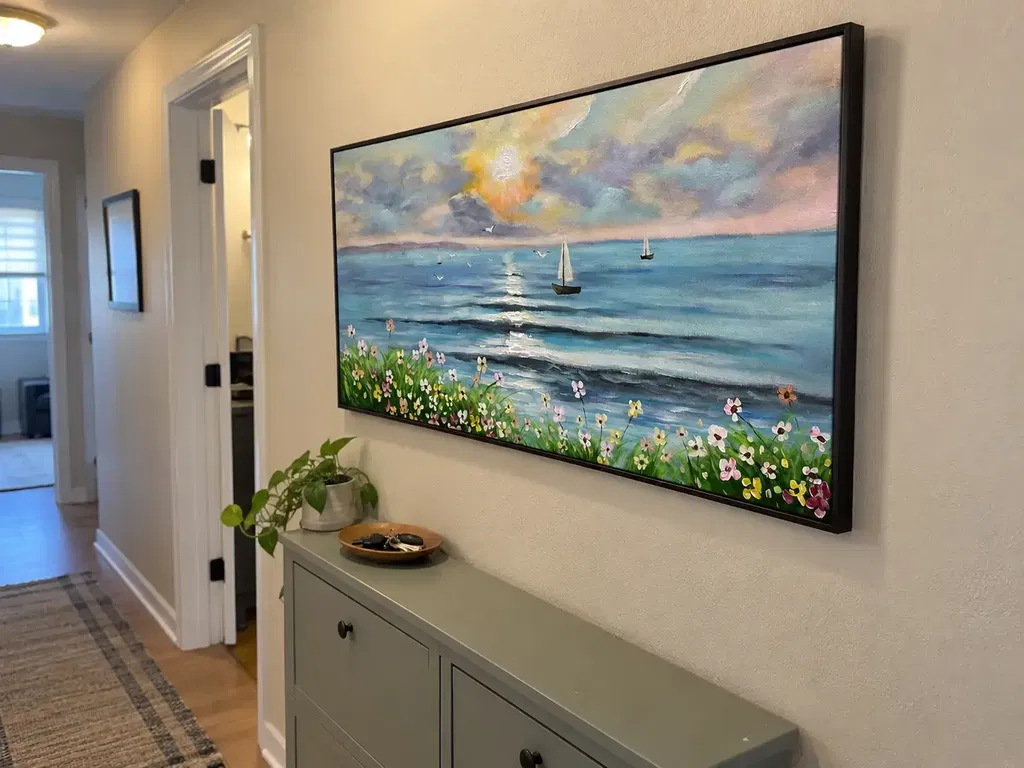
The most difficult technique for mass-reproduction machines to mimic is the dry brush stroke. This method, often used for scumbling or creating ethereal textures, serves as a "tactile fingerprint." In this guide, we will break down the forensic cues of authentic dry brushwork, helping you distinguish a master’s touch from a high-resolution giclée.
The Anatomy of an Authentic Dry Brush Stroke
To the untrained eye, a print might look "painterly." However, the physics of paint application on a porous substrate like canvas creates microscopic structures that current printing technology cannot replicate.
1. The Pigment Concentration Gradient
In a genuine dry brush application, the brush is loaded with minimal paint and high-viscosity pigment. As the bristles drag across the canvas, the paint is deposited unevenly. Our analysis of professional brushwork suggests a specific "loading decay": pigment density is typically 70-90% at the stroke's edges where the bristles splay, compared to 30-50% in the center.
Printers, conversely, utilize uniform ink droplets. Even high-end giclées at 6000+ DPI resolution struggle to vary the "thickness" of the pigment layer within a single stroke. They create a flat "map" of color rather than a three-dimensional deposit.
Logic Summary: This "loading decay" heuristic is based on the mechanical friction between hog-hair bristles and primed canvas. A machine nozzle maintains constant pressure, whereas a human hand experiences variable resistance and paint depletion through the duration of the stroke.
2. Micro-Peaks and Valleys (Microtopography)
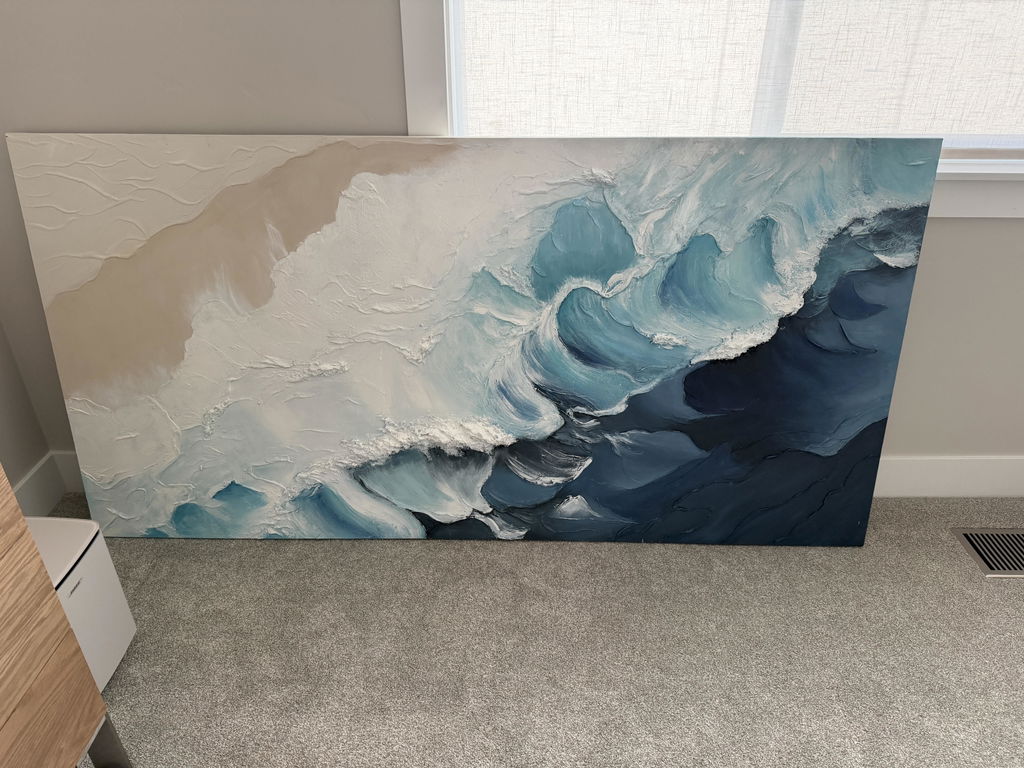
When an artist uses a dry brush, the bristles don't just lay down color; they sculpt it. Under magnification, you will see "peaks" where the paint has accumulated at the edge of a bristle's path and "valleys" where the canvas tooth remains visible. Research published in Sensors (MDPI) proves that this mm-scale texture is crucial to the aesthetic experience.

3. Bristle-Path Interruption
Authentic dry brushwork often involves "scumbling"—dragging a thin layer of opaque paint over a dry underlayer. This creates a broken, scratchy look. In a real painting, you can see where individual hairs of the brush have skipped over the "valleys" of the canvas weave. In a reproduction, these "skips" are often filled with a flat background color or a simulated "blur" that lacks the sharp, physical edge of real pigment.
The 45-Degree Light Test: A Collector’s Best Tool
We often advise collectors to move beyond a direct, head-on visual inspection. To verify the three-dimensional quality of a stroke, you must manipulate the light source.
- The Method: Position the artwork so that a single light source (a lamp or window) hits the surface at a 45-degree angle.
- What to Look For: Authentic dry brush strokes will cast microscopic shadows. These shadows are the result of the "impasto" effect—even in "dry" techniques, the paint has a measurable height.
- The Print Giveaway: A flat print, even one with a "gel coat" embellishment, will reflect light uniformly across the "stroke." Gel coats often look like a transparent "slug trail" sitting on top of the image, rather than being integrated into the pigment particles themselves.
As noted in our guide on spotting embellished prints, the "sheen" of a gel coat is a major red flag. Real pigment has a varying refractive index depending on the mineral content of the paint (e.g., earth tones like Burnt Umber reflect light differently than synthetic Phthalo Blue).
The Chemical Signature: Why Pigment Matters
Authenticity isn't just about the "look"; it's about the material. Hand-painted art utilizes heavy-bodied acrylics or oils that contain actual mineral solids.
Lightfastness and Longevity
Professional artists rely on ASTM D4303 standards to ensure their work doesn't fade. This involves measuring the "CIE 1976 Lab* color difference" after accelerated aging. Most commercial prints use dye-based inks that, while vibrant initially, lack the "lightfastness" of artist-grade pigments.
| Feature | Hand-Painted (Dry Brush) | Digital Canvas Print |
|---|---|---|
| Pigment Type | Mineral-based / Organic solids | Dye-based / Nano-pigment inks |
| Binder | Acrylic Polymer / Linseed Oil | Solvent / UV-curable resins |
| Refractive Index | Variable (creates "depth") | Uniform (looks "flat") |
| Tactile Relief | 0.1mm to 2mm | ~0mm (flat) |
| Aging Pattern | Oxidative cross-linking | Photochemical degradation |
Methodology Note: This comparison is based on standard material science profiles for artist-grade vs. commercial-grade media. We assume the use of professional-series paints (e.g., Golden, Winsor & Newton) vs. standard wide-format inkjet printers.
The Support Induced Discoloration (SID) Risk
A nuance we often see in the studio involves the interaction between the canvas and the paint. In hand-painted works, water-soluble impurities in the canvas can sometimes be drawn into the paint layer, a phenomenon known as Support Induced Discoloration (SID). While artists work to prevent this with proper priming, the presence of these subtle, organic interactions is actually a hallmark of a "living" piece of art. A print is sterile; it lacks the chemical "dialogue" between the substrate and the medium.
The Economic and Psychological ROI of Authenticity
Buying authentic art is no longer just a "prestige" move; it is a calculated investment in both property value and personal well-being.
Boosting Property Value
Research from the Royal Society used a CAR model to quantify the link between art and real estate. They found that neighborhoods with higher "art" geo-tags—specifically those featuring high-quality murals and public art—saw greater relative house price ranking gains. For commercial developers, commissioning original hand-painted murals is a "marketing trump card" used to lease up massive office spaces in a post-pandemic market.
The "Neuro-Aesthetic" Effect
Why does a hand-painted wall feel more comfortable than a wallpapered one? It’s neurological. A University of Pennsylvania review noted that nature-themed artworks reduced stress in 61% of patients. Passive viewing of authentic art activates the mPFC (medial prefrontal cortex), optimizing emotional regulation.
Digital prints, because they lack the "micro-physical texture" and "essential identity" of the artist's hand, do not stimulate the brain's intrinsic motivation circuits to the same degree. MUNCH Museum tests confirmed that physical relief textures exponentially increase viewer satisfaction.

Ethical Collecting: Supporting the Human Workforce
In an era of AI automation, the ethics of art procurement have moved to the forefront. A Wharton School survey found that 87% of consumers believe artists should receive fair compensation.
At MontCarta, we emphasize that every inch of brushstroke contains "uncompressible human life-time." Unlike AI, which generates images in seconds, a large-scale mural or a textured canvas requires hundreds of hours of invisible labor. By choosing hand-painted art, you are supporting a creative economy that, according to the NEA, is growing at twice the rate of the overall U.S. economy.
A Note on Safety and Environment
Authenticity also carries a responsibility for safety. While we celebrate the "magic" of pigments, we must acknowledge the chemistry involved.
- VOC Emissions: Low-VOC paints are a prerequisite for modern "Green Building" (LEED) certifications. Authentic hand-painted art, when executed with high-quality acrylics, typically emits significantly lower toxic VOCs than industrial coatings once cured.
- Microplastics: We are mindful of the Stanford University warning regarding polymer breakdown. Using high-quality varnishes and proper conservation techniques prevents the "chalking" and shedding of paint particles into the indoor environment.
- Pigment Awareness: While historical "Lead White" is now banned under EU REACH regulations, some professional pigments (like Cadmium) still require careful handling. We prioritize eco-friendly alternatives, such as walnut oil binders and hemp canvases, which consume 50% less water than traditional cotton.
Identifying Authenticity: A Final Checklist
When evaluating a piece for your next project, use this summary checklist to confirm the presence of authentic dry brushwork:
- The Angle Check: Rotate the piece under light. Do the strokes have a physical "edge" that casts a shadow?
- The Texture Gradient: Does the color look "scratched" onto the surface, with the canvas grain showing through?
- The Pigment Clumping: Under a 10x magnifying glass, can you see individual pigment particles embedded in the medium, or does it look like a grid of CMYK dots?
- The Refractive Shift: Does the color change its "depth" as you move? (Genuine mineral pigments like Cobalt or Ultramarine have unique light-scattering properties that ink cannot match).
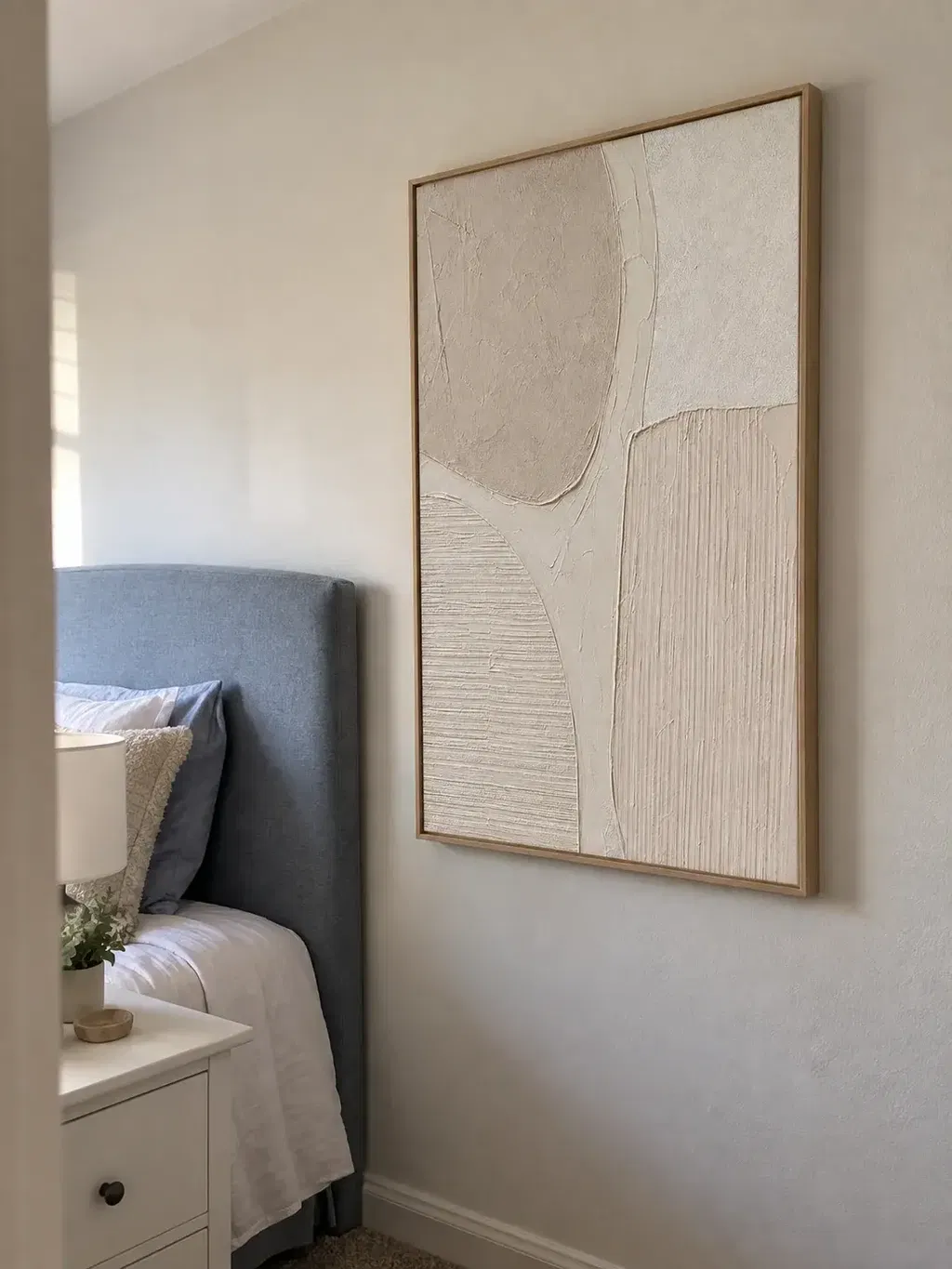
For more on how to balance these high-texture pieces in your home, see our guide on balancing textured art with minimalist decor.
Disclaimer: This article is for informational purposes only. When dealing with antique paintings or unknown pigments, always consult a professional conservator. Some historical pigments contain heavy metals that require specialized safety protocols. Hand-painted art should be displayed away from direct, unfiltered UV light to ensure maximum longevity.
Sources & References
- Marketplace: The expensive art market continues to struggle
- Columbia Business School: Human-Made vs. AI Art Study
- Royal Society: Quantifying the link between art and property prices
- ASTM International: Standard Test Methods for Lightfastness
- EPA: Indoor Air Quality and Low-VOC Paints
- Stanford University: The deal with microplastics
- EU REACH: Restriction on Lead Carbonates
- Golden Artist Colors: Support Induced Discoloration (SID) Technical Bulletin