Vertical Hierarchy: Art Placement for Vaulted Ceilings
Vaulted ceilings are the architectural equivalent of a blank canvas—exhilarating in their potential but intimidating in their scale. For the aesthetic-driven homeowner, these soaring heights often lead to a specific type of "commitment risk": the fear that a piece of art will look like a postage stamp on a billboard or, conversely, feel disconnected from the room’s living pulse.
We are currently witnessing a structural shift in how high-end art is consumed. While the expensive art market continues to struggle, with vanity auction sales plummeting 44% in 2024, there is a massive resurgence in "real application value." Today’s collectors are moving away from speculative assets and toward custom, hand-painted works that harmonize with their physical environment. This guide explores the "Vertical Hierarchy"—a systematic approach to art placement that bridges the gap between human scale and architectural grandeur.
The Psychology of Scale: Why Hand-Painted Matters
Before we pick up a level and a hammer, we must understand the "why" behind the art we choose. In an era of mass-produced digital prints, the human brain remains remarkably discerning. A study by Columbia University confirmed that consumers value art labeled as "AI-generated" 62% lower than authentic human-created art.
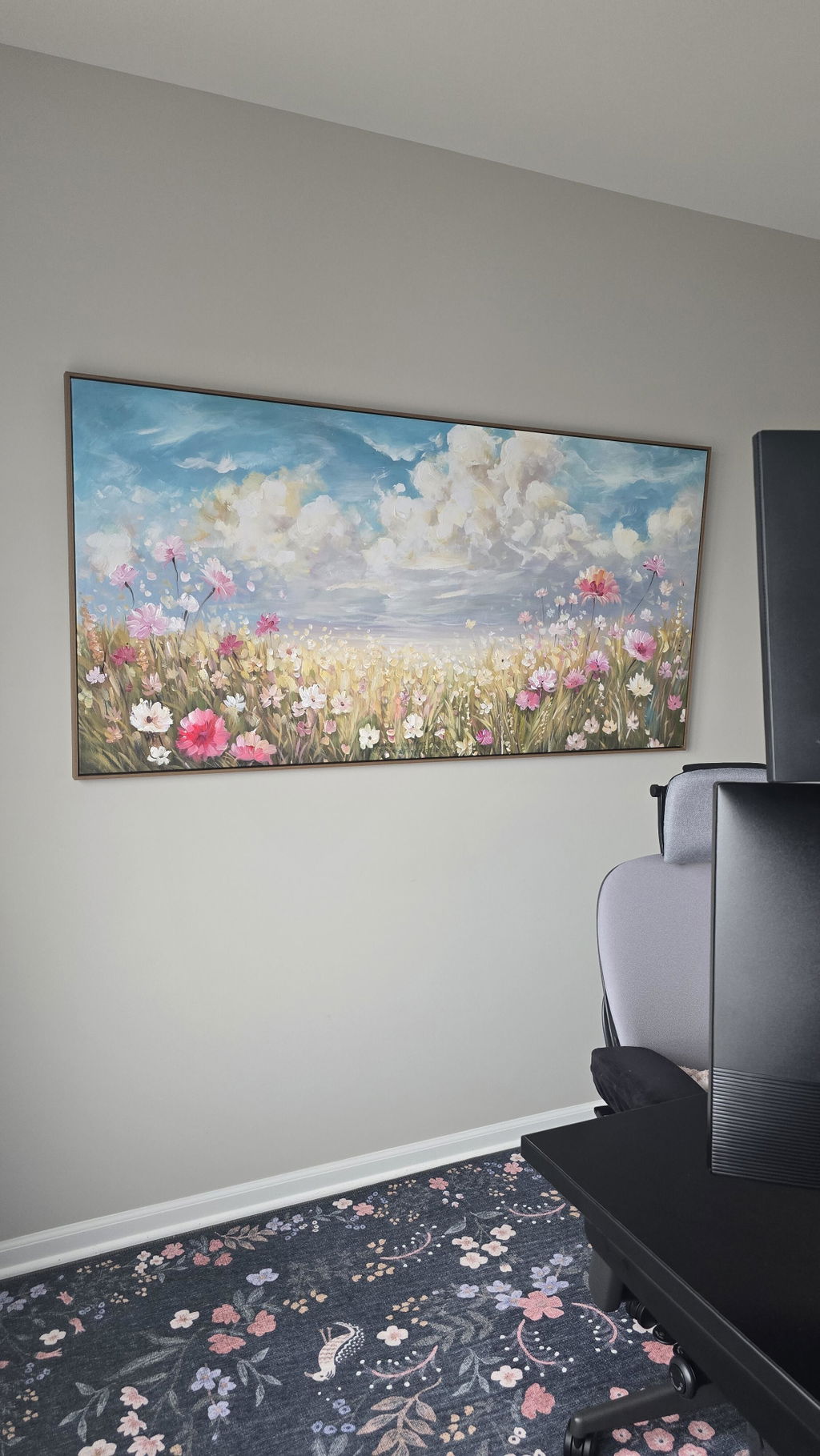
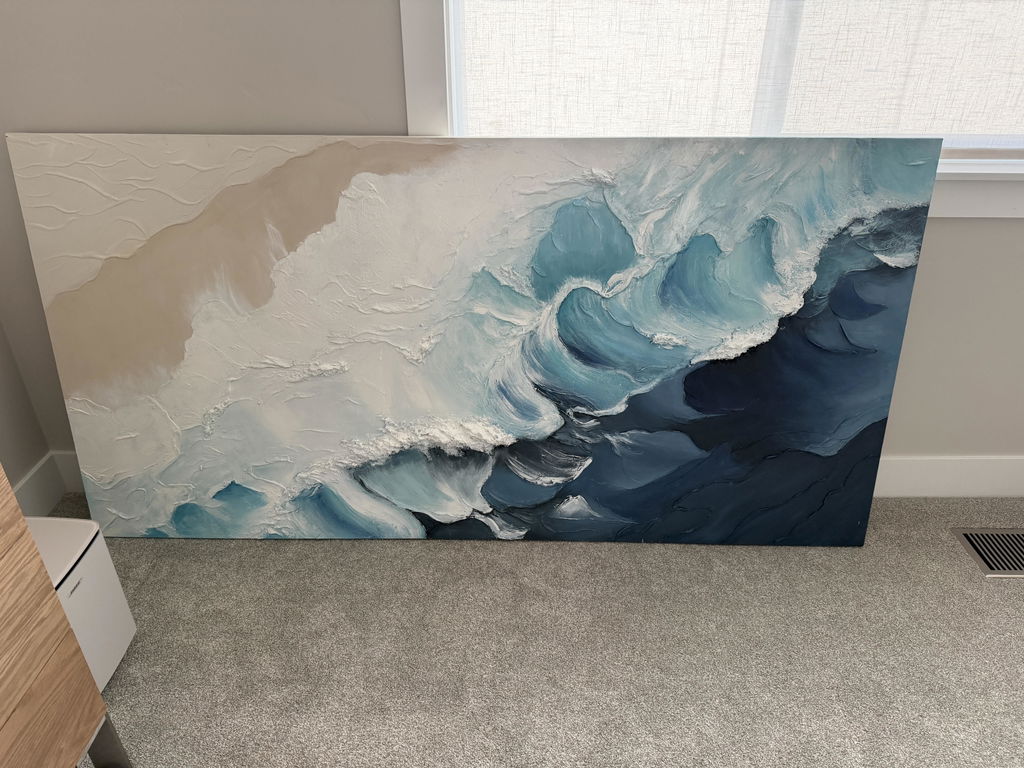
Why does this matter for vaulted ceilings? Large-scale walls amplify every detail. Digital replicas often lack what researchers at the University of Chicago call "essential identity"—the irreplicable soul and physical presence of an artist’s hand. On a 20-foot wall, the micro-topography of hand-painted pigments interacts with light in ways a flat print cannot. This "micro-physical texture" is crucial for creating an environment that feels grounded rather than hollow.

The Three-Zone Strategy for Vertical Placement
The most common mistake in vaulted rooms is adhering to the standard "eye-level" rule (typically 57–60 inches from the floor). While this works for standard 8-foot ceilings, it often leaves a vast, "dead" vertical space in vaulted environments, making the room feel bottom-heavy.
To solve this, we utilize a Zone-Based Hierarchy. This method divides the wall into three functional segments based on how we interact with the space:
| Zone | Height Range | Primary Function | Art Strategy |
|---|---|---|---|
| Conversational | Below 48" | Interaction with furniture | Anchors the art to seating; best for smaller, detailed pieces. |
| Visual | 48" – 72" | Primary sightline | The "Hero" zone. Raise the centerline to 65–68" for vaulted spaces. |
| Architectural | Above 72" | Spatial volume | For vertical "narrative sequencing" or oversized statement pieces. |
Logic Summary: This hierarchy is a heuristic based on common interior design patterns for non-standard heights. It assumes that as ceiling height increases, the "visual weight" must be distributed higher to prevent the art from feeling "sunken."
The Eye-Level Adjustment
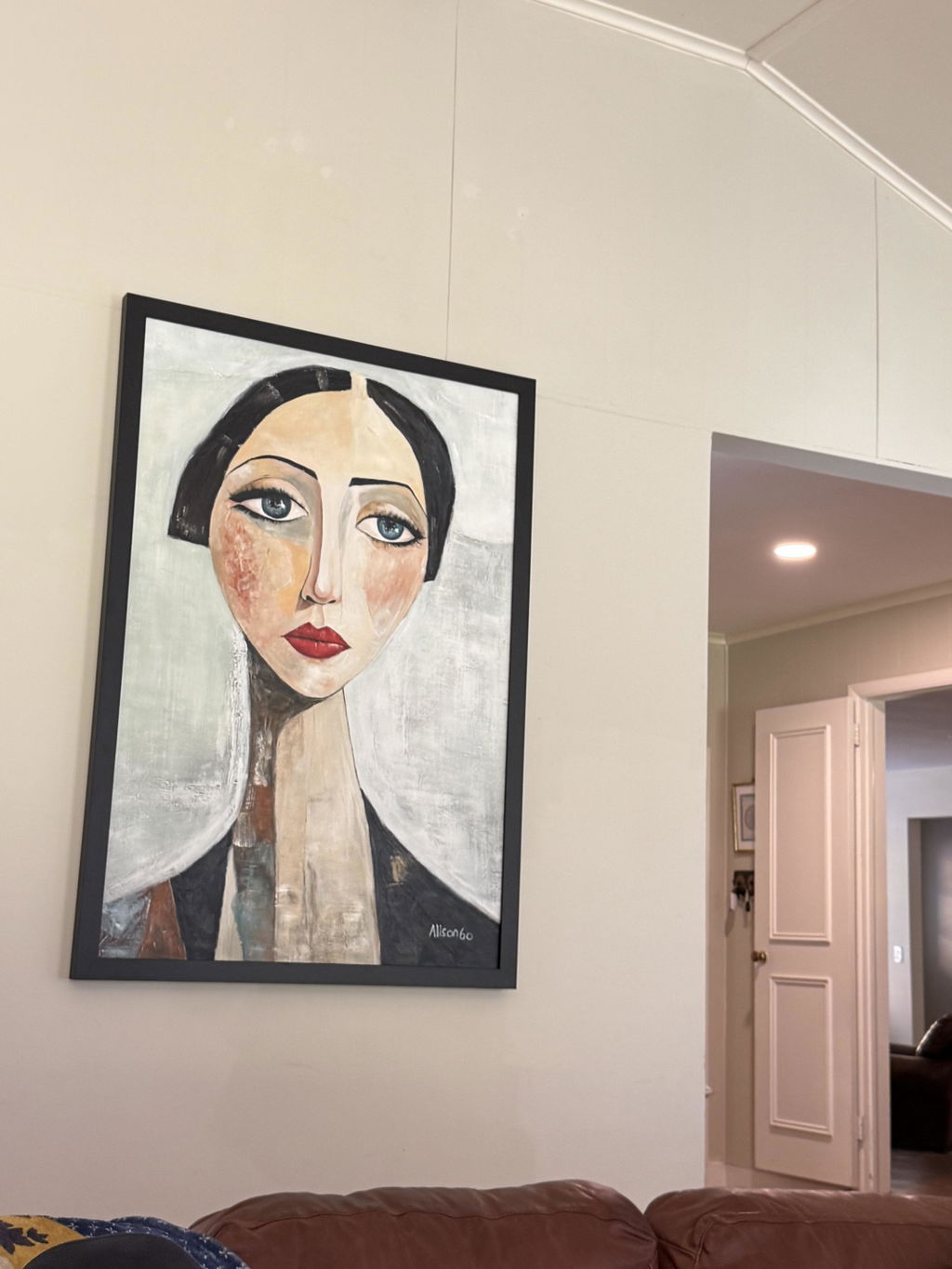
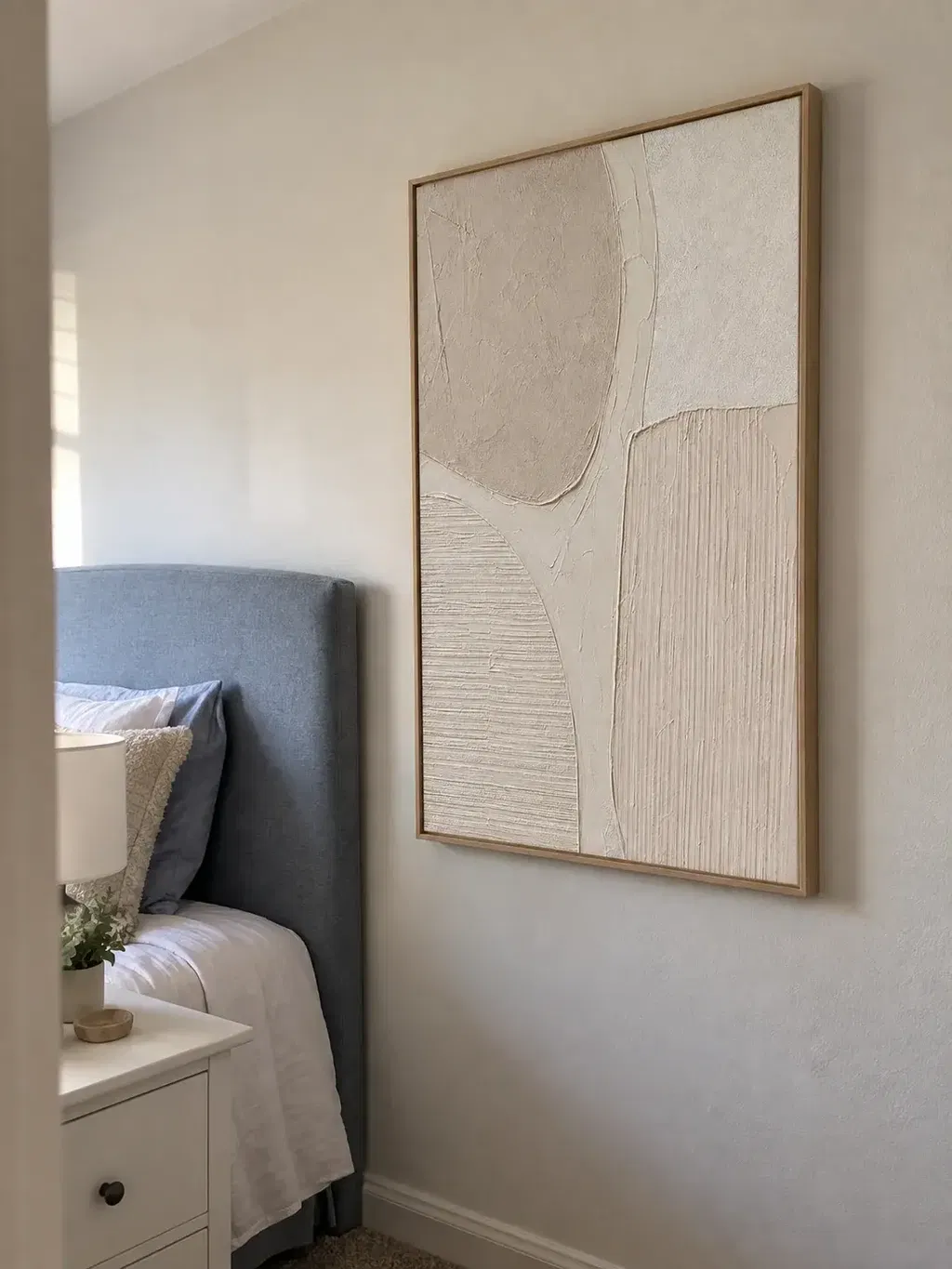
For ceilings over 10 feet, we typically recommend raising the center point of the artwork to 65–68 inches above the floor. This creates a transitional bridge between the human scale (our seated height) and the architectural scale (the ceiling apex). According to experts at Home Decor Bliss, this prevents the art from floating in "empty space" while maintaining a visual connection to the furniture below.
Calculating Proportional Harmony: The Golden Ratio
When dealing with massive walls, "winging it" on size is a recipe for aesthetic discord. Instead of simple percentages, we lean on the Golden Ratio (1:1.618) to determine the ideal width and height.
The Golden Ratio Width Heuristic:
Ideal Art Width = 0.618 × (Wall Width - 12 inches of clearance)
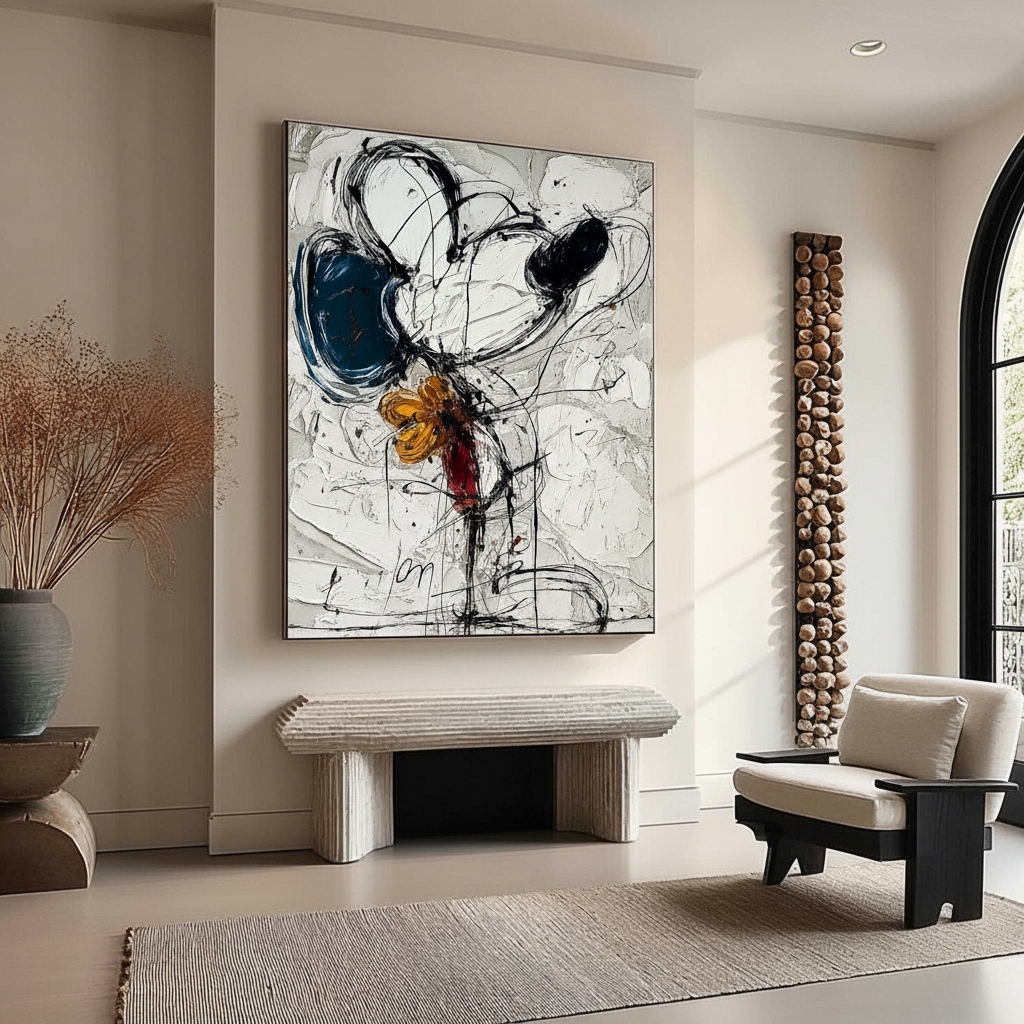
For example, on a 20-foot (240-inch) wall, a standard 72-inch piece often looks insignificant. Following the Golden Ratio, an optimal width would be closer to 141 inches. This creates a proportional relationship that respects the wall's geometry rather than fighting it.
The Two-Thirds Rule for Height: The centerline of the artwork should ideally sit approximately two-thirds of the distance between the top of the furniture (like a sofa or mantle) and the ceiling. This ensures the piece doesn't look like it's "resting" on the furniture or "escaping" toward the rafters.
Method & Assumptions for Placement Modeling: Our scenario modeling for vaulted placements assumes a "Standard Living Room" configuration.
Parameter Value/Range Unit Rationale Ceiling Height 14–22 Feet Typical vaulted range Furniture Height 30–36 Inches Standard sofa/console height Vertical Spacing 8–12 Inches Ideal gap between multi-piece sets Art Coverage 40–60 % Vertical wall space between furniture and ceiling Viewing Distance 10–15 Feet Average room depth for focal point evaluation Note: This model may not apply to rooms with irregular angled beams or floor-to-ceiling windows that consume more than 70% of the wall surface.
Creating a Visual Hierarchy: Fireplaces and TVs
In many vaulted living rooms, the art must compete with other dominant elements like fireplaces or large televisions. The goal is to create a Focal Point Hierarchy where the art acts as the "soul" of the room, while functional elements remain secondary.
- Over the Mantle: If hanging art above a fireplace, the bottom of the frame should be 4–8 inches above the mantle. If the ceiling is exceptionally high, consider a vertically oriented piece that extends into the Architectural Zone to draw the eye upward.
- Vertical Narrative Sequencing: For irregular geometries, abandon the idea of a single "unified shape." Instead, follow the architectural lines of the room. This "vertical journey" respects beams and angled walls as part of the total composition, a technique often highlighted by The Wild Rose Gallery.

Biophilic Design: The Health ROI of Large-Scale Art
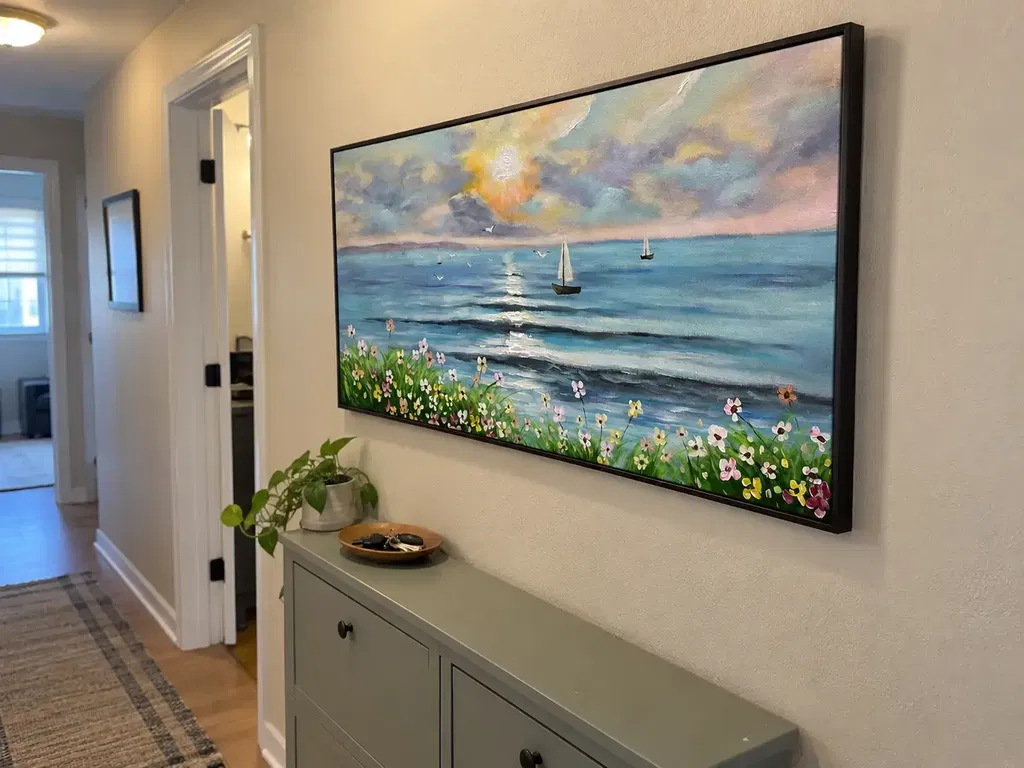
Large walls offer a unique opportunity to integrate "Biophilic Design"—art that features natural landscapes or organic forms. This isn't just a design trend; it’s a wellness strategy. A critical review from the University of Pennsylvania found that 73% of patients reported significant mood improvements when exposed to environmental artwork.
Furthermore, the World Health Organization (WHO) has confirmed through thousands of studies that art interventions can effectively alter clinical indicators for stress and mental well-being. By choosing nature-themed, hand-painted murals or canvases for your highest walls, you are essentially installing "public health infrastructure" within your own home.
Technical Integrity: Safety and Material Science
When hanging large-scale art, especially in high-traffic areas with vaulted ceilings, technical specs matter as much as aesthetics.
The VOC Promise
Indoor air quality is a significant concern for modern homeowners. The EPA warns that indoor air pollution is often more concentrated than outdoor pollution. When commissioning large murals or oversized canvases, ensure the artist uses low-VOC (Volatile Organic Compound) paints. Professional-grade acrylics typically emit significantly fewer toxins during the curing process compared to industrial coatings.
The "SID" Phenomenon (Support Induced Discoloration)
A common technical pitfall for large acrylic works is SID. As revealed by Golden Artist Colors, water-soluble impurities in cotton or linen canvases can be drawn into the paint layer if the medium is applied too thickly, causing yellowing. We recommend ensuring your artist uses a "GAC 100" or similar sealer on the substrate to prevent this chemical migration.
Lightfastness and Durability
Vaulted rooms often feature large windows and high UV exposure. Standard prints will fade within years. Authentic hand-painted works should adhere to ASTM D4303 lightfastness standards, which use xenon-arc testing to simulate decades of sunlight exposure. This ensures your investment remains vibrant as the sun tracks across your high walls.
Economic Impact: Art as a Real Estate Asset
Investing in high-quality, hand-painted art isn't just an aesthetic choice; it’s a savvy financial move. Research from the Royal Society found a direct correlation between "art-heavy" environments and gains in property value. In commercial contexts, the impact is even more staggering—Chicago's Millennium Park art projects drove $1.4 billion in real estate growth.
For the homeowner, a well-placed, large-scale mural or custom canvas can act as a "permanent physical billboard" for the home’s quality. It signals to future buyers that the space was curated with an eye for "artisan craftsmanship," a term that has seen a 21% rise in Zillow searches.
Final Considerations for Your Vertical Space
Hanging art in a vaulted room is about more than just finding the center of a wall. It is an exercise in balancing architectural volume with human emotion. By raising your eye-level targets, respecting the Golden Ratio, and prioritizing the "essential identity" of hand-painted works, you transform a daunting vertical void into a cohesive, healing, and high-value focal point.
Remember: the goal is not to fill the space, but to command it. Whether you are zoning a multi-use rental or scaling art for an open-plan living room, let the "Vertical Hierarchy" be your guide to a home that feels as grand as its architecture intended.
Disclaimer: This article is for informational purposes only. When hanging heavy artwork or installing murals in high-ceiling environments, always consult with a professional installer or structural engineer to ensure seismic safety and proper mounting. For information regarding paint toxicity, consult the safety data sheets (SDS) provided by the manufacturer.