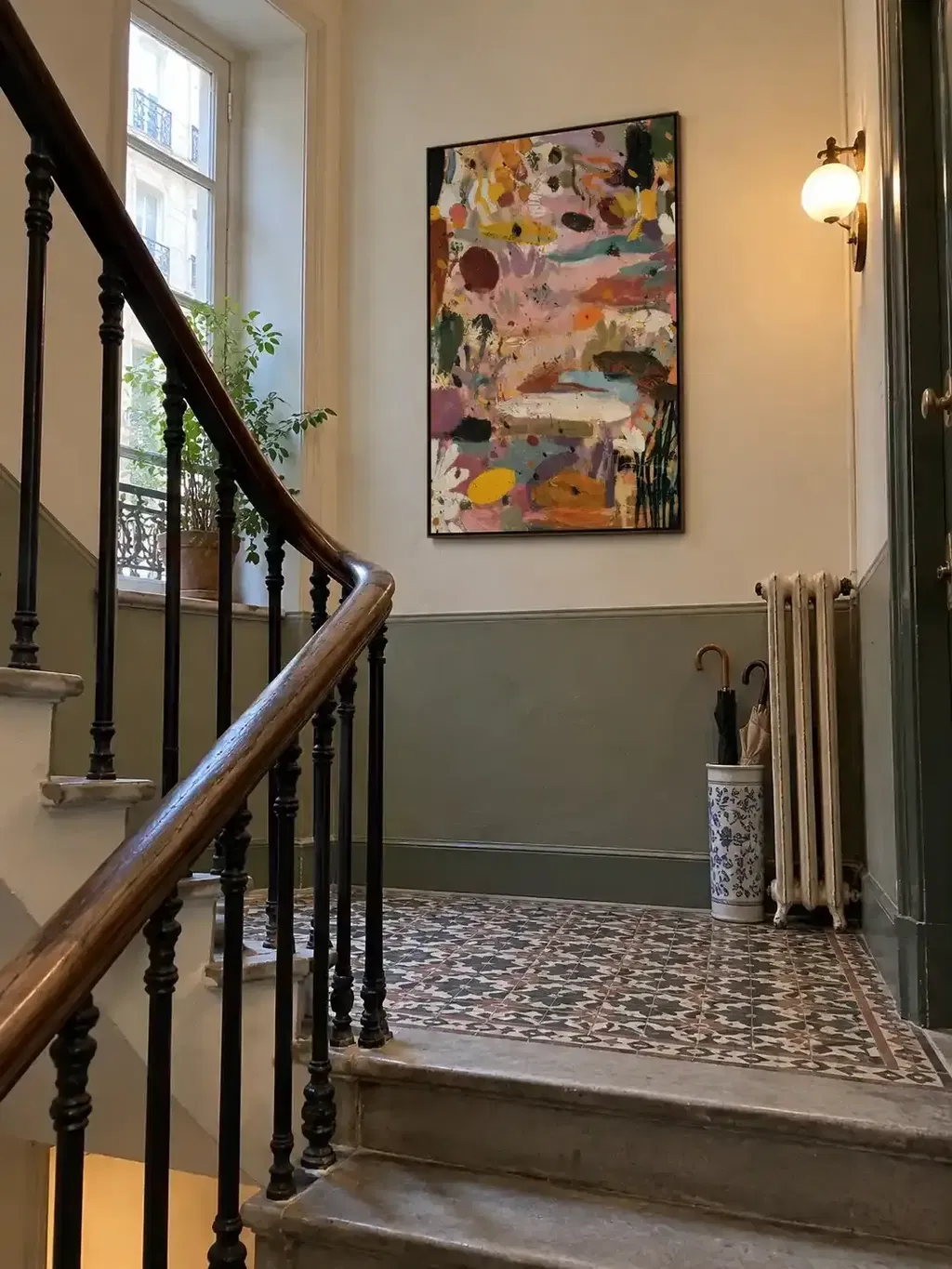
Textured original apartment wall art works best in city homes when it matches the wall's proportion, adds warmth, and keeps the room from feeling crowded. In small apartments, texture can bring depth without needing a busy image or a huge frame. That makes it useful for modern spaces that lean flat, hard, or minimal.
Why Texture Works in Compact City Rooms
Texture gives a small room more visual presence without asking for more floor space. In interior design, texture and line are two elements that shape how a room feels, which is why a textured surface can soften a compact apartment better than another flat print can. The texture and line as design elements idea matters most when the room already has glass, metal, stone, or smooth painted walls.
That does not mean texture automatically makes a room feel larger. It usually works by making the wall feel more layered and finished, so the space feels less bare. In a studio, bedroom, or small living room, that extra depth can be the difference between a wall that disappears and one that quietly anchors the room.

Original textured art also helps when the rest of the apartment is visually restrained. If your furniture is simple and the palette stays neutral, the artwork can carry warmth without adding clutter. That is why textured original art often feels like a better fit than an equally large flat canvas in a compact urban interior.
If you want a quick follow-up on the style side, textured wall art basics explain why impasto surfaces feel different from flat prints.
Choose Scale That Fits Narrow Walls
For apartment wall art, scale usually matters more than subject matter. A piece can be beautiful and still feel wrong if it overfills a narrow wall or sits too small above a sofa. Start with the visible wall width, the furniture below it, and the empty space you want to leave around the artwork. Those are the checks that tell you whether a wall wants a slim vertical piece, a broader horizontal piece, or a single large statement.
Vertical art is often the better answer on narrow apartment walls because it draws the eye upward. That creates visual lift, which is useful in hallways, entry nooks, tight bedroom walls, and any spot where the room feels compressed from side to side. The placement logic behind vertical art for narrow walls is simple: vertical shape supports height, while horizontal shape tends to spread across width.

A single substantial piece can also calm visual noise better than several small frames in a compact room. That is not a universal rule, but it is a strong option when the wall already has a lot going on, such as a sofa, lamp, console, or shelf nearby. In those cases, one clear focal point often looks more intentional than a busy cluster.
Use the wall as the decision maker. If the space is slim and tall, choose a vertical composition. If the wall is wider and sits above low furniture, a broader format may balance better. If neither choice feels right, a grouped layout can work, but only when the spacing stays open enough that the apartment still feels breathable.
For readers comparing layout options, small-space art curation is a useful next step, and narrow-wall stacking covers a more segmented vertical approach.
Texture That Softens Modern Minimalism
Modern apartments often rely on clean lines, pale walls, and simple furniture, which can make a room feel sharp rather than warm. Textured original art helps soften that look. The right surface gives the room a little friction and variation, so the eye has something to rest on instead of sliding across another smooth plane.
Neutral texture is the easiest starting point for a calm room. Beige, white, gray, and earth tones keep the palette quiet while still adding dimension. That works especially well in bedrooms, compact living rooms, and homes that already have a lot of visual activity from windows, flooring, or furniture finishes.
More expressive surface depth can work too, but it needs a simpler setting. Thick brushwork or pronounced impasto usually makes the strongest case when the room wants a focal point and the rest of the décor stays restrained. In other words, the art should lead while the furniture supports it, not compete with it. If the room already feels crowded, a calmer surface is usually the safer choice.
Warm accents, including small touches of gold, can add richness in small doses. They are most effective when the apartment already has warm wood, brass hardware, or soft lighting. Used sparingly, they can make a neutral piece feel more finished without turning it into a loud statement.
If you are browsing by style, the impasto collection is a natural path for more expressive surfaces, while neutral art options fit quieter rooms better.
Placement Ideas for Living Rooms, Entryways, and Bedrooms
-
Living room: Over a sofa, textured art usually works best when it stays centered and leaves breathing room on both sides. If the sofa is small or the wall is narrow, a vertical piece can feel cleaner than a wide composition. In a room with lots of furniture lines, choose a surface that adds depth without adding more visual noise.
-
Entryway or hallway: This is one of the strongest places for vertical apartment wall art because the wall is often slim and the first view is brief. A tall piece can make the space feel more intentional the moment you walk in. For renters, this is also a smart zone to keep the visual impact high while the footprint stays small. If you are mapping a narrow rental wall, vertical entryway ideas are worth a look.
-
Bedroom: Bedrooms usually benefit from calmer textures and softer color movement. Above a headboard, the art should support the bed rather than fight it, so a restrained piece often works better than a highly active surface. If the room is very minimal, texture can add just enough warmth to stop the space from feeling unfinished.
-
Compact dining area or studio nook: These spaces often share sightlines with the kitchen or living zone, so the artwork needs to stay controlled. A single vertical piece can define the corner without overpowering the rest of the apartment. This is a good place to use texture as a focal point, not as extra decoration layered on top of everything else.
If you are deciding between broader and more vertical formats, large vertical wall decor is the right browsing path. For a wider set of abstract choices, abstract art painting gives you more room to compare styles.
A Practical Checklist Before You Buy
Measure the wall you actually want to fill, then note the furniture below it. A piece that looks right in isolation can still feel too wide, too low, or too small once it is above a sofa, dresser, or console. Decide whether the wall needs height or width, then match the texture level to the room's energy. If the apartment already has strong finishes or a lot of pattern, choose a quieter surface. If the room is plain, a more dimensional piece may be the better fit.
Check the color mood against the room's existing materials, and look for visual proof of texture through brushstroke visibility, side angles, or surface variation. If the piece is meant to look hand-painted, those details help you judge the finish before checkout. Confirm packaging, shipping, and returns before you buy so you know how the art will arrive and what happens if it does not fit.
If the wall, orientation, and texture level are clear, the final choice gets much easier. We recommend narrowing your search to one real wall, then comparing only pieces that fit that space.
FAQs
What Textured Art Works in Small Apartments?
Textured art for small apartments usually works best when it is slim, vertically oriented, or otherwise proportional to the wall. The safest choice is a piece that adds depth without taking over the room. If the wall is narrow or shared with furniture, start with one focal piece instead of a busy cluster.
How Do I Choose Vertical Art for a City Home?
Start with wall shape and nearby furniture height. If the wall feels tall and narrow, vertical art usually creates better balance than a wide piece. It works especially well in hallways, entryways, and beside low furniture. If the wall is broad, a vertical piece can still work, but it should feel intentional rather than squeezed in.
Can Textured Original Art Work in a Minimalist Apartment?
Yes, and it often works better than flat art when the room needs warmth. Keep the palette restrained and the scale calm so the texture adds character without noise. If your furniture and finishes are already simple, a quieter textured piece can give the room enough depth without changing the minimalist look.
How Much Texture Is Too Much for a Small Room?
Too much texture is usually the point where the artwork competes with the rest of the room instead of grounding it. If you already have strong patterns, bold finishes, or a crowded wall, choose a softer surface. Stronger impasto tends to work best when the room is otherwise simple and the art can be the main focal point.
What Should I Check Before Buying Art for a Narrow Wall?
Check the wall width, the furniture below it, and whether the space needs height or width. Then verify texture level, color mood, packaging, and returns. If the piece is meant to look hand-painted, ask for close-up or side-angle views so you can judge the surface before checkout.