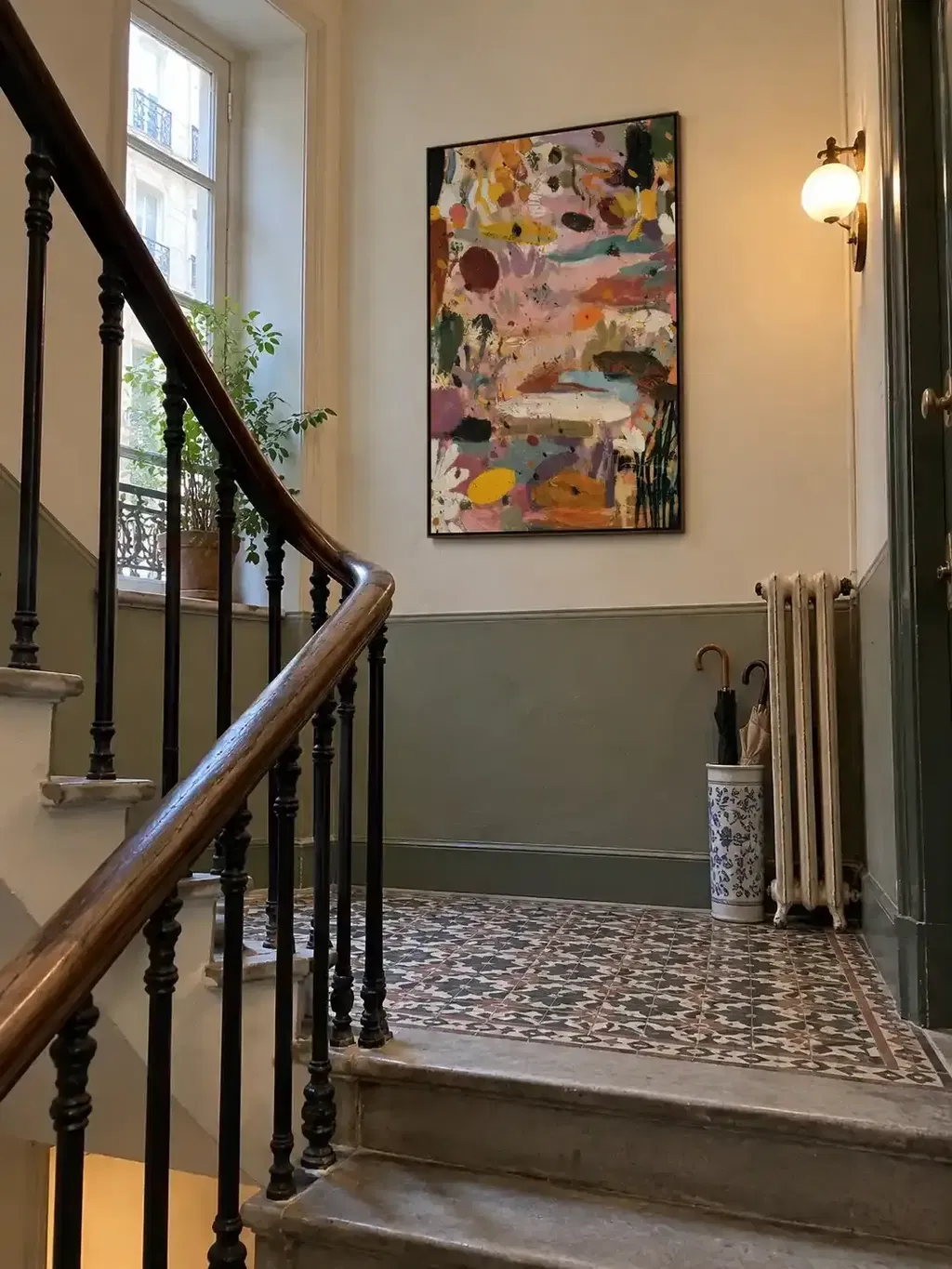
You walk into a room, and a snow-capped ridge stretches across the far wall. The space feels bigger, calmer, somehow more grounded. That is the quiet power of mountain paintings. They reshape how a room feels without changing a single piece of furniture. Whether you lean toward bold peaks or soft, misty valleys, the right mountain art turns an ordinary wall into a view worth pausing for.
Key Takeaways
- Mountain paintings work in every interior style, from minimalist lofts to cozy cabins.
- Style matters: abstract mountain art, realistic landscapes, and textured impasto pieces each create a different mood.
- Size, orientation, and color palette should match your wall space and existing décor.
- Hand-painted originals offer texture and uniqueness that prints cannot replicate.
- Placement height, lighting, and furniture alignment all affect how a mountain scene reads in a room.
Why Do People Love Mountain Paintings?
Mountains carry a universal emotional weight. They suggest stability, adventure, and open space. These are the feelings most of us want inside our homes.
A mountain landscape painting brings depth to a flat wall and gives the eye somewhere to travel.
Snowy mountain wall art cools down a warm-toned room. Green alpine valleys add life to a neutral space.
There is also a psychological pull. Mountains remind us of travel, silence, and scale.
Hanging mountain wall art is one of the simplest ways to invite that energy indoors as a focal point, a conversation starter, or a quiet backdrop that makes a room breathe.

What Types of Mountain Paintings Can You Choose?
Not all mountain art looks the same. The style you pick sets the entire tone of your space. Here is a quick breakdown:
| Style | Look & Feel | Best For |
|---|---|---|
| Realistic landscape | Detailed peaks, natural colors, classic composition | Traditional and transitional rooms |
| Abstract mountain art | Simplified shapes, bold or muted palettes, layered textures | Modern, minimalist, and eclectic spaces |
| Impasto / palette knife | Thick, textured paint you can see and almost feel | Spaces that need tactile warmth and dimension |
| Wabi-sabi mountain scenes | Muted tones, imperfect beauty, quiet atmosphere | Japandi, Scandinavian, and earthy interiors |
| Minimalist silhouettes | Clean lines, limited color, lots of negative space | Small rooms, hallways, bedrooms |
| Colorful expressionist peaks | Vivid hues, loose brushwork, high energy | Accent walls, creative studios, kids' rooms |
A Note on Texture
If you have only seen mountain art in flat prints, you are missing half the experience. A hand-painted mountain painting with raised brushstrokes catches light differently throughout the day. It adds a layer of richness that no print or digital reproduction can match.
Is Mountain Art Only for Rustic Homes?
Not even close. This is one of the biggest myths in home décor. Mountain scene wall art adapts to nearly any interior style:
- Modern & minimalist: An abstract mountain piece in grey, white, and blue keeps the space clean yet interesting.
- Mid-century modern: Warm-toned mountain landscapes with earthy palettes complement walnut furniture and statement lighting.
- Coastal: Soft blue and grey peaks echo the tones of a seaside home without clashing.
- Industrial: A large-scale, moody mountain painting adds soul to exposed brick and metal.
- Boho & eclectic: Colorful, textured mountain art fits right into the layered, personality-driven look.
- Scandinavian / Japandi: Quiet, wabi-sabi mountain scenes with neutral tones feel natural in pared-back spaces.
Mountain paintings for living room walls are the most common choice, but they also shine in bedrooms, dining rooms, offices, and hotel lobbies.
12 Tips for Choosing the Right Mountain Art
- Measure your sofa, then multiply by 0.66. The painting should span about two-thirds the width of the furniture below it. An 84-inch sofa calls for art around 56 inches wide.
- Tape the dimensions on your wall first. Use painter's tape to outline the frame size and live with it for a day. This one step prevents most sizing regrets.
- Match color temperature to your room's light direction. North-facing rooms get cool, blue light, so pick mountain art with warm undertones like golden or amber. South-facing rooms handle cooler blue and grey palettes well.
- Pick warm-toned peaks for evening rooms. If you use your living room mostly at night under warm bulbs, a blue-grey snowy mountain scene may look flat. Choose one with warm highlights instead.
- Run the "squint test" on your phone. Pull up the painting image, squint, and check if the dominant color fights your room. If it clashes, skip it.
- Choose hand-painted originals over prints. Impasto and palette knife textures catch and reflect light, giving the piece a living quality flat prints never have.
- Avoid art that matches your wall too closely. A white mountain on a white wall vanishes. Keep at least two shades of contrast between the painting and the wall.
- Size up, not down. The most common regret designers hear is art that ended up too small. When torn between two sizes, always go bigger.
- Request detail photos under different lighting. Colors shift dramatically between daylight and LED bulbs. Ask for close-ups under warm and cool light before committing.
- Look for depth in the composition. Mountain paintings with a foreground element like a river, path, or tree line pull you into the scene. A flat, single-plane peak can feel more like wallpaper.
- Echo your room's strongest shapes. Angular modern furniture pairs with sharp geometric ridges. Rounded, soft sofas look better alongside rolling hills and gentle peaks.
- Invest in visible brushstrokes. Thick paint creates real shadow and dimension that change as light moves through the room, making the art feel alive.

10 Tips for Placing Mountain Art & Mistakes to Avoid
Placement Tips
- Hang the center at 57 inches from the floor. This museum standard works in most homes with 8 to 9 foot ceilings.
- Keep 6 to 8 inches between the sofa back and the frame's bottom edge. This gap makes art and furniture read as one unit.
- Install a picture light or spotlight above the canvas. Directional light makes impasto texture dramatic, especially at night.
- Outline the frame on the wall with tape before drilling. Step back to the doorway and check the position first.
- Align horizontal pieces with the sofa line. Art and furniture should feel connected, not like separate objects.
- Lean oversized pieces on a shelf or mantel. This creates a relaxed gallery feel without heavy wall mounting.
- Hang a vertical mountain scene in low-ceiling rooms. The upward pull of the peak creates an illusion of height.
- Group 2 or 3 smaller pieces with 2 to 3 inch gaps. Consistent spacing makes them read as one composition.
- Place mountain art on a wall with indirect light. Direct sun causes glare on oil paintings and fades color over time.
- Check the view from the room's entrance. The painting should be the visual anchor the moment you walk in.
Common Mistakes
- Hanging too high. This is the most frequent error. If you have to tilt your head up, it is too high.
- Choosing a piece that is too small. A tiny painting on a large wall looks lost. When in doubt, go bigger.
- Ignoring the frame-to-wall contrast. A dark frame on a dark wall disappears. Make sure there is enough contrast for the art to stand out.
Is Mountain Art Right for You?
It is for you if you…
- Love nature but want to bring it indoors without a literal photo print.
- Prefer calm, grounding spaces over high-energy décor.
- Want a single piece that anchors an entire room.
- Appreciate texture and handmade craftsmanship in your home.
- Are decorating a large wall and need something with visual weight.
- Enjoy a range of styles — from abstract mountain art to detailed landscape scenes.
- Like art that works across seasons and never feels dated.
It might not be for you if you…
- Prefer urban-themed or figurative art as your main focal point.
- Want artwork that changes frequently — mountain paintings tend to be "forever" pieces.
- Dislike nature-themed décor entirely.
Why Choose Montcarta for Mountain Wall Art?
When you are ready to invest in a piece that lasts, quality matters. Montcarta offers a curated mountain wall art collection featuring original, hand-painted oil and acrylic paintings by global artists.
Every piece is crafted with real brushstrokes like impasto, palette knife or classic techniques, so you get texture and depth that prints simply cannot deliver.
If you want mountain paintings that feel as alive as the peaks they capture, Montcarta is a strong place to start.

Frequently Asked Questions
Should a mountain painting be horizontal or vertical?
It depends on your wall. Horizontal mountain paintings feel panoramic and are ideal above sofas, beds, and dining tables. Vertical pieces work well in narrow spaces like hallways and between windows. If your room has low ceilings, a vertical mountain scene draws the eye upward and creates the illusion of height.
Do mountain paintings work in a bedroom?
Very well. Soft, muted mountain landscape paintings in cool blues, greys, or earthy pastels create a restful atmosphere. Avoid overly dramatic scenes in a sleep space. A quiet, misty ridgeline above a headboard feels serene without overwhelming the room.
Can mountain wall art make a low-ceilinged room feel taller?
Yes. Choose a vertical mountain painting with a strong upward line, one where the peak rises toward the top of the canvas. The vertical composition naturally pulls the eye up and creates a sense of more height.
What colors pair best with mountain wall art?
Earthy tones like sage green, warm taupe, and soft grey complement most mountain scenes. For snowy mountain wall art, pair it with cool whites, slate blue, or charcoal accents. Colorful abstract mountain art works well with one accent tone pulled from the painting, such as a mustard throw or terracotta vase, to tie the room together without competing.