Art has always been more than decoration. It has the power to hold memories, mirror identity, and set the atmosphere of a home. Store-bought pieces can be attractive, but they often feel like something anyone could own. A custom art commission is different: it turns a personal memory, image, or story into a treasure that belongs only to you and the people closest to you.
The Unique Value of Commissioning Custom Art
A commissioned artwork gives a home individuality. Instead of decorating with the same prints found in countless living rooms, you have a piece that embodies your life and values.
A Reflection of Your Life
Walking into a room and seeing not just a generic print but a painted version of your grandmother's garden or the street where you grew up creates a feeling of belonging. These works carry a weight of memory that mass-produced art can never match.
Emotional Connection That Lasts
Custom paintings often grow in meaning over time. A portrait of a child painted at age six becomes a reminder of those fleeting years, and decades later, it takes on even deeper resonance as it passes from one generation to the next.
Authentic Craftsmanship
Every commissioned piece carries the artist's hand in visible ways—the brushstrokes, the layering of color, the small choices that add life. Unlike prints, they are crafted with intention and made for you alone.
Custom art adds depth and individuality by weaving your personal history into the fabric of your home.

Inspiring Ideas for Your Own Custom Painting
The best commissions come from subjects that hold real weight in everyday life. People often find that the most powerful ideas are also the simplest ones. Here are some ideas to inspire your next custom art piece:
| Theme | Description | Why It's Special |
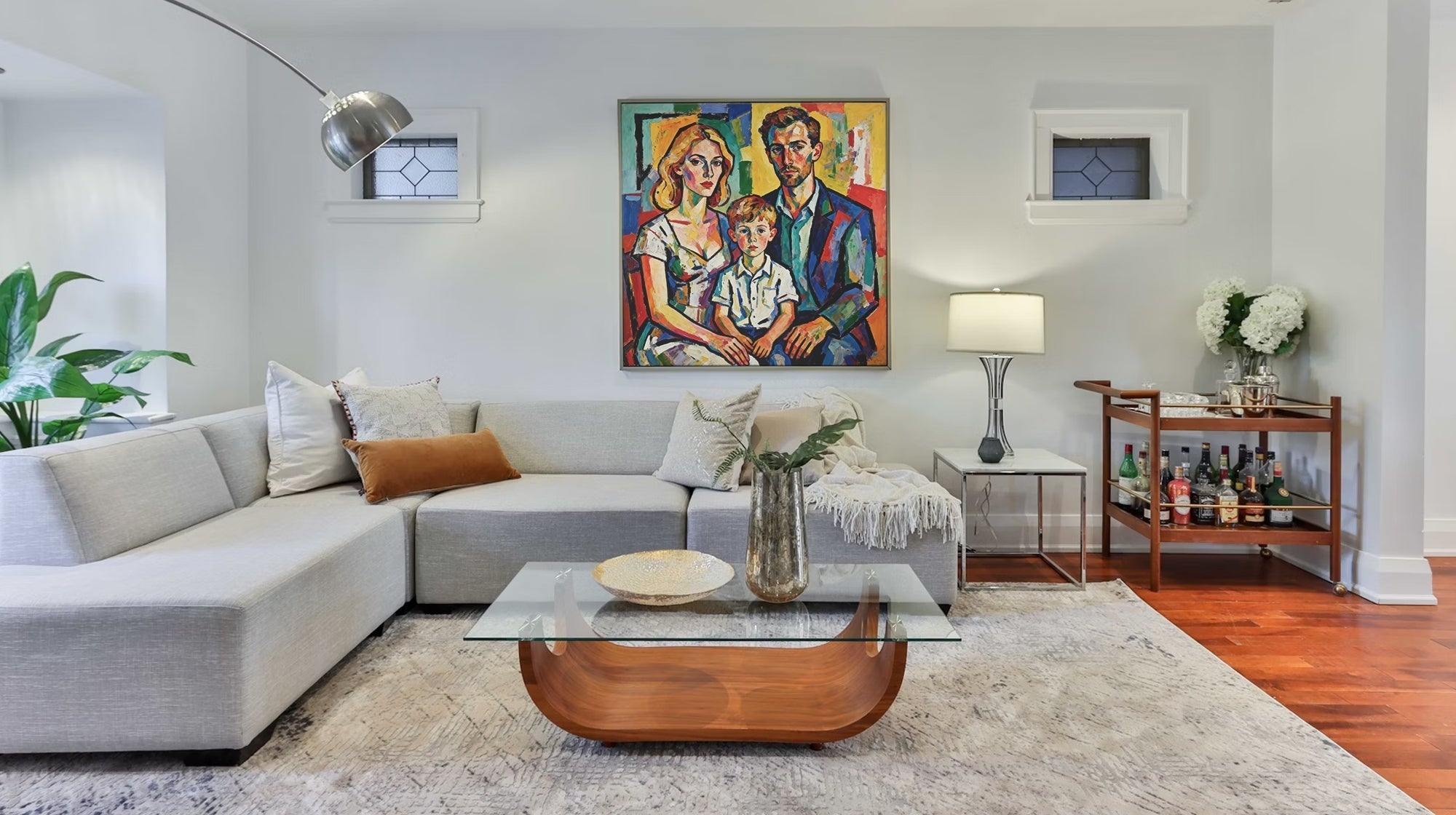
| Family Portraits | A painting of parents with children gathered around. | Captures a unique family bond that no photograph can fully convey. |
| Pets | A dog's eager look or a cat curled up on a windowsill. | Freezes a beloved pet's personality and keeps that memory alive forever. |
| Weddings | A painted first dance, with light, color, and movement captured uniquely. | Adds a romantic touch that photography sometimes can't express. |
| Travel Memories | A canvas of a mountain view or sunset from a special trip. | Brings the beauty of a special place into your everyday life. |
| Milestones | Commemorating achievements like finishing school or celebrating anniversaries. | Turns significant moments into lasting treasures. |
The best ideas often come from life itself, with paintings preserving the people, pets, and places you never want to forget.

What to Keep in Mind When Choosing the Perfect Photo
The success of a commissioned painting depends largely on the photo chosen. A thoughtfully selected photo provides the artist with the best foundation to work from.
Clarity Matters
Sharp details in the photo allow the artist to accurately capture expressions and textures. A blurry or low-resolution image makes the process more challenging, though some artists can still adapt with extra care. Aim for high-resolution photos with clear details to ensure every little nuance can be captured.
Lighting Enhances Mood
Soft natural light, such as in the morning, late afternoon, or open shade, usually adds depth and warmth to photos. Diffused flash can also work well if it preserves true color and avoids hard shadows. Harsh flash often washes out faces, while deep shadows can obscure important features. Choose photos taken in natural light, as they help bring out the true essence of the subject.
Composition Sets the Stage
A well-balanced composition makes it easier to translate the photo into a strong painting. If the photo has a busy or distracting background, share both the original and a cropped version so the artist can propose background simplifications, such as soft bokeh or color blocks, to keep the focus on the subject. This ensures the important details remain clear and prominent in the final artwork.
Emotion Over Perfection
Sometimes the most meaningful photo is not the clearest one. A slightly crooked shot of a child laughing or a dog running across the yard may carry far more life and emotion than a perfectly staged studio photo. While technical quality is important, the emotional connection the photo conveys often matters more, but aim to provide at least one reference with enough facial detail so the artist can capture likeness accurately. The right photo stirs both the artist's creativity and your personal connection to the subject.

How to Begin Your Commission with Confidence
Starting a custom art commission can feel daunting, but with a little planning, the process becomes smooth and exciting. Here's a step-by-step guide to help you begin with confidence—plus a look at how artists transform your photo into a finished painting.
Step 1: Set Your Budget
Setting a clear budget is essential as it influences the size, style, and materials of your artwork. Decide on a comfortable price range and share it with the artist. Being upfront ensures both you and the artist are on the same page, allowing for a seamless collaboration.
Step 2: Choose the Right Size and Placement
Consider where you want to place the artwork and how it will fit into the space. Measure the wall carefully and visualize the artwork from across the room. Using masking tape to mark the area on the wall can give you a better sense of scale and help you avoid any surprises later.
Step 3: Share Your Photos and Story
Clearly share your chosen photo and the story behind it. Whether it's a family moment or a travel memory, explaining the emotional significance helps the artist create something meaningful. Open communication ensures the final piece aligns with your vision.
At this stage, the artistic process begins:
- Selecting the Right Photo: A clear, well-lit photo with strong detail gives the artist the best foundation. Some clients send multiple photos so elements can be combined into one painting, but combining works best when perspective, scale, and light direction are consistent. Your artist can advise what will look natural.
- Initial Sketch: The artist maps out proportions and placement on canvas, allowing for adjustments before paint is applied.
- Building Layers of Color: Base tones are laid down first, with details built gradually. Portrait paintings receive skin tones in layers, while landscapes gain depth with repeated passes of color.
- Final Touches and Approval: Highlights, shading, and glazing may complete the piece; for oils and acrylics, a protective varnish might be applied after appropriate curing, while watercolor or pastel works are typically framed under glass instead of being varnished. Some artists provide progress updates, but it is best to agree beforehand on if and when to check in, such as after the sketch stage, to avoid interrupting the creative flow.
Step 4: Align on the Timeline
If the artwork is for a special event or gift, discuss the timeline early. Factor in drying time, varnishing, and shipping, and build in a little extra time to prevent any last-minute stress. A clear timeline ensures you'll receive the finished piece when you need it.
Step 5: Plan for Framing
The right frame completes the artwork. Check if the artist provides framing services, or plan to have it done locally. A complementary frame enhances the piece and integrates it seamlessly into your space.
A Timeless Treasure and the Perfect Gift
A commissioned piece is more than decoration—it becomes a permanent part of the story of your home. Unlike digital files stored away on a phone, a piece of art hangs proudly on the wall, woven into the texture of daily life and conversation. Over the years, it can be passed down to children or grandchildren, carrying cherished memories. Each brushstroke holds lived experience, and decades later it can still bring back the laughter, voices, and emotions of that special moment.
FAQs about Custom Painting
Q1: How does a custom painting differ from store-bought artwork?
A commissioned painting is unique because it is created specifically for an individual, family, or space. Mass-produced works sold in stores are made in large quantities and may appear in countless homes, but a commissioned piece embodies a personal narrative, memory, or vision. This makes it emotionally inseparable from its owner and gives the home a sense of intimacy instead of being decorated with something generic.
Q2: How do artists usually work from a photo?
Most artists begin by studying the photo to understand its mood, lighting, and composition. They often create a preliminary sketch to confirm proportions before applying paint. Layers are then built gradually to capture detail, depth, and atmosphere. The photo provides the foundation, but the artist's interpretation brings originality and vitality to the finished piece.
Q3: How long does it usually take to complete a commissioned painting?
The timeline depends on the medium, size, and complexity. Small watercolors may take one to two weeks, while large oil paintings can require several months because of the layering process and drying time. Since artists often balance multiple projects, it is important to discuss deadlines clearly in advance, especially if the painting is intended as a gift.