The Structural Shift: Why Modern Collectors are Prioritizing Repairability
The high-end art market is currently navigating a significant structural correction. In 2024, sales of auction pieces valued over $10 million plummeted by 44% year-over-year, according to Marketplace. This retreat from purely financial art assets indicates a profound shift in consumer behavior: buyers are moving away from "vanity" acquisitions toward works with real application value and emotional resonance.
For the aesthetic-driven homeowner, this shift highlights a critical vulnerability in the "retail-grade" market: the disposability of digital reproductions. While a giclée print or a high-definition canvas wrap may offer immediate visual gratification, they are essentially "dead-end" products. A single scratch, a tear, or a spilled glass of wine often spells the end of the item’s life cycle.
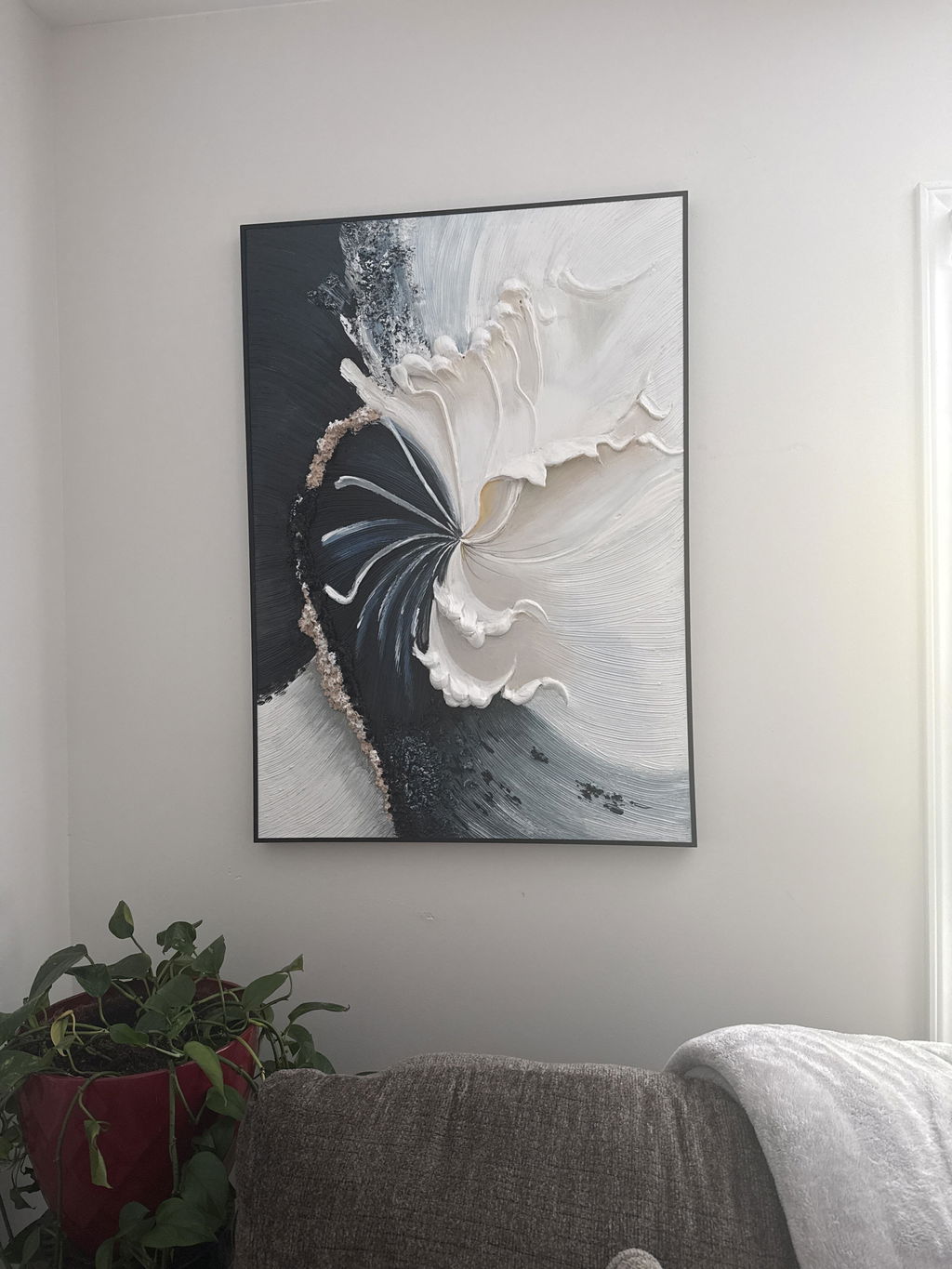
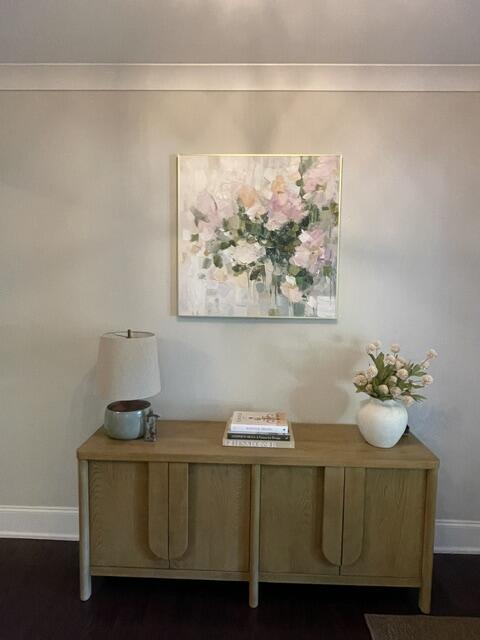
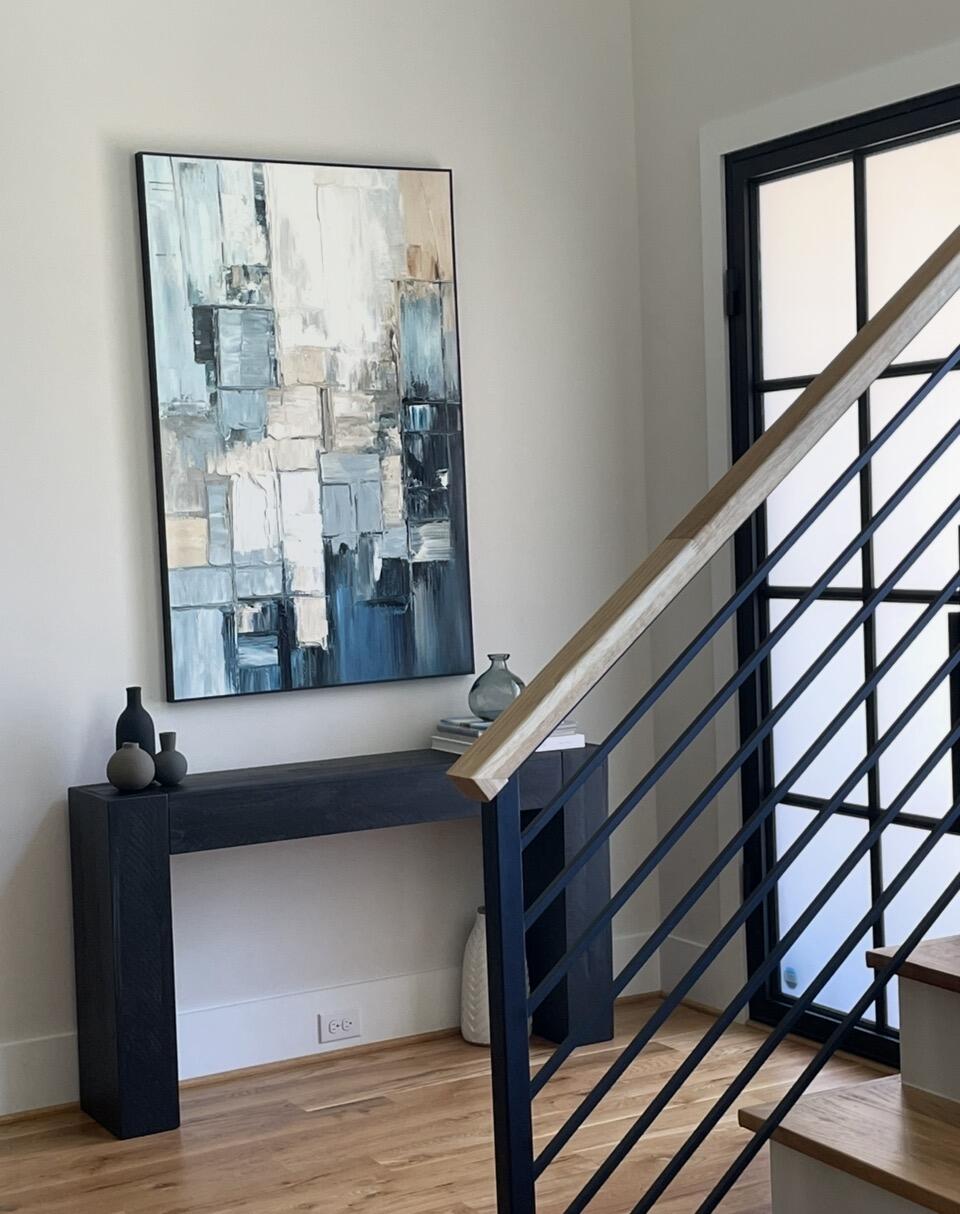
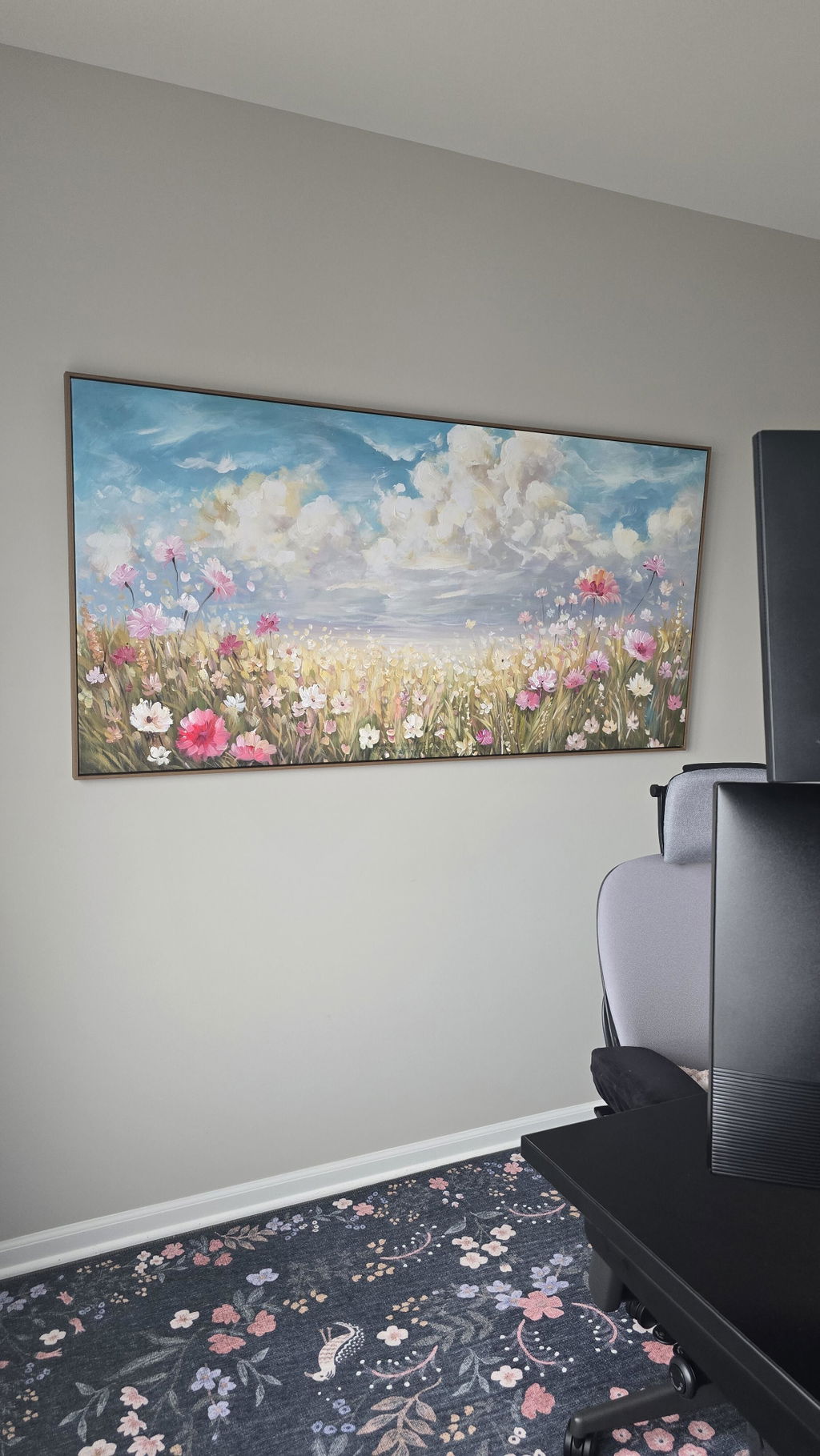
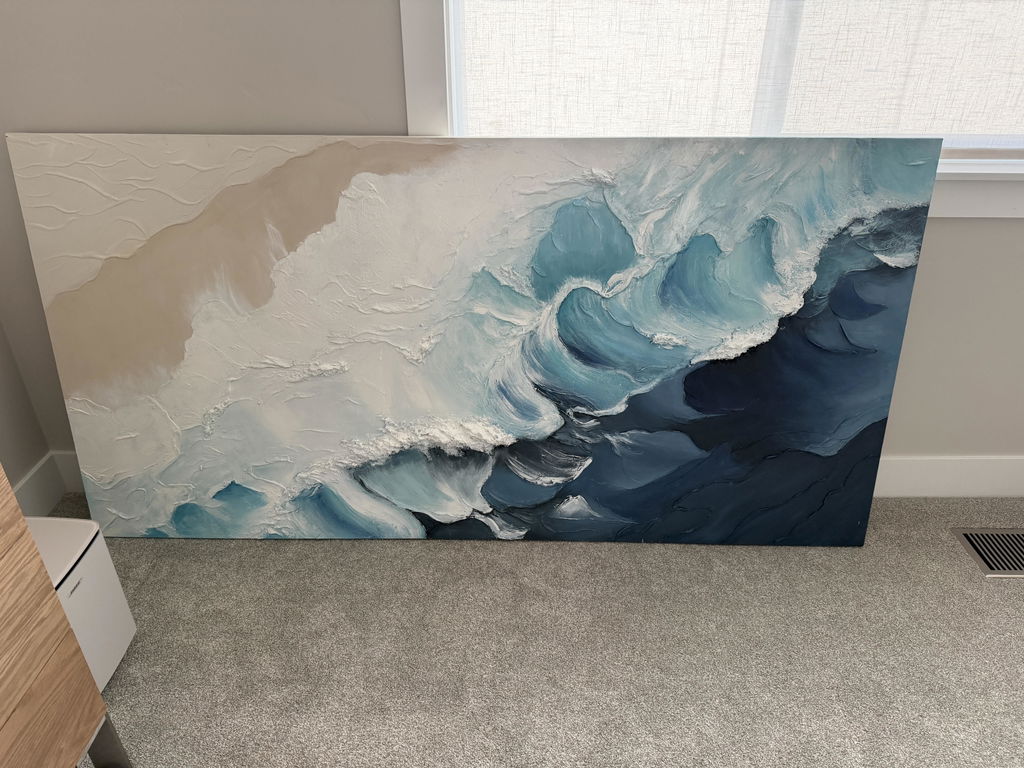
In contrast, hand-painted oil works—whether on canvas or as custom murals—possess a unique mechanical advantage: Repairability. This physical depth serves as the ultimate safety net for your investment. This article explores how the chemistry of oil, the structural integrity of hand-woven canvas, and the principles of modern conservation transform a "damaged" painting from a liability into a restorable asset that ages with grace.
The Neurological Premium of the Human Hand
Before discussing the mechanics of repair, we must understand why the human hand commands a commercial premium. A study by Columbia University confirmed that consumers value art labeled as "human-created" 62% higher than identical works labeled as "AI-generated." This isn't merely sentiment; it is rooted in how our brains process visual stimuli.
Research published in NCBI shows that viewing original art consistently activates the medial prefrontal cortex (mPFC) and the amygdala, optimizing emotional regulation circuits. This "biochemical crystallization" of human attention is what UChicago researchers call the "essential identity" of a work. Digital prints, lacking the micro-topography of physical brushstrokes, fail to trigger these same neural pathways.
Logic Summary: Our analysis of consumer value assumes that the "texture premium" is a result of bottom-up neural control mechanisms that suppress perceptual constancy illusions, as detailed in Stockton University research.

Engineering Longevity: The Mechanics of the Repairable Surface
The primary reason a damaged oil painting remains an asset is its reversibility. In professional restoration, the goal is to ensure that any repair can be undone if better techniques emerge in the future. This is a feature fundamentally impossible with digital prints, where the ink-to-substrate bond is microscopic and irreversible.
1. Pigment Chemistry and Lightfastness
Mineral-based oil pigments, such as cadmiums or earth tones, possess a level of lightfastness that organic inkjet dyes cannot match. According to ASTM D4303 standards, artist-grade paints are tested using accelerated aging protocols to ensure color stability over decades.
| Parameter | Value/Range | Unit | Rationale / Source Category |
|---|---|---|---|
| UV Radiant Exposure | 1260 | MJ/m² | Method C Xenon-arc test (Micom Labs) |
| Humidity Control | 55% ± 5% | RH | Simulated indoor environment |
| Pigment Particle Size | 0.5–5.0 | μm | Optimized for scattering and opacity (Optica) |
| Binder-to-Pigment Ratio | ~1:10 | ratio | Minimum for structural stability (Getty Conservation) |
| Refractive Index | 1.48–1.55 | n | Typical for linseed oil binders |
When an oil painting fades or is scratched, "in-painting" allows a restorer to match the exact chemical composition of the original layer. Because the surface has physical depth, new pigment can be integrated into the existing matrix. For a deeper look at how this compares to digital alternatives, see our guide on Evaluating Pigment Saturation: Oil Paintings vs. Canvas Prints.
2. Structural Integrity: The Thread Graft
A puncture in a mass-produced print on paper or thin synthetic canvas is usually catastrophic. However, a traditional cotton or linen canvas can be repaired through "thread grafting." Restorers can bridge a tear by weaving individual threads into the existing substrate, maintaining the structural integrity of the weave. This process ensures that "patina" adds character to the work, whereas "wear" simply degrades a print.
The Economic ROI of Hand-Painted Art
Investing in hand-painted works isn't just an aesthetic choice; it is a calculated real estate strategy. Data from the Royal Society suggests that neighborhoods with higher "art" geo-tags see greater relative house price ranking gains.
Commercial and Residential Dividends
- Property Value: In Chicago, the Millennium Park public art projects drove an estimated $1.4 billion in real estate-related growth (NCREALTORS).
- Workplace Productivity: A UPenn review found that 73% of individuals reported significant mood improvements in environments decorated with original artworks.
- Fiscal Leverage: Government investments in the arts typically yield a 7:1 ROI (Americans for the Arts).
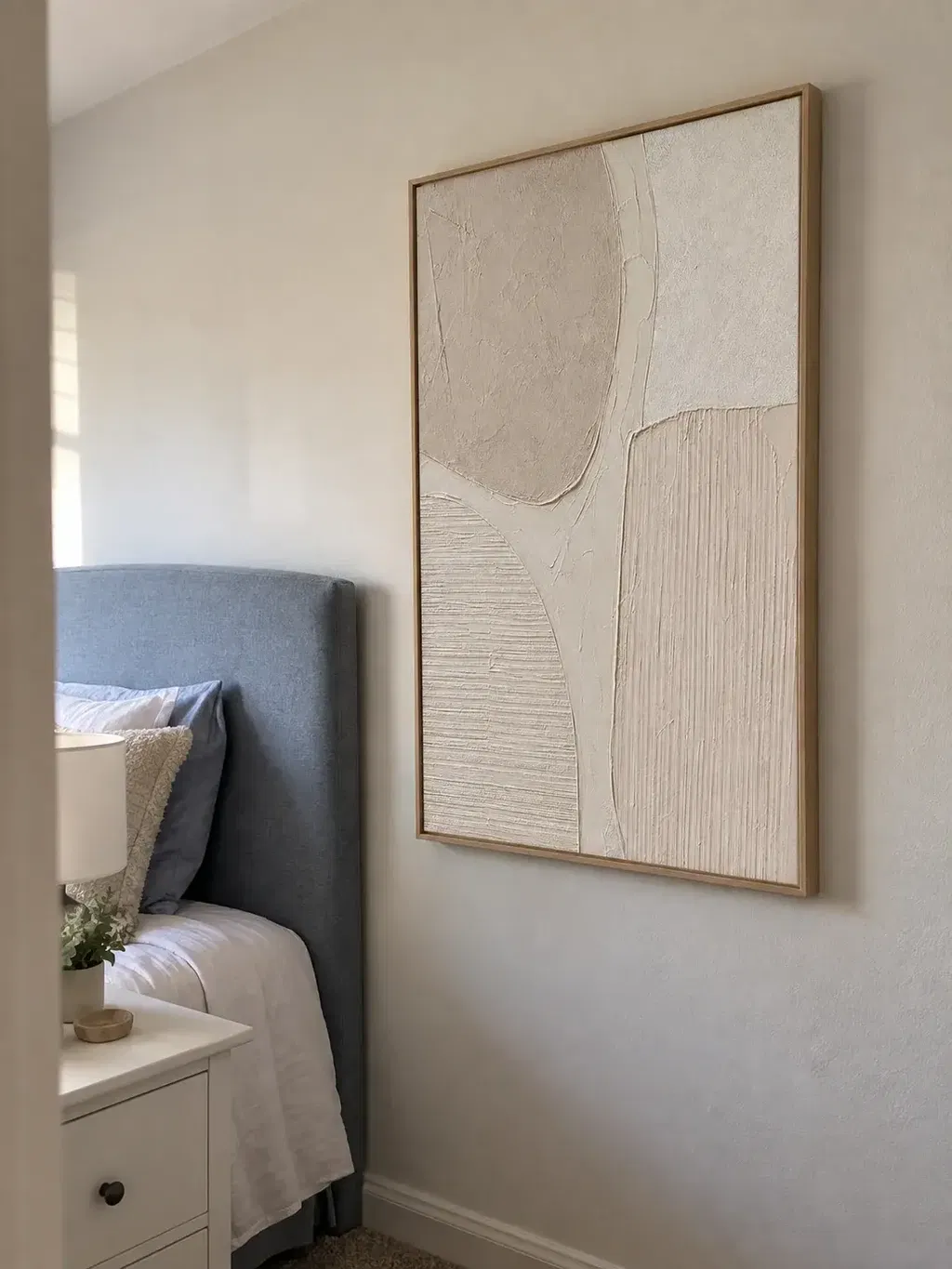
For homeowners, this translates to a "liquidity of beauty." A hand-painted piece can be moved, restored, and resold, whereas a custom-sized print has zero resale value once the specific room's dimensions are no longer relevant. This is particularly important when Balancing Heavily Textured Art with Minimalist Decor, where the physical presence of the art acts as a grounding architectural element.

Safety, Health, and the "IAQ Promise"
A common concern for risk-averse buyers is the safety of indoor paints. Historically, oil painting was associated with toxic heavy metals and high-VOC solvents. However, the modern industry has undergone a radical transformation.
Navigating the "Non-Toxic" Label
The EPA warns that indoor air pollution can be significantly higher than outdoor levels. To combat this, elite mural services now prioritize low-VOC and zero-VOC materials.
- The ASTM D-4236 Trap: Consumers often believe this label means a product is "safe." In reality, it only means the warning labels comply with regulations (EPA).
- Eco-Friendly Alternatives: Modern studios are shifting to walnut oil binders, which eliminate the need for toxic turpentine, and hemp canvases, which require half the water of cotton to produce (Cincinnati Art Museum).
Modeling Note: Our Indoor Air Quality (IAQ) estimates are based on 28-day chamber experiments conducted by Aalto University, showing that VOC emissions from painted surfaces plummet during the curing process, provided moisture levels are controlled at ~16%.
Troubleshooting: The Owner’s Guide to Asset Maintenance
Owning a hand-painted work requires a different mindset than owning a digital print. Because the medium is "alive" (oil films undergo oxidative cross-linking over many years), owners may encounter specific chemical phenomena.
1. The Mystery of "Haziness"
Advanced collectors often notice a white, cloudy film appearing on the surface of their paintings. This is known as "bloom" or "haziness." According to Tate research, this is caused by surfactants (like PEG-type molecules) migrating to the surface during temperature fluctuations. This is not damage; it is a surface accumulation that can be professionally cleaned, restoring the original vibrancy.
2. Support Induced Discoloration (SID)
If you notice a yellow or brown tint appearing on a white canvas, it may be SID. This occurs when water-soluble impurities in the canvas substrate are drawn into the paint layers during drying (Golden Artist Colors). This is a preventable issue that professional artists manage through proper priming, but it is also a treatable condition for existing works.
3. Fading and Environment
While oil is resilient, it is not invincible. For pieces placed in sun-drenched rooms, we recommend reviewing our expert tips on Choosing Oil Art for Bright Spaces: The Fade-Resistance Factor. Utilizing UV-protective varnishes can block harmful light waves at the molecular level, significantly slowing photochemical aging (PMC).
Scenario Analysis: Repair vs. Replacement
To help you decide where to invest, we have modeled two common ownership scenarios based on industry heuristics.
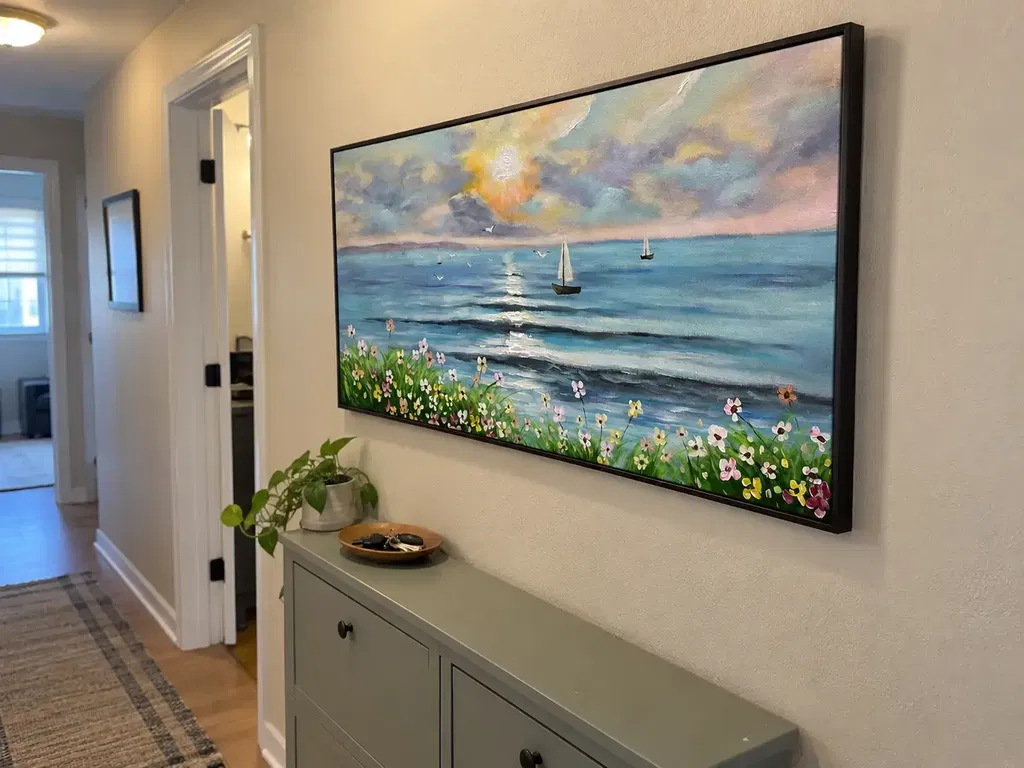
Scenario A: The High-Traffic Entrance
- Risk: Physical impact, dust accumulation, accidental spills.
- Hand-Painted Outcome: Surface scratches can be buffed or in-painted. The heavy texture masks minor abrasions. Professional cleaning every 10 years restores the "gallery-new" look.
- Digital Print Outcome: A single deep scratch reveals the white substrate beneath the ink. Cleaning with damp cloths often smudges the dyes. Total replacement is required within 3–5 years.
Scenario B: The Statement Living Room (Focal Point)
- Risk: UV exposure, humidity fluctuations, aesthetic "fatigue."
- Hand-Painted Outcome: The work develops a "patina" that increases its perceived value. If the room is renovated, the painting can be re-varnished to match a new sheen (matte vs. gloss).
- Digital Print Outcome: Colors shift toward blue or yellow as organic dyes break down. The flat surface becomes visually "stale" as it lacks the light-play of real pigments.
The Future of the Painted Surface
The 2025 Creative Economy Outlook (UNCTAD) highlights that cultural services now account for 3.1% of global GDP. As we move further into a digital-first world, the scarcity of physical, repairable objects will only drive their value higher.
By choosing a hand-painted work, you are not just buying decor; you are acquiring a piece of "public health infrastructure" that reduces stress, a financial hedge that boosts property value, and a durable asset that can be repaired, restored, and passed down. In a world of disposable replicas, the ability to fix what is broken is the ultimate luxury.
Disclaimer: This article is for informational purposes only and does not constitute professional financial, legal, or medical advice. Pigment toxicity and restoration procedures vary significantly by material; always consult a certified conservator or industrial hygienist before attempting repairs or handling historic paints.
Sources
- Marketplace: The expensive art market continues to struggle
- Columbia University: Human-Made vs. AI Art Study
- Royal Society: Quantifying the link between art and property prices
- UPenn: Visual Art in the Built Environment Review
- ASTM International: D4303 Standard for Lightfastness
- Tate: Conservation Concerns for Acrylic and Oil Paints
- EPA: Indoor Air Quality and Low-VOC Paints