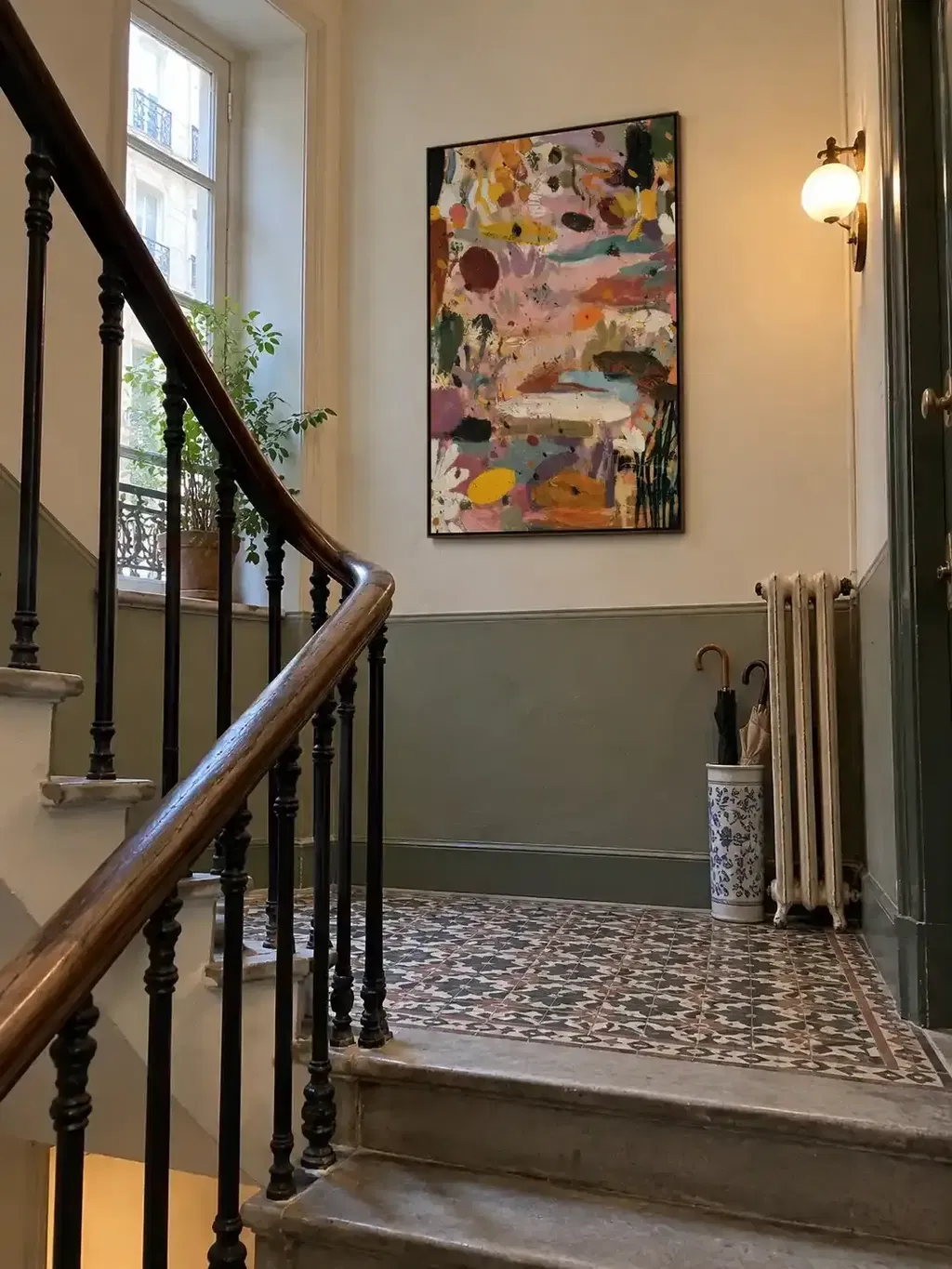
Palette knife art is a unique painting technique where an artist applies thick, uncompressed layers of paint—usually oil or heavy-body acrylic—to a canvas using a flexible metal blade instead of a traditional brush. This method results in a style known as impasto, characterized by visible, raised ridges that physically protrude from the surface. The dimensional look occurs because these raised edges interact with ambient light to create micro-shadows, giving the piece a tangible three-dimensional quality that shifts as you move around the room.
Quick Summary of Palette Knife Dimensionality
- Impasto Application: The knife acts as a small spatula, depositing thick paint that keeps its shape without being flattened by bristles.
- Physical Relief: Paint layers can reach several millimeters in height, creating a topographical map on the canvas.
- Light Interaction: The ridges catch light on one side and cast tiny shadows on the other, creating depth.
- Color Separation: Because colors are layered rather than blended, they retain a vibrant, clean quality that increases the illusion of space.
The Direct Answer to Why Palette Knife Art Looks 3D
The primary reason palette knife art appears so dimensional is the impasto technique, where paint is handled as a sculptural material rather than a liquid stain. Unlike brushes, which are designed to push paint into the fibers of the canvas and spread it thinly, a palette knife scoops and deposits paint in distinct, structural blocks. This creates a high-relief surface that physically occupies space.
When a piece of 3d art paintings is viewed in a home or gallery, the dimensionality is reinforced by the physics of light. As ambient light hits the jagged, raised edges of the paint, it creates "micro-shadows." These shadows provide the human eye with a constant stream of depth cues. Because the paint is not flattened by bristles, it maintains its internal volume and sharp edges, allowing it to mimic the textures of real-world objects like mountain crags, tree bark, or crashing waves.
Palette Knife vs Brush for Texture

Choosing between a brush and a knife fundamentally changes how an artist builds textured wall art. Brushes are excellent for soft gradients and delicate details, but they naturally compress the paint. The bristles hold the medium within their structure, and the pressure required to release the paint onto the canvas forces the layer to be relatively thin. Even "heavy" brushwork rarely achieves the architectural height of a knife stroke.
In contrast, palette knives act as small, flexible trowels. They do not absorb any paint, meaning every ounce of medium scooped from the palette is deposited directly onto the surface. This allows for clean, uncompressed layers that stand away from the canvas. The following table highlights the core differences in application and visual outcome:
| Application Factor | Paintbrush Technique | Palette Knife Technique |
|---|---|---|
| Paint Compression | Bristles compress paint layers into the canvas | Blade deposits uncompressed, thick layers |
| Edge Definition | Soft, blended, and feathered transitions | Sharp, architectural ridges and hard edges |
| Texture Height | Thin to moderate; generally flat | High relief; significant physical height |
| Color Purity | Prone to "muddying" during mixing | Maintains vibrant, unblended, layered hues |
| Cleaning Effort | Requires solvents and careful drying | Wipes clean in seconds with a rag |
The Physics of Dimension and Light Interaction
The visual depth of a palette knife painting is not merely an optical illusion; it is a physical reality. When an artist uses oil paint on canvas, they are essentially building a low-relief sculpture. The height of these paint ridges creates a surface that is incredibly sensitive to the environment in which it is displayed.
As the lighting in a room changes—such as sunlight moving across a wall or an evening lamp being switched on—the shadows cast by the impasto ridges shift. This dynamic interaction is why a palette knife piece can look different at noon than it does at dusk. Light damage is cumulative and irreversible, so while these pieces thrive under good lighting, museum-standard guidelines often suggest controlled levels (around 50 lux for sensitive materials) to preserve the integrity of the paint layers while still allowing the texture to "pop."
Furthermore, the physical ridges allow for a phenomenon called optical color mixing. Instead of mixing blue and yellow on the palette to create a flat green, an artist might lay a stroke of blue next to a stroke of yellow with a knife. From a distance, the viewer's eye mixes these colors together, but the physical separation between the two ridges adds a shimmering, atmospheric depth that a flatly blended green could never achieve.
Mastering Optical Color Mixing for Vibrant Results
One of the most common frustrations for beginner artists is the creation of "muddy" colors. This usually happens when a brush is used to over-blend wet paint on the canvas, leading to a dull, grayed-out hue. Palette knives solve this problem by allowing for clean layering. Because the metal blade is non-porous and smooth, it can lay a fresh color directly over a semi-wet layer without picking up the pigment underneath.
This layering technique allows for contemporary textured art to remain vibrant even in complex compositions. For example, in a sunset scene, an artist might use a knife to drag a streak of bright orange over a deep purple background. With a brush, these two colors would likely mix into a brownish tone. With a knife, the orange sits cleanly on top of the purple ridges, allowing both colors to exist independently. This creates a sense of "shimmer" or vibration that gives the painting a life-like, energetic quality.
Essential Palette Knife Shapes and Their Uses

Achieving specific dimensional effects requires an understanding of the tool's anatomy. A standard palette knife consists of a handle, a "tang" (the angled neck that keeps your knuckles out of the wet paint), and the blade itself. The flexibility of the blade is crucial; it must be springy enough to respond to pressure but stiff enough to hold a scoop of heavy paint.
- The Teardrop or Pear Shape: This is the most versatile blade. The rounded belly is perfect for mixing paint on the palette, while the tapered tip allows for the application of small, controlled dabs of texture.
- The Long Flat Blade: This shape is ideal for creating broad planes of color, such as large sky areas or smooth architectural surfaces. It can be used to "frost" the canvas like a cake, creating wide, even swaths of texture.
- The Pointed Tip (Diamond Shape): This blade is designed for precision. It can be used to scratch into wet paint—a technique called sgraffito—to reveal underlying layers, or to create sharp, thin lines for tree branches and grass.
- The Offset Handle (Cranked Tang): While not a blade shape itself, an offset handle is an essential feature. It allows the artist to work parallel to the canvas without their hand touching the wet surface, which is vital for maintaining the height of the impasto ridges.
Historical records from the National Gallery of Art indicate that even masters like Rembrandt utilized these types of tools to create sharp lead-white ridges that define the highlights of his portraits. Similarly, the English painter John Constable was known to move between thick, rough application and thin passages, using the palette knife to add "sparkle" to his landscapes.
Common Technical Challenges and Solutions
Working with such thick volumes of paint presents unique structural challenges. Because the paint is so dense, it does not dry at the same rate as a thin wash. This can lead to issues with the stability of the artwork over time.
1. Cracking and Peeling
Thick layers of oil paint dry from the outside in. As the surface skin hardens, the wet paint underneath may still be contracting, which can lead to "traction cracks." To prevent this, artists should follow the "fat over lean" principle—using paint with higher oil content in the upper layers. Additionally, using a stable support is key; all canvas paintings should have backing boards to protect against the physical vibration and humidity changes that can stress thick impasto layers.
2. Muddying the Canvas
If you find your colors are mixing accidentally, you are likely applying too much pressure. The knife should "float" over the previous layer. If the blade touches the canvas directly, it will scrape up the bottom layer and mix it with the new color. Practice the "buttering" motion—holding the knife at a low angle and using a light touch to deposit the paint.
3. Air Quality and Safety
Applying large amounts of paint increases the surface area of wet medium, which can lead to higher emissions of volatile organic compounds (VOCs). Always work in a well-ventilated studio, and if using traditional oil paints, be mindful of the solvents used for cleanup. Modern heavy-body acrylics offer a lower-VOC alternative that still maintains excellent peak-holding properties for texture.
Embracing Textured Wall Art and the Palette Knife Technique
What is palette knife art and why does it look so dimensional? The answer lies in the intersection of physical sculpture and optical physics. By moving away from the soft compression of a brush and embracing the bold, unyielding application of a metal blade, artists can create works that feel alive. The impasto ridges create a topographical surface that catches light and casts shadows, ensuring the piece remains dynamic as room conditions change.
Whether you are a collector looking for a statement piece or an artist beginning your journey, the palette knife offers a gateway to unparalleled depth. By mastering different blade shapes and understanding the mechanics of light interaction, you can move beyond flat images and into the world of truly dimensional art that commands attention on any wall.
Safety Notice
This article provides general guidance on art techniques and materials. Always follow the manufacturer's safety instructions for paints, solvents, and tools. Some traditional pigments and solvents may contain hazardous substances or emit VOCs; ensure your workspace is properly ventilated and consult a professional conservator for the long-term preservation of heavy impasto works.
FAQs
Can I use a palette knife with any type of paint?
No, a palette knife requires heavy-body paints like oils or thick acrylics. Thin mediums like watercolor or fluid acrylics will not hold the 3D impasto shape and will simply flatten out.
What is the difference between a palette knife and a painting knife?
A palette knife is typically straight and used for mixing colors on a palette. A painting knife has a 'cranked' or offset handle that allows you to apply paint to the canvas without your knuckles touching the wet surface.
Does palette knife art take longer to dry?
Yes, because the paint is applied in thick layers (impasto), drying times are significantly longer. Heavy acrylics can take days to weeks, while thick oil paint layers can take several months to fully cure.