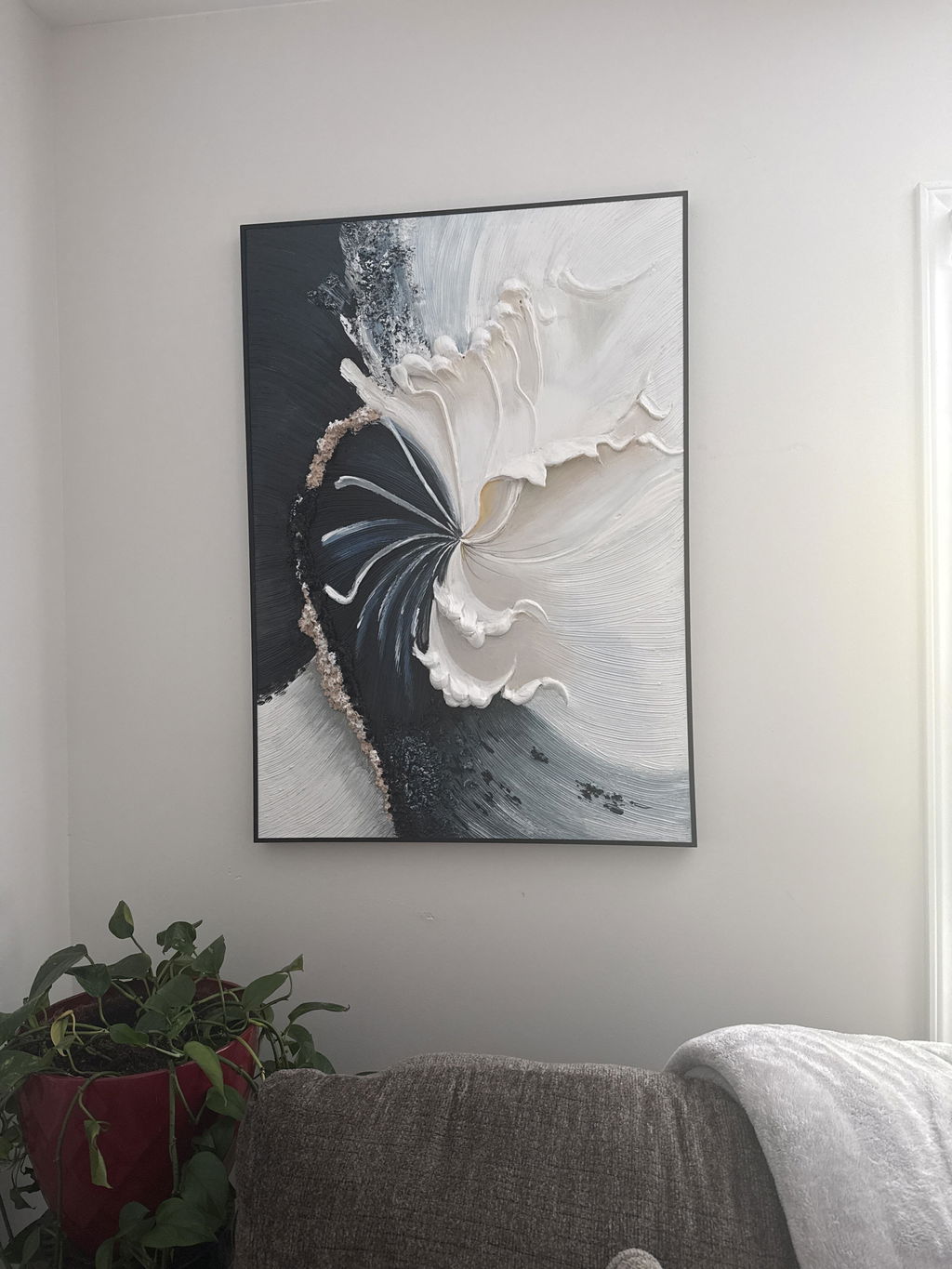
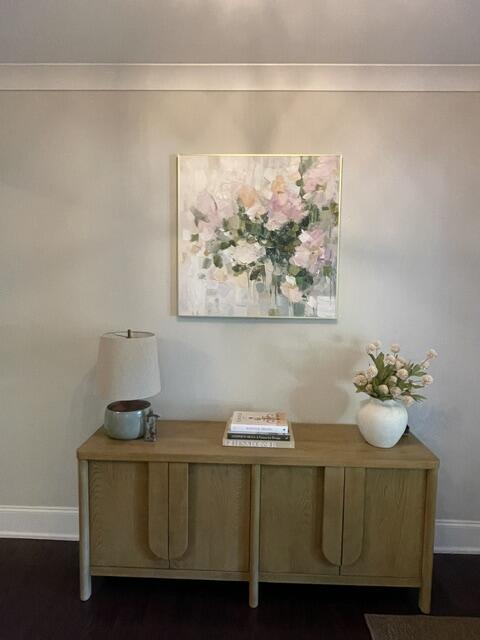
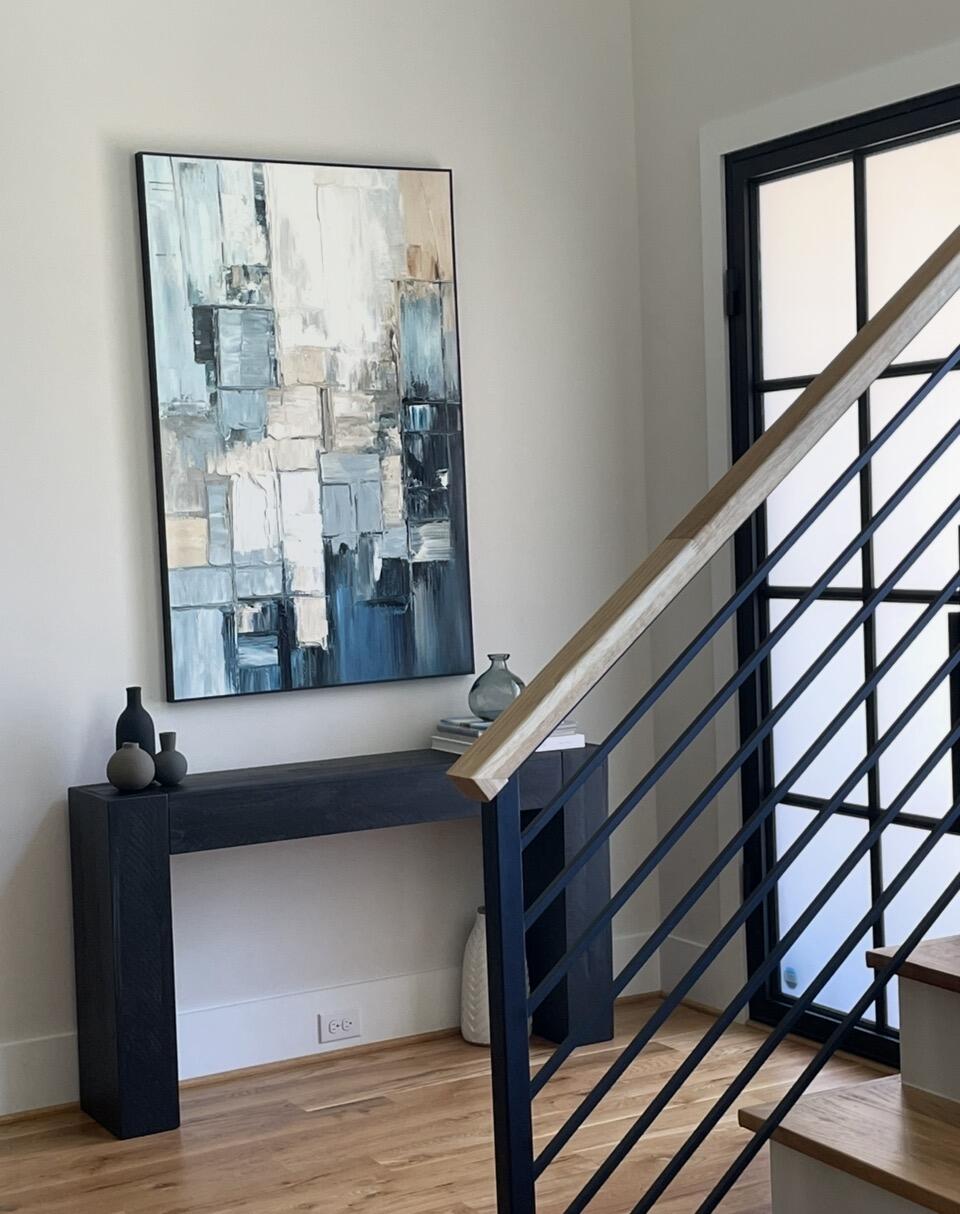
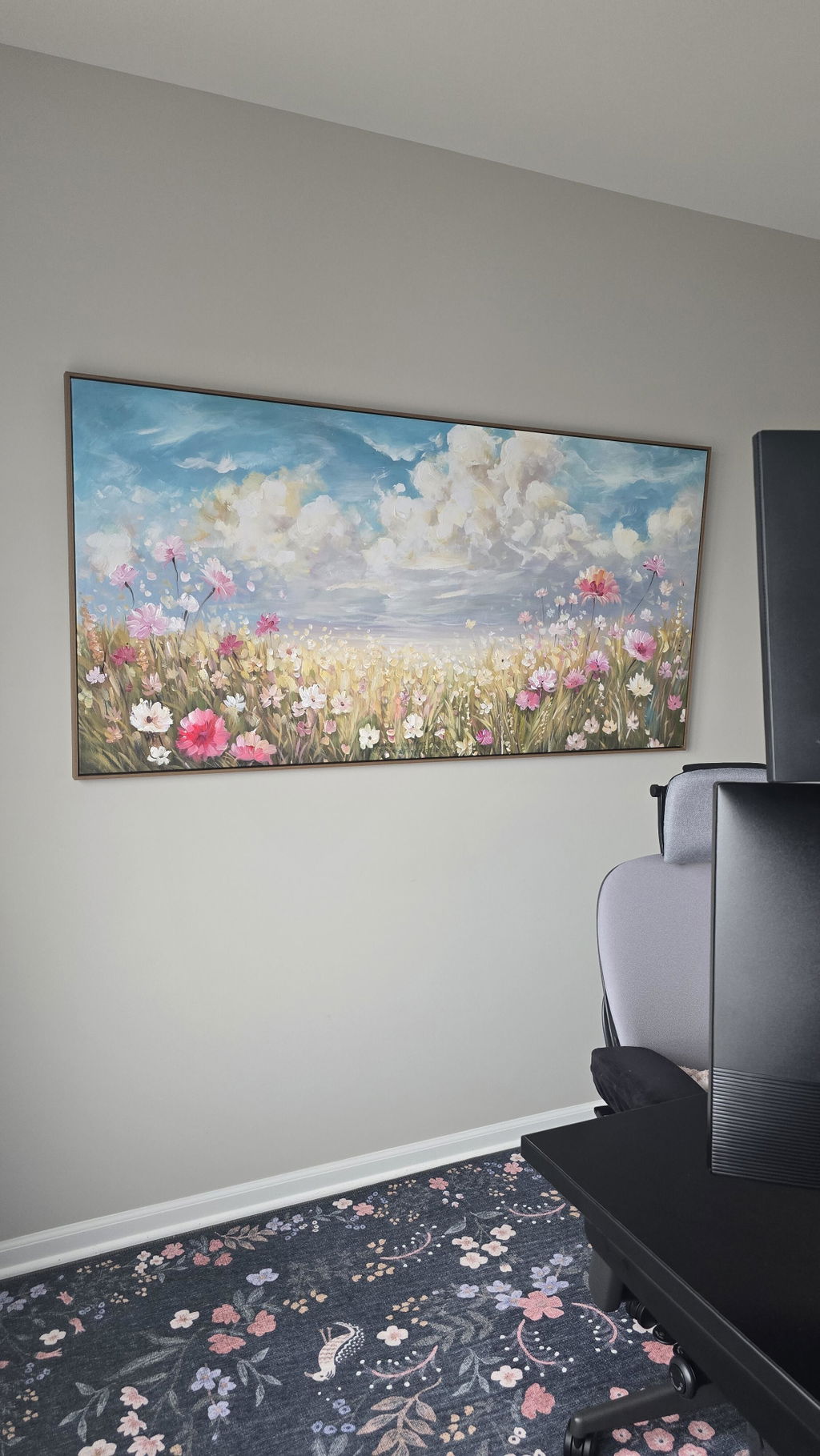
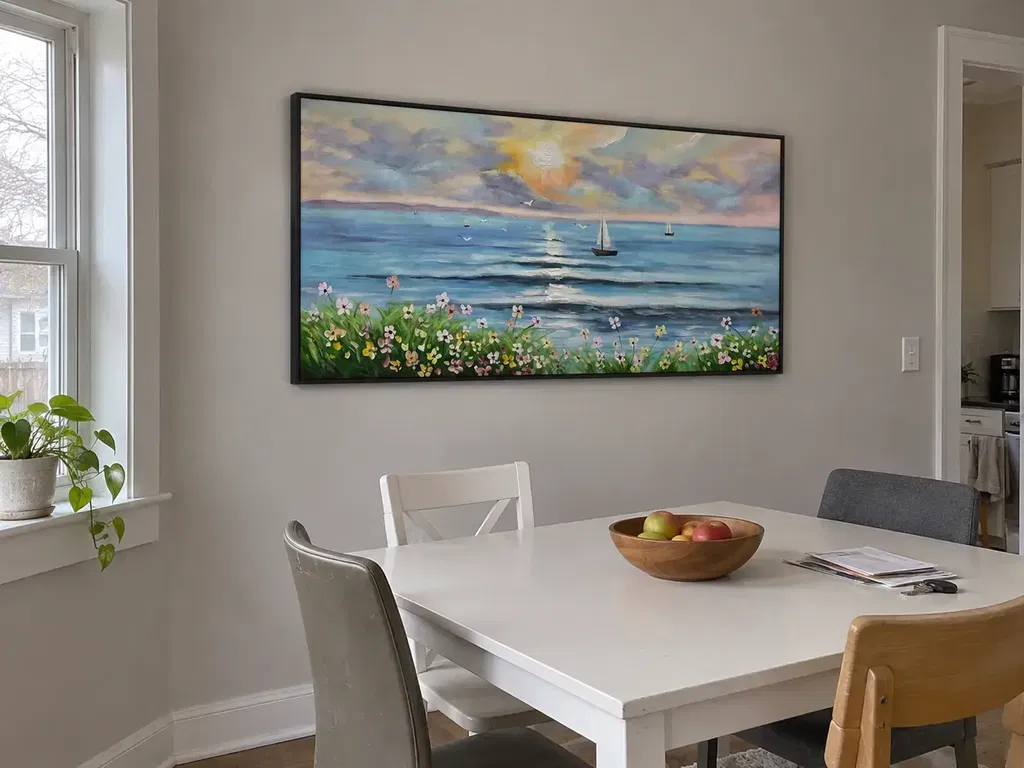
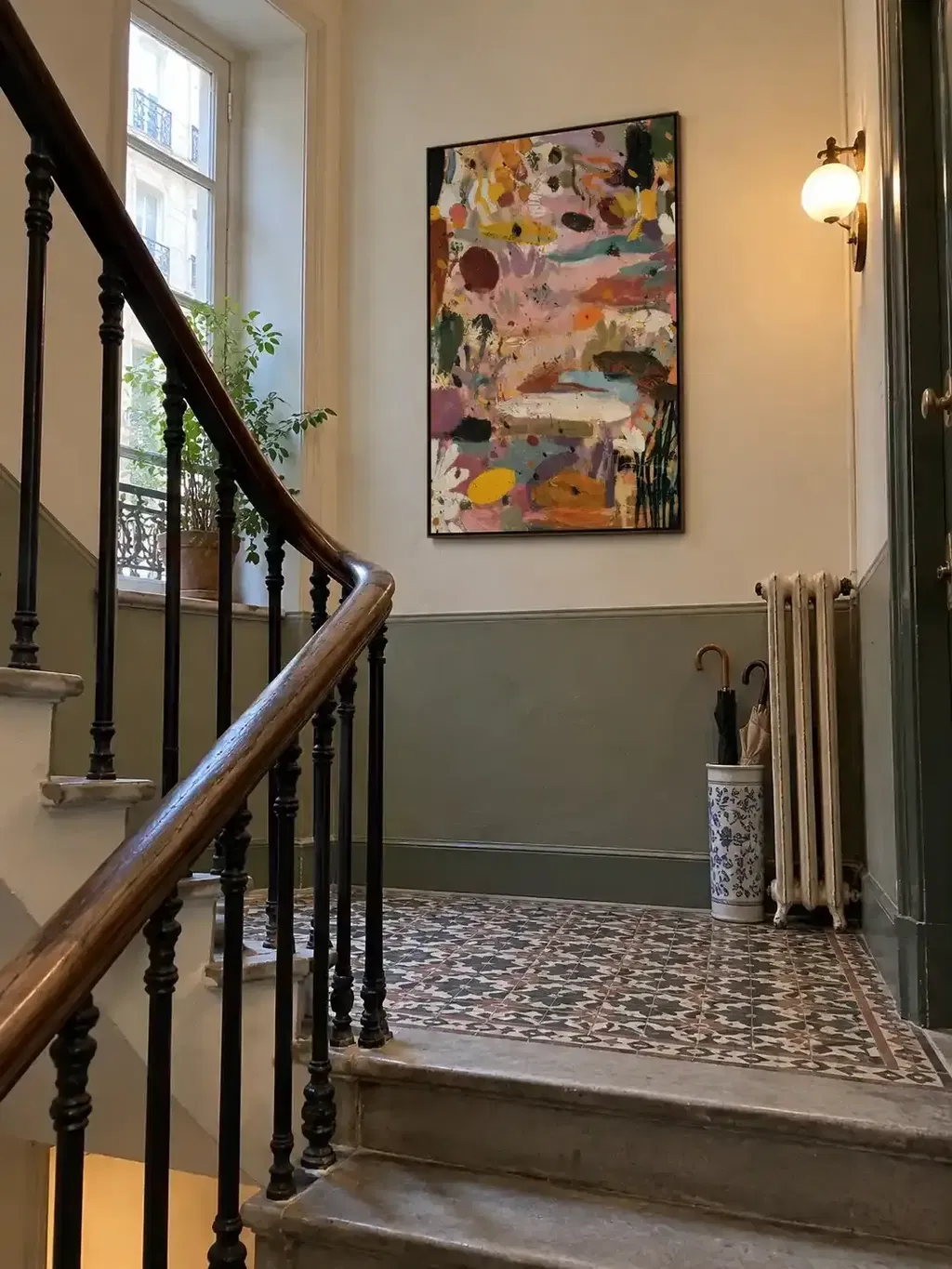
Wabi sabi wall art works best when the room is calm enough for texture to read clearly, the wall has some breathing room, and light comes from a direction that reveals the surface instead of flattening it. Bedrooms, living rooms, hallways, and quiet offices can all work well, but the strongest placement depends on scale, wall color, and how much visual activity is already in the room.
What Wabi-Sabi Texture Needs
Wabi-Sabi textured art feels calm when it has a simple job: soften a room, add depth, and stay the main visual note without competing with everything around it. The style usually looks best in rooms with neutral or muted colors, organic shapes, and fewer shiny or high-contrast objects nearby.
That is why a piece can look serene in one room and busy in another. If the wall sits beside bold furniture, glossy finishes, or a lot of small decor, the texture loses its quiet effect. A calmer backdrop helps the relief and surface variation do the work.

For readers comparing neutral texture balance, the key question is not whether the art is "minimal" enough. It is whether the room gives the texture space to be noticed from a normal viewing distance.
Best Rooms for the Look
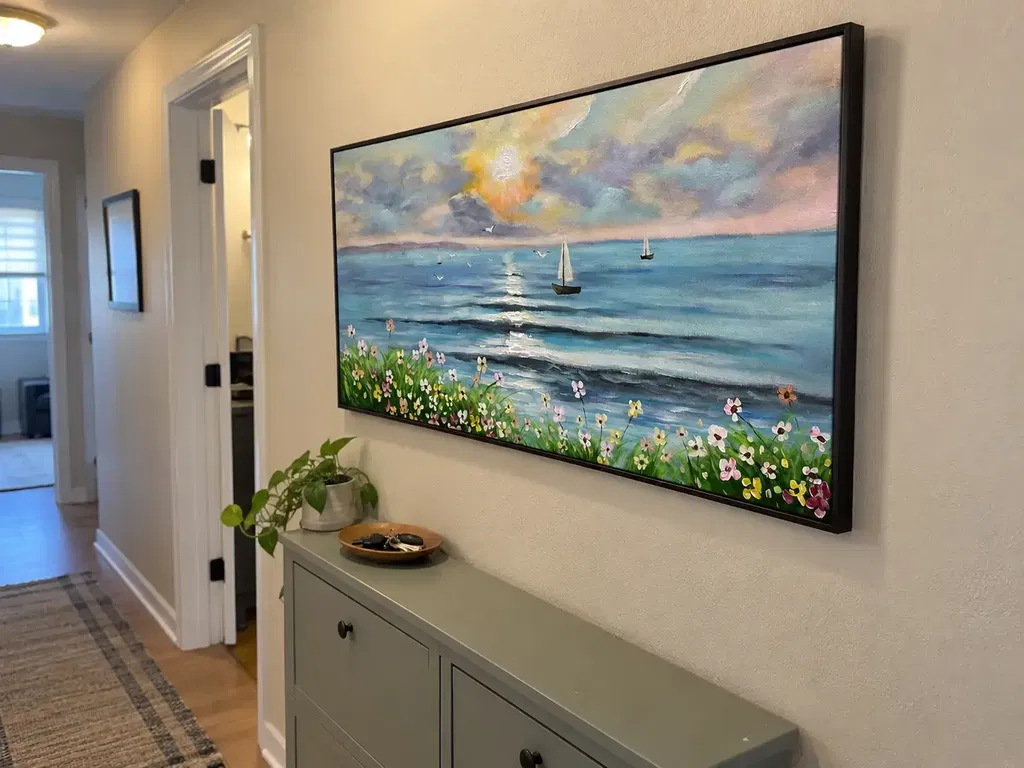
Rooms with open wall space and softer decor usually show the style best. Living rooms tend to be the easiest fit because the piece can act as a focal point without needing to do too much. Hallways can also work well when the wall is long enough for the texture to register as you pass by.
| Room | Why It Works | When It Feels Less Effective | Best Placement Cue |
|---|---|---|---|
| Living room | Usually has enough wall area for texture to be seen clearly | Becomes noisy if the room already has many accents | Use one strong focal wall and keep nearby decor simple |
| Bedroom | Supports a quieter, more restful look | Can feel busy if the headboard wall is crowded | Choose a balanced wall with calm bedding and decor |
| Hallway | Lets the piece act like a pause in the home | Feels weak if the wall is too narrow or dark | Use a clean wall that is easy to see in passing |
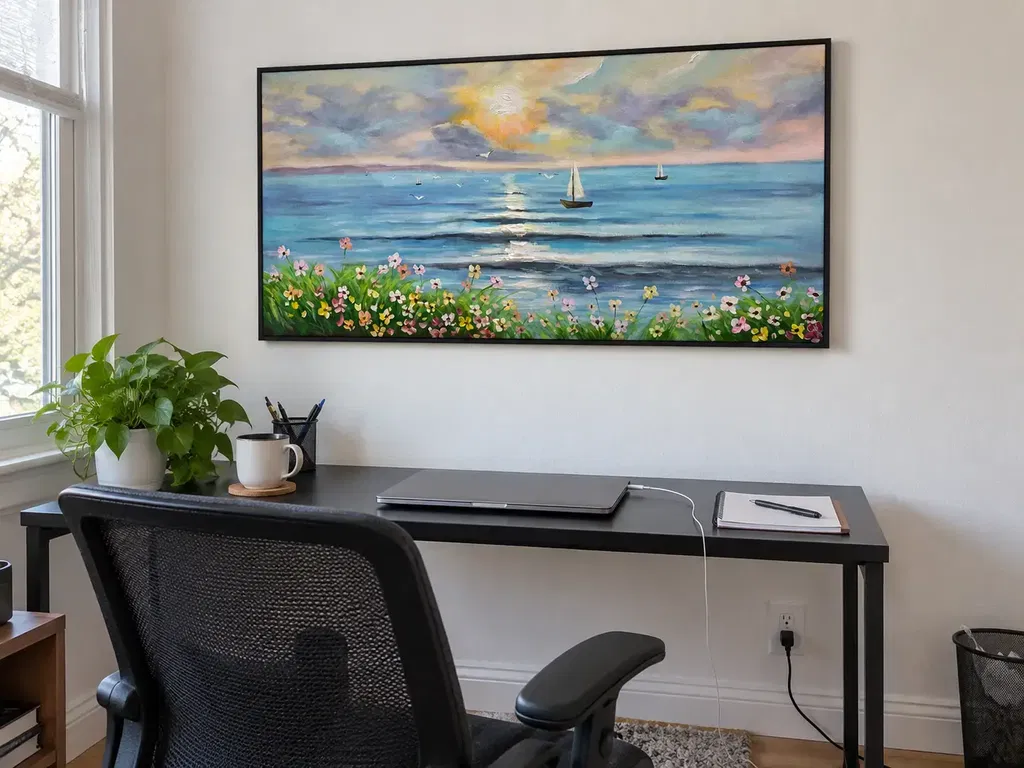
| Office | Can soften a functional room without making it feel cold | Feels off if the desk area is already visually busy | Place it where it is visible but not distracting |
A living room wall art path makes sense when you already know the room can handle a single focal piece. For broader browsing, browse wall art only after you have ruled out walls that are too busy or too cramped.

Bedroom Placement That Feels Restful
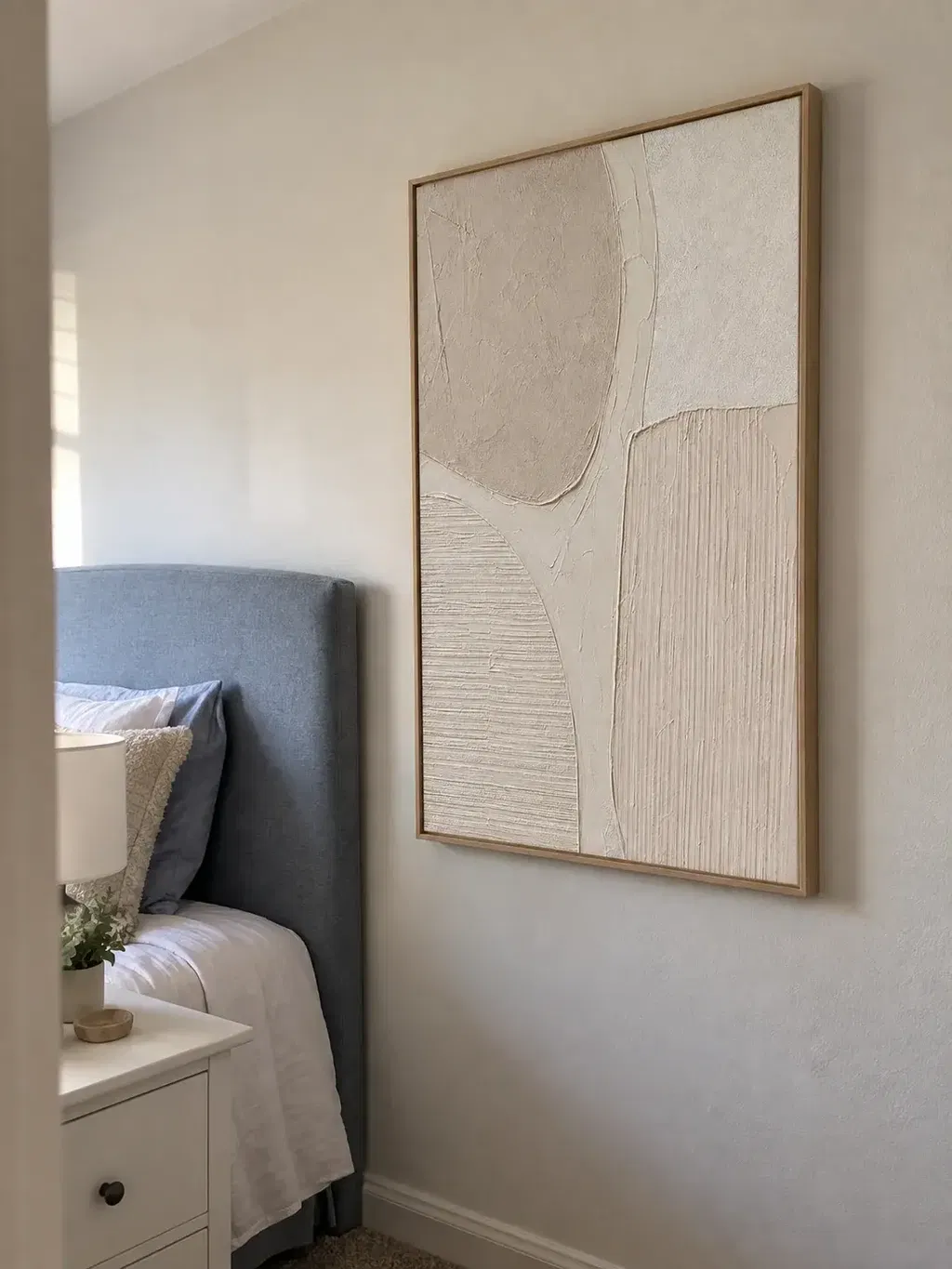
Yes, Wabi-Sabi art is often good for bedroom decor when the room already leans calm. Bedrooms reward softer texture because the art can add warmth without asking for attention all the time. The best results usually come from one balanced piece above the bed or on the main focal wall, not from several small pieces spread across the room.
Above the Bed
Above the bed is a strong choice when the artwork feels proportionate to the headboard and the wall is not crowded by lamps, mirrors, or shelves. A larger piece usually reads more calmly than a cluster of smaller works, because the eye can settle on one surface instead of scanning multiple frames.
If the bed wall already has strong patterns, bright bedding, or heavy furniture, the art may stop feeling restful. In that case, a quieter wall elsewhere in the bedroom can be a better fit.
Color and Texture Balance
Soft neutrals, warm whites, beige, stone, and muted earth tones usually support the style well in bedrooms. The goal is not to make the room look empty. It is to keep enough contrast for the texture to show while avoiding sharp color shifts that fight the calm mood.
For a bedroom-specific next step, restful bedroom texture is the right path if you are choosing between a few calm walls. If the wall scale and palette already support a quiet look, bedroom-ready textured art can be a sensible fit. That is often the right answer to is wabi sabi art good for bedroom decor.
Lighting That Brings Out Texture
Lighting changes the answer more than most shoppers expect. Side or grazing light usually reveals more texture because it creates small shadows across the surface, which makes the relief easier to read. Strong frontal light can flatten the piece, and overhead light may make it look less dimensional.
A good wall test is simple: look at the same spot in morning light, afternoon light, and evening light before you hang anything. If the texture still reads clearly at the times you use the room most, the wall is probably a good candidate. If glare, shadows, or flattening keep changing the look, pick a different wall.
The practical rule is clear: side light reveals texture better, while frontal light can flatten texture. That does not mean every bright room is a bad fit. It means the wall should help the texture show, not erase it.
Small Rooms and Tight Walls
Does textured wall art work in small rooms? Yes, but it usually works best as a single focal piece with enough breathing room around it. In a compact room, the mistake is not texture itself. The mistake is adding texture on top of too many competing elements.
- Check the wall first. If the wall is already interrupted by shelves, a TV, a busy window treatment, or a crowded furniture layout, the art may feel cramped.
- Match the artwork to the wall's scale. A piece that is too small can disappear, while one that is too large can overwhelm the room.
- Simplify the nearby decor. Fewer patterns, fewer small objects, and softer color shifts give the surface room to stand out.
- Step back from the entry point. If the piece reads as one calm focal point when you walk in, the room is probably balanced.
For apartment dwellers, apartment wall art ideas can help if you need a scale-friendly browse path first. If the room calls for a larger single statement, large neutral wall art is the safer direction than trying to fill the wall with several smaller accents. That is the short answer to does textured wall art work in small rooms.
Placement Mistakes to Avoid
- Hanging the piece too high, which breaks the calm line of sight and makes the wall feel disconnected.
- Putting it on a wall with too much visual competition, such as bold shelving, busy media setups, or sharp color contrast.
- Choosing a size that is too small for the wall, which makes the texture feel accidental instead of intentional.
- Pairing it with framing or decor that is louder than the artwork itself.
- Treating texture as a secondary detail instead of the main feature that needs visual breathing room.
A simpler room almost always helps the piece feel more grounded. If the wall already has enough going on, the answer may be to move the art rather than add more around it. That is also why square textured wall art only works when the wall shape and surrounding furniture let the texture stay the center of attention.
Final Takeaway
The best room for wabi sabi wall art is the one that gives texture room to breathe, soft light to show depth, and a calm backdrop that does not fight the surface. Bedrooms, living rooms, and quiet halls are usually the safest starting points, while small rooms and bathrooms need a little more care. If you already know your wall and light conditions, choose a size that fits that spot and then look for wabi sabi wall art that stays simple on the wall.
FAQs
Is Wabi-Sabi Art Good for Bedroom Decor?
Usually, yes, if the bedroom is already quiet and the piece is scaled to the wall. The clearest signal is whether the art supports rest instead of adding another busy layer. If your bedding, rugs, and bedside furniture are already expressive, choose a simpler wall or a larger single piece.
What Room Is Best for Wabi-Sabi Wall Art?
Living rooms are often the easiest fit, with bedrooms and calm hallways close behind. The room that works best is the one with enough open wall space, softer colors, and fewer competing details. If two rooms seem equally good, pick the one with better light and less visual clutter.
Does Textured Wall Art Work in Small Rooms?
It can, as long as it acts like one focal point instead of one more layer of clutter. The easiest check is to ask whether the wall needs more structure or less. If the room already feels crowded, choose a larger single piece or a cleaner wall rather than adding multiple accents.
Can I Hang Wabi-Sabi Art in a Bathroom?
Only in a bathroom that is well ventilated and kept away from showers, tubs, and direct splash zones. Ventilation matters in bathrooms because moisture and steam can make delicate textured finishes a less comfortable choice. A dry powder room is a different case from a steamy main bath.
How Do I Choose the Right Wall for Textured Art?
Start with the wall that has the cleanest sightline, the least visual competition, and the best chance for side light. Then check whether the piece will have enough breathing room from furniture, shelves, and hard color contrasts. If you still have two options, choose the wall that looks calm from the doorway.