Beyond the Surface: Checking Canvas Edges for Over-Paint
The global art market is undergoing a profound structural shift. While high-end auction sales for pieces over $10 million plummeted 44% year-over-year in 2024, the broader market for authentic, applicable art remains resilient. According to Marketplace, collectors are retreating from purely financial "vanity assets" and returning to pieces with real emotional and aesthetic value. In this climate, the ability to distinguish a genuine hand-painted work from a mass-produced reproduction is no longer just a skill for gallery owners—it is a vital competency for any serious home decorator or collector.
At the heart of this verification process lies a detail often overlooked: the canvas edge. While the front of a painting captures the narrative, the edges carry the "forensic fingerprint" of the artist’s process. By examining the raw edges and over-paint, we can find definitive proof of a manual painting process that industrial printers simply cannot replicate.
The Economic and Psychological Premium of Authenticity
The demand for "100% human-made" art is backed by significant commercial data. A consumer perception study by Columbia University confirmed that consumers value art labeled as "AI-generated" 62% lower than authentic human-created art. This isn't just a matter of snobbery; it’s a search for what researchers at the University of Chicago call "essential identity." Their empirical research suggests that digital replicas lack the artist’s soul and essence, which causes a collapse in perceived value.
As online art e-commerce grows—with Artsy reporting a 15% YoY increase in gallery sales—the risk of purchasing "oil-enhanced" prints (prints with a few dabs of paint on top) has risen. To protect your investment, you must look where the machines fail: the perimeter.
Logic Summary: Our verification framework assumes that manual painting is inherently "messy" at the boundaries. Industrial processes prioritize efficiency and clean lines, whereas human artistry involves physical over-extension of the brush and manual tensioning of the fabric.
Forensic Anatomy of the Canvas Edge
When we audit a piece for authenticity, we look for three specific mechanical markers on the edges: over-paint patterns, staple puckering, and pigment migration.
1. The Over-Paint Heuristic
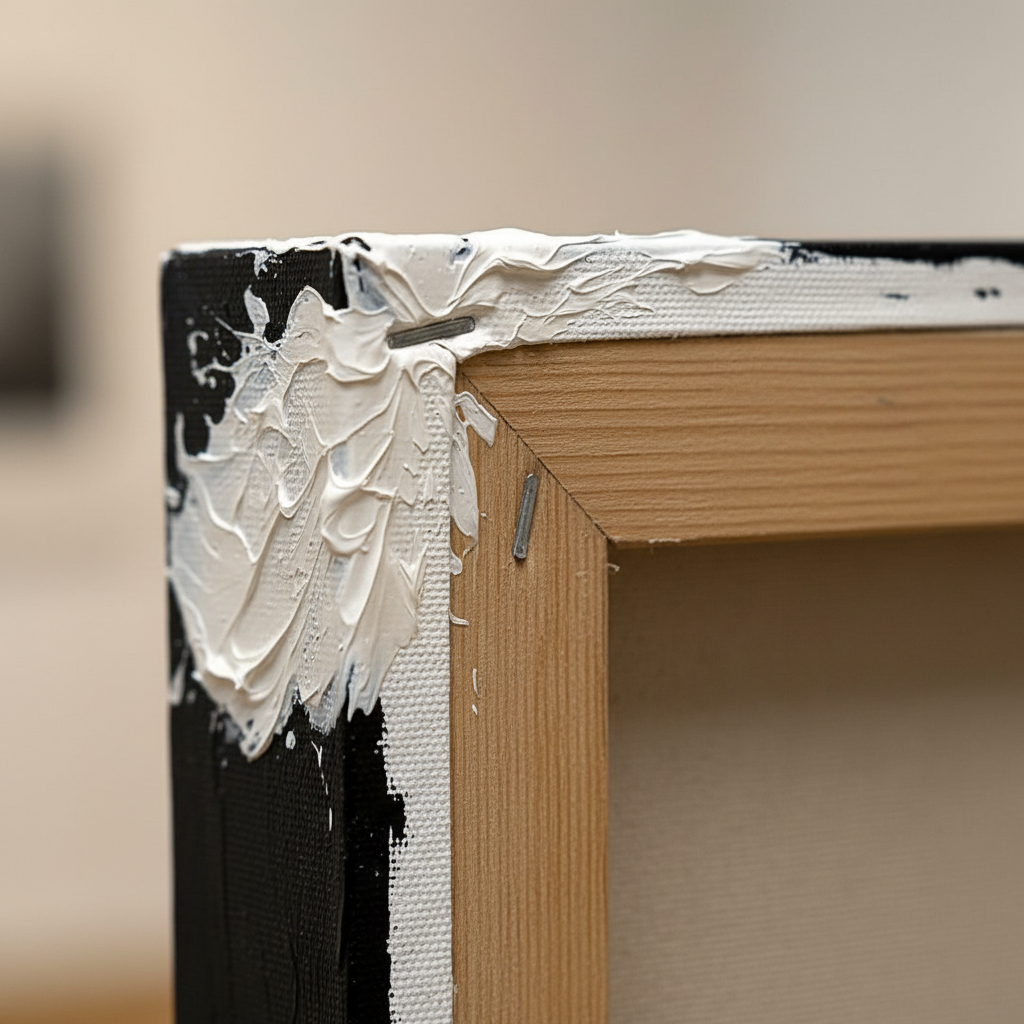
Over-paint refers to the pigment that spills over the front "face" of the canvas onto the sides. In a genuine hand-painted work, this spillover is involuntary.
- Pattern Consistency: Look for irregular distribution. A human brushstroke naturally carries more pigment at the beginning or end of a motion. You should see thicker accumulations of paint at these endpoints.
- The "Factory" Trap: Many high-end prints use "mirrored edges" or solid color wraps. According to Grand River Giclée, these are digital manipulations where the image is folded over the side. These edges are perfectly uniform. If the "over-paint" follows a perfectly straight line or maintains a consistent 0.1mm thickness, it is likely a machine-finished edge.
2. Staple Patterns and Canvas Puckering
The way a canvas is stretched tells a story of physical force.
- Hand-Stretched: An artist stretching a canvas by hand creates uneven tension. Look for slight "puckering" or ripples in the fabric around the staples. Genuine paint often seeps into these irregularities.
- Machine-Stretched: Industrial reproductions use pneumatic stretchers that apply perfectly even PSI across the frame. The staples will be perfectly aligned, and the canvas will show zero stress-induced puckering.
3. Tactile and Olfactory Markers
Experience teaches us that the nose and the fingertips are as reliable as the eyes. Genuine oil paint remains detectable by scent for years, especially where it has soaked into the raw, unprimed fibers of the canvas edge. Furthermore, the MUNCH Museum has found that allowing audiences to interact with the physical relief textures of art significantly stimulates satisfaction. On the edges, feel for the "organic roughness"—the slight grit of dried pigment that hasn't been smoothed by a printer's roller.

The Science of Pigment and Light
Understanding why hand-painted art looks different requires a dive into optical physics. The Getty Conservation Institute uses the Kubelka-Munk equation to explain that pigment reflection is dominated by absorption and scattering coefficients.
In a print, the "color" is a thin layer of cyan, magenta, yellow, and black (CMYK) ink sitting on the surface. In a hand-painted work, the color is a three-dimensional suspension of mineral particles. This leads to what we call "geometric metamerism"—the way the color shifts and glows as you move around the room.
Lightfastness: The Longevity Factor
A common concern for collectors is fading. Industrial inks often struggle with UV exposure. Professional hand-painted works use pigments rated by ASTM D4303 standards.
- Titanium White: Dominates 90% of the global white pigment market due to its extreme chemical inertness and hiding power (NCBI).
- Acrylic vs. Oil: Research from JustPaint indicates that acrylic polymers form films through physical coalescence, making them more resistant to embrittlement than older oil films that undergo oxidative cross-linking.
When evaluating pigment saturation, the depth achieved by hand-layered pigments is mathematically superior to the flat deposition of a printer.
Methodology Note: These optical comparisons are based on standard light scattering models. The "glow" of an oil painting is a result of light traveling through translucent layers of binder and reflecting off pigment particles at various depths—a phenomenon known as "subsurface scattering" that 2D printing cannot emulate.
Health, Safety, and Ethical Craftsmanship
Authenticity verification isn't just about aesthetics; it’s about the environment you live in. Mass-produced decor often uses high-VOC (Volatile Organic Compound) solvents and adhesives.
The Indoor Air Quality Promise
The EPA warns that indoor air pollution can be significantly more concentrated than outdoor pollution. High-quality hand-painted art, particularly those using modern water-based acrylics or walnut-oil-based paints, can significantly reduce this risk. Aalto University experiments have shown that VOC emissions from properly cured coatings plummet during the drying process, ensuring that the art you hang in a bedroom or nursery is safe.
The Toxic Pigment Reality
Collectors should be aware of the "material history" of their art. The International Agency for Research on Cancer (IARC) classifies cadmium compounds—common in bright reds and yellows—as Group 1 carcinogens. While the EU has strict REACH regulations banning lead carbonates in concentrations exceeding 0.1%, many low-cost imports bypass these checks.
By purchasing from artists who prioritize eco-friendly alternatives—like hemp canvases and non-toxic pigments—you are protecting both your health and the environment. Furthermore, supporting real artists addresses the gender pay gap in the creative industry, where women still face significant undervaluation.

The "Catalytic Effect" on Property and Wellbeing
Why go through the trouble of verifying hand-painted art? Because the ROI extends beyond the canvas.
Real Estate Value
Research published by the Royal Society found a direct correlation between "art-rich" environments and property price gains. In Chicago, the Millennium Park art projects drove an estimated $1.4 billion in real estate-related growth. For homeowners, a custom mural or a large-scale hand-painted piece isn't just decor; it's a value-add for the entire property.
Psychological Healing
The impact on human health is equally quantifiable. A WHO scoping review of over 3,000 studies confirmed that art interventions effectively alter clinical indicators for mental illness and stress. University of Pennsylvania reviews noted that 73% of patients reported significant mood improvements when exposed to environmental artworks.
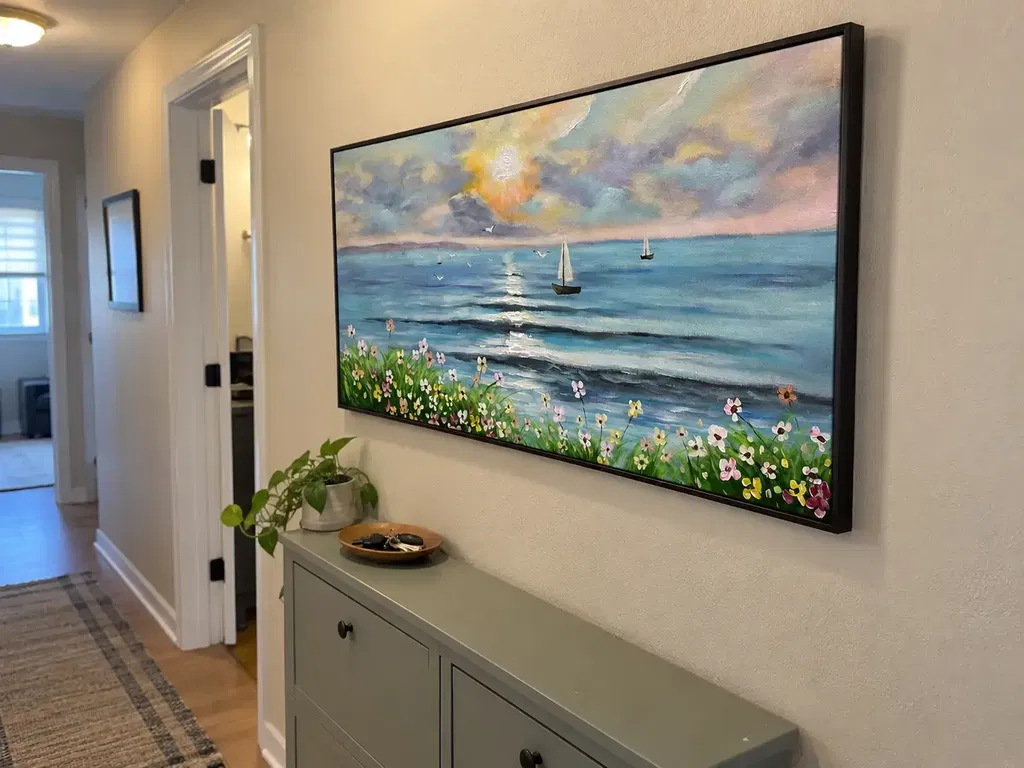
This is particularly true for biophilic design—art featuring natural landscapes. These pieces produce the same stress-reduction effects in the brain as being outdoors, making them ideal for high-stress home offices or urban apartments.
Practical Checklist for the Modern Collector
To ensure you are investing in a genuine hand-painted work, use this "Edge-First" inspection protocol:
| Feature | Hand-Painted Marker | Reproduction/Print Marker |
|---|---|---|
| Edge Texture | Irregular, raw, slightly "gritty" | Smooth, uniform, sealed feel |
| Over-paint | Random drips, thicker at stroke ends | Perfectly straight or mirrored image |
| Stretcher Tension | Slight puckering around staples | Perfectly flat, drum-like uniformity |
| Scent | Faint linseed/walnut oil or polymer | Plastic, adhesive, or odorless |
| Pigment Depth | Visible relief (impasto) | Flat surface, no physical height |
Common Pitfalls to Avoid
A common mistake for beginners is confusing deliberate edge painting with involuntary over-paint. Some artists intentionally paint their borders for a "gallery wrap" look. The key distinction is the pattern consistency. If the paint on the side looks like it was applied with a ruler, be cautious. If the paint shows the "start-stop" energy of a human hand, you’ve likely found the real thing.
Furthermore, ensure you are choosing oil art for bright spaces by verifying the lightfastness of the pigments used. A genuine painting is a legacy item, but only if the materials are of archival quality.
The Future of the Human Touch
As the global creative economy hits $1.4 trillion (UNCTAD), the "human premium" will only increase. We are entering an era where the ability to prove a work was created by a person—not a prompt—is the ultimate luxury.
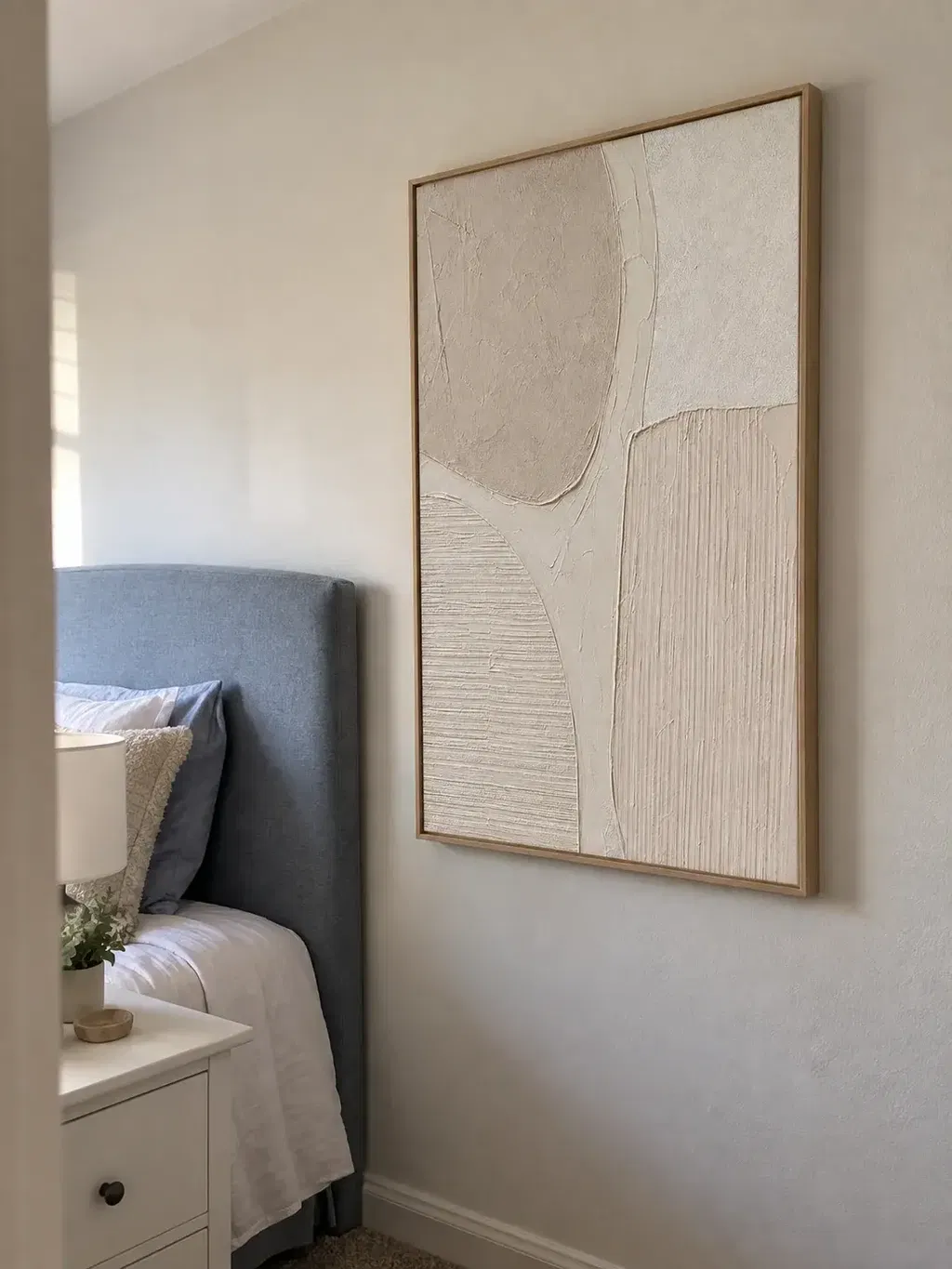
By looking beyond the surface and examining the humble canvas edge, you aren't just checking for paint; you are verifying a connection to a centuries-old tradition of craftsmanship. Whether you are balancing heavily textured art with minimalist decor or commissioning a panoramic mural for a powder room, the "organic messiness" of the edge is your greatest assurance of quality.
Disclaimer: This article is for informational purposes only. While forensic techniques can aid in authentication, definitive valuation and attribution should be performed by a certified art appraiser or conservator. For health concerns regarding specific pigments, consult a qualified medical professional or industrial hygienist.
Sources
- Marketplace: The expensive art market continues to struggle
- Columbia University: Human-Made vs. AI Art Study
- WHO: Scoping Review on Arts and Health
- EPA: Indoor Air Quality and Low-VOC Paints
- Royal Society: Quantifying the link between art and property prices
- ASTM International: Standard Test Methods for Lightfastness
- Getty Conservation Institute: Color Science and Pigment Mixture