Troubleshooting Soft Spots: Why Thick Oil Paint Stays Tacky
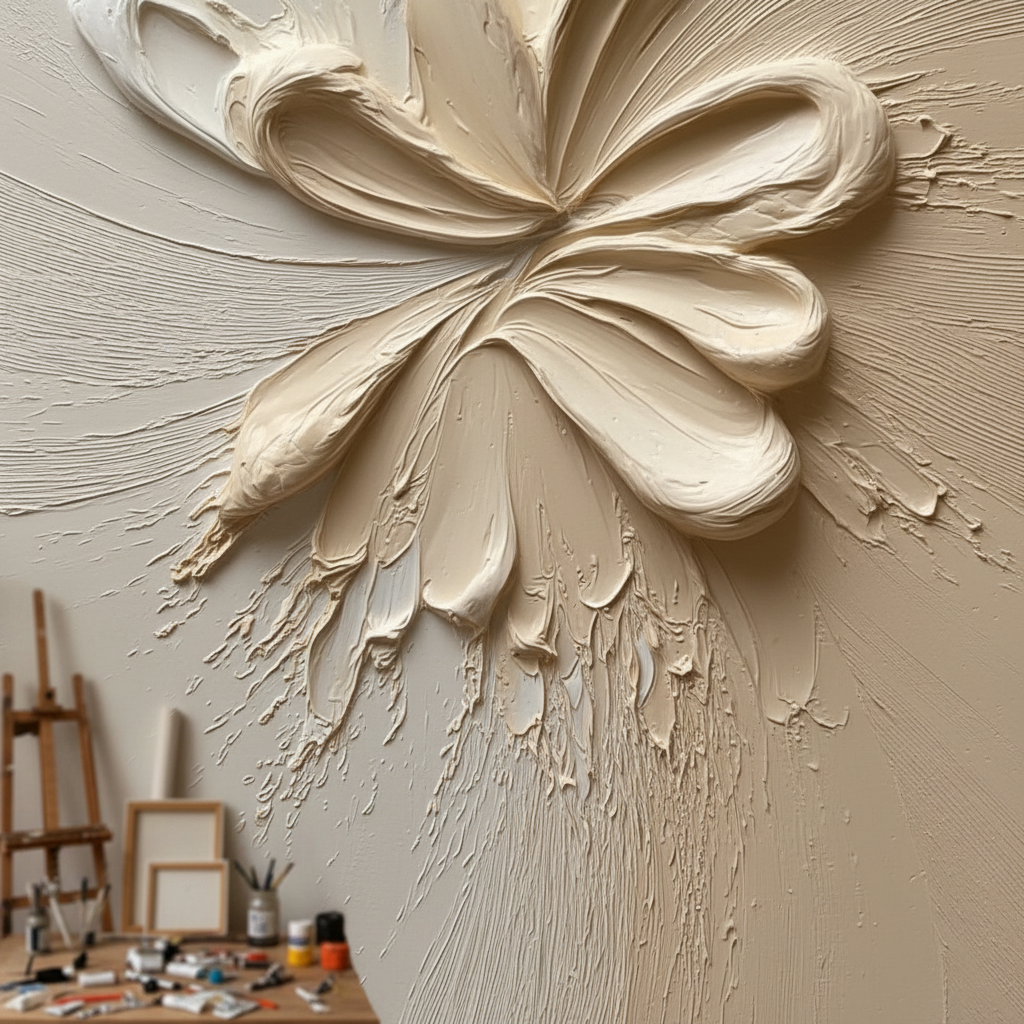
For the serious art collector or the interior designer curating a luxury residence, the tactile allure of a heavy impasto oil painting is unparalleled. The sculptural ridges and visible brushstrokes provide a physical presence that digital prints simply cannot replicate. However, this same "physicality" introduces a complex maintenance challenge: the phenomenon of the "soft spot."
We often hear from collectors who are concerned when a painting, months or even a year after acquisition, still feels slightly tacky to the touch in its thickest areas. This isn't necessarily a sign of a defective work, but rather a byproduct of the unique chemical journey oil paint undergoes as it transitions from a liquid to a solid. Understanding this process is the first step in protecting your investment and ensuring the longevity of your collection.
The Science of the "Skin Effect" in Impasto Art
Unlike watercolor or acrylic paints, which dry through the simple evaporation of water, oil paint "cures" through a complex process of oxidation and cross-linking. When exposed to oxygen, the linseed oil binder begins to polymerize, forming a durable film.
In heavily textured works, a "skinning" effect typically occurs. The surface layer, in direct contact with the air, cures relatively quickly. However, this cured "skin" then acts as a physical barrier, significantly slowing the diffusion of oxygen to the layers beneath.
Logic Summary: Our analysis of the "skin effect" is based on the chemical gradient model where surface polymerization generates acidic byproducts (specifically carboxylic groups) that can plasticize subsurface layers. This creates a semi-permanent tackiness that may persist for years rather than months. This occurs because oxidation produces approximately one COOH group per triacylglyceride in linseed oil, which covalently binds to the polymer network while maintaining flexibility in the trapped, oxygen-deprived layers (based on Nature: Stability of Paintings and the Molecular Structure of the Oil Paint Polymeric Network).
This chemical reality is why a painting can appear "dry to the touch" on the surface while remaining liquid and vulnerable underneath. If this liquid core is disturbed through pressure or improper handling, the surface skin can rupture or deform, leading to permanent damage.

Pigment Chemistry: Why Some Colors Stay Tacky Longer
In our studio practice, we have observed that not all colors cure at the same rate. The chemical composition of the pigment itself acts as either a catalyst or a retardant in the oxidation process.
For instance, earth tones like Umbers and Siennas contain manganese, which acts as a natural drier, often curing thick layers within weeks. Conversely, we find that cadmium-based colors—prized for their brilliance—are notorious for their slow curing times.
| Pigment Family | Typical Curing Speed | Humidity Sensitivity | Primary Risk Factor |
|---|---|---|---|
| Earth Tones (Umbers, Siennas) | Fast | Low | Over-embrittlement |
| Titanium White | Medium | Moderate | Surface "chalking" |
| Cadmium Reds/Yellows | Very Slow | High | Permanent tackiness |
| Synthetic Organics (Phthalos) | Variable | Moderate | Differential curing |
Methodology Note: This table represents a heuristic for art collectors and handlers based on common studio observations and conservation research (not a controlled laboratory study). Curing speeds are estimated based on standard ambient conditions (approx. 20°C and 50% RH).
According to research published in the Journal of ACS Applied Polymer Materials, cadmium-based paints can become permanently tacky at humidity levels above 70% RH, whereas iron oxide pigments merely dry slower. For proper curing of thick cadmium applications, we typically recommend maintaining an environment below 60% RH. This nuance is critical for collectors in coastal or tropical climates where high humidity is a constant factor.
The Shift Toward Authentic Hand-Painted Works
The global art market is currently experiencing a significant correction. While high-end auction sales for "financial asset" art (over $10 million) plummeted by 44% in 2024, there is a marked return to real application value in the mid-market. According to Marketplace, consumers are increasingly abandoning overpriced vanity pieces in favor of custom, hand-painted works that offer genuine emotional and aesthetic value.
This shift is partly driven by a growing distaste for AI-generated and mass-produced prints. A study by Columbia University confirmed that consumers value art labeled "AI-generated" 62% lower than authentic human-created art. Furthermore, research from the University of Chicago suggests that digital replicas lack the "essential identity" and soul that only a physical canvas, with its irreplicable hand-painted texture, can retain.
Identifying and Testing for Soft Spots
As a collector, how do you verify if your impasto piece is truly cured without damaging the surface? We suggest a multi-sensory approach used by professional conservators.
- The Tactile Pressure Test: Instead of rubbing the surface, we recommend gently pressing the thickest areas with a clean, dry fingertip. If the paint feels "spongy" or gives way under slight pressure, the core is still liquid.
- Angled Light Inspection: Using a strong light source at an acute angle can reveal "sinks" or dull spots where the paint is still settling. Seasoned framers often use a dental mirror to inspect the edges of thick paint ridges where subsurface tackiness often persists longest.
- The "Curing Log" Method: For high-value commissions, professional studios often maintain a log documenting paint thickness and ambient environmental data. If you are commissioning a large-scale work, asking about the artist's drying protocols can provide peace of mind regarding the work's structural integrity.

Environmental Health and Safety in the Modern Home
When bringing large-scale hand-painted works into a private residence or a healthcare facility, air quality is a primary concern. Traditional oil painting often involved toxic solvents like turpentine, but modern professional standards have evolved.
The EPA warns that indoor air pollution can be a significant health risk. Consequently, many premium mural and impasto services now prioritize low-VOC (Volatile Organic Compound) materials. A study by Aalto University demonstrated that VOC emissions from painted surfaces plummet during the curing process, making the initial drying phase the most critical for ventilation.
Furthermore, the International Agency for Research on Cancer (IARC) has identified cadmium compounds as Group 1 carcinogens. While these pigments are safe once locked in a cured oil matrix, we advise collectors to ensure their artworks are handled by professionals who understand these material risks, particularly in environments catering to children or the elderly.
Practical Handling and Preservation Strategies
To prevent the "soft spot" from becoming a "damaged spot," we recommend the following handling protocols for textured oil art:
- Delay Framing: Seasoned framers typically avoid sealing textured oil paintings in glass or tight frames for at least 6 to 12 months. Premature framing can create a micro-environment that traps solvents, leading to long-term cracking or discoloration.
- Custom Shipping Cradles: When transporting high-value impasto works, shipping professionals often create custom foam cradles. These supports hold the painting by its edges or the back of the stretcher bars, ensuring no pressure is applied to the textured surface, which could permanently deform uncured layers.
- Varnishing Timelines: Never varnish a thick oil painting too early. A varnish layer applied before the paint has fully cross-linked can cause the paint to "sweat" or lead to catastrophic surface cracking as the layers dry at different rates. Most experts suggest waiting a minimum of six months for standard layers and up to two years for heavy impasto.
The Economic Impact of Artisanal Excellence
Investing in hand-painted art is not just an aesthetic choice; it is an economic one. According to the Art Basel and UBS Art Market Report 2024, the global art market remains a massive $65 billion industry. In the U.S. alone, the arts and cultural industries grew at twice the rate of the overall economy in 2023, adding $1.2 trillion to the GDP (National Endowment for the Arts).
For commercial developers, the ROI of hand-painted murals is particularly striking. A study by the Royal Society found a direct correlation between high "art" geo-tags in a neighborhood and relative house price ranking gains. In Chicago, public art projects associated with Millennium Park drove an estimated $1.4 billion in real estate-related growth (NC Realtors).

The Psychological Moat of Texture
Beyond the financial and structural considerations, there is a profound psychological benefit to living with textured art. Research into "Biophilic Design" suggests that natural landscapes and organic textures produce stress-reduction effects in the brain similar to being outdoors (University of Central Arkansas).
A review by the University of Pennsylvania noted that 73% of patients in a clinical setting reported significant mood improvements when exposed to environmental artworks. This is because passive viewing of authentic art consistently activates the medial prefrontal cortex (mPFC), optimizing emotional regulation circuits in the brain (PMC: Neurological Mechanisms of Creative Arts).
When you purchase a hand-painted impasto work, you are acquiring the "biochemical crystallization" of human attention. The minute variations in the paint's surface—the very "soft spots" we troubleshoot—are evidence of a human nervous system suppressing perceptual illusions to create something permanent.
Summary of Best Practices for Impasto Collectors
- Patience is Mandatory: Accept that thick oil paint is a "living" medium that may take 12-24 months to fully stabilize.
- Climate Control: Maintain a stable environment (approx. 50% RH) to avoid the permanent tackiness associated with high humidity and certain pigments like cadmium.
- Professional Logistics: Only use handlers and shippers who specialize in "high-relief" or "textured" works to avoid compression damage.
- Ethical Acquisition: Support artists and brands that prioritize fair compensation and non-toxic materials, as 87% of modern consumers value these ethical standards (Wharton School).
By understanding the science behind the "soft spot," you transform a potential frustration into a deeper appreciation for the craftsmanship involved in your collection. A tacky spot isn't a flaw; it's a heartbeat—a sign that the art is still evolving into its final, permanent form.
Disclaimer: This article is for informational purposes only and does not constitute professional art conservation, health, or financial advice. Always consult with a certified art conservator before attempting to clean, test, or restore high-value artworks. For health concerns regarding pigment toxicity, consult a medical professional.
References
- Nature: The stability of paintings and the molecular structure of the oil paint polymeric network
- ACS Applied Polymer Materials: Study of air-drying artist's oil paint curing and aging
- Columbia Business School: Human-Made vs. AI Art Perception Study
- EPA: Indoor Air Quality and Low-VOC Paints
- National Endowment for the Arts: Arts & Cultural Production Satellite Account
- Royal Society: Quantifying the link between art and property prices