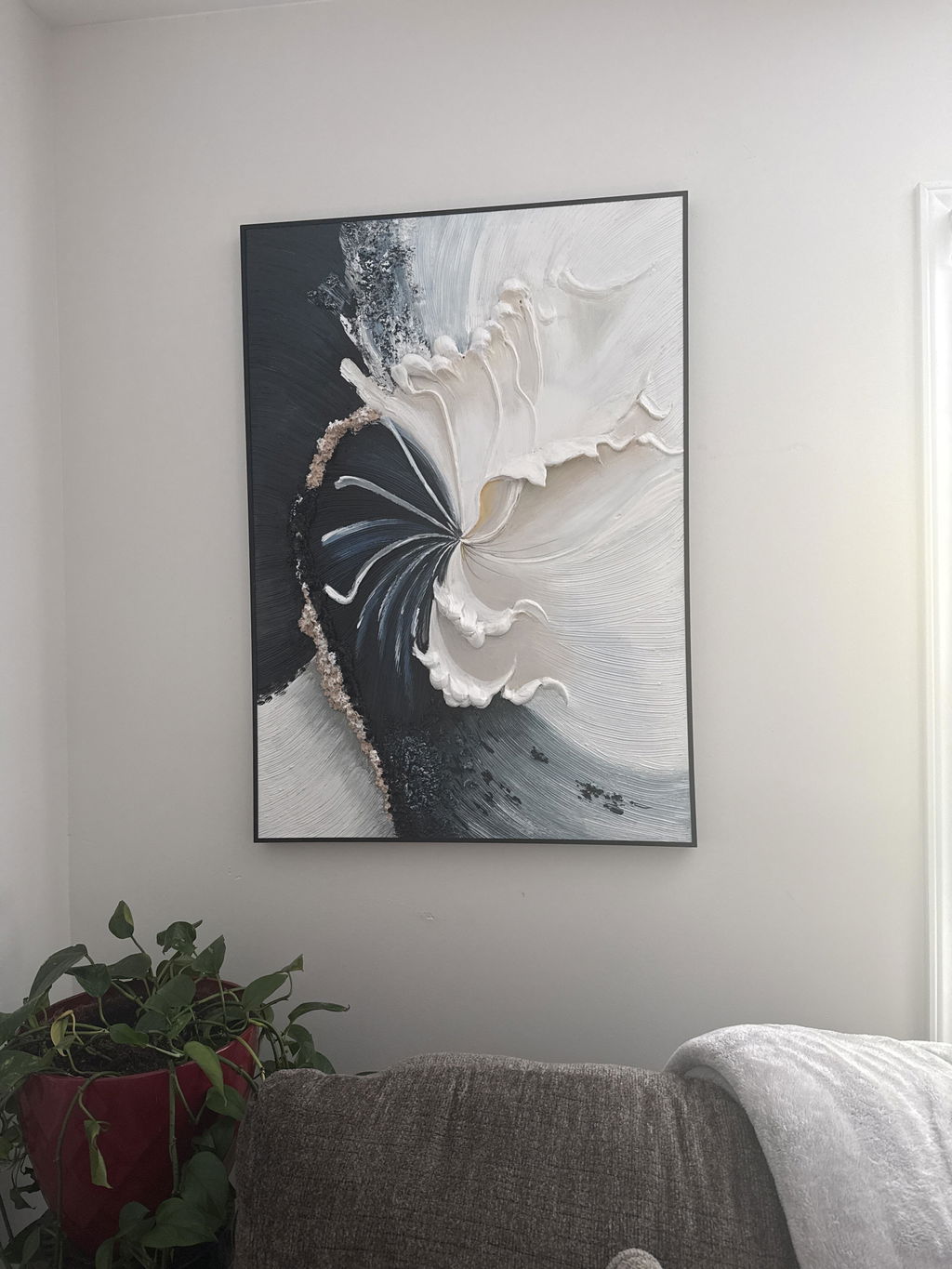
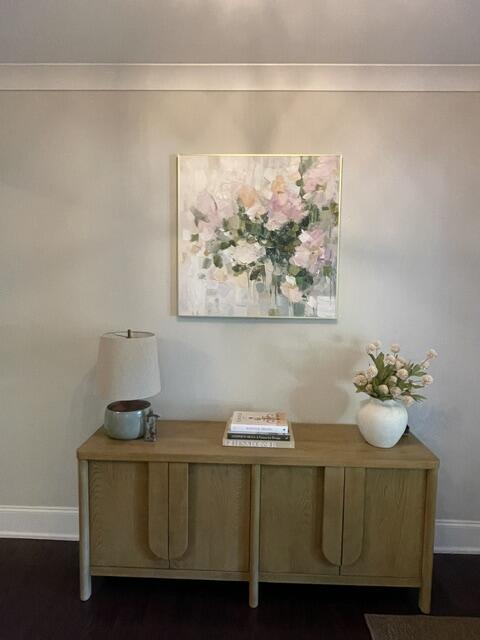
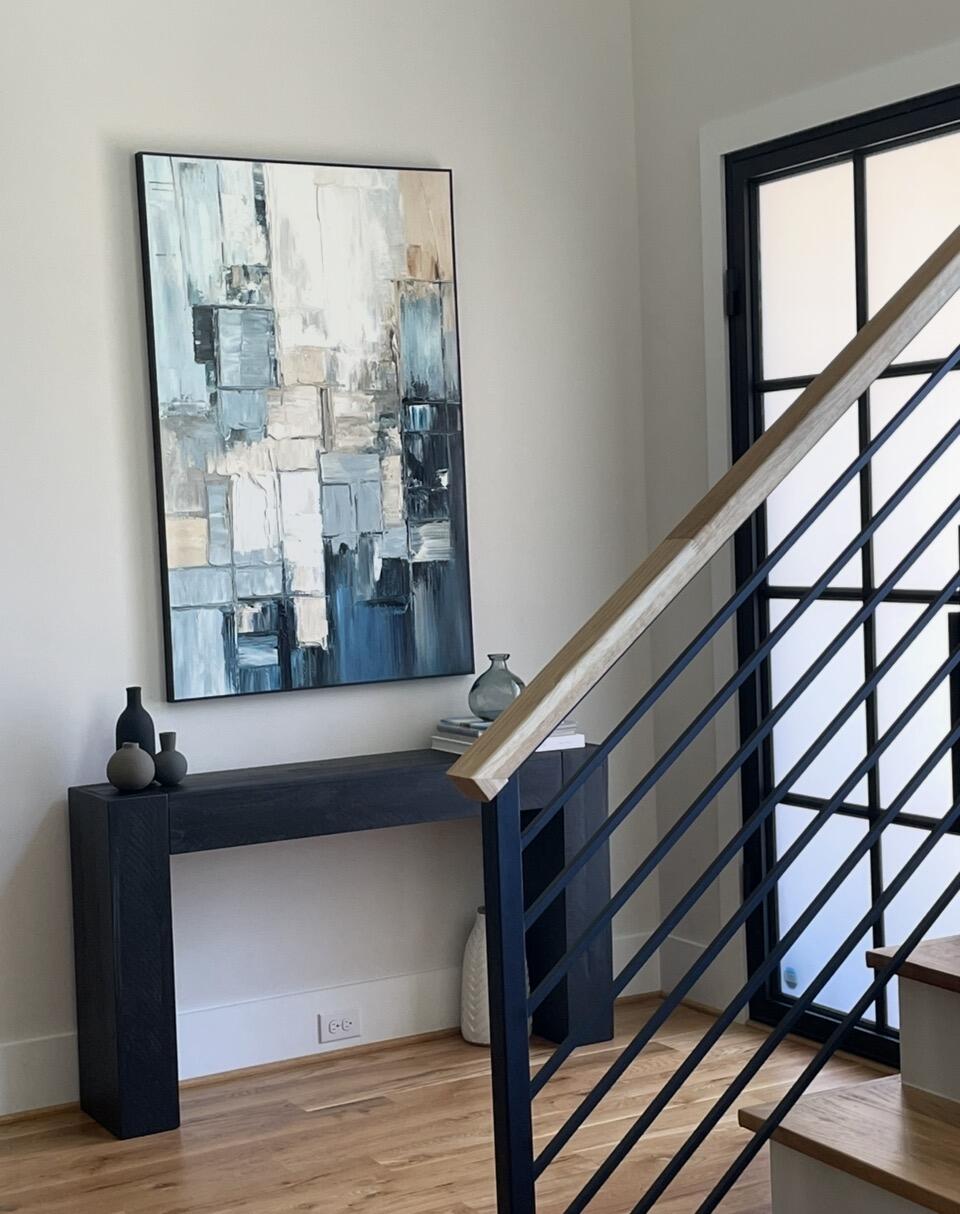
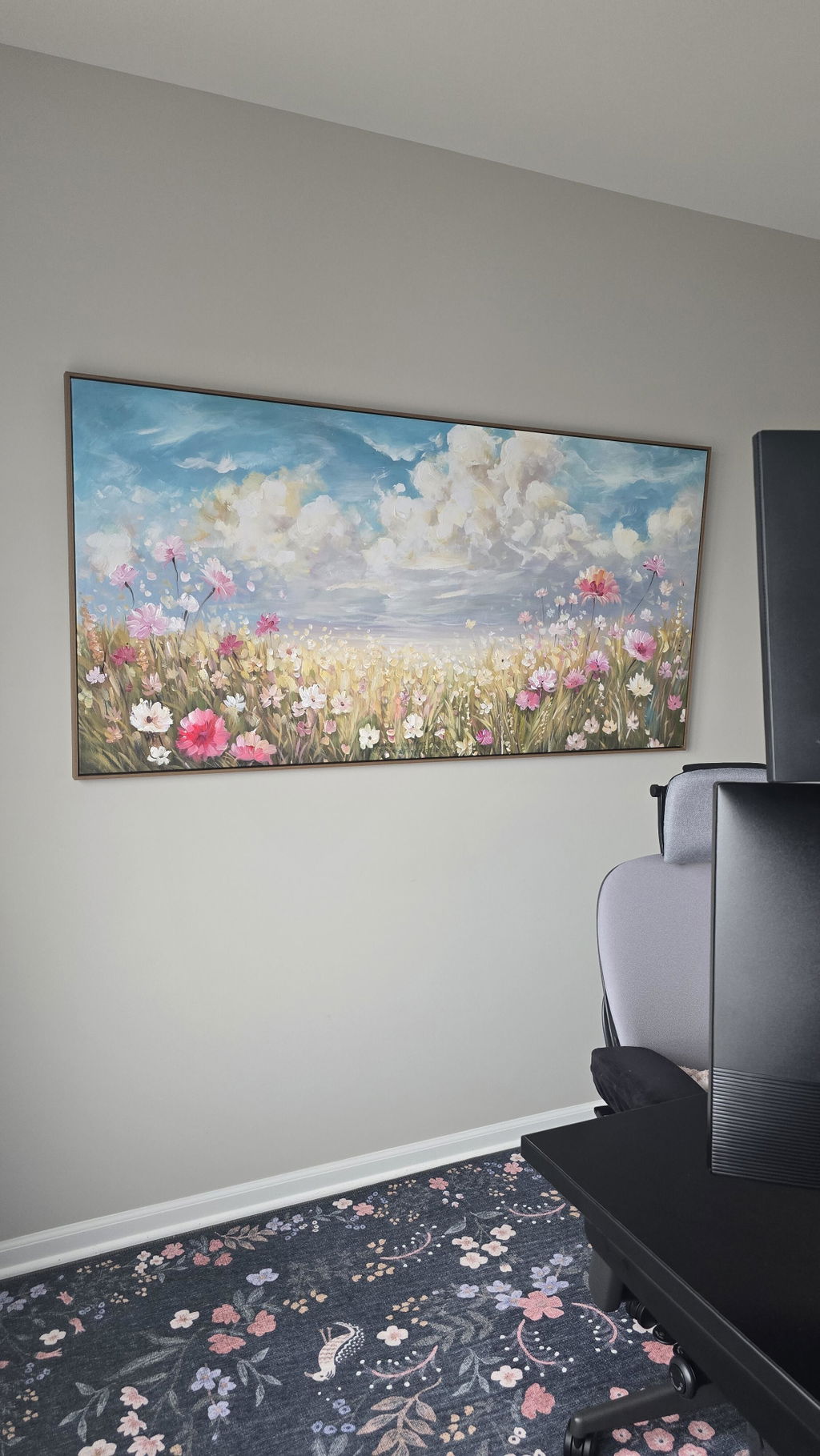
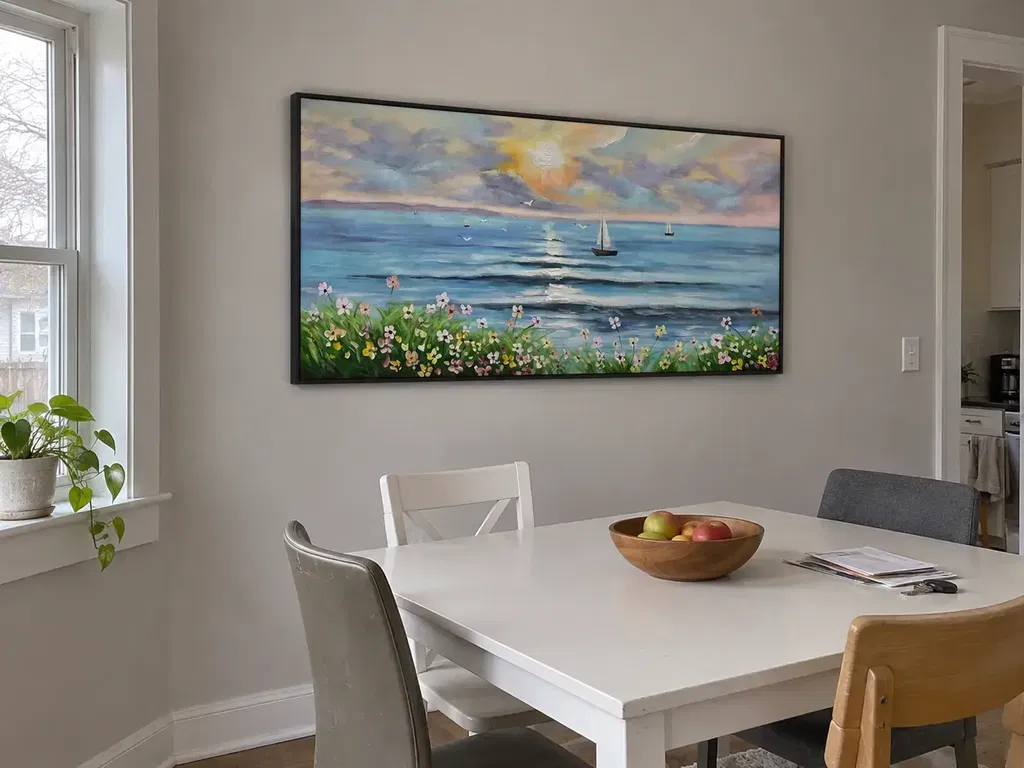
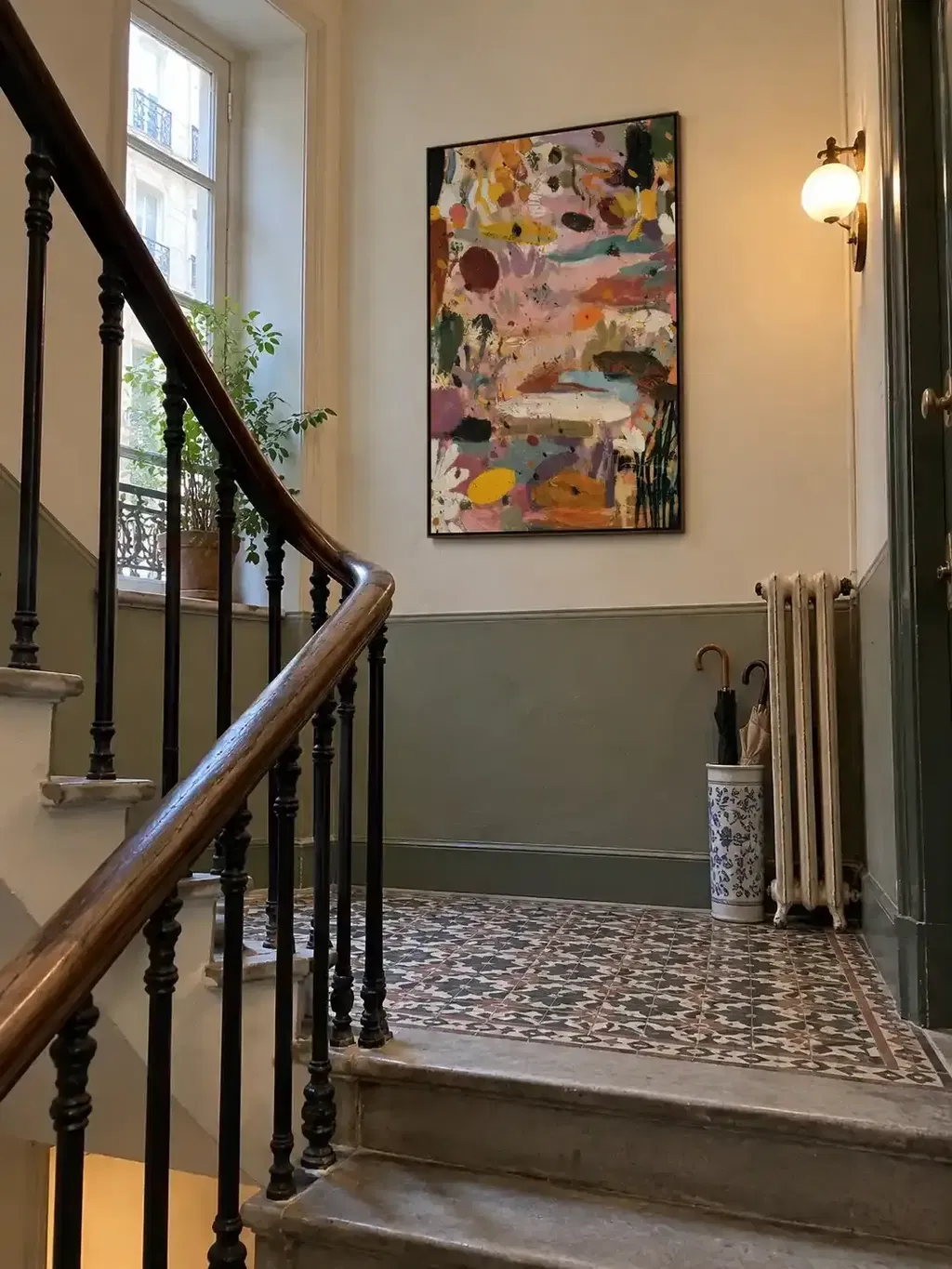
Textured wall art can help an open room feel less echoey by softening harsh reflections, but it will not soundproof the space. The best results usually come from larger pieces with real surface depth, placed where the room has the most hard-surface bounce and where the art can also improve the visual balance.
Why Texture Can Help Soften Echo
In open rooms, sound tends to bounce off hard floors, bare walls, and tall ceilings before it has a chance to settle. A flat, hard surface reflects that energy in a cleaner way, which is why conversation can feel sharper or more lively in a mostly empty living room or loft. Textured wall art changes that path a little by breaking up reflections instead of sending them straight back through sound diffusion and limited absorption.
How Sound Reflects in Open Rooms
The practical issue is not just volume. It is the way repeated reflections make a room feel hard, busy, or slightly tiring. Hard floors, long wall spans, and fewer upholstered pieces give sound more chances to bounce around. That is why textured wall art for sound dampening living room setups is usually most relevant in open-plan spaces rather than in already-soft furnished rooms.
Why Raised Surfaces Change the Feel
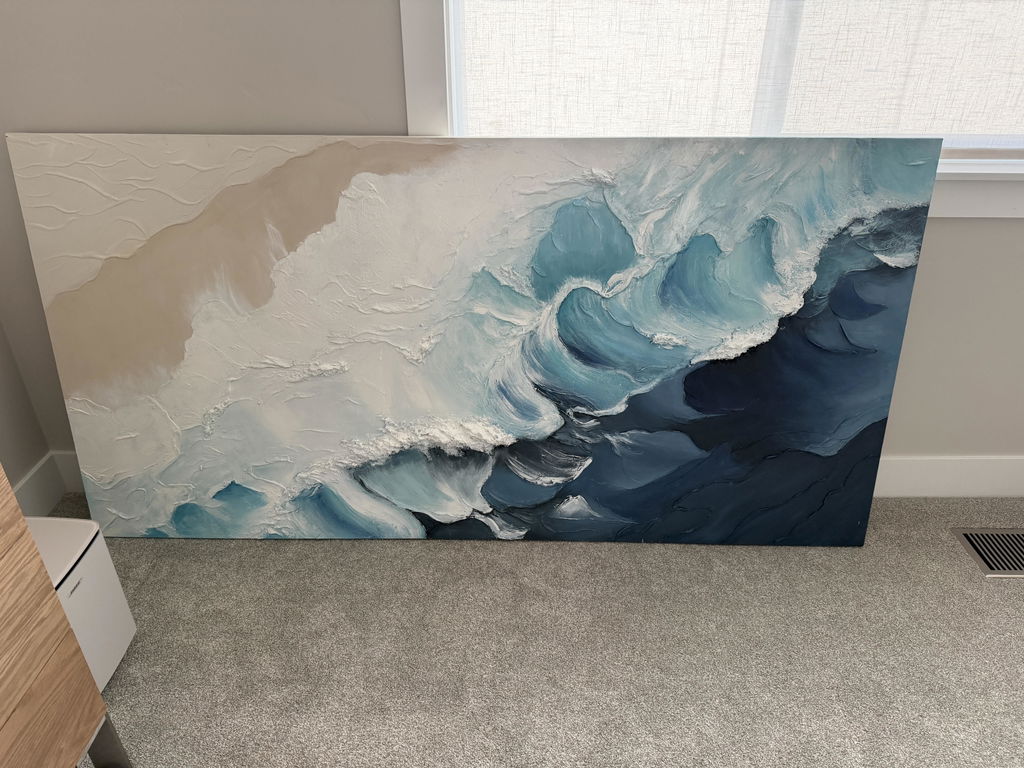
Impasto, ridges, and layered paint create small variations across the surface, so the wall is less acoustically uniform. That can scatter some reflections and, in certain materials, add limited absorption as well. One study found oil paintings on jute canvas reached absorption coefficients as high as 0.40 at 4 kHz, which is a narrow example of how surface construction can matter.
What Texture Can and Cannot Do
The benefit is real, but it is modest. Textured wall art is best understood as a supplemental way to soften echo, not a replacement for professional acoustic treatment. If the room is especially lively, rugs, curtains, upholstered seating, or acoustic panels will usually do more of the heavy lifting.
Where It Works Best in Open Rooms
Textured wall art has the best chance of helping when the room is echo-prone to begin with. That usually means hard floors, tall walls, broad blank surfaces, and not much soft furniture between the seating area and the wall. In those rooms, the art can make the biggest difference where reflections are most obvious rather than scattered across several smaller pieces.
A good rule of thumb is to start with the largest blank wall near the main conversation zone. A piece placed where people actually sit or face each other is more likely to affect how the room feels than art tucked far from the action. Practical placement guidance for large blank walls near ear level is especially useful in great rooms and open-plan living areas.

| Room Condition | Why It Feels Echoey | Where Textured Art Helps Most | What To Expect |
|---|---|---|---|
| Hard floors, tall ceiling, sparse furniture | Reflections stay lively and obvious | A large blank wall near seating | A softer, calmer feel, not full noise control |
| Open living and dining combo | Sound travels across more open space | The wall opposite the main seating area | Better visual grounding and some reflection softening |
| Already furnished with rugs and curtains | Fewer hard reflections remain | A statement wall that needs styling more than acoustics | Smaller acoustic gain, stronger design payoff |
| Renter space with limited changes | Fewer permanent fixes are allowed | Reversible wall decor on the largest available wall | Useful if you want a softer room without remodeling |
If the room already has rugs, curtains, and upholstered seating, the incremental acoustic gain is usually smaller. In that case, textured wall art may still be worth it for the look, but the sound result should be a bonus, not the main reason to buy.

Choosing the Right Size and Surface
Scale matters because sound changes most where the wall coverage is meaningful. A small accent can be attractive, but it is less likely to interrupt reflections in a large open room than a piece that visually anchors the wall. Larger pieces cover more of the reflective surface, so they are more likely to matter in a room where echo is the complaint through larger pieces cover more reflective area.
Scale for Large Walls
For most open rooms, the piece should look intentional from the main seating area, not float in the middle of a wall like a placeholder. If the wall is tall, wide, or visible from multiple zones, the art should have enough presence to hold the space. That is why buyers comparing extra large wall art often get better room balance than they do from several small prints.
Texture Depth and Relief
Not all textured wall art behaves the same way. Subtle texture gives you a softer visual finish, while deeper relief or impasto creates stronger highlights, shadows, and a more tactile feel. If your room already feels visually busy, a piece with controlled texture depth usually reads calmer than one with heavy surface movement.
For buyers who want the handmade look without overwhelming the room, hand-painted texture can be a better fit than a highly aggressive surface. The goal is to add depth, not visual noise.
Color and Finish Choices
Color changes how calm the room feels, even when the acoustic change is similar. Muted neutrals, beige, soft green, and other low-contrast palettes usually feel quieter in open-plan spaces. Brighter color can work too, but it tends to read more energetic. A low-glare finish also helps the piece keep its softness in daylight rather than flashing back at you.
Placement Moves That Make a Difference
The most practical way to think about placement is to start with the room's echo problem, then let the art solve both the acoustic and visual sides of that wall. A centered piece on the wrong wall usually does less than a well-scaled piece on the wall where reflections feel strongest.
- Stand in the main seating area and listen for the liveliest wall or corner.
- Choose the largest blank wall that faces or sits near that zone.
- Mock up the size with painter's tape before you buy or hang anything.
- Center the artwork relative to the seating arrangement, not just the wall edges.
- Keep it near the height where sound and sight lines meet, often around ear level in the room's main conversation zone.
That approach gives textured wall art the best chance to reduce echo without looking like an afterthought. It also keeps the piece integrated with the furniture layout, which matters as much as the texture itself in a room you actually use every day.
For people planning a larger statement piece, living room wall proportions are worth checking before checkout. A wall that looks empty on screen can feel much smaller once the sofa, rug, and side tables are in place.
Choosing Style Without Losing the Acoustic Benefit
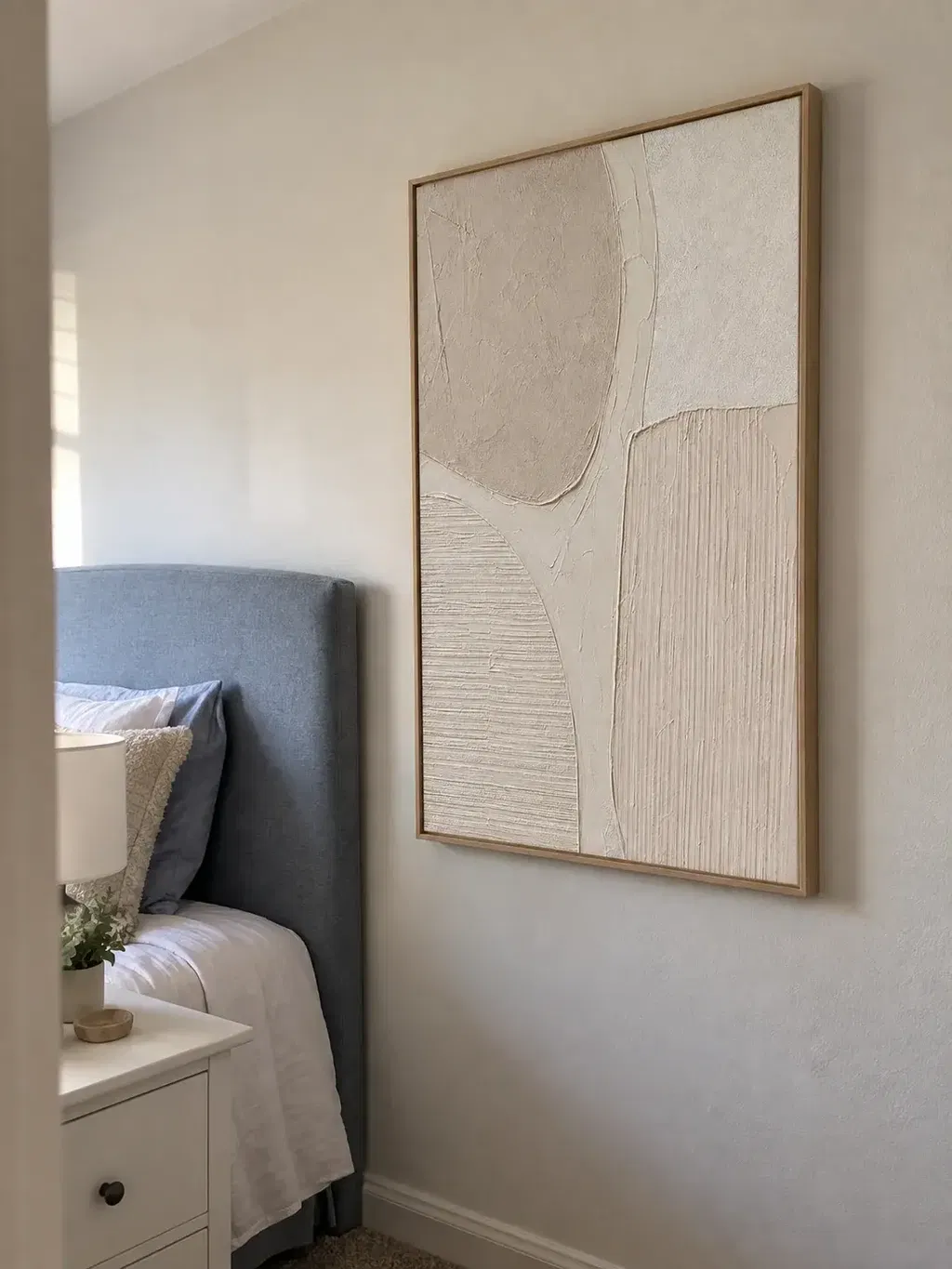
Style should support the room's calm, not compete with it. Minimal and organic textures usually work well when the room already has strong lines, because they soften the wall without adding more visual tension. Bold abstract color can still work, but it tends to read as a focal point first and a softening layer second.
If your goal is a quieter feeling room, a restrained palette is usually easier to live with in open-plan layouts. Wabi Sabi textures are a useful browsing direction when you want surface depth, warmth, and a more relaxed visual rhythm. If you want a cleaner modern look, a minimalist textured painting can deliver the same room-softening feel without introducing extra visual clutter.
The practical test is simple: if the room already has plenty of color and movement, choose the calmer piece. If the room feels flat and unfinished, a more expressive texture can add life without needing to be loud.
What to Expect Before You Buy
Textured wall art usually makes a room feel softer, not silent. If you want a true acoustic fix, you still need dedicated treatment. The point here is to improve the room feel, reduce the sharpness of reflections, and make the space more comfortable to sit in.
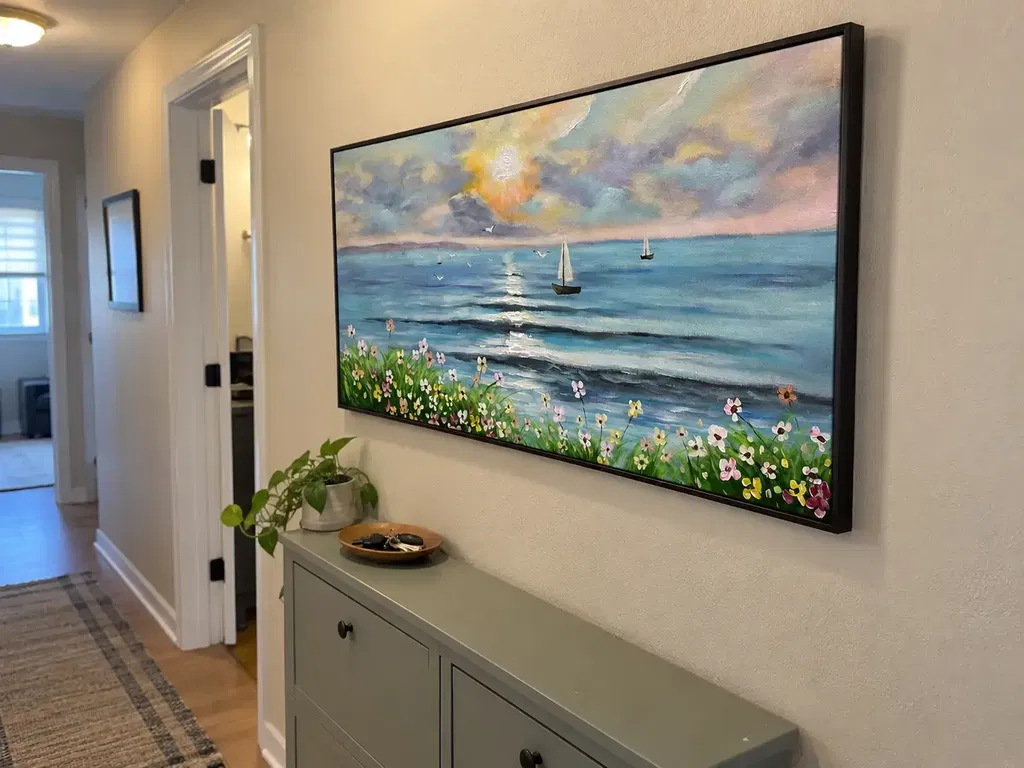
Before you buy, check three things: the wall size, the room's hard-surface level, and the amount of soft furnishings already in the space. Then verify the product photos carefully. Side-angle images and a painter's-tape mockup help you judge whether the texture reads deep enough and whether the size fills the wall the way you expect through side-angle photos and tape checks.
If the room is already soft and the echo is mild, browse for the look you want first. If the room is hard, tall, and lively, make scale and placement the priority before style details.
FAQs
Can Textured Wall Art Really Reduce Echo in a Living Room?
Yes, it can soften reflected sound in some open rooms, especially when the piece is large and the wall is mostly hard surface. The effect is usually subtle, though. If you need a noticeable reduction in room noise, use textured wall art as part of a broader setup with rugs, curtains, and other soft surfaces.
What Type of Textured Wall Art Works Best for Open Rooms?
Larger pieces with deeper surface variation tend to be the best fit for open rooms because they cover more reflective area. A small textured accent can still look nice, but it is less likely to change how the room feels acoustically. Choose the style that matches the room's scale first, then the texture depth.
How Large Should Textured Wall Art Be for a Big Wall?
It should feel proportionate to the wall and the seating area, not like a small object left behind on a blank surface. In practice, bigger is usually better when the wall is the source of the echo complaint. Tape out the size first so you can judge both visual coverage and placement before buying.
Why Does an Open-Plan Room Sound More Echoey Than a Furnished Room?
Open-plan rooms usually have more hard surfaces and fewer soft objects to absorb or scatter sound. That lets reflections travel farther and feel sharper. Once you add rugs, curtains, upholstery, and a textured wall piece, the room often feels less lively even if the acoustics are still far from studio quiet.
Can Textured Wall Art Replace Acoustic Panels or Curtains?
No. It can complement those treatments, but it is not a substitute for them in a noisy or highly reflective room. Think of it as the design-friendly layer that helps soften the room while the more functional materials handle the heavier acoustic work.
Browse Textured Wall Art for Open Rooms
If your room needs a softer feel and a calmer focal wall, textured wall art is worth considering after you check scale, placement, and what else is already in the room. Start with a large wall, choose a surface that feels intentional from the sofa, and keep your expectations focused on softening echo rather than eliminating it. When you are ready, we recommend browsing textured wall art and comparing pieces by wall size, texture depth, and overall room balance.