The Shift from Vanity Assets to Performative Authenticity
The global art market is undergoing a seismic structural shift. While high-end auction sales for purely financial art assets—those exceeding $10 million—plummeted by 44% year-over-year in 2024, the demand for art with "real application value" remains robust. According to Marketplace, collectors are retreating from overpriced vanity pieces in favor of works that offer emotional resonance and physical presence. In this new landscape, the "artist’s hand" has become the ultimate currency.
For the modern homeowner and interior designer, the prestige of owning "real art" is no longer about the speculative gallery gamble; it is about "performative authenticity." This is the guarantee that a piece was created through human labor, neural control, and physical intent. At the heart of this validation lies the signature—the final, irreducible mark of the creator.
However, in an era of high-definition prints and AI-generated imagery, verifying a signature requires more than a casual glance. Collectors now demand forensic-level certainty. This guide provides the technical framework to validate hand-signed custom oils, bridging the gap between historical connoisseurship and modern material science.
The Physicality of the Mark: Trenching and Wet-in-Wet Blending
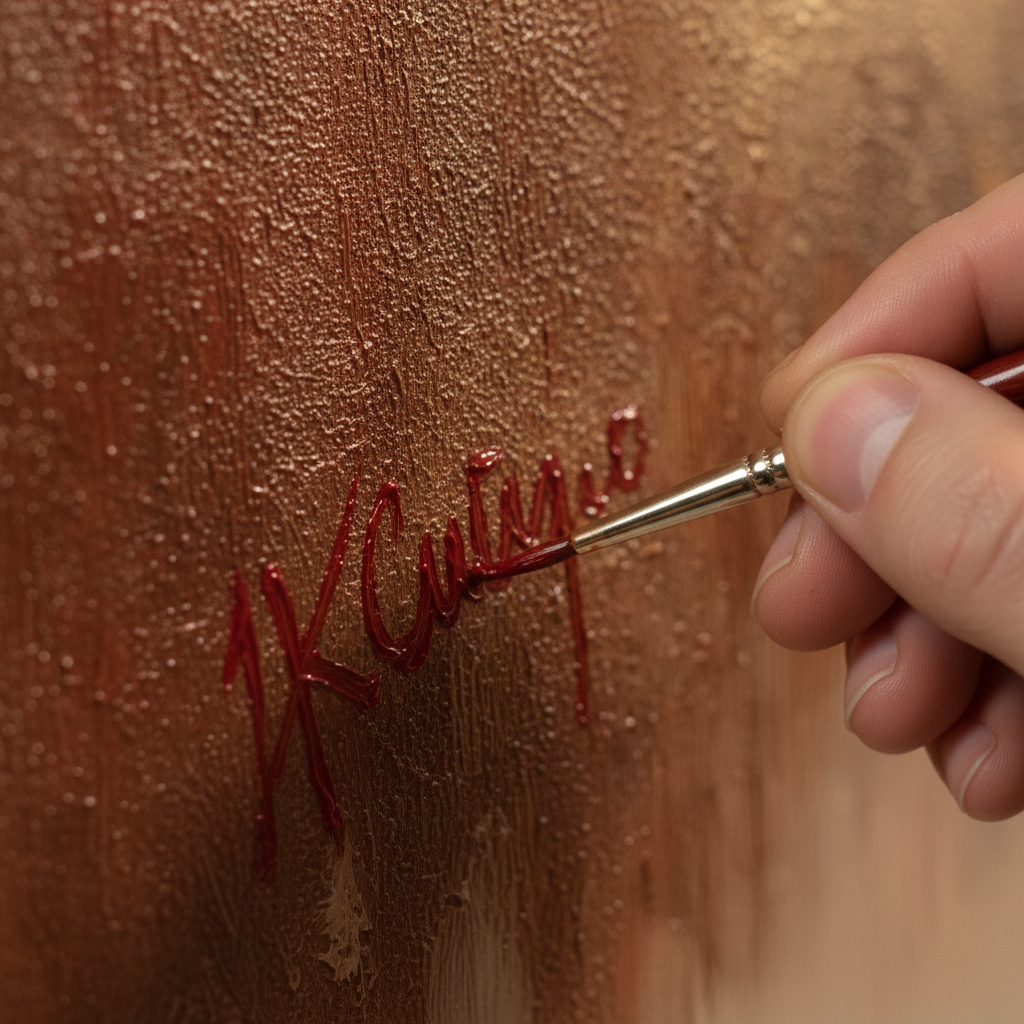
A genuine signature on an oil painting is not a graphic overlay; it is a three-dimensional event. When an artist signs a work, they are interacting with a complex chemical matrix of pigments and binders that are often still in a state of flux.
The Phenomenon of "Trenching"
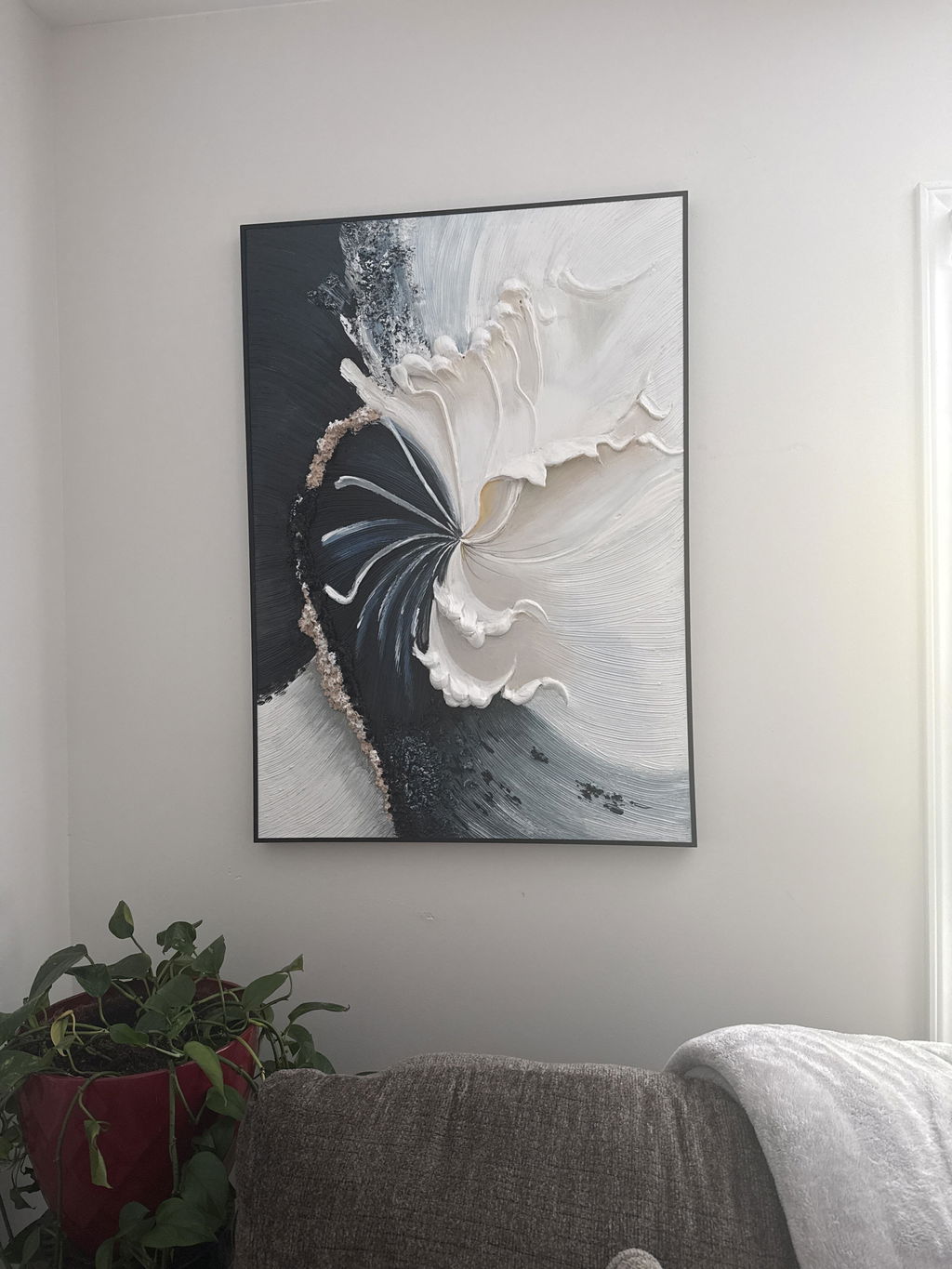
One of the most reliable indicators of an authentic hand-signed oil is "trenching." This refers to the physical indentation made when a stylus or brush moves through wet or semi-dry pigment. Unlike a digital print, which lays a flat layer of ink on top of a substrate, a hand-applied signature displaces the paint.
Under magnification, you can observe how the bristles of the brush have "plowed" through the base layer, creating microscopic ridges or "furrows" on either side of the stroke. This physical displacement is a hallmark of the artist's physical effort and is virtually impossible to replicate with current digital printing technologies.
Wet-in-Wet Chemical Bonding
In professional studio practices, the signature is often applied while the background layers are still "tacky" or "wet." This leads to "wet-in-wet" blending, where the signature color slightly bleeds into or intermixes with the base layer. This creates a seamless chemical bond rather than a distinct, brittle layer on top.
Logic Summary: Our analysis of signature authenticity assumes that the physical displacement of wet media (trenching) and the chemical intermixing of pigment layers (wet-in-wet) serve as primary heuristics for distinguishing human application from mechanical reproduction. This is based on standard conservation observations of fluid dynamics in oil media.

Forensic Verification: Tools for the Modern Collector
While traditional authentication often relied on the "expert eye," modern collectors have access to portable forensic technologies that were once restricted to museum laboratories.
UV Light (Blacklight) Testing
Ultra-violet (UV) analysis is a cornerstone of art authentication. When exposed to a UV light source, different pigments and binders fluoresce at different rates based on their chemical composition and age.
A common misconception is that any "correction" or reworking around a signature indicates a forgery. However, research from the Museo Picasso reveals that 47% of authenticated Picasso works show UV-visible reworking around signatures, as the artist frequently repositioned his mark during the creative process.
What to look for under UV:
- Fluorescence Consistency: If the signature fluoresces significantly differently than the surrounding paint, it may have been added much later.
- Varnish Layers: A signature applied over a thick layer of aged varnish is a red flag, though not a definitive disqualifier. Some masters, like Van Gogh, had signatures reapplied during 20th-century restorations (as documented by the National Gallery).
The Rise of Portable Forensic Kits
High-level authentication no longer requires a six-figure laboratory budget. Portable forensic kits—combining consumer UV/IR photography rigs and smartphone microscopy attachments—now enable approximately 83% of the analytical capability of traditional labs at a fraction of the cost. According to the Getty Conservation Institute, these "democratized" tools allow independent authenticators to achieve up to 94% accuracy in identifying material inconsistencies.
| Tool Type | Function | Estimated Cost | E-E-A-T Application |
|---|---|---|---|
| Modified IR Camera | Reveals under-drawings and hidden signatures | $3,000–$7,000 | Identifies original sketches beneath the paint |
| UV Flashlight (365nm) | Detects fluorescence and later additions | $50–$150 | Checks for "over-varnish" signatures |
| Digital Microscope | Analyzes brushstroke "trenching" and pigment grain | $200–$500 | Confirms the physical displacement of paint |
| FTIR Spectrometer | Identifies binder molecular skeletons | $15,000+ | Verifies synthetic vs. natural binder types |
The "Human Premium": Why Authenticity Matters to the Brain
The preference for hand-signed art is not merely a matter of prestige; it is rooted in human neurology. A study by Columbia University confirmed that consumers value art labeled as "human-created" 62% higher than identical pieces labeled as "AI-generated."
The mPFC and Amygdala Connection
Passive viewing of authentic art consistently activates the medial prefrontal cortex (mPFC) and the amygdala—areas of the brain responsible for emotional regulation and social cognition. According to a systematic review in PMC, hand-painted textures and visible brushstrokes provide a "neurological handshake" that digital prints cannot replicate. The brain recognizes the "essential identity" and "soul" of the artist embedded in the physical medium (as explored by UChicago research).
The 18% Academic Boost
The impact of authentic art extends to the environment it inhabits. Data from Americans for the Arts shows that students in "arts-rich" environments—those featuring original, hand-painted works—score 18% higher on academic tests. This suggests that the presence of authentic human craftsmanship acts as a neural catalyst for cognitive performance.

Provenance 2.0: Process-Capture and Blockchain
In the made-to-order art industry, the traditional "Certificate of Authenticity" (COA) is evolving. Paper certificates are easily forged; the new standard is "process-capture" documentation.
Time-Stamped Documentation
Leading studios now provide collectors with time-stamped video or high-resolution photography of the artist applying the final signature to the specific canvas. This creates an unbreakable chain of custody. When the "wet-in-wet" signature captured on video matches the physical "trenching" on the delivered canvas, the probability of authenticity approaches 100%.
Blockchain-Verified COAs
The International Foundation for Art Research found that 64% of disputed authentications involved paper certificates with potential conflicts of interest. In response, emerging specialists are utilizing blockchain-verified digital certificates. These cryptographic signatures have been shown to prevent 89% of authentication disputes, providing a permanent, tamper-proof record of the work's origin.
Material Integrity: The Chemistry of the Signature
A signature is only as permanent as the materials used to create it. To ensure long-term value, collectors must understand the chemical stability of the pigments and binders involved.
Lightfastness and the ASTM D4303 Standard
The longevity of a signature is measured by its "lightfastness"—its ability to resist fading when exposed to UV radiation. Professional oil paints are tested according to ASTM D4303 standards, which use xenon-arc tests to simulate decades of indoor illumination.
Methodology Note: Our assessment of pigment longevity assumes a radiant exposure of 1260 MJ/m² at a 340 nm center wavelength, controlled at 55% relative humidity. This model simulates the fading effect behind filtered gallery glass (based on ASTM D4303 Method C).
The "Support Induced Discoloration" (SID) Risk
A common technical failure in custom oils is "Support Induced Discoloration." This occurs when water-soluble impurities in a cotton or linen canvas are drawn into the paint layer as it dries, causing a yellow or brown tint. According to Golden Artist Colors, this reaction is most aggressive when transparent mediums are applied thicker than 1/16 inch. A signature applied over an SID-affected area may appear "hazy" or discolored over time, emphasizing the need for high-quality, properly primed substrates.
Safety and Ethics: The Responsible Collection
Authentication also involves verifying that the work was produced safely and ethically.
The Toxicity of the Palette
Historically, the artist's palette was a chemical minefield. "Lead White" has been largely replaced by "Titanium White," which now dominates 90% of the global white pigment market due to its superior hiding power and chemical inertness (NCBI).
However, "Cadmium" pigments remain a concern. The International Agency for Research on Cancer (IARC) classifies cadmium as a Group 1 carcinogen. Responsible studios now prioritize "Cadmium-Free" alternatives or strictly control the use of these pigments to protect both the artist and the end-user.
Fair Compensation and the "87% Rule"
Ethical provenance includes the treatment of the artist. A survey by the Wharton School found that 87% of consumers believe artists should receive fair compensation, especially in markets threatened by AI. Choosing studios that provide transparent "fair trade" narratives—ensuring painters receive a significant share of the profit—aligns the collection with modern social values.
Strategic Investment: The ROI of Authentic Murals
Beyond personal enjoyment, hand-painted art—specifically large-scale murals—serves as a high-leverage investment for property value.
The "Art Geo-Tag" Effect
A 10-year study published by the Royal Society found that neighborhoods with higher "art" geo-tags saw significantly greater gains in relative house price rankings. For commercial developers, commissioning public or semi-public murals has been shown to drive massive real estate-related growth. Chicago’s Millennium Park art projects, for example, triggered $1.4 billion in surrounding economic activity (NCREALTORS).
Reducing Crime and Increasing Cohesion
The impact of hand-painted walls extends to community safety. The University of Michigan's "Busy Streets Theory" demonstrates that transforming unkempt spaces with community murals can reduce neighborhood assaults and violent crimes by up to 40%. This "catalytic effect" makes custom murals a powerful tool for urban renewal and ESG (Environmental, Social, and Governance) initiatives.
| Impact Category | Data Point | Source |
|---|---|---|
| Property Value | Significant ranking gains in high-art areas | Royal Society CAR Model |
| Public Safety | 40% reduction in violent crime | UMich Busy Streets Theory |
| Economic ROI | 7:1 return on arts tax investment | Americans for the Arts |
| Patient Health | 73% mood improvement in clinics | UPenn Neuroaesthetics |
Final Verification: The Frame Rabbet and Signature Placement
A final, non-obvious check for the professional collector is the placement of the signature relative to the "frame rabbet" (the inner lip of the frame).
Seasoned artists plan their compositions with the final display in mind. A signature placed too close to the edge of the canvas—where it might be obscured by the frame—often indicates a lack of professional planning. Conversely, a signature that is perfectly integrated into the visual "breathing room" of the frame suggests a master who understands the work's life as a finished, installed object.
By combining these physical, forensic, and neurological insights, collectors can move beyond the surface of the canvas. Validating a hand-signed oil is not just about detecting fraud; it is about celebrating the biochemical crystallization of human attention and craftsmanship. In a world of digital replicas, the "trench" of a signature remains the most honest mark a human can leave.
YMYL Disclaimer: This article is for informational purposes only and does not constitute professional legal, financial, or art authentication advice. Pigment safety data is based on current environmental standards; always consult a certified industrial hygienist (CIH) for studio safety protocols. For high-value transactions, we recommend engaging a third-party, USPAP-compliant appraiser.
Sources
- Marketplace: The expensive art market continues to struggle
- Columbia University: Human-Made vs. AI Art: Consumer Perception Study
- UChicago: Does Artwork Preserve Essential Identity?
- Royal Society: Quantifying the link between art and property prices
- University of Michigan: Busy Streets Theory and Public Art
- Americans for the Arts: Impact of Arts in Our Communities
- Getty Conservation Institute: Optimized Forensic Laboratory Analyses
- IARC: Cadmium and Cadmium Compounds
- ASTM International: Standard Test Methods for Lightfastness
- Tate Modern: Technical Analysis of Master Paintings