The New Era of Custom Art: Why Standard Documentation Falls Short
The global art market is undergoing a seismic structural shift. While high-end auction sales for speculative assets (those over $10 million) plummeted by a staggering 44% year-over-year in 2024, according to Marketplace, a new trend is emerging. Collectors and homeowners are retreating from "vanity" pieces and returning to "real application value." This movement favors custom, hand-painted works that offer emotional resonance and physical presence rather than just financial speculation.
However, this shift toward made-to-order art introduces a significant challenge: how do you prove the authenticity and value of a work that was created specifically for you, often via an online transaction? In the traditional gallery world, a simple signature might suffice. In the modern e-commerce landscape, where the gap between "performative authenticity" and "retail certainty" must be bridged, a standard Certificate of Authenticity (COA) is no longer enough.
We have observed that for today’s aesthetic-driven homeowners and interior designers, the COA must evolve into an "Authenticity Shield"—a comprehensive data package that mitigates risk, ensures material safety, and protects the investment. This guide breaks down the essential data points required for custom art documentation to ensure your hand-painted oil or mural maintains its status as a high-value original.

1. The Anatomy of a High-Value COA for Commissioned Works
For a made-to-order painting, the COA serves as the physical "birth certificate" of the piece. However, because the buyer is often not present in the studio, the documentation must provide a transparent link between the digital approval process and the physical object.
The "Approval Media" Integration
Standard COAs usually list the title, artist, and dimensions. In our experience with custom commissions, a critical missing link is the "Approval Media." This refers to the specific high-resolution photos or videos sent to the buyer before shipping. By referencing these digital assets in the COA, you tie the physical object to the exact moment of buyer verification. This prevents "bait and switch" concerns and ensures the work received is the work approved.
Texture Verification and Macro-Physicality
The primary reason consumers value human-created art 62% higher than AI-generated art—as confirmed by a Columbia University study—is the "essential identity" of the artist's hand. Digital prints lack this soul.
To protect this value, a modern COA should include a Texture Verification section. This might include:
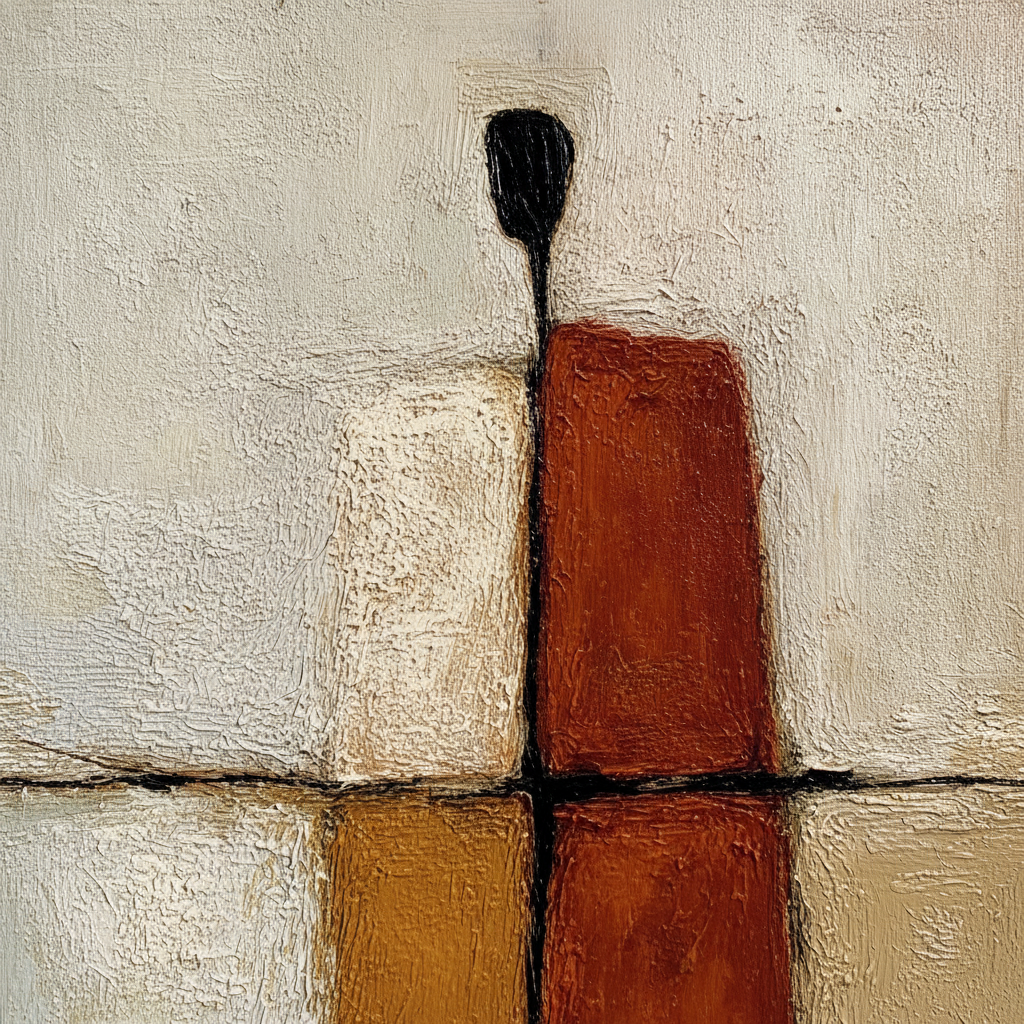
- Macro-Photographs: Close-ups of specific impasto techniques or unique brushwork.
- Relief Measurements: Descriptions of the pigment depth (mm-scale texture), which optical microprofilometry has proven is crucial to the aesthetic experience of oil paintings.
- Impasto Signature: A description of how the artist uses palette knives or heavy brushes to create 3D relief, distinguishing it from a flat Giclée print.
Logic Summary: Our analysis of collector behavior assumes that physical texture is the primary "authenticity signal." By documenting this texture in the COA, we create a physical "fingerprint" that is impossible to replicate via digital printing.
2. Legal Compliance and the "Art Multiples" Framework
In states like New York and California, the law is quite specific about what must be disclosed when art is sold in a series or via a catalog. NY Arts & Cult. Aff. Law § 15.01 requires disclosures regarding the medium, the artist's name, and whether the work is a reproduction of a pre-existing image.
Disclosure Requirements for Custom Series
If you are commissioning a work that is part of a "limited series" or a "customizable edition," the COA must explicitly state the edition size and the specific number of the piece. Furthermore, if the work is a "hand-painted reproduction" of an existing motif, the COA must clearly distinguish between a "unique original" and a "master-led studio recreation." This transparency is not just ethical; it is a legal safeguard for the buyer's future resale value.
Chain of Custody (CoC)
Experienced collectors now look for a documented Chain of Custody. This should include:
- Order Timestamp: The exact date the commission was initiated.
- Studio Identifier: A unique code for the specific resident artist's studio, ensuring the piece wasn't sourced from a generic, mass-production warehouse.
- Transit Records: Documentation of the logistics path from the studio to the final installation.
3. Material Integrity: The "IAQ Promise" and Pigment Safety
One of the most overlooked aspects of art documentation is the chemical composition of the paints. As indoor air quality (IAQ) becomes a priority for luxury homeowners and healthcare facilities, the COA must serve as a safety data sheet.
The Shift to Low-VOC and Non-Toxic Pigments
The EPA warns that indoor air pollution can be significantly more concentrated than outdoor air. For large-scale murals or heavy oil paintings, the choice of binders and solvents is critical.
- VOC Emissions: Aalto University research has shown that coatings on wood with specific moisture levels emit significantly lower VOCs during curing. A COA should certify that the work uses low-VOC paints and non-toxic solvents like walnut oil instead of industrial turpentine.
- The Lead and Cadmium Factor: The International Agency for Research on Cancer (IARC) classifies cadmium compounds as Group 1 carcinogens. While some artists still prefer cadmium for its vibrance, modern "Authenticity Shields" should disclose if these heavy metals are present, especially in homes with children or in medical environments.
Lightfastness and Longevity
How will the painting look in 20 years? The COA should reference ASTM D4303 standards for lightfastness. This ensures the pigments won't fade under indoor UV exposure. We recommend that COAs include a "Material Log" detailing the specific pigment codes (e.g., PW6 for Titanium White) and the binder type (e.g., alkali-refined linseed oil).
| Parameter | Recommended Standard | Rationale |
|---|---|---|
| Lightfastness | ASTM D4303 (I or II) | Ensures color stability over 50+ years. |
| VOC Content | < 50 g/L | Meets LEED/WELL certification for healthy buildings. |
| Heavy Metals | EN 71-3 Compliant | Safety for residential and pediatric environments. |
| Binder Type | Natural Oils/Acrylic Emulsion | Prevents premature cracking or "Support Induced Discoloration" (SID). |
| Surface Finish | UV-Protective Varnish | Protects against dust and photochemical aging. |
Methodology Note: This table is a heuristic developed for interior designers to quickly vet art materials for residential safety and long-term durability.

4. The Economic Impact: Art as a Property Value Multiplier
A well-documented, hand-painted piece is more than just decor; it is a financial asset. Data from the Royal Society found that neighborhoods with higher "art" geo-tags saw greater relative house price ranking gains. For commercial developers, the ROI is even more pronounced.
Catalytic Effects of Murals
Public and private murals act as "permanent physical billboards." According to Americans for the Arts, government tax investments in the arts yield an astonishing 7:1 ROI. When a business or homeowner invests in a custom mural, the COA acts as the proof of that investment's "authenticity premium."
Deterring Crime and Boosting Social Cohesion
The "Busy Streets Theory" from the University of Michigan suggests that transforming spaces with community-focused murals can reduce violent crime by up to 40%. For a property owner, a COA that documents the community-centric nature of a commission can be a powerful tool for ESG (Environmental, Social, and Governance) reporting or municipal grant applications.
5. Psychological and Physiological Benefits of Authenticity
Why does a hand-painted wall feel different than a printed one? The answer lies in neuroaesthetics. A systematic review published in PMC shows that viewing art consistently activates the medial prefrontal cortex (mPFC) and the amygdala, optimizing emotional regulation.
Biophilic Design and Healing
For clinical and office environments, biophilic design—incorporating natural landscapes—has been shown to produce the same stress-reduction effects as being outdoors. A UPenn review noted that 73% of patients reported significant mood improvements when exposed to environmental artworks.
A COA for a biophilic mural should ideally note the "Natural Narrative" of the piece, documenting the artist's intent to foster a healing environment. This elevates the work from "decoration" to "public health infrastructure."
6. Avoiding the "Digital Replicated" Trap
As AI-generated art floods the market, the value of the "human touch" is skyrocketing. Research from UChicago shows that digital replicas lack the artist's "essential identity," causing their perceived value to collapse in the eyes of consumers.
To avoid the "authenticated fake" trap—where a digital certificate is attached to a mass-produced print—your COA must include physical verification methods. We suggest looking for:
- Micro-XRF or Raman Spectroscopy References: While usually reserved for museum-grade pieces, high-end custom art providers are beginning to use these tools to identify trace element "fingerprints" in their pigments.
- Infrared Imaging: The Smithsonian uses IR to reveal original sketches hidden beneath paint. A COA that references the existence of these "under-drawings" proves the piece was built layer-by-layer by a human hand, not a printer.
Ensuring Your Investment is Shielded
The Certificate of Authenticity is the final bridge between the artist’s studio and your wall. For custom, made-to-order art, it must do more than just name the creator. It must serve as a technical manual, a safety guarantee, and a legal shield.
When purchasing original art online, always insist on a COA that includes Approval Media, Texture Verification, and Material Safety disclosures. These data points ensure that your work is not just a beautiful addition to your space, but a protected asset that carries the "essential identity" of human craft into the future.
By prioritizing these "Authenticity Shields," you move from the uncertainty of e-commerce to the retail certainty of a gallery-grade acquisition, ensuring your home or project is defined by real art, real texture, and real value.
Disclaimer: This article is for informational purposes only and does not constitute professional legal, financial, or medical advice. For specific legal requirements regarding art sales in your jurisdiction, consult with a qualified attorney. For health-related concerns regarding paint fumes or pigments, consult a medical professional or industrial hygienist.
Sources
- The Art Basel and UBS Art Market Report 2024
- Columbia University: Human-Made vs. AI Art Study
- EPA: Indoor Air Quality and Low-VOC Paints
- Royal Society: Quantifying the link between art and property prices
- WHO: Scoping Review on Arts and Health
- IARC: Cadmium and Cadmium Compounds
- University of Michigan: Busy Streets Theory and Public Art
- Americans for the Arts: Arts & Economic Prosperity III