The Architecture of the Shadow: Why Floater Frames Matter in Multi-Panel Art
In the current art market, we are witnessing a significant pivot. High-end auction sales for purely financial art assets plummeted 44% year-over-year in 2024, according to Marketplace.org. Buyers are returning to "real application value"—art that transforms a living space rather than sitting in a vault. For homeowners and designers, this shift places a premium on how art is physically integrated into the home.
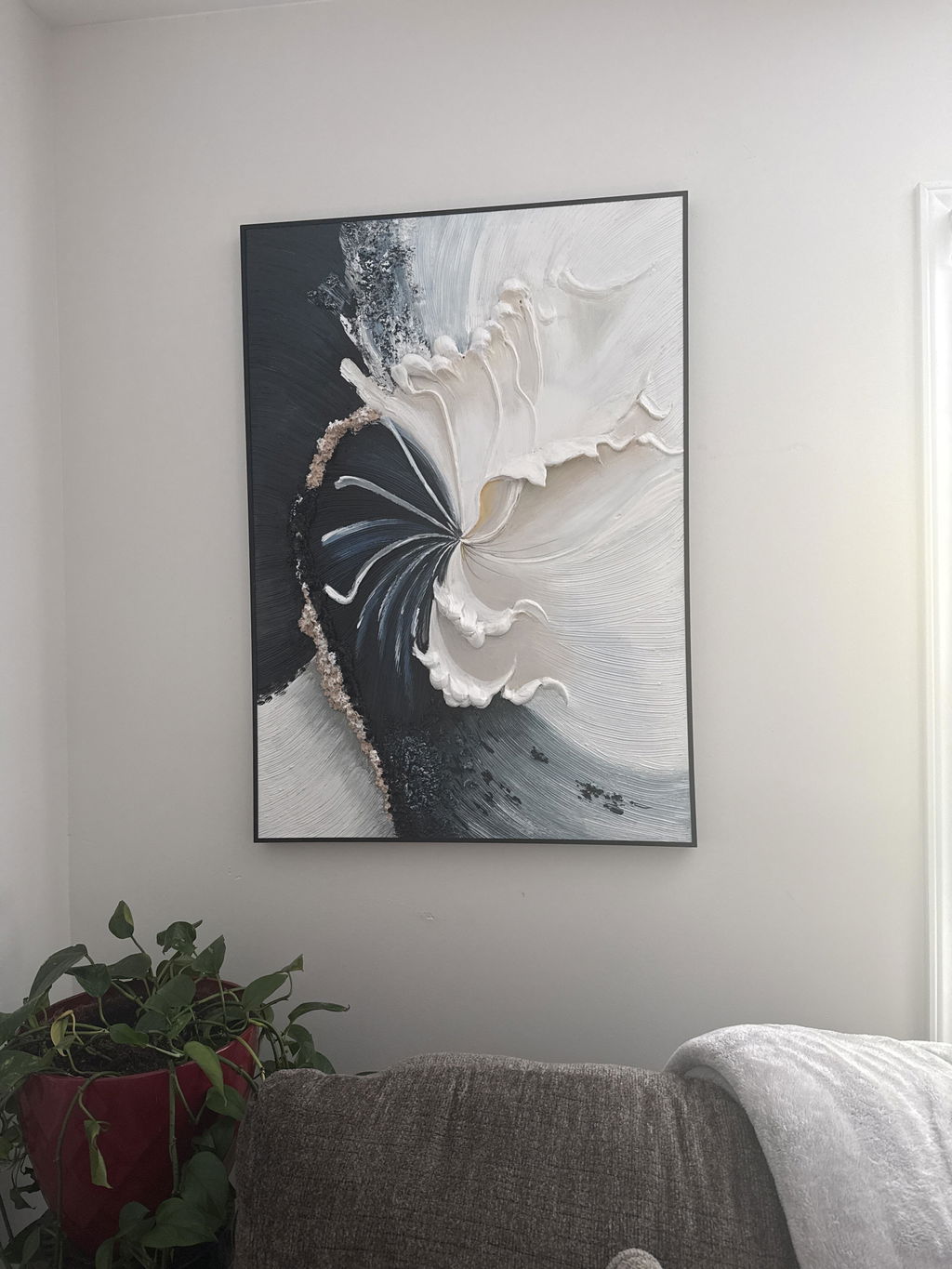
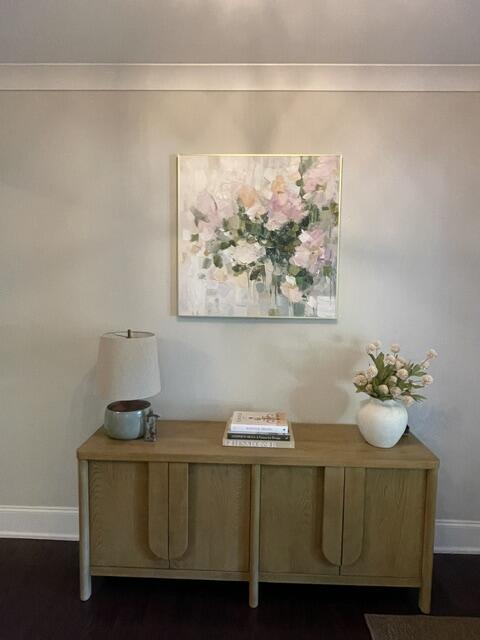
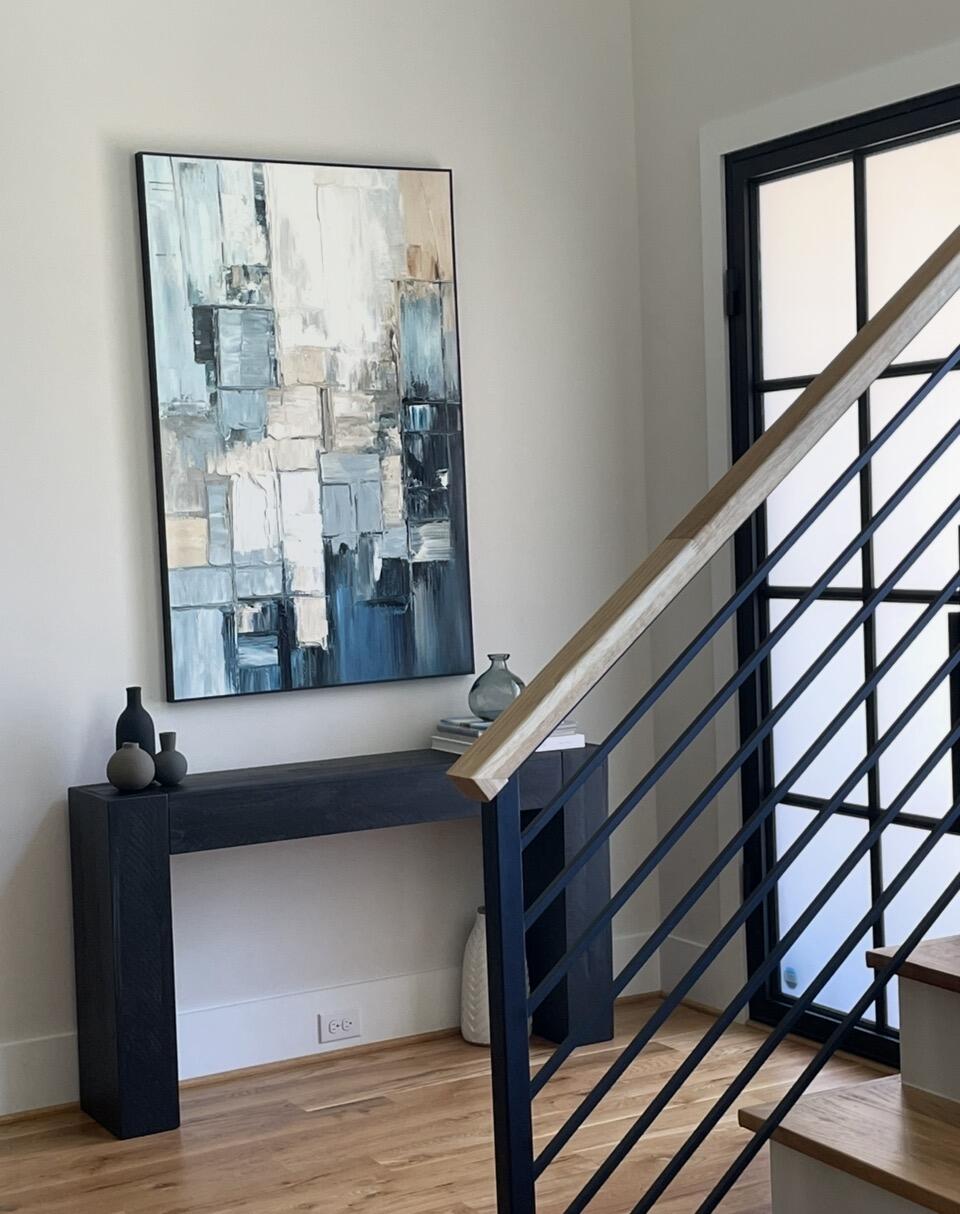
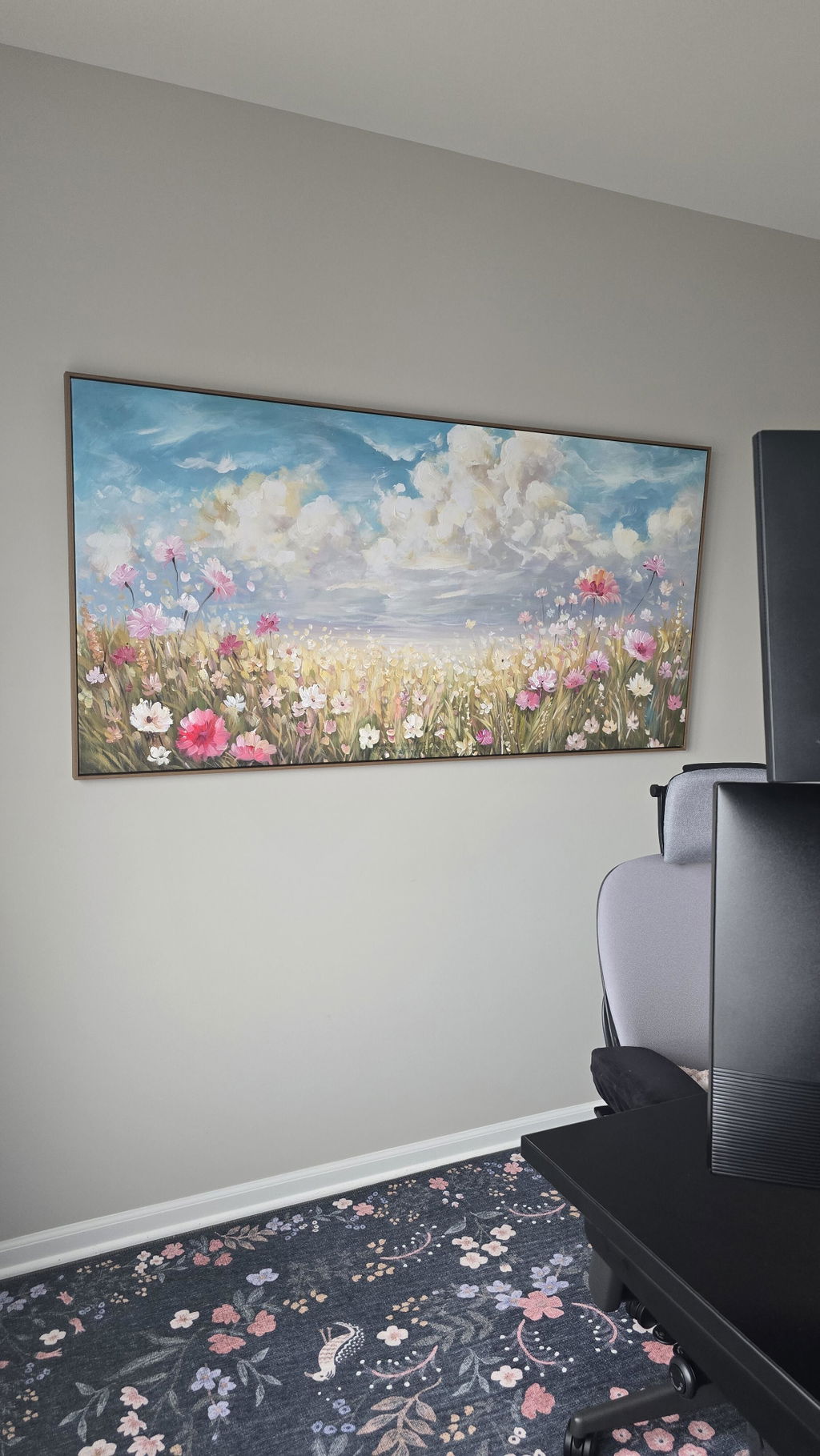
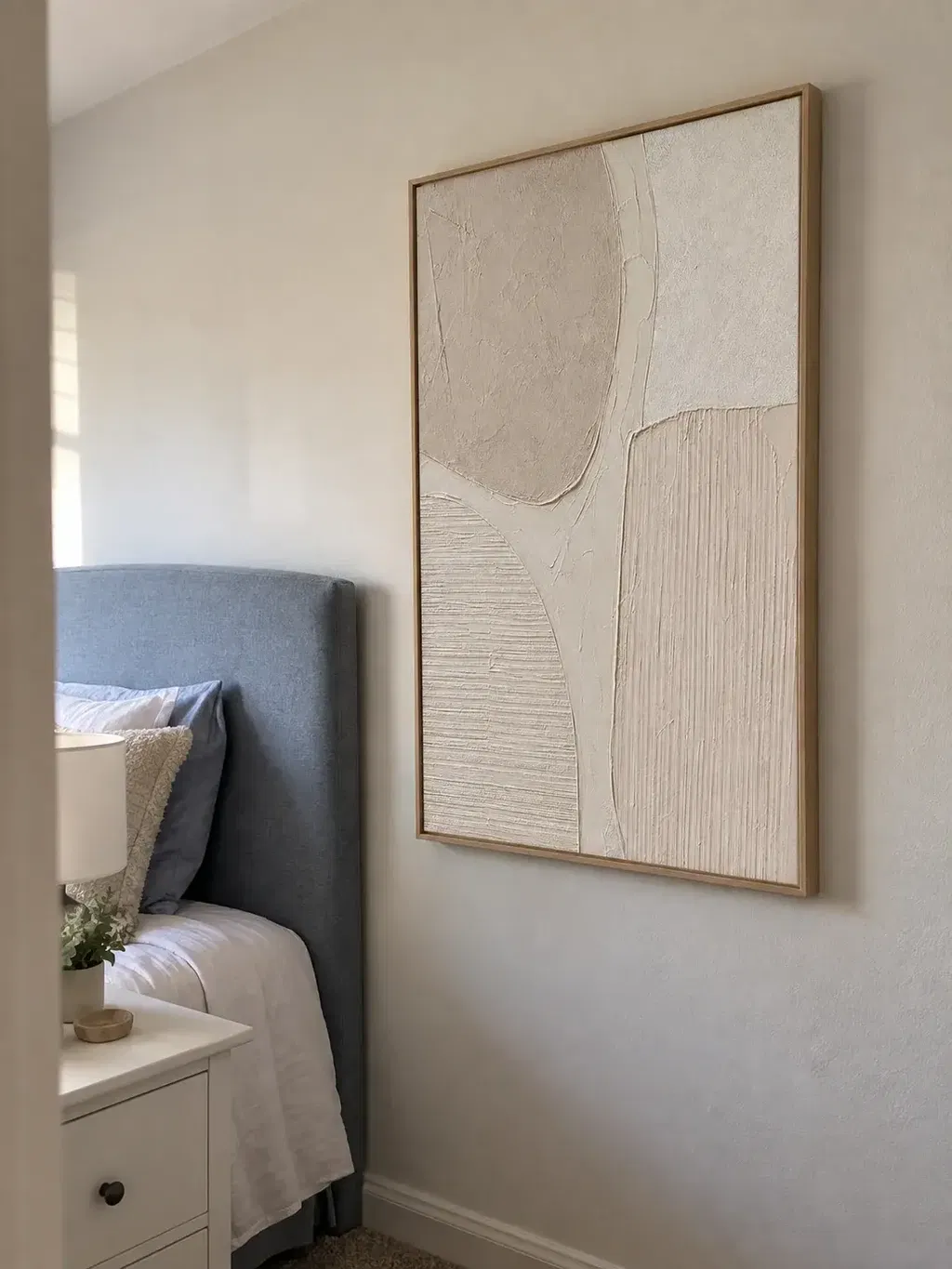
The floater frame has become the gold standard for this integration, particularly for high-value, hand-painted canvases. Unlike traditional frames that overlap the edge of the painting, a floater frame leaves a "shadow gap" between the canvas and the interior edge of the frame. This creates the illusion that the artwork is suspended in mid-air. However, when dealing with multi-panel installations like diptychs or triptychs, this gap becomes a complex architectural element. If mismanaged, these gaps can create a "black hole" effect, where the shadows between panels swallow the room’s ambient light and disrupt the visual flow of the work.
In our experience assisting with large-scale residential installations, the most common frustration isn't the art itself, but the unexpected visual "noise" created by inconsistent shadow gaps. This guide breaks down the technical mechanics of managing these gaps to ensure your multi-panel investment delivers the aesthetic authority it deserves.
The Physics of the "Black Hole" Effect
The shadow gap is not just empty space; it is a trap for light. When we mount frames side-by-side at standard gallery heights (typically 60-70 inches from the floor to the center of the piece), the eye is highly sensitive to vertical alignment and depth.
Wall Color and Light Absorption
A critical "gotcha" in frame selection is ignoring the relationship between the shadow gap and the wall color.
- Light-Colored Walls: These amplify the shadow gap. The high contrast between a white or cream wall and the dark recession of the frame creates a sharp, punchy line. If the gap is too wide (exceeding 0.5 inches), it can appear as a dark vertical stripe that "slices" your triptych into three unrelated pieces.
- Dark-Colored Walls: Darker tones (navy, charcoal, forest green) absorb the shadow, making the gap less visible. This allows for slightly wider gaps without the risk of visual fragmentation.
Logic Summary: Our framing recommendations assume a neutral lighting environment (500-700 lux). We have observed that lighting often masks poor sizing decisions; therefore, we advise verifying your gap width under neutral light before committing to decorative spotlights.

Multi-Panel Cohesion: The Spacing Heuristic
There is a common misconception that the spacing between the frames should match the shadow gap within the frame. In reality, these two measurements must work in a calculated harmony.
Conventional wisdom often suggests a 2-5 inch spacing rule for multi-panel arrangements. However, our analysis of high-end gallery installations suggests this spacing often contradicts shadow gap principles. Wider spacing creates a visual disconnect that undermines the "unified window" effect of a triptych.
The Unified Shadow Band
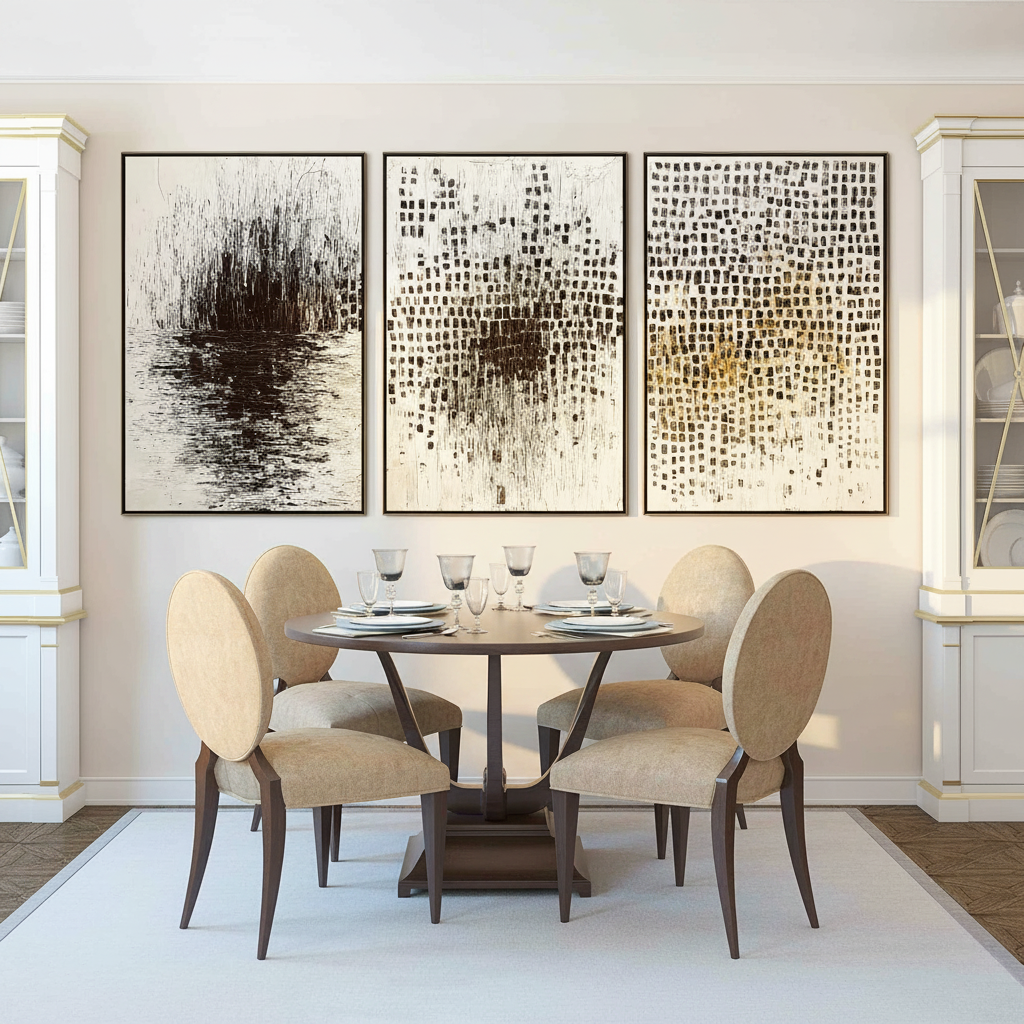
To achieve "shadow gap cohesion," we recommend a spacing of 1.5 to 2 inches between the outer edges of the frames. This creates a unified shadow "band" across the panels. This proximity allows the eye to leap across the gaps, treating the segmented work as a single narrative.
| Parameter | Recommended Value | Unit | Rationale |
|---|---|---|---|
| Standard Shadow Gap | 0.25 - 0.375 | Inch | Standard for 1.5" deep canvases |
| Inter-Panel Spacing | 1.5 - 2.0 | Inch | Ensures narrative continuity |
| Mounting Height | 60 - 70 | Inch | Center-line alignment for eye-level viewing |
| Impasto Clearance | > 0.25 | Inch | Prevents "visual crowding" of thick paint |
| Seasonal Adjustment | 0.03 - 0.08 | Inch | Accommodates thermal expansion of materials |
Methodology Note: These ranges are based on common industry heuristics for residential spaces and pattern recognition from professional multi-panel installations. They are not absolute requirements but serve as a reliable baseline for predictable outcomes.
Texture, Impasto, and Optical Interference
One of the primary reasons buyers choose hand-painted art over digital prints is the "essential identity" and soul retained in the canvas. Research from the University of Chicago shows that consumers perceive a collapse in value when art lacks the artist’s physical touch. This touch is most evident in "impasto"—the thick, textured application of paint.
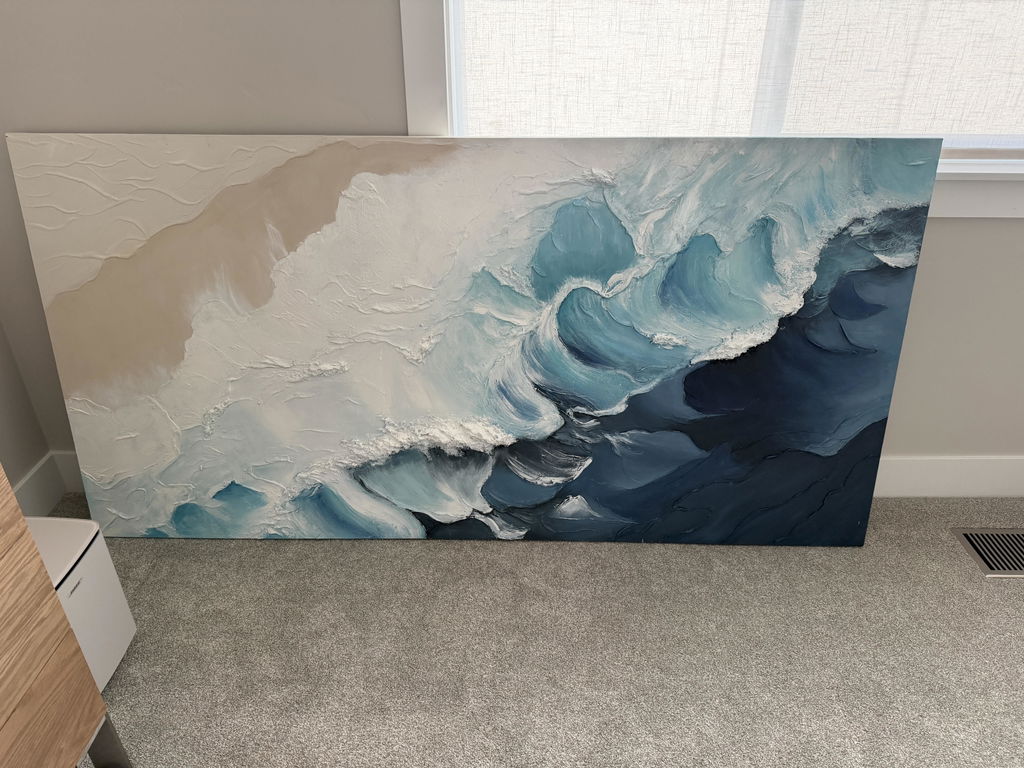
However, heavy texture introduces a technical challenge: optical interference. If your painting has impasto exceeding 1/8 of an inch, a standard 1/4-inch shadow gap can create a "visual trap." The thick textures appear compressed against the frame edge, making the art feel "stifled." For heavily textured works, we recommend increasing the shadow gap to 3/8 or 1/2 inch. This provides the "breathing room" necessary for the shadows cast by the paint itself to resolve before hitting the frame.

Technical Resilience: Why Materials Matter
Managing gaps isn't just about aesthetics; it’s about the longevity of the materials. Hand-painted art is a biochemical crystallization of human attention, but it is also subject to the laws of chemistry.
Thermal Expansion and Humidity
Materials breathe. Wood, canvas, and acrylic polymers expand and contract at different rates. According to scenario modeling for typical 30°F temperature swings, the following adjustments are often necessary:
- Canvas: Needs roughly 0.03" of seasonal "play."
- Wood Frames: Require ~0.06" to prevent warping.
- Acrylic Paint Films: Can require up to 0.08" due to their higher expansion coefficient (0.0004-0.0006 in/in/°F).
When you order a custom floater frame, these tolerances are usually built-in by professional framers, but it is vital to ensure your installation environment is stable. For instance, Aalto University research confirms that while coatings on wood emit lower VOCs over time, the physical mass of the paint can swell by over 7% in high-humidity environments (above 83% RH). If your shadow gap is too tight, this swelling can cause the canvas to press against the frame, leading to "haziness" or surfactant migration.
Support Induced Discoloration (SID)
Experienced installers often notice a "yellowing" effect on white canvases over time. A technical bulletin from Golden Artist Colors identifies this as Support Induced Discoloration (SID). Water-soluble impurities in the canvas are drawn into the paint film as it dries, especially if the paint is applied thickly. A proper shadow gap ensures airflow around the edges of the canvas, which can help mitigate the moisture-trapping conditions that accelerate SID.
The ROI of Authenticity: Art as Infrastructure
Investing in a hand-painted multi-panel installation is more than a decorative choice; it is an investment in "cultural heritage" and wellness.
Psychological and Health Benefits
The World Health Organization (WHO) has reviewed over 3,000 studies confirming that art interventions effectively alter clinical indicators for mental health. Specifically, nature-themed or biophilic murals have been shown to reduce stress-related sick leave in corporate environments. A University of Pennsylvania review noted that 73% of patients reported significant mood improvements when exposed to environmental artworks.
Property Value and Commercial Impact
For B2B developers and homeowners looking at resale value, the data is equally compelling. A Royal Society CAR model analysis found that neighborhoods with higher "art" geo-tags saw greater relative house price ranking gains. In the commercial sector, public art projects like Chicago’s Millennium Park have driven $1.4 billion in real estate-related growth. A well-framed, professionally installed mural or triptych acts as a "permanent physical billboard," generating foot traffic and elevating the perceived value of the property.

Professional Installation: The "Mock-Up" Strategy
For large-scale installations (5+ panels), we strongly advise against "eye-balling" the placement. Professional multi-panel shadow gap installations often require laser alignment systems, which can increase labor costs by 40-60%.
A DIY Expert Tip: Create a temporary mock-up using paper templates cut to the exact size of your frames. Tape these to the wall to test the shadow effects at different times of the day. This allows you to visualize how the "dark vertical stripes" interact with your room’s specific lighting before you drive a single nail into the wall.
Another advanced technique used by interior designers is mounting panels at slightly different heights (variations of 1-2 inches). This breaks the continuous shadow line and creates a more dynamic, "gallery-curated" feel, though it requires meticulous planning to maintain thematic continuity.
Summary of Best Practices for Shadow Gaps
To ensure your multi-panel art remains a source of pride rather than a technical headache, keep these rules of thumb in mind:
- Proportionality: Use frame thickness proportional to your panel size (e.g., 1.5-inch frames for 24x36 panels).
- Wall Contrast: Be more conservative with gap widths on light-colored walls to avoid the "stripe" effect.
- Texture Clearance: If your hand-painted work has heavy impasto, increase your shadow gap to at least 3/8 inch.
- Environmental Stability: Maintain a consistent humidity level to protect the "breathable" components of the wood and canvas.
- Fair Compensation: Support the creative economy. Wharton School surveys show that 87% of consumers believe artists should receive fair compensation. Choosing hand-painted art over AI prints (which are valued 62% lower by consumers) is a moral and financial win for the industry.
By treating the shadow gap as a deliberate design choice rather than a framing byproduct, you secure the "retail-grade certainty" that your space deserves.
YMYL Disclaimer: This article is for informational purposes only. While we discuss the health benefits of art and the safety of paint materials (such as VOC emissions), this content does not constitute professional medical, legal, or environmental health advice. Always consult with a certified industrial hygienist or medical professional regarding indoor air quality and chemical sensitivities, especially in healthcare or nursery settings.
References
- Marketplace: The expensive art market continues to struggle
- Columbia Business School: Human-Made vs. AI Art Perception Study
- University of Pennsylvania: Visual Art in the Built Environment
- Royal Society: Quantifying the link between art and property prices
- ASTM International: D4303 Standard Test Methods for Lightfastness
- Tate: The Tate AXA Art Modern Paints Project (TAAMPP)
- Golden Artist Colors: Support Induced Discoloration (SID)
- World Health Organization: Scoping Review on Arts and Health
- Wharton School: Consumers Value Fair Artist Compensation