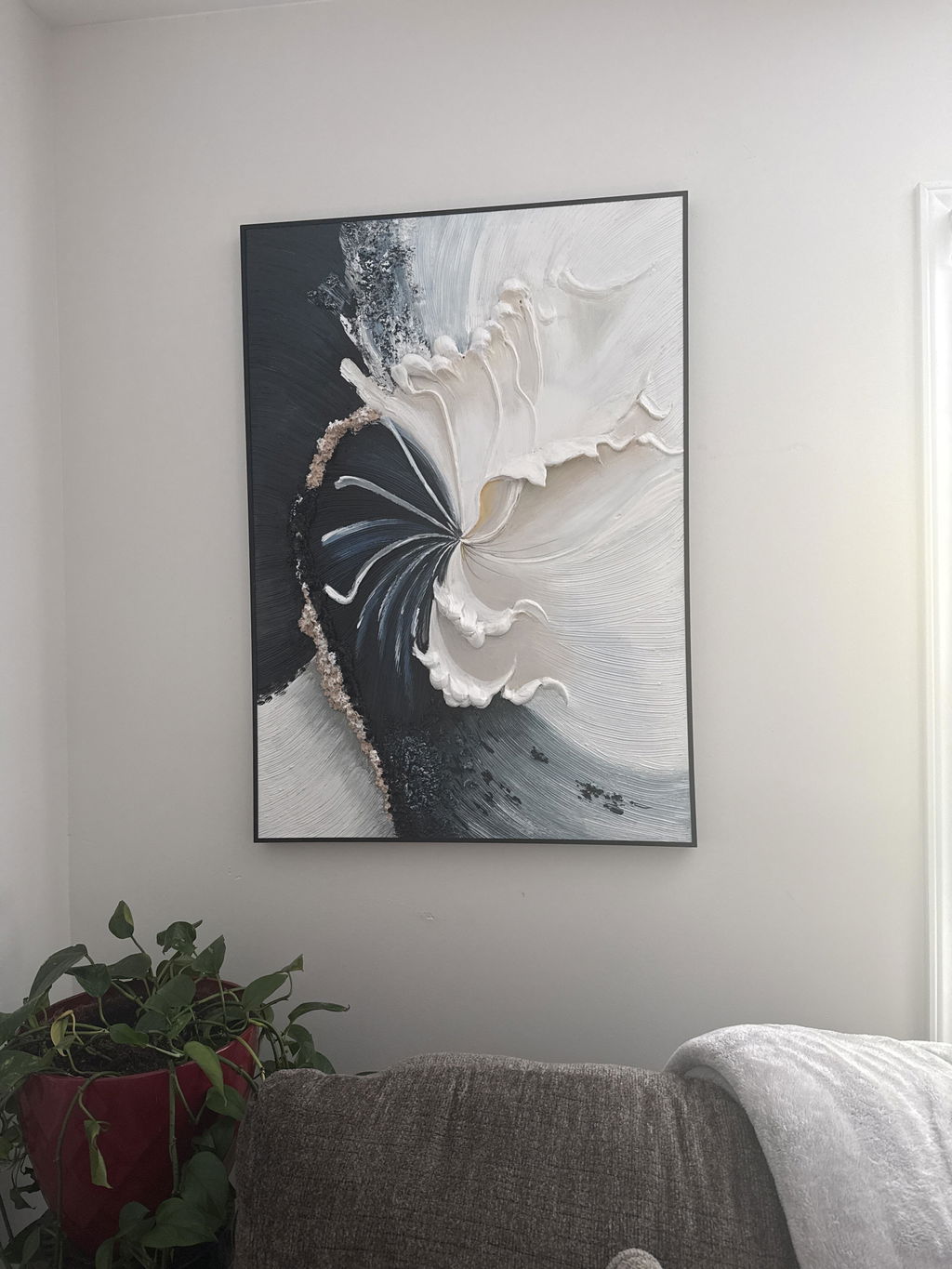
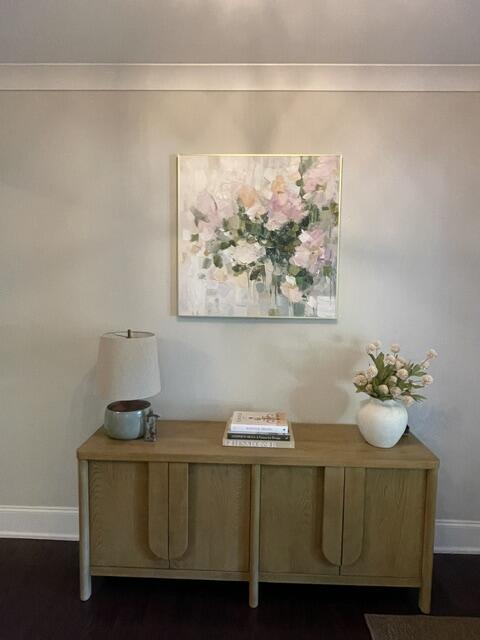
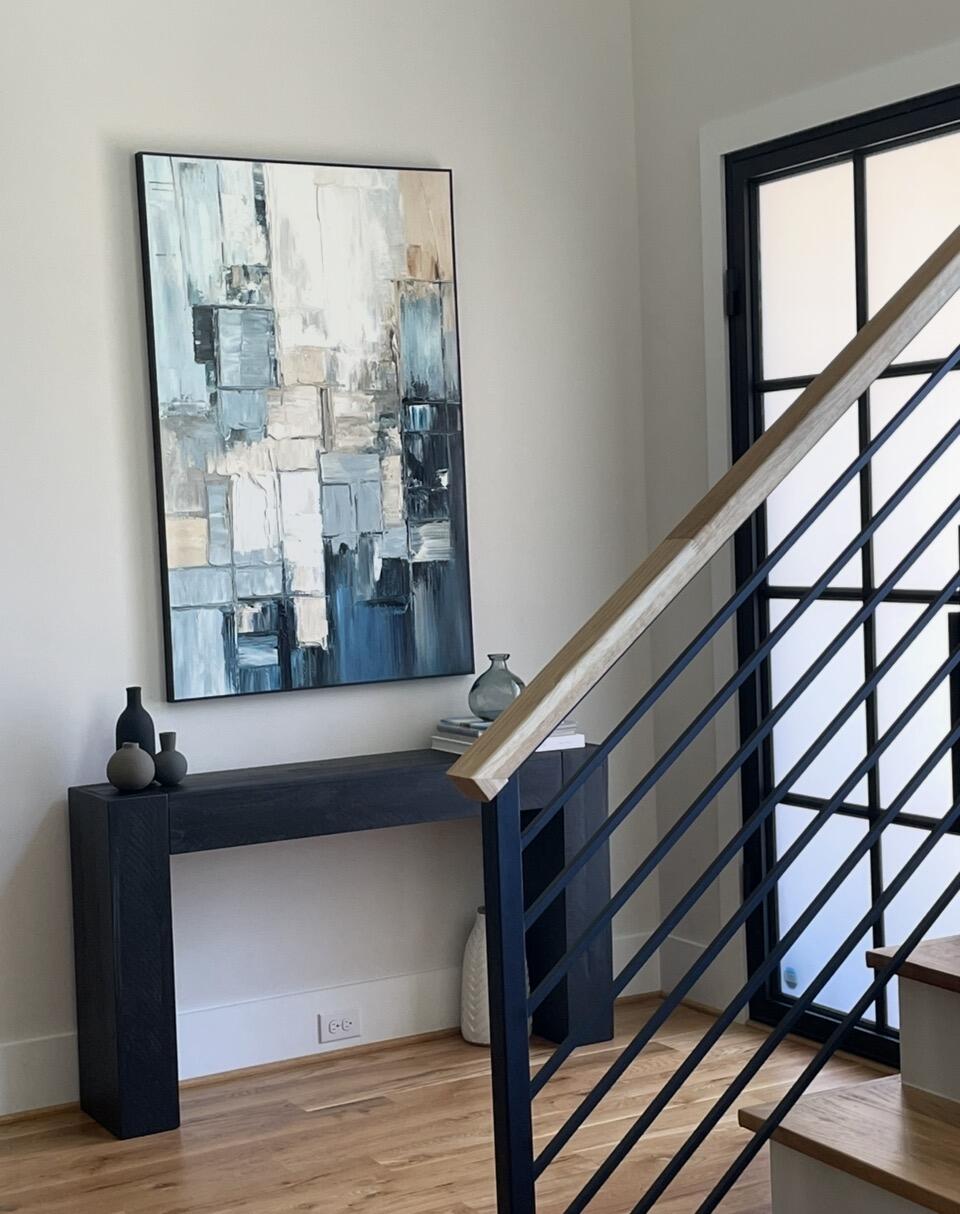
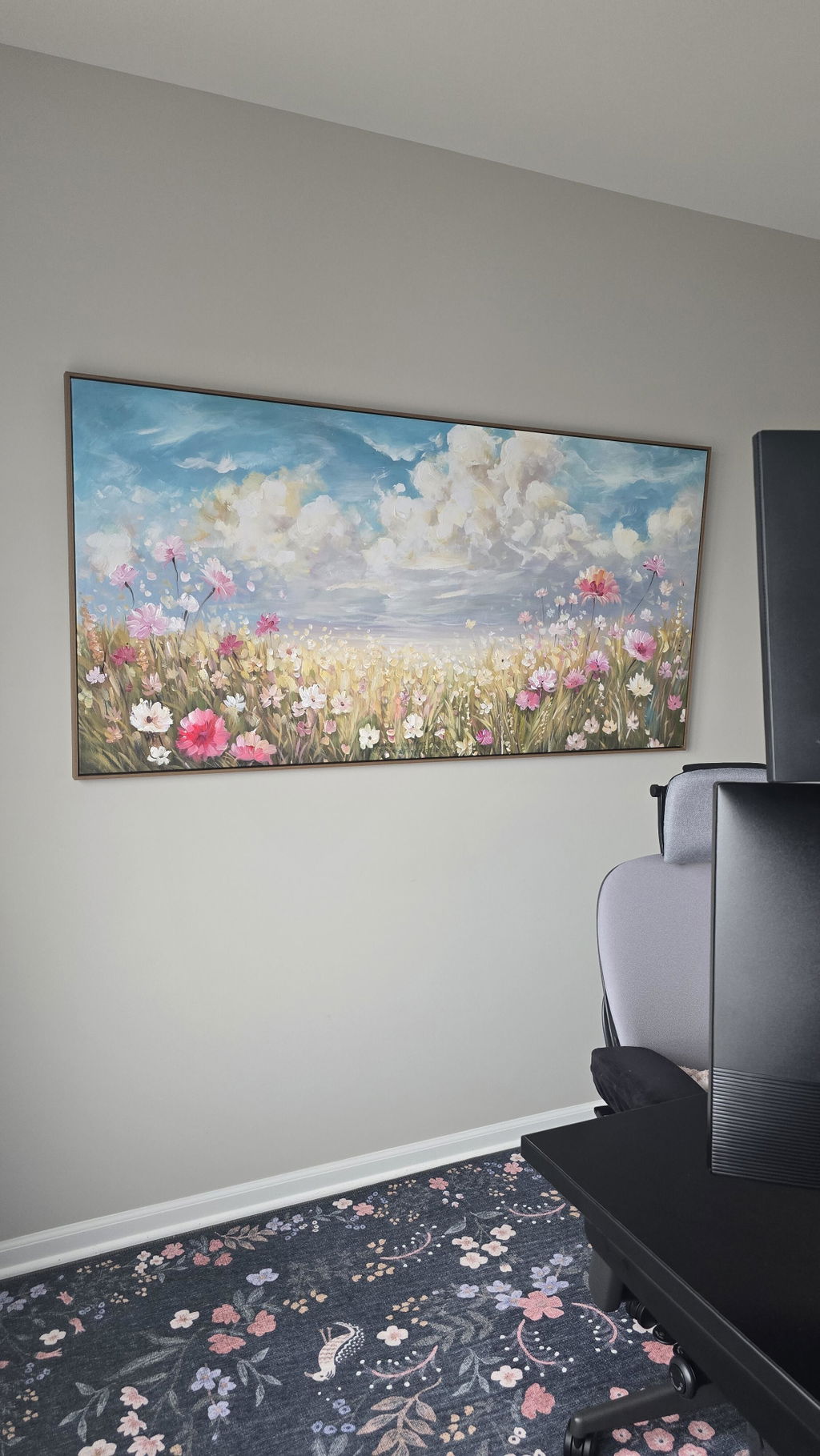
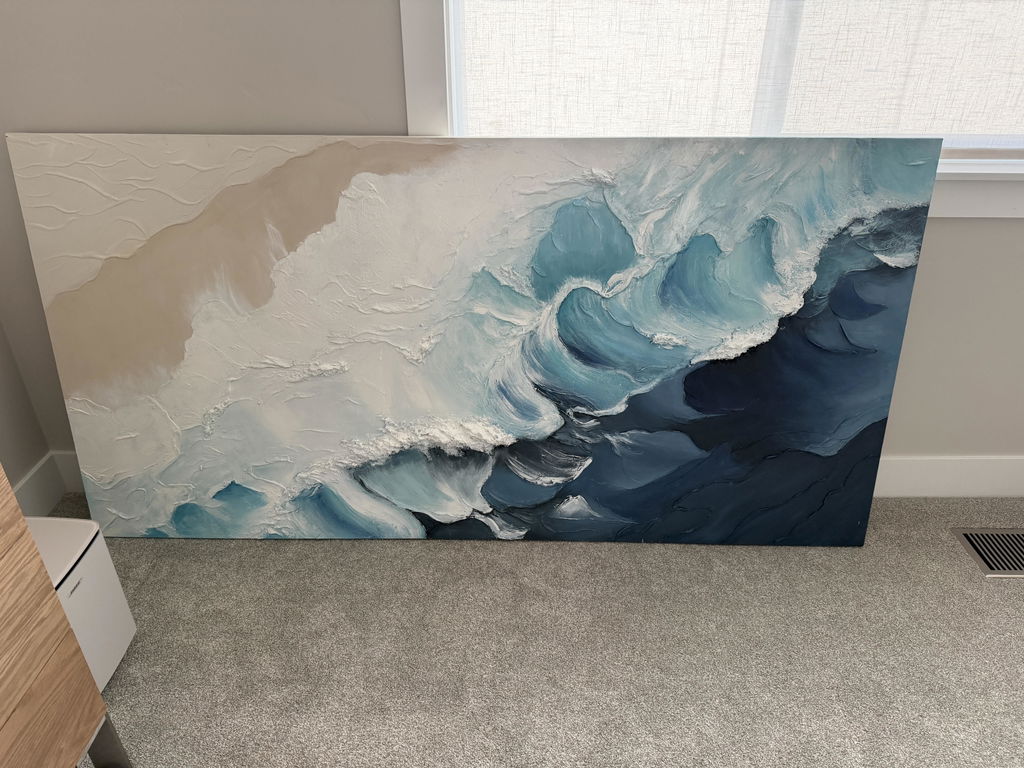
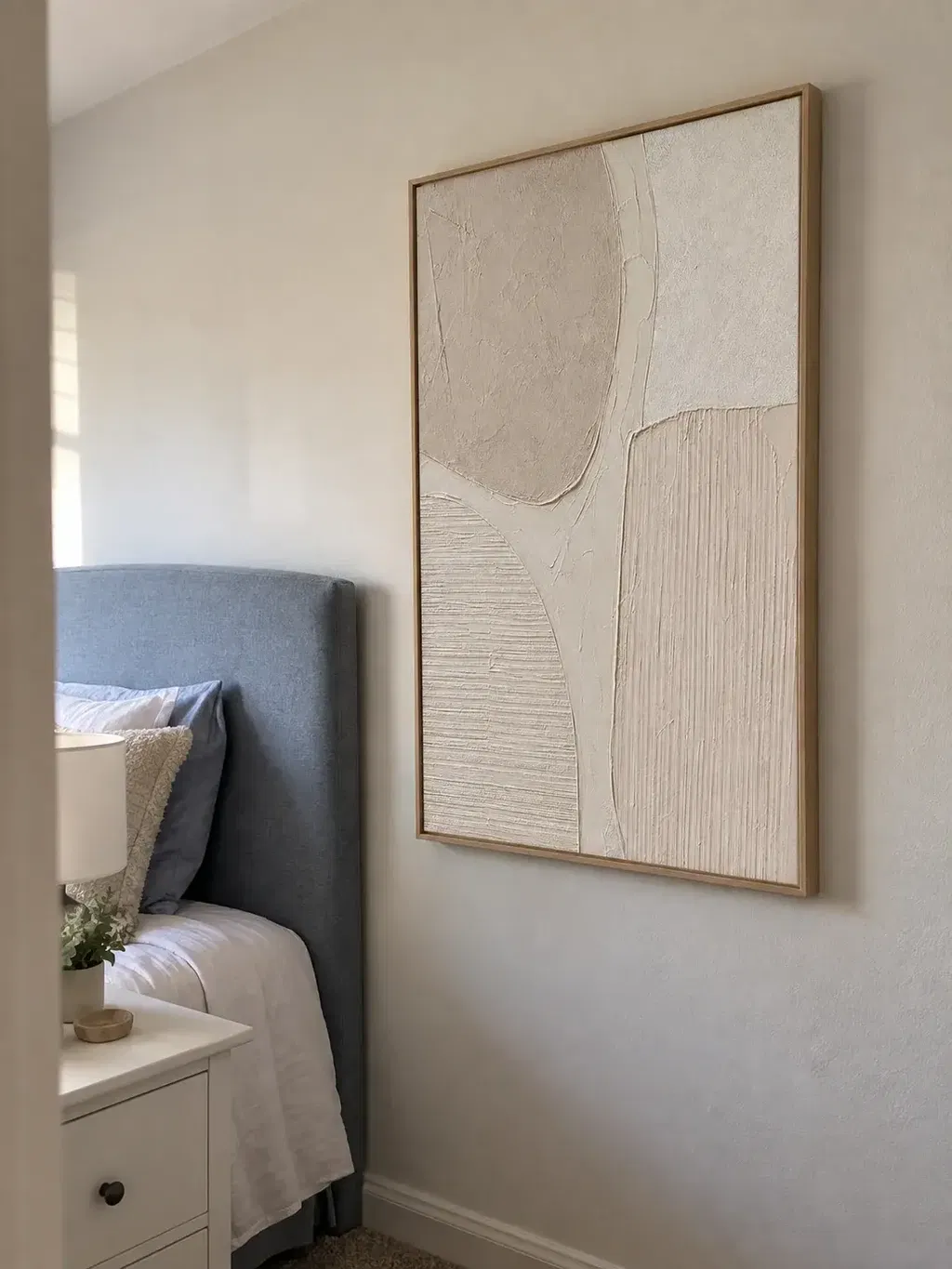
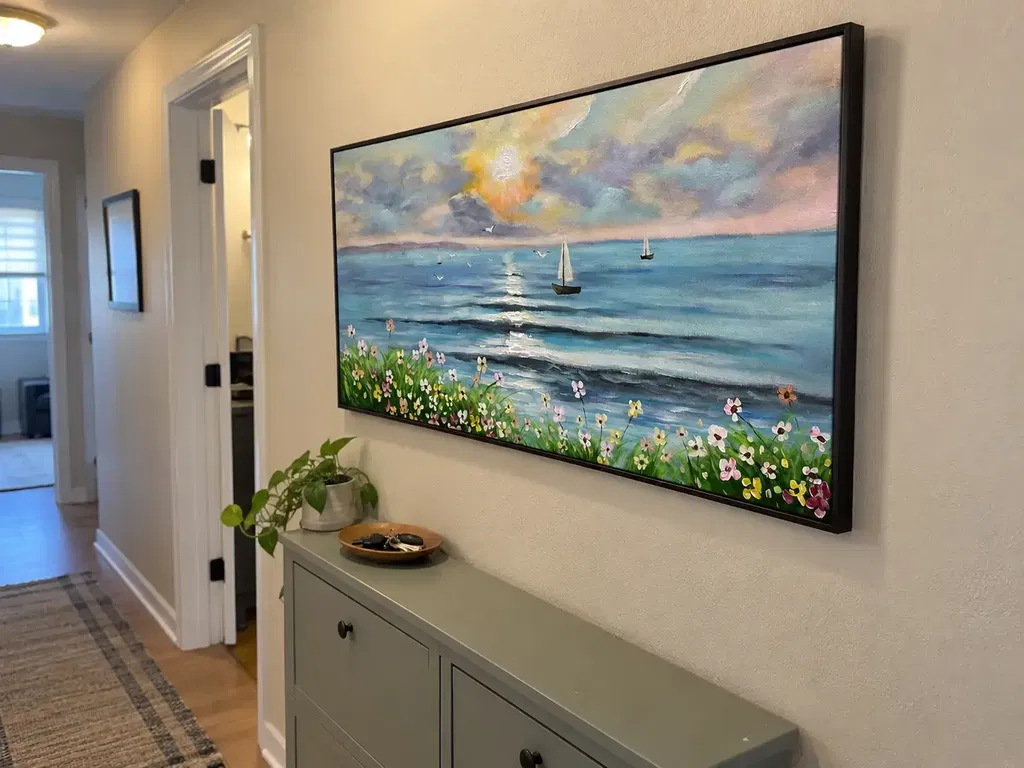
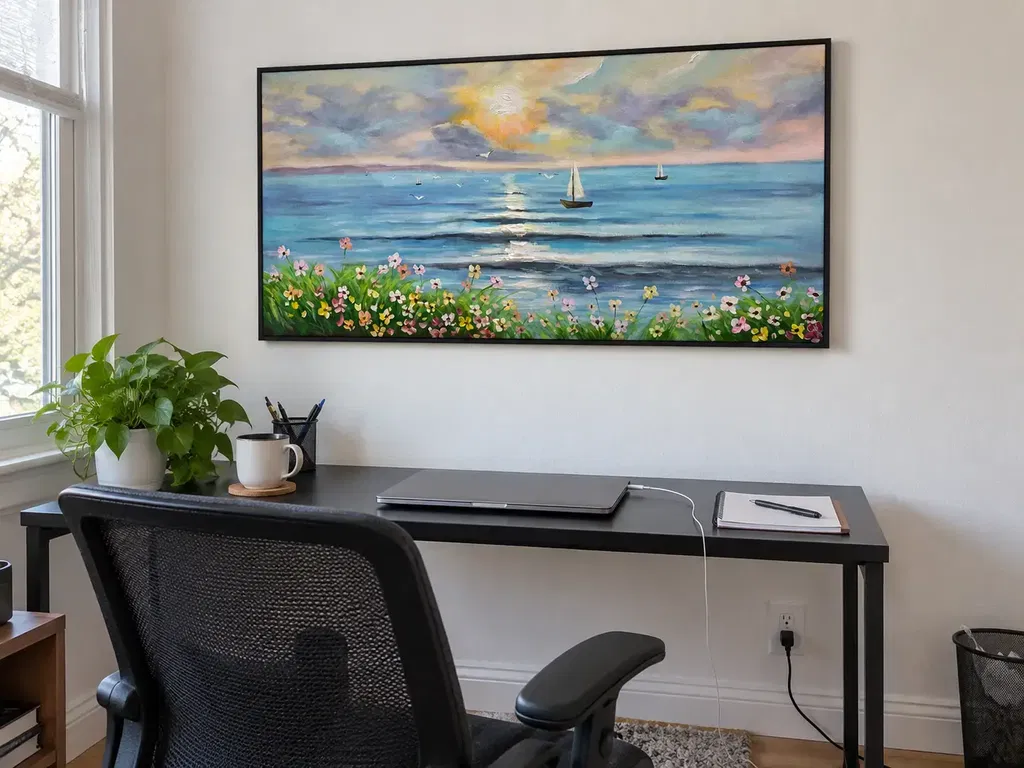
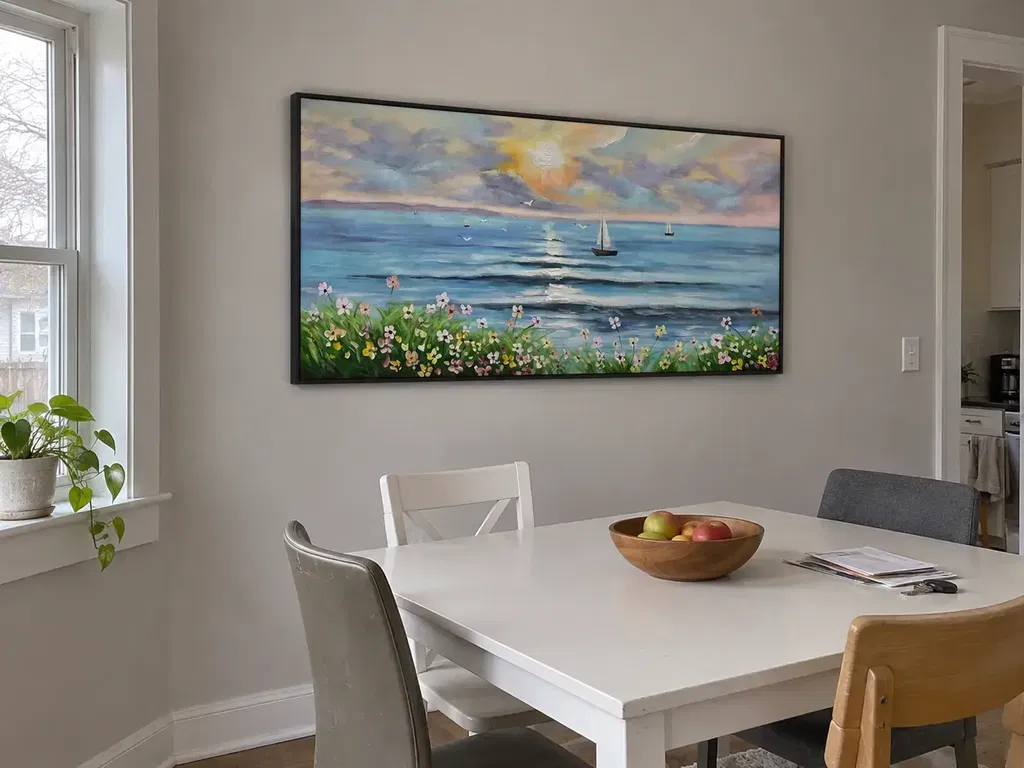
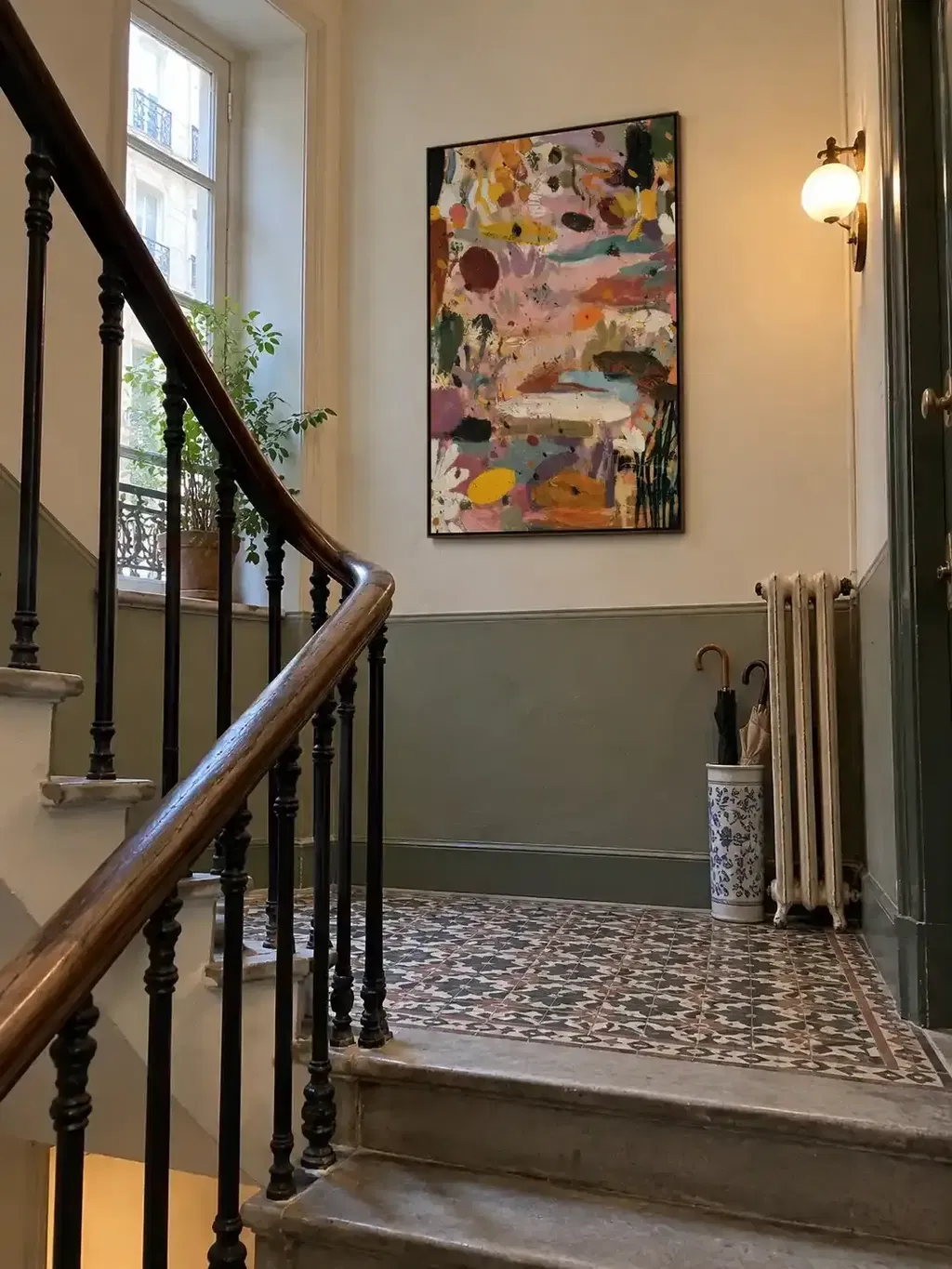
Textured original pet friendly wall art can work in a home with dogs or cats when you treat it as low-touch decor, not pet-proof decor. The right setup depends on contact risk, room traffic, and how gently you're willing to care for the surface. If you want textured art with pets, the safest approach is to keep it out of jump paths, tail-swipe zones, and spots where you expect frequent wipe-downs.
Why Textured Art Can Fit Pet-Friendly Homes
The short answer is yes, with conditions. Textured pieces can suit pet homes because the main issue is usually not the style itself, but where it hangs and how much handling you expect later. That matters because original art materials can raise safety concerns if pigments or solvents are ingested or inhaled as dust, especially in homes with curious pets, as the veterinary toxicity guidance on art supplies explains.
For most pet owners, the real trade-off is simple: the more raised the texture, the more you should think about contact and care. Fur, dander, quick jumps, and a wagging tail can all turn into maintenance problems if the art sits in the wrong place. Pet friendly wall art is really about reducing those exposures, not promising a finish that can take anything.

A good fit usually looks like this: the piece hangs in a calmer room, it is not part of the pet's daily path, and you are comfortable with gentle dusting rather than frequent scrubbing. If you expect to wipe it down like a framed print, durable original paintings for dog and cat homes may still feel too delicate for that routine.
Choose Safer Placement Zones
Placement does most of the work. In homes with active dogs or cats, the best walls are usually the ones with the least brushing, leaping, and through-traffic. The AKC's home-safety advice treats busy paths and stress zones as places where decorations are more likely to get bumped, and that logic translates well to wall art.
Room and Traffic Mapping
Start with the rooms your pet moves through fastest. Entryways, narrow hallways, mudrooms, and tight corners are more likely to create accidental contact than a calm secondary wall. If a pet cuts across a room at speed, the piece is more exposed than it looks from a furniture plan.
For pet friendly wall art, a lower-contact room is often one where pets pass through slowly or only occasionally. Living rooms and dining areas can still work, but only if the wall is not part of a constant lane from door to couch to pet bed. The goal is to reduce touch, not to hide the artwork.

Wall Height and Clearance
Height matters because it changes what a tail, shoulder, or jumping body can reach. You do not need a universal number to make the decision; you need enough clearance that everyday movement does not bring the pet into the surface. If the art hangs above a console, bench, or mantel, make sure the furniture does not create a launch pad or a brush-past point.
What this means in practice is that a piece can be safe in one room and awkward in another, even if the wall size is similar. The same textured art with pets may be fine above a quiet sideboard but a poor fit above a sofa arm or near a cat climb route.
Furniture, Beds, and Jump Paths
Watch the furniture your pets already use as steps. Sofas, ottomans, beds, window perches, and cat trees can all become launch points toward the wall. If a pet uses the piece of furniture to turn or jump, the art is effectively closer than the tape measure says.
The best check is visual: stand in the room and trace the pet's likely route. If the art sits in the arc of a jump, next to a bed, or behind a crate or perch, that is a sign to move it. In textured art with pets, the most common regret comes from underestimating how often animals brush the same wall.
Best Rooms for Lower Contact Risk
Calmer family spaces usually beat narrow traffic lanes. A wall in a living room, dining room, or quiet hallway can work well if your pets do not treat that wall as a runway. Rooms with predictable traffic also make it easier to spot dust or accidental contact early.
For busy households, that is often the better starting point than a high-activity entry. If you are deciding between two walls, choose the one that is easier to inspect and less likely to get brushed during everyday movement. You can also compare broader textured art in busy homes if you want to judge whether your layout is realistically low-contact.
Protect the Surface Without Overhandling It
Protection should start with setup, not aggressive cleaning. Once the art is hanging in a lower-contact zone, the next job is to keep the surface from getting more attention than it needs. Conservation guidance warns that dry cloths, stiff brushes, and feather dusters can snag impasto peaks, so the safest plan is to reduce touch first and clean lightly second, using the Canadian Conservation Institute's precautions for paintings as the caution line.
- Use secure hanging hardware so the piece does not shift if a pet bumps nearby furniture.
- Leave breathing room around the frame or edges instead of crowding the wall with shelves, hooks, or pet gear.
- Keep the art away from pet beds, crates, and furniture that pets use as climbing steps.
- Treat prevention as the main protection, because repeated handling is often what creates damage.
- Avoid sealant or coating assumptions unless the maker specifically says the surface supports them.
That last point matters. A lot of owners want a surface treatment that makes everything easier, but that can be a bad assumption for original work. If the piece is delicate, the safest move is still simpler placement and lighter contact, not a DIY fix that could change the finish.
Pick Textures That Are Easier to Live With
Some textures are easier to live with around pets because they tolerate distance and gentle dusting better than heavy contact. Deep relief, sharp peaks, and mixed media details can all look beautiful, but they usually ask more from the room around them. In other words, the surface choice affects maintenance friction even when it does not guarantee a better outcome.
| Texture Profile | Visible Fur And Dust Tendency | Accidental Touch Risk | Cleaning Ease | Best Fit |
|---|---|---|---|---|
| Flatter textured surface | Lower to moderate | Lower | Easier | Active homes that still want depth |
| Medium impasto | Moderate | Moderate | Moderate | Living rooms with controlled traffic |
| Heavily raised texture | Higher | Higher | More delicate | Quieter rooms with low contact |
| Mixed texture with fine detail | Moderate to higher | Moderate to higher | More careful handling | Owners comfortable with gentle maintenance |
This is not a durability ranking. It is a live-with-it ranking. If you dislike frequent dust checks or expect pets to brush past the wall, flatter or less exposed surfaces are usually the safer choice. If you are comparing options, browse textured wall art and compare how much relief you can realistically keep away from daily pet movement.
Build a Simple Care Routine
A low-touch routine works best for original art in pet homes. The point is to keep fur and dust from building up without using methods that can catch on the texture or alter the finish. Smithsonian conservation guidance is clear that improper cleaning can permanently damage original paintings, so the first rule is to stay conservative, not clever, as shown in the museum conservation advice on cleaning paintings.
Weekly Dust and Fur Checks
Do a quick visual check when you already clean the room. You do not need a long ritual. In a higher-traffic space, a brief look once a week is a practical rhythm; in a calmer room, you may only notice buildup every couple of weeks.
The key is consistency. Fur often collects where texture catches air movement, and dust is easier to handle before it settles into crevices. If the piece looks dusty from normal viewing distance, that is usually your cue to slow down and inspect it, not to start scrubbing.
Gentle Cleaning Tools and Motion
For unglazed oil or acrylic art, the safest home dusting tool is a soft natural-hair brush, such as goat or squirrel hair, according to the Art Care & Maintenance guidance. Use light motions only, and keep pressure minimal so you are moving dust, not pushing into the peaks.
Do not use water, soap, stiff brushes, or aggressive wipe-downs unless the artist's instructions specifically allow them. If the surface seems delicate, or if the finish is unusual, stop and follow the maker's guidance instead of improvising. For a more detailed method, our safe dusting methods and safe handling and humidity notes can help you keep the routine gentle.
Pet-Friendly Placement Checklist
Before you hang textured original art, run through this quick check.
- Pick a lower-contact wall, not a traffic lane, jump path, or pet bed zone.
- Check whether nearby furniture gives pets a launch point or brushing point.
- Make sure the hanging hardware is secure and the piece will not shift easily.
- Confirm the material label if you are shopping, especially for the ASTM D-4236 mark on art materials.
- Choose a care routine you can actually keep up with, using only gentle tools and light contact.
- If the artist's care notes differ from general advice, follow the piece-specific guidance.
If you are shopping with that checklist in mind, browse all paintings and compare each textured option against your pet's daily movement, your wall traffic, and how much care you want to do by hand.
Final Takeaway
Textured original art and pet homes can go together when you treat placement as the main decision and care as the second. Keep the piece out of high-contact zones, choose texture depth you can realistically maintain, and use only gentle dusting habits. If you are still comparing options, check the room first, then compare pet friendly wall art against your pet's habits before you buy or hang.
FAQs
Can Textured Original Art Work in Homes With Pets?
Yes, if you place it where pets do not routinely brush past or jump toward it. The biggest filter is contact risk, not the pet label itself. If the wall is calm, the hanging is secure, and you are comfortable with light dusting instead of frequent wiping, textured art can be a practical choice.
How Do You Keep Pet Fur Off Textured Wall Art?
You cannot prevent every stray hair, but you can cut buildup with placement and regular checks. Keep the piece out of pet traffic zones, then do quick visual inspections during normal cleaning. If fur starts collecting in the texture, that is usually a sign the location is too exposed for the surface depth.
What Rooms Are Best for Textured Art in a Pet Home?
Calmer rooms with predictable movement are usually better than entryways, mudrooms, and tight hallways. A living room or dining area can work if the wall is not part of a pet's main route. The best room is the one where the art can stay visible without becoming part of daily pet traffic.
How Do You Protect Original Paintings From Jumping or Tail Swipes?
Use secure hanging, keep the piece away from launch furniture, and avoid walls that pets cross at speed. A painting is far less exposed when it is not above a couch arm, bed edge, or perch. If your pet has a favorite route, assume that route is the one to design around.
Can You Dust Textured Paintings at Home?
Yes, but only gently and only with the right tool for the surface. For unglazed oil or acrylic art, a soft natural-hair brush is the safest home option, while harsh cloths and stiff brushes can catch on peaks. If the piece is fragile or the artist gives different instructions, follow that guidance instead.