The Authenticity Premium: Why Texture is Reclaiming the Art Market
The global art landscape is undergoing a structural shift. While high-end auction sales for "financial asset" art—pieces over $10 million—plummeted by 44% year-over-year in 2024, the market for art with "real application value" remains a bedrock of the creative economy. According to Marketplace.org, buyers are retreating from overpriced vanity pieces and returning to works that offer emotional and physical presence.
For the modern home decorator or interior professional, this retreat from the "digital and distant" is best expressed through texture. In an era where AI-generated prints are ubiquitous, the value of human-made art has never been higher. A study by Columbia University confirms that consumers value art labeled "AI-generated" 62% lower than authentic human-created art. This "Authenticity Premium" is rooted in what University of Chicago research calls "essential identity"—the irreplicable soul of the artist’s hand that digital replicas simply cannot capture.
Understanding the distinction between palette knife and brushwork texture is not just an academic exercise; it is a prerequisite for selecting art that anchors a room’s energy and preserves its value as a cultural heritage asset.
The Visual Language: Palette Knife vs. Brushwork
At the most basic level, the choice between a palette knife and a brush determines the "rhythm" of a painting. However, professional observations suggest that the differences are more nuanced than "thick vs. thin."
The Palette Knife: Bold, Sharp, and Sculptural
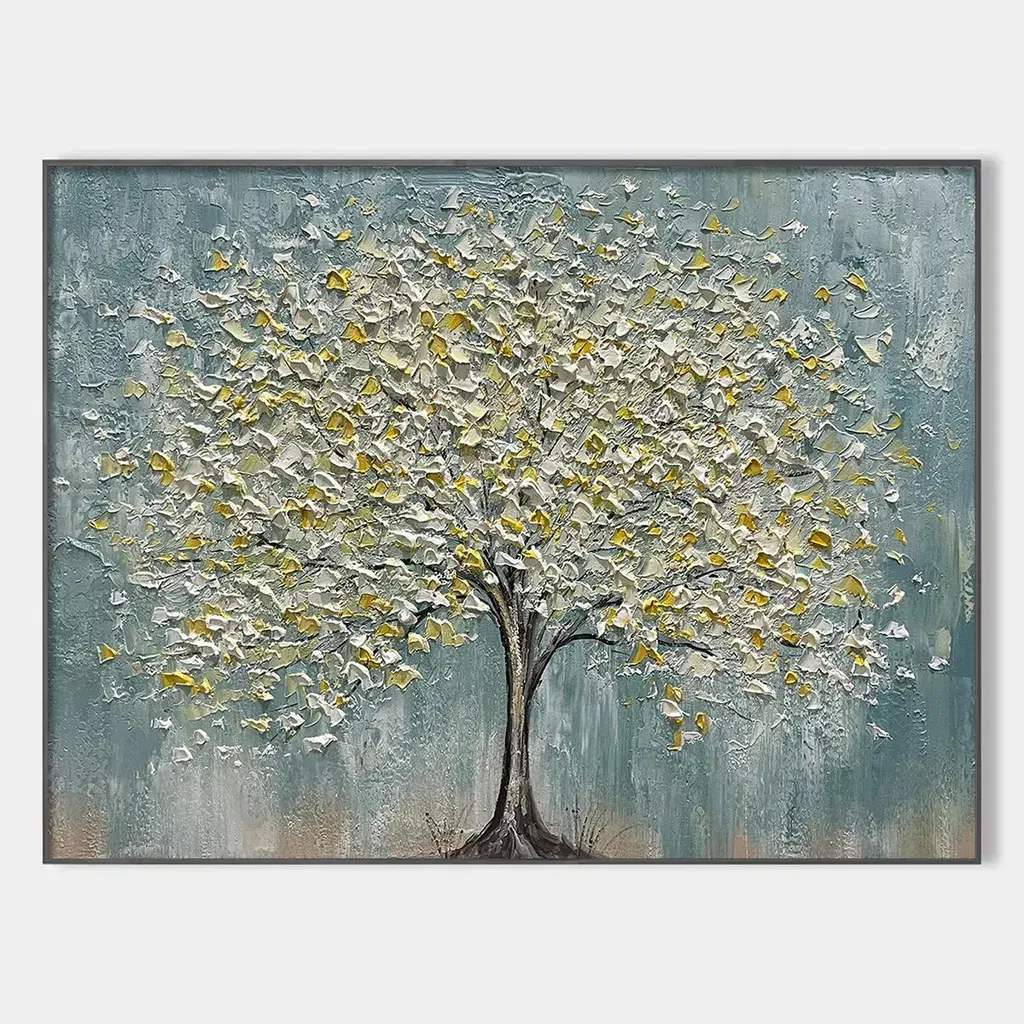
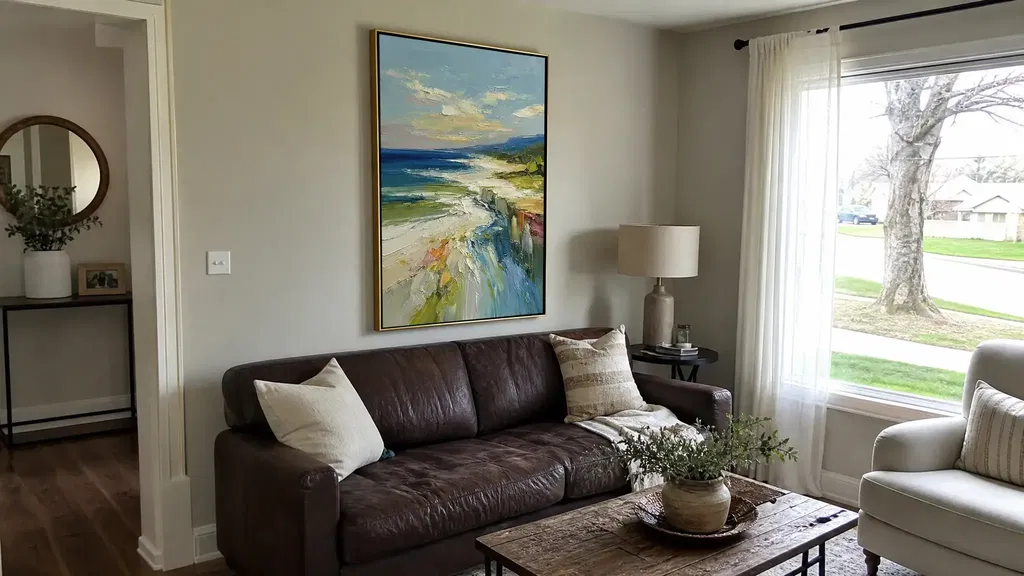
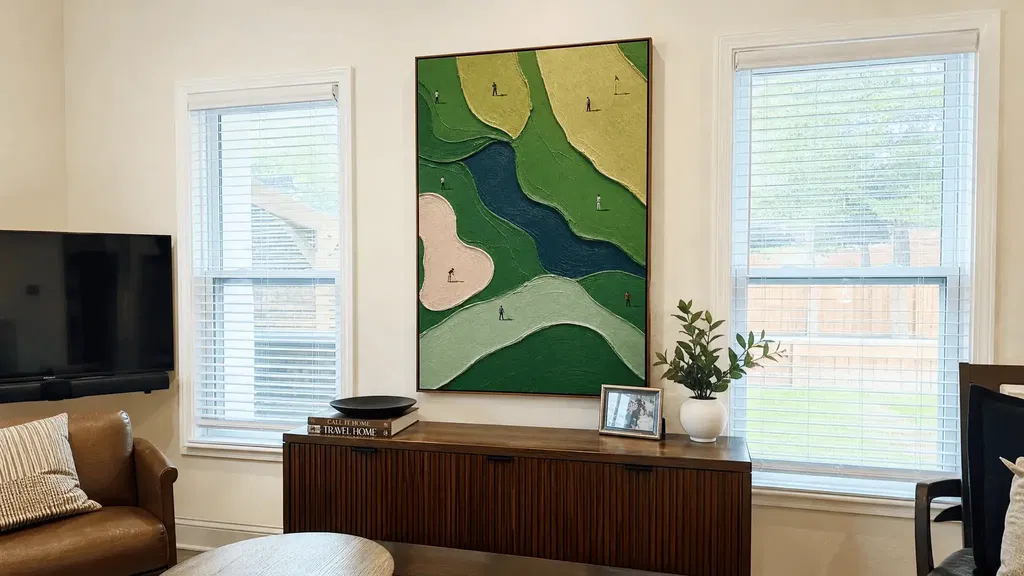
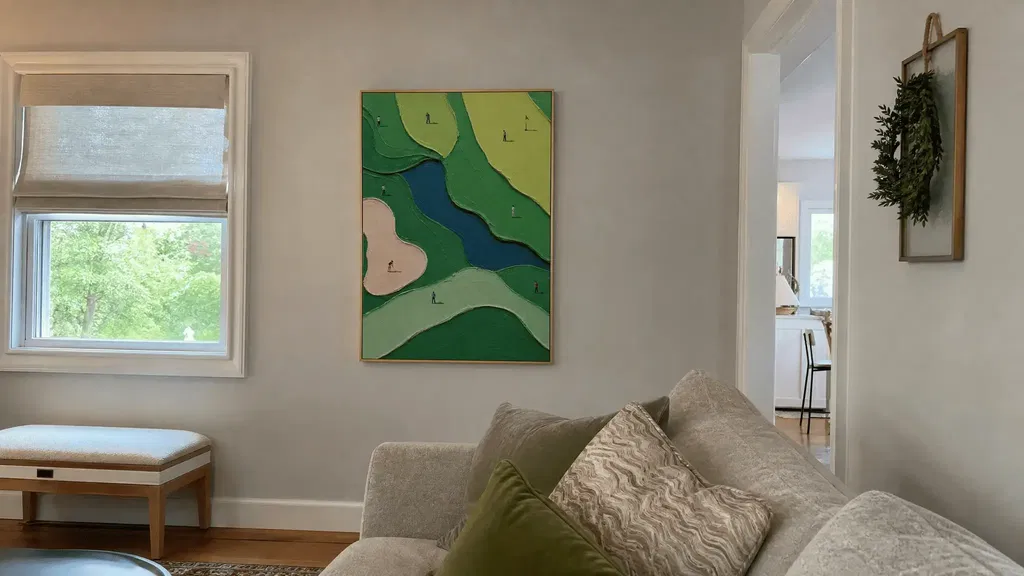
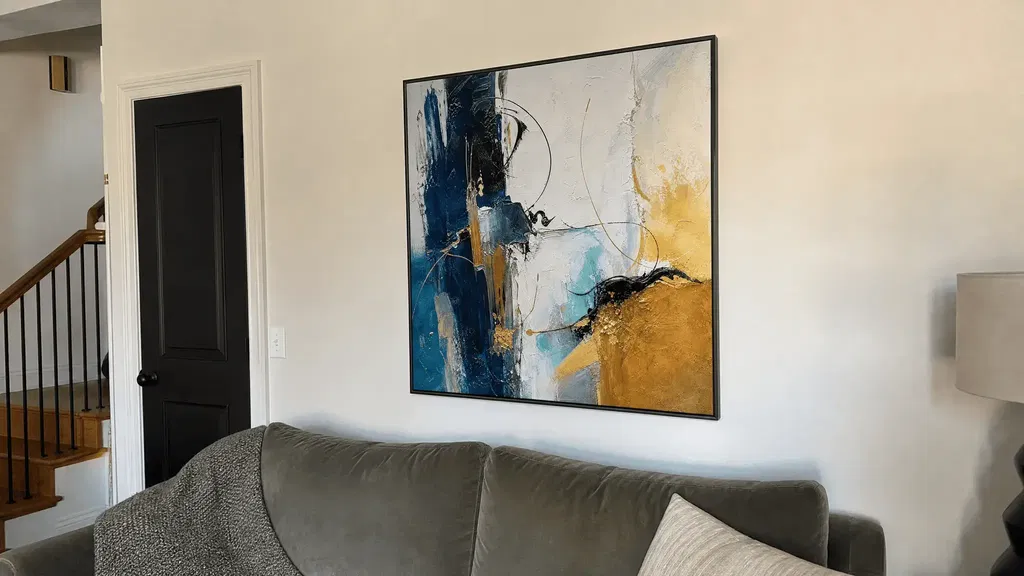
A palette knife allows an artist to apply paint with a flat, steel blade, resulting in clean, unblended edges and "broken" lines. This technique creates a sculptural effect that photographs dramatically, emphasizing the physical relief of the pigment.
- Aesthetic Energy: High-impact, modern, and raw.
- Light Interaction: The sharp edges created by a knife create micro-shadows that shift as the viewer moves through the room.
- Common Pitfall: In intimate spaces, overly bold palette knife work can feel aggressive if not balanced with softer décor elements.
The Brush: Fluidity, Direction, and Nuance
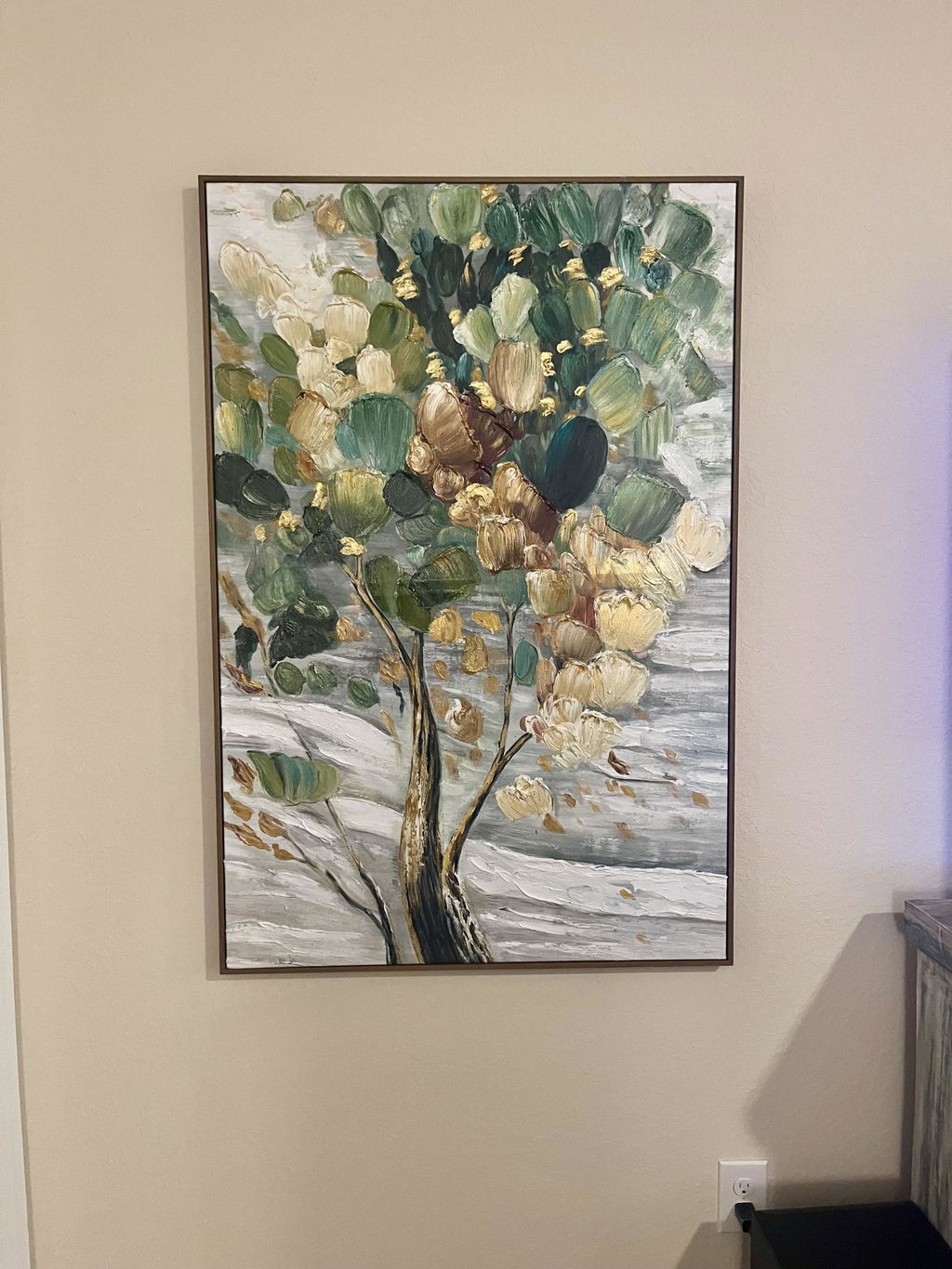
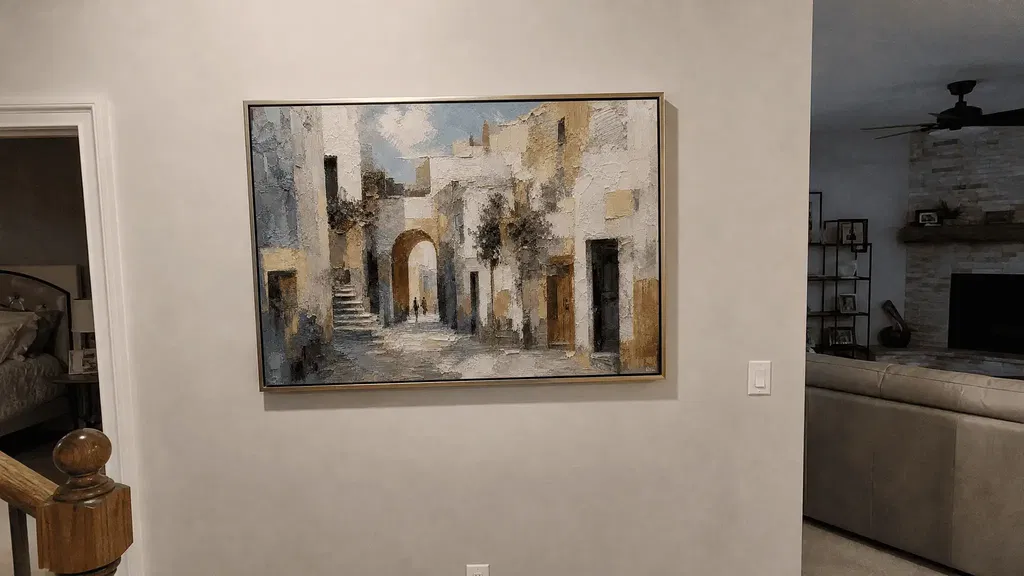
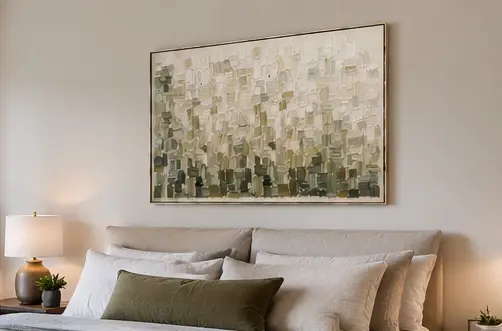
Traditional brushwork utilizes the flexibility of bristles (synthetic or natural) to move paint. While often associated with smoother transitions, brushes are capable of surprising intensity.
- Aesthetic Energy: Fluid, organic, and rhythmic.
- Light Interaction: Brushstrokes tend to have a "directional sheen" where the alignment of the bristles creates a subtle shimmer.
- The "Hog Bristle" Myth: Many believe palette knives are the only way to achieve thick impasto. However, research analyzing photometrically scanned samples shows that stiff bristle brushes (like hog bristle) can produce paint layers up to 5mm thick—equivalent to palette knife applications.
Logic Summary: Our comparison of tool effects is based on standard painterly heuristics and brushstroke research datasets (source: SSRN). We assume a high-viscosity oil or heavy-body acrylic medium for these comparisons.

The Physics of Texture: Why Your Brain Prefers the Physical
Why does a hand-painted wall feel more "comfortable" than a high-definition print? The answer lies in your medial prefrontal cortex (mPFC). A systematic review published in PMC shows that passive art viewing consistently activates the mPFC and amygdala, optimizing emotional regulation circuits.
Optical Scattering and Depth
The "premium" feel of original art is a result of light wave physics. According to Optica, when pigment particle diameters approach half the wavelength of visible light, optical scattering reaches its theoretical extreme. In a hand-painted piece, the varying thickness of the paint layers (impasto) creates a complex surface that scatters light in ways a flat print cannot.
- Geometric Metamerism: The Getty Conservation Institute notes that differences in surface refractive index—the way light enters and exits the paint film—are the root cause of color saturation.
- 3D Optical Illusions: Brushwork creates measurable 3D effects through directional stroke patterns. These patterns create optical depth illusions that are equivalent to physical depth, providing a richer sensory experience.
Modeling Texture Perception
To help designers predict how texture will perform in a space, we can model the "Visibility Factor" based on lighting conditions.
| Lighting Type | Texture Visibility | Unit | Rationale |
|---|---|---|---|
| Natural Daylight (Direct) | High | Lux/Scale | Highlights micro-topography (mm-scale) |
| Natural Daylight (Diffused) | Moderate | Lux/Scale | Softens edges; emphasizes color depth |
| Artificial (Recessed/Spot) | Extreme | Lux/Scale | Creates high-contrast shadows on impasto |
| Artificial (Ambient) | Low | Lux/Scale | Flattens texture; relies on pigment saturation |
Note: This is a scenario model based on interior design heuristics, not a controlled lab study.
Durability, Aging, and the "Patina" Factor
A common concern for premium buyers is how texture ages. Gallery curators observe that brushwork texture tends to age gracefully, developing a subtle patina. In contrast, the sharp edges of palette knife work can be more prone to visible wear if the artwork is frequently moved or improperly protected.
The Science of "Haziness"
Advanced artists often face the "Support Induced Discoloration" (SID) phenomenon. Research from Golden Artist Colors reveals that water-soluble impurities in cotton or linen canvases can be drawn into transparent acrylic mediums if applied thicker than 1/16 inch, causing a yellow or brown tint.
Furthermore, the Tate Modern identifies that surfactants in acrylic paints can migrate to the surface when humidity rises, forming water-soluble microcrystals that cause a "hazy" appearance.
Cleaning and Restoration
Restoration specialists caution that heavy impasto requires specialized care.
- Palette Knife Surfaces: The "joints" and crevices in heavy knife work can accumulate dust. Cleaning these requires specialized solvents, leading to maintenance costs that are often 2-3 times higher than smooth brushwork.
- Acrylic vs. Oil: ResearchGate data shows that under 83% humidity, acrylic yellow pigment can swell by 7% due to water absorption. Oil paint, while more moisture-resistant, is susceptible to catastrophic binder separation if exposed to high heat (above 100°C).
Health, Safety, and Ethical Artistry
For the high-end decorator, the "hidden" ingredients of a painting are as important as the visual result. The EPA warns that indoor air pollution is often deadlier than outdoor air, making low-VOC paints a prerequisite for luxury and healthcare environments.
The Toxicity of the Palette
While modern pigments have evolved, certain traditional colors remain hazardous.
- Cadmium: The International Agency for Research on Cancer (IARC) classifies cadmium compounds as Group 1 carcinogens. While the EU rejects a total ban on cadmium in artist paints (citing that artists contribute only 0.09% of environmental cadmium), the health risk of inhaling dry powdered pigments remains extreme.
- Lead: The EU REACH regulation comprehensively prohibits the use of lead carbonates (Lead White) in concentrations exceeding 0.1%.
- Microplastics: Stanford University scholars warn that adults ingest a "credit card's worth" of plastic particles weekly. Acrylic paints, being polymer-based, are a significant source of microplastic shedding as they age and degrade.
Ethical Sourcing
Beyond safety, there is a moral dimension. A Wharton School survey found that 87% of consumers strongly agree that artists should receive fair compensation. Choosing hand-painted art from reputable studios ensures that you are supporting a creative economy that accounts for 3.1% of global GDP (source: UNCTAD).

Biophilic Design: Art as Public Health Infrastructure
The most profound application of hand-painted texture is in the realm of health. Biophilic design—incorporating natural landscapes and organic textures—produces the same stress-reduction effects in the brain as being outdoors.
- Clinical ROI: A review by the University of Pennsylvania found that 73% of patients in clinical settings reported significant mood improvements when exposed to environmental artworks.
- Workplace Productivity: In high-density office spaces, nature-based murals effectively intervene in employee cognitive fatigue. This is not just "décor"; it is an investment in human capital.
- Real Estate Value: The Royal Society has quantified the link between art and property prices, finding that neighborhoods with higher "art" geo-tags see greater relative house price ranking gains.
Final Considerations for the Collector
When choosing between palette knife and brushwork texture, consider the following checklist to ensure your investment serves both your aesthetic and functional needs:
- Light Source: Will the art be placed under direct spotlights? If so, palette knife impasto will create dramatic shadows. If the light is diffused, brushwork will offer better color saturation.
- Environment: In high-humidity areas (like bathrooms or coastal homes), be wary of heavy acrylic impasto which may swell. Ensure the substrate is properly sized and primed to prevent Canvas Rot.
- Safety: Always verify that the artist uses low-VOC or water-based acrylics for indoor murals, especially in Maternal or Infant environments.
- Authenticity: Remember that the "essential identity" of a hand-painted piece is what drives its long-term value. As the Artsy 2024 Report notes, online e-commerce for original art is growing because buyers value the direct connection to the creator's physical process.
By distinguishing between these techniques, you move from being a consumer of décor to a steward of cultural heritage. Whether it is the bold scrape of a knife or the rhythmic flow of a brush, texture is the bridge between a flat image and a living space.
YMYL Disclaimer: This article is for informational purposes only and does not constitute professional medical, legal, or financial advice. Regarding indoor air quality and pigment safety, always consult with a certified industrial hygienist or environmental health professional. For art investments, consult with a qualified financial advisor or art appraiser.
References
- Marketplace: The Expensive Art Market Struggles
- Columbia Business School: Human vs. AI Art Perception
- WHO: Scoping Review on Arts and Health
- Getty Conservation Institute: Organic Materials in Wall Paintings
- Tate Modern: Conservation Concerns for Acrylic Emulsion Paints
- CDC NIOSH: Paint and Coating Hazards
- Royal Society: Quantifying the link between art and property prices