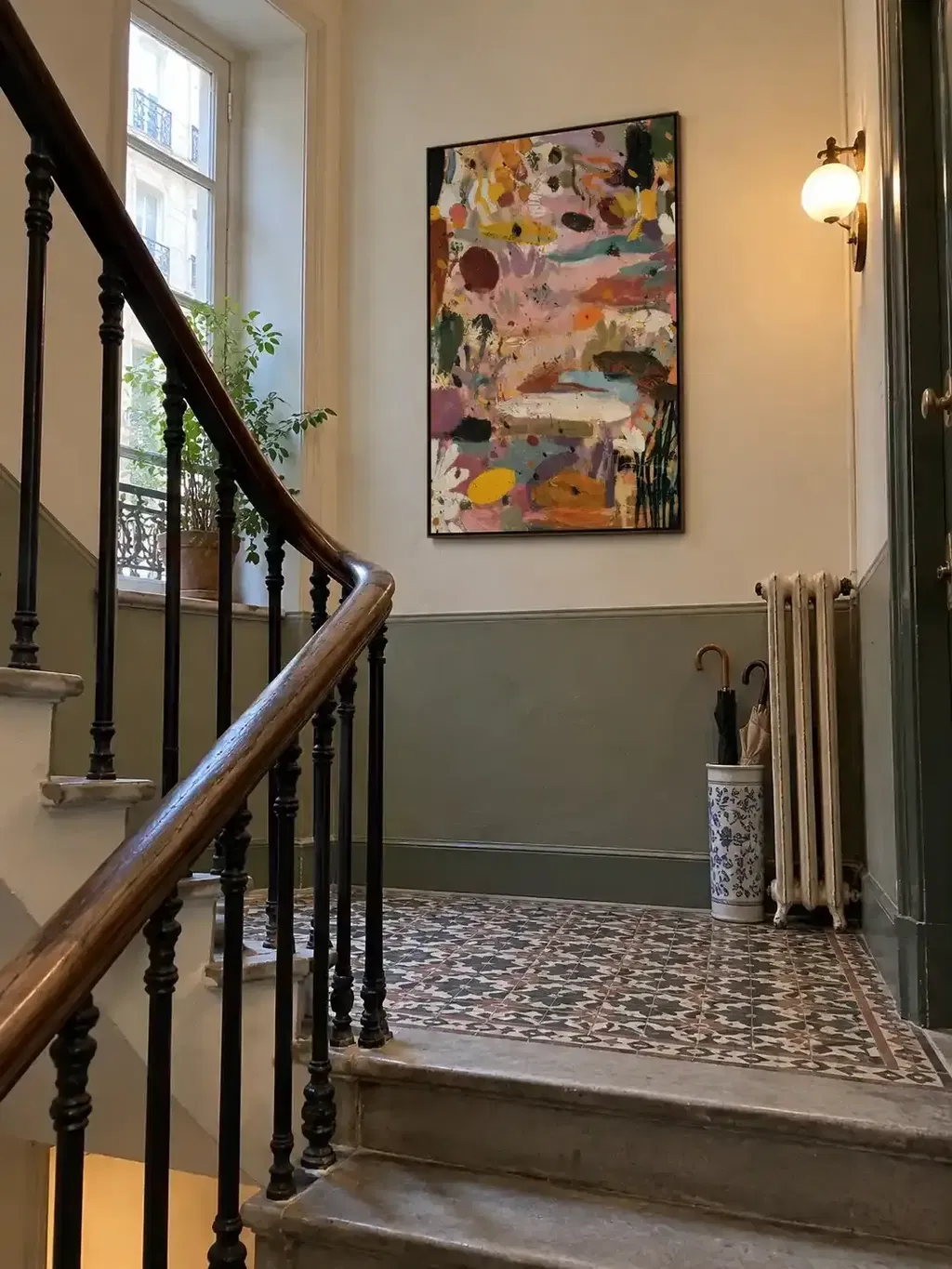
Textured original artwork vs. print investment comes down to two separate questions: which one you will enjoy living with longer, and which one has any realistic resale upside later. Originals often win on daily presence because texture, brushwork, and one-of-one character feel more personal over time, but prints usually win on budget, simplicity, and low-risk decorating. If the piece only makes sense when you assume appreciation, the premium is too high.
Why Textured Originals Feel More Durable
A textured original usually feels more durable in everyday life because it changes how a room reads from across the space and up close. Visible brushwork, impasto, and layered surfaces give the eye more to return to than a flat reproduction does. The Canada Conservation Institute's guidance on paintings also makes the durability point clear: original oil and acrylic paintings can last a long time when they are properly maintained.
That does not mean every original is automatically long-lasting in practice. It means the medium itself is capable of durability, and the buyer still has to support it with reasonable care. For a living room, that difference matters because the piece is not just filling wall space. It becomes part of the room's daily atmosphere.

For many shoppers, that is the real reason to buy original artwork. A textured piece can feel less replaceable, less generic, and more tied to the home it hangs in. Prints can look polished, but they rarely create the same sense of material presence.
One practical way to think about it: if you are choosing art for a wall you will see every day for years, texture can keep the piece interesting after the first month. If you are choosing art mainly to solve a short-term decor gap, the durability advantage matters less.
Original vs. print basics can help if you want a broader home-decor comparison before you narrow in on a specific style.
How Originals Compare With Prints
The cleanest comparison is not "which is better," but "which trade-off fits your wall, budget, and expectations." A textured original gives you singular ownership and stronger tactile presence. A print gives you lower entry cost and easier replacement if the room changes.
| Buyer factor | Textured original artwork | |
|---|---|---|
| Visual presence | More material depth and variation | Flatter, more repeatable look |
| Uniqueness | One-of-one or close to it | Reproducible, often widely available |
| Upfront cost | Usually higher | Usually lower |
| Room impact | Feels more collected and personal | Easier to match a style quickly |
| Replacement ease | Harder if damaged or sold | Easier to replace or swap |
| Resale uncertainty | Can be stronger, but not guaranteed | Usually lower upside, simpler expectations |
That table is why prints can still be the right answer in plenty of rooms. If you are furnishing a rental, refreshing a guest space, or decorating on a tight budget, a print can be the smarter buy because it gives you the look without the same financial commitment.

Recent commentary on prints and multiples notes that prints can serve as a lower-entry option for buyers who care more about accessibility than one-off ownership. That does not make them worse. It just means the decision changes when the goal is enjoyment first and resale second.
If you are comparing abstract art for sale online, focus on which format will still feel right after the room is already furnished. The better choice is the one you will keep wanting to look at.
What Drives Resale Value in Textured Art
Resale is where many art buyers overreach. A textured original may have more upside than a print because uniqueness creates a scarcity premium, but that premium is only one factor. In real resale decisions, demand, artist recognition, condition, provenance, and timing matter more than texture alone.
A useful way to separate the factors is this: texture can help a piece stand out, but it does not create a market by itself. If the style is too narrow, the condition is weak, or the artist is not known to the buyer pool, the resale path can still be limited.
Condition, Care, and Presentation
Condition is one of the first things future buyers notice. Clean edges, intact texture, and a surface that has been reasonably protected will usually feel more credible than a piece that shows avoidable wear. Documentation and presentation matter too, because buyers often read them as signals that the work was cared for.
Artist Recognition and Demand
A recognized artist generally gives resale conversations more structure than an unknown one. That does not mean the work will rise in value, only that there may be a clearer audience for it later. A niche piece can still be beautiful, but if the style only appeals to a narrow group, resale can be slower or less predictable.
Subject Matter and Broad Appeal
Neutral abstracts, calm palettes, and versatile compositions often have a wider possible audience than highly specific imagery. That does not make them superior art. It simply means a broader range of homes may be able to picture them on the wall, which can matter if resale is part of your thinking.
Provenance and Documentation
Keep the paper trail. Receipts, artist information, ownership records, and any notes about materials or framing can make a future resale conversation easier. Documentation does not certify value, but it can support buyer confidence.
The key point is simple: uniqueness premium with resale limits is a better mental model than "originals are investments." That is especially true when a buyer is comparing a first meaningful piece against a cheaper print.
Why Everyday Enjoyment Can Outlast the Price Tag
Textured originals often outlast prints in enjoyment because they keep rewarding attention. The surface has variation, so the piece can look different in morning light, evening light, or from another angle across the room. That kind of visual depth makes the work feel less like a placeholder and more like a chosen object.
For most buyers, the satisfaction comes from three things:
- The piece feels more personal than a repeatable print.
- The room reads as more finished without looking generic.
- The artwork keeps its interest after the novelty of buying it wears off.
That is why people often stay happier with an original over time even when the print looked fine at checkout. The original carries a stronger sense of authorship, and that can matter in a home where the art is part of the daily experience.
This is also why original artwork can work well for gifts and milestone purchases. If the goal is to mark an event, the one-of-one quality gives the purchase more emotional weight. If the goal is just to fill a blank wall quickly, a print may be enough.
How to Decide If a Textured Original Fits Your Goals
Start with the simplest question: would you still want this piece if resale later were modest? If the answer is no, do not treat the purchase like an investment. Treat it like a decor spend that needs a stronger price-to-enjoyment ratio.
- Decide whether the main goal is enjoyment, gifting, decor budget, or resale curiosity.
- Check whether the piece fits the room's scale, palette, and expected time on the wall.
- Ask whether the texture and hand-made look are doing real work for you, or just making the price easier to justify.
- Compare that answer with a print that would solve the same room problem for less.
If the original still wins after that comparison, the premium is easier to defend. If the print gives you most of the visual payoff with less risk, that is probably the better buy.
For shoppers who already know they want originals, browse canvas paintings once the room fit is clear. If you are down to one piece that feels right, a featured textured abstract may be the kind of option that justifies the higher price through daily use, not resale hopes.
What to Check Before You Buy
Before you pay for a textured original, check the parts of ownership that affect both enjoyment and future confidence. The Natural Pigments conservation guidance stresses stable conditions and protection from direct sunlight, and a NIH review on oil painting preservation shows that temperature swings and handling can contribute to deterioration.
Use this final checklist:
- Inspect the surface condition, edges, and framing details.
- Confirm how the work will be packed and shipped.
- Check return terms before you buy.
- Ask what documentation comes with the piece.
- Make sure you have a placement plan away from harsh light, damp areas, and rough traffic.
Those checks matter more for textured pieces because the surface itself is part of the value. A print can often absorb more casual treatment. An original is less forgiving if the buyer ignores care and shipping details.
If you want a broader browsing path, the all paintings collection is a useful starting point before you lock in a size or subject. When the choice comes down to a specific textured statement piece, textured impasto option is the kind of format to review only after the care and placement questions are settled.
Final Takeaway
Textured originals outlast prints when you want the art to feel more personal, more tactile, and more rewarding to live with every day. Prints still make sense when budget, flexibility, or low maintenance matter more. If enjoyment-first criteria fit, browse originals; if the room needs a simpler, lower-risk fill, compare prints and choose the one that solves the space without forcing the resale story.
FAQs
Why Are Original Paintings More Expensive Than Prints?
Originals cost more because they are one-of-one works that involve direct hand labor, materials, and a singular physical object rather than a reproduced file or edition. That higher price does not guarantee future appreciation. It mainly reflects uniqueness, making the purchase more about ownership experience than financial return.
Does Original Art Hold Value Better Than Prints?
Sometimes, but not reliably. Originals have more resale upside because they can carry a uniqueness premium, while prints usually start from a lower-value position. The deciding factors are still condition, artist recognition, documentation, and demand. If those are weak, an original is not automatically a better store of value.
What Makes Textured Oil Paintings Easier to Resell?
Broad appeal, clean condition, good documentation, and a subject that fits many homes can help. Texture can make a work more memorable, but it rarely carries resale by itself. A piece that is easy to picture in different rooms usually has a better chance of attracting future buyers than a highly specific one.
Can a Print Still Be the Better Choice?
Yes. A print is often the better choice when budget, easy replacement, or temporary decor matters more than uniqueness. It is also the safer path if you want the visual effect without taking on shipping, care, or resale uncertainty. Choose the print when the room benefit is enough on its own.
How Should I Compare Original Artwork vs Print Investment?
Compare enjoyment, room fit, upkeep, and realistic resale expectations, not just price. A better question is whether the original still feels worth keeping if resale stays modest. If it does, the premium is easier to justify. If it only works as a speculation play, the print is usually the cleaner decision.