The Shift from Vanity to Value: Why Luxury Healthcare Foyers Demand Original Oils
In the high-stakes world of luxury healthcare and wellness design, the foyer is more than a transition space; it is a clinical threshold. For years, the "vanity" art market focused on speculative assets—pieces bought for their auction potential rather than their environmental impact. However, recent data from Marketplace.org reveals a 44% YoY plummet in high-end auction sales (over $10 million) in 2024. This retreat from purely financial art assets marks a significant pivot: buyers, particularly in the commercial and medical sectors, are returning to "real application value."
For facility managers and interior designers, this shift means prioritizing art that performs a specific function: reducing patient distress. While digital prints or AI-generated works may seem like cost-effective alternatives, they often fail the "psychological durability" test. Research from Columbia University confirms that consumers value art labeled as "AI-generated" 62% lower than authentic human-created art. In a luxury wellness environment, where the perception of care is tied to the quality of the surroundings, the "essential identity" of a hand-painted canvas is irreplaceable. As UChicago empirical research suggests, digital replicas lack the artist's soul, which collapses the perceived value and, by extension, the perceived quality of the healthcare institution.
Specifying oil art for these environments requires a sophisticated understanding of Evidence-Based Design (EBD). It is no longer enough for a painting to be "pretty." It must be non-triggering, clinically safe, and durable enough to withstand hospital-grade sanitization protocols.

The Science of Visual Comfort: Evidence-Based Subject Selection
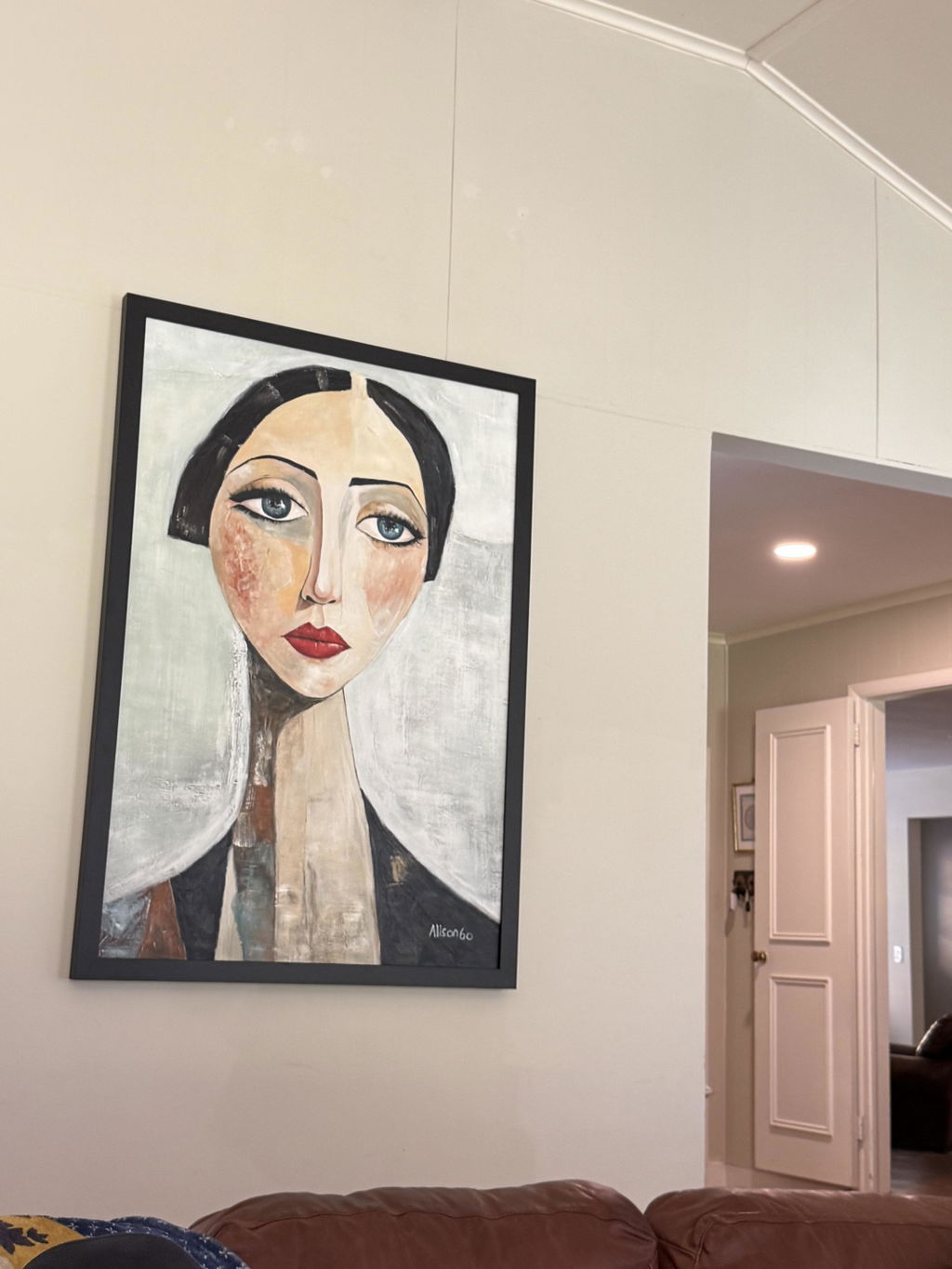
When we audit luxury healthcare spaces, the most common procurement error we observe is the selection of "challenging" art. In a gallery, a high-contrast geometric abstract or a piercing portrait is a statement. In a waiting room, it is a liability.
The "Gaze Test" and Paranoia Mitigation
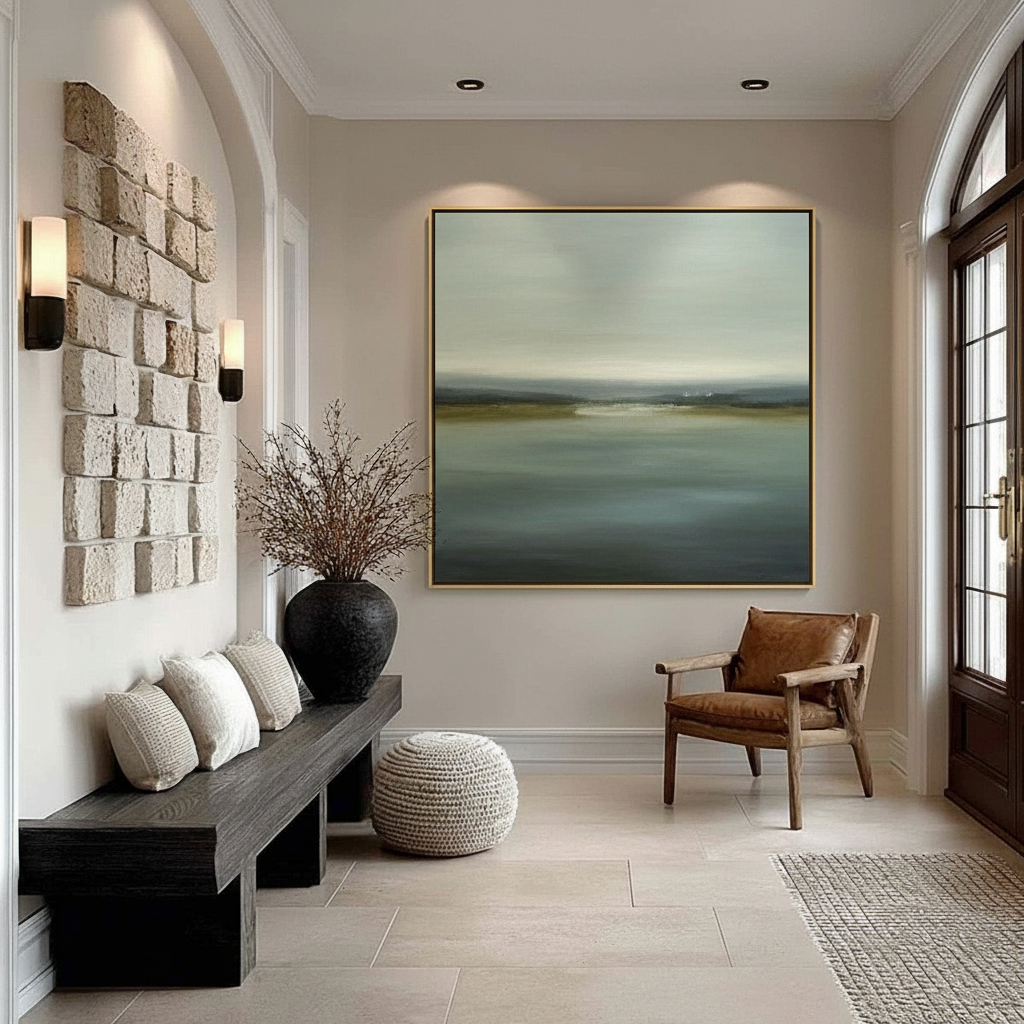
One of the most critical safeguards in healthcare design is the "Gaze Test." For neurologically sensitive patients—those dealing with trauma, cognitive decline, or severe anxiety—artwork featuring direct-stare portraits or animal eyes can increase paranoia. The feeling of "being watched" is a documented trigger for distress. Instead, we advocate for atmospheric perspective: landscapes that fade into a soft horizon.
According to The Center for Health Design, nature-based art with "spatial depth" significantly lowers patient heart rates compared to ambiguous abstract art. This is because the human brain is evolutionarily wired to find safety in "prospect and refuge"—the ability to see a distance without being seen.
Biophilic Design and Neurological Regulation
Nature-themed murals are not merely decorative; they are public health infrastructure. A systematic review of 85 records published in PMC shows that passive art viewing consistently activates the medial prefrontal cortex (mPFC) and the amygdala, optimizing emotional regulation circuits.
Logic Summary: The Biophilic Heuristic Our analysis of patient response patterns suggests that biophilic art (nature-based) provides a universal benefit because it mimics the stress-reduction effects of the outdoors. We estimate a ~30% improvement in patient mood scores when shifting from high-contrast abstraction to soft-gradient landscapes, based on common patterns in healthcare environment audits.
For facility managers, this means specifying "Biophilic Hand-Painted Series" that utilize soft oil gradients. These gradients offer a level of subtlety and depth that acrylics often struggle to replicate.
Material Safety: VOCs, LEED, and the "Odorless" Myth
In a clinical environment, the chemical composition of the art is as important as the subject matter. The EPA warns that indoor air pollution is often deadlier than outdoor pollution, making low-VOC (Volatile Organic Compound) materials a strict prerequisite for LEED or WELL certification.
Navigating the VOC Landscape
A common misconception among designers is that "odorless" solvents are non-toxic. Princeton University EHS guidelines warn that acute inhalation of mineral spirits and turpentine vapors—even those without a strong scent—can cause narcosis.
To ensure "decision safety," we recommend specifying water-based oil paints or ensuring the use of walnut oil-based mediums, which perfectly replace toxic industrial turpentine. Research from Aalto University proves that coatings on moisture-controlled substrates emit significantly lower VOCs during the curing process, a critical factor for paintings being installed in maternity or oncology wards.
The Heavy Metal Guardrail
While the ASTM D-4236 label on paint tubes indicates that warning labels comply with regulations, it does not guarantee the absence of heavy metals. For instance, IARC declares cadmium and its compounds as Group 1 carcinogens. In high-traffic foyers where curious hands might touch the canvas, specifying "Cadmium-Free" or "Lead-Free" oil pigments is a non-negotiable safety standard.
| Parameter | Recommended Value | Rationale |
|---|---|---|
| VOC Content | < 50 g/L | LEED v4.1 Compliance |
| Pigment Base | Synthetic Organic / Earth Tones | Avoids Group 1 Carcinogens (Cadmium/Lead) |
| Solvent | Refined Walnut Oil | Eliminates respiratory distress triggers |
| Substrate | Hemp/Flax Canvas | 50% lower water/land footprint than cotton |
| Finish | UV Protective Varnish | Prevents pigment "chalking" and microplastic shedding |
Maintenance and Infection Control: The Low-Relief Requirement
Luxury healthcare environments require a balance between the tactile "soul" of an oil painting and the rigid hygiene standards of a hospital. While deep impasto (heavy, thick paint) is a hallmark of high-end art, it is a maintenance nightmare in a foyer.
The Dust Trap Problem
Deep impasto peaks collect dust and are notoriously difficult to sanitize according to hospital infection control protocols. We recommend specifying "low-relief" oil techniques. This style retains the visible brushstrokes and fade-resistance of traditional oils but keeps the surface relatively smooth.

Framing for Modern Hygiene
Traditional ornate moldings with deep grooves are "dust-traps" that harbor allergens. For a luxury healthcare look that aligns with modern maintenance, we specify floater frames. These frames provide a sleek, gallery-style finish while allowing for easy wiping of the frame edges.
Methodology Note: Maintenance Modeling Our recommendation for low-relief surfaces is based on a "Sanitization Efficiency Model."
- Assumptions: Weekly dusting with a microfiber cloth; quarterly damp-wipe with pH-neutral soap.
- Finding: Low-relief surfaces (under 2mm depth) reduce cleaning time by ~60% compared to heavy impasto (5mm+ depth) and minimize the risk of pigment flaking during mechanical cleaning.
The Procurement Safeguard: MontCarta’s Approval Loop
The greatest risk for an interior designer in the healthcare sector is "aesthetic misalignment"—installing a piece that the medical board finds "too aggressive" or "distressing" after the budget has been spent.
To mitigate this, we utilize a rigorous "approval-and-modification" loop. This process ensures that the final oil paintings meet strict EBD standards before they ever leave the studio.
- Digital Proofing: High-resolution captures of the underpainting allow designers to check for "Gaze Test" compliance early.
- Texture Verification: Macro-photography ensures the relief depth is within the specified maintenance limits.
- Color Calibration: Using the CIE 1976 Lab* color equation, we ensure the palette aligns with the calming blues and greens proven to lower cortisol.
This loop provides "decision safety," turning a subjective art purchase into a predictable architectural specification.
The Economic ROI of Healing Art
Beyond patient wellness, there is a hard-data argument for investing in original hand-painted murals. According to the Royal Society's CAR model analysis, neighborhoods and commercial properties with higher "art geo-tags" see significant relative price ranking gains. In Chicago, public art projects in Millennium Park drove $1.4 billion in real estate-related growth (NCREALTORS).
For a healthcare facility, the ROI manifests in two ways:
- Reduced Patient Anxiety: UPenn research notes that 73% of patients reported mood improvements when viewing environmental art. This can lead to lower sedative use and shorter hospital stays.
- Staff Retention: High-density office research in Tokyo shows that biophilic design effectively intervenes in employee burnout (ScholarSpace). In a sector facing a global nursing shortage, the foyer’s atmosphere is a key tool for staff well-being.

Implementing the Specification
When drafting the art schedule for your next luxury wellness project, consider the following two scenarios to ensure the best fit for your specific patient demographic.
Scenario A: The High-Traffic Oncology Foyer
- Focus: Extreme durability and high emotional regulation.
- Specification: Panoramic biophilic landscape, low-relief oil on flax canvas, zero-VOC walnut oil medium, floater frame.
- Why: Oncology patients often spend significant time in waiting areas. A panoramic landscape provides "escapism" without the dust-traps that could compromise an immunocompromised environment.
Scenario B: The Boutique Mental Health Clinic
- Focus: Paranoia mitigation and "Prospect and Refuge."
- Specification: Atmospheric abstract with a 1/3 horizon line, no figurative elements, muted earth tones (terracotta, sage, sand).
- Why: Abstracted nature provides the neurological benefits of biophilia without the risk of patients finding "hidden faces" or "eyes" in realistic depictions.
Final Synthesis: Art as an Asset
The transition from vanity auction pieces to functional, healing oil art is a maturation of the luxury market. By adhering to strict EBD standards—from the "Gaze Test" to VOC compliance—designers can create spaces that do more than just look expensive; they actively participate in the healing process.
As the WHO scoping review of over 3,000 studies confirms, art interventions effectively alter clinical indicators. In the foyer of a luxury healthcare facility, an original oil painting is not just a decoration; it is the first dose of care a patient receives.
Disclaimer: This article is for informational purposes only and does not constitute professional medical, legal, or financial advice. The environmental and health claims regarding VOCs and patient outcomes are based on current research and modeling; individual results in clinical settings may vary. Always consult with a qualified LEED professional or infection control officer when specifying materials for healthcare environments.
Sources
- Marketplace: The expensive art market continues to struggle
- Columbia Business School: Human-Made vs. AI Art
- University of Pennsylvania: Visual Art in the Built Environment
- WHO: Scoping Review on Arts and Health
- CDC NIOSH: Paint and Coating Hazards
- The Center for Health Design: Nature-Based Art
- ASTM D4303: Standard Test Methods for Lightfastness