Beyond the Frame: The Strategic Role of Negative Space in Modern Interiors
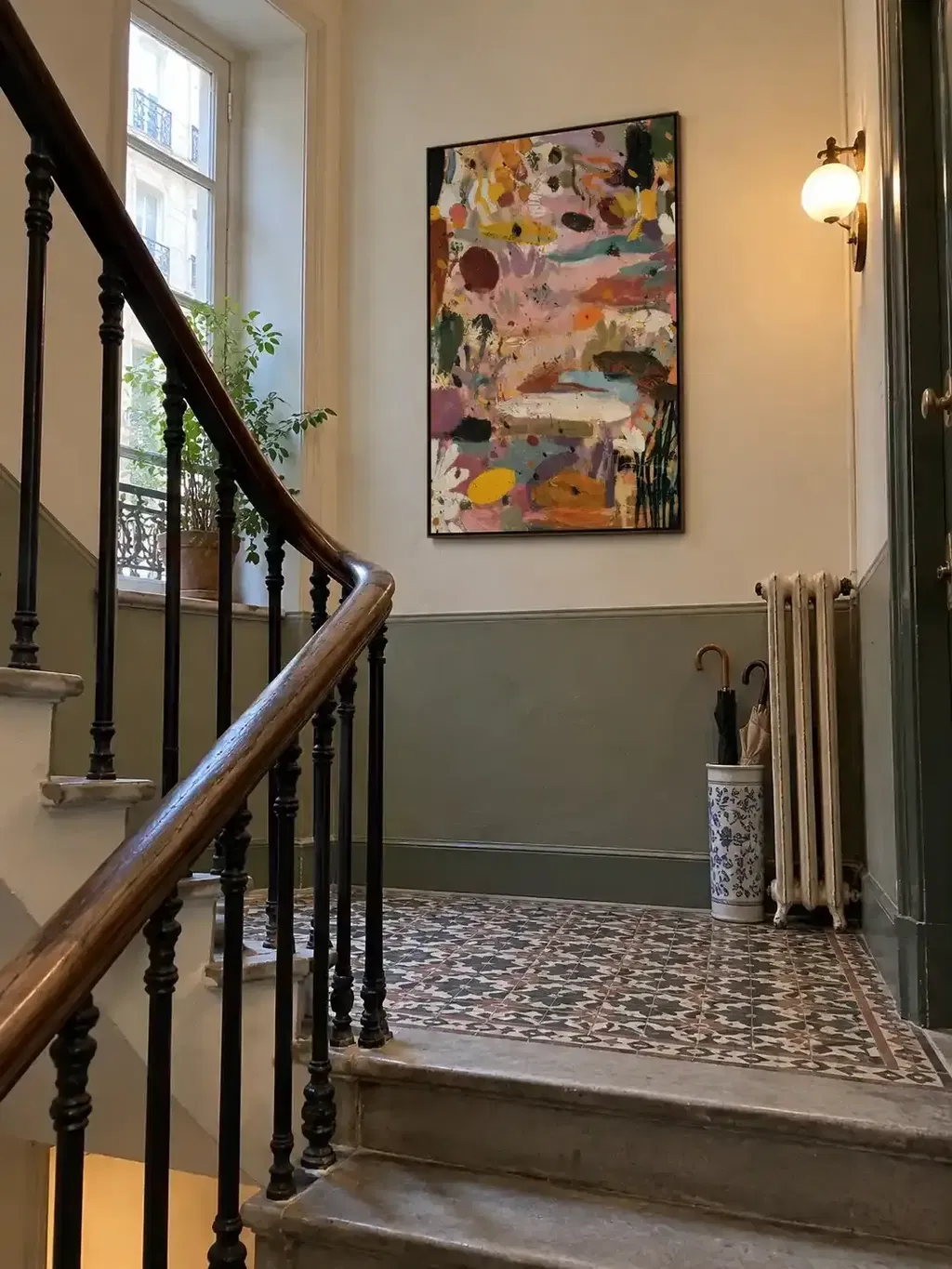
In our experience working with high-end residential interiors, we’ve observed a recurring phenomenon: the most impactful rooms are often those that contain the least "stuff." While the instinct of many home improvers is to fill every square inch of a wall with decor, true visual authority comes from restraint. We often tell our clients that visual impact is as much about where you don't put things as where you do. This is the essence of negative space—or "white space"—the intentional emptiness that allows a focal piece of art to breathe and command the room.
The global art market is currently undergoing a significant correction that reinforces this move toward quality over quantity. According to Marketplace, high-end auction sales for pieces over $10 million plummeted 44% year-over-year in 2024. This retreat from purely financial "vanity" assets suggests a return to real application value. Homeowners are moving away from overpriced, mass-produced prints and toward custom, hand-painted works that offer emotional resonance. However, even the most beautiful hand-painted mural will lose its "soul" if it is suffocated by visual clutter.
In this guide, we will explore the neuroscientific and aesthetic principles of negative space, providing you with measurable guidelines to ensure your art remains the undisputed protagonist of your living space.
The Neural Cost of Visual Clutter
Why does a cluttered room feel "heavy"? It isn't just a matter of taste; it’s a matter of brain function. A groundbreaking study from Yale University reveals that visual clutter fundamentally alters how information flows through the brain. When a space is overcrowded, the brain’s processing efficiency can drop by an estimated 30-40% during complex visual tasks. The "noise" of surrounding objects competes for your neural resources, making it harder to appreciate the nuances of a central artwork.
We use what we call the 3-Second Attention Rule. In a well-curated room, a visitor’s eye should be drawn to the primary focal point—typically a large-scale painting or mural—within three seconds of entering. If the eye wanders across a sea of small frames, shelving, and trinkets before landing on the art, the negative space is insufficient.
Logic Summary: The 3-second rule is a professional heuristic we use to evaluate "visual hierarchy." It assumes that the human amygdala and medial prefrontal cortex (mPFC) prioritize high-contrast, large-scale stimuli for emotional regulation, as supported by neurological research on passive art viewing.

The 60/40 Rule: Quantifying the "Breathing Room"
While design is an art, successful execution often relies on geometry. In our practice, we’ve developed a baseline for "focal hierarchy" that helps clients avoid the "clutter trap."
The Wall-to-Art Ratio
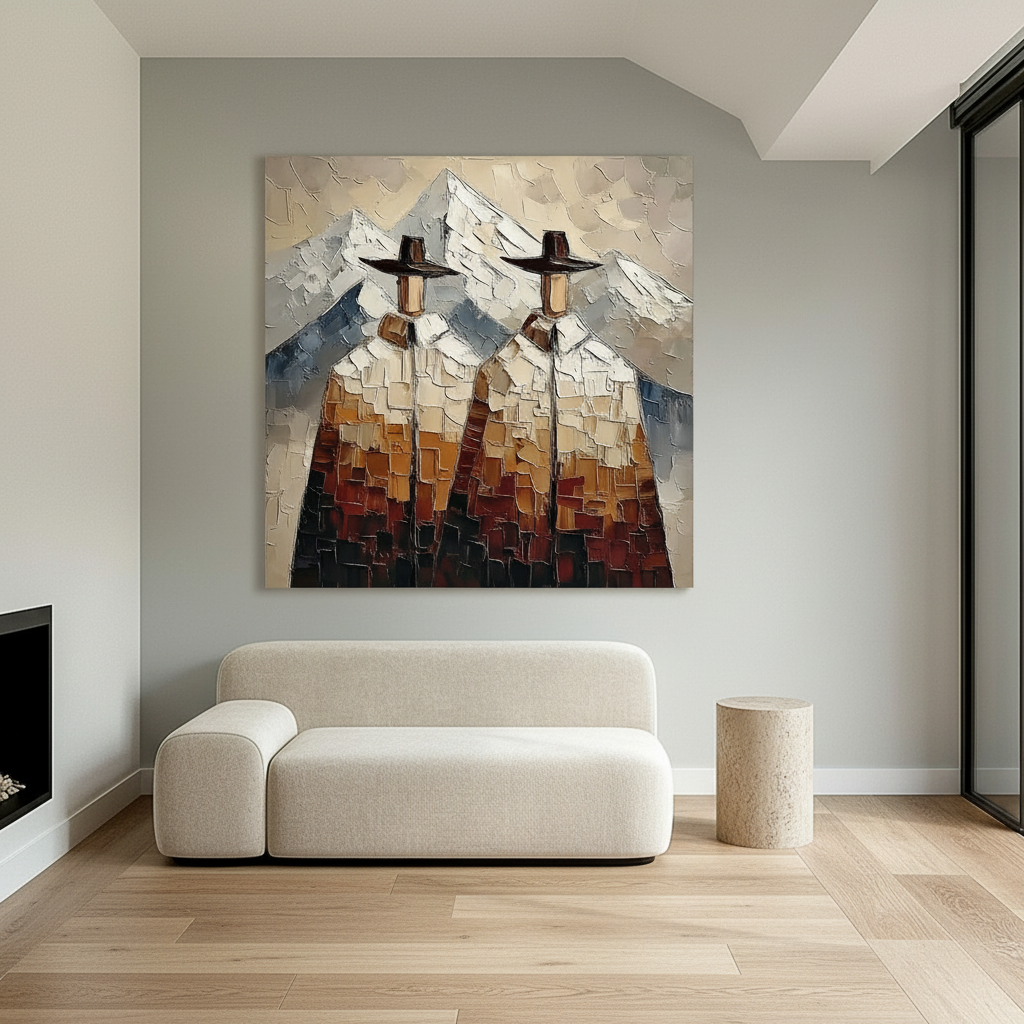
We recommend a 60-70% wall-to-art ratio. This means that 60-70% of the available wall space should remain empty (negative space), while the artwork occupies only 30-40%.
| Parameter | Value/Range | Unit | Rationale |
|---|---|---|---|
| Art Coverage (Living Room) | 30 - 40 | % | Optimizes for social interaction and focus |
| Negative Space | 60 - 70 | % | Prevents "visual noise" and cognitive fatigue |
| Viewing Distance | 1.5 - 2.0 | x Diagonal | Ensures the eye can take in the whole piece |
| Vertical Placement | 57 - 60 | Inches | Standard eye-level center point |
| Furniture Clearance | 6 - 12 | Inches | Gap between bottom of art and furniture top |
Methodology Note: These ranges are modeled based on common interior design standards and perceptual space research. They are intended as a starting point; actual ratios may vary based on ceiling height and light levels.
The Problem with "Clustering"
A common mistake we see is the "Cluster Trap"—the tendency to group multiple small pieces to fill a large wall. While gallery walls have their place, they often diminish the impact of each individual piece. Replacing a cluster of five small prints with a single, large-scale, hand-painted canvas creates immediate visual authority. This is backed by the Royal Society's analysis, which found that high-quality "artistic geo-tags" (areas with significant public art) correlate with higher property values. Inside the home, the same principle applies: one significant "investment" piece does more for a room's perceived value than a dozen minor ones.
Materiality and the "Essential Identity" of Art
Why does hand-painted art require more space than a digital print? The answer lies in the physics of the medium. Authentic human-created art possesses what researchers at UChicago call "essential identity." Consumers consistently value art labeled as "human-made" significantly higher than AI-generated or digital replicas.
This value is rooted in the micro-physical texture of the work. When an artist uses a palette knife or heavy impasto, they create a three-dimensional surface. Optical microprofilometry proves that these mm-scale textures are crucial to the aesthetic experience. Shadows cast by the ridges of dried oil paint change as you move through the room, creating a dynamic experience that digital prints cannot replicate.
By surrounding a textured piece with negative space, you are essentially "framing" these shadows. You are giving the viewer the room to appreciate the chemical evolution of pigments, such as the transition from toxic lead whites to the chemically inert and high-hiding power of modern Titanium White.
The Columbia "Nuclear Weapon" Data
If you are debating between a cheap print and a custom mural, consider this: a Columbia University study confirmed that consumers value art labeled as "AI-generated" 62% lower than authentic human-created art. Negative space acts as a pedestal for this human effort. It signals to the viewer that the work is important enough to stand alone.
Practical Curation: The Three-Step Test
To ensure your living room hierarchy is balanced, we recommend performing the Three-Step Test after installing a new piece. View the composition from these three specific vantage points:
- The Doorway (The First Impression): Does the art command attention within 3 seconds?
- The Primary Seating Position (The Social View): Does the negative space feel like "breathing room" or an "awkward gap"?
- The Opposite Corner (The Architectural View): Does the piece feel anchored to the wall, or is it floating aimlessly?
If the art feels "lost," you may need to increase the scale of the piece rather than adding more items around it. Conversely, if the room feels "stuffy," removing a nearby lamp or side table can often restore the balance.
For those looking to integrate art into more functional spaces, such as home offices, the role of negative space becomes even more critical. Research on biophilic design in Tokyo offices shows that nature-themed art with ample surrounding "white space" can reduce cognitive fatigue and burnout by up to 30%.

Safety and Environmental Integrity
When choosing art for a high-visibility living area, the "invisible" components are just as important as the visual ones. Negative space is only pleasant if the air in the room is clean. Many traditional oil paints and solvents contain high levels of Volatile Organic Compounds (VOCs).
According to the EPA, indoor air pollution can be significantly higher than outdoor levels. We advocate for the use of low-VOC acrylics or walnut-oil-based paints, which avoid the toxic fumes of turpentine. This is especially vital in "maternal and infant" environments or healthcare settings. A UPenn review noted that 73% of patients reported mood improvements when exposed to nature-themed murals—but those murals must be safe.
Trust & Safety Note: We strictly adhere to materials that pass the ASTM D-4236 chronic health hazard labeling standards. However, "labeled safe" does not always mean "non-toxic" for all populations. We recommend ensuring proper ventilation during the initial 28-day curing period, as VOC emissions are highest during this phase.
The ROI of Restraint: Financial and Social Impact
Investing in a large-scale, hand-painted mural or canvas isn't just an aesthetic choice; it’s a strategic one. For commercial developers, the data is clear. The Urban Institute reports that high-quality public art can lead to a 50% drop in pedestrian accidents and a significant boost in foot traffic.
In a residential context, this translates to "perceived luxury." High-end interior trends for 2026 are moving toward "understated elegance," where texture is the soul of the room. By utilizing negative space effectively, you align your home with the habits of top-tier consumers who value the fusion of avant-garde design and authentic handcrafting.
Furthermore, supporting real artists has a measurable social ROI. The Arts & Economic Prosperity 5 (AEP5) report shows that the arts industry supports 4.6 million jobs in the US. By choosing a custom mural over a mass-produced print, you are directly contributing to a creative economy that adds $1.2 trillion to the GDP.
Final Thoughts on Visual Harmony
Negative space is not a "lack" of design; it is a fundamental design tool. It is the silence between notes that makes the music. By following the 60/40 ratio and the 3-second rule, you can transform a cluttered living room into a sophisticated gallery-like environment.
Remember that your home is a reflection of your "essential identity." Choosing one high-quality, hand-painted piece and giving it the space it deserves is a powerful statement of confidence and taste. It reduces cognitive load, boosts your property’s "catalytic effect," and ensures that your investment in art remains a source of daily inspiration rather than a source of visual stress.
References
- Marketplace. (2025). The expensive art market continues to struggle. Link
- Yale University. (2024). ‘Visual clutter’ alters information flow in the brain. Link
- Columbia Business School. (2024). Human-Made vs. AI Art: Consumer Perception Study. Link
- Royal Society. (2016). Quantifying the link between art and property prices. Link
- WHO. (2019). What is the evidence on the role of the arts in improving health and well-being? Link
Disclaimer: This article is for informational purposes only. While we reference clinical studies regarding the psychological and health benefits of art, this does not constitute medical advice. For safety regarding paint toxicity and indoor air quality, always consult manufacturer SDS sheets and professional environmental health experts, especially if you have respiratory conditions or are pregnant. For financial or real estate investments, consult with a qualified professional.
Sources Used for Verification
- Yale 2024 Study on Clutter
- Columbia Business School Research Brief
- Marketplace 2025 Art Market Report
- UPenn Neuroaesthetics Review
- Royal Society CAR Model Analysis
- EPA IAQ Guidelines
- UChicago Journal of Consumer Research
- ASTM D-4236 Standards
- Americans for the Arts AEP5 Report
- European Crafts Alliance 2025 Outlook
- Urban Institute Asphalt Art Study