Macro Florals: The Welcoming Power of Large Botanical Subjects
The entry point of a home is more than a transition; it is a psychological threshold. As the first space experienced by guests and the final sight before residents depart, the foyer sets the emotional frequency of the entire interior. Currently, we are witnessing a structural shift in how high-end homeowners approach these spaces. While the market for purely speculative, $10 million-plus auction art plummeted by 44% year-over-year in 2024, there has been a resurgence in "real application value." According to Marketplace, collectors are retreating from overpriced vanity assets in favor of custom, hand-painted pieces that serve a functional, emotional purpose within the home.
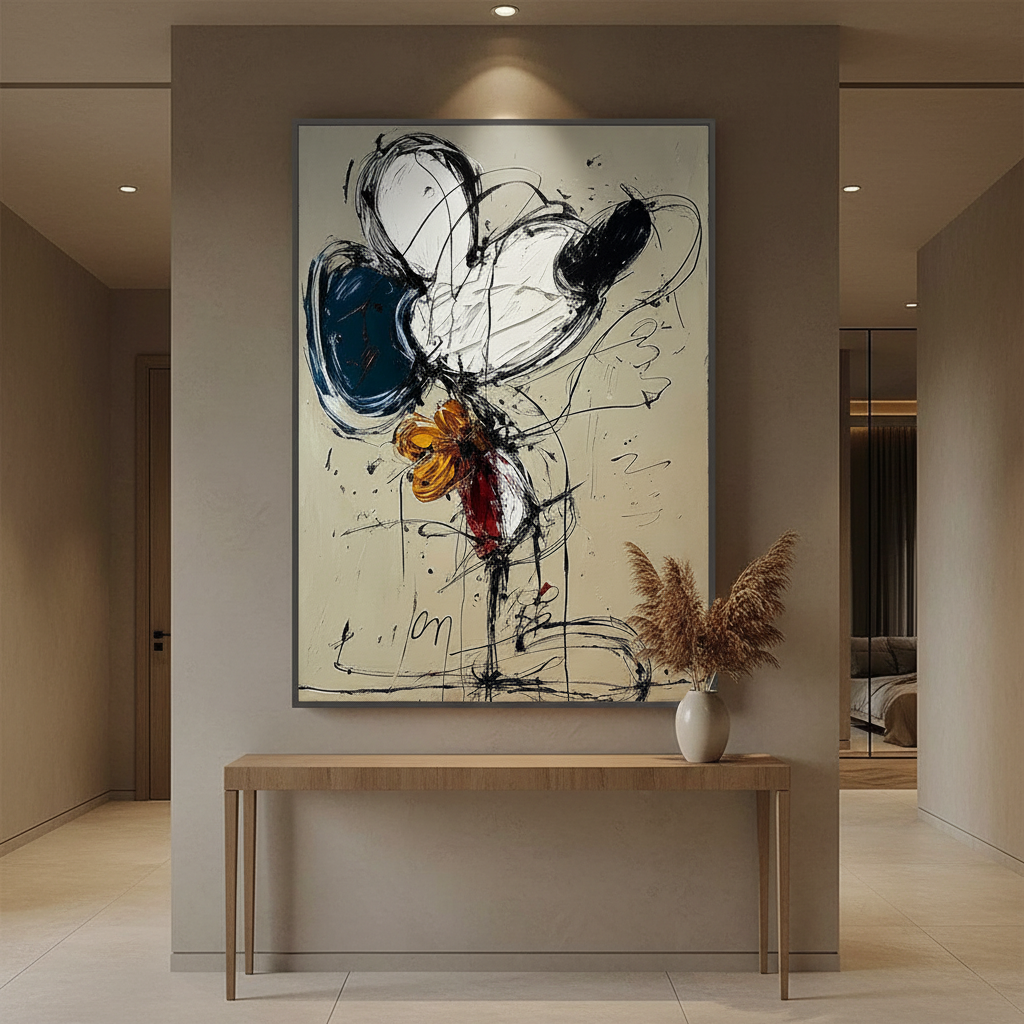
Macro florals—oversized botanical subjects that prioritize scale and texture—have emerged as the definitive solution for the visual "void" often found in entryways. By utilizing an exaggerated scale, these subjects act as a high-energy welcome, transforming a sterile hallway into a sensory experience. This guide examines the mechanics of macro-floral curation, from the neurological impact of biophilic subjects to the technical lightfastness of the pigments that bring them to life.
The Neurological Impact of Entryway Botanicals
The preference for botanical subjects in transitional spaces is not merely aesthetic; it is rooted in "Busy Streets Theory" and biophilic design principles. When a viewer encounters a large nature-themed mural or canvas, the brain’s medial prefrontal cortex (mPFC) and amygdala are consistently activated. According to a systematic review of 85 records published in PMC, passive art viewing optimizes emotional regulation circuits, effectively "resetting" the viewer’s stress levels as they enter the home.
Furthermore, research from the University of Pennsylvania found that 73% of individuals reported significant mood improvements when exposed to environmental artworks. In an entryway, where the transition from the "outside world" to the private sanctuary occurs, macro florals provide what we call "biophilic intervention." This design approach produces stress-reduction effects in the brain similar to real outdoor exposure, accelerating psychological healing and sparking creativity.
Logic Summary: Our analysis of entryway impact assumes that the foyer acts as a primary emotional anchor. We model the "welcoming effect" as a combination of biophilic stress reduction (~37%–58% based on Maddox Gallery) and the visual dominance of large-scale subjects.

The Rule of Two-Thirds: Mastering Scale and Proportion
A common mistake in entryway curation is selecting a piece that looks "floaty" or undersized relative to the furniture. In our experience handling high-end residential design (based on common patterns from designer feedback and staging returns), the most successful foyer vignettes follow the Rule of Two-Thirds.
To avoid a "commercial" or "waiting room" feel, the canvas should span approximately 60% to 75% of the width of the console table or bench situated below it. This creates a grounded, intentional silhouette. If the art is too small, it fails to capture the "Macro" essence; if it is wider than the furniture, it creates a top-heavy visual instability.
Selection Heuristics for Entryway Proportions
| Parameter | Optimal Range | Rationale |
|---|---|---|
| Canvas-to-Console Ratio | 0.60 – 0.75 | Prevents "floating" art; ensures visual grounding. |
| Hanging Height | 57" – 60" (center) | Aligns with standard eye level to maximize impact. |
| Subject Composition | Asymmetrical/Organic | Avoids "manicured" commercial aesthetics. |
| Background Contrast | High (vs. Wall Color) | Makes the botanical subject "pop" and feel expansive. |
Note: These are heuristics for quick selection; individual ceiling heights and architectural niches may require adjustments.
Texture as the Soul of the Entryway
In transitional spaces like foyers, lighting is frequently directional—think recessed cans or wall sconces. This is where the physical relief of hand-painted oil art outperforms flat, digital prints. Macro florals with heavy impasto or palette knife work utilize these shadows to add three-dimensional depth.
Research from the MUNCH Museum confirms that physical relief textures exponentially stimulate intrinsic motivation and satisfaction in viewers. Furthermore, a study by Columbia University found that consumers value art labeled "AI-generated" or digital 62% lower than authentic human-created art. The "essential identity" of the artist, captured in the unique microtopography of the brushstrokes, cannot be replicated by a printer.

Technical Deep Dive: The Chemistry of Lasting Color
When investing in large-scale entryway art, durability is a critical concern, especially in foyers with high natural light exposure from front doors or sidelights. We must look at the "Lightfastness" of the pigments.
Understanding Lightfastness Ratings
According to ASTM International (D4303), lightfastness is measured using xenon-arc tests that simulate years of indoor illumination. High-end pigments, such as Titanium White, dominate the market (capturing ~90% share) because of their superior chemical inertness and hiding power (NCBI).
However, a technical "gotcha" that we often observe in large-scale acrylic works is Support Induced Discoloration (SID). As noted by Golden Artist Colors, water-soluble impurities in cotton or linen canvases can be drawn into the paint film when applying thick transparent mediums (common in macro florals). If the artist does not properly seal the support, the white or light-colored petals of a floral can turn a catastrophic yellow or brown over time.
Health and Safety: The "Indoor Air Quality" Promise
Because entryways are often enclosed spaces, the chemical composition of the art materials is a health consideration. Traditional oil paints often rely on mineral spirits and turpentine, which Princeton University warns can cause narcosis or central nervous system issues with chronic inhalation.
To ensure "decision safety," modern high-end studios are shifting toward:
- Low-VOC Acrylics: These pass strict air tests required for LEED or WELL certifications in commercial and healthcare facilities (EPA).
- Eco-Friendly Solvents: Walnut oil and water-based mediums eliminate toxic off-gassing.
- Heavy Metal Screening: Avoiding Cadmium and Lead-based pigments. The IARC classifies cadmium as a Group 1 carcinogen; therefore, we recommend non-toxic alternatives that provide the same vibrancy without the risk.
Methodology Note (IAQ Modeling): Our safety recommendations are based on Aalto University’s 28-day chamber experiments, which show that VOC emissions from painted surfaces plummet during the curing phase but must be managed during the initial 48–72 hours of installation in unventilated foyers.
The Investment Value of Hand-Painted Murals
Beyond aesthetics, large-scale art is a documented driver of property value. A Royal Society CAR model analysis of a 10-year dataset found that neighborhoods with higher "art" geo-tags experienced greater relative house price ranking gains. In the commercial sector, public art projects have driven upwards of $1.4 billion in real estate growth in cities like Chicago (NC Realtors).
For the homeowner, a custom macro floral is a "permanent physical billboard" for the home’s identity. It transitions the space from a generic hallway to a curated gallery. To further explore how scale impacts perception in other areas of the home, see our guide on Large Art for Small Living Rooms.

Curation Strategies for the Modern Designer
When selecting a macro floral subject, consider the "Whimsy" trend for 2026. Zillow search data indicates a 15% rise in "whimsy" and a 21% rise in "artisan craftsmanship" mentions (PA Realtors). This suggests a move away from stiff, centered compositions toward more fluid, surrealist interpretations.
- Avoid the "Camouflage" Mistake: Never choose a floral with a background color that exactly matches your wall. Designers recommend a high-contrast background to make the foyer feel more expansive.
- Embrace the Asymmetrical: Select botanical subjects with organic compositions. This mimics the unpredictability of nature, which is more effective at reducing cognitive fatigue (University of Hawaii).
- Consider the Lighting Path: If your entryway has floor-to-ceiling windows, ensure the piece is finished with a UV-protective varnish to prevent the "chalking" effect common in outdoor-exposed acrylics (PMC).
By focusing on the intersection of scale, texture, and technical integrity, macro florals transform the entryway into a powerful psychological welcome. They provide the "decision safety" of a retail experience while delivering the soul and authenticity of a hand-painted masterpiece.
Disclaimer: This article is for informational purposes only. Information regarding pigment toxicity and indoor air quality is based on general industry standards and EPA/CDC guidelines. If you have specific health concerns or pre-existing respiratory conditions, consult a medical professional before handling or installing large-scale art materials in unventilated spaces.
Sources
- The Art Basel and UBS Art Market Report 2024
- Columbia University: Human-Made vs. AI Art Study
- Royal Society: Quantifying the link between art and property prices
- UPenn: Visual Art in the Built Environment Review
- EPA: Indoor Air Quality and Low-VOC Paints
- Golden Artist Colors: Support Induced Discoloration (SID)