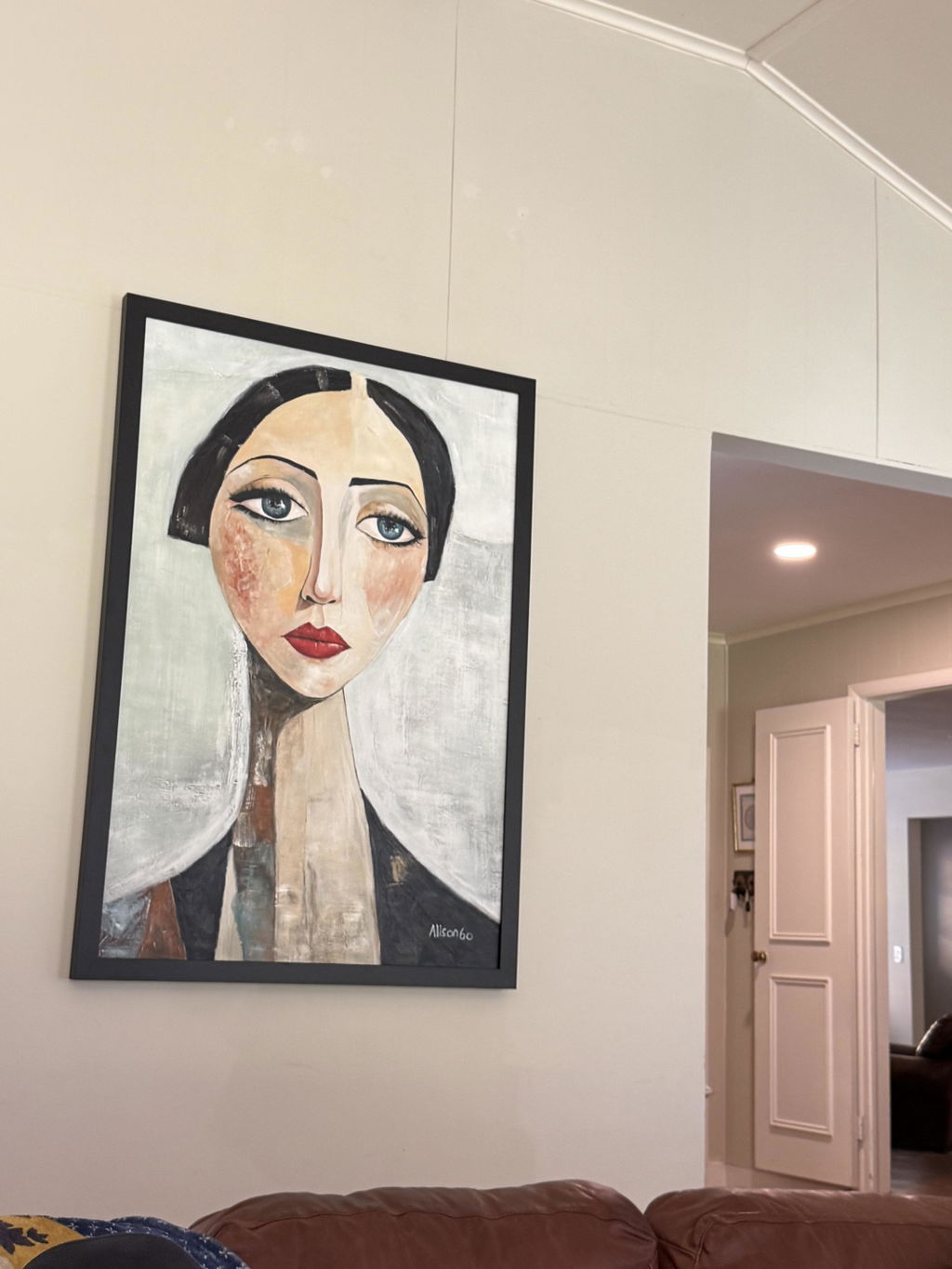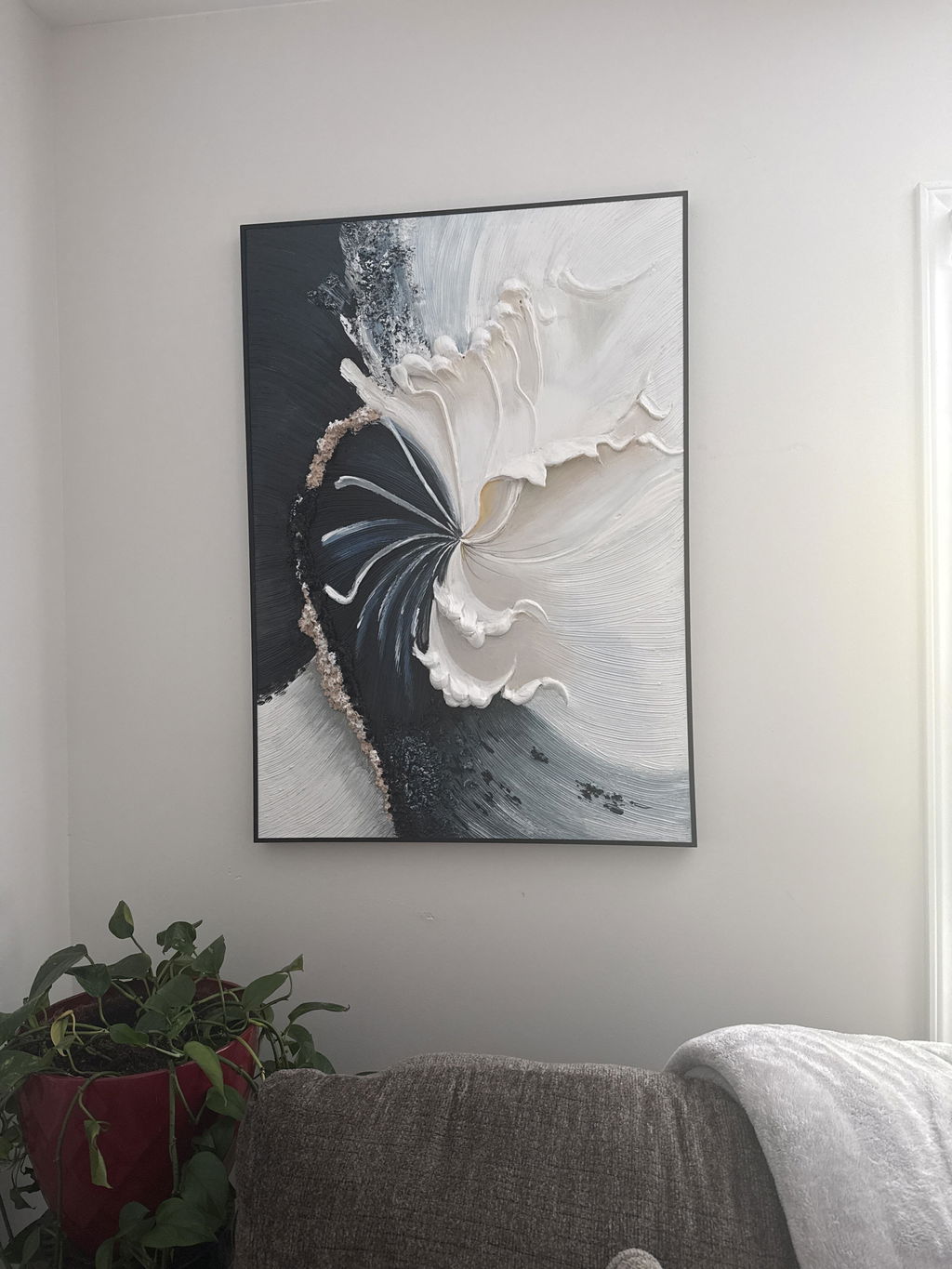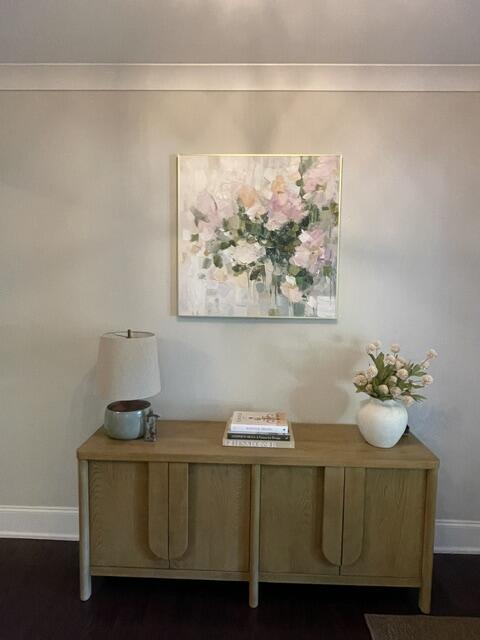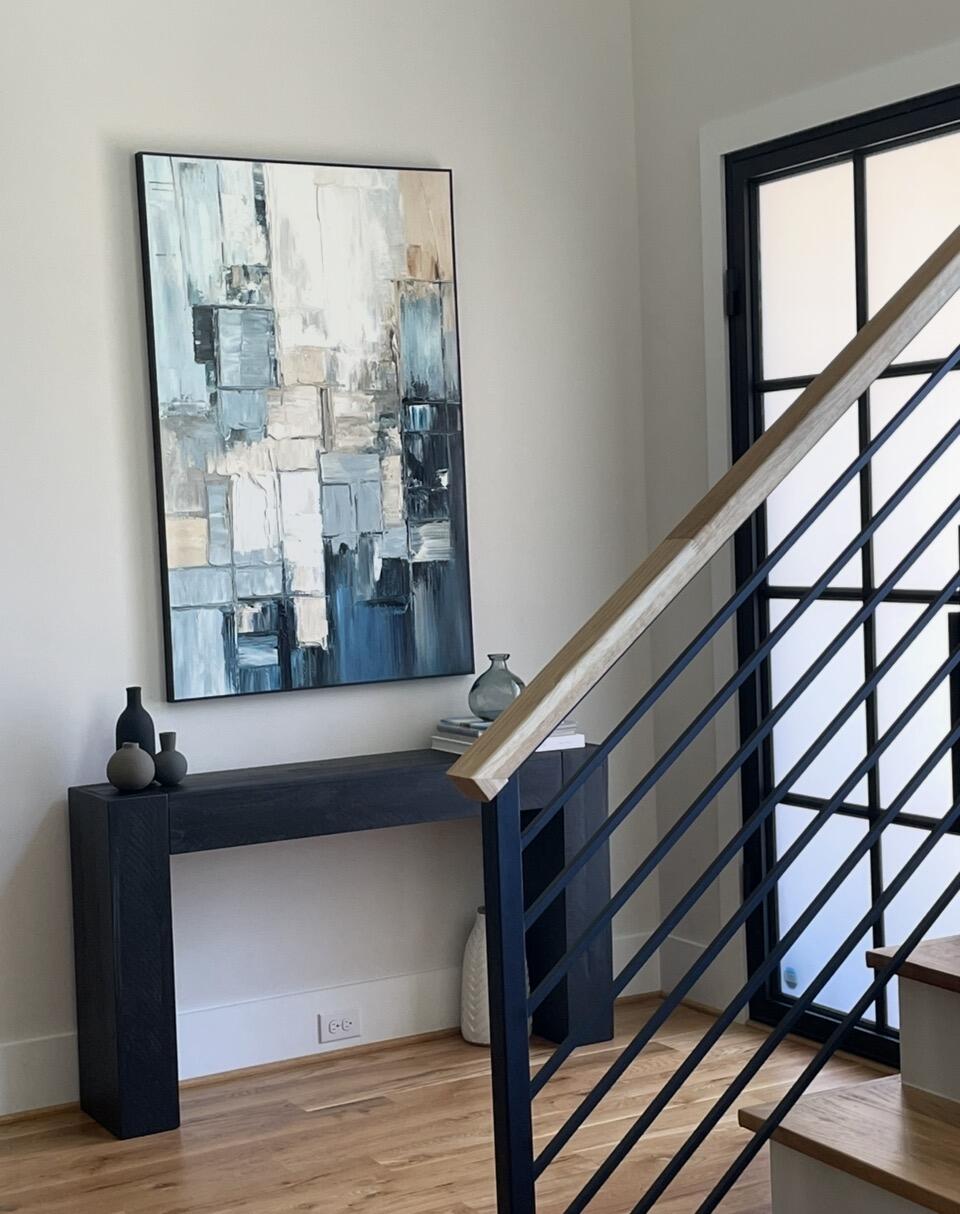
Double-Height Entrances: Balancing Large Art with Foyer Volume
The architectural majesty of a double-height foyer is designed to inspire awe, yet for many homeowners and interior designers, these grand volumes present a daunting curation challenge. The most frequent frustration we observe in our consultancy is the "postage stamp" effect—where a piece of art that seemed large in a gallery suddenly shrinks when placed against a 20-foot vertical expanse.
Recent shifts in the global art market underscore a move away from purely speculative acquisitions toward pieces that offer real "application value." According to Marketplace, high-end auction sales for pieces over $10 million plummeted 44% YoY in 2024. This retreat from vanity assets has fueled a resurgence in custom, hand-painted murals and large-scale commissions that prioritize architectural harmony over auction-house prestige.
Navigating these spaces requires a departure from standard residential hanging rules. To achieve a cohesive first impression, one must balance the emotional resonance of authentic craftsmanship with the mathematical precision of vertical scale.

The Neurological Impact of First Impressions
The entryway is more than a transitional corridor; it is the "visual handshake" of a home. From a neuroaesthetic perspective, the art encountered here sets the tone for the entire residential experience. Research published in NCBI reveals that passive art viewing consistently activates the medial prefrontal cortex (mPFC) and the amygdala, the brain's primary circuits for emotional regulation.
In grand foyers, the scale of the artwork directly influences this response. A piece that is too small for its environment creates a sense of "visual discord," which can subtly increase cognitive load as the eye struggles to find a focal point in the vastness. Conversely, a correctly scaled, hand-painted work provides what researchers call "essential identity." A study from The University of Chicago suggests that authentic human-created art preserves a unique "soul" that digital prints lack, leading to significantly higher perceived value and emotional satisfaction.
For homeowners looking to foster a sense of tranquility, biophilic design—integrating natural landscapes into the built environment—is particularly effective. According to the University of Central Arkansas, nature-themed murals produce stress-reduction effects in the brain nearly identical to real outdoor exposure. In a high-traffic foyer, this translates to an immediate "decompression" effect upon entering the home.
The Math of Grandeur: Solving the Scale Problem
To prevent a 20-foot wall from "swallowing" your art, we rely on two primary heuristics: the Rule of 70% and the Vertical Shift.
The Rule of 70%
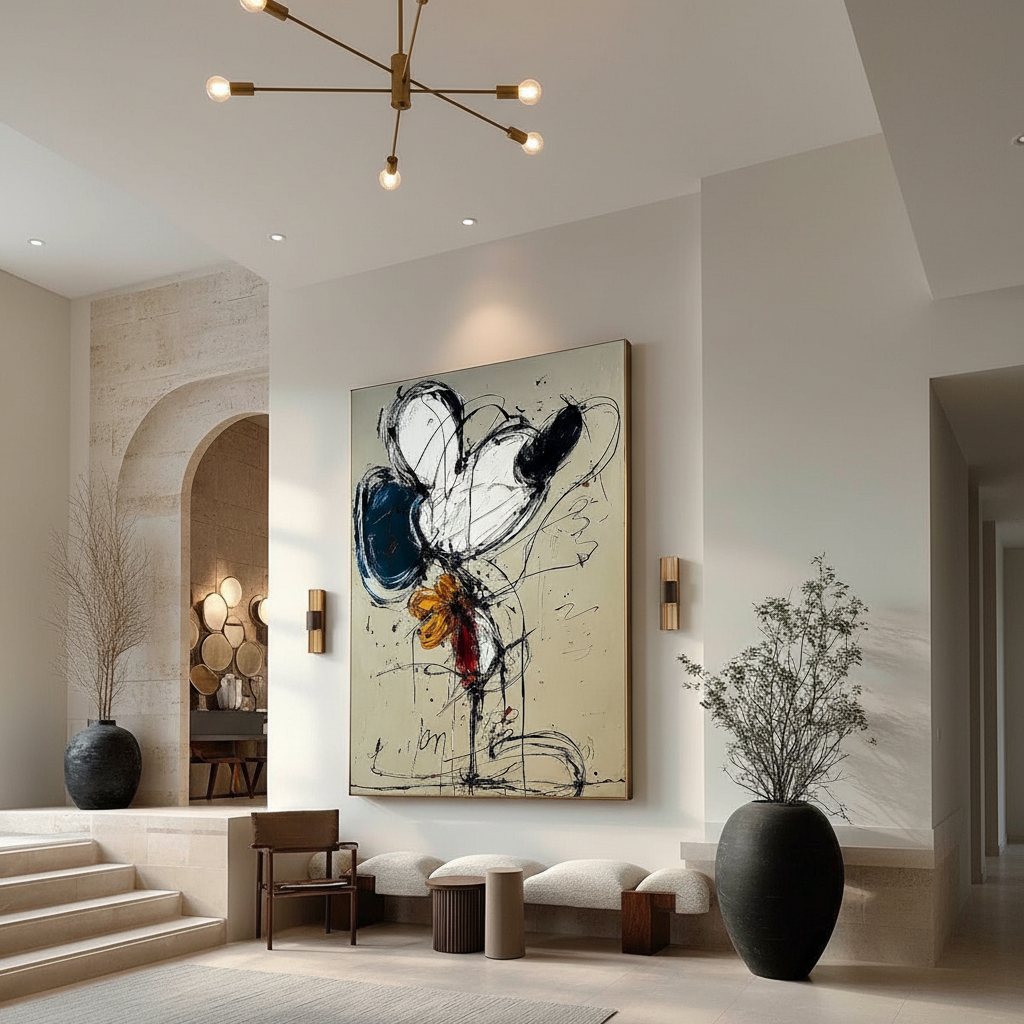
For walls wider than 10 feet, art should occupy approximately 70% of the horizontal wall width. This prevents the architecture from overwhelming the work. If a single 8-foot canvas is logistically impossible, we recommend utilizing triptychs or diptychs. These multi-panel installations provide the necessary visual weight while remaining manageable for installation on high scaffolds.The Vertical Shift: Adjusting the Center Point
The standard "57-inch" eye-level rule—where the center of the art sits 57 inches from the floor—often fails in double-height spaces. It leaves too much "dead air" above the piece, making the composition feel bottom-heavy. * **Our Heuristic:** In foyers with ceilings exceeding 14 feet, we suggest raising the vertical center to **65–70 inches**. * **Why this works:** This adjustment bridges the floor-to-ceiling gap, ensuring the art remains connected to the ground-level furniture while reaching upward to address the vertical volume.Logic Summary: Vertical Parallax Adjustment Our analysis of grand residential spaces assumes that the viewer's gaze in a foyer is rarely static. Because viewers often look at the art from both the ground floor and the second-story landing, the 65-70 inch center point serves as a "visual anchor" that accommodates both perspectives.
Parameter Standard Foyer Double-Height Foyer Rationale Center Height 57 inches 65-70 inches Prevents "bottom-heavy" feel Wall Coverage 50-60% 70% Balances architectural volume Viewing Angle Eye-level Multi-level (Ground + Landing) Accommodates vertical movement

Texture as a Functional Solution for Light
One of the most overlooked challenges in double-height foyers is the interplay of light. These spaces often feature high-angle chandeliers and massive windows, creating complex glare patterns.
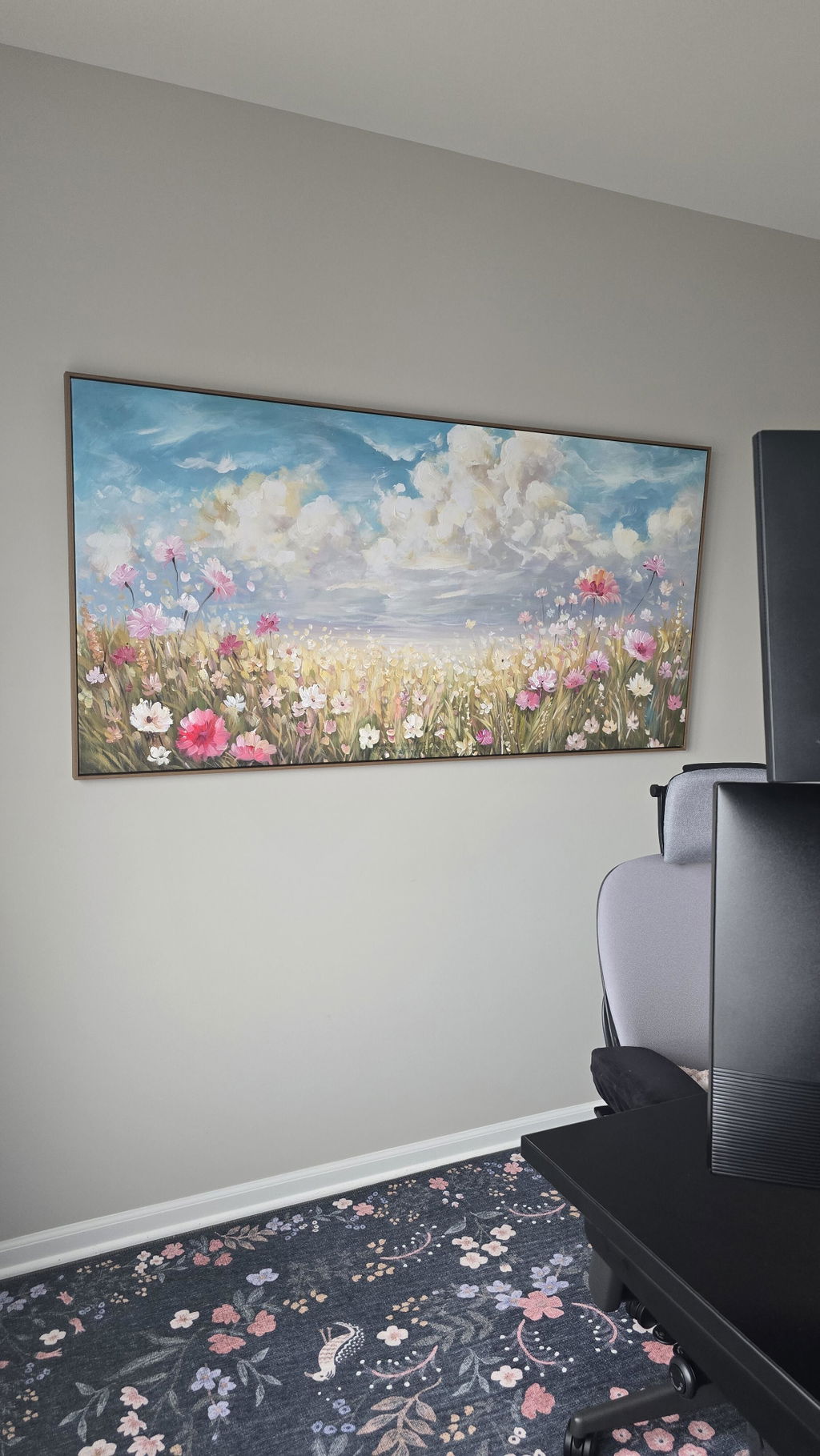
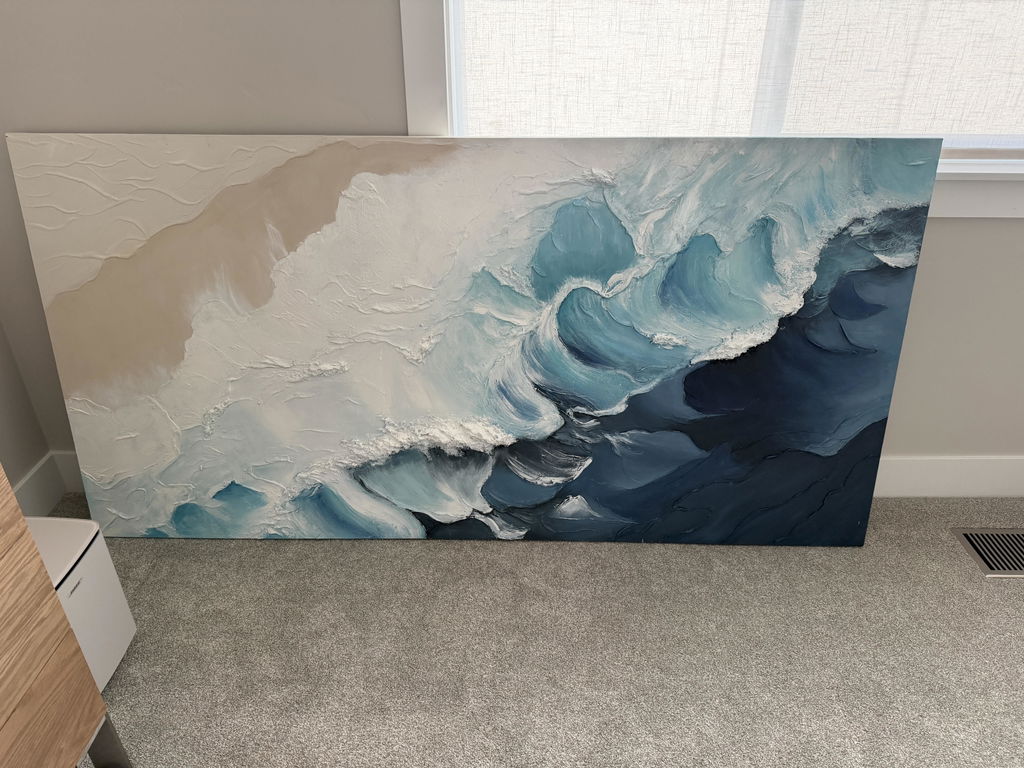
Flat prints or glass-covered works frequently "wash out" or create distracting reflections that obscure the image. Hand-painted oils with physical impasto (thick, textured brushstrokes) offer a technical advantage. According to optical theory, textured surfaces scatter light more effectively than flat ones. The physical relief of the paint catches light from varying angles, creating depth that is visible from the front door and the upstairs hallway alike.
Furthermore, consumers are increasingly discerning about the "human premium." A Columbia University study found that consumers value art labeled "AI-generated" 62% lower than authentic human-created art. In a high-visibility area like a foyer, the tactile presence of real pigment and the visible "struggle" of the artist’s hand signify a level of luxury that mass-produced alternatives cannot replicate.
The Hidden Costs: Structural Engineering and Logistics
While the aesthetic benefits of large art are clear, the structural requirements are often ignored until the installation day. A 10-foot oil-on-canvas work, especially one with heavy impasto or a solid wood frame, can exceed 100kg.
Most standard residential drywall is not rated for this load. According to Cadcrowd, structural reinforcement for massive canvases can add $2,000 to $8,000 in hidden engineering costs. This may include:
- Steel Bracing: To distribute the weight across multiple studs.
- Specialized Cleats: French cleat systems are required for flush mounting and weight distribution.
- Scaffolding Labor: High-ceiling installations require professional crews and OSHA-compliant scaffolding.
For clients wishing to avoid structural modifications, we often recommend "Architectural Multi-Panels." By splitting a massive image into three vertical panels (a triptych), you reduce the individual weight of each piece, often allowing for installation without heavy-duty wall reinforcement.
Health, Safety, and Material Integrity
In a grand foyer, air circulation patterns can carry VOCs (Volatile Organic Compounds) throughout the entire home. It is critical to ensure that large-scale commissions use low-VOC materials.
The Environmental Protection Agency (EPA) warns that indoor air pollution is often significantly higher than outdoor levels. For large-scale indoor murals, we prioritize water-based acrylics or oils thinned with walnut oil rather than toxic solvents like turpentine. Research from Aalto University confirms that coatings on wood and canvas emit significantly lower VOCs once cured, but the selection of the initial pigment is vital.
Furthermore, lightfastness is non-negotiable for foyer art exposed to high-UV environments near windows. We look for pigments that meet the ASTM D4303 standard, which uses xenon-arc testing to simulate years of sunlight exposure. This ensures that your investment won't fade into a "hazy" version of its former self within a decade.
Modeling Note: Pigment Longevity We estimate the longevity of foyer artwork based on a hypothetical exposure of 1260 MJ/m² (Standard ASTM Method C).
- Assumption 1: High-UV exposure from south-facing foyer windows.
- Assumption 2: Use of museum-grade UV-protective varnish.
- Boundary Condition: This model does not apply to "fugitive" pigments like Prussian Blue, which may fade regardless of the binder if not properly shielded.

The "ROI" of Architectural Art
For homeowners and developers, large-scale art is not just a decorative choice; it is a value-add for the property. A Royal Society analysis found that neighborhoods and properties with higher "art" geo-tags saw greater relative house price gains.
In the commercial sector, the impact is even more pronounced. The Chicago Millennium Park public art projects drove $1.4 billion in real estate growth. While a residential foyer is smaller in scale, the principle remains: bespoke, hand-painted art elevates a property from a "house" to a "curated estate," making it more attractive to high-net-worth buyers who value unique architectural details.
Summary of Best Practices for Grand Entrances
To successfully curate a double-height foyer, follow this checklist derived from our pattern recognition in high-end residential projects:
- Prioritize Texture: Choose impasto or mixed-media works to diffuse glare from high-angle lighting.
- Apply the Rule of 70%: Ensure the horizontal width of the art covers roughly 70% of the available wall space.
- Elevate the Anchor: Set the vertical center point at 65-70 inches to bridge the architectural gap.
- Verify Material Safety: Demand low-VOC paints and ASTM D4303 lightfastness ratings to protect indoor air quality and long-term color.
- Consider Structural Weight: Consult an engineer for works exceeding 50kg to determine if wall reinforcement or a triptych approach is necessary.
By balancing these technical requirements with the emotional appeal of authentic hand-painted art, you can transform a vast, empty foyer into a powerful architectural statement that resonates with everyone who crosses the threshold.
This article is for informational purposes only and does not constitute professional structural engineering, medical, or financial advice. Always consult with a qualified contractor for high-ceiling installations.