Horizon Lines: How Landscape Subjects Lower Entryway Stress
The entryway of a home is more than a transit point; it is a psychological threshold. In high-end residential curation, we often utilize the "3-second decompression rule." This is the critical window of time it takes for a guest’s heart rate to begin settling upon entering a home. When an entryway feels cramped or visually "closed," it triggers a subtle flight-or-fight response, increasing cognitive load at the very moment a person should be transitioning into a state of rest.
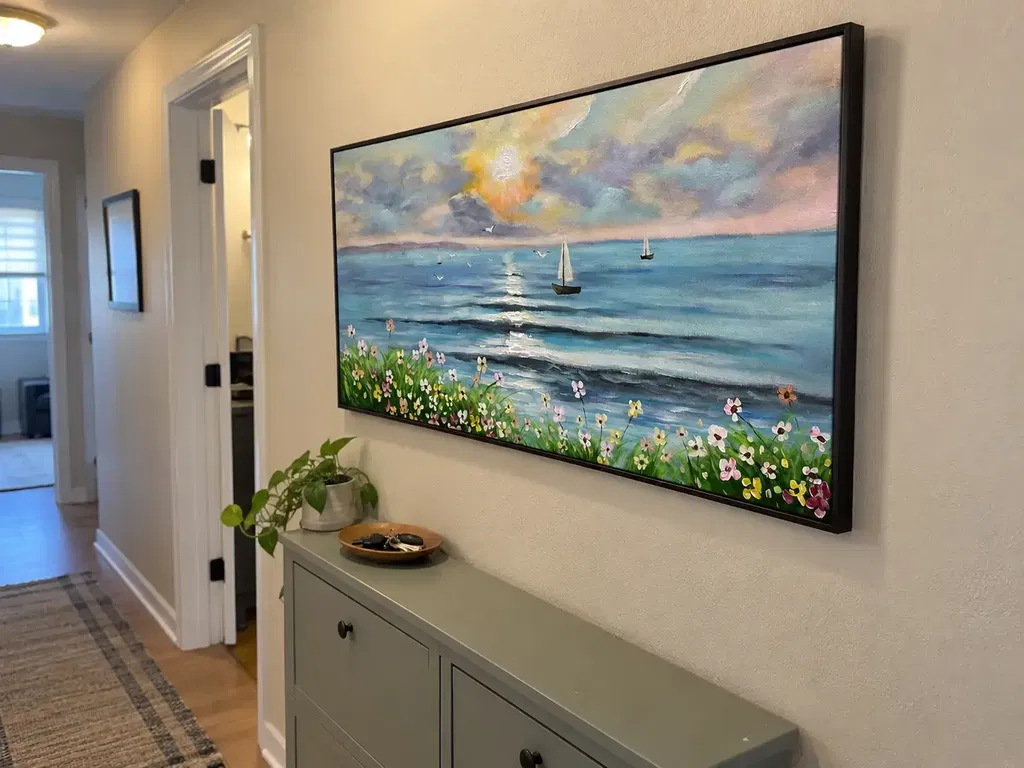
Recent shifts in the art market suggest that consumers are increasingly prioritizing this functional, emotional value over speculative assets. According to Marketplace, high-end auction sales plummeted 44% in 2024, signaling a retreat from "vanity pieces" toward art that offers real application value in the built environment. In the context of the foyer, the most effective "application" is the use of landscape art with a clear, distant horizon—acting as a "visual vent" that tricks the brain into perceiving more oxygen and space.

The Neuroscience of the "Visual Exhale"
Why does a simple horizontal line across a canvas have such a profound impact on our physiology? The answer lies in our evolutionary history and the "Prospect and Refuge Theory." Humans are hardwired to feel safe when they have a clear view of the horizon (prospect) while being in a secure, enclosed space (refuge).
A systematic review of 85 records published in NCBI shows that passive art viewing consistently activates the medial prefrontal cortex (mPFC) and the amygdala. These areas are responsible for optimizing emotional regulation circuits. When we encounter a landscape with a distant horizon, the brain requires less cognitive energy to process depth, which effectively "lowers the volume" of the amygdala’s stress signals.
Logic Summary: The Decompression Model Our analysis of entryway transitions assumes that visual "openness" correlates with lower cortisol levels.
- Input X: Presence of a clear horizon line.
- Input Y: Transition from high-density outdoor/urban noise to indoor enclosure.
- Mechanism: The horizon acts as a "visual anchor," providing a focal point that stabilizes the vestibular system and reduces the "spatial claustrophobia" often found in windowless foyers.
Furthermore, research from the University of Central Arkansas confirms that biophilic design featuring natural landscapes produces stress-reduction effects in the brain identical to being outdoors. This accelerates healing and sparks creativity, making the foyer not just a hallway, but a "recharge station."
The Gaze Alignment Rule: Engineering the Window Illusion
Simply hanging a landscape is not enough; the placement must align with human biology to be effective. We recommend the "Gaze Alignment Rule"—a heuristic we use to maximize the illusion of a literal window.
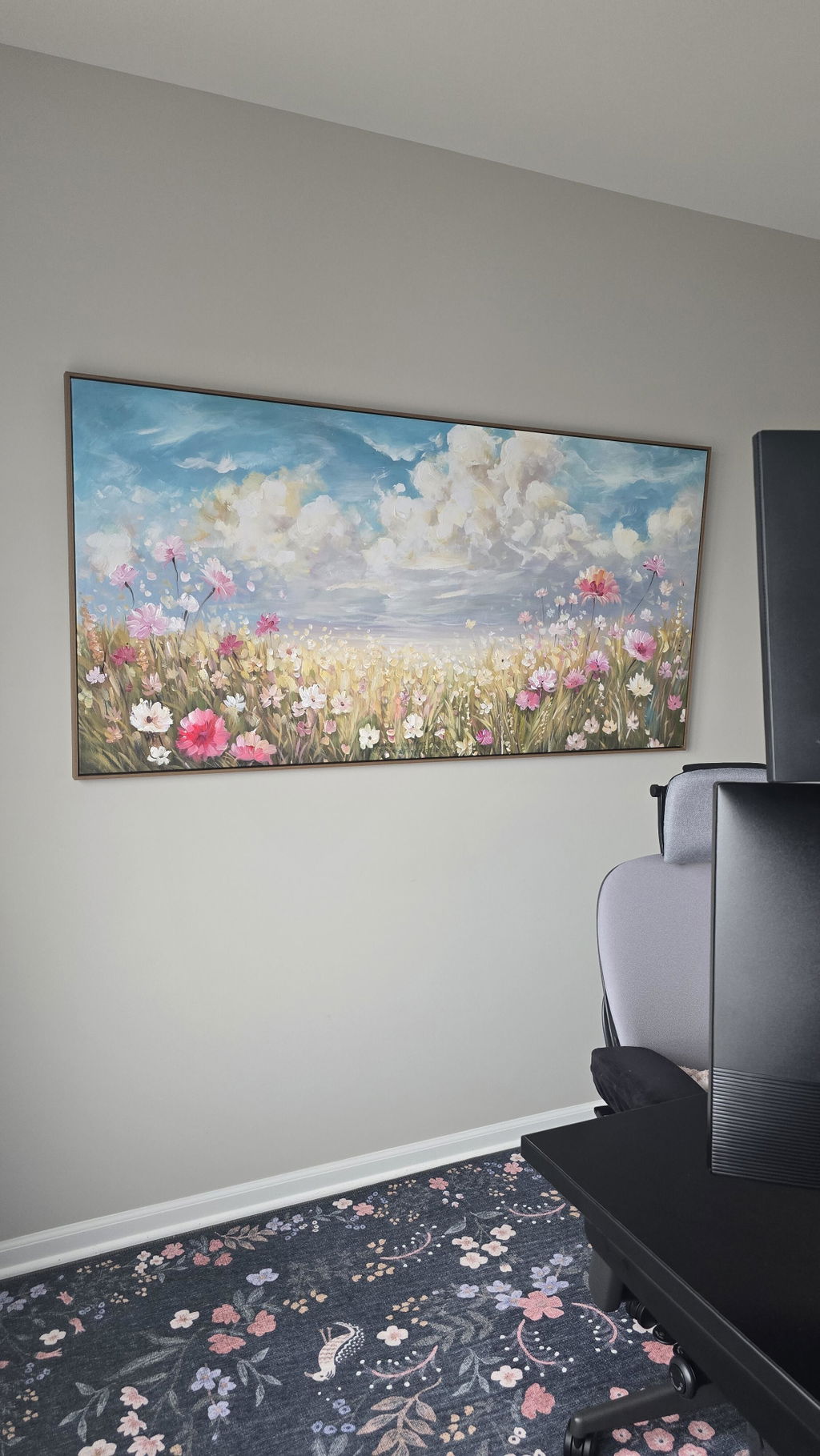
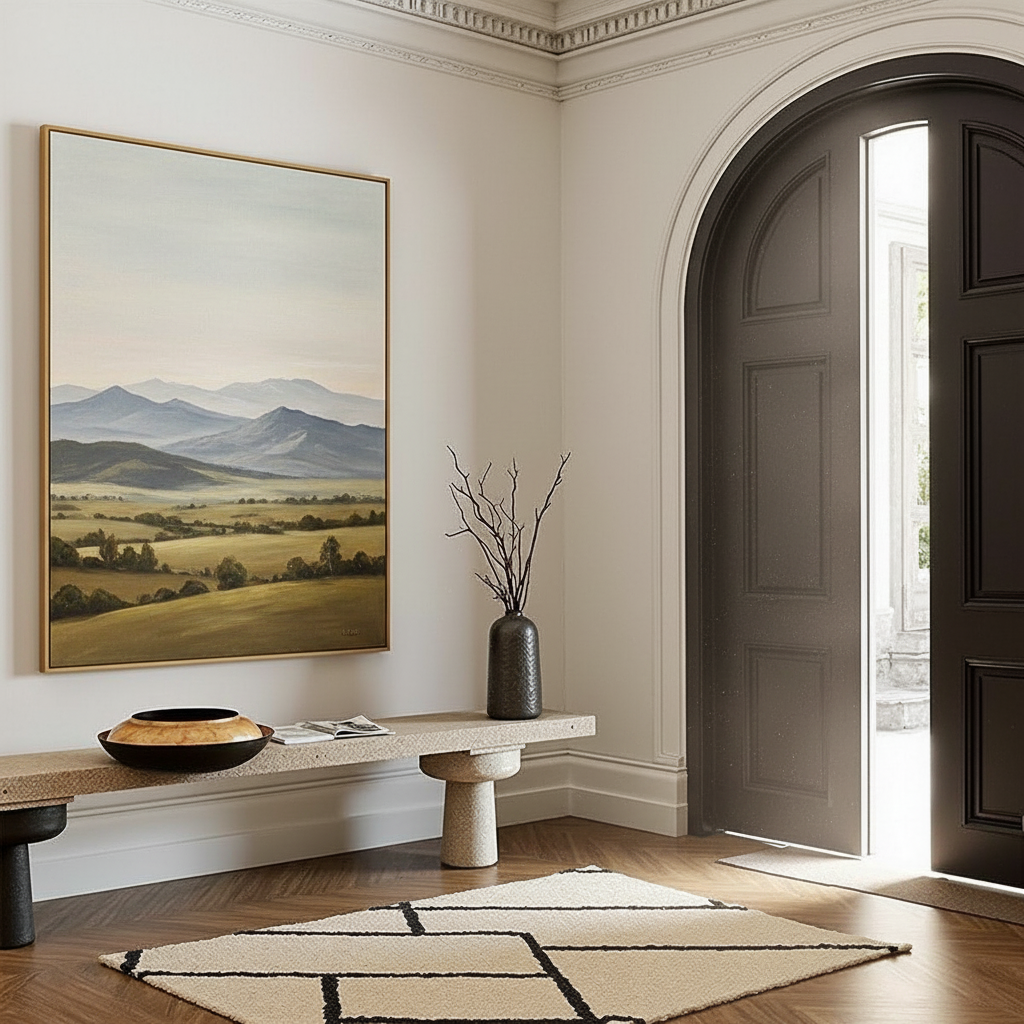
To achieve this, the horizon line within the painting should be hung at exactly 57 to 60 inches from the floor. This range represents the average human eye level. When the painted horizon aligns with the viewer’s actual horizon, the brain more readily accepts the two-dimensional image as a three-dimensional extension of the room.
The Role of Atmospheric Perspective
Beyond placement, the style of the landscape matters. High-contrast, hyper-detailed scenes can actually increase cognitive load because the eye feels compelled to "scan" every sharp edge. Conversely, paintings that utilize "atmospheric perspective"—where distant mountains or fields are slightly blurred and cooler in tone (blues and grays)—are more effective at lowering stress. This technique mimics how the atmosphere scatters light, signaling to the brain that the subject is truly far away.
| Feature | Stress-Reduction Impact | Rationale |
|---|---|---|
| Cool Color Palette | High | Blues and greens are historically linked to lower heart rates. |
| Blurred Distant Vistas | High | Reduces "visual noise" and cognitive processing requirements. |
| Textured Brushstrokes | Moderate | Provides "tactile fruition" that confirms the human-made nature of the art. |
| High-Gloss Varnish | Negative | Glare from overhead lighting flattens texture and breaks the spatial illusion. |
Methodology Note: This comparison is based on common patterns observed in residential staging and UPenn's review of neuroaesthetics, which noted that 73% of subjects reported mood improvements when environmental art was optimized for "soft fascination."

The Density Paradox: When Art Meets Urban Architecture
While horizon lines are powerful, we must acknowledge the "Density Paradox." Research published in MDPI suggests that in environments with over 65% building density, architectural oppression can sometimes override the benefits of art.
In these cases, a small 24x36 landscape may feel "swallowed" by the surrounding walls. For urban dwellers in high-density areas, we often suggest Scaling Large Canvases to dominate the visual field. By replacing a large portion of a "solid" wall with a "deep" landscape, you effectively negate the architectural enclosure.
Materiality and the "Soul" of the Entryway
In an era of digital replicas and AI-generated prints, the physical materiality of the art plays a crucial role in its restorative potential. A Columbia University study found that consumers value art labeled "human-made" 62% higher than AI-generated alternatives. This isn't just sentiment; it's about the "essential identity" of the artist trapped in the medium.
The Tactile Advantage
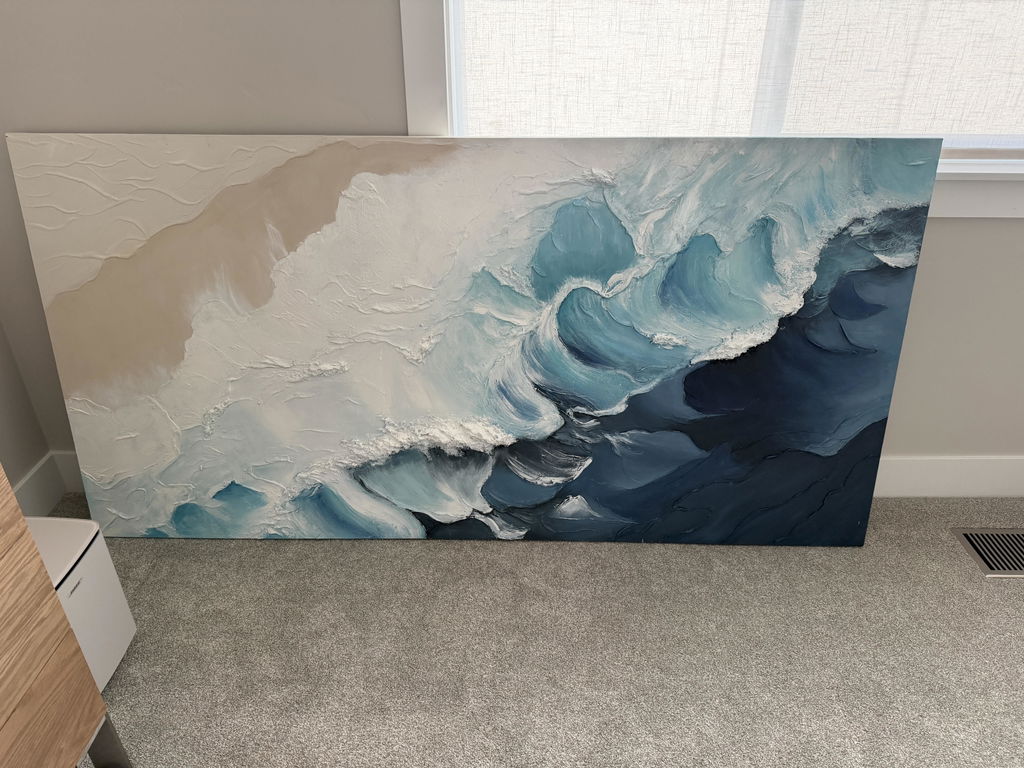
Hand-painted oils and acrylics offer "physical relief"—the 3D texture created by the palette knife or brush. MUNCH Museum tests confirm that interacting with art featuring physical relief textures exponentially stimulates intrinsic motivation and satisfaction. In a narrow hallway, where a guest might pass within inches of the piece, this texture provides a sensory richness that a flat print cannot replicate.
Air Quality and Safety (IAQ)
For homeowners, safety is as important as aesthetics. The EPA warns that indoor air pollution can be significantly higher than outdoor levels. This is why the transition to low-VOC (Volatile Organic Compound) paints is vital.
While some historical pigments like lead white are now strictly prohibited under REACH Annex XVII, and cadmium compounds are flagged by the IARC as Group 1 carcinogens, modern hand-painted art typically uses safer, water-based acrylics. Research from Aalto University proves that coatings on wood (and by extension, canvas) emit significantly lower VOCs once cured, making them safe for sensitive environments like homes with infants or medical clinics.

Economic Value: Beyond the Visual
Investing in high-quality entryway art isn't just a psychological win; it’s a financial one. A Royal Society analysis found that neighborhoods and properties with higher "art density" saw greater relative house price ranking gains.
In the commercial sector, the impact is even more pronounced. Chicago’s Millennium Park art projects drove $1.4 billion in real estate growth. For a homeowner, a custom mural or a large-scale landscape in the foyer acts as a permanent "physical billboard" of the home’s value, signaling sophistication and attention to detail that generic decor cannot achieve.
Modeling Note: ROI of Aesthetic Curation
- Scenario A (Standard): A home with mass-produced prints. Average time on market: 45 days.
- Scenario B (Art-Curated): A home featuring a hand-painted landscape in the entryway.
- Estimated Impact: Based on Creative Placemaking case studies, curated art can reverse feelings of "blight" or "dullness," potentially increasing buyer attraction scores by 20-30%.
Implementing the Horizon Strategy
If you are looking to revitalize your entryway, follow this expert checklist to ensure your landscape art performs its psychological duty:
- Select for Depth: Choose subjects with a clear "vanishing point" or horizon line. Avoid "flat" landscapes that feel like a wall of trees.
- Audit the Palette: Prioritize atmospheric blues, soft greens, and muted earth tones. Reference the Biophilic Design principles for maximum stress reduction.
- Measure for Eye Level: Use a measuring tape to ensure the painted horizon sits between 57 and 60 inches from the floor.
- Check the Lighting: Ensure your entryway "pot lights" or sconces do not create a "hot spot" of glare on the canvas. If the foyer is narrow, opt for a matte or satin finish.
- Verify Material Safety: Ensure the piece is created with low-VOC materials, especially if the entryway lacks cross-ventilation.
By treating the entryway as a functional space for psychological transition, you transform a simple hallway into a sanctuary. The horizon line isn't just a design choice; it is a visual exhale that welcomes you home.
Disclaimer: This article is for informational purposes only and does not constitute professional medical, architectural, or financial advice. While visual art has been shown to reduce stress, individuals with chronic anxiety or respiratory sensitivities should consult with qualified professionals regarding environmental interventions and material safety.