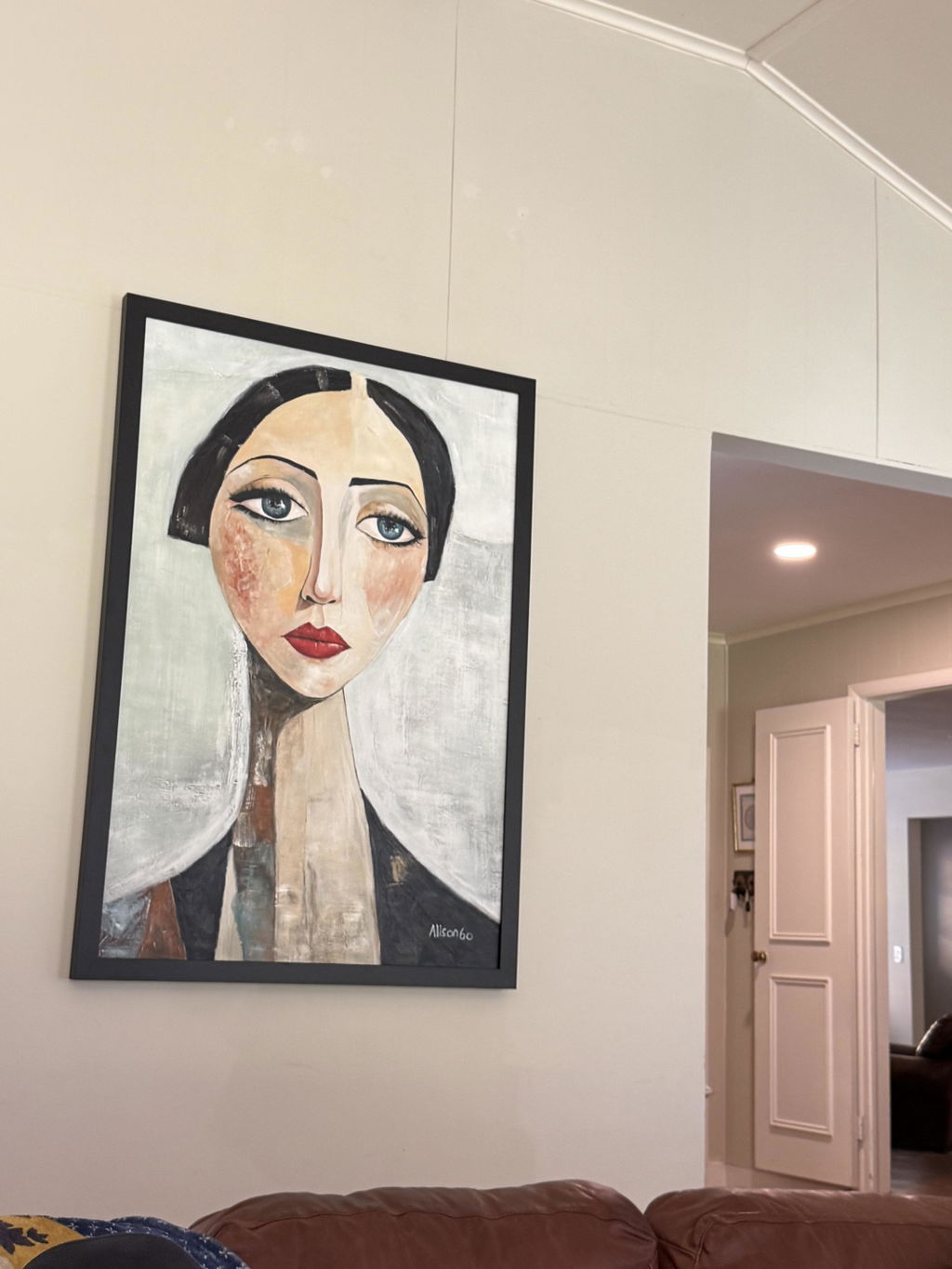
You can treat Japanese imperfection art with real wabi-sabi painting texture as authentic-looking when several surface cues line up: varied relief, non-repeating tool marks, changing light response, and a listing that names its medium and process. One rough patch or the phrase "wabi-sabi" alone does not prove a piece is handmade.
When that pattern holds and the listing backs it up, you can buy with reasonable confidence. When a close-up, angled view, or material statement is missing, investigate further before adding the piece to your cart.
Key Takeaways
- Wabi-sabi is an aesthetic look, not a production standard, so the label alone never confirms handmade origin.
- A believable painting usually shows varied relief, shifting tool direction, and changing light response across several areas, not just one spot.
- A close-up can support an impasto reading, but a plaster claim needs an explicit medium and process statement from the seller.
- Repeated ridge spacing, identical strokes, or one flat sheen regardless of light angle are reasons for caution, not confirmation.
- Classify each listing as buy, investigate further, or do not rely on the claim based on how well the images and the written description agree.
What Authentic-Looking Wabi-Sabi Texture Can—and Cannot—Prove
Wabi-sabi texture in a contemporary painting is a description of intended look, not a verified production method. Treat it as one input alongside close-up images and a stated medium, not as a stand-in for either.
Wabi-Sabi is an Aesthetic Description, Not a Making Method
Wabi and sabi are related but distinct ideas in Japanese aesthetics: wabi points to a subdued, humble kind of beauty, while sabi points to the patina and quiet dignity that comes with age and wear, as detailed in this university analysis of wabi-sabi. The philosophical overview of Japanese aesthetics frames these as long-standing philosophical concepts tied to imperfection, restraint, and incompleteness, not a checklist for judging a modern painting's construction. A contemporary listing that uses "wabi-sabi" is borrowing that visual language; it is not certifying a technique or a maker.
The Authenticity Rule: Look for a Pattern
Rely on a cluster of cues rather than one detail, then match that pattern to one of three outcomes.
- Buy: several areas show varied relief, shifting tool marks, and changing light response, and the listing states a medium and technique that match what you see.
- Investigate further: the surface looks plausible, but you cannot see enough detail, or the listing does not say what the piece is made of.
- Do not rely on the claim: the surface looks flat or repeats the same pattern everywhere, and the description does not explain the discrepancy.
Read the Surface: Relief, Tool Movement, Edges, and Light
Zoom in on at least three separate areas of the painting instead of judging the whole piece from one glance. Compare how relief, tool direction, and light behave across those areas rather than searching for a single "correct" mark.
Relief and Tool Movement
Look at how raised paint sits against flatter background areas, and note whether the direction of any ridges changes from spot to spot.

- Height and density that shift across the canvas may be consistent with hand application rather than a printed or molded surface.
- Ridges that follow plausible, varying movement are consistent with impasto-style work; ridges repeating with the same spacing and shape in every area are worth a second look.
- Treat any of these as "consistent with" impasto, not proof of it or of a specific artist.
Edges, Transitions, and Light
Check where texture starts, stops, overlaps, or thins out, since a hand-applied surface rarely stays uniform at its borders.
- Uneven fading or overlapping at the edges of raised areas can support a hand-applied read; hard, identical borders in every section warrant more caution.
- Angled light should create shifting highlights and shadows as the viewing angle changes; a single flat sheen regardless of angle is a weaker signal.
- Exploring impasto shadows and depth walks through how light and raised paint interact if you want more detail on this specific cue.
Troweled Plaster vs. Impasto Knife Marks
A close-up may support an impasto reading more directly than a plaster reading, because plaster's visual signature is much less distinct in a photograph. Treat any plaster claim as unresolved until the listing names the material outright.
What an Impasto Claim Can Mean
Impasto describes paint applied thickly enough to leave raised, opaque masses, often worked with a loaded brush or a palette knife. When a close-up shows raised paint deposits or directional ridges that vary across the canvas, that is consistent with an impasto technique. It still does not, by itself, confirm who painted the work or exactly what tool made each mark; our review of impasto vs palette knife painting explains how the technique and the tool differ.
Why Plaster Needs Disclosure
A rough, troweled-looking surface in a photo does not establish that the material is plaster rather than heavily built-up paint or another compound. Relief alone cannot make that distinction from an image. Before trusting a plaster claim, look for an explicit statement naming plaster, a plaster-like compound, or paint as the medium; without that line, treat the surface as an open question rather than a confirmed plaster texture.
Handmade-Looking Texture vs. Repeated or Simulated Texture
The table below lines up what tends to support a handmade-looking read against what should make you pause, plus the action each pattern points to.
| Inspection area | May support handmade-looking variation | May warrant caution | Next buyer action |
|---|---|---|---|
| Relief variation | Height and density change across areas | Same bump size and spacing throughout | Look at more close-ups |
| Tool movement | Direction shifts, occasional overlaps | Identical strokes repeated in a grid | Ask for angled detail shots |
| Edges and transitions | Texture fades or thins unevenly | Sharp, identical borders throughout | Compare several edges |
| Light response | Highlights and shadows shift with angle | One flat sheen regardless of angle | Request an angled-light photo |
| Listing medium/process disclosure | Named medium, technique, and process | No mention of medium or technique | Ask the seller directly |
A listing that clears most rows supports moving forward; one that is silent on several rows, especially the medium and process row, is a reason to investigate before you rely on the texture claim.
How to Evaluate Texture in an Online Listing
Work through the images and the written description in order, from the whole composition down to the specific claim.
A Five-Step Online Inspection
- Look at the full composition first to see whether texture appears throughout the piece or only in one hero close-up.
- Study several macro detail shots, not just one, and compare relief and tool marks between them.
- Look for a side or angled-light view; a straight-on shot can hide real relief entirely.
- Read the technique, medium, and production wording as separate claims rather than one blended description.
- If any of that is missing, send one specific request: a close-up, an angled-light photo, and a plain statement of medium and process.
Use Product Pages as Evidence Records, Not Proof by Label
A product listing can separate style, technique, medium, and production claims into distinct fields, which makes comparison easier. For example, evaluating ETERNAL HORIZONS: Textured Wabi Sabi Mountain Landscape Painting shows how a listing can state style, medium, and technique clearly. Treat those as the seller's stated facts to weigh against the photos, not as an independent authentication of the piece.

Final Inspection Checklist: Buy, Investigate Further, or Do Not Rely on the Claim
Use this only as your last check before you decide; it does not reopen the technique explanations above.
- Buy: multiple close-ups and an angled or side view are available, the medium and technique are named, and nothing in the images contradicts the description.
- Investigate further: relief looks plausible, but a close-up, angled view, or medium/process statement is missing. Send the seller a specific request before deciding.
- Do not rely on the claim: the image looks flat or repeats identically across the canvas, or the listing contradicts what you can see. Photos alone still cannot confirm exact material or authorship, so treat any remaining gap as unresolved rather than assumed.
FAQs
Does a wabi-sabi label mean a painting is handmade?
No. "Wabi-sabi" describes an intended aesthetic direction, drawing on ideas of restraint and patina, rather than a certified production method. Check the medium, technique, and process statements on the listing separately before assuming the piece was hand-painted.
Can online photos prove whether texture is plaster or impasto?
Not on their own. Images can show apparent relief and knife-like movement, which may be consistent with impasto, but they cannot independently confirm plaster, paint medium, or who made the piece. Ask the seller for an explicit material and process description if the listing does not already include one.
What should I do if a listing shows only a front-facing image?
Treat that as incomplete evidence rather than a finished decision. A straight-on shot can hide real relief, so request a close-up and an angled or side-light view. If the seller cannot provide one, classify the listing as investigate further instead of verified.