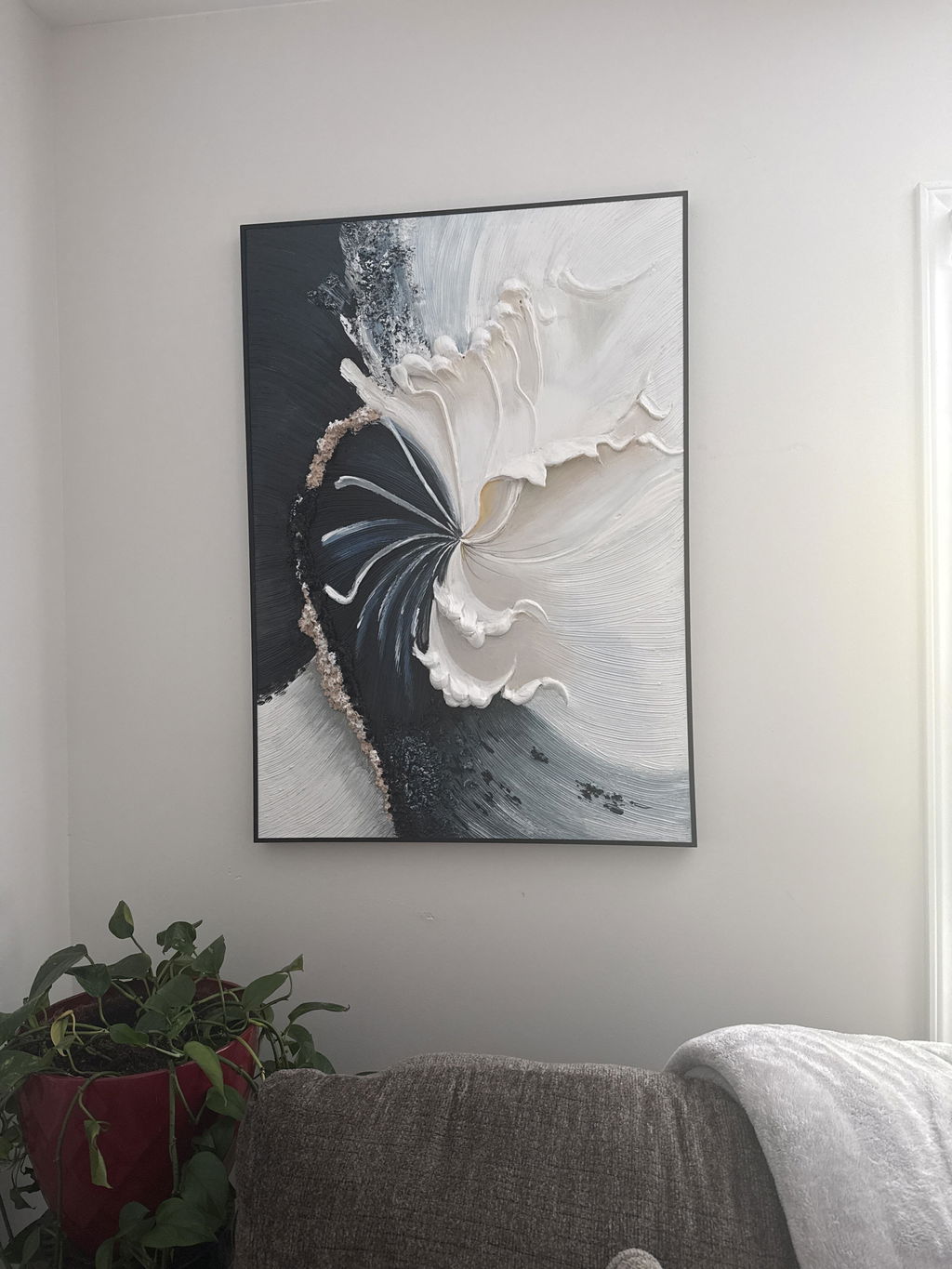
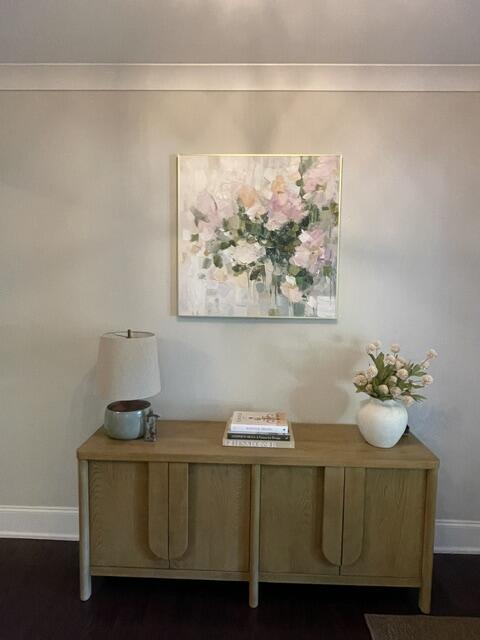
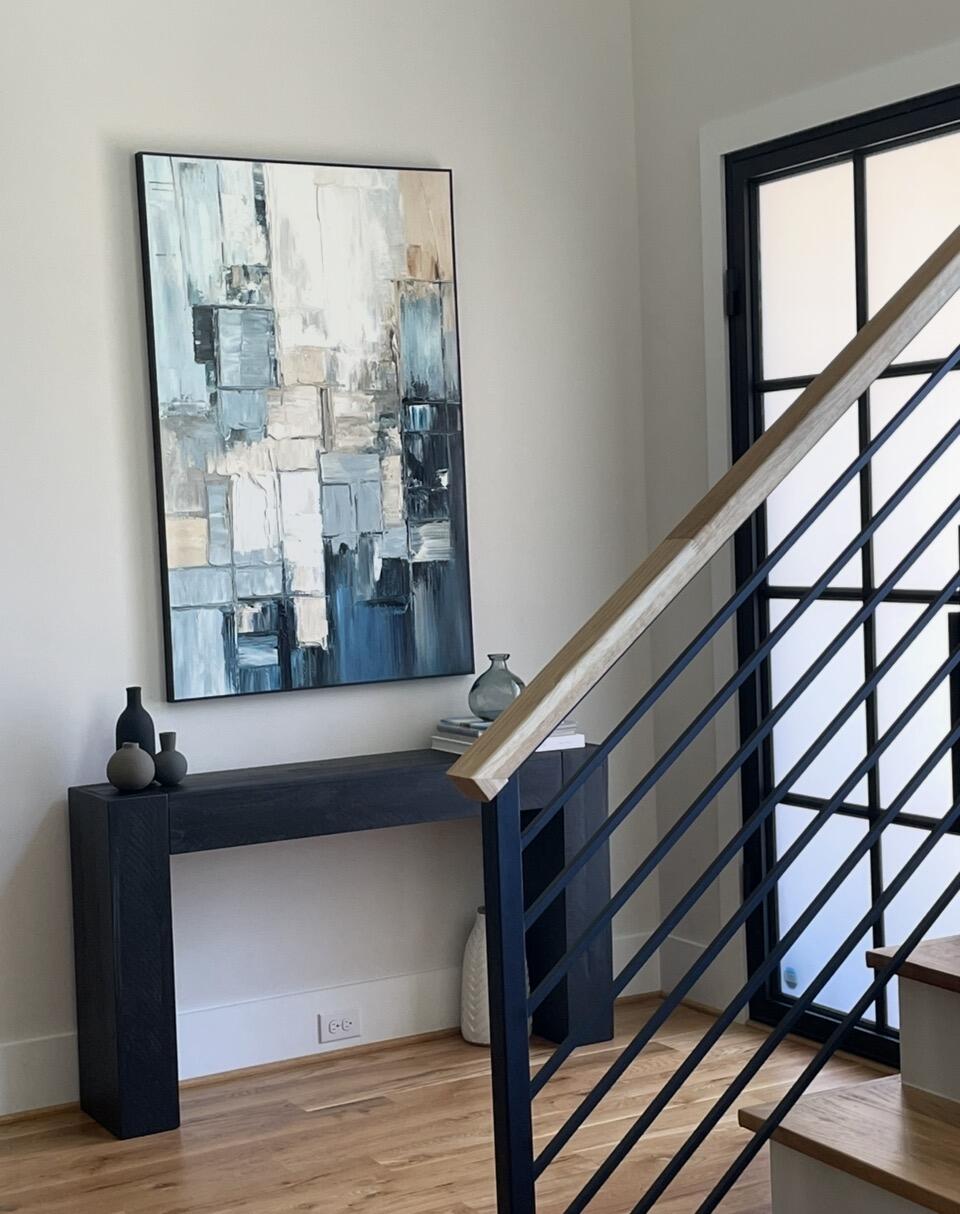
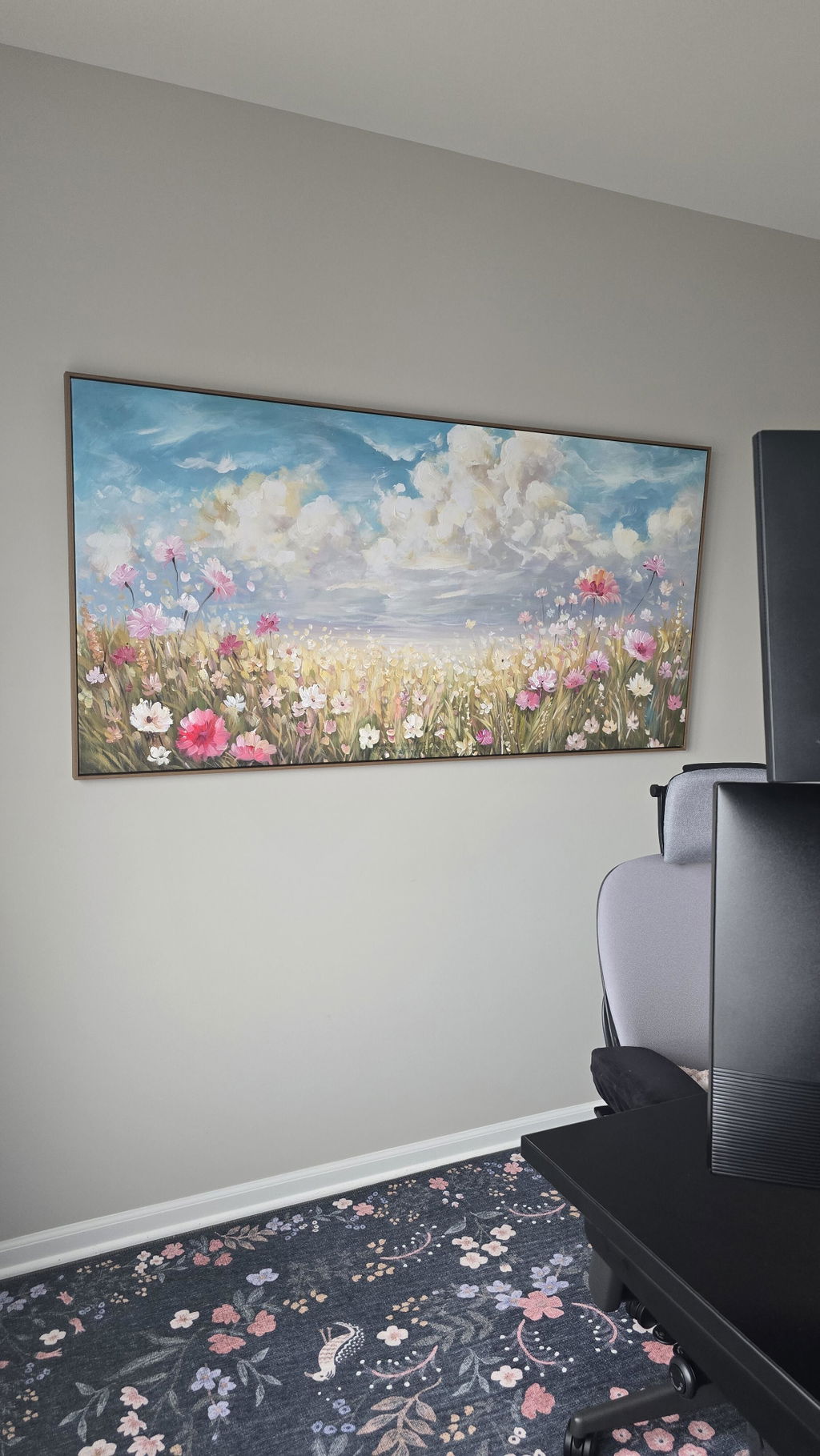
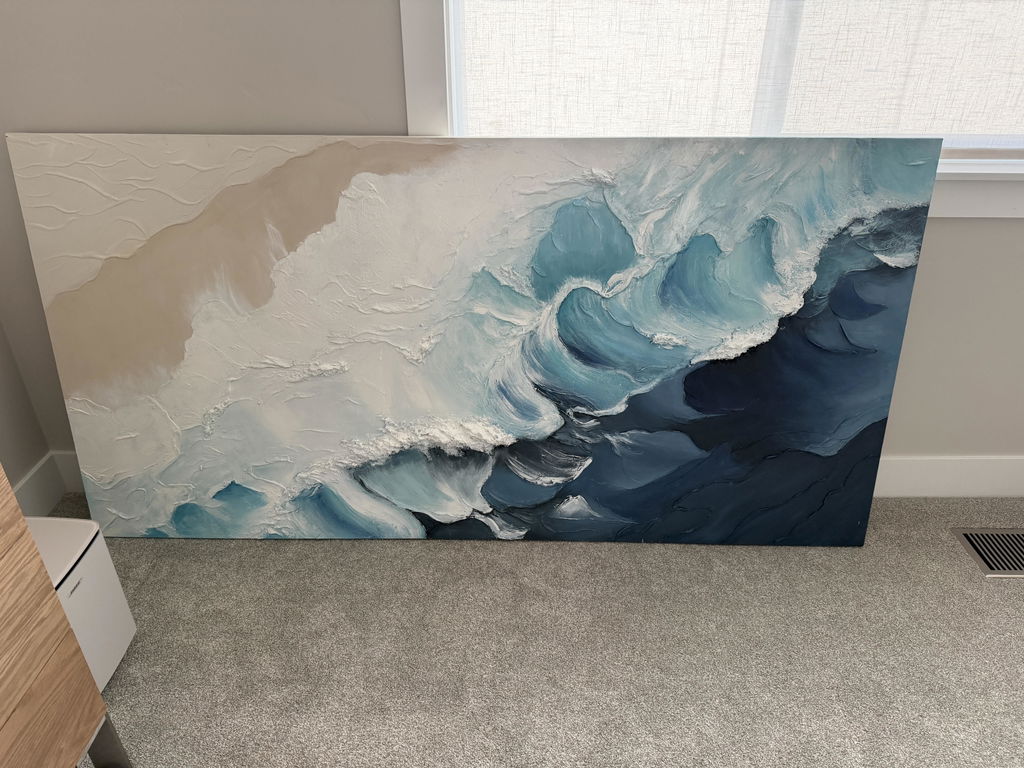
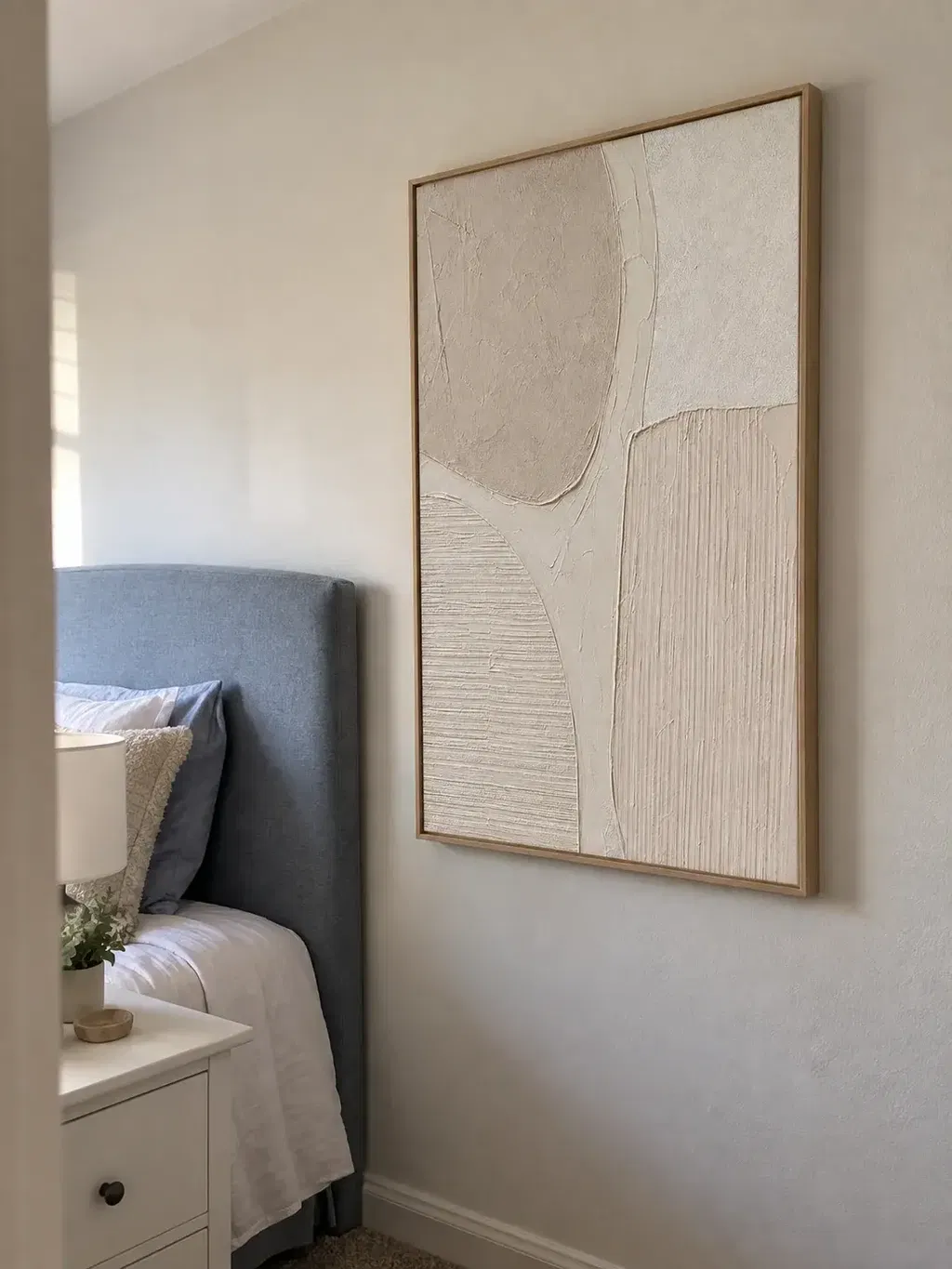
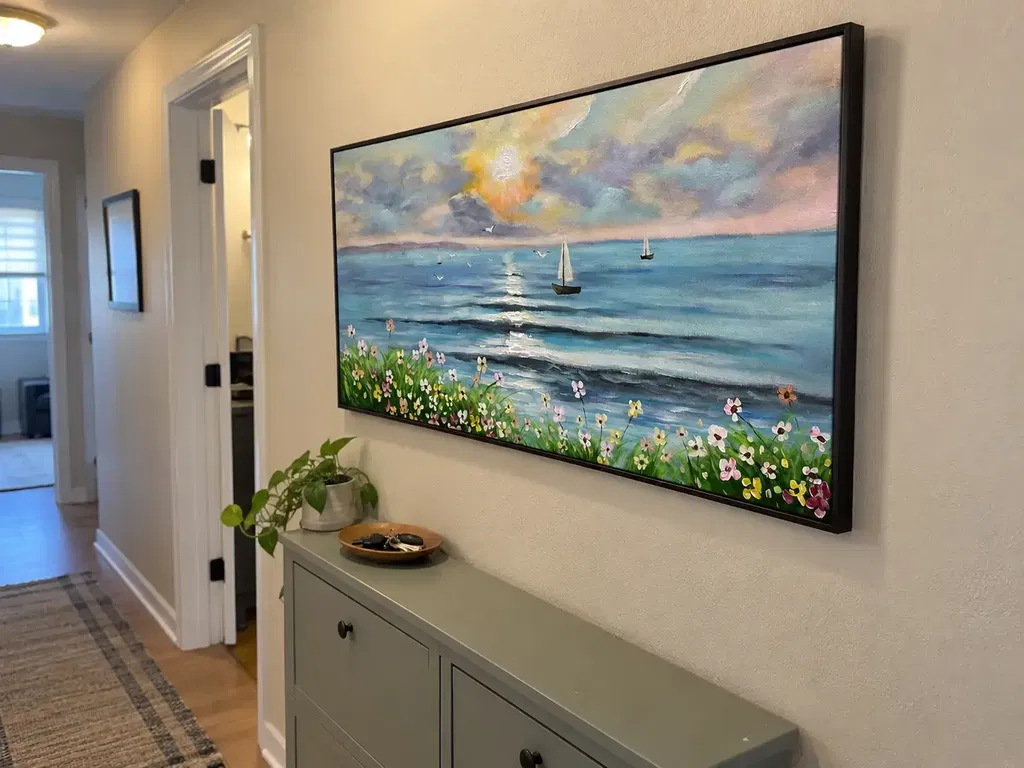
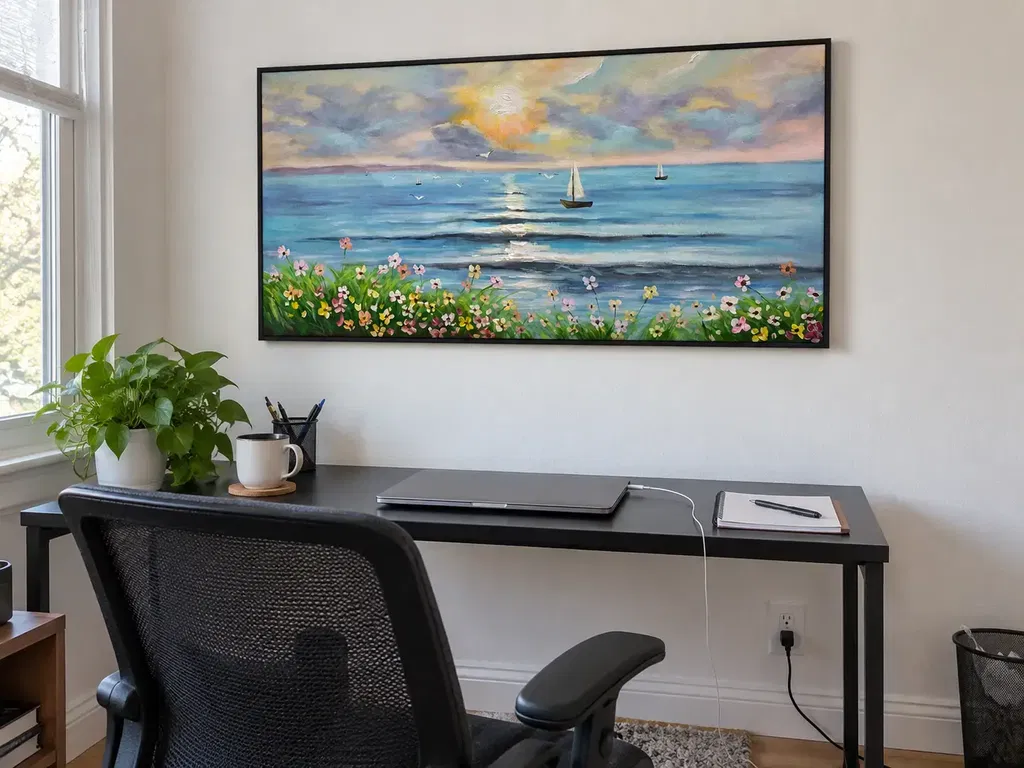
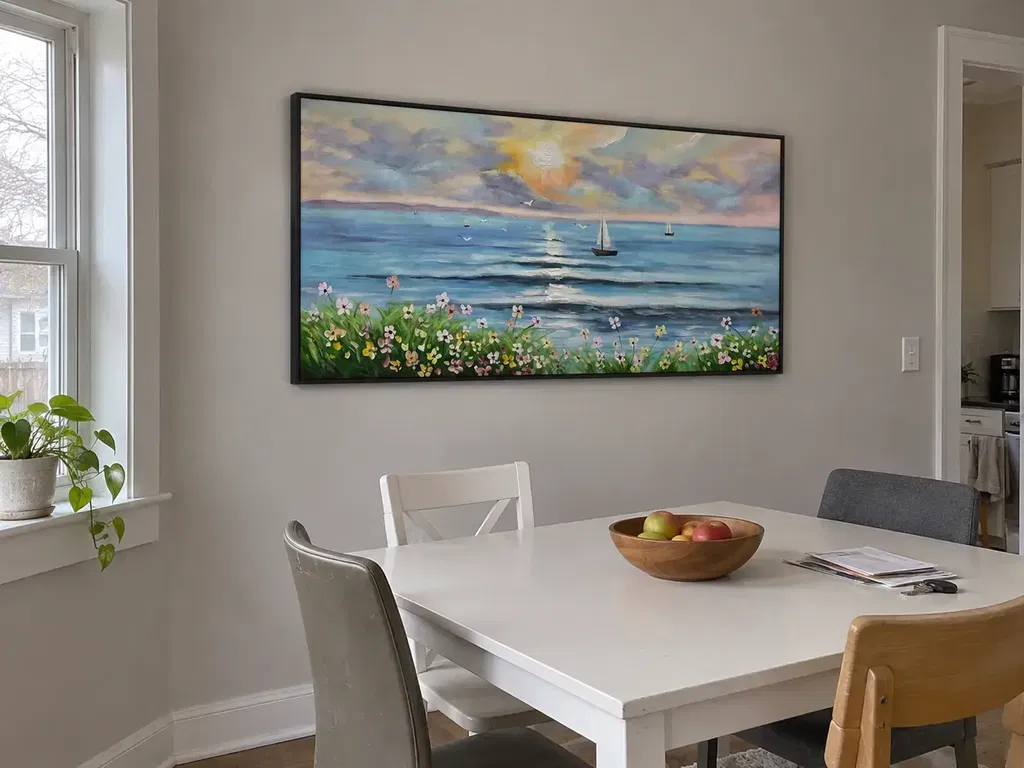
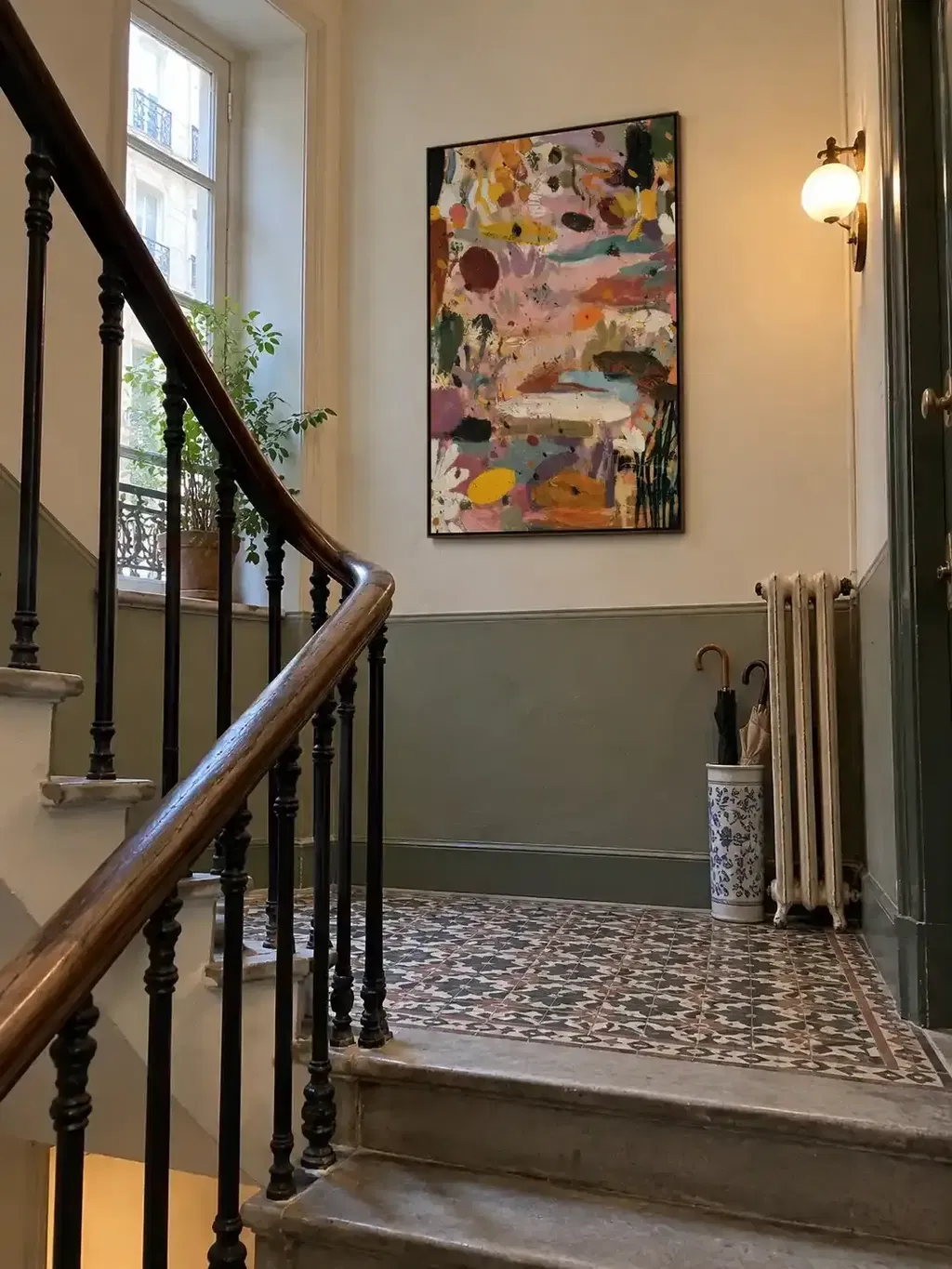
Humidity and temperature guidelines for textured oil paintings are less about chasing a perfect number and more about avoiding swings, condensation, and hot or damp spots. For heavily textured or impasto work, textured wall art humidity control matters because the canvas support and paint layer react to changes over time, not because a normal living room is automatically risky.
Why Humidity Matters Most
Moisture matters because the canvas support can expand and contract as conditions change, and that movement transfers stress to the paint film. The Canadian Conservation Institute notes that humidity fluctuations can move the support and stress the paint layer, while the MITRA conservation archive explains that thick paint layers are more vulnerable when the support shifts.
That is especially relevant for textured oil paintings, because the raised surface gives the eye more to notice and the structure more ways to show strain. Moisture can also affect nearby backing materials and the room around the painting, so the concern is not only the visible paint surface. In practice, the issue is cumulative: repeated damp-to-dry or warm-to-cool swings matter more than a single ordinary day indoors.

If you already care for heavily textured impasto art, keep the focus on stable conditions and gentle handling rather than trying to "fix" the artwork itself.
Safe Indoor Conditions to Aim For
A useful reference point for paintings is about 70°F and 50% RH, but homeowners do not need to treat that as the only acceptable setup. A more practical display band from the Western Australian Museum is roughly 59-77°F and 45-55% relative humidity, which is a better planning guide for typical homes.
Humidity Targets and Stability
For most U.S. homes, moderate humidity with small daily changes is the real goal. A room that sits near the middle of a reasonable band is usually better than one that reaches the same average through big spikes and drops. If a room regularly feels muggy, fogs on windows, or swings hard between heater-dry and summer-humid, the painting is under more stress even if the average looks fine. That is why textured wall art humidity control is about consistency first.
Temperature Range and Daily Swings
Temperature matters most when it changes quickly or creates local hot spots. Vents, radiators, fireplaces, and sun-baked walls can punish one side of a painting while the rest of the room stays comfortable. For that reason, a moderate room average is helpful, but steady conditions are more important than trying to hit one exact number every day.
Where in the Home Placement Is Safest
Interior walls are usually a safer choice than bathrooms, kitchens, laundry rooms, unfinished basements, or exterior walls that run colder and damper. Those spaces are more likely to create moisture pockets or repeat exposure to steam and condensation. If you need a follow-up on stabilizing canvas from the back side, archival backing boards can be a useful next read.
Signs Moisture or Heat Is Stressing the Surface
Watch for changes that are new, recurring, or tied to room conditions rather than to normal age. The warning signs below do not prove a serious failure on their own, but they do tell you the environment deserves attention.
- Dulling or uneven sheen: may point to moisture stress, residue, or surface change in the finish.
- Tackiness or a sticky feel: can suggest the piece is not happy in a humid or poorly ventilated room.
- Rippling or visible movement near the stretcher bars: may mean the canvas is reacting to changing moisture levels.
- Edge lifting or separation-looking changes: can signal stress where the paint film meets the support.
- Musty odor or visible spotting nearby: can be a sign that the room, backing, or wall area has a mold problem.
The AIC discussion on relative humidity is useful here because it highlights how higher humidity levels raise mold and stability risk. As a practical boundary, if you are seeing repeated tackiness, condensation, or anything that looks like active mold, stop treating it as a simple decor issue and start treating it as a preservation problem.

Practical Ways to Protect It at Home
-
Choose the steadiest room you have. A living room or bedroom with normal HVAC control is usually easier on the painting than a room that gets steam, cooking heat, or repeated moisture.
-
Keep it off direct vents and hot surfaces. Even if the room average is fine, a heater blast or sunlit wall can create local stress that the rest of the room does not show.
-
Avoid damp or poorly ventilated spaces. Bathrooms, laundry rooms, and basements are the clearest not-a-fit choices unless the space is unusually well controlled.
-
Check the room during seasonal swings. Summer humidity and winter furnace heat can both push a space outside the comfort zone without you noticing day to day.
-
Handle the painting as if the texture is fragile. Thick impasto can catch on fingers, packaging, and walls. When you move or store it, support the frame evenly and avoid pressing on raised areas.
-
Keep the wall area clean and dry. A spill, leak, or condensation patch near the painting matters more than most owners expect because moisture can travel into the surrounding materials.
-
Use gentle documentation. A quick photo every few months makes it easier to tell whether a change is new, seasonal, or just normal aging.
For owners who want a sturdier display path, our textured wall art collection is a practical place to browse styles with the same kind of dimensional surface this guide is protecting.
When to Get Extra Help
If condensation keeps coming back, the piece smells musty, you see visible mold, or the surface keeps changing in the same area, it is time to bring in a conservator or framing professional. That advice matters even more for valuable or sentimental work, because the cost of waiting is usually higher than the cost of asking early. Take a few photos, note the room conditions, and record when the issue appears so the pattern is easier to assess.
If you are unsure whether the problem is environmental or structural, start with photos and room notes, then ask for a conservation review before you try any fix on the surface.
If your room keeps drifting too damp, too hot, or too variable, move the painting first and then reassess the space. That is the simplest way to protect textured wall art humidity conditions before the surface starts to show stress.
Final Takeaway
Humidity and temperature guidelines for textured oil paintings come down to stability, not perfection. If your room stays moderate, dry enough, and free of repeated spikes, you are already doing most of the right things. If the painting lives near steam, vents, or condensation, move it first and evaluate later. For persistent surface changes, document the room and contact a conservator before the problem has time to grow.
FAQs
Does Humidity Damage Textured Paintings?
Yes, humidity can contribute to long-term damage when it swings repeatedly or stays too high for too long. The bigger clue is not one damp afternoon, but a room that regularly traps moisture, shows condensation, or makes the surface feel tacky. If that happens, move the painting to a steadier room first.
What Temperature Is Safe for Oil Art?
Moderate room temperature is usually the safer choice, especially when it stays steady instead of cycling up and down around heaters or sunny windows. A practical way to judge it is whether the room feels comfortable for people without sharp hot or cold spots near the artwork.
Can I Hang Textured Wall Art in a Bathroom?
Usually not unless the bathroom is unusually dry, ventilated, and stable. Steam, splashes, and repeated condensation are the main reasons bathrooms are a higher-risk choice. If that room is your only option, treat it as a caution zone and check the surface often for tackiness or change.
How Do I Protect a Textured Oil Painting From Humidity?
Start with the room, not the art. Put the piece on an interior wall, keep it away from vents and damp rooms, and watch what happens during seasonal HVAC changes. If the environment is already unstable, moving the painting is usually smarter than trying to compensate after the fact.
When Should I Call a Conservator About Surface Changes?
Call sooner if the change is repeated, spreading, or paired with mold, condensation, or a musty odor. A single small mark can be normal aging, but active tackiness, rippling, or surface movement that keeps returning is the point where expert help is worth it.