
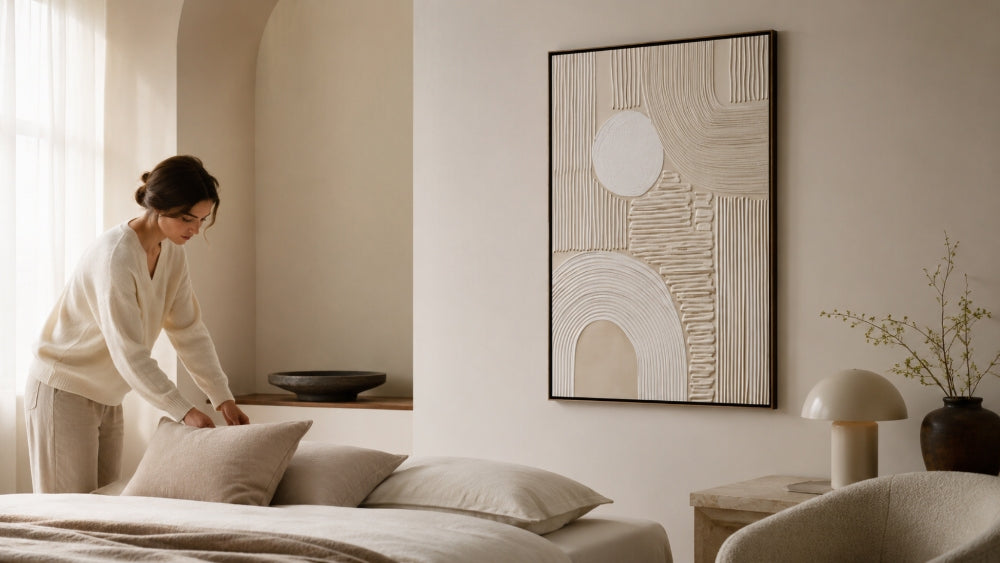
To maintain the longevity and vibrancy of your art collection, you should dust your canvas paintings every three to six months. In high-traffic environments or urban areas with significant air pollution, a more frequent cycle of every one to two months is recommended. Regular visual inspections are equally critical and should be performed alongside each cleaning to detect early signs of structural decay, moisture damage, or pest activity.
Owning fine art is a stewardship that extends beyond simple display. Whether you own a classic oil paint on canvas or a modern piece of abstract art, the surface of the work is constantly interacting with its environment. Dust is more than a cosmetic nuisance; it is a collection of microscopic particles, including skin cells, fabric fibers, and environmental pollutants that can become chemically bonded to the paint film over time if left unaddressed.
Recommended Maintenance Frequency for Canvas Art
The standard interval for dusting most residential artwork is twice a year. However, this is not a one-size-fits-all rule. The specific needs of your painting depend heavily on the room's "micro-climate." For example, a painting hung in a formal dining room that is rarely used will accumulate dust much slower than one positioned in an entryway or near an HVAC vent.
Environmental factors such as proximity to a fireplace, high ceilings that trap rising particulates, or even the presence of pets can accelerate the need for care. According to the Canadian Conservation Institute, keeping unprotected paintings away from air intakes and cooking grease is essential for preventing the buildup of difficult-to-remove residues. If your artwork is located in a kitchen or a high-traffic hallway, you should inspect it monthly.
Dusting Frequency by Environment
| Room Environment | Recommended Frequency | Primary Concerns |
|---|---|---|
| Low Traffic (Bedroom, Study) | Every 6 Months | General household dust |
| High Traffic (Hallway, Entry) | Every 2 Months | Airborne debris, vibration |
| Urban/Industrial Areas | Every 1-2 Months | Soot, pollutants, metallic dust |
| Near Vents/Windows | Every 1-2 Months | Pollen, moisture, draft-driven dust |
Essential Tools for Safe Art Cleaning
When cleaning fine art, the quality of your tools is paramount. Using the wrong material can lead to "abrasion," which the Smithsonian Museum Conservation Institute (MCI) defines as the loss of paint or varnish through rubbing. To avoid this, only 100% natural-hair brushes should be used.
Natural Hair Brushes
Badger-hair or high-quality sable brushes are the gold standard for art conservation. These fibers are incredibly soft and flexible, allowing them to lift dust without exerting mechanical pressure on the paint layer. If you are looking for a more accessible option, a clean, high-end makeup brush made from natural hair can suffice, provided it has never been used for cosmetics.
Risks of Feather Dusters
You must avoid traditional feather dusters at all costs. While they appear soft, the central quills of the feathers are stiff and sharp. As you swipe across the canvas, these quills can create micro-scratches on the surface of the paint, particularly on unvarnished or "impasto" (thickly textured) works. Furthermore, feathers often redistribute dust rather than lifting it, and they can catch on delicate flakes of paint, causing them to detach.
How to Properly Dust Oil and Acrylic Canvases

Cleaning a painting requires a steady hand and a methodical approach. Before you begin, ensure the painting is securely mounted or placed on a stable, clean surface. Wash and dry your hands thoroughly to remove natural oils, or wear lint-free cotton gloves as recommended by the CCI.
- Preparation: Position a strong light source at a side angle to highlight the dust layers and any surface irregularities.
- Top-to-Bottom Motion: Always start at the top of the painting. Use very light, short strokes, moving horizontally across the canvas.
- Brush Angle: Hold the brush at a 45-degree angle to the surface. This allows the tips of the hairs to flick the dust away rather than pushing it into the weave of the canvas.
- Textured Areas: If the piece has heavy texture, use a vertical dabbing motion with the brush tips to lift dust from the crevices.
WARNING: Never use water, damp cloths, or household cleaning sprays. Moisture can cause the canvas fibers to swell and contract, leading to cracking or the removal of water-sensitive additives. The Smithsonian MCI warns that even mild organic solvents can soften the surface of certain paints, leading to irreversible damage.
Critical Inspection Points for Canvas Paintings
A visual inspection is your first line of defense against permanent damage. While you may be focused on the beauty of the large landscape paintings or the intricate details of a portrait, you must look for structural health. Conduct these checks under bright, natural light whenever possible.
- Canvas Tension: Look for sagging or ripples in the corners. A loose canvas is more susceptible to cracking because the paint layer is forced to flex with the moving support.
- Stretcher Bar Health: Inspect the wooden frame for signs of warping. If the wood bows, it puts uneven stress on the canvas. The AICCM notes that humidity changes make these supports expand and contract, which is a primary cause of cracking.
- Surface Stability: Look for "cupping" (where the edges of paint cracks curl upward) or flaking. If you see any loose fragments, stop cleaning immediately.
Signs of Mold and Insect Infestation on Art Backings
The back of a painting is often neglected, but it is where the most serious threats—mold and insects—typically begin. If you buy canvas paintings online or from estate sales, a thorough rear inspection is mandatory.
- Frass: This is a fine, powdery substance that looks like sawdust. It indicates that wood-boring beetles or other pests may be attacking the stretcher bars or the canvas.
- Mold and Foxing: Look for fuzzy white, grey, or black patches. On the reverse side, you may also see brown "foxing" spots, which are often caused by high humidity.
- The Benefit of Backing Boards: To mitigate these risks, the Canadian Conservation Institute recommends installing a protective backing board.
Varnished vs Unvarnished Canvas Care

Understanding the surface of your art is vital for safe maintenance. Many modern acrylic works are left unvarnished, whereas traditional oil paintings are almost always varnished for protection.
Unvarnished acrylics are particularly challenging because the polymer surface can be slightly "tacky" at room temperature. Research from the Getty Conservation Institute suggests that the mechanical properties of these paints depend heavily on temperature and humidity.
When to Consult a Professional Art Conservator
There is a clear line between routine maintenance and restoration. Attempting to deep-clean a heavily soiled painting yourself is a high-risk endeavor. You should stop your DIY efforts and call a professional if you encounter flaking paint, severe yellowing, smoke damage, or structural tears.
Summary: How Often Should You Dust or Inspect Canvas Paintings?
In summary, the answer to how often should you dust or inspect canvas paintings is at least every three to six months for standard home environments. Consistent care is the most effective way to protect your investment, whether you are displaying framed abstract wall art or family heirlooms. By using natural-hair brushes, avoiding moisture, and conducting regular inspections of both the front and back of the canvas, you can prevent minor issues from becoming irreparable damage. Remember that art is a living object that responds to its environment; treat it with the gentle care it deserves to ensure it remains a vibrant centerpiece of your home for generations to come.
Safety Notice
This article provides general guidance only for the maintenance of artwork. Always follow any specific care instructions provided by the artist or gallery. For valuable or historically significant pieces, or when dealing with structural damage, flaking paint, or heavy contamination, consult a qualified professional art conservator. Improper cleaning techniques or tools can cause irreversible damage to the paint and canvas layers.
FAQs
Can I use a damp cloth on a canvas painting?
No. You should never use water or a damp cloth on a canvas painting. Moisture can cause the canvas fibers to swell and the paint to flake or crack.
What should I do if the paint is starting to flake?
Immediately stop cleaning and do not touch the area. Contact a professional art conservator, as even a soft brush can cause the loose paint to fall off permanently.
Why should I avoid feather dusters for my art?
Feather dusters contain sharp central quills that can micro-scratch the paint surface and easily snag on the texture of the canvas, causing damage.











