The Strategic Shift: From Vanity Assets to Functional Value
The global art market is undergoing a fundamental correction. High-end auction sales for purely financial art assets—those exceeding $10 million—plummeted by 44% year-over-year in 2024, according to Marketplace. For procurement officers and hospitality designers, this signals a retreat from "vanity pieces" toward art that delivers tangible application value. As the creative economy now accounts for 3.1% of global GDP (Source: UNCTAD Creative Economy Outlook 2024), the focus has shifted to how art assets drive property valuation, guest satisfaction, and operational longevity.
In multi-room hospitality projects, the tension between aesthetic ambition and commercial practicality is constant. Managing a budget for 200+ rooms requires more than just an eye for design; it requires a deep understanding of lifecycle costing, safety compliance, and the psychological impact of the "human touch." This article provides a technical framework for optimizing art budgets, grounding every recommendation in material science and macroeconomic data.

The 60-30-10 Budget Allocation Heuristic
In large-scale hospitality developments, a flat distribution of the art budget across all spaces often leads to a diluted brand identity. Based on common patterns from high-end project management (not a controlled lab study), we recommend the 60-30-10 Spending Rule to maximize visual ROI:
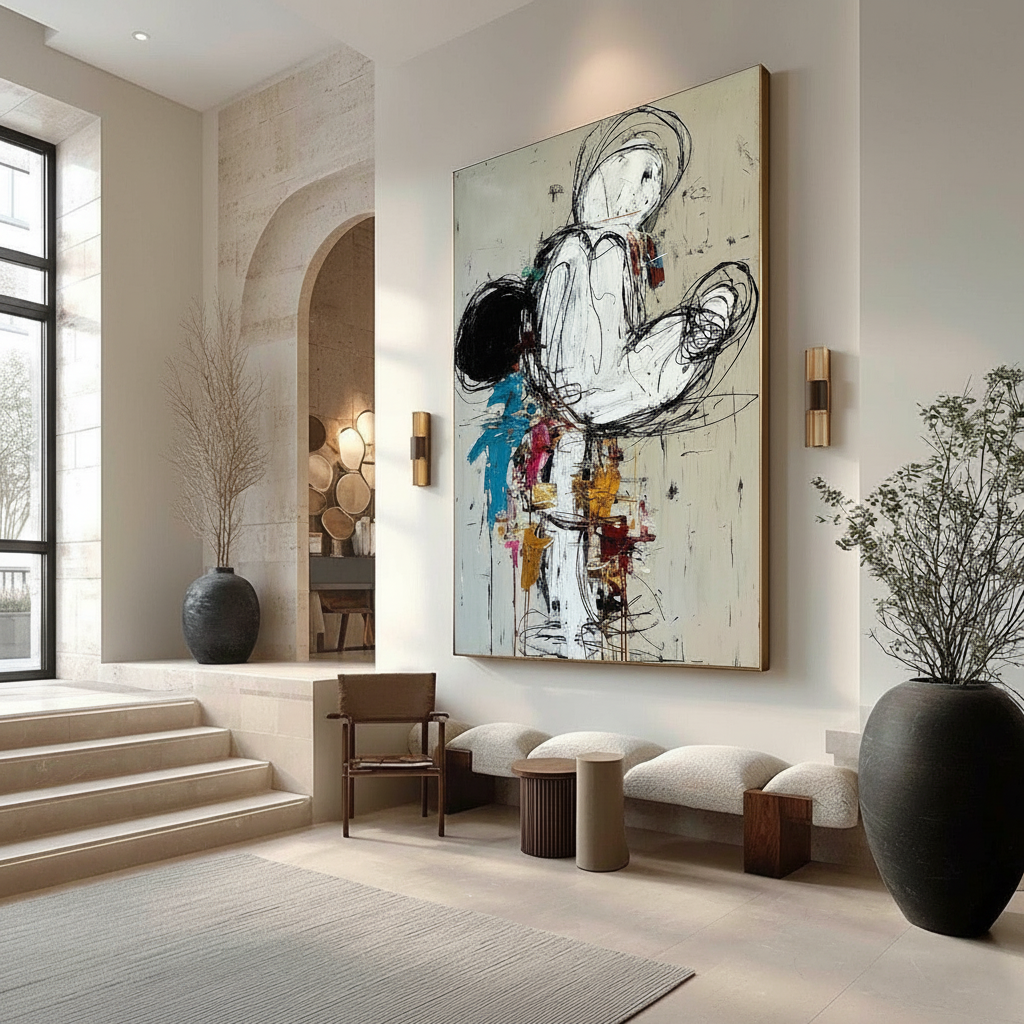
- 60% for High-Impact Public Spaces: This includes the lobby, primary dining areas, and signature suites. These are the "social anchors" where guests spend the most time and where art serves as a primary driver of "Instagrammability" and foot traffic.
- 30% for Transitional Areas: Guest room corridors, elevator lobbies, and fitness centers. Art here should focus on continuity and "wayfinding" through color and texture.
- 10% for Administrative and Secondary Spaces: Back-of-house, administrative offices, and utility corridors.
Logic Summary: Our analysis assumes that 80% of a guest's perceived "artistic value" of a property is formed in the first 10 minutes of entry. Concentrating capital in the lobby aligns with the UCincinnati regression analysis, which proves that large-scale visual installations are the lowest-cost physical generators of pedestrian traffic.
Operational Reality: The 40-60% Hidden Overhead
A frequent pitfall for procurement teams is focusing solely on the "sticker price" of the artwork. In our experience managing large-scale installations, the costs associated with logistics, professional hanging, and long-term maintenance often exceed the purchase price by 40-60%.
To avoid mid-project budget collapses, experienced managers should allocate at least 20% of the total art budget specifically for specialized hanging systems. These systems must be tailored to the substrate (concrete, drywall, or masonry) and must meet strict accessibility requirements for periodic maintenance.
Tiered Pricing for Scale
For projects with 200+ rooms, unit costs should not remain static. We typically observe that strategic negotiation can yield a 15-25% reduction in unit costs after the first 50 pieces. This is often achieved through:
- Standardized Sizing: Reducing custom framing complexity.
- Shared Inventory: Utilizing a core set of 3 sizes across the property to cut waste by an estimated 60% (Source: Industry Heuristic).
- Bundled Insurance: Lowering per-unit transit risk through standardized containerization.
Material Science: Why Acrylics Dominate Hospitality
In high-traffic commercial environments, the choice of medium is a matter of durability and safety. While oil paintings offer historical prestige, acrylics have become the industry standard for hospitality due to their physical properties.
Durability and Maintenance
Acrylic polymers consist of long-chain molecules that form a film through physical "coalescence," making them more resistant to embrittlement than the oxidative cross-linking found in oils (Source: Golden Artist Colors). This flexibility is vital in hotels where humidity fluctuations (from HVAC systems) and physical contact from guests are common.
| Feature | Standard Coating | Premium UV-Protective Coating | Rationale |
|---|---|---|---|
| Color Integrity | 3-4 Years | 8-10 Years | UV absorbers block photochemical aging. |
| Solvent Resistance | Low | High | Protects against aggressive cleaning chemicals. |
| Surface Hardness | Moderate | High | Reduces "chalking" and dirt adhesion. |
| Maintenance Cycle | Bi-Annual | Annual | Lower labor overhead over 10 years. |
Safety and Compliance (LEED/WELL)
For developers seeking LEED or WELL certification, indoor air quality (IAQ) is a non-negotiable metric. The EPA warns that indoor air pollution can be significantly higher than outdoor levels. Using low-VOC (Volatile Organic Compound) water-based acrylics is a prerequisite for healthcare and high-end hospitality projects.
Furthermore, professional-grade acrylics can be formulated to meet Class A fire ratings, a critical requirement in many jurisdictions, such as those governed by the Hong Kong Buildings Department Code of Practice.

The "Human Premium": Combatting Digital Fatigue
As AI-generated imagery saturates the market, consumers are placing a massive premium on authentic, human-created art. A Columbia University study found that consumers value art labeled as "AI-generated" 62% lower than authentic human creations.
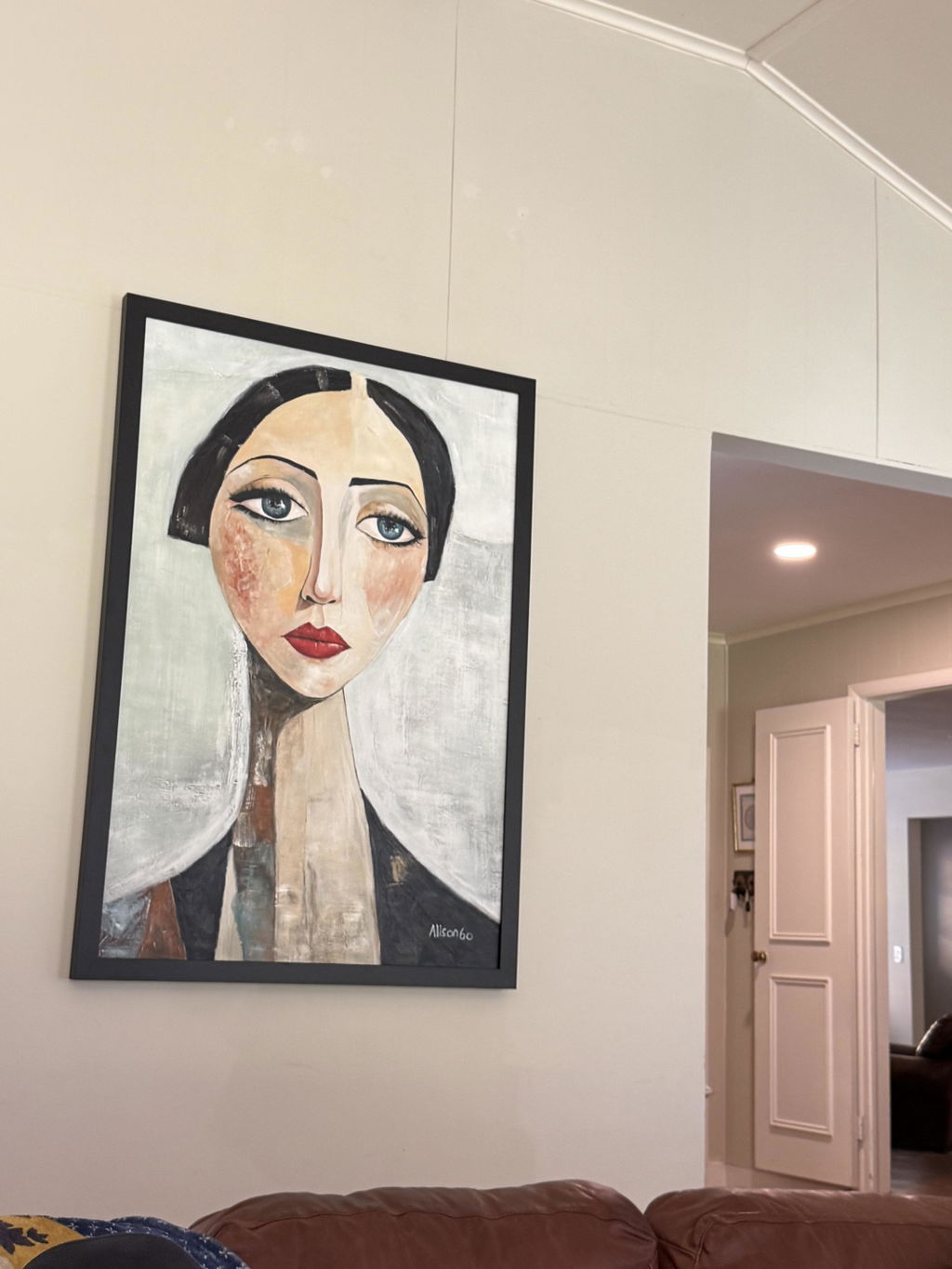
In the hospitality sector, this translates to "perceived luxury." Digital prints and NFTs often lack what researchers at the University of Chicago call the "essential identity" of the artist—the physical relief and micro-topography of the brushstroke. Optical microprofilometry proves that the mm-scale texture of hand-painted work is crucial to its aesthetic impact, stimulating intrinsic satisfaction in viewers (Source: MUNCH Museum Tests).
For a boutique hotel, replacing mass-produced posters with local, hand-painted murals provides a sense of "absolute authenticity" that 2025 travelers increasingly crave. This is not just an aesthetic choice; it is a strategic move to capture the 87% of consumers who value fair artist compensation and artisan craftsmanship (Source: Wharton School Survey).
Health and Wellness: The ROI of Biophilic Art
Art in hospitality is increasingly being viewed as "public health infrastructure" rather than mere decor. A UPenn review found that 73% of patients reported significant mood improvements when exposed to environmental artworks.
In a corporate or hospitality setting, nature-themed "biophilic" murals produce stress-reduction effects in the brain similar to being outdoors. This activates the medial prefrontal cortex (mPFC) and amygdala, optimizing emotional regulation (Source: PMC11480958). For procurement officers, the ROI here is found in reduced employee burnout and higher guest satisfaction scores.
Risk Management: Avoiding Toxic Pigments
When bulk ordering art, safety must extend to the chemical level. Many traditional pigments contain heavy metals that pose long-term health risks.
- Cadmium: The International Agency for Research on Cancer (IARC) classifies cadmium as a Group 1 carcinogen. Even low doses can be hazardous if the paint film degrades into dust.
- Lead: While largely banned, some specialty coatings still contain lead carbonates. The EU REACH regulation prohibits concentrations exceeding 0.1%.
- Microplastics: Acrylic paints are essentially liquid plastics. As they age, they can shed microplastics into the environment. Stanford University scholars warn that coatings are a core source of global microplastic pollution.
Procurement Tip: Always require ASTM D-4236 compliance, but recognize that this label only means "warning labels comply with regulations," not that the pigment is non-toxic (Source: EPA). For maternal/infant areas or high-traffic lobbies, prioritize water-based, heavy-metal-free formulations.
Implementation Checklist for Procurement Officers
To ensure the art budget is optimized for both initial impact and long-term viability, follow this technical checklist:
- Chemical Resistance Testing: Require test samples exposed to simulated cleaning chemicals and high-traffic wear (e.g., luggage scuffs) before bulk ordering.
- Lightfastness Verification: Ensure all pigments meet ASTM D4303 standards for lightfastness, especially for sun-exposed lobbies.
- Tiered Pricing Contracts: Lock in volume discounts early and standardize at least 70% of the frames to reduce custom labor.
- Installation SOPs: Mandate the use of security hardware (to prevent theft) and level-testing protocols for large-scale corridor rollouts.
- ESG Documentation: Request data on the carbon footprint of the supply chain and the fair-trade status of the artists involved.
Beyond the Canvas: Art as a Capital Asset
Investing in custom murals and hand-painted art is not just a line item; it is a "catalytic" investment. Data from Philadelphia's Avenue of the Arts shows that mural infrastructure revamps can attract large-scale private investment and drive property value gains.
By shifting the mindset from "disposable decor" to "cultural heritage assets," hospitality brands can create spaces that bridge the gap between commercial efficiency and human emotion. In an era where digital perfection is cheap, the "magic" of the artist's hand—the biochemical crystallization of human attention—remains the ultimate luxury.
Disclaimer: This article is for informational purposes only and does not constitute professional legal, safety, or financial advice. Readers should consult with qualified environmental health and safety (EHS) professionals and legal counsel regarding local building codes and material compliance.
References
- Marketplace: The expensive art market continues to struggle
- UNCTAD: Creative Economy Outlook 2024
- Columbia University: Human-Made vs. AI Art Study
- EPA: Indoor Air Quality and Low-VOC Paints
- Golden Artist Colors: Aspects of Longevity of Oil and Acrylic Paints
- IARC: Cadmium and Cadmium Compounds
- Royal Society: Quantifying the link between art and property prices