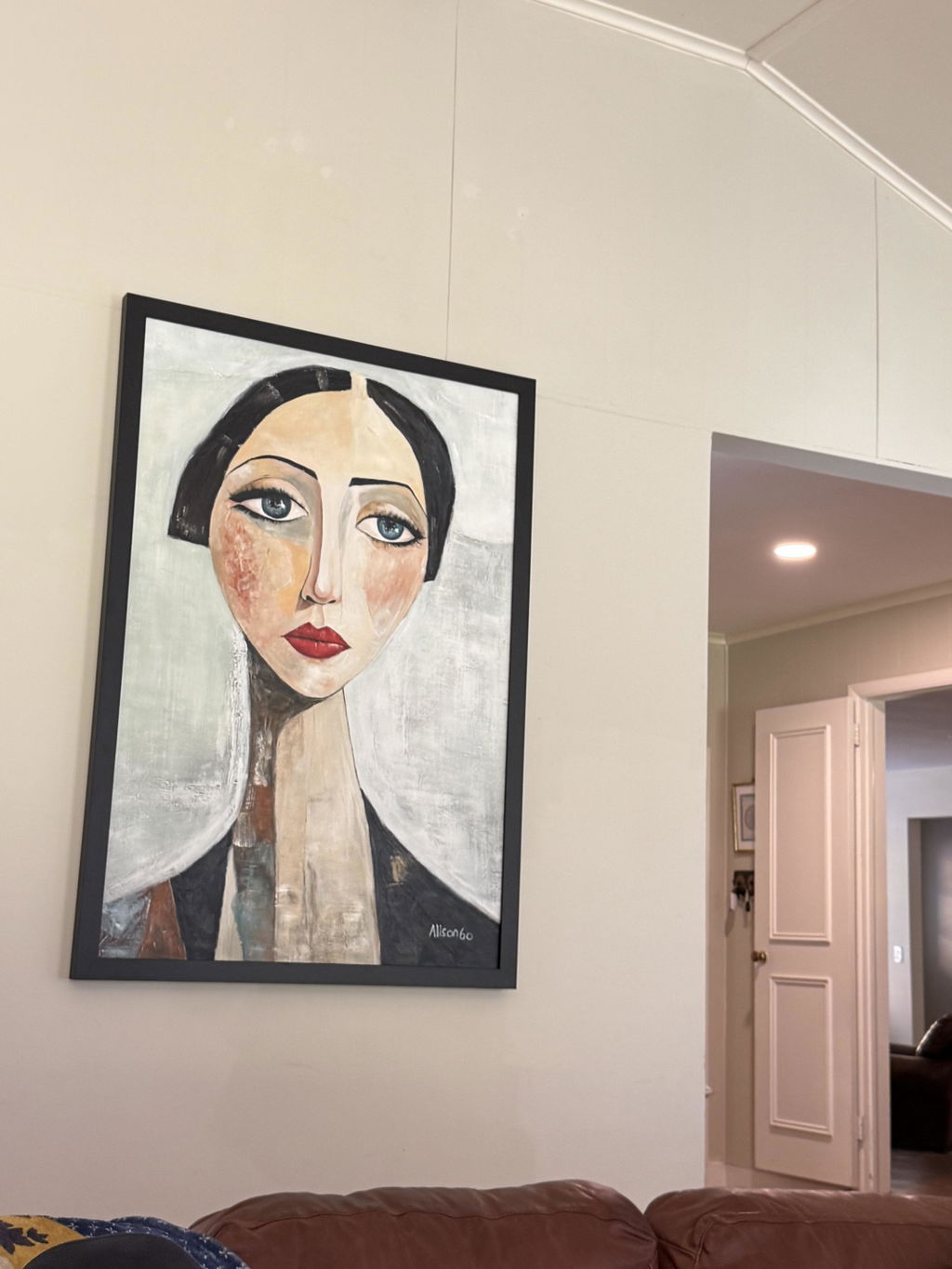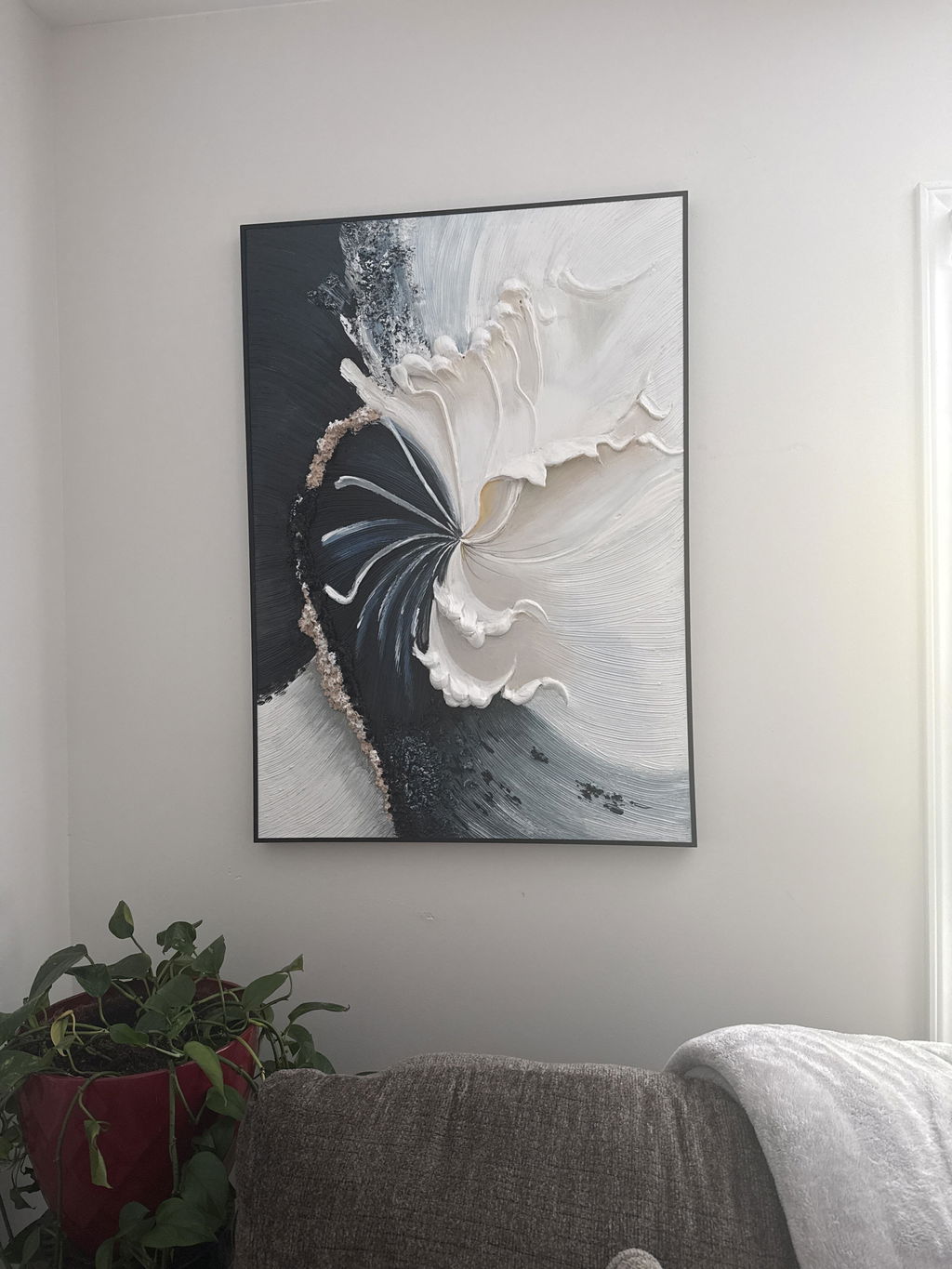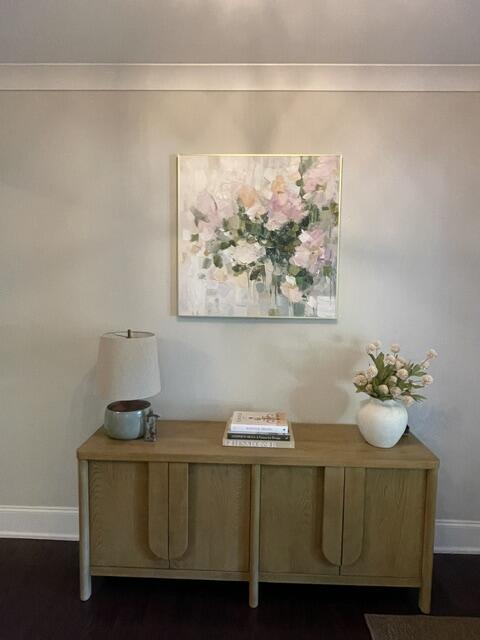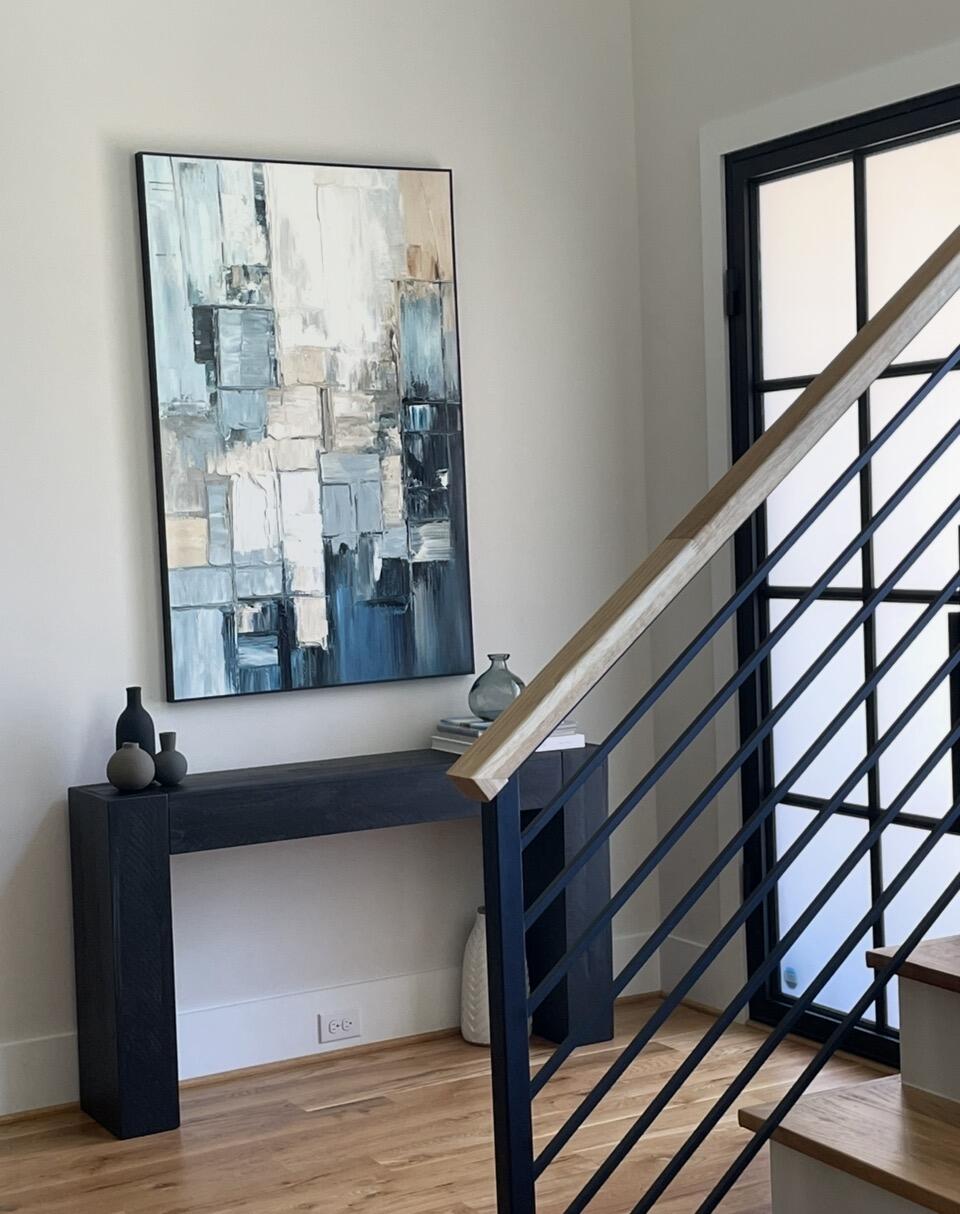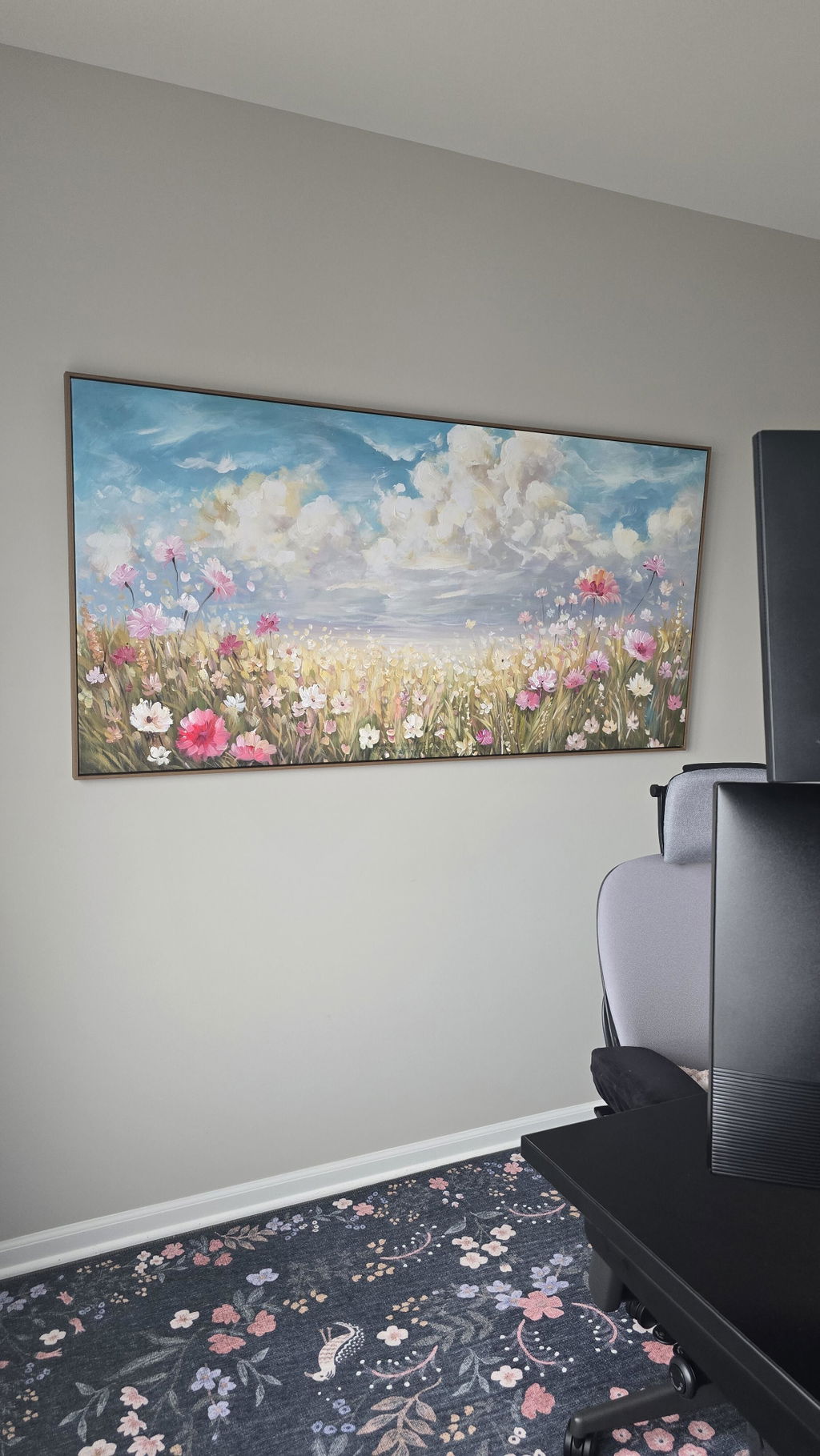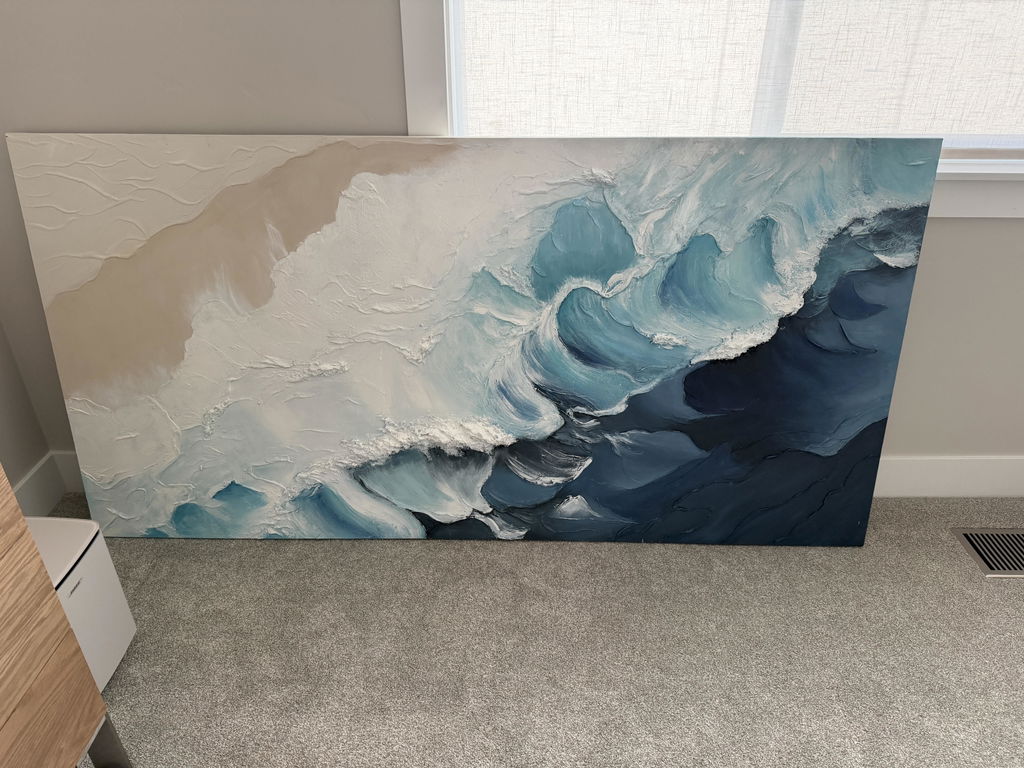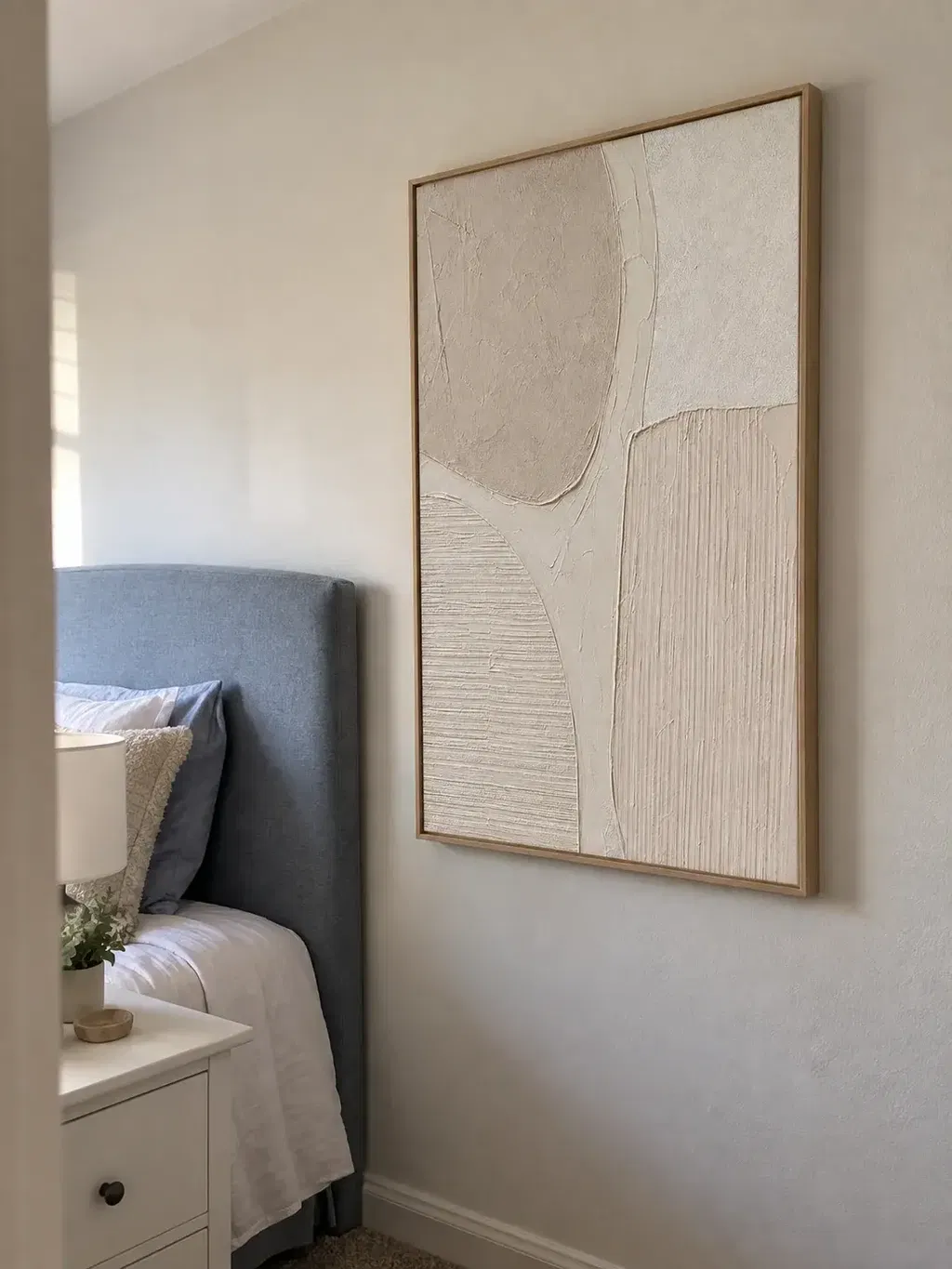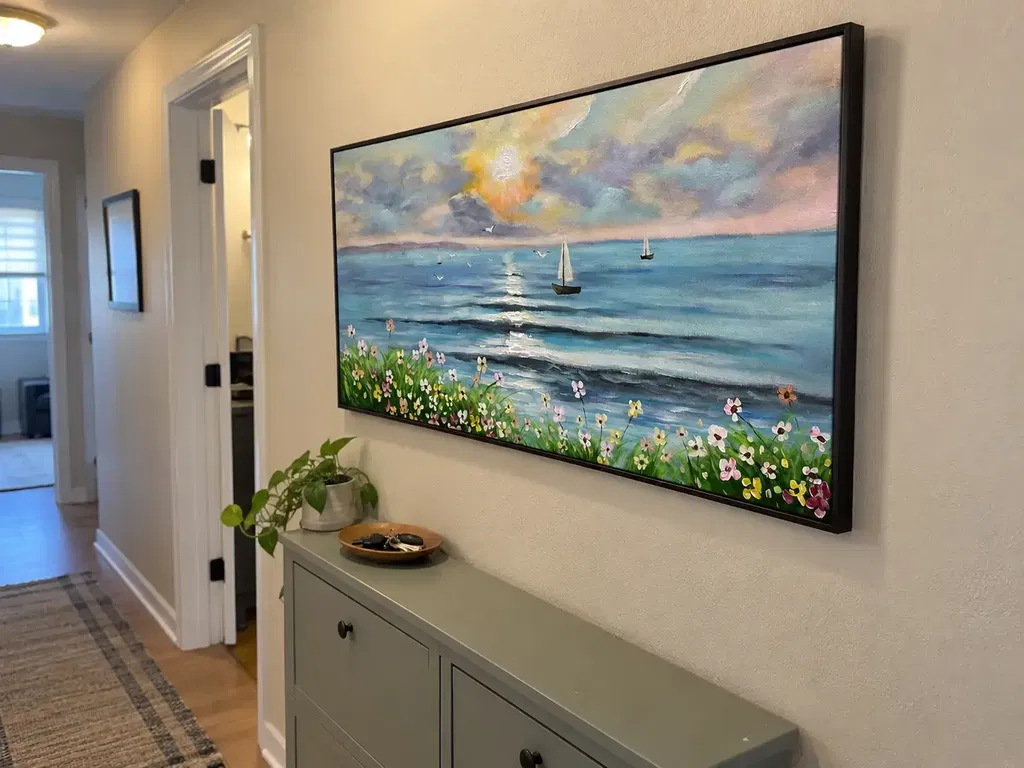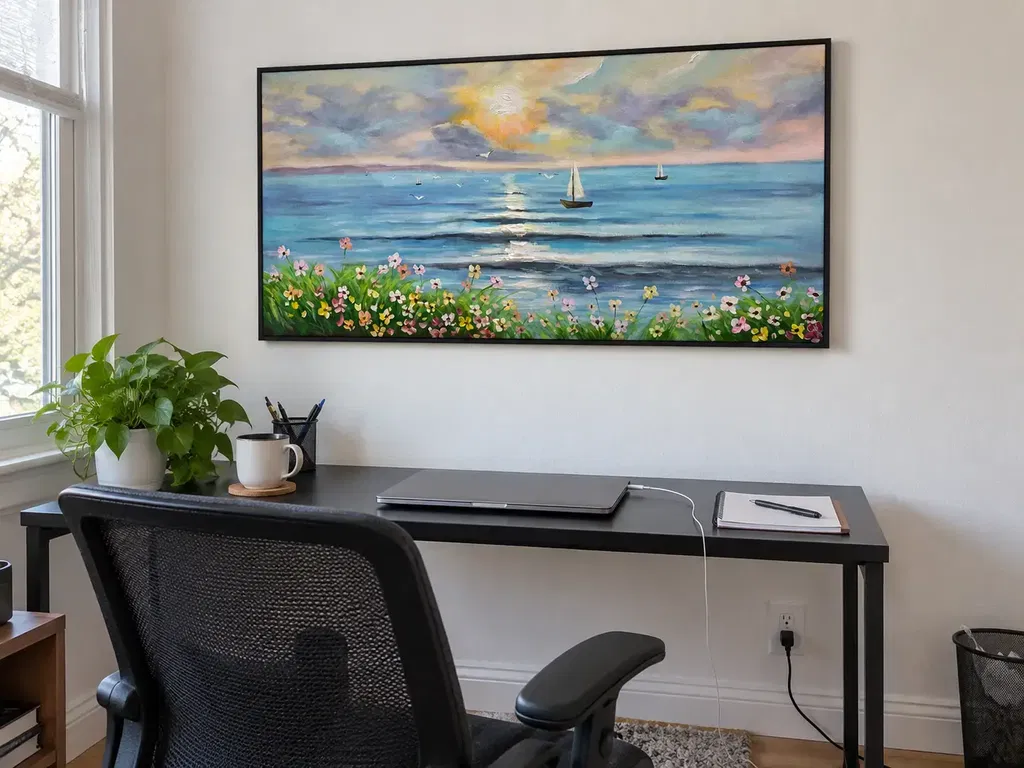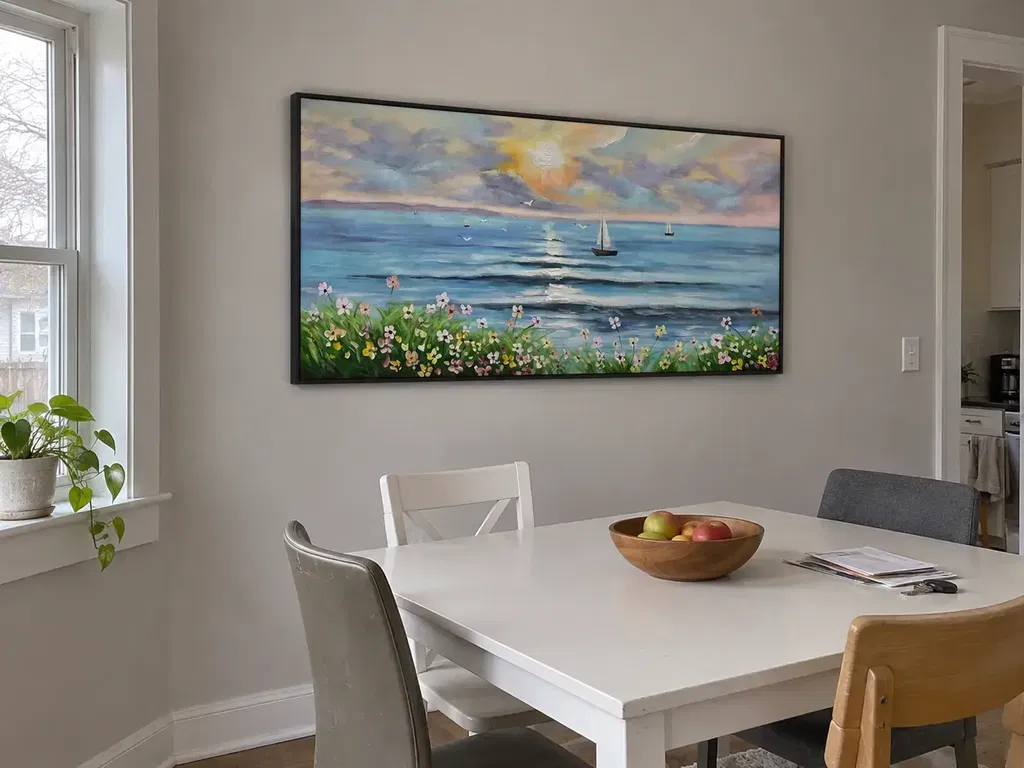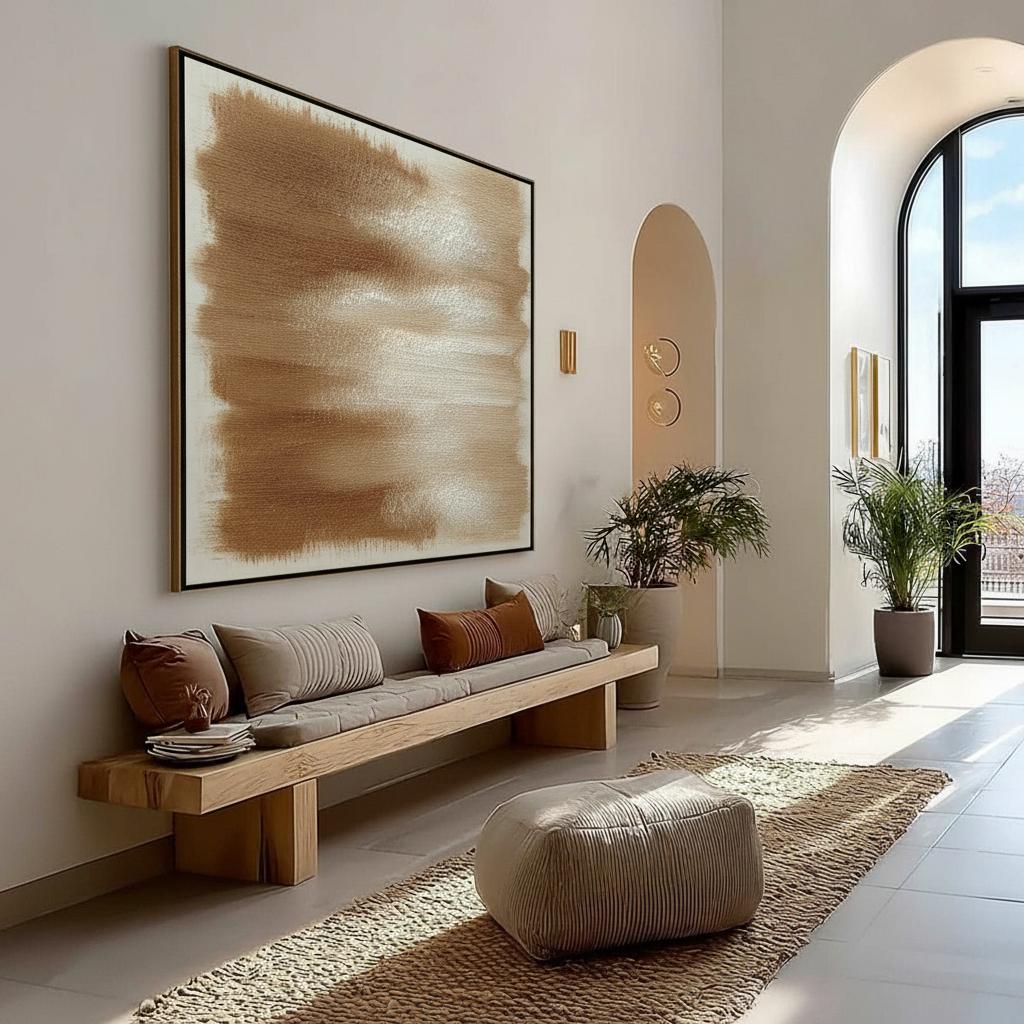
High-Impact Art in the Modern Commercial Landscape
Commercial environments are undergoing a quiet revolution. As high-end auction sales for purely financial art assets plummeted 44% year-over-year in 2024, according to Marketplace, the focus has shifted from "vanity" pieces to art with real application value. For facility managers and hospitality designers, this means moving away from overpriced auction pieces toward custom, hand-painted works that define a space's identity.
However, the transition to large-scale acrylic art—often preferred in commercial settings for its durability and lack of volatile organic compound (VOC) odors—comes with a significant technical hurdle: glare. In sun-drenched lobbies and glass-walled offices, the very windows that provide a sense of openness can turn a premium investment into an unviewable, reflective mess.
This guide provides a benchmark for managing light and glare in professional environments, ensuring your art remains a focal point rather than a mirror.

The Physics of Visibility: Why Glare Happens
In our experience assisting with commercial installations, the most common error is treating art placement as a purely aesthetic decision rather than an optical one. Standard acrylic surfaces have a specific refractive index that interacts with high-intensity light sources.
Surface Reflectivity vs. Light Transmission
Conventional wisdom suggests that anti-glare coatings are a universal fix. However, data from Reshin Monitors indicates a critical trade-off: while advanced multi-layer anti-reflection (AR) coatings can maintain over 99% light transmission with minimal distortion, standard matte finishes often reduce transmission to 85–92%. This results in a noticeable "haze" that dulls the vibrant pigments facility managers paid for.
Furthermore, Tru-Vue research highlights a secondary challenge: UV-blocking additives, while essential for protecting the artwork from fading, can increase surface reflectivity by 15–25%. This creates a "protection versus visibility" paradox that requires strategic positioning rather than just material selection.
Methodology Note: Glare Mitigation Modeling Our recommendations are based on a deterministic scenario model designed for high-traffic commercial spaces. This model assumes standard window glass with a 0.90 visible light transmission (VLT) and typical office fluorescent overheads (4000K).
Parameter Recommended Value Rationale Minimum Separation 8–10 Feet Reduces intensity of direct specular reflection Light Offset Angle 30–45 Degrees Moves the "glare zone" outside the viewer's primary sightline Coating Transmission >95% Preserves pigment saturation and micro-texture Surface Cleaning pH 7.0 (Neutral) Prevents micro-fractures in acrylic polymer chains UV Block Level 99% Essential for long-term lightfastness in window-adjacent spots
Strategic Positioning: The 30-Degree Rule
Based on patterns we observe in professional installations, the most effective way to combat glare is through geometry, not chemistry.
The Separation Heuristic
A reliable rule of thumb for commercial spaces is to maintain at least 8 to 10 feet of separation between the acrylic surface and direct window exposure. This distance allows for the diffusion of light before it hits the artwork's surface.
Managing the Sun Path
Installation teams often overlook the seasonal sun path. A placement that looks perfect during a summer walkthrough may be blinded by low-angle winter sun. To mitigate this, we recommend a minimum 30-degree offset angle from perpendicular light sources. By angling the art slightly away from the primary window or using architectural features to block direct rays, you ensure the specular reflection (the "hot spot" of glare) bounces away from the viewer.
The "Shadow Test" for Rapid Assessment
You don't need specialized optical equipment like a gloss meter to evaluate a space. We often use the "shadow test" as a practical diagnostic tool:
- Stand in the primary viewing position (e.g., the reception desk or a boardroom chair).
- Hold your hand between the light source and the artwork.
- If you can see a distinct, sharp shadow of your hand on the acrylic surface, the glare level is likely high enough to compromise the artwork's color depth.

Persona-Based Lighting Design
Different commercial environments require varied approaches to light management.
Healthcare: The Healing Power of Diffused Light
In clinical settings, even lighting is a prerequisite for patient comfort. A University of Pennsylvania review found that 73% of patients reported significant mood improvements when exposed to environmental art. To maximize this effect, healthcare facility managers should prioritize biophilic designs—nature-themed murals—lit with high-diffusion fixtures that eliminate harsh shadows and glare, which can be disorienting to those with cognitive fatigue.
Corporate Lobbies: Dramatic Contrast
Unlike healthcare, corporate lobbies can tolerate higher contrast. Developers often use unique art installations as "marketing trump cards" to lease office space, a trend noted by NAIOP. In these spaces, accent lighting with narrow beam angles can be used to highlight the physical relief of hand-painted pigments—a tactile quality that 3D printing research from MDPI proves is essential to the human perception of "authentic" art.
The Technical Backbone: Pigments and Safety
When selecting art for commercial windows, the durability of the medium is just as important as the lighting. Acrylics are favored because they form films through a physical coalescence process, making them more resistant to the embrittlement that can affect oil paintings in high-UV environments JustPaint.
Lightfastness and the ASTM Standard
Not all paints are created equal. Facility managers should specify works that adhere to ASTM D4303 lightfastness standards. This protocol uses xenon-arc tests to simulate years of indoor illumination aging. In our experience, using pigments with high "star ratings" ensures that the vibrant blues and reds don't fade into a muddy gray within three years of window exposure.
Air Quality and LEED Compliance
Indoor air quality (IAQ) is a critical metric for modern commercial buildings. The EPA warns that indoor pollution is often higher than outdoor levels. Choosing low-VOC acrylic murals can help facilities secure LEED or WELL certification points. Furthermore, Aalto University experiments have shown that coatings on moisture-controlled substrates emit significantly lower toxic VOCs during the curing process, making them safe for immediate occupancy in busy offices.
Maintenance Protocols for Professional Spaces
A common mistake that leads to permanent damage is the use of standard glass cleaners. Most commercial cleaning kits contain ammonia or alcohol, which can cause micro-fractures (crazing) in acrylic over time.
The Professional Cleaning Checklist
- Solution: Use only pH-neutral, soap-free cleaners specifically designed for acrylic.
- Cloth: Use high-gsm microfiber cloths to avoid scratching the surface.
- Motion: Apply light pressure in circular motions. This prevents the buildup of static electricity, which Tate research suggests is a primary driver for dirt and pollutant adhesion.
- Frequency: In high-traffic areas, a monthly dry-dusting with a specialized wand is typically sufficient to maintain clarity.

The Economic and Social ROI of Art Placement
Investing in correctly lit, hand-painted art isn't just about decor; it's a strategic business move.
Boosting Property Value
A Royal Society study found a direct correlation between high-quality art "geo-tags" and relative property price gains. In Chicago, public art projects in Millennium Park drove an estimated $1.4 billion in real estate-related growth NC Realtors. For commercial developers, a well-placed mural acts as a permanent physical billboard that generates foot traffic and increases the "landmark" status of a property.
Community and Safety
Beyond economics, art serves as "community glue." The University of Michigan's "Busy Streets Theory" demonstrates that transforming unkempt spaces with murals can reduce neighborhood violent crime by up to 40%. In a corporate context, this translates to increased employee safety and a stronger sense of social cohesion within the workplace Salud America.
Summary of Best Practices
| Task | Action | Key Benefit |
|---|---|---|
| Placement | 8–10 ft from windows | Minimizes specular glare hotspots |
| Angle | 30-degree offset | Redirects reflections away from viewers |
| Lighting | Diffused LED (CRI 90+) | Ensures color accuracy and patient/employee comfort |
| Material | ASTM D4303 Certified | Prevents UV-induced fading and pigment loss |
| Cleaning | pH-neutral + Microfiber | Avoids surface crazing and static dust attraction |
Managing glare in commercial windows requires a blend of optical science and practical spatial planning. By following these heuristics, facility managers can protect their artwork investment while creating environments that foster productivity, healing, and community value.
YMYL Disclaimer: This article is for informational purposes only and does not constitute professional architectural, lighting design, or safety advice. Commercial art installations should be reviewed by qualified professionals to ensure compliance with local building codes, fire safety regulations, and environmental standards.
Sources
- Marketplace: High-end art market struggles
- UNCTAD: Creative Economy Outlook 2024
- Columbia Business School: Human-Made vs. AI Art Study
- UPenn: Visual Art in the Built Environment Review
- Royal Society: Quantifying art and property prices
- University of Michigan: Busy Streets Theory and Public Art
- ASTM: Standard Test Methods for Lightfastness
- Tate: Modern Paints Project Summary