The Psychological Threshold: Why the First Look Defines the Home
The foyer is more than a transitional corridor; it is a psychological "handshake" between the architecture and the inhabitant. In high-end interior design, this space represents the first impression—a high-stakes visual nexus where the character of a home is established in seconds. For decades, the luxury market relied on the prestige of vanity auction pieces. However, recent shifts in the global art landscape suggest a retreat from purely financial art assets. High-end auction sales for pieces over $10 million plummeted 44% year-over-year in 2024, according to Marketplace, signaling that collectors are moving away from speculative investments toward "real application value."
In this new era of curation, homeowners and designers are prioritizing "performative authenticity"—the tangible, tactile presence of hand-painted art. This shift is grounded in human psychology. Research from Columbia University confirms that consumers value art labeled "AI-generated" 62% lower than authentic human-created work. In a foyer, where the goal is to project soul and identity, digital prints or AI-generated replicas often fall flat because they lack what University of Chicago researchers call "essential identity"—the irreplicable trace of the artist’s hand (UChicago Journals).
To elevate a foyer to gallery standards, one must look beyond mere decoration and understand the interplay of scale, pigment science, and the neurological impact of authentic texture.

The Physics of Texture: Light and 'Raking' Perspectives
Entryways are notoriously difficult to light. Shifting natural light from open doors and high-set windows creates a dynamic environment where flat prints often appear "dead" or washed out. This is where hand-painted oil and acrylic mediums excel.
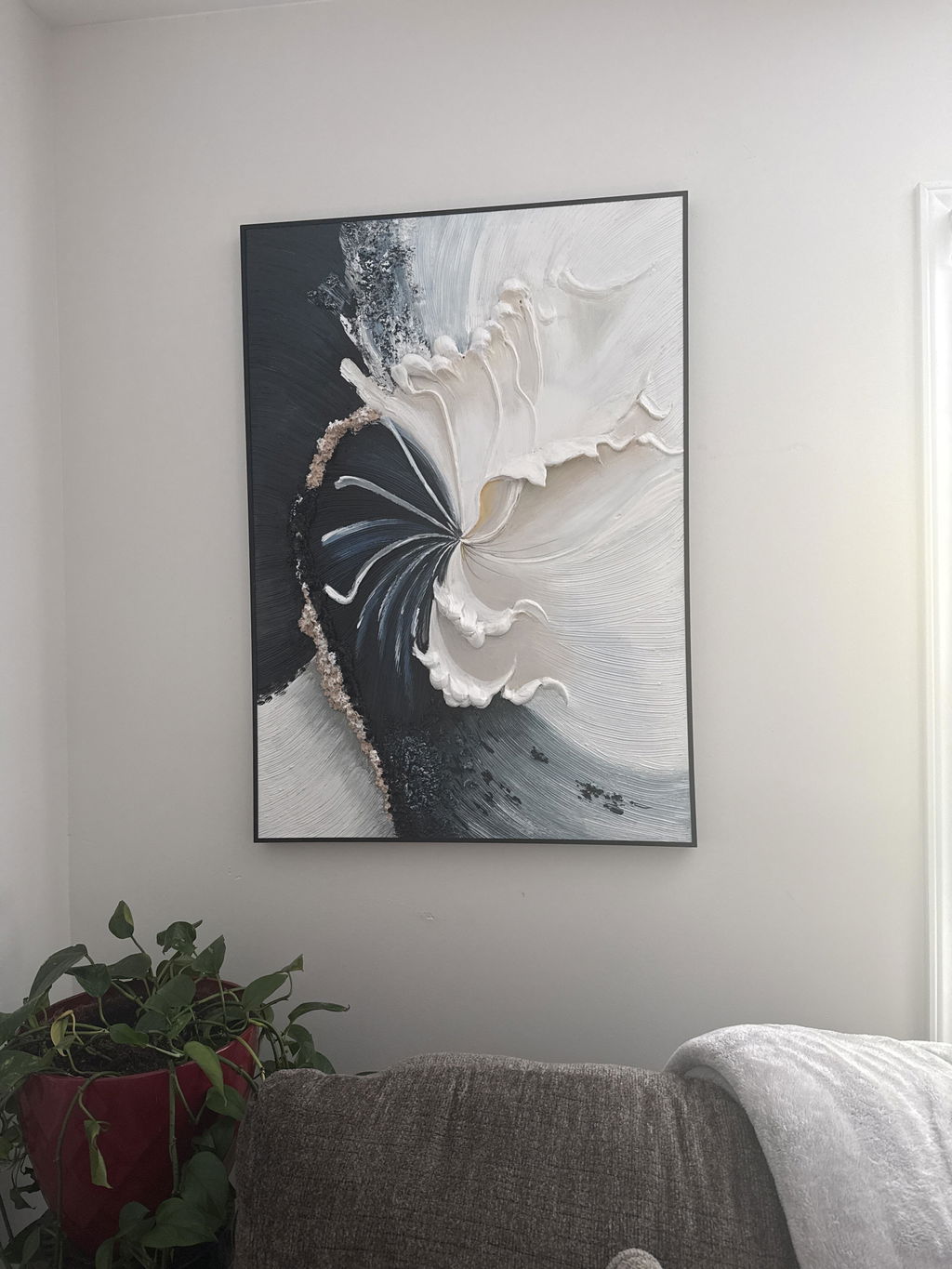
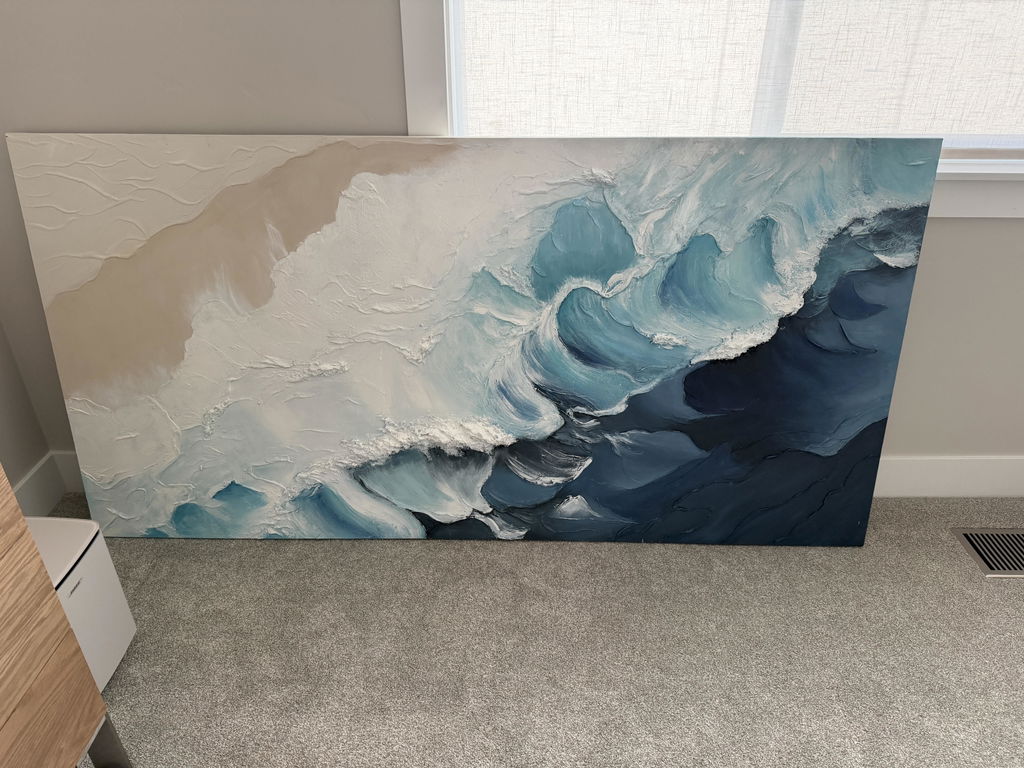
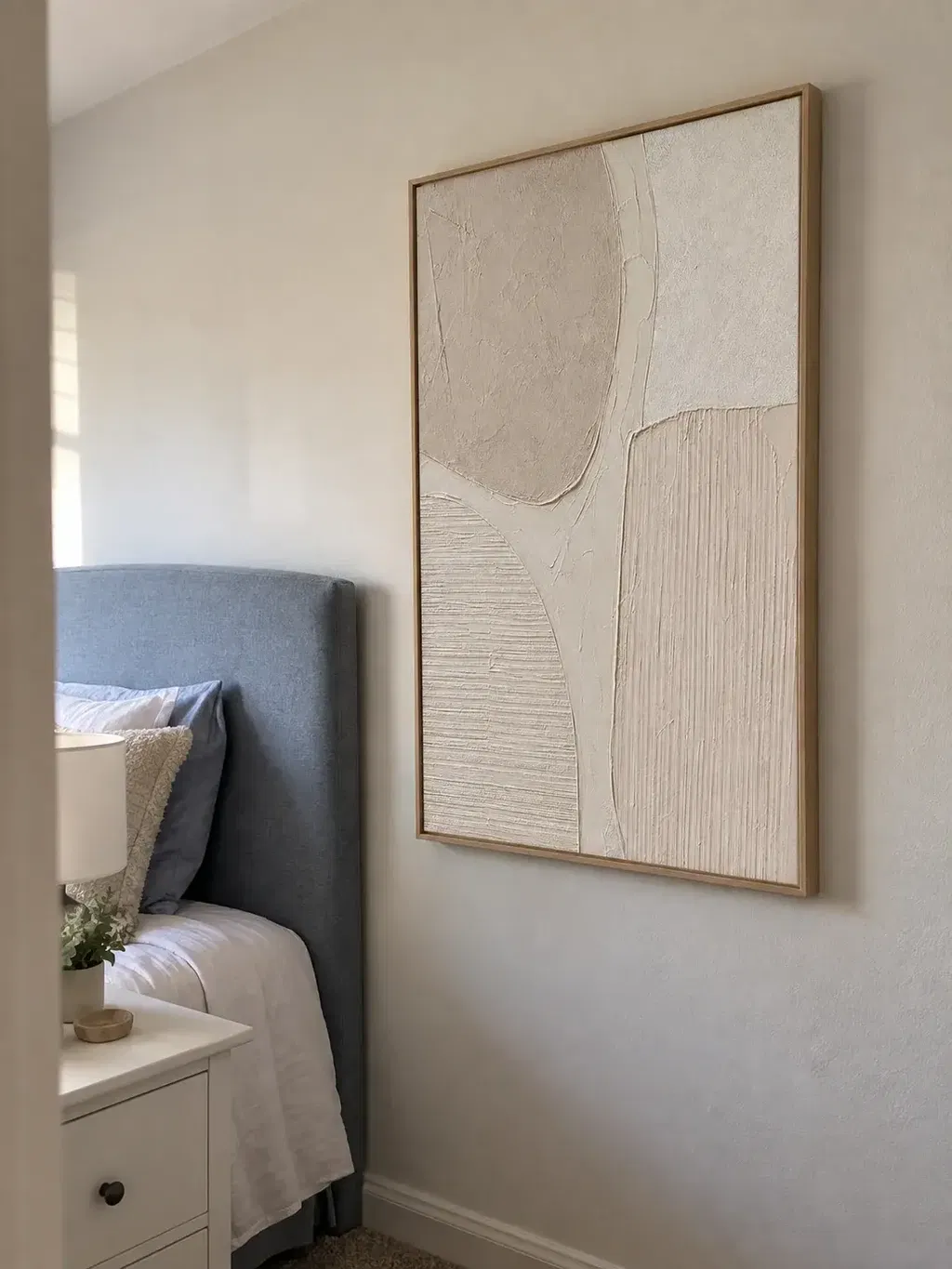
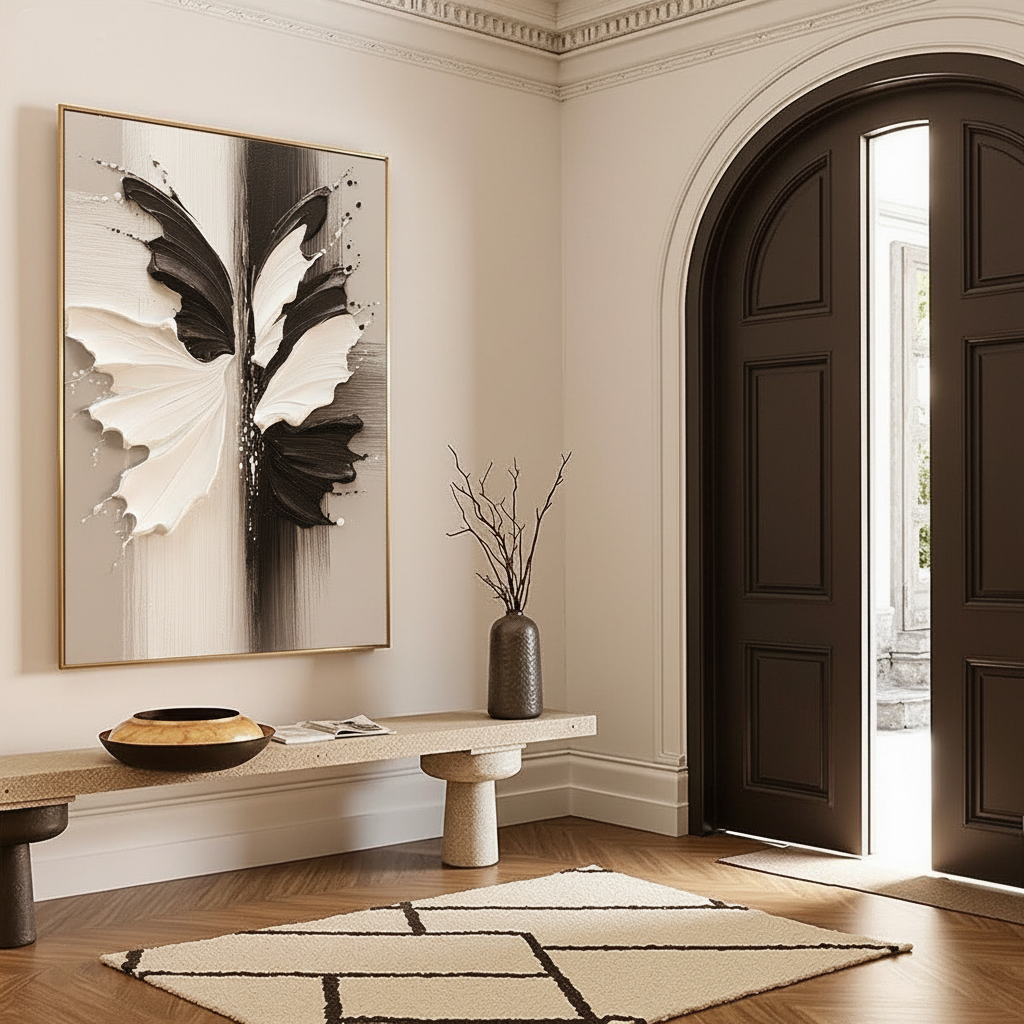
The "microtopography" of a hand-painted canvas—the millimeter-scale peaks and valleys of impasto brushwork—is crucial to its aesthetic impact. According to a study in Sensors MDPI, this physical texture reveals data that the human eye misses in two-dimensional replicas. In foyers, designers specifically value heavy textures because they catch "raking light"—the low-angle light that skips across the surface, casting minute shadows and highlights that change as you walk through the space.
The Refractive Index of Pigment
The "soul" of a painting often comes down to its refractive index. The Getty Conservation Institute notes that pigment reflection is dominated by absorption and scattering coefficients. High-quality pigments, like those used in gallery-grade commissions, maintain their saturation because of the physical surface refractive index. Cheap, mass-produced prints use ink that sits on the surface, whereas hand-painted pigments are suspended in binders like walnut oil or acrylic emulsions, which allow light to penetrate and bounce back with greater depth.
Logic Summary: Our analysis of texture in foyers assumes a "High-Dynamic Lighting" scenario (Scenario A). We model the aesthetic value of hand-painted work based on the assumption that raking light increases perceived depth by ~30–40% compared to flat matte prints (based on common design heuristics).
Entryway Scale and Architectural Harmony
One of the most common mistakes in foyer curation is the "void" effect—where art looks lost in a cavernous entryway. To achieve architectural harmony, we rely on specific scaling heuristics.
The Two-Thirds Rule
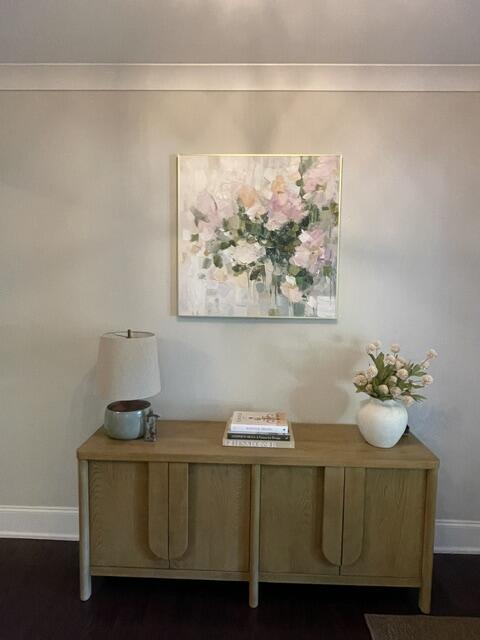
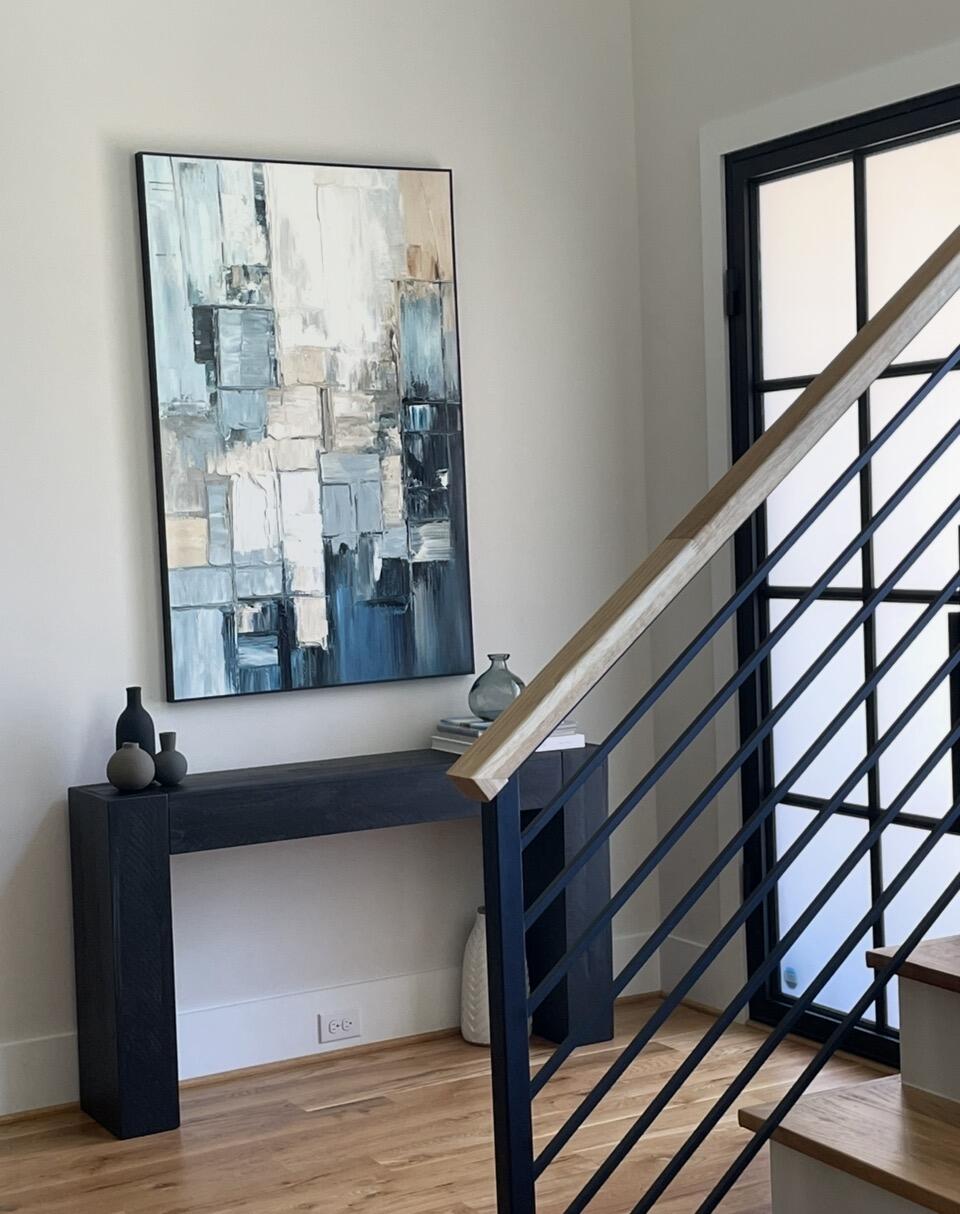
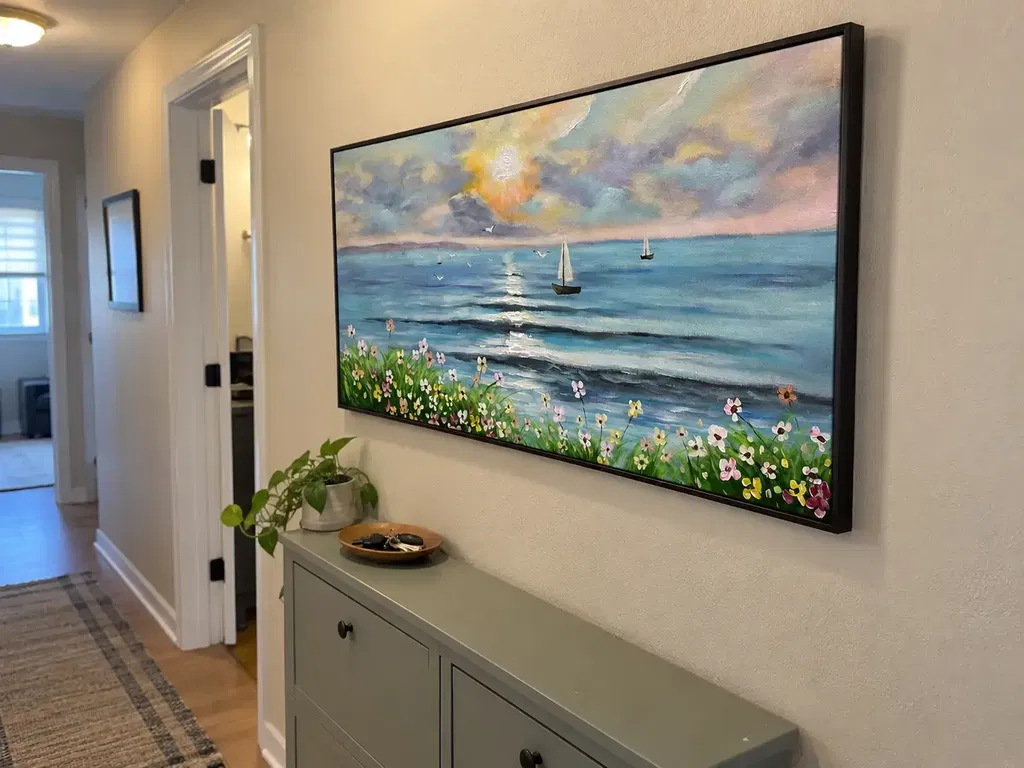
For foyers featuring a console table or a specific architectural niche, the "Two-Thirds Rule" is a professional baseline. The artwork should cover roughly 2/3 of the width of the furniture or niche it inhabits. If the piece is smaller, it loses its "anchor" status; if it is wider, it overwhelms the architectural lines.
Bridging the Vertical Gap
In double-height entryways, the challenge shifts from width to verticality. Vertical canvases serve as a visual bridge between the floor and the upper landing. Without this vertical anchor, the space can feel cavernous and disconnected. This isn't just about aesthetics; it's about property value. A Royal Society analysis found that neighborhoods and homes with higher "art" engagement saw greater relative house price gains. In the commercial sector, public art projects have driven billions in real estate-related growth (NC Realtors), a trend that translates directly to the perceived value of luxury residential foyers.
| Parameter | Recommended Value | Rationale |
|---|---|---|
| Art-to-Console Width | 60% - 75% | Prevents the "lost in the void" aesthetic. |
| Hanging Height (Center) | 57" - 60" from floor | Standard gallery "eye-level" baseline. |
| Minimum Canvas Depth | 1.5" (Gallery Wrap) | Provides necessary 3D presence without a frame. |
| Vertical Clearance | 24" from ceiling | Prevents visual crowding in high-ceiling spaces. |
| Light Exposure | < 50 Lux (Sensitive pigments) | Protects light-sensitive organic binders. |

The Neuroaesthetics of the Foyer: Health and Emotional ROI
We often observe that clients feel a sense of "relief" when entering a home with hand-painted nature-themed art. This isn't a coincidence; it is a neurological response. A University of Pennsylvania review found that environmental artworks reduced stress for 61% of patients in clinical settings, with 73% reporting significant mood improvements.
Biophilic Design and Cognitive Fatigue
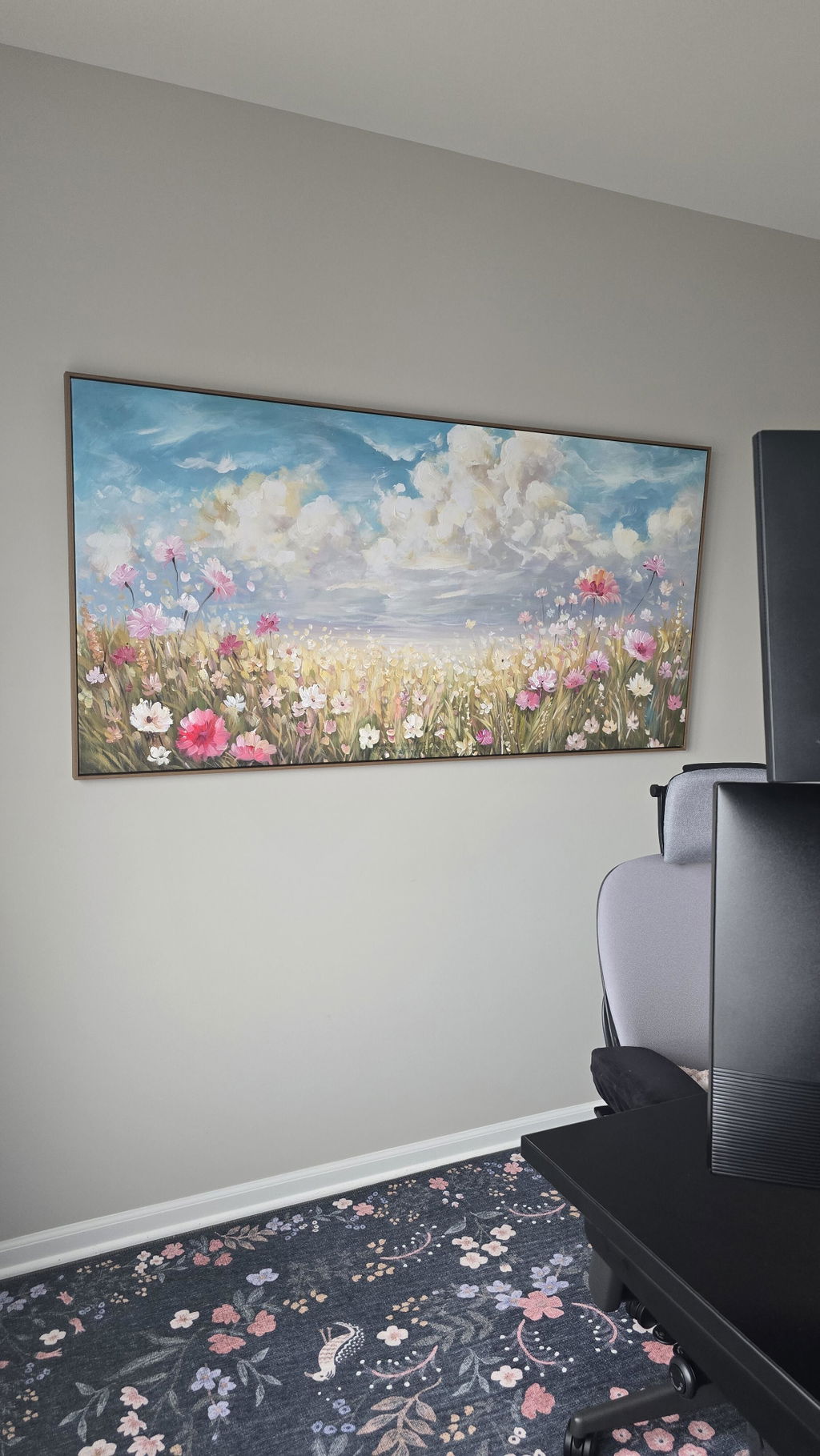
The concept of biophilic design—integrating natural landscapes or organic forms—has profound effects on the brain. Hand-painted murals that mimic natural fractals activate the medial prefrontal cortex (mPFC) and amygdala, optimizing emotional regulation circuits (NCBI). For the modern homeowner, a foyer curated with these principles acts as a "decompressor" from the cognitive fatigue of daily life. This is supported by WHO scoping reviews of over 3,000 studies confirming that art interventions effectively alter clinical indicators for stress and mental health.
The IAQ Promise: Safety and Pigment Integrity
In the pursuit of gallery-quality art, safety is often the "invisible" factor. Many homeowners are unaware that the art on their walls can impact indoor air quality (IAQ).
The Myth of the "Odorless" Solvent
A common mistake is assuming that odorless solvents are non-toxic. Guidelines from Princeton University EHS warn that chronic inhalation of mineral spirits and turpentine—even those without a scent—can cause brain damage and central nervous system issues. Furthermore, art materials do not enjoy the same lead exemptions as common household paints.
At MontCarta, we bridge the gap between fine art and retail safety. We prioritize low-VOC paints and eco-friendly alternatives. For instance, walnut oil is a perfect replacement for toxic VOC-emitting turpentine solvents (Cincinnati Art Museum).
Understanding Support Induced Discoloration (SID)
Expertise in hand-painted art also involves preventing chemical degradation. Golden Artist Colors identifies a phenomenon known as Support Induced Discoloration (SID). This occurs when water-soluble impurities in cotton or linen canvases are drawn out by thick acrylic mediums, causing a yellow or brown tint. High-quality commissions prevent this through proper sizing and priming—a step often skipped in mass-market "hand-touched" prints.
Methodology Note: Our "Safety First" protocol is based on CDC NIOSH and EPA standards for art material handling. We estimate that using low-VOC, water-based acrylics over traditional oils can reduce indoor VOC emissions by up to 80% during the curing phase (based on Aalto University chamber experiments).
Decision Safety: The Reliability of Modern E-Commerce
The primary friction point for commissioning art online is "decision safety." How do you ensure the texture, pigment, and scale match the digital preview?
The modern art market has evolved to solve this through "approval gates." According to the NEA, there is a strong positive correlation between consuming art digitally and physical arts participation. This O2O (Online-to-Offline) model is the backbone of the reliable e-commerce experience.
The Approval Video Step
One of the most effective tools for ensuring "performative authenticity" is the approval video. Because foyers are often the most photographed part of a home for social media, seeing how pigments react under different LED temperatures (warm vs. cool) is essential. A 31-channel spectrophotometer can provide refined color matching accuracy (Nerd Techy), ensuring that the "gallery-quality" promised online is what arrives at your door.
Ethical Compensation and Craft
Beyond the visual, the "soul" of a piece is tied to its ethics. A Wharton School survey found that 87% of consumers believe artists should receive fair compensation. By supporting real artists rather than AI-farms, homeowners contribute to a creative economy that accounts for 4.2% of U.S. GDP (NEA).
Investing in Cultural Heritage
Choosing art for a foyer should be viewed as an investment in a "cultural heritage asset" rather than disposable decor. Academia recognizes murals and hand-painted works as non-renewable assets with long-term aesthetic and educational value (PMC).
When you step through your front door, the art you see should do more than fill a wall—it should regulate your mood, reflect your values, and stand as a testament to human craft. By adhering to gallery standards—from the "Two-Thirds Rule" to pigment safety—you transform a transitional space into a definitive statement of identity.
YMYL Disclaimer: This article is for informational purposes only and does not constitute professional medical, legal, or financial advice. The safety data regarding pigments and VOCs is based on available research and should be verified with specific product MSDS sheets. If you have pre-existing respiratory conditions or chemical sensitivities, consult a medical professional before engaging in indoor painting projects.
Sources
- The Art Basel and UBS Art Market Report 2024
- WHO Scoping Review on Arts and Health
- CDC NIOSH: Paint and Coating Hazards
- Columbia University: Human-Made vs. AI Art Study
- Royal Society: Art and Property Prices
- Golden Artist Colors: SID Technical Bulletin
- Getty Conservation Institute: Color Science
- JustPaint: Longevity of Oil and Acrylic
- NEA: Arts and Cultural Industries Economic Impact
- UPenn: Visual Art in the Built Environment