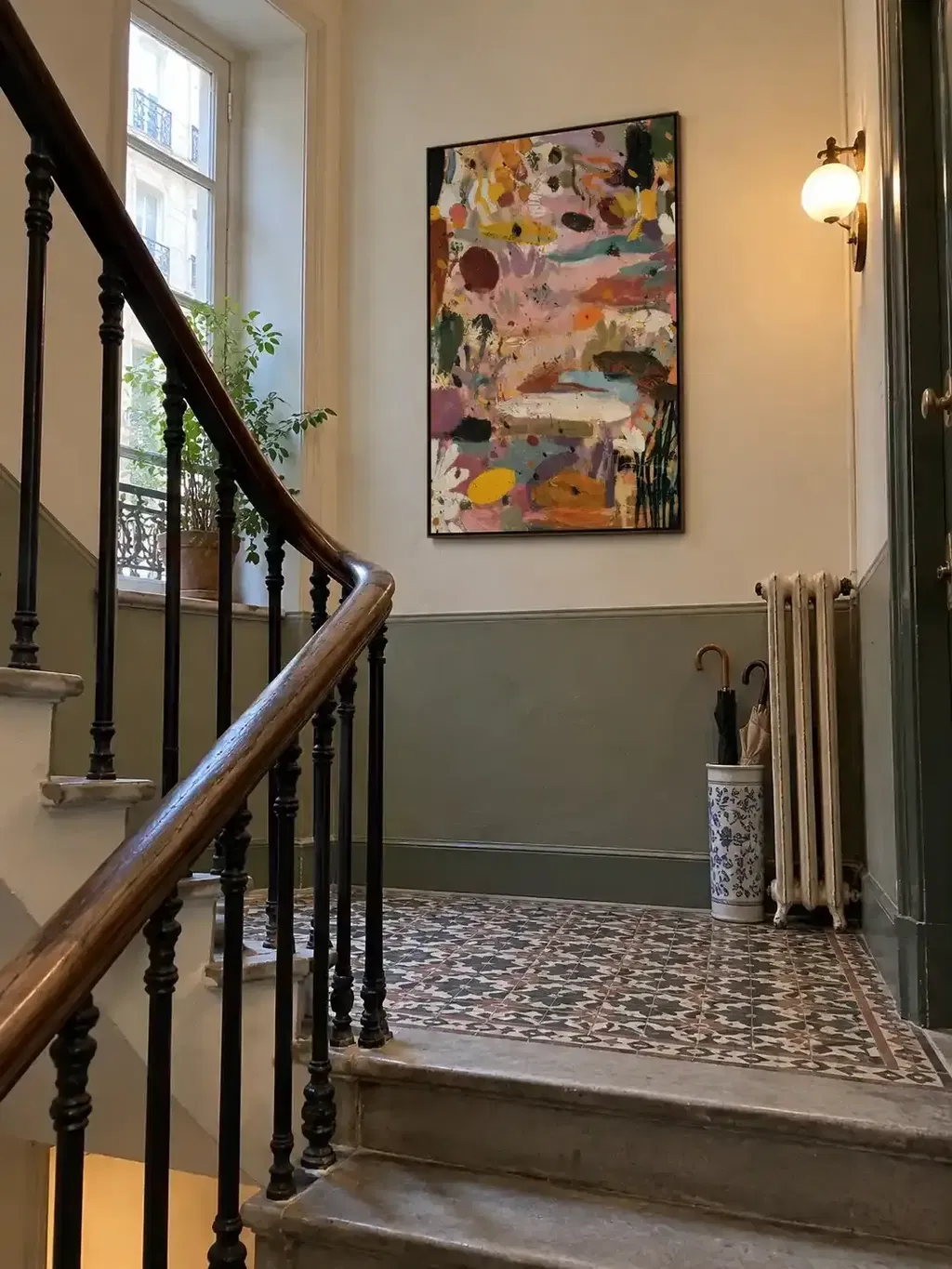
The Foyer as the Architectural Handshake
When you step into a home, the foyer acts as the "architectural handshake." It is the first point of contact, a transitional space that sets the emotional and aesthetic tone for the entire residence. Yet, for many homeowners and interior designers, this high-traffic zone remains a source of significant "buying regret." The risk of a high-visibility art purchase often leads to one of two outcomes: the "safe" but underwhelming retail print, or a fine art piece that feels disconnected from its surroundings due to poor scaling.
We are currently witnessing a structural shift in how art is consumed. According to Marketplace.org, high-end auction sales for pieces over $10 million plummeted 44% year-over-year in 2024. This retreat from purely financial art assets suggests that buyers are returning to real application value—investing in pieces that enhance their living environment rather than just their portfolios. In this climate, the demand for custom, hand-painted works that bridge the gap between "fine art authenticity" and "retail predictability" has never been higher.
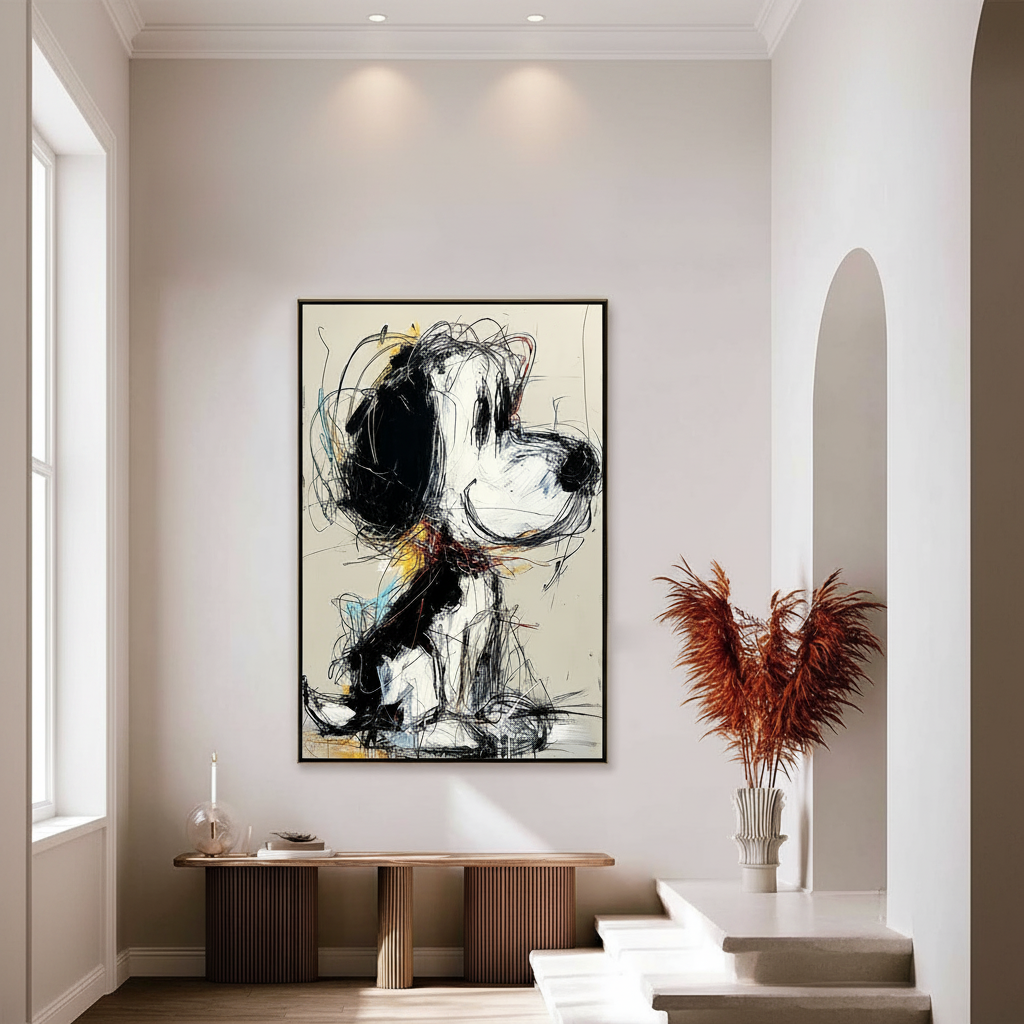
The most common friction point we observe in foyer design isn't the subject matter of the art itself, but its relationship with the console table. A "camera-ready" room relies on precise proportions. If the art is too small, it appears to "float" aimlessly; if it is too large, it swallows the furniture. This article provides a definitive framework for foyer console pairings, ensuring your entryway art feels anchored, authoritative, and intentionally scaled.

The Golden Rules of Foyer Proportions
Achieving a cohesive look requires moving beyond "eyeballing" and adopting a heuristic approach to dimensions. Based on common patterns from interior design support and spatial modeling (not a controlled lab study), we have identified three core rules that define the relationship between entryway furniture and wall art.
1. The 75% Rule: Width and Anchor
The most frequent mistake in entryway curation is undersizing the art relative to the console. To ensure the artwork feels anchored to the furniture rather than floating on the wall, we recommend the 75% Rule.
Logic Summary: Our analysis of residential entryway layouts assumes that art should span approximately 60% to 75% of the console's total width. This ratio creates a visual "unit" where the furniture acts as a pedestal for the art.
- The Formula: $Console Width \times 0.75 = Ideal Art Width$.
- Why it works: According to guidelines found in the Laiya Home Console Table Guide, maintaining this proportion prevents the art from being overwhelmed by the furniture's footprint.
- Self-Check: If your console is 60 inches wide, your art should ideally be between 36 and 45 inches wide.
2. The Vertical Gap: Creating a Visual Unit
The distance between the tabletop and the bottom of the frame is the "connective tissue" of the pairing. If this gap is too wide, the visual link is severed.
- The Heuristic: For console pairings, the bottom of the frame should typically sit 6 to 10 inches above the tabletop.
- The "Visual Unit" Principle: This spacing allows for the placement of decorative objects (vases, books, or sculptures) on the console without obscuring the art, while still maintaining a clear relationship between the two elements.
3. The 57-Inch Rule vs. Furniture Anchoring
Standard museum height dictates hanging art so the center is 57 to 60 inches from the floor (eye level). However, in a foyer with a console, the furniture takes priority. You must hang the art relative to the console, not just the floor. This is particularly crucial in grand foyers where high ceilings can create a "void" if the art is hung too low.

Architectural Harmony in High-Ceiling Foyers
Grand entryways with ceilings exceeding 10 feet present a unique challenge: the "Wall Void." A single standard-sized canvas, even if it follows the 75% rule for width, can be swallowed by the vertical expanse.
Vertical Stacking and Oversized Portions
In these scenarios, we often recommend "Vertical Stacking"—using two or three segmented pieces to draw the eye upward. Alternatively, an oversized portrait orientation can fill the void more effectively than a traditional landscape piece. As noted in Scaling Large Acrylic Canvases for Open-Plan Living Rooms, the goal is to balance the room's architecture so the art feels "built-in" rather than an afterthought.
The Designer’s "Ghosting" Technique
Before committing to a purchase, we advise using painter's tape to "ghost" the dimensions on the wall. This physical mockup allows you to see how the scale interacts with the specific light and shadows of your entryway. This step is the only way to ensure a 99.9% match between the digital vision and the physical room architecture.
The Authenticity Premium: Why "Human-Made" Matters
The foyer is where you signal your home's values. In an era of AI-generated prints, the tactile nature of hand-painted art has become the ultimate luxury.
The Psychology of the Brushstroke
Research from Columbia University confirms that consumers value art labeled "human-created" 62% higher than AI-generated alternatives. This isn't just sentiment; it is rooted in "essential identity." A study published by the University of Chicago suggests that digital replicas lack the artist's "soul," which collapses the perceived value of the piece.
When you pair a console with a hand-painted canvas, you are introducing micro-physical texture. Optical microprofilometry has proven that the millimeter-scale texture of oil and acrylic paintings is crucial to their aesthetic impact (Sensors Journal). These textures create a dynamic interplay with foyer lighting that a flat print simply cannot replicate.
2026 Trends: Texture and Whimsy
Looking toward 2026, high-end interior design is trending toward "understated elegance" where texture is the soul of the room (Design State of Mind). Zillow search data already shows a 21% rise in mentions of "artisan craftsmanship." A custom, hand-painted piece in your foyer aligns with this shift, moving away from mass-produced "fast decor" toward heirloom-quality investments.
Neuroaesthetics: The Health Impact of Entryway Art
The art in your foyer does more than just look good; it actively regulates your nervous system as you enter or leave your home.
Biophilic Healing
Integrating nature-themed murals or landscapes into a foyer is a core tenet of biophilic design. According to the World Health Organization (WHO), art interventions effectively alter clinical indicators for mental health. Specifically, passive art viewing activates the medial prefrontal cortex (mPFC) and the amygdala, optimizing emotional regulation circuits (NIH - Neurological mechanisms of creative arts).
A study from the University of Pennsylvania found that 73% of patients reported significant mood improvements when exposed to environmental artwork. By placing a high-quality, hand-painted landscape above your foyer console, you are creating a "decompression zone" that helps lower cortisol levels the moment you walk through the door.

Material Science and Safety in the Home
For homeowners—especially those with children or pets—the chemical composition of the art is as important as its aesthetic. The "hand-painted" label must be backed by safety standards.
VOCs and Indoor Air Quality
Indoor air pollution can be significantly higher than outdoor levels. The EPA warns that low-VOC paints and sealants are essential for maintaining a healthy environment.
Methodology Note: Our safety analysis of art materials relies on ASTM D-4236 standards. However, consumers should be aware that the ASTM label only confirms that warning labels comply with regulations, not that the pigment is inherently non-toxic.
| Material Component | Health/Environmental Impact | Mitigation Strategy |
|---|---|---|
| Cadmium Pigments | Group 1 Carcinogen (IARC) | Use high-quality synthetic alternatives |
| Solvents (Turpentine) | Central Nervous System neuropathy | Replace with walnut oil or water-based acrylics |
| Titanium Dioxide | 90% of white pigments; chemically inert | Standard in high-end non-toxic whites |
| Microplastics | Acrylic binders shed microplastics into soil/air | Use eco-friendly hemp or flax canvases |
For those sensitive to air quality, water-based acrylics are often preferred over traditional oils. Acrylic polymers form films through physical "coalescence" rather than oxidative cross-linking, making them more resistant to the embrittlement and off-gassing common in low-quality oil paints (JustPaint).
The Economic Value of a Curated Entryway
Beyond personal enjoyment, professional art curation in a foyer is a sound financial investment.
Property Value and "Art Geo-tags"
A 10-year data analysis by the Royal Society found that neighborhoods with higher "art" geo-tags experienced greater relative house price ranking gains. While this study focused on community murals, the principle extends to private residences. A "camera-ready" foyer significantly enhances "perceived value" during resale.
Supporting the Creative Economy
By choosing hand-painted art, you are also supporting a vital economic sector. In 2023, the U.S. arts industry created $1.2 trillion in value-added, accounting for 4.2% of GDP—surpassing agriculture and transportation (NEA). However, freelance artists remain financially vulnerable. Ethical brands that ensure fair artist compensation—a priority for 87% of consumers according to the Wharton School—provide a "fair trade" narrative that adds moral value to your purchase.
Summary Checklist for Foyer Console Pairings
To achieve a "low-regret" buying experience, use the following checklist before finalizing your order:
- Measure Twice: Ensure the art width is 60-75% of the console width.
- Mind the Gap: Aim for a 6-10 inch vertical space between the tabletop and the frame.
- Check Orientation: Is the wall wider than it is tall above the console? Use Landscape. If you have high ceilings and a narrow console? Use Portrait or Vertical Stacking.
- Verify Materials: Confirm the use of low-VOC paints and sustainable substrates like flax or hemp canvases (Cincinnati Art Museum).
- Ghost the Wall: Use painter's tape to visualize the scale in your specific architectural context.
By following these frameworks, you move from "decorating" to "curating." You create a foyer that not only looks like a designer-staged room but also functions as a healthy, welcoming, and high-value introduction to your home.
Disclaimer: This article is for informational purposes only and does not constitute professional interior design, medical, or environmental health advice. Always consult with a qualified professional regarding structural changes to your home or the use of specific chemical materials in your living environment.