Commercial Lobby Grandeur: Scaling Art for High-Traffic Entries
In the current economic landscape, the definition of corporate "prestige" is undergoing a fundamental shift. For decades, the high-end art market was dominated by vanity auction pieces—multi-million dollar assets that often sat in climate-controlled storage rather than on office walls. However, recent data from Marketplace.org reveals that sales of these $10 million+ "financialized" artworks plummeted by 44% in 2024. As a result, we are seeing commercial interior designers and facility managers return to what we call "real application value."
In high-stakes environments like corporate lobbies and hotel foyers, art is no longer just a line item for decoration; it is a silent ambassador. It must project brand authority while navigating the grueling physical demands of a high-traffic entry. We have found that the most successful projects bridge the gap between the soul of hand-painted texture and the cold predictability of B2B procurement.
The Physics of Scale: Architectural Voids and the 60/40 Heuristic
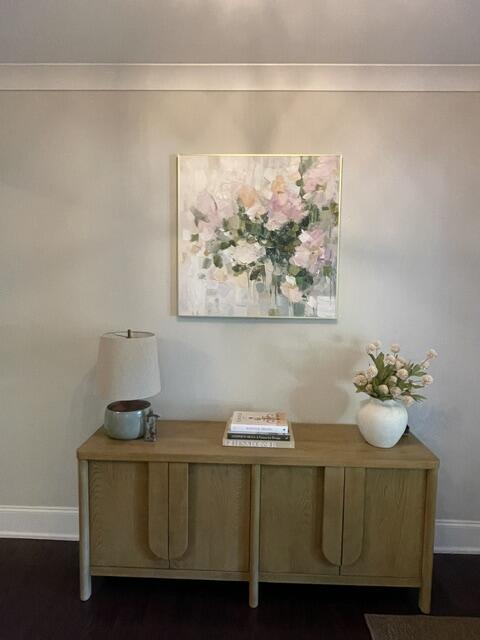
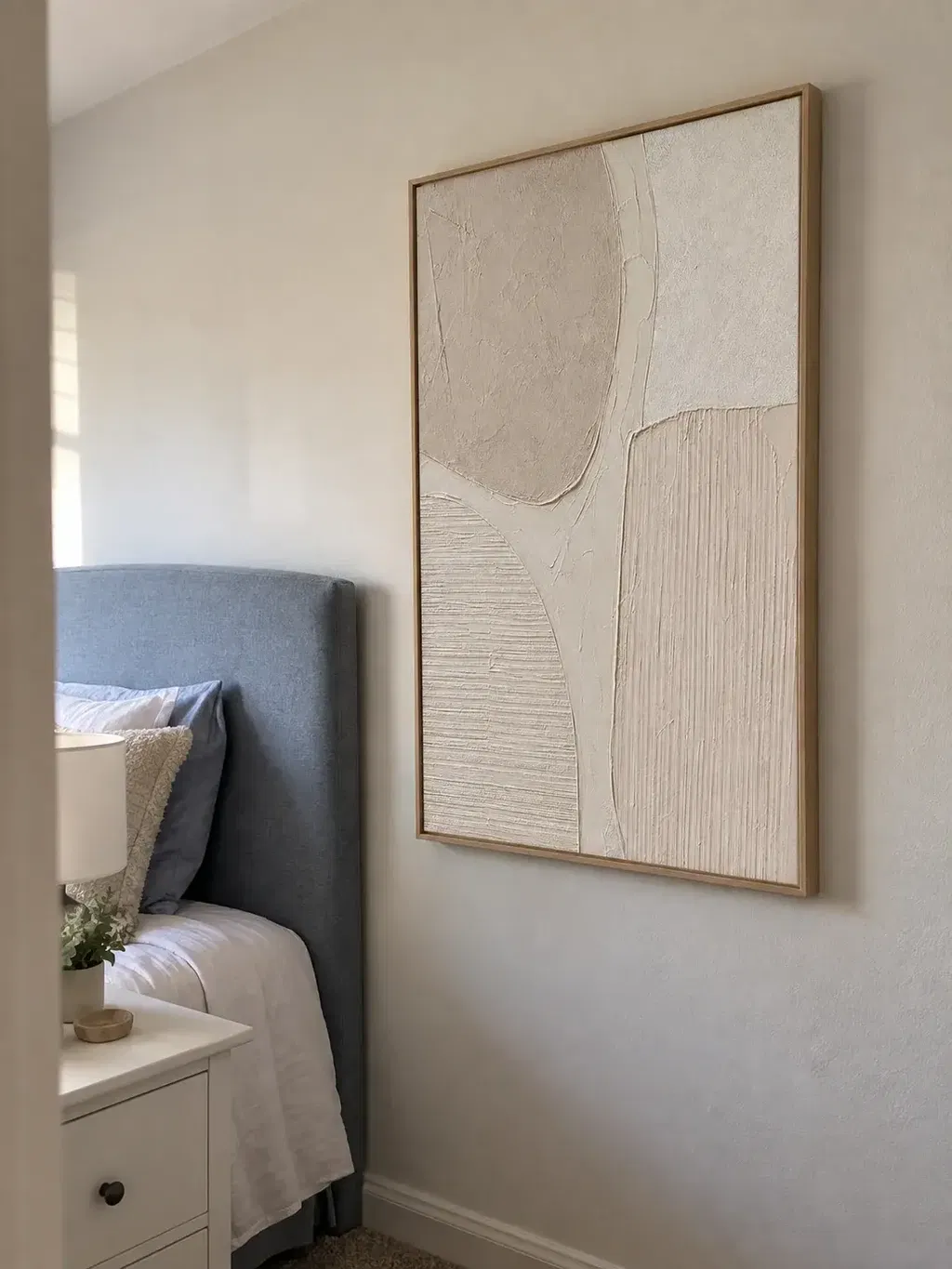
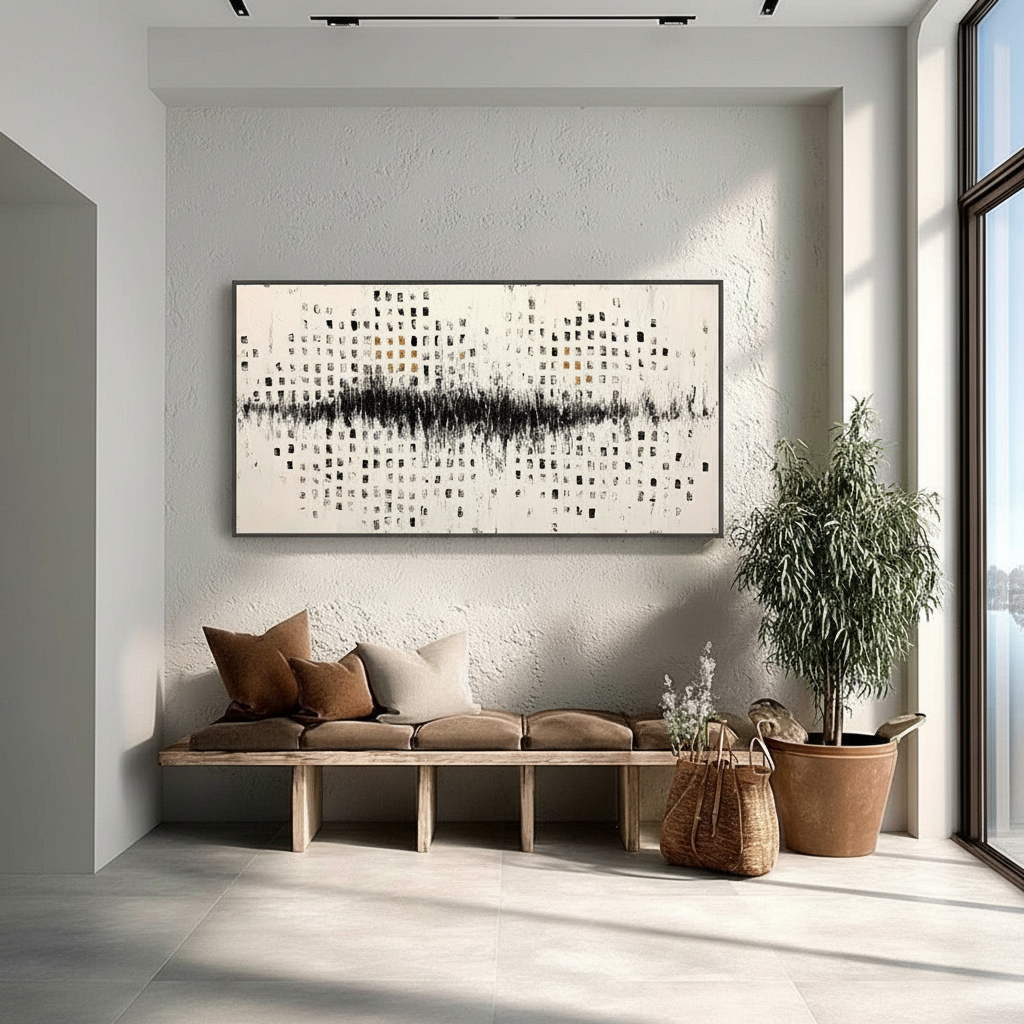
The most common mistake we observe in commercial lobbies is "floating art syndrome." This occurs when a designer selects a piece based on its beauty rather than its relationship to the architectural void. A standard residential-sized painting will inevitably look like a postage stamp when placed in a grand foyer with 20-foot ceilings or a 30-foot commercial office bay.
To solve this, we advocate for the 60/40 Rule of Scale.
Logic Summary: Our 60/40 heuristic is a practical baseline designed to ensure visual anchoring in grand architectural voids. It assumes a single-wall focal point and standard commercial ceiling heights.
Parameter Value/Range Rationale Wall Width Coverage ~60% Prevents the art from being "swallowed" by the wall. Negative Space Margin ~20% on each side Maintains architectural breathing room. Minimum Height 48–60 inches Ensures vertical presence in high-ceiling foyers. Viewing Distance 75–150 cm Optimized for impact and readability (Source: Trowbridge). Ceiling Clearance Min. 24 inches Prevents the piece from feeling "cramped" against the ceiling.
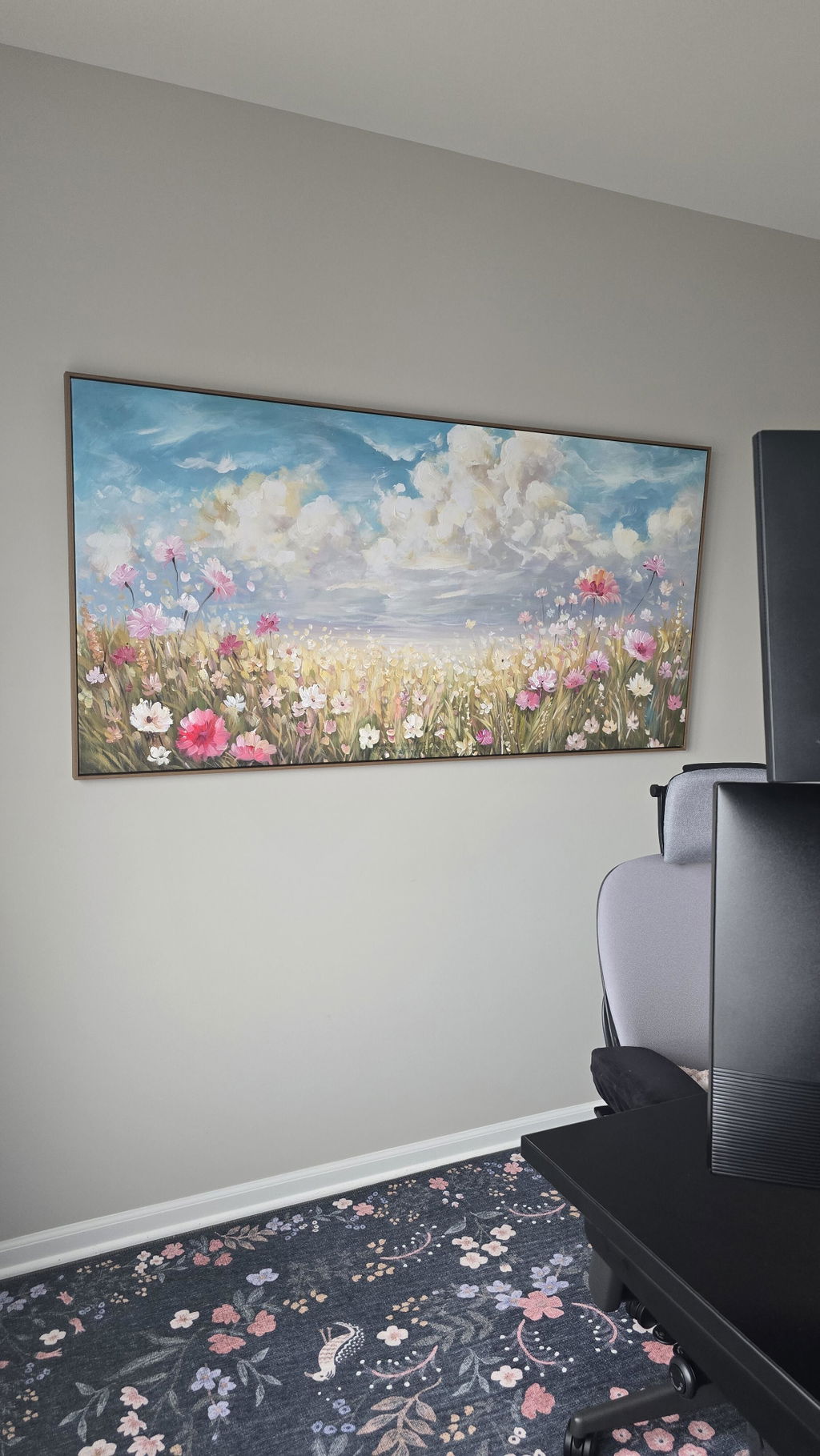
For exceptionally wide walls, we often recommend a diptych or triptych configuration. This is not just an aesthetic choice; it is a logistical necessity. Multi-panel art allows for a massive visual footprint while simplifying shipping and installation, effectively bypassing the exorbitant costs of specialized "oversized" freight.

The Psychology of Presence: Why Hand-Painted Beats Digital
In an era where AI-generated prints are ubiquitous, the value of the "human hand" has become a measurable commercial premium. A landmark study by Columbia University confirmed that consumers value art labeled "AI-generated" approximately 62% lower than authentic human-created pieces.
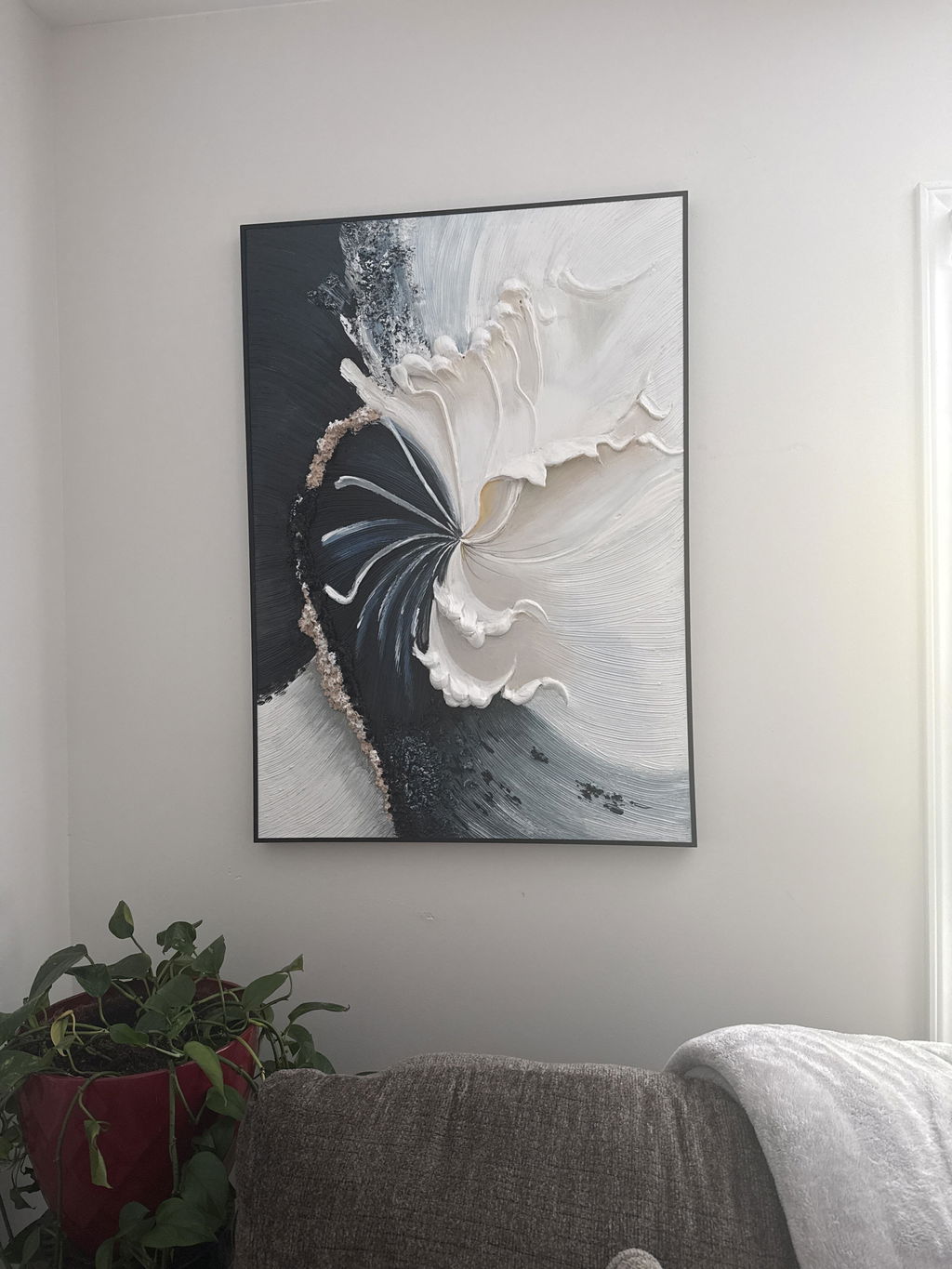
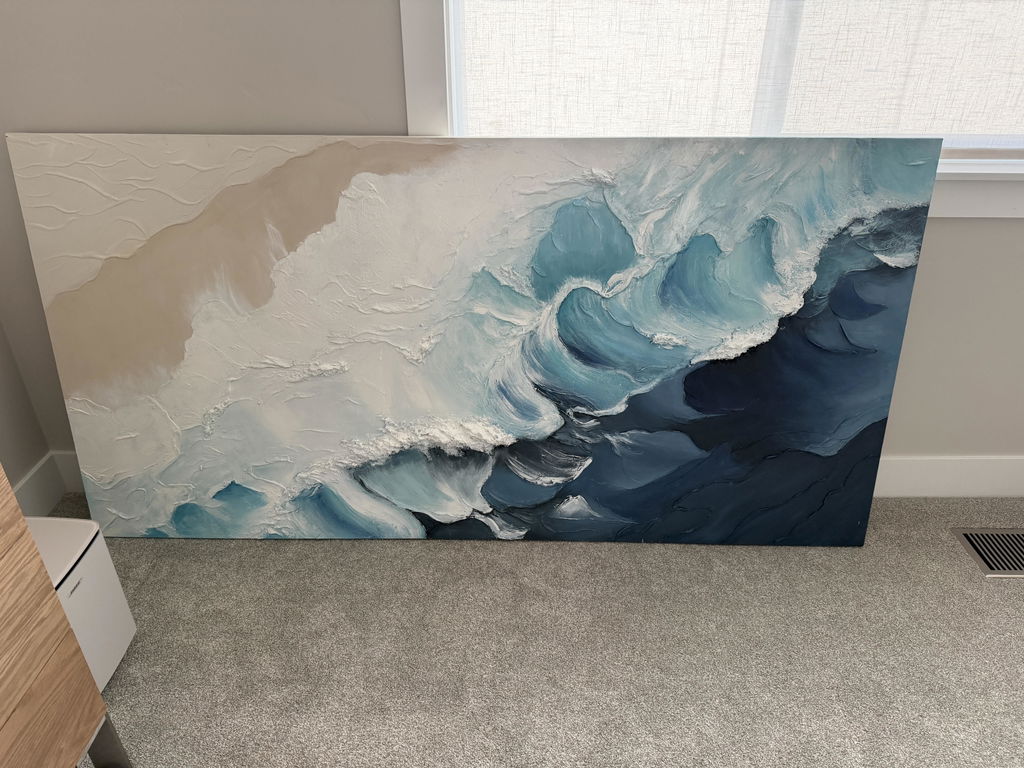
But why? The answer lies in what researchers at the University of Chicago call Essential Identity. Digital prints, regardless of their resolution, lack the "soul" or the physical trace of the creator. In a corporate lobby, where you are trying to establish trust and authenticity, a flat print can feel like a generic placeholder. In contrast, heavy impasto texture—the three-dimensional relief of oil or acrylic paint—activates the viewer's medial prefrontal cortex (mPFC), a region associated with emotional regulation and comfort (Source: NCBI).
We have seen this play out in clinical settings as well. A review by the University of Pennsylvania noted that 73% of patients reported significant mood improvements when exposed to high-quality environmental art. For a facility manager, this isn't just about "pretty pictures"—it's about "public health infrastructure" that reduces employee burnout and visitor stress.
Strategic Implementation: Lighting, Height, and High-Traffic Safety
Commercial lobbies are not galleries; they are functional, high-velocity zones. This requires a different set of installation standards than a private residence.
1. The 63-Inch Center Rule
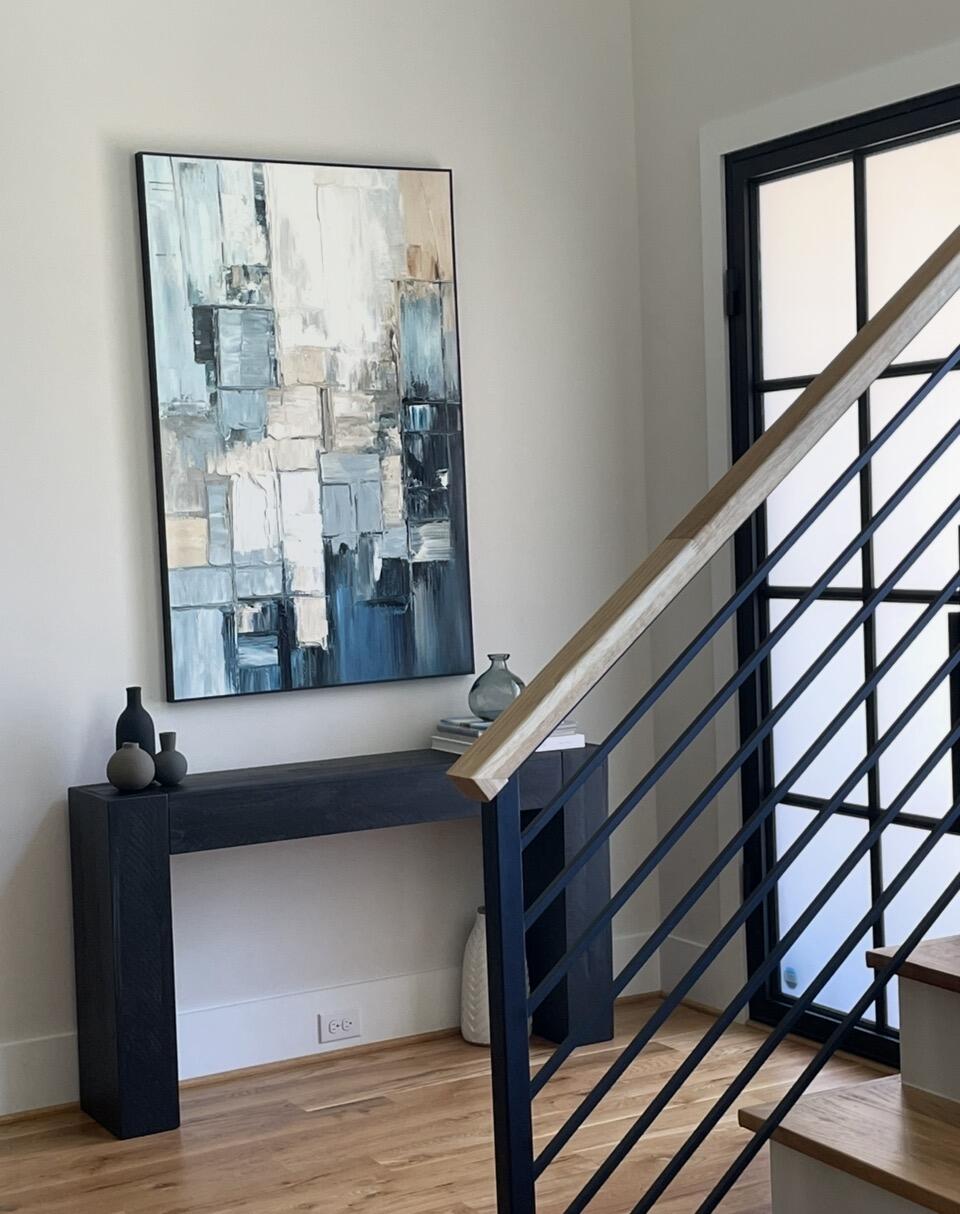
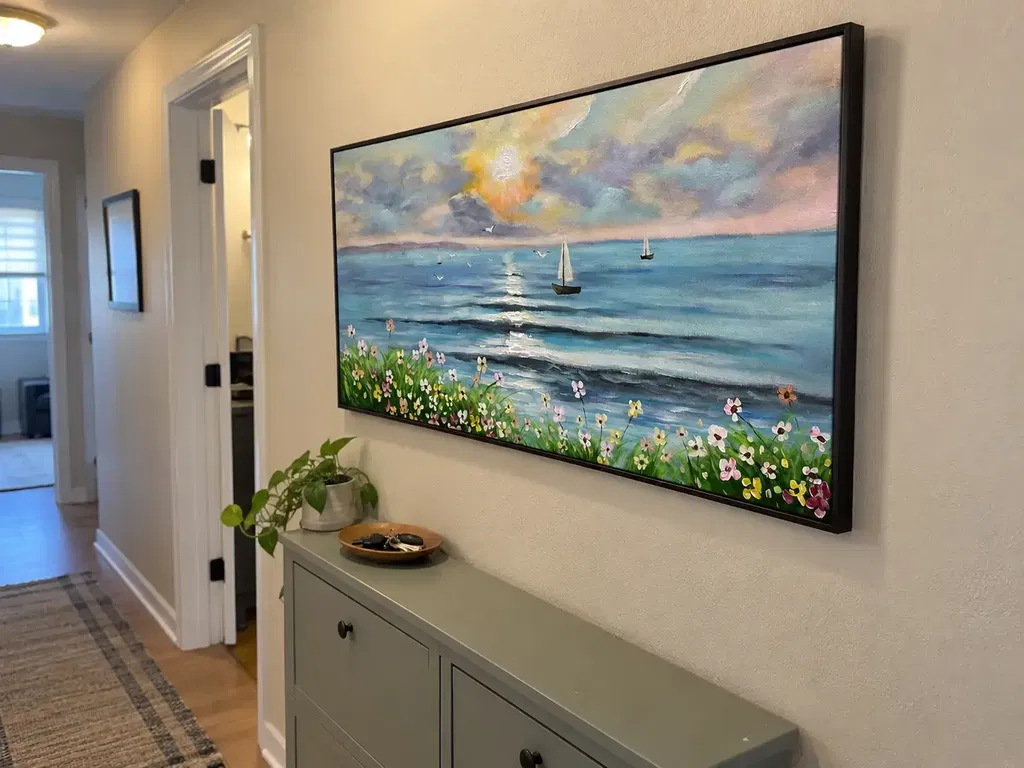
While the residential standard for hanging art is 60 inches "on center" (eye level), we recommend hanging pieces 2–3 inches higher (62–63 inches) in high-traffic entries. This subtle adjustment protects the canvas from accidental contact with rolling luggage, cleaning equipment, or delivery carts.
2. Lighting the Texture
Grand lobbies often feature significant glass frontage, which can create blinding glare on high-gloss finishes. We suggest pairing heavy impasto textures with 3000K–3500K LED track lighting. This specific temperature range highlights the physical brushwork without washing out the colors. According to optical theory, the scattering of light across the physical peaks and valleys of the paint is what gives hand-painted art its depth—a depth that digital prints cannot replicate.
3. Acoustic and Environmental Benefits
Large lobbies are notorious for being "echo chambers." While art is not a replacement for dedicated acoustic panels, large-format canvases can contribute to broader acoustic coverage by breaking up large, flat, reflective surfaces.

The B2B Procurement Model: Mitigating the Risk of "The Unknown"
The biggest barrier for facility managers in commissioning hand-painted art is the lack of "decision safety." Unlike a furniture order with a fixed SKU, art can feel unpredictable. This is why we utilize a "Preview-and-Approve" model. By providing high-resolution digital proofs of the actual hand-painted piece before it ships, we eliminate the risk of a mismatch between the vision and the reality.
Furthermore, we address the "invisible labor" that often leads to undervaluing art. According to the Cincinnati Artist Report, the market frequently ignores the mental and physical output required for large-scale work. We bridge this by ensuring fair artist compensation, a practice that Wharton School research shows is supported by 87% of modern consumers.
Economic Impact and Property Valuation
Investing in large-scale art is a proven driver of property value. A Royal Society analysis of 10-year data found that neighborhoods and commercial districts with higher "art density" saw significantly higher property price gains. In Chicago, the Millennium Park public art projects were credited with driving $1.4 billion in real estate-related growth.
For commercial developers, the ROI of art investment can be as high as 7:1. A single, well-placed mural or large-format canvas acts as a "marketing trump card" that helps lease up office space in a post-pandemic market where vacancy rates remain a challenge.
Safety, VOCs, and LEED Certification
In the B2B sector, health and safety are non-negotiable. Many traditional oil paints contain volatile organic compounds (VOCs) and pigments like lead or cadmium that are strictly regulated. For example, the EU REACH regulation comprehensively prohibits lead carbonate concentrations exceeding 0.1%.
For healthcare facilities and corporate offices seeking LEED or WELL certification, we prioritize low-VOC acrylics. Research from Aalto University proves that high-quality acrylic coatings emit significantly lower VOCs during the curing process compared to traditional solvent-based paints. This ensures that the "brand new" lobby smell isn't actually a cocktail of toxic vapors.

Final Thoughts for the Commercial Designer
Scaling art for a commercial lobby requires a balance of architectural rigor and artistic soul. By adhering to the 60/40 rule, prioritizing human-made texture over digital prints, and ensuring strict adherence to B2B safety standards, you can transform a vacant entryway into a powerful brand statement.
Large-scale art is not just an expense; it is a long-term asset that preserves the "essential identity" of your space while providing measurable returns in property value, employee wellness, and visitor trust.
YMYL Disclaimer: This article is for informational purposes only and does not constitute professional architectural, legal, or medical advice. For specific safety standards regarding indoor air quality or structural installation of large-scale art, please consult with a certified industrial hygienist or a licensed structural engineer.
References
- Marketplace: The expensive art market continues to struggle
- Columbia Business School: Human-Made vs. AI Art Perception Study
- Americans for the Arts: Arts & Economic Prosperity III
- Royal Society: Quantifying the link between art and property prices
- NCBI: Neurological mechanisms of creative arts
- EPA: Indoor Air Quality and Low-VOC Paints
- REACH: Restriction on Lead Carbonates
- EB3 Construction: Commercial Building Design Standards
- University of Pennsylvania: Visual Art in the Built Environment