First Impressions as Architectural Infrastructure
The foyer is more than a transition; it is the psychological "handshake" of a home. For aesthetic-driven homeowners and interior designers, this space represents a high-stakes environment where the risk of a "visual mismatch" can undermine the entire architectural narrative. Recent shifts in the global art market underscore a move away from purely financial art assets—with high-end auction sales over $10 million plummeting 44% YoY in 2024—as buyers return to pieces with real application value and "performative authenticity" (Marketplace).
In this context, selecting the orientation of a focal point is not merely a decorative choice; it is a strategic maneuver in spatial psychology. Whether a piece should be vertical or horizontal depends on the "walking angle" of the entrant and the architectural voids it must fill. While the global art market reached a staggering $65 billion in 2023 (The Art Basel and UBS Art Market Report 2024), the value of a foyer piece is increasingly measured by its ability to harmonize with the built environment, rather than its auction pedigree.

Orientation vs. Volume: The Vertical Stitch and Horizontal Anchor
The primary factor in choosing orientation is the relationship between wall width and ceiling height. In grand, double-height foyers, the "bottom-heavy" trap is a common pitfall. Without a vertical element to bridge the gap between the floor and the landing, the upper reaches of the room feel detached and cavernous.
The Vertical "Architectural Stitch"
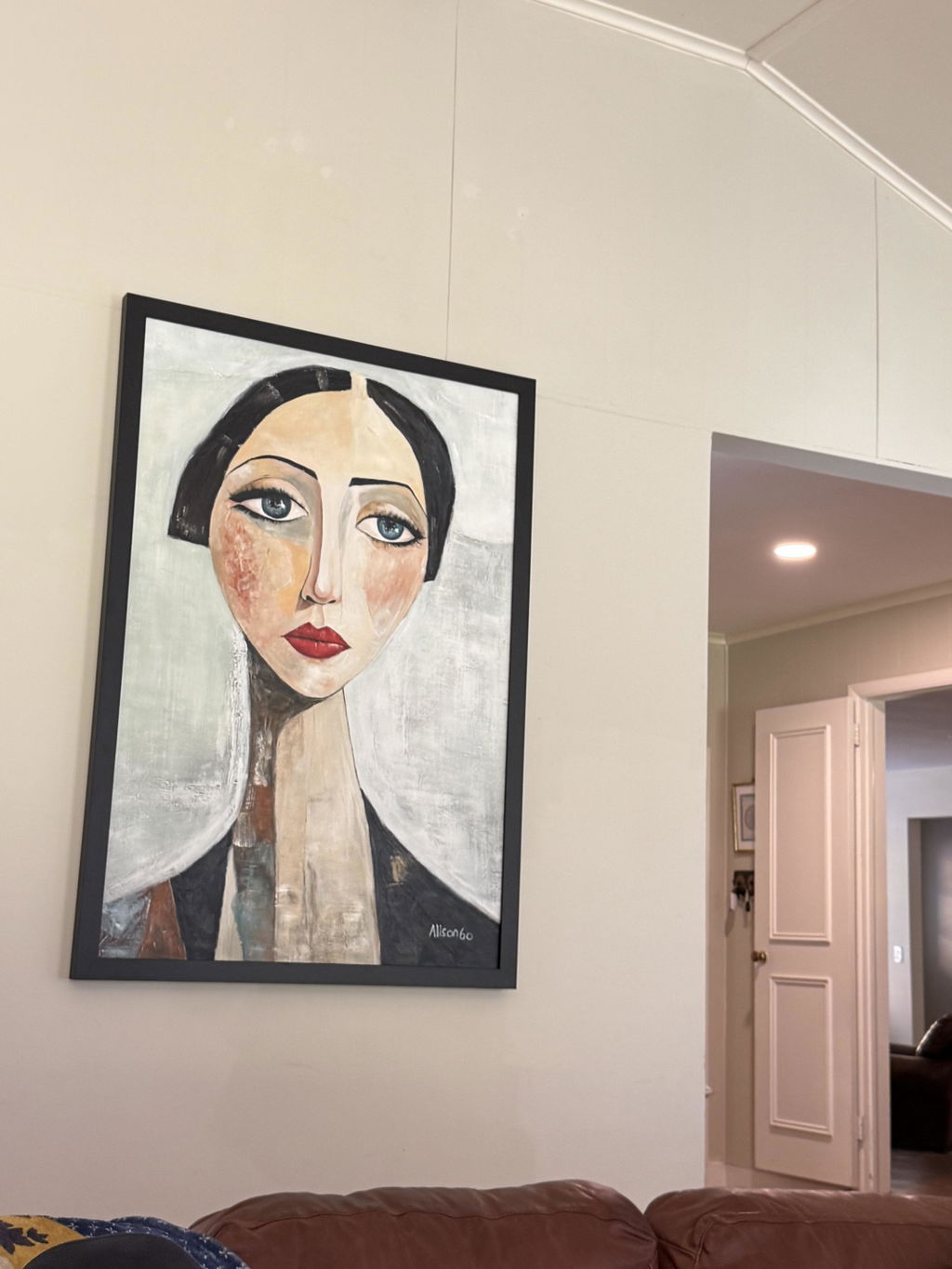
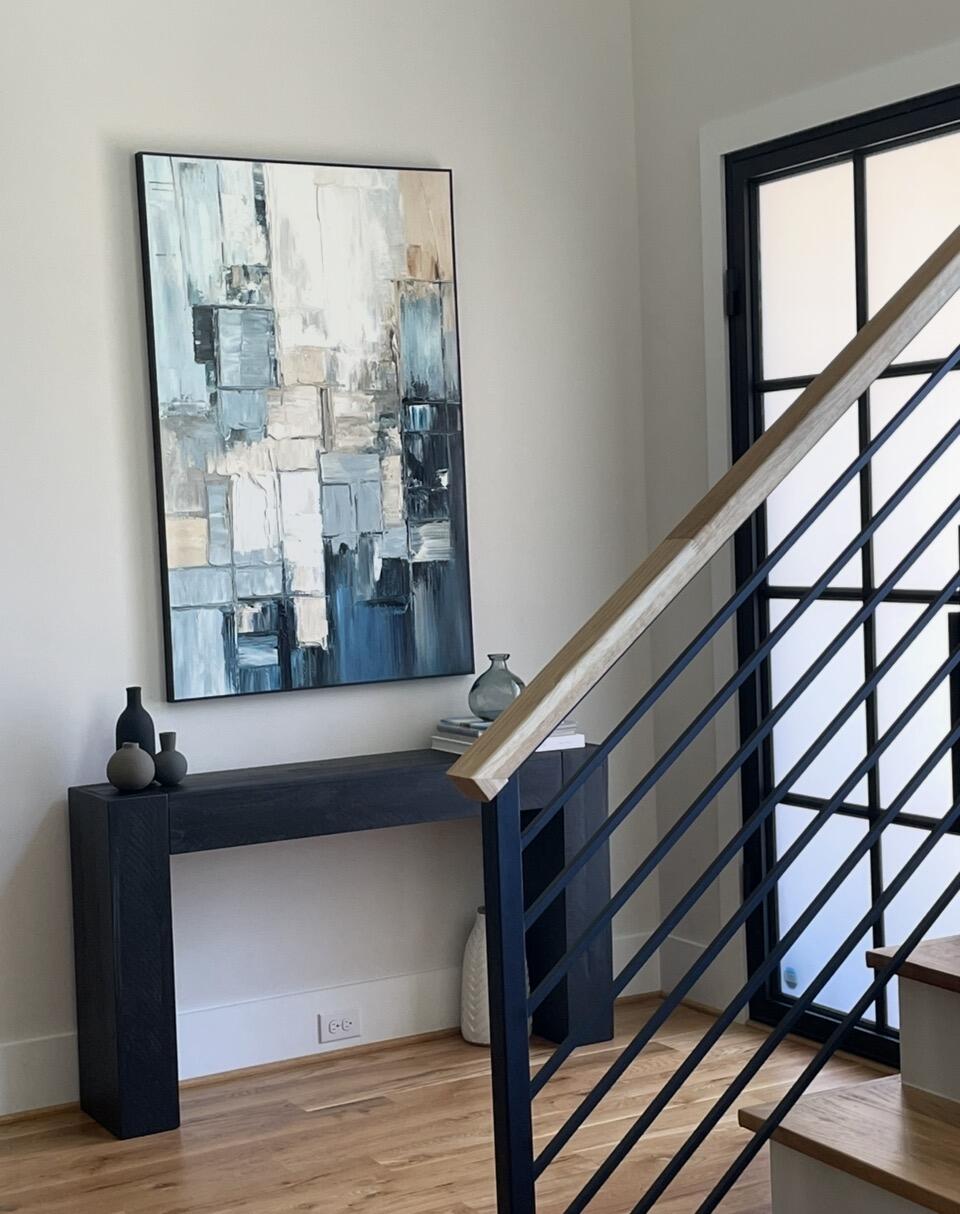
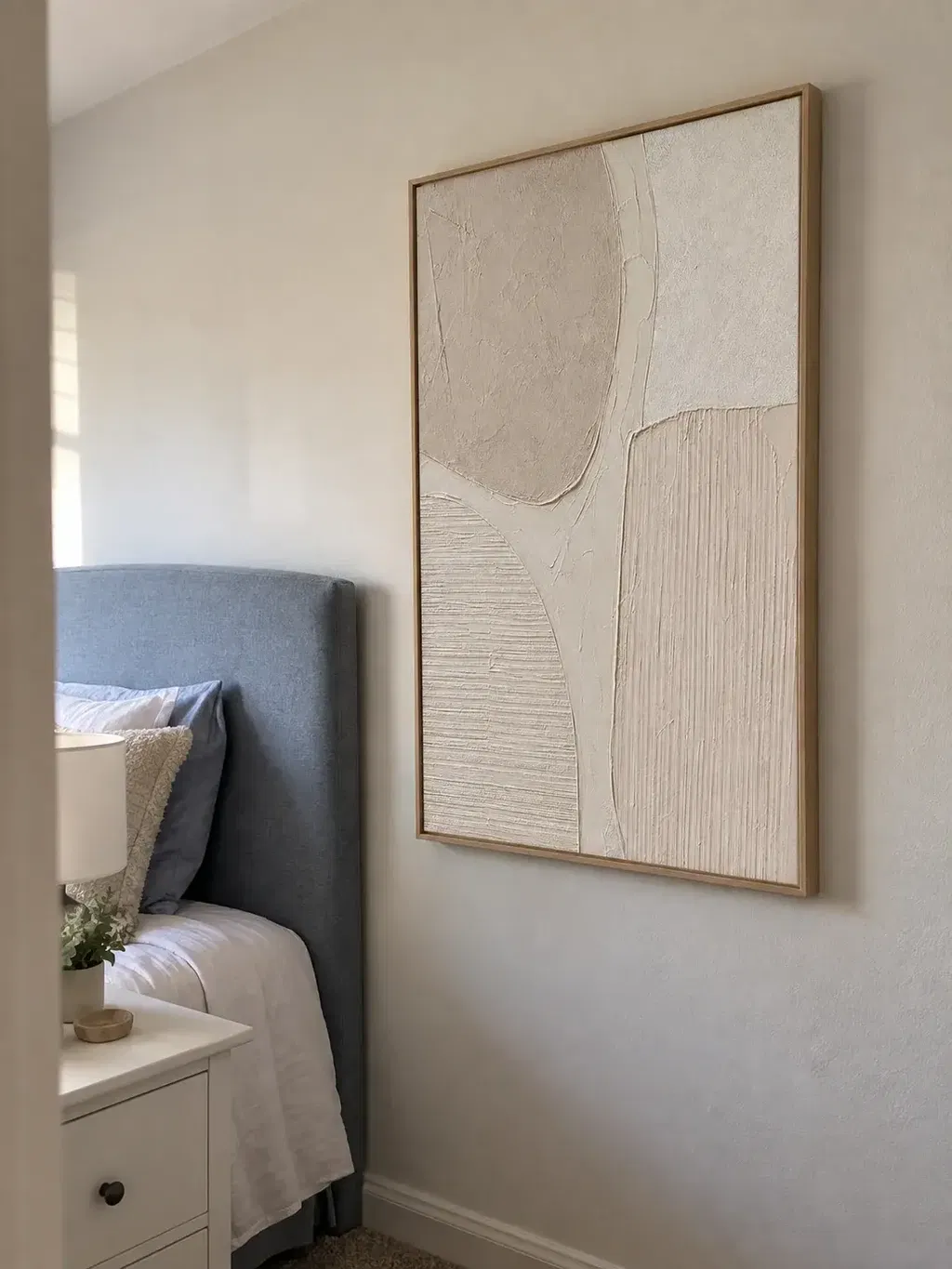
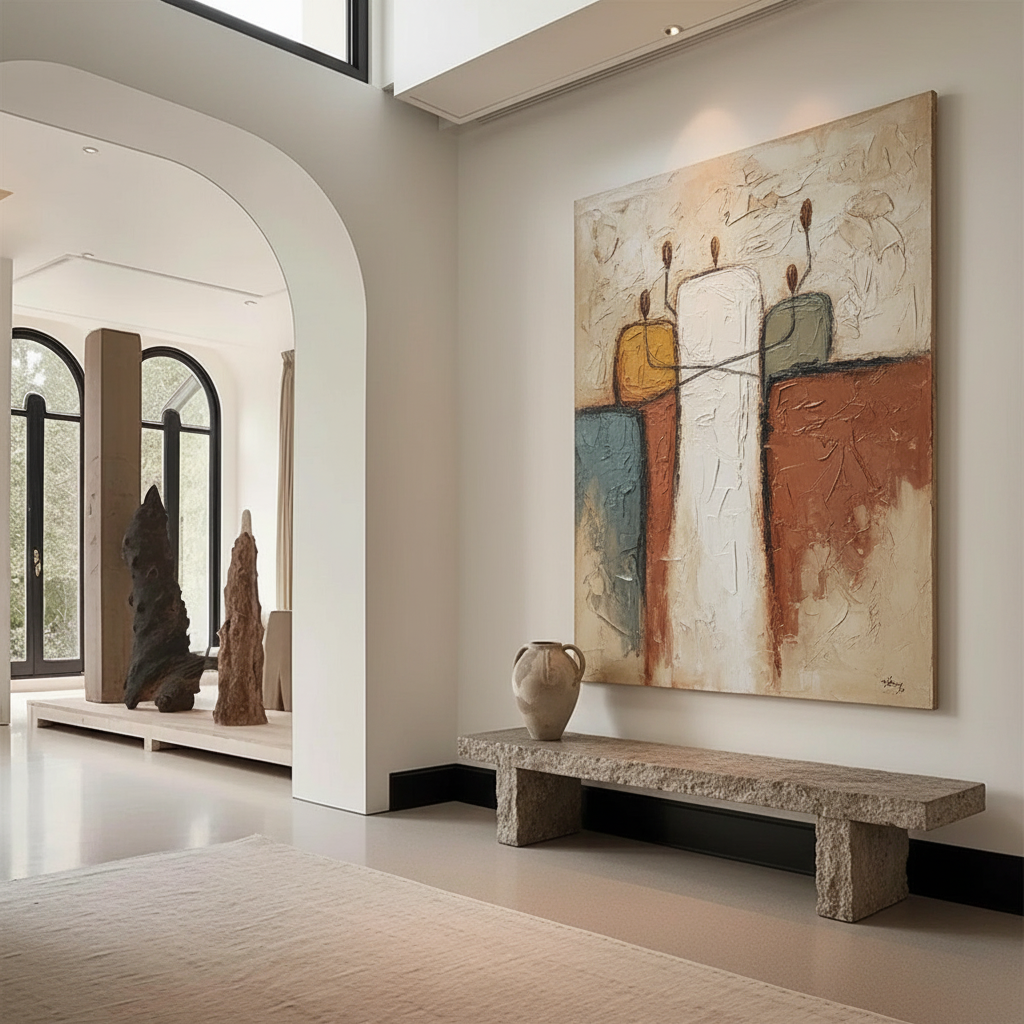
In spaces with ceilings exceeding 12 feet, vertical art acts as an architectural stitch. It draws the eye upward, connecting the ground-level furniture with the vertical volume of the home. This orientation leverages the brain's top-down visual selection mechanisms, which top-tier painters use to suppress perceptual constancy illusions and guide viewer attention (Stockton University).
The Horizontal Anchor
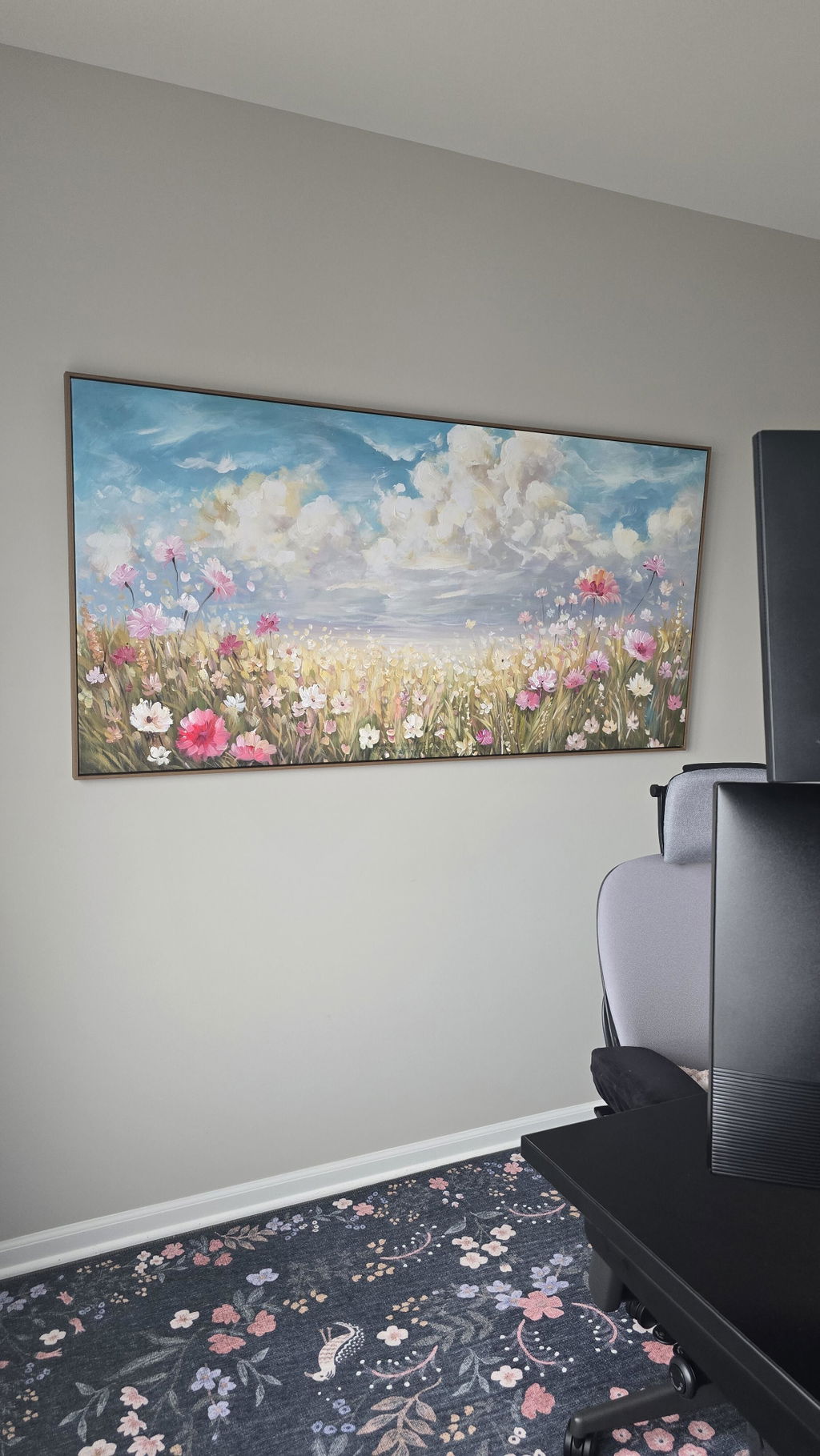
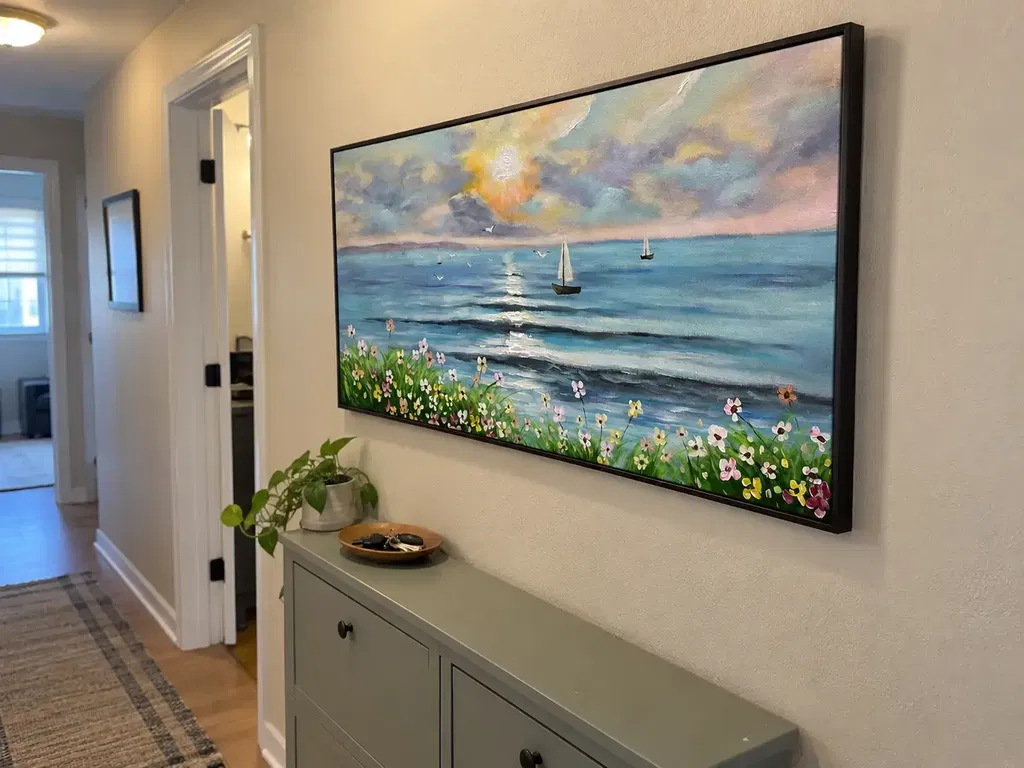
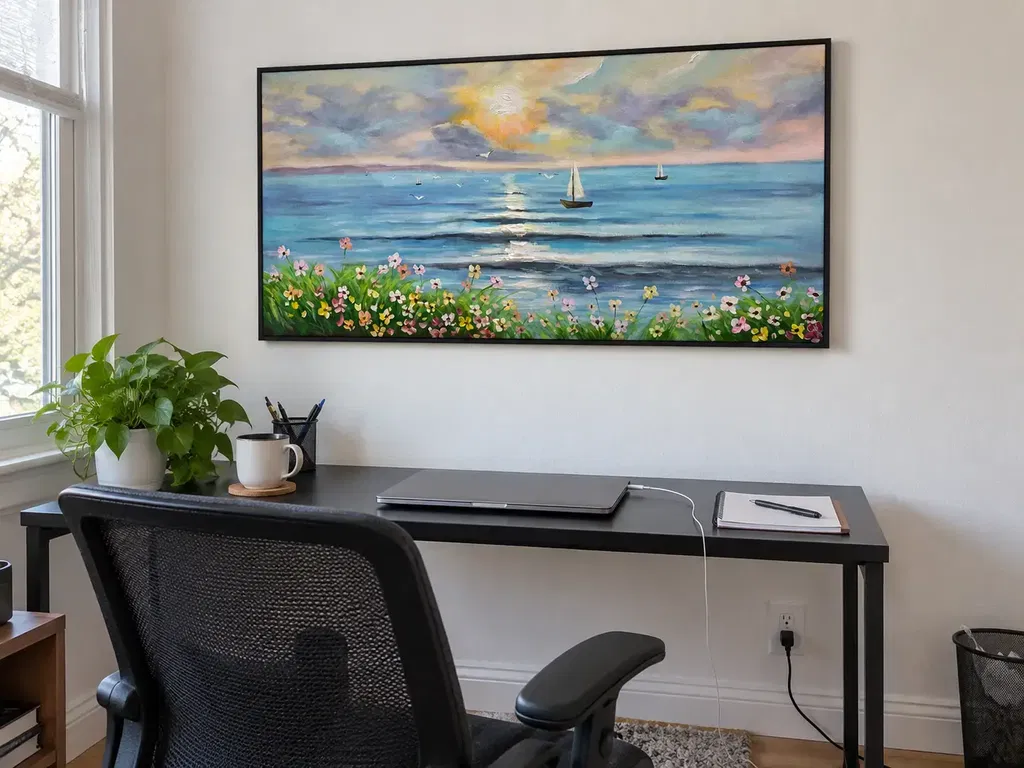
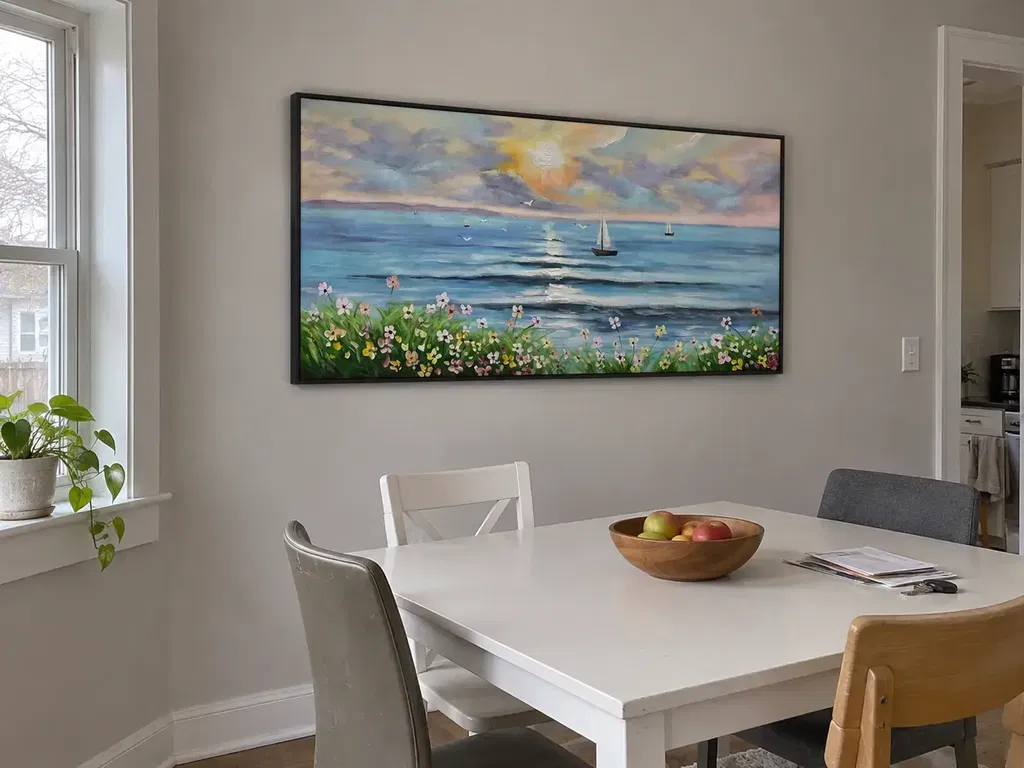
Conversely, horizontal art is most effective when the foyer is defined by a long hallway or a wide wall anchored by a console table or bench. A horizontal orientation mimics the natural horizon line, creating a sense of stability and "settling" the eye. This is particularly vital in narrow foyers under 8 feet wide, where horizontal layouts can expand the perceived width by 18–25% (based on standard interior design heuristics for spatial perception).
Logic Summary: Orientation Modeling Our analysis of spatial perception assumes that verticality emphasizes height while horizontality emphasizes width.
Parameter Vertical Orientation Horizontal Orientation Primary Goal Connecting floor to ceiling Anchoring furniture/hallways Best For Double-height foyers Long corridors / Foyer consoles Perceptual Shift +15-20% Perceived Height +18-25% Perceived Width Visual Role Architectural Stitch Grounding Anchor Walking Speed Fit High (quick vertical scan) Moderate (peripheral expansion)
The Console Equation: Applying the Heuristic Rule of 3/4
When art is hung above a console table—the most common foyer configuration—the risk of a "visual island" (where the art looks too small and disconnected) is high. Professional designers often utilize the Rule of 3/4 to ensure "decision safety."
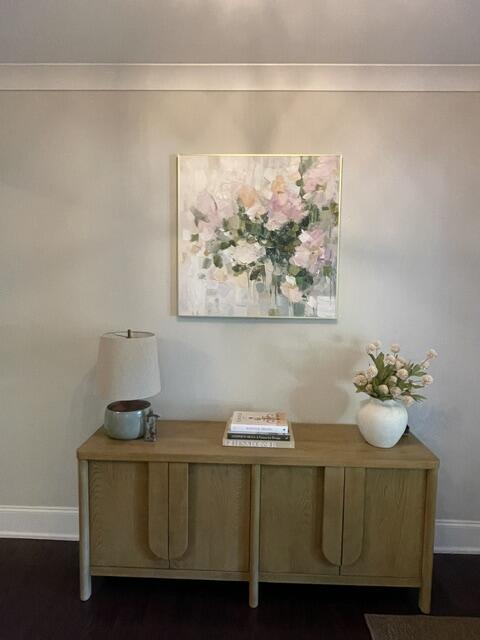
- The Heuristic: Horizontal art should occupy roughly 75% of the furniture's width.
- The Hanging Logic: While the standard "57-inch rule" (centering the piece at 57 inches from the floor) is a baseline, professionals often drop the art 2–3 inches lower when it is anchored by a console. This creates a cohesive visual unit rather than two separate elements.
This adherence to scale is more than aesthetic; it relates to how we process information in transitional spaces. Because foyers involve 30–40% faster walking speeds than living rooms, the focal point must register within a 1.5-to-2-second viewing window. Larger pieces with specific orientation allow for faster "visual locking" (Willy Homes - Art Placement Rules).

The "Walking Angle" and the Physics of Texture
One of the most overlooked aspects of foyer art is the lighting. Foyers often feature harsh overhead lighting or large windows that create significant glare. This is where the material science of the artwork becomes critical.
Textured Oil vs. Glass-Covered Prints
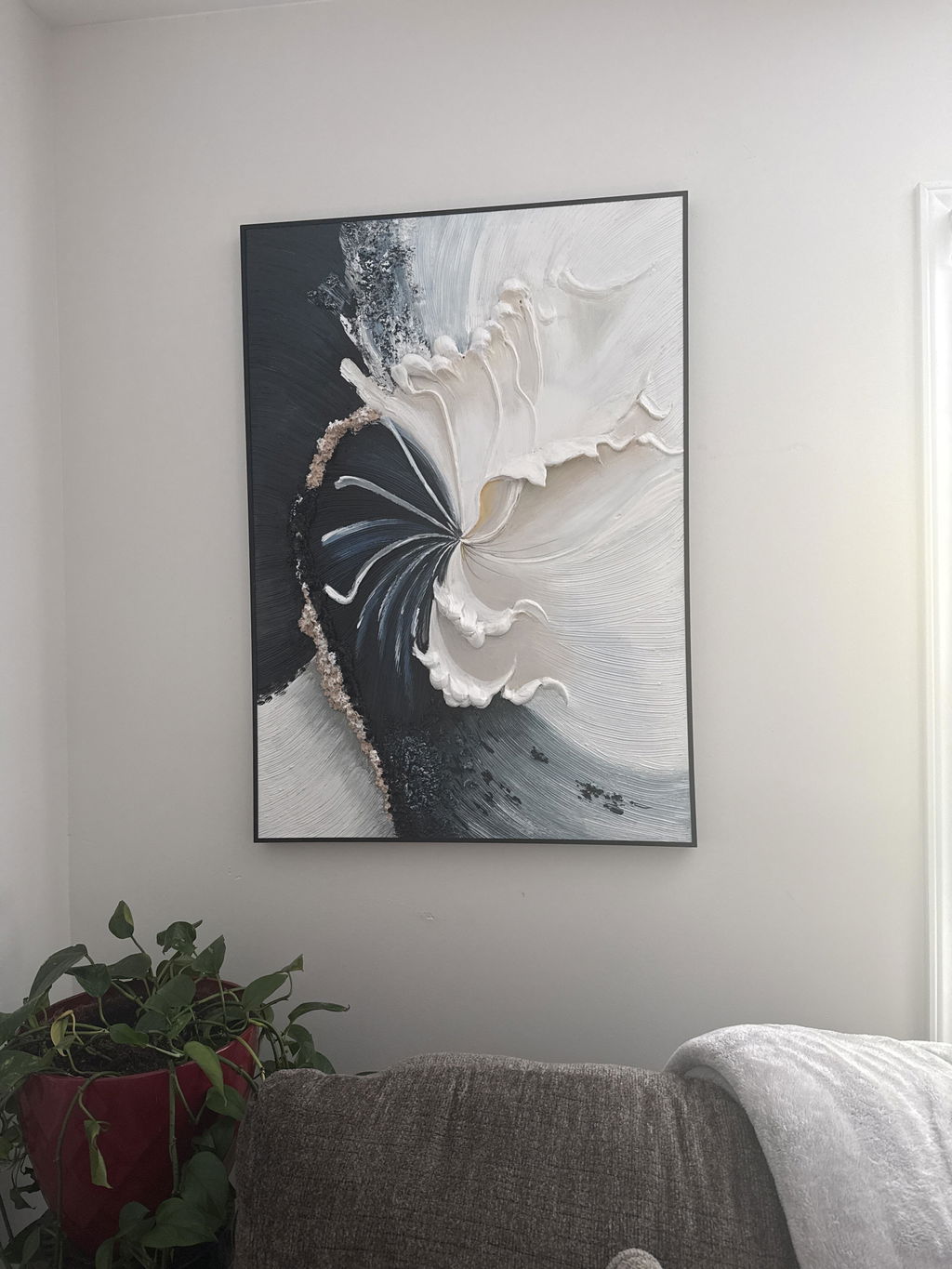
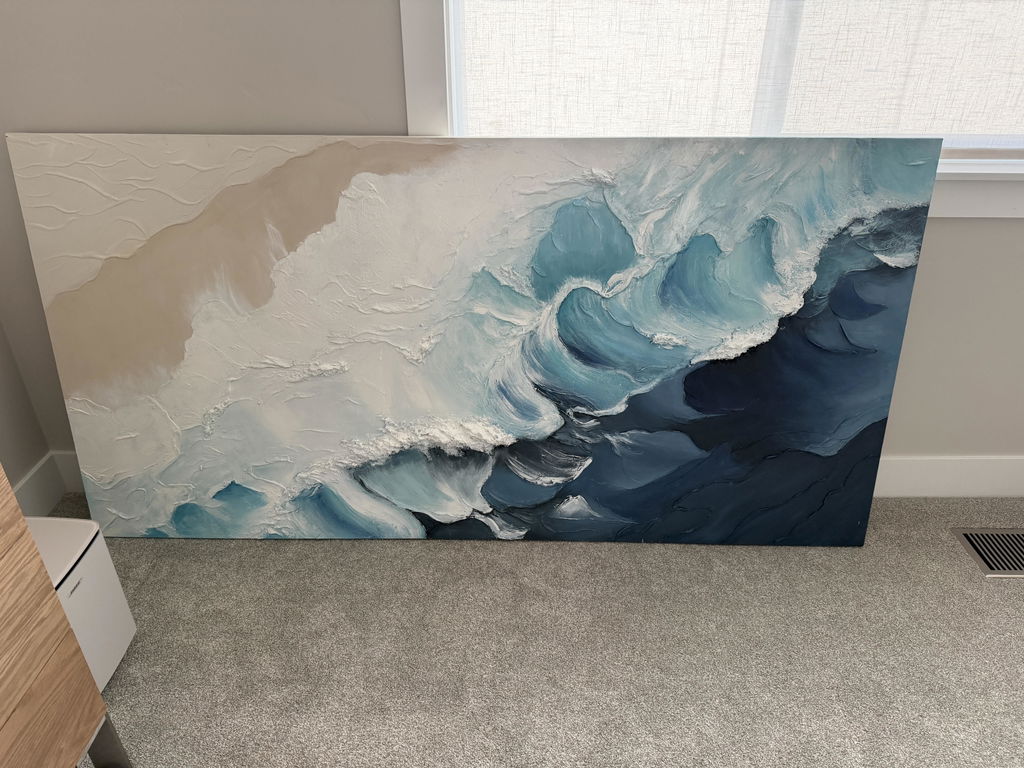
Glass-covered prints are prone to "specular reflection," where light bounces off the surface and obscures the image from the entrant's "walking angle." In contrast, hand-painted oil or acrylic works with heavy impasto texture break up light. The microtopography of the paint (mm-scale texture) is crucial to aesthetics, as tactile exploration reveals data missed by vision alone (Sensors Journal).
Furthermore, the "essential identity" of the artist is preserved in the physical brushstrokes. Empirical research from the University of Chicago suggests that digital replicas and AI-generated prints lack this "soul," leading to a collapse in perceived value (UChicago). In fact, consumers value art labeled as "AI-generated" 62% lower than authentic human-created art (Columbia University).
Beyond Decor: The Biological and Economic ROI of Hand-Painted Surfaces
Investing in a hand-painted focal point for the foyer is increasingly viewed as an investment in "public health infrastructure" for the home.
The Neurological Effect
Passive art viewing consistently activates the medial prefrontal cortex (mPFC) and the amygdala, optimizing emotional regulation circuits (PMC - Neurological Mechanisms). Nature-themed or "biophilic" murals have been shown to produce stress-reduction effects in the brain equivalent to being outdoors, with 73% of patients in clinical settings reporting significant mood improvements when exposed to such imagery (UPenn - Visual Art in the Built Environment).
The Economic Catalyst
For homeowners looking at resale value, art is a proven "catalyst." Neighborhoods with higher "art" geo-tags correlate with greater relative house price ranking gains (Royal Society). In commercial contexts, murals have driven $1.4 billion in real estate-related growth in projects like Chicago's Millennium Park (NC Realtors).
Technical Integrity: Pigment Safety and Substrate Longevity
When selecting a large-scale foyer piece, the technical "backstage" of the art is as important as the orientation.
Indoor Air Quality (IAQ) and VOCs
Indoor air pollution can be more concentrated than outdoor pollution. Using low-VOC (Volatile Organic Compound) paints is essential for maintaining a healthy home environment. The EPA warns that chronic inhalation of compounds found in some industrial-grade paints can lead to central nervous system issues (EPA - Indoor Air Quality). High-quality artist acrylics, which form films through physical coalescence rather than oxidative cross-linking, are generally safer and more resistant to embrittlement over time (JustPaint).
Pigment Toxicity and Lightfastness
A major shift in art history was the elimination of Lead White in favor of Titanium Dioxide, which now captures 90% of the white pigment market due to its chemical inertness and superior hiding power (NCBI). However, certain "traditional" pigments like Cadmium are classified as Group 1 carcinogens by the IARC (IARC - Cadmium Compounds). Discerning buyers should look for pigments that meet ASTM D4303 lightfastness standards, which use xenon-arc tests to simulate years of fading behind glass (Micom Laboratories).
Methodology Note: Material Safety Benchmarks Our safety recommendations are based on a synthesis of EPA, CDC, and IARC guidelines.
Hazard Category Material/Pigment Risk Level Mitigation Strategy VOCs Alkyd/Solvent-based High Use water-based acrylics Heavy Metals Lead/Cadmium Severe Choose Titanium or synthetic hues Dust Inhalation Dry Pastels/Powders High Use wet mediums (Oil/Acrylic) Light Fading Smalt/Prussian Blue Moderate Verify ASTM D4303 Star Rating
Designing for the Human Pace: Transition and Accessibility
A final consideration for foyer orientation is accessibility and the "Japanese Genkan" philosophy. Unlike Western design, which often seeks a singular, commanding focal point, traditional Japanese entryway design (Genkan) focuses on a gradual spatial transition through layered visual experiences.
In a modern context, this means ensuring that the foyer focal point is accessible to all. While residential art is often hung at 57–60 inches, ADA-compliant commercial foyers require a maximum height of 48 inches for wheelchair users (ResearchGate). For a truly inclusive foyer, designers should consider a larger vertical piece that spans both height ranges, ensuring the visual impact is felt regardless of the viewer's eye level.
By combining the "Rule of 3/4" with an understanding of light physics and pigment safety, homeowners can transform their foyer from a mere entryway into an authentic, health-promoting architectural landmark.
Disclaimer: This article is for informational purposes only and does not constitute professional health, legal, or architectural advice. Always consult with a certified interior designer or environmental health specialist when making significant structural or material changes to your home.
References
- The expensive art market continues to struggle | Marketplace
- Human-Made vs. AI Art: Consumer Perception Study | Columbia University
- Does Artwork Preserve Essential Identity? | University of Chicago
- Visual Art in the Built Environment: A Critical Review | UPenn
- Quantifying the link between art and property prices | Royal Society
- Indoor Air Quality and Low-VOC Paints | EPA
- Cadmium and Cadmium Compounds | IARC
- Aspects of Longevity of Oil and Acrylic Paints | JustPaint
- Where to Hang Wall Art: Simple Rules & Real Rooms | Willy Homes
- Visual Art and Drawing Skill Perception | Stockton University