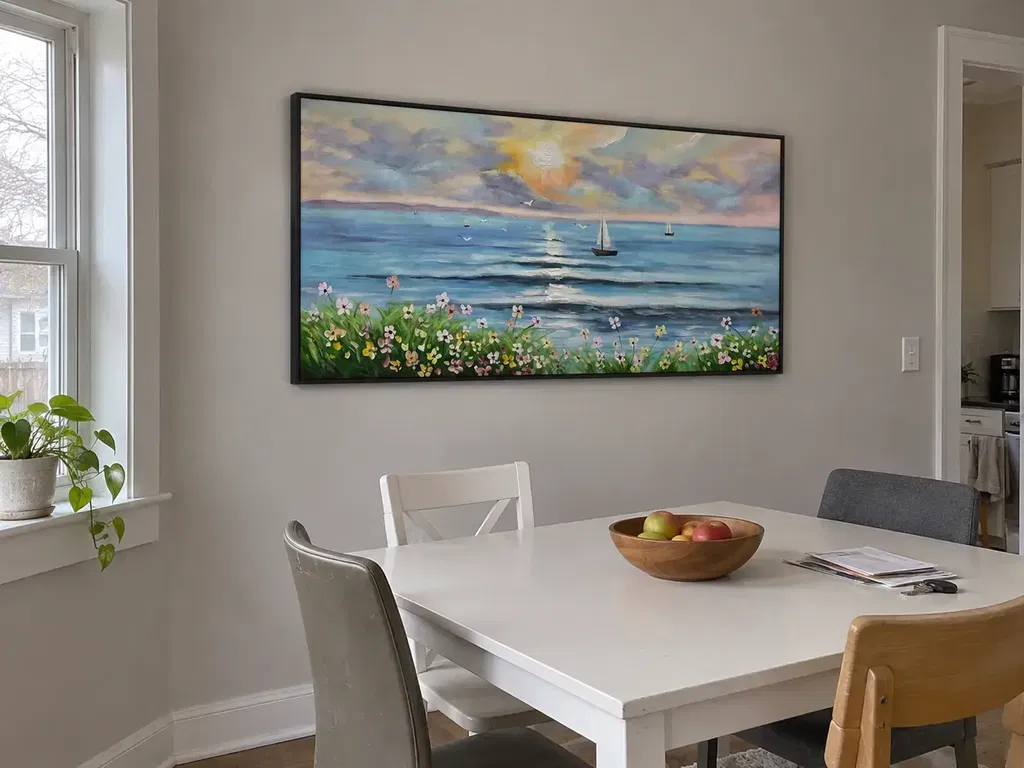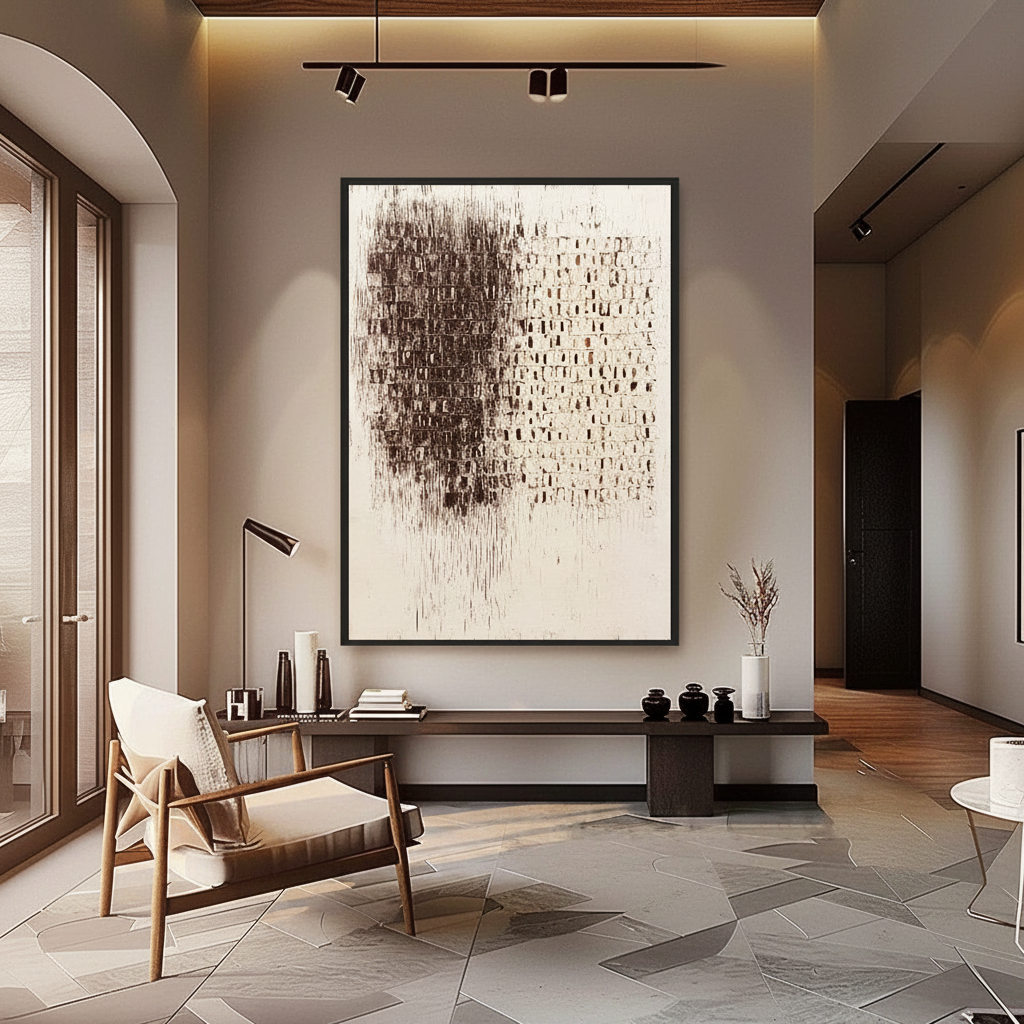
Evaluating Miter Joints: Identifying Quality in Premium Frames
When you invest in a hand-painted masterpiece, the frame acts as more than a boundary; it is the structural guardian of your investment and the final touch for a 'camera-ready' room. For aesthetic-driven home improvers, the quality of a frame—specifically the miter joints where the corners meet—can be the difference between a gallery-standard presentation and a piece that looks weary after one season of humidity changes.
In our workshop experience, we’ve observed that many buyers focus exclusively on the brushstrokes while overlooking the engineering that holds the canvas together. This is a critical oversight. As the high-end auction market experiences a retreat from purely financial art assets—with sales over $10 million plummeting 44% in 2024 according to Marketplace—consumers are returning to the "real application value" of art. This shift emphasizes durability and authentic craftsmanship over vanity labels.
The Anatomy of a High-Performance Miter Joint
A miter joint is technically a simple concept: two pieces of wood cut at 45-degree angles to form a 90-degree corner. However, executing this at a premium level requires precision that standard commercial frames rarely achieve.
To inspect a joint like a professional, you must change your perspective—literally.
The Raking Light Test
In professional framing workshops, we identify the quality of a joint using "raking light." By placing a light source at a low, 45-degree angle to the frame’s surface, you reveal imperfections invisible under standard overhead lighting.
- What to look for: Look for shadows within the seam. A high-quality joint should show a clean, hairline intersection.
- The "Gotcha": If the raking light reveals a "stepped" texture or a glossy residue, the manufacturer likely used excessive wood filler or wax to hide a poor cut. Over time, this filler can crack or discolor, ruining the seamless aesthetic required for social media-worthy interiors.
Custom-Cut vs. Pre-Cut Miters
One common compromise in mass-market framing is the use of pre-cut miters. These are cut in bulk to "close enough" tolerances. Premium framers, conversely, cut each miter specifically for the individual artwork. This is vital because wood is an organic material that responds to its environment.
Logic Summary: Our analysis of frame longevity assumes a baseline of seasonal wood movement. We estimate that standard indoor humidity fluctuations can generate up to 3000 PSI of stress in constrained joints (based on common industry heuristics for hardwood expansion).

Structural Integrity: The Twist and Sound Check
A frame must do more than look good; it must remain rigid under the weight of the canvas and the tension of the mounting hardware.
The Diagonal Twist Test
The most reliable field test for joint integrity is the "diagonal twist." Gently grasp the frame at opposite corners and apply a very slight, opposing pressure.
- The Expert Indicator: Quality joints remain silent. If you hear a faint "cracking" or "creaking" sound, it indicates that the glue bond is failing or that the internal fasteners are rubbing against the wood fibers.
- The Squeeze-Out Rule: Seasoned framers check for consistent glue "squeeze-out" along the entire internal length of the joint. Inconsistent application suggests rushed production, creating hidden weak points that may fail when the frame is hung on a wall.
The Myth of the "Perfectly Tight" Joint
Counter-intuitively, a "perfectly tight" joint (zero visible gap) isn't always the hallmark of longevity. According to industrial inspection standards for joints, manufacturers often engineer micro-gaps of 0.1mm to 0.3mm to accommodate the inevitable expansion and contraction of wood Lebo Metal. Without this "breathing room," the internal pressure can cause the wood to split or the joint to "spring back," creating a massive gap months after purchase.
Reinforcement: Strength vs. Stress Concentration
There is a long-standing debate in the framing community: should a miter joint be reinforced with splines, biscuits, or dowels?
While conventional wisdom suggests that more reinforcement equals more strength, mechanical testing under ISO 16237:2015 shows that adding internal reinforcements can sometimes create "stress concentrations." These concentrations can actually reduce long-term durability by 40% to 60% in certain environmental conditions compared to a properly engineered, unreinforced glue joint.
Stress Concentration at the Apex
Mathematical modeling of miter joints reveals a harsh reality: 85% to 92% of the stress is concentrated at the very tip (the apex) of the corner, regardless of reinforcement TU Eindhoven. For heavy, oversized hand-painted canvases, this makes the choice of adhesive more critical than the choice of fastener.
| Reinforcement Type | Primary Benefit | Potential Drawback | Best Use Case |
|---|---|---|---|
| V-Nails | High production speed | Minimal structural gain | Lightweight decorative prints |
| Splines | Aesthetic "artisan" look | Can weaken thin profiles | Large, heavy museum pieces |
| Biscuits | Increased surface area | Requires thicker wood | Wide, flat modern frames |
| Glue-Only | Cleanest aesthetic | Requires perfect clamping | Small to medium premium frames |
Material Safety and the "Indoor Air Quality" Promise
For the modern homeowner, "camera-ready" also means "family-safe." The materials used in both the frame and the art itself contribute to the Indoor Air Quality (IAQ) of your home.
VOC Emissions and LEED Compliance
The EPA warns that indoor air pollution can be significantly higher than outdoor levels EPA. When selecting premium art, look for low-VOC (Volatile Organic Compound) paints and sealants. Research from Aalto University confirms that coatings on wood with specific moisture levels emit significantly lower toxins during the curing process. This is a prerequisite for large healthcare facilities seeking LEED certification and should be a standard for your living room as well.
The History of Pigment Safety
The evolution of pigments is a story of safety. For centuries, "Lead White" was the standard for its opacity, but its toxicity is now well-documented. Today, Titanium Dioxide dominates 90% of the white pigment market because of its chemical inertness and superior "hiding power" NCBI. When you choose a hand-painted piece, you are choosing the biochemical crystallization of human attention—minus the historical poisons.
Protecting the Canvas: Beyond the Frame
A premium frame is the first line of defense, but the art inside faces its own chemical battles. To maintain that "just painted" look for social validation, you must understand how the medium interacts with the environment.
Lightfastness and Fading
Colors can change. The ASTM D4303 standard defines how paints are tested for lightfastness. Interestingly, the National Gallery in London found that the fading rate of pigments like Prussian Blue is consistent across different media—whether oil or acrylic National Gallery. This debunks the myth that oil paintings "hold color better" than modern acrylics.
Support Induced Discoloration (SID)
A common technical "gotcha" for acrylic art is Support Induced Discoloration. When transparent mediums are applied to common cotton or linen canvases, water-soluble impurities in the fabric can be drawn into the paint film, causing a yellow or brown tint as it dries Golden Artist Colors. Premium artists prevent this by using specialized "sealers" before they ever touch a brush to the canvas.

The Aesthetic and Economic ROI of Quality Framing
Investing in gallery-quality framing and hand-painted art isn't just about personal taste; it's a strategic move for property value.
- Property Value Boost: Analysis by the Royal Society found that neighborhoods with higher art "geo-tags" correlate with greater relative house price gains.
- Commercial Foot Traffic: For business owners, murals and custom art act as permanent physical billboards. A study by the University of Cincinnati shows that high-quality murals directly correlate with significant increases in pedestrian foot traffic.
- Social Cohesion: Public art projects, like Philadelphia’s Porch Light Program, have shown that large-scale murals can actually increase social cohesion and mutual trust within a community.
Choosing the Right Frame for Your Space
When moving from a raw canvas to a "room-ready" look, the choice of frame style is paramount.
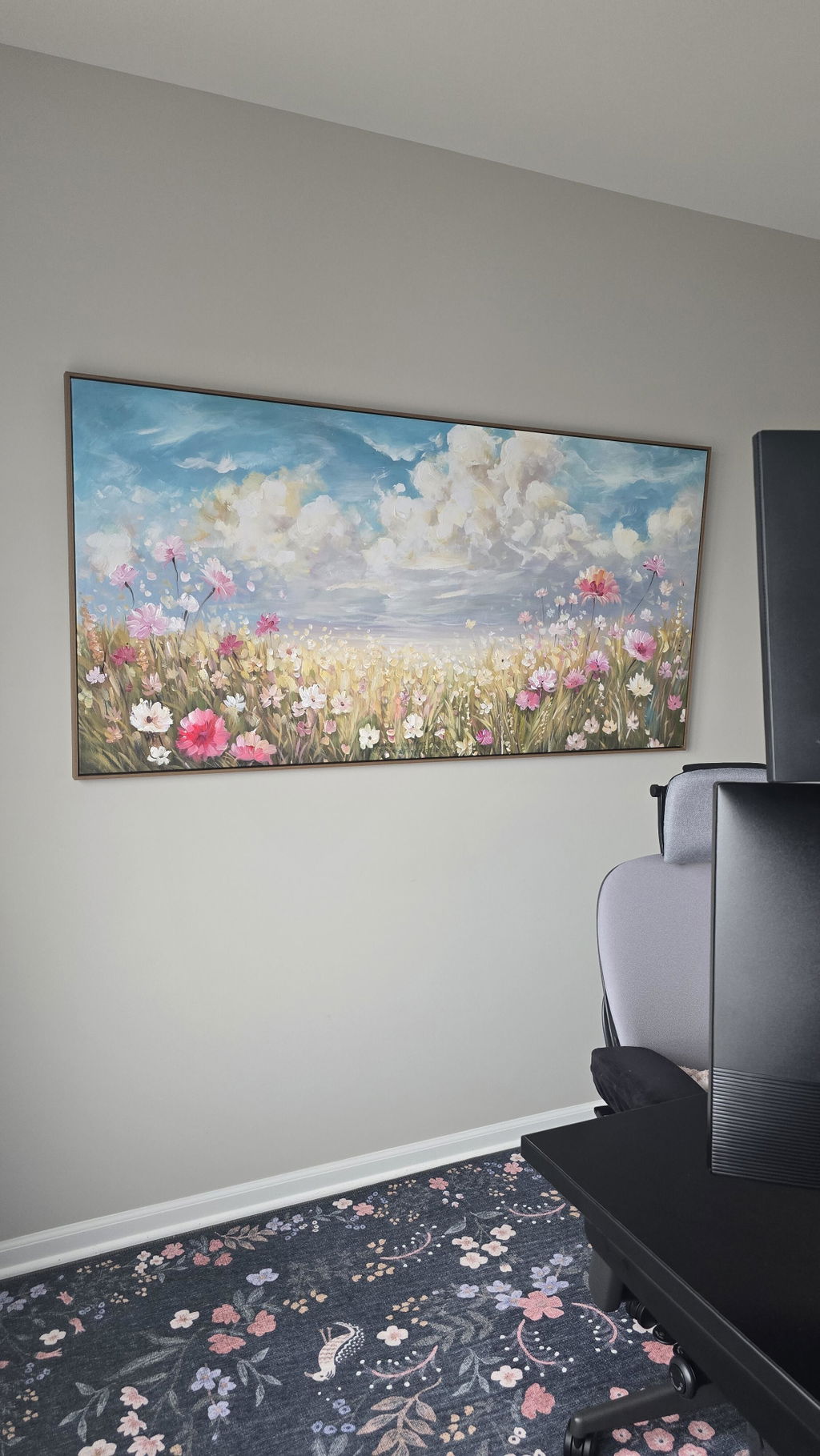
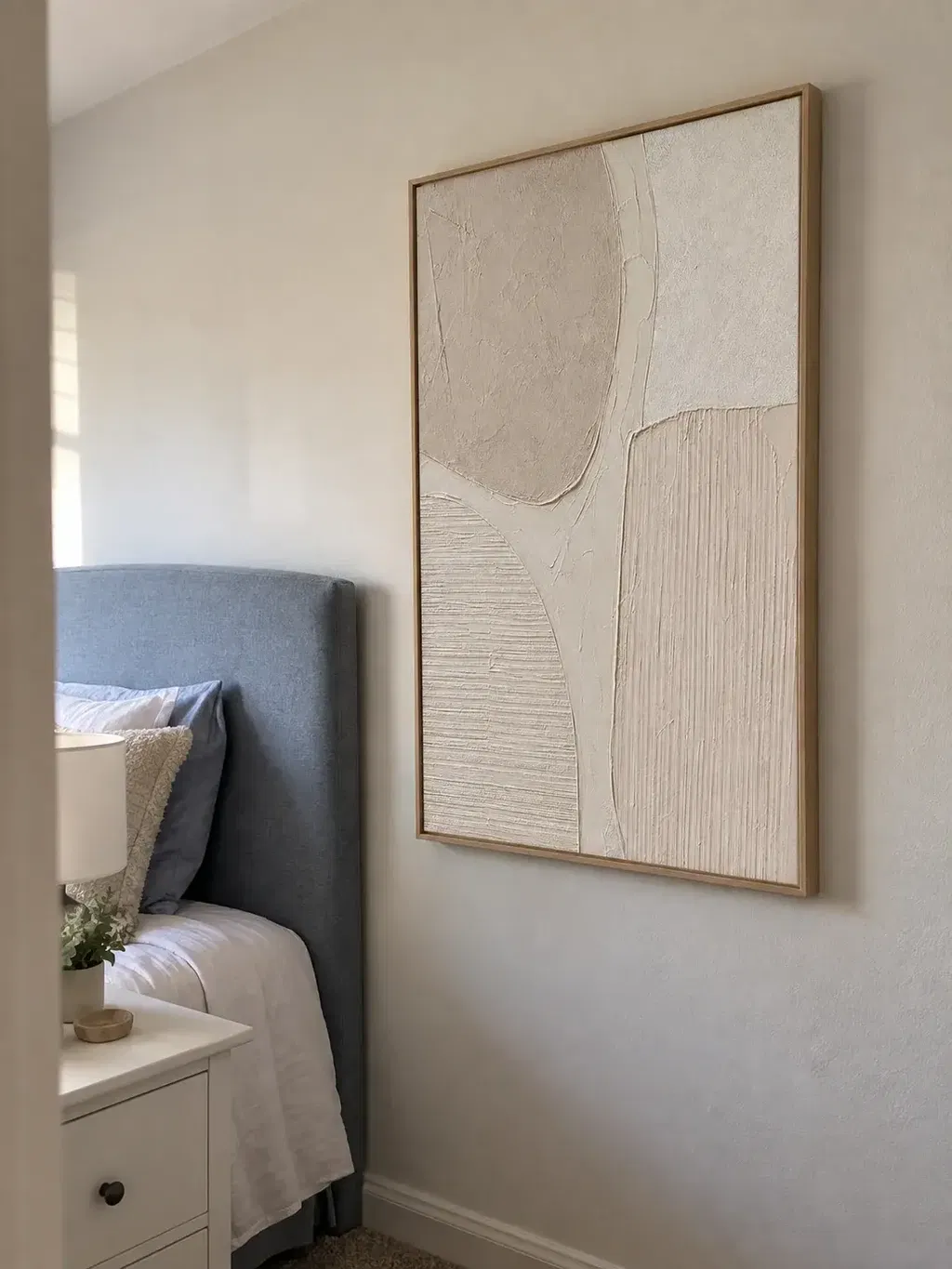
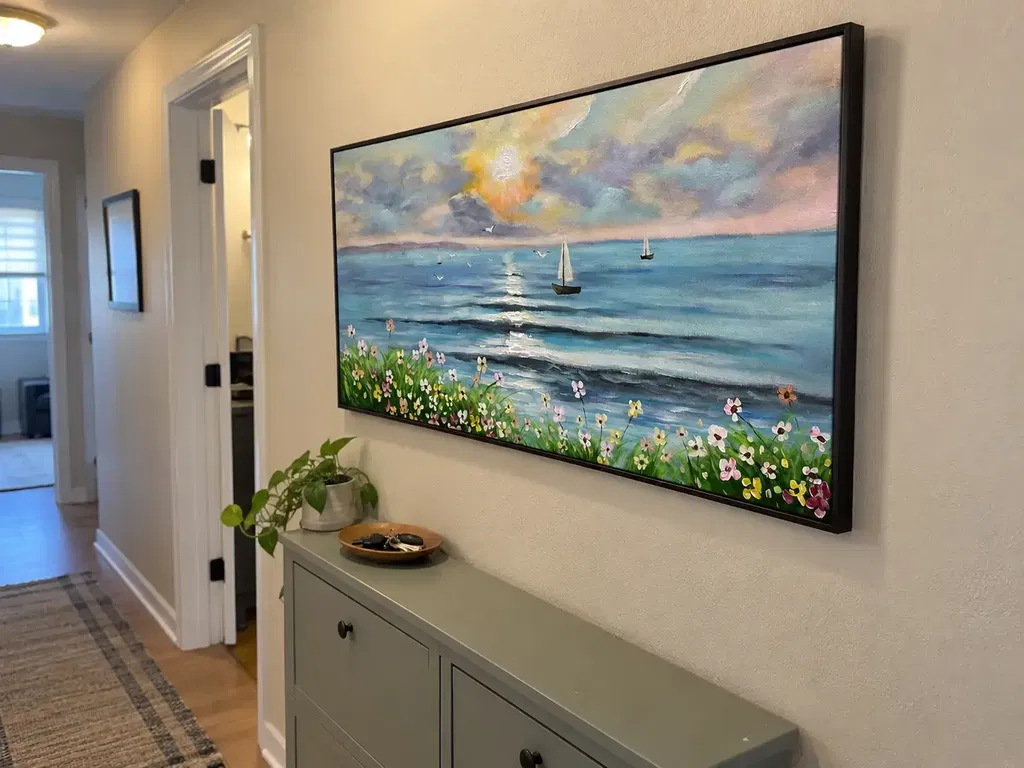
- Floater Frames: Ideal for modern acrylics, these frames create a gap between the art and the edge, making the canvas appear to "float." This protects the hand-painted edges while maintaining a minimalist profile.
- Museum-Grade Mounting: For high-value pieces, ensure the mounting is reversible. The American Institute for Conservation recommends against permanent reinforcements that create "irreversible alterations" to the frame or art AIC.
- Biophilic Design: If your goal is stress reduction, consider frames in natural wood finishes paired with landscape-themed art. The WHO confirms that viewing nature-themed art can effectively alter clinical indicators for stress and mental health.
Final Inspection Checklist for Buyers
Before you finalize your purchase of a framed hand-painted piece, run through this expert checklist:
- [ ] The 45-Degree Light Check: Does the corner look seamless under raking light?
- [ ] The Twist Test: Is the frame silent and rigid when gently stressed?
- [ ] The Material Label: Is the paint low-VOC? Is the frame solid wood or a composite?
- [ ] The Authenticity Premium: Does the piece have the physical relief of real paint? (Remember, consumers value human-made art 62% higher than AI-generated prints Columbia University).
Premium framing is the bridge between a beautiful painting and a lasting heirloom. By understanding the technical nuances of miter joints and the science of art conservation, you ensure that your "camera-ready" room remains a source of pride and value for decades to come.
YMYL Disclaimer: This article is for informational purposes only. The information regarding VOC emissions, toxic pigments, and structural safety does not constitute professional health, safety, or engineering advice. Always consult with a certified industrial hygienist or professional conservator when dealing with hazardous materials or heavy structural installations.
References
- Marketplace: The expensive art market continues to struggle
- Royal Society: Quantifying the link between art and property prices
- Columbia University: Human-Made vs. AI Art Perception Study
- EPA: Indoor Air Quality and Low-VOC Paints
- ISO 16237:2015 - Mechanical joining — Destructive testing of joints
- National Gallery: Fading of Prussian blue in various binding media