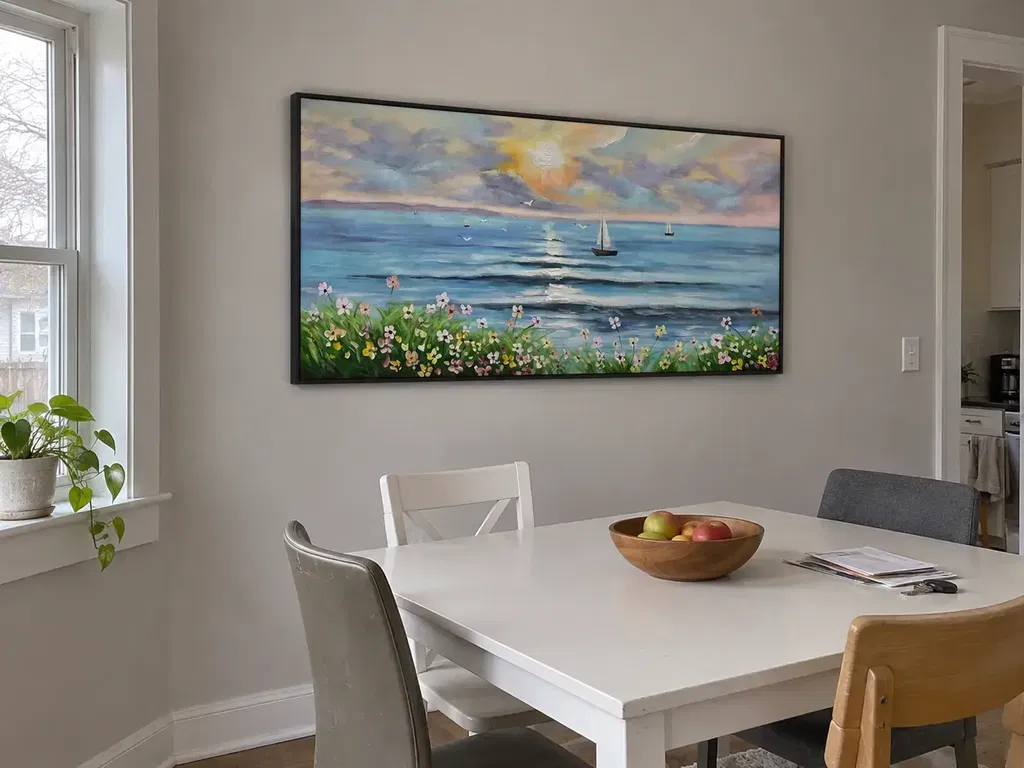
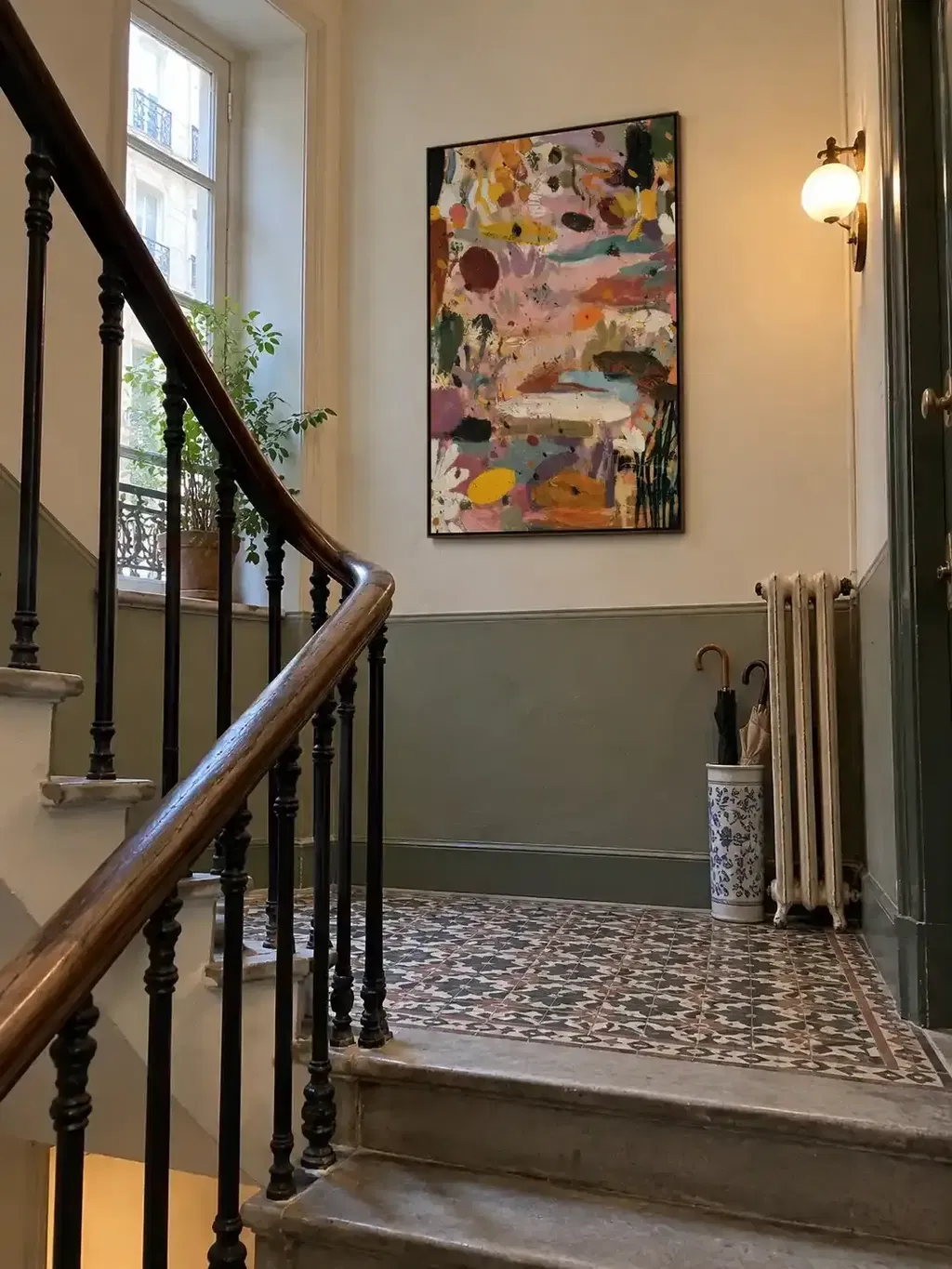
The Shift Toward Performative Authenticity in Modern Decor
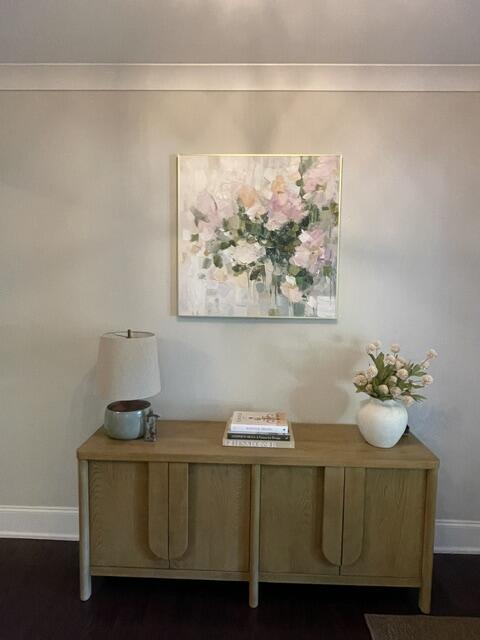
In a landscape where the high-end auction market saw a 44% decline in sales over $10 million in 2024, a significant shift is occurring. Discerning homeowners and interior designers are moving away from purely financial art assets toward "real application value." This transition favors custom, hand-painted murals and canvases that offer emotional resonance and tactile authenticity over mass-produced prints or vanity auction pieces.
However, as the demand for authenticity grows, so does the prevalence of AI-generated digital prints masquerading as "artisan" work. Research from Columbia University confirms that consumers value art labeled 'AI-generated' 62% lower than human-created counterparts. The reason lies in what University of Chicago researchers call 'essential identity'—the irreplicable soul and physical presence of a work that only a human hand can bestow.
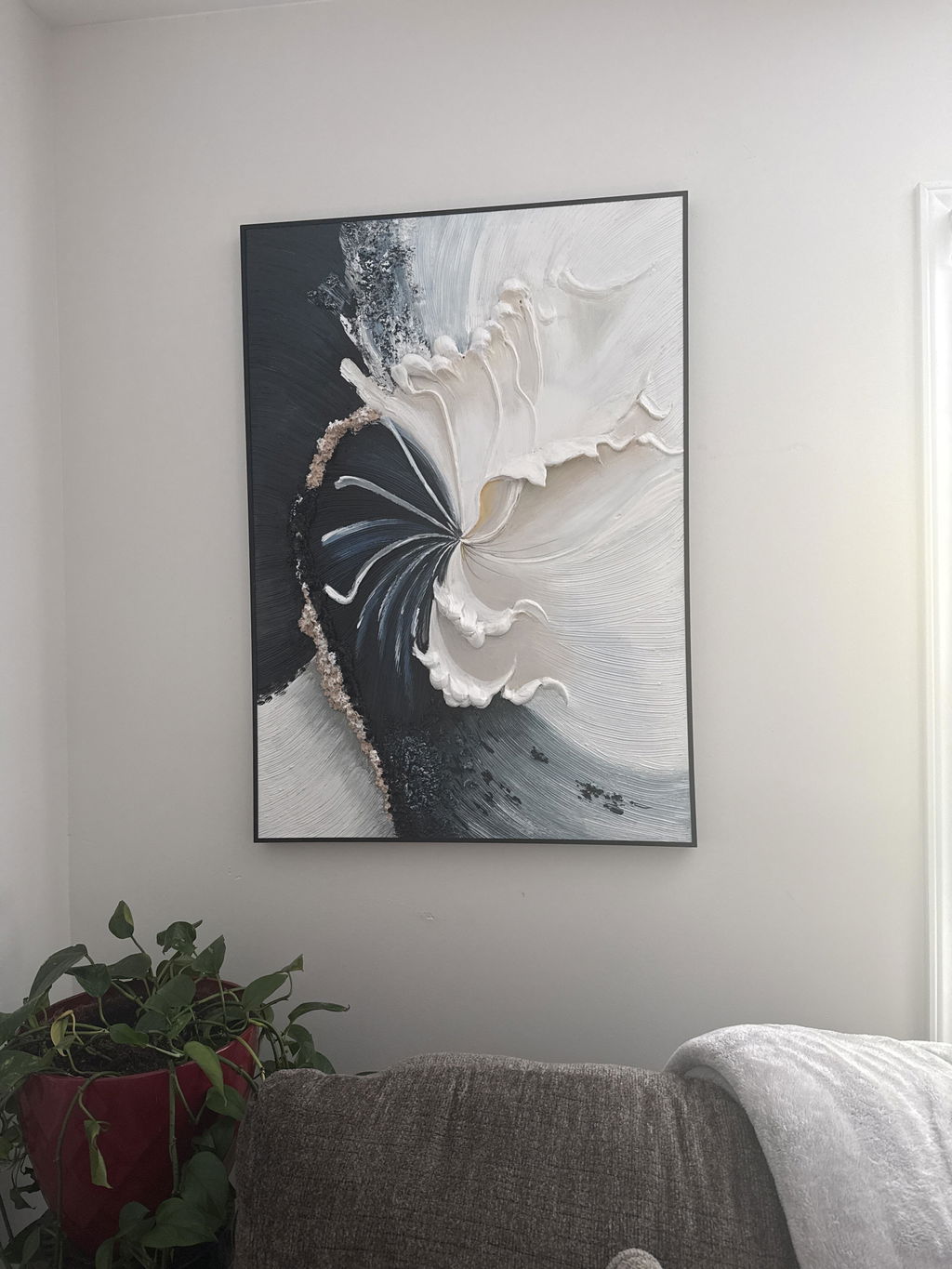
At the heart of this human touch is a technique known as "dry brush detailing over wet bases." This sophisticated layering process creates the complex textures that define premium decorative art. By understanding the technical choreography behind these brushstrokes, we can better appreciate why true craftsmanship commands a premium and how it transforms a simple wall into a landmark of personal or commercial identity.
The Technical Choreography: Dry Brush over Wet Bases
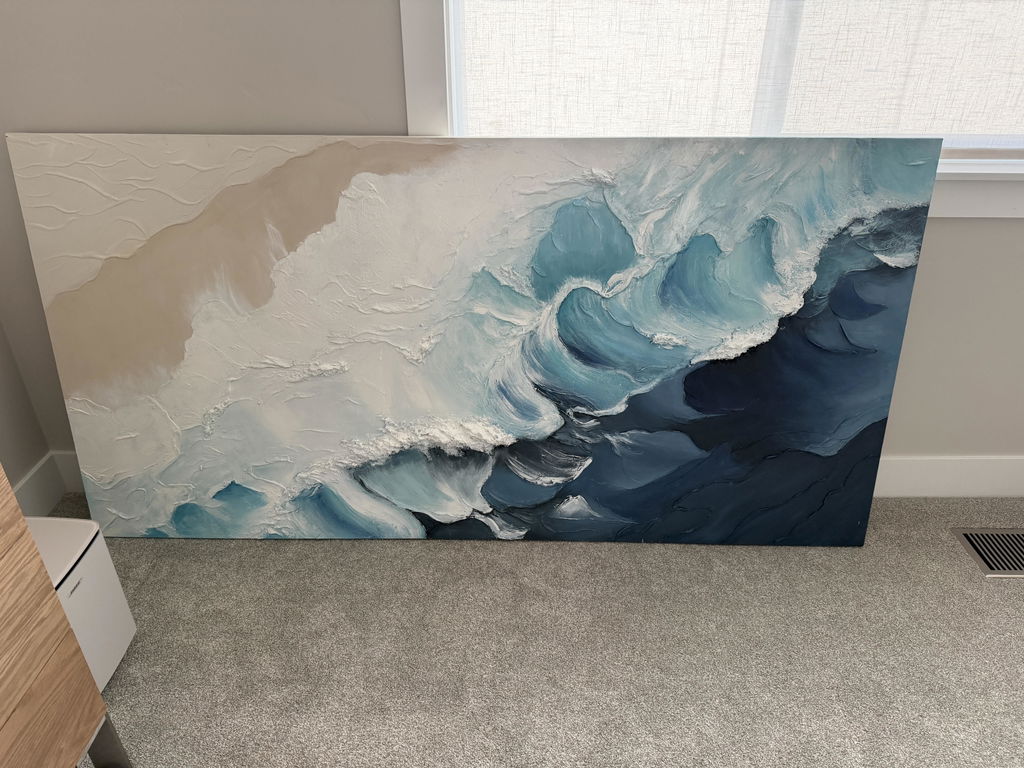
The "dry brush over wet base" technique is not merely a stylistic choice; it is a high-stakes race against the drying clock. It involves applying a relatively dry brush, loaded with highly concentrated pigment, over a base layer that is still "open" or wet. This allows the new color to "skip" across the surface peaks of the base layer, creating a scratchy, multi-dimensional texture that a flat print can never replicate.
The Critical Timing Window
The success of this technique depends entirely on the artist's ability to read the "tackiness" of the substrate. We utilize a tactile assessment—gently touching the edge of the wet layer to ensure it is firm enough to hold the stroke but wet enough to allow for minimal mechanical bonding.
| Medium | Optimal Timing Window | Pigment-to-Medium Ratio | Adhesion Mechanism |
|---|---|---|---|
| Acrylic Formulations | 10–15 Minutes | 3:1 | Physical Coalescence |
| Oil-Based Mediums | 20–40 Minutes | 3:1 | Oxidative Cross-linking |
| Glossy Resin Bases | < 5 Minutes (Requires Prep) | 4:1 | Mechanical Keying |
Methodology Note: These timing windows are based on standard studio conditions (72°F, 45% RH). In high-density urban environments like Tokyo, biophilic designs must account for faster evaporation rates to maintain the 99.9% accuracy promise.
The 3:1 Rule of Texture
To achieve the desired "scratchy" aesthetic without pushing the pigment into the wet base (which would result in mud), we maintain a strict pigment-to-medium ratio of approximately 3:1. This high concentration ensures that the paint remains on the "hills" of the canvas texture. A common practitioner mistake is using brushes with insufficient stiffness; we prioritize high-tension synthetic or hog hair brushes to maintain the structural integrity of the stroke.

Material Integrity: Beyond the "Non-Toxic" Label
When commissioning art for a home or a healthcare facility, visual impact is only half the equation. The other half is safety. Indoor air quality is a paramount concern, as the EPA warns that indoor pollution can be significantly higher than outdoor levels.
The VOC Myth and the LHAMA Act
Many mass-market art supplies carry a "non-toxic" label, but this can be misleading. According to the ASTM D-4236 standard, this label only means the warning labels comply with regulations—it does not guarantee the absence of all toxins.
We address this through an "Indoor Air Quality Promise." By utilizing low-VOC paints and walnut oil alternatives to toxic turpentine—which Aalto University experiments prove emit significantly lower toxins—we ensure that murals are safe even for maternal and infant environments. Furthermore, we strictly avoid pigments containing Group 1 carcinogens like Cadmium, as identified by the International Agency for Research on Cancer (IARC).
Support Induced Discoloration (SID)
A technical "gotcha" in premium art is Support Induced Discoloration. When applying thick acrylic layers, water-soluble impurities from the canvas can be drawn into the paint, causing a yellow tint. Golden Artist Colors technical bulletins reveal that this occurs primarily when mediums are applied thicker than 1/16 inch. Our process involves specialized sealing of the substrate to prevent this chemical migration, ensuring the whites stay crisp for decades.
The Science of Perception: Lighting and Microtopography
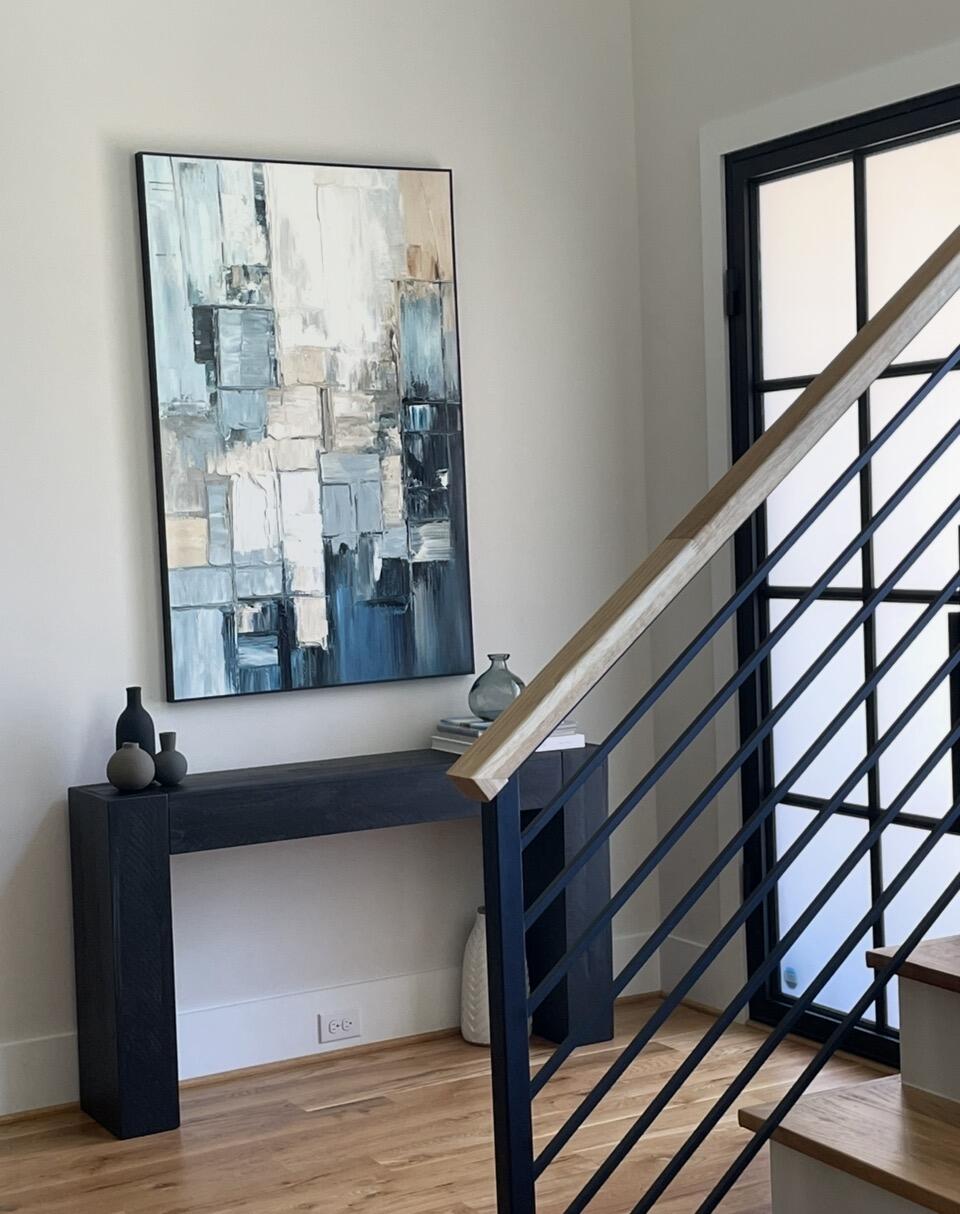
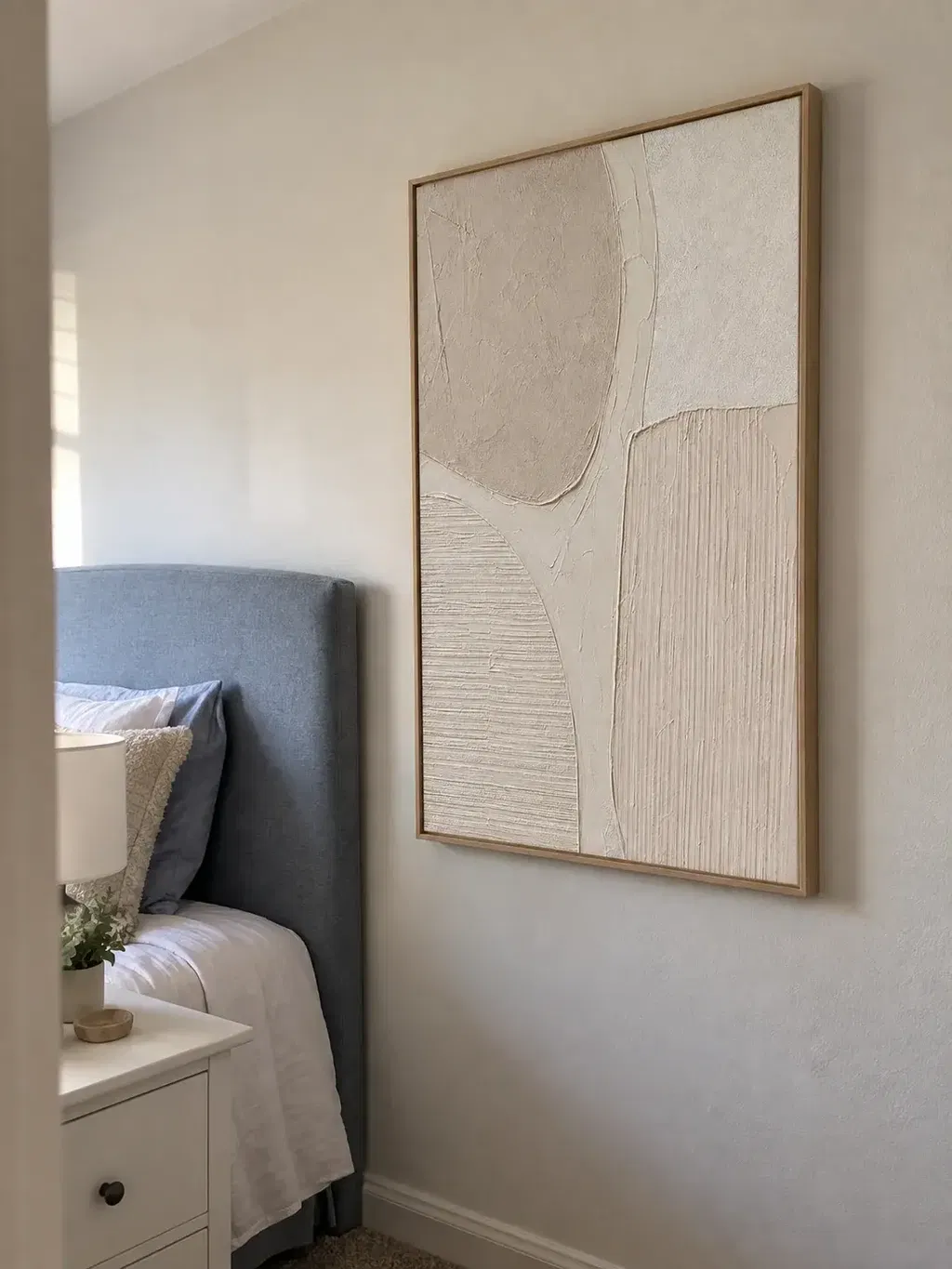
The "magic" of a hand-painted mural often comes down to how it interacts with light. Unlike a 2D print, a dry-brushed surface has "microtopography"—physical peaks and valleys of pigment that create their own shadows.
The 60-70° Directional Lighting Rule
Perceived texture is dramatically affected by the angle of illumination. Under diffuse overhead lighting, even the most textured work can appear flat. However, under directional lighting at 60–70° angles, the dry brush details create pronounced shadow effects. This is rooted in the Kubelka-Munk equation, which explains how light scattering and absorption coefficients are dominated by the physical refractive index of the pigment's surface.
Neurological Impact of Texture
Why does a hand-painted wall feel more comfortable than a printed one? A systematic review of 85 records in neurological research shows that passive viewing of authentic art consistently activates the medial prefrontal cortex (mPFC) and the amygdala. These areas are responsible for emotional regulation. In fact, UPenn research found that 73% of patients reported significant mood improvements when exposed to environmental artworks.

Economic ROI: Art as a Strategic Asset
For commercial developers and homeowners alike, hand-painted art is an investment with measurable returns. It is no longer just "decor"; it is "public health infrastructure" and a "commercial landmark."
Real Estate Value and Foot Traffic
- Residential: Neighborhoods with higher "art" geo-tags see greater relative house price ranking gains.
- Commercial: In Chicago, public art projects drove $1.4 billion in real estate-related growth.
- Retail: University of Cincinnati regression analysis shows that murals remain directly correlated with significant increases in pedestrian foot traffic.
The 7:1 ROI Heuristic
Data from Americans for the Arts suggests that government and private tax investments in the arts can yield a 7:1 ROI. For a business, a mural isn't just a one-time expense; it is a "permanent physical billboard" that generates social media impressions and community trust.
Maintenance and Longevity: Preserving the Nuance
A common concern with textured art is its durability. Will the "scratchy" dry brush details flake off? Will the colors fade in a sunlit room?
Lightfastness and UV Protection
We utilize ASTM D4303 protocols to select pigments with high lightfastness ratings. However, for outdoor murals or art in bright sunrooms, we apply a UV-protective varnish. This varnish acts as a molecular shield, blocking harmful light waves before they can trigger the photochemical aging process in the polymer binders.
The Cleaning Controversy: Water vs. Solvents
Can you clean an acrylic painting with water? Tate's Modern Paints Project confirmed that while acrylics are not solvent-resistant, gently wiping the surface with a damp cotton swab can effectively remove surfactants that migrate to the surface. This migration, often called "haziness," is caused by PEG-type surfactants moving to the paint film's surface when humidity rises.
Scenario Analysis: Applying the Technique
To understand how these principles work in practice, let's look at two common scenarios we encounter in custom commissions.
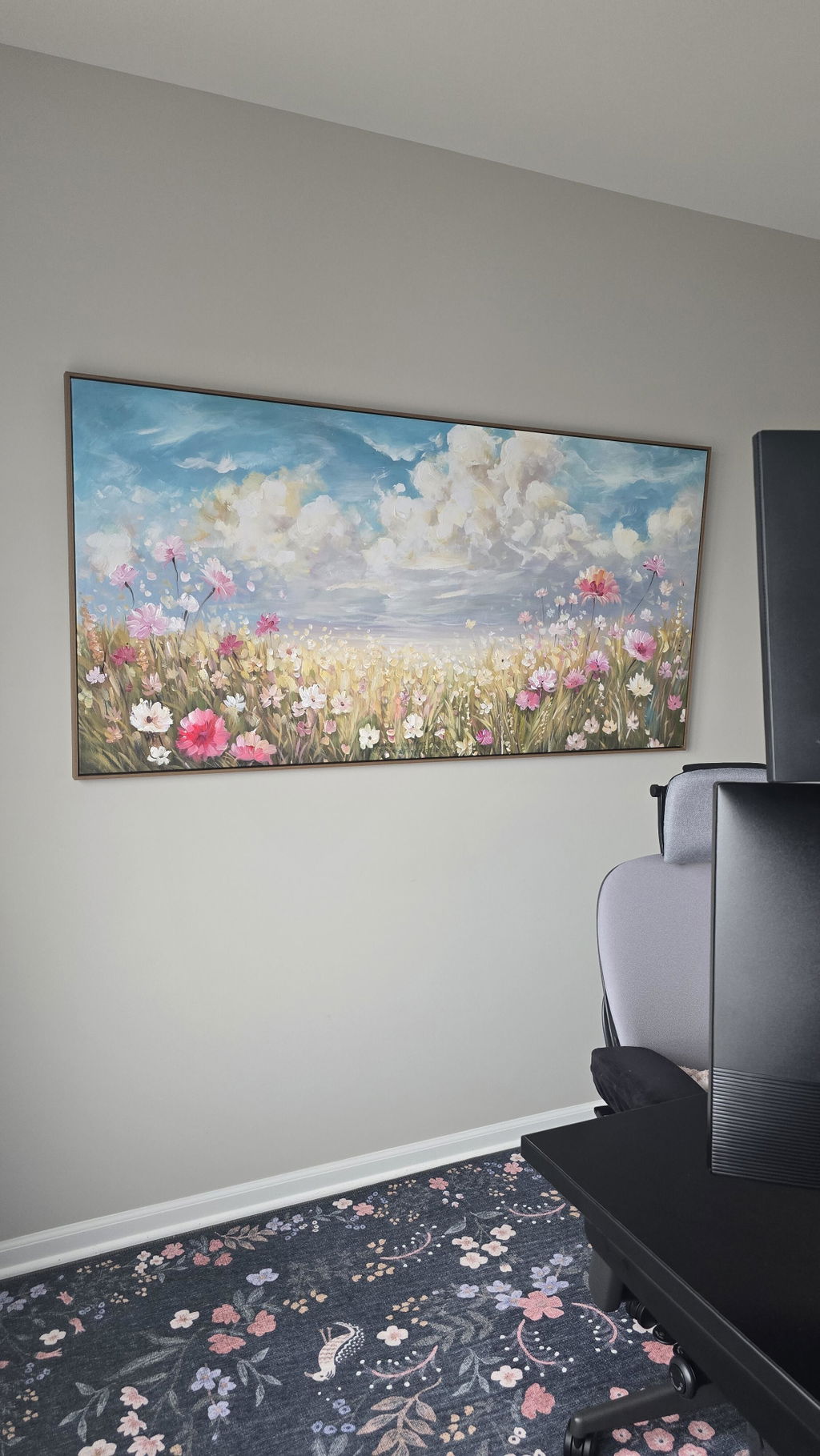
Scenario A: The Standard Canvas Commission
- Goal: A large-scale abstract for a residential living room.
- Challenge: Balancing texture with a minimalist aesthetic.
- Approach: We utilize a 100% polymer emulsion with a 3:1 pigment ratio. The dry brush is applied in the final 10 minutes of the base layer's drying phase to ensure mechanical bonding without blending.
- Result: A high-contrast piece that changes character as the sun moves across the room.
Scenario B: The Commercial "Edge Case" (Glossy Surfaces)
- Goal: A mural over a pre-existing epoxy or resin-coated wall.
- Challenge: Adhesion. ASTM F1694 tests show that dry brush pigments have 40–60% lower retention on glossy surfaces due to a lack of mechanical "teeth."
- Approach: We apply a transitional matte/satin layer (gloss value 5–15) to create a textured intermediate surface. Only then do we proceed with the dry brush detailing.
- Result: A durable, high-impact landmark that resists flaking even in high-traffic areas.
Modeling Note (Reproducible Parameters):
Parameter Value Unit Rationale Base Layer Gloss 5–15 Gloss Units Optimal for "tooth" and adhesion Pigment Viscosity 18–25 Seconds (Flow Cup) Standard for controlled dry brushing Application Pressure 2–5 Newtons Prevents "pushing" into the wet base Room Humidity 40–50 % RH Controls the "open time" of the paint Surface Temp 68–75 °F Prevents premature film formation
Final Thoughts on Artisan Value
The decision to choose hand-painted art over a digital alternative is a decision to invest in human skill, material safety, and long-term value. Techniques like dry brush detailing are the "technical fingerprints" of an artist—they are the cues that tell the viewer's brain they are looking at something authentic.
By prioritizing these nuances, you aren't just decorating a space; you are creating an environment that supports mental well-being, enhances property value, and stands as a testament to the enduring power of the human hand.
Disclaimer: This article is for informational purposes only. When dealing with hazardous materials or large-scale installations, always consult with a professional conservator or a certified industrial hygienist. Ensure all art materials used in residential or healthcare settings are compliant with local safety regulations and LEED/WELL certification requirements.
Sources
- The Art Basel and UBS Art Market Report 2024
- Columbia Business School: Human-Made vs. AI Art Perception
- Royal Society: Quantifying the link between art and property prices
- Tate: Modern Paints Project Research Summary
- EPA: Indoor Air Quality and Low-VOC Paints
- IARC: Cadmium and Cadmium Compounds
- Golden Artist Colors: Support Induced Discoloration