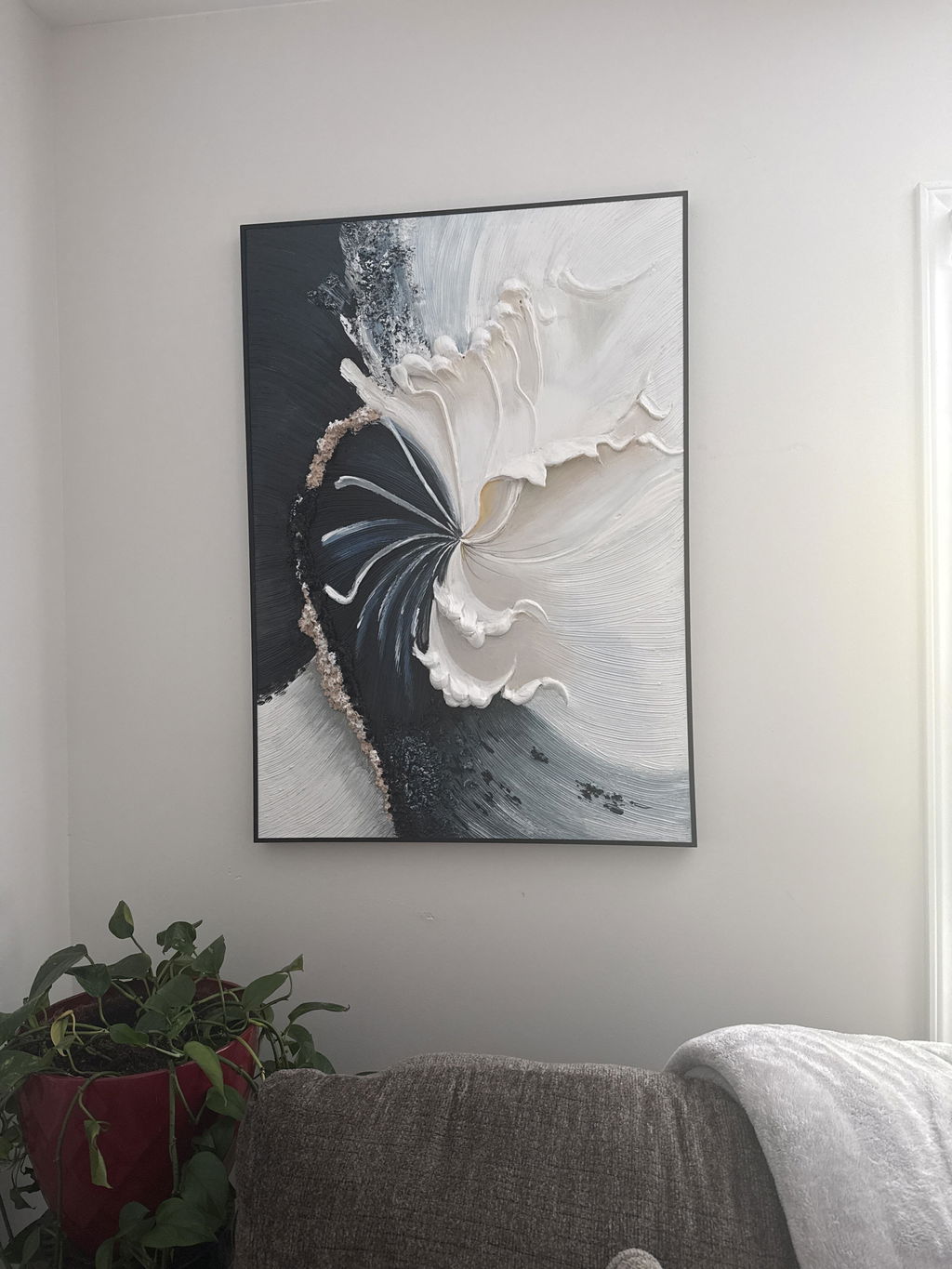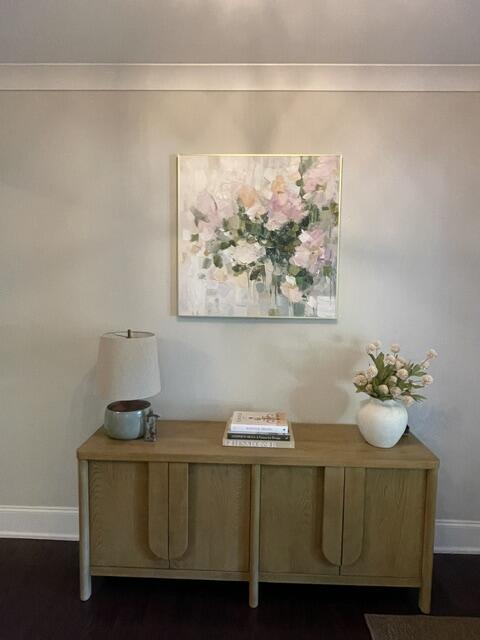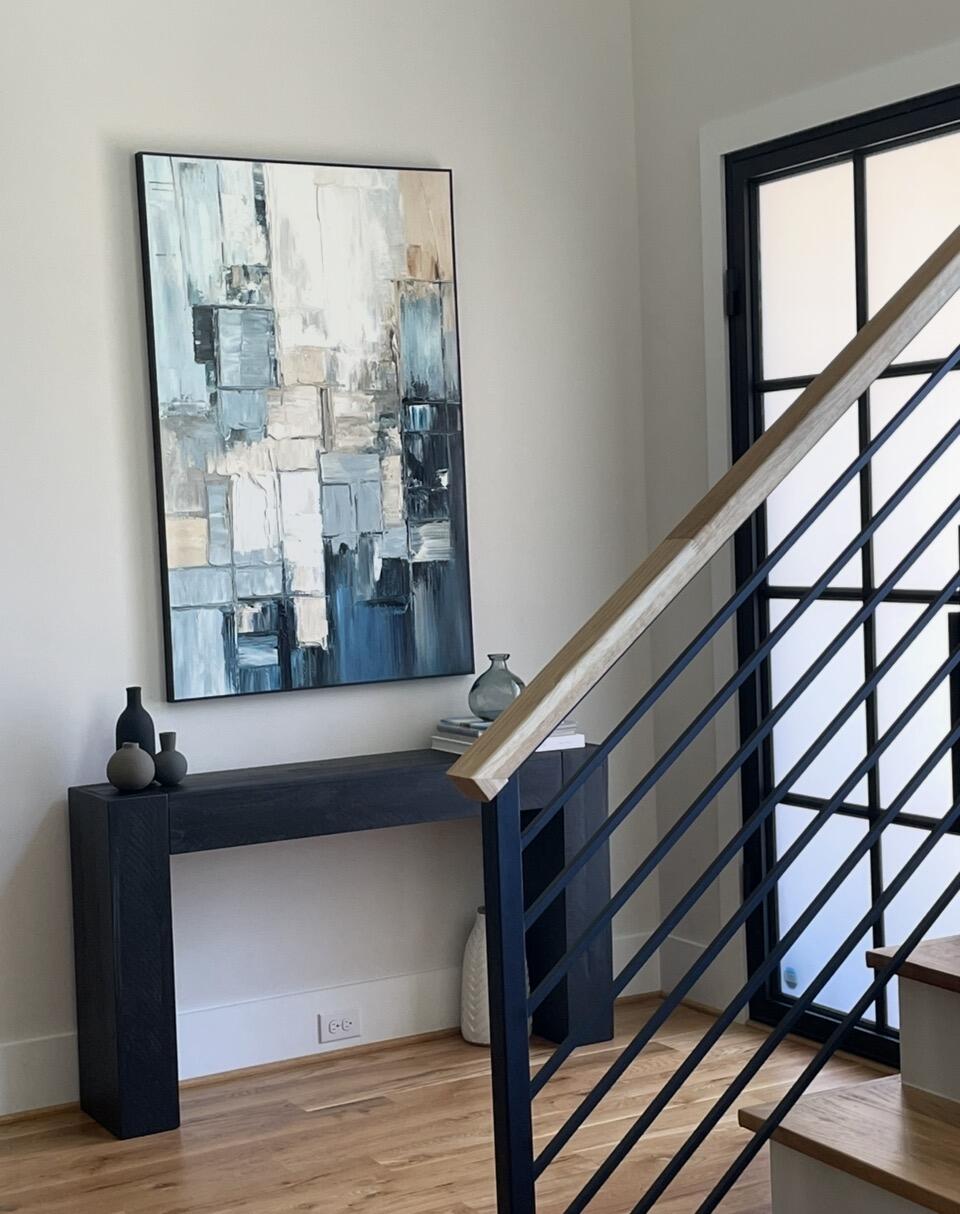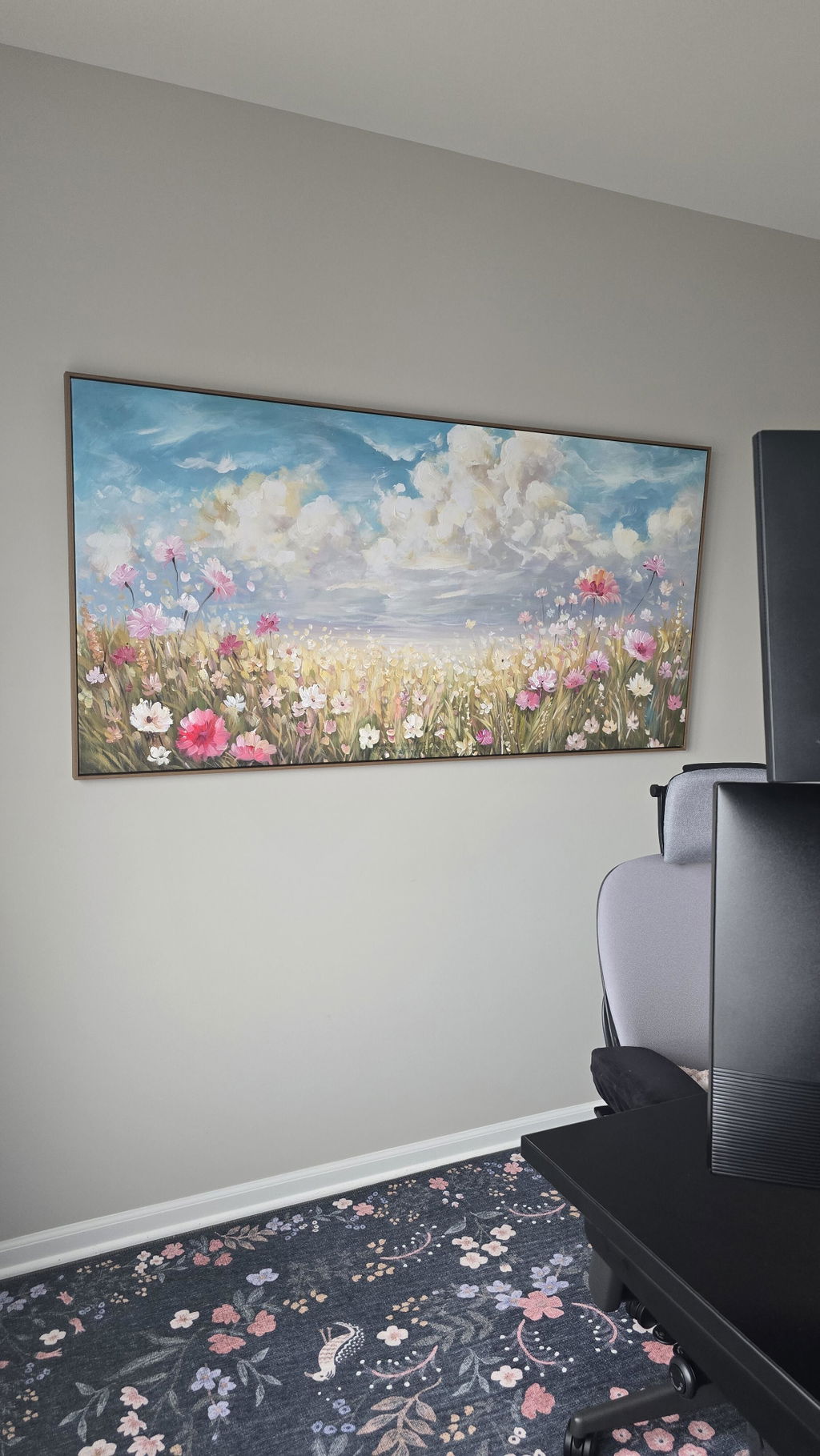
The Shift Toward "Real Application Value" in Custom Art
In recent years, we have observed a significant structural shift in how high-end homeowners and interior designers approach art procurement. The era of the "vanity auction piece"—purchased primarily for financial speculation—is receding. According to Marketplace, high-end auction sales for works over $10 million plummeted by 44% year-over-year in 2024. This retreat from purely financial art assets indicates a return to "real application value," where the primary motivation for a purchase is the emotional and aesthetic impact the work has within a lived environment.
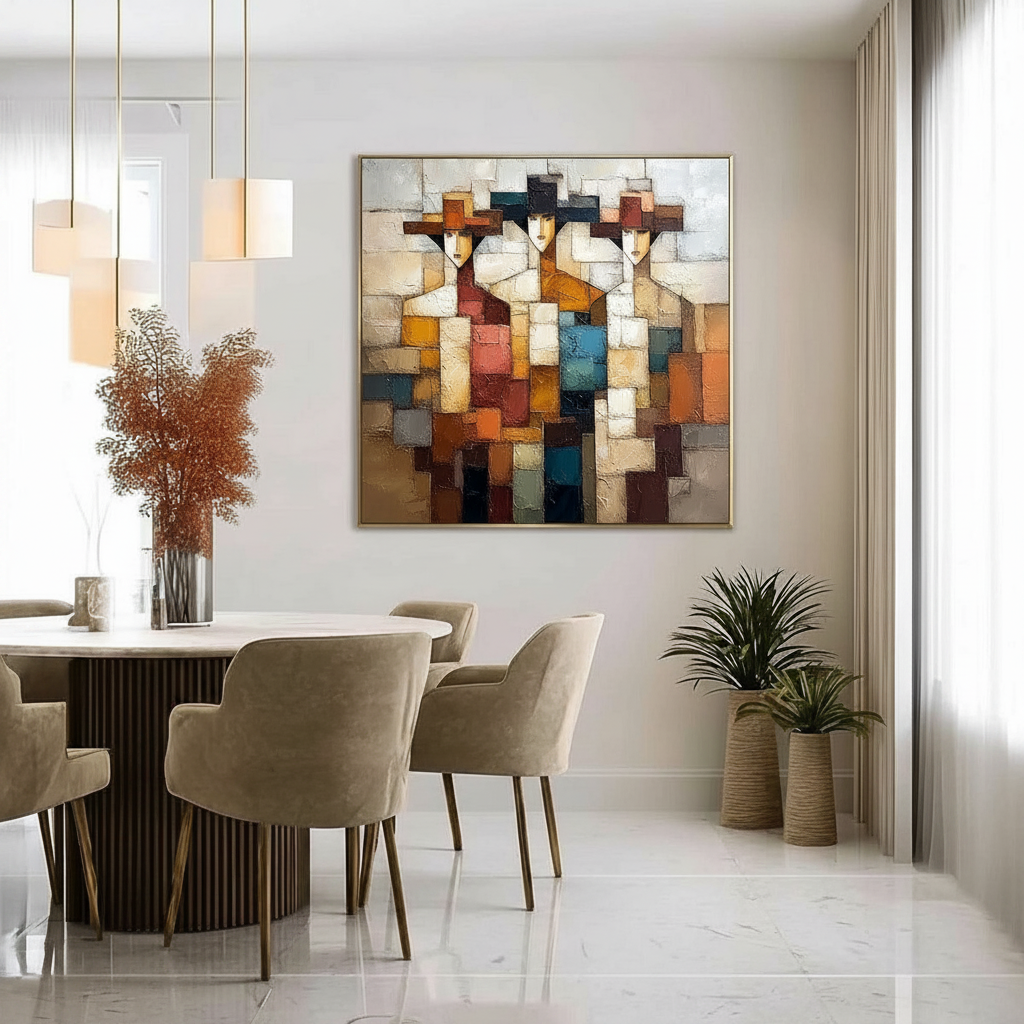
For the modern homeowner, "camera-ready" spaces are the goal, but "decision safety" is the obstacle. There is a persistent fear that a custom, hand-painted mural or a large-scale oil painting will visually conflict with expensive architectural lighting, specifically low-hanging chandeliers in dining rooms. When these two elements compete, the result is visual clutter rather than curated elegance.
We often see clients hesitate because they cannot visualize how to scale art behind a light fixture. This article provides a technical framework for navigating these sightlines, ensuring that your investment in original art remains visible, impactful, and protected from the environmental stressors inherent in social spaces.
The Seated Eye-Level Heuristic: Redefining the 57-Inch Rule
In a gallery or hallway, the standard "57-inch on center" rule is the gold standard. However, the dining room is a specialized environment where the primary interaction with art happens from a seated position. If you hang a large-scale hand-painted canvas at standard gallery height, the top half of the work often disappears behind the chandelier's silhouette when guests sit down to dinner.
Based on our observations of hundreds of high-end dining room installations, we recommend the Seated Eye-Level Heuristic. In these spaces, the center of the artwork should typically be positioned 2–4 inches lower than the standard 57-inch mark. This adjustment aligns the "visual weight" of the painting with the eye level of seated guests, ensuring the primary focal point of the art is not obscured by the lower tiers of a chandelier.
Modeling the Seated Sightline
When we model these environments, we consider the parallax effect between a standing entry and a seated dinner.
Logic Summary: Our analysis of dining room sightlines assumes a standard table height of 30 inches and a seated eye level of approximately 46–48 inches. This model is a heuristic intended for quick selection and may vary based on chair ergonomics and ceiling height.
| Parameter | Value or Range | Unit | Rationale |
|---|---|---|---|
| Table Height | 30 | inches | Standard residential height |
| Seated Eye Level | 46–48 | inches | Average adult seated height |
| Chandelier Bottom | 30–36 | inches above table | Standard functional clearance |
| Art Center (Seated) | 53–55 | inches from floor | Optimized for seated viewing |
| Clearance Zone | 12 | inches | Minimum vertical gap to prevent "crowding" |

Solving "Silhouette Bisecting": The 12-Inch Clearance Zone
One of the most common mistakes in luxury interior design is "Silhouette Bisecting"—a phenomenon where the widest part of a chandelier cuts directly across the primary focal point or the "eyes" of a figurative painting. This creates a jarring visual tension that makes the room feel smaller and the art feel like an afterthought.
To achieve "decision safety," we recommend maintaining a 12-inch vertical clearance zone. This is the minimum distance required between the bottom of the light fixture and the top edge of the art. This gap provides the "visual breathing room" necessary for the eye to distinguish the lighting as a foreground element and the art as a background anchor.
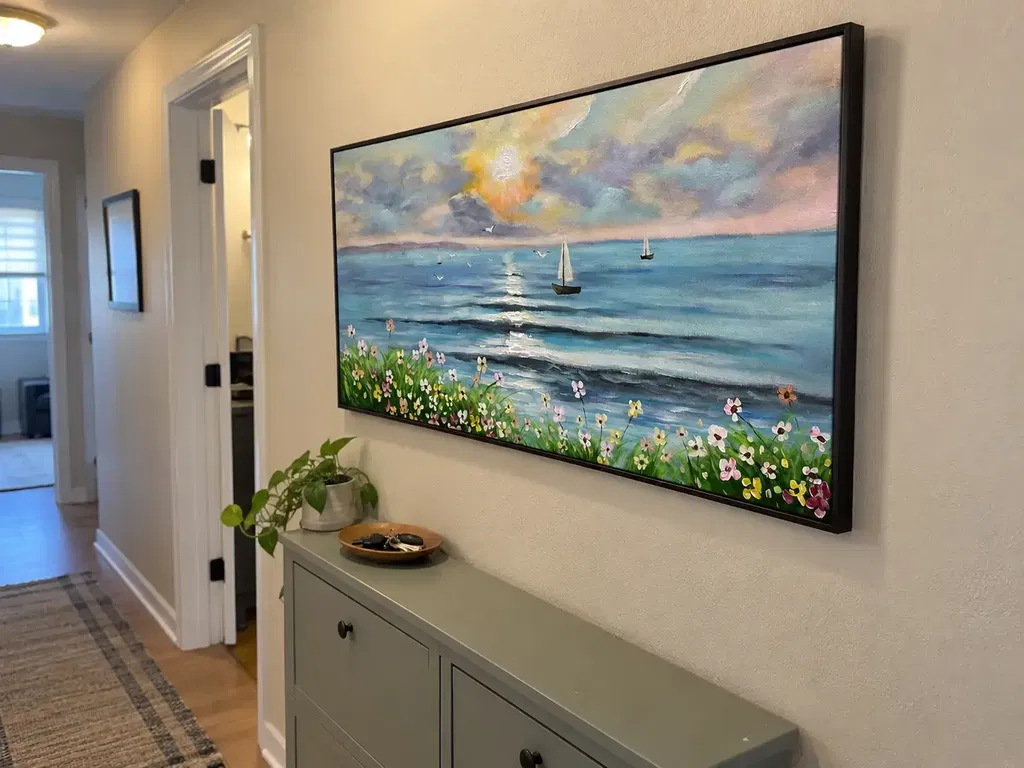
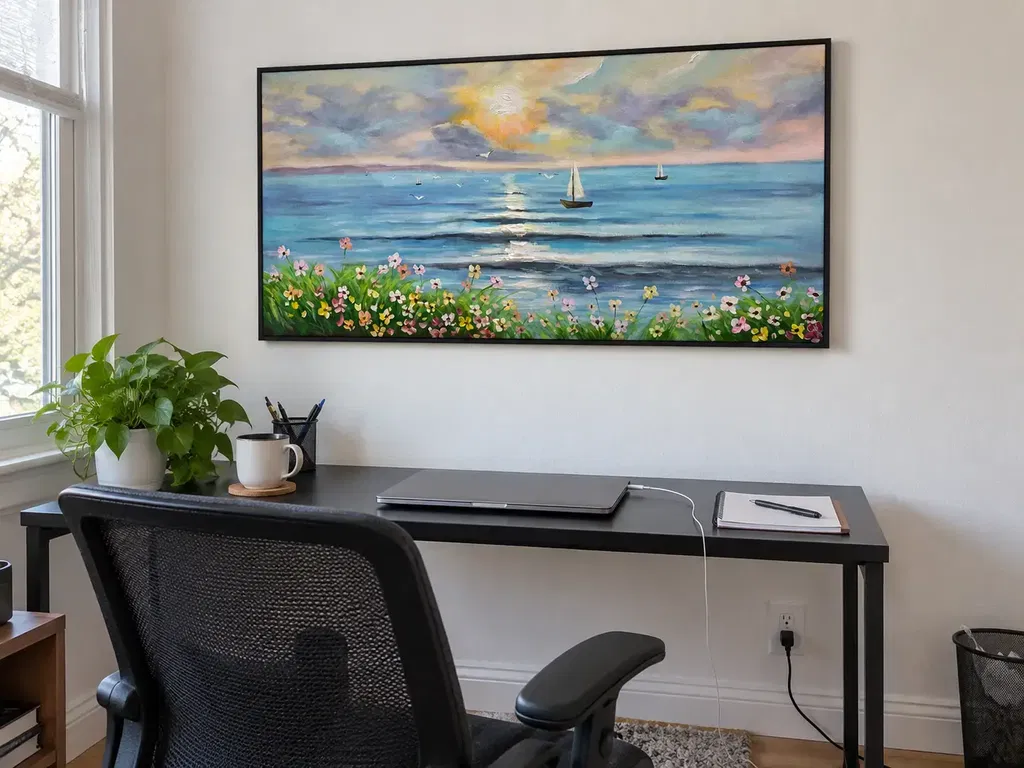
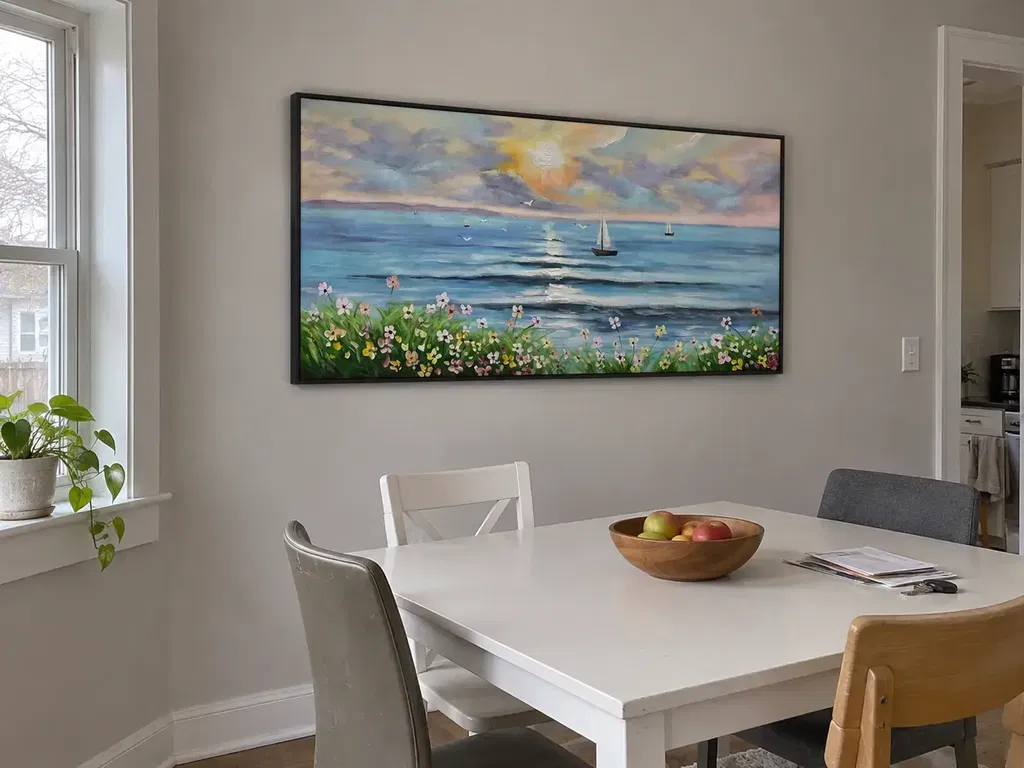
If your chandelier hangs particularly low for dramatic effect, you must scale the art proportionally. In these cases, a horizontal landscape orientation or a triptych (three-panel) arrangement often performs better than a single oversized vertical canvas. By spreading the visual weight horizontally, you keep the art within the "viewing window" created by the space between the table and the light fixture.
The "Glare Angle" and the Physics of Textured Oils
High-end collectors increasingly prioritize "100% human hand-painted" works over AI-generated prints. Research from Columbia University confirms that consumers value art labeled "AI-generated" 62% lower than authentic human-created pieces. This is largely due to the "essential identity" and soul retained in the physical brushstrokes—a concept supported by UChicago empirical research.
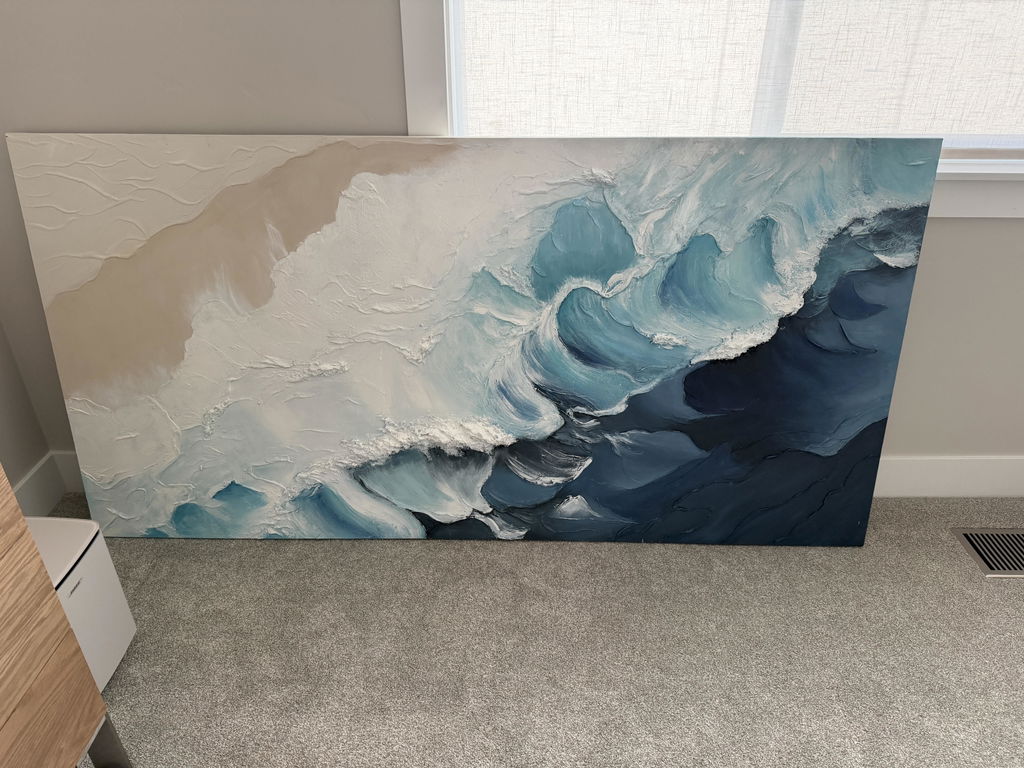
However, the very thing that makes hand-painted art valuable—the heavy impasto and physical texture—creates a challenge under low-hanging lights. Low-hanging bulbs can create "hot spots" or harsh glare on the peaks of the paint.
To mitigate this, we utilize the Glare Angle adjustment. By tilting the top of the canvas forward by 1–2 degrees (using a small spacer behind the top rail), you can redirect reflections away from the seated viewers' eyes. This technique is particularly effective for "textured oil" works where the surface refractive index varies across the canvas. According to the Getty Conservation Institute, pigment reflection is dominated by absorption and scattering coefficients; managing the angle of incidence is the only way to preserve color saturation in high-texture works.

Architectural Integration: Wainscoting and Wall Niches
Many "camera-ready" dining rooms feature architectural details like wainscoting or chair rails. When integrating art into these paneled sections, the rules of proportion shift.
- The 60–75% Rule: For art placed above a chair rail or wainscoting, the piece should occupy roughly 60–75% of the available wall space above the rail. Any larger, and the art feels "pinched" by the architecture; any smaller, and it loses its ability to anchor the room.
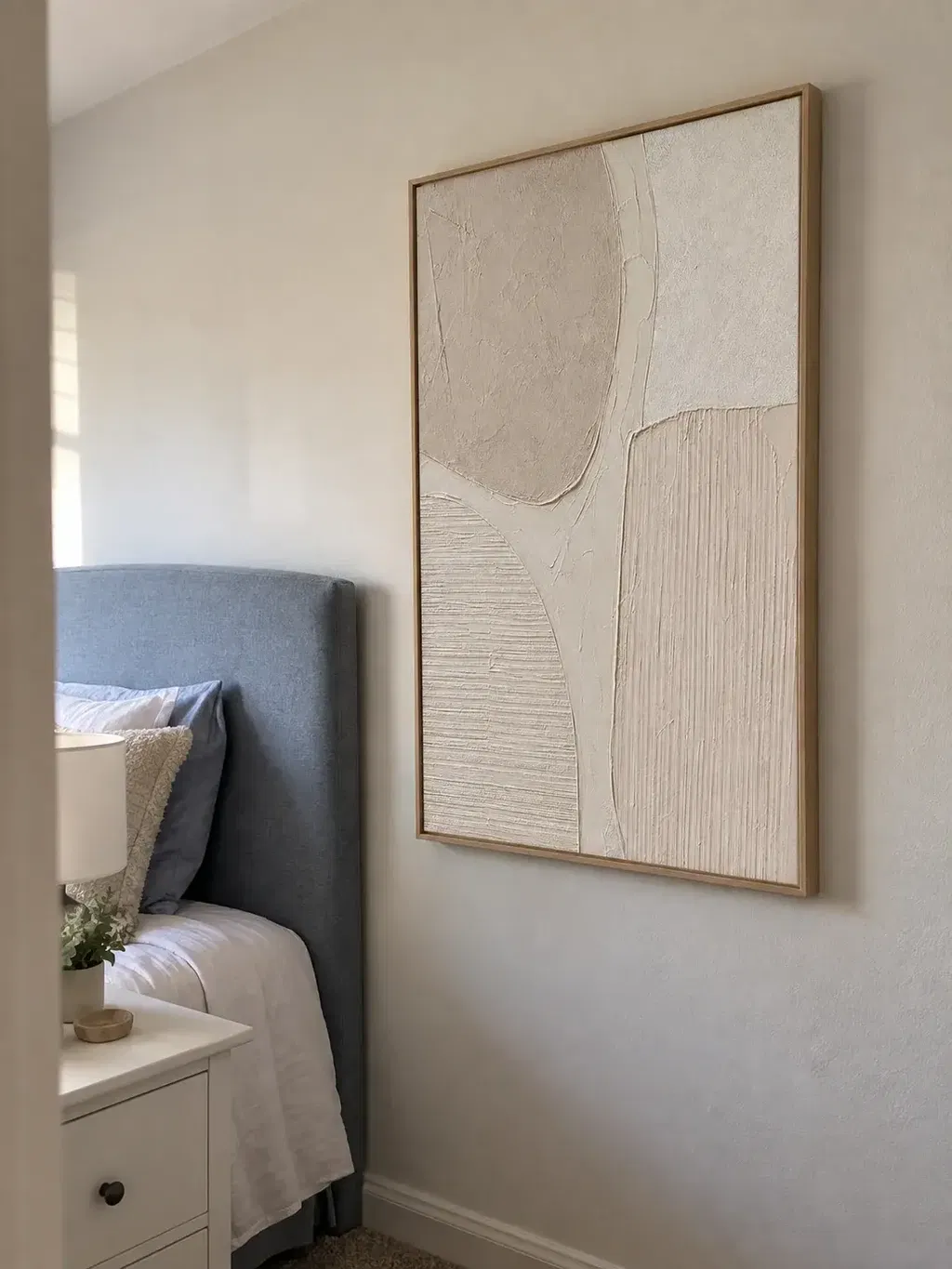
- Wainscoting as a Frame: We treat wainscoting as a secondary frame. If the wainscoting is dark or heavily detailed, we often recommend a simpler, more minimalist hand-painted work to prevent visual competition.
- The 2026 Trend: Current data from Zillow and Yelp shows a 21% rise in mentions of "artisan craftsmanship" and a massive 329% spike in searches for custom framing. Aligning your art scale with these architectural boundaries is a key component of the "understated elegance" trend predicted for 2026.
Conservation Priorities: The "Cone of Protection"
While aesthetics are paramount, the longevity of your investment is equally important. Conventional wisdom focuses on vertical clearance for sightlines, but art conservation requires a focus on horizontal distance and heat radiation.
According to Library of Congress Preservation Guidelines, artwork placed within 4 feet of traditional incandescent chandeliers can experience temperature rises exceeding 10°F. This heat, combined with UV exposure, can lead to the embrittlement of oil binders or the fading of light-sensitive pigments.
We recommend positioning artwork at least 45° off-axis from the chandelier bulbs. This creates a "Cone of Protection" where the art is shielded from direct heat radiation.
Expert Insight: Different media have different tolerances. While oil paintings can tolerate 150–200 lux, watercolors may degrade at just 50 lux. For light-sensitive works, we often suggest a "conservation priority zone" where the art is mounted slightly higher (60–66 inches) to maintain a 4-foot separation from the heat source, even if it slightly compromises seated sightlines.
The Economic and Wellness ROI of Hand-Painted Murals
Investing in custom hand-painted art is not merely a decorative choice; it is a strategic asset for property valuation and mental well-being.
Property Value and Commercial Impact
Research published by the Royal Society found that neighborhoods with higher "art" geo-tags saw greater relative house price gains. For commercial developers, the impact is even more pronounced. The Urban Institute reports that public murals can drive significant real estate growth, with some projects generating over $1 billion in related economic activity.
Health and Stress Reduction
Beyond the financial returns, the presence of art in the "built environment" has measurable physiological benefits. A University of Pennsylvania review noted that 73% of patients reported significant mood improvements when exposed to environmental artworks. Furthermore, NCBI research shows that viewing art activates the medial prefrontal cortex (mPFC), optimizing emotional regulation.
For the homeowner, this means that a nature-themed biophilic mural in a dining room isn't just a backdrop for dinner; it's a tool for stress reduction and social cohesion.

Safety and Sustainability: The Indoor Air Quality (IAQ) Promise
In high-end residential design, the health of the occupants is as important as the beauty of the space. Traditional oil paints and solvents can emit high levels of Volatile Organic Compounds (VOCs), which the EPA warns can be more concentrated indoors than outdoors.
We prioritize "decision safety" by ensuring that the materials used in our hand-painted works meet strict safety standards.
- Low-VOC Options: Modern acrylic emulsions and walnut-oil-based paints provide a safer alternative to traditional turpentine-based oils.
- Pigment Safety: We avoid toxic heavy metals like lead and mercury. While IARC classifies cadmium as a Group 1 carcinogen, we utilize modern synthetic alternatives that provide the same vibrancy without the health risks.
- LEED Certification: For commercial clients, using zero-VOC compliant murals can help secure "Green Building" points, as noted in EPA safety guidelines for healthcare facilities.
Navigating the Procurement of Custom Art
Procuring custom art should not be an intimidating gallery experience. By treating hand-painted art as a spec-driven procurement—much like custom cabinetry or high-end lighting—homeowners can reduce the fear of visual conflict.
When scaling art for a dining room, we suggest the following checklist to ensure a "camera-ready" result:
- Measure the "Viewing Window": Calculate the space between the table surface and the bottom of the chandelier.
- Apply the 12-Inch Rule: Ensure at least 12 inches of vertical clearance to prevent visual crowding.
- Check the Sightlines: Sit in a dining chair and confirm that the primary focal point of the art is visible.
- Consider the Glare: If using a high-texture oil painting, plan for a 1-2 degree forward tilt.
- Verify Material Safety: Confirm that the painting uses low-VOC binders and non-toxic pigments to protect your indoor air quality.
By following these technical guidelines, you can bridge the gap between expensive light fixtures and custom art, creating a space that is both architecturally balanced and emotionally resonant.
YMYL Disclaimer: This article is for informational purposes only. The information regarding indoor air quality, VOC emissions, and chemical safety is based on general environmental guidelines and should not be taken as professional medical or toxicological advice. Always consult with a certified industrial hygienist or environmental specialist when dealing with chemical sensitivities or large-scale indoor painting projects.