Specifying Sharpness: A Designer’s Guide to Detail Levels
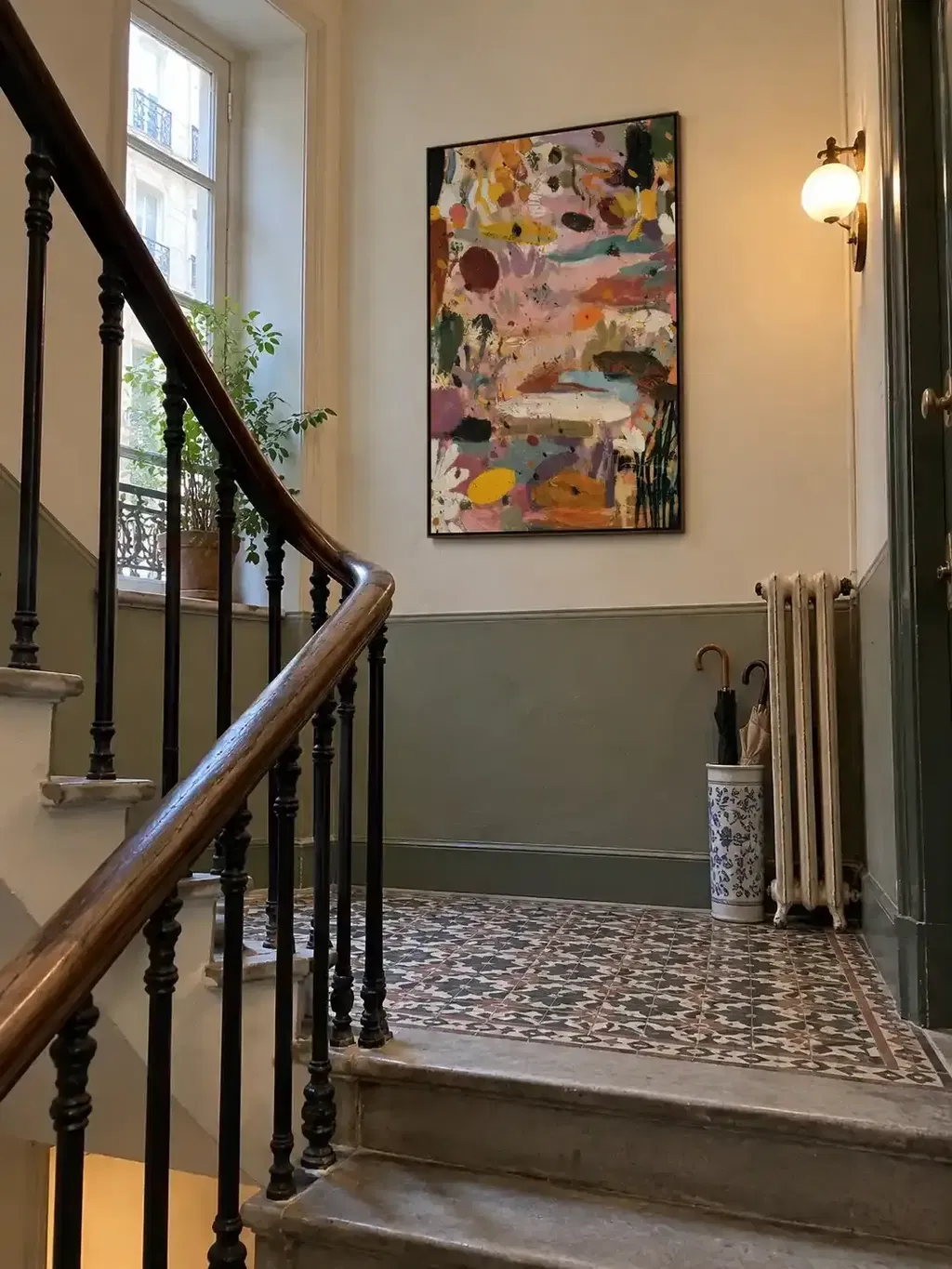
The high-end art market is undergoing a structural realignment. While sales of purely financial "vanity assets" over $10 million plummeted by 44% year-over-year in 2024, there is a visible retreat toward art with real application value. According to Marketplace.org, buyers are increasingly prioritizing emotional resonance and spatial utility over speculative auction pieces. For interior designers, this shift translates to a surge in demand for custom hand-painted murals and bespoke canvases.
However, commissioning original work introduces a unique friction point: the "Detail Gap." When a designer asks for a "softer" look or "more detail," the artist’s interpretation may vary wildly from the client's expectation. This lack of a shared vocabulary leads to a 60% spike in revision rates when expectations aren't visually anchored before production begins.
To bridge this gap, we must move beyond subjective adjectives and adopt a specification framework that balances artistic authenticity with retail-grade certainty.
The Value of the Human Hand in a Digital Age
Before diving into technical specifications, it is vital to understand why "sharpness" in a hand-painted context is commercially superior to digital alternatives. Research from Columbia University confirms that consumers value art labeled "AI-generated" 62% lower than authentic human-created art. This "human premium" isn't just a preference; it's rooted in what researchers at the University of Chicago call Essential Identity. Digital prints and NFTs lack the physical "soul" and micro-texture that a human artist embeds into a canvas.
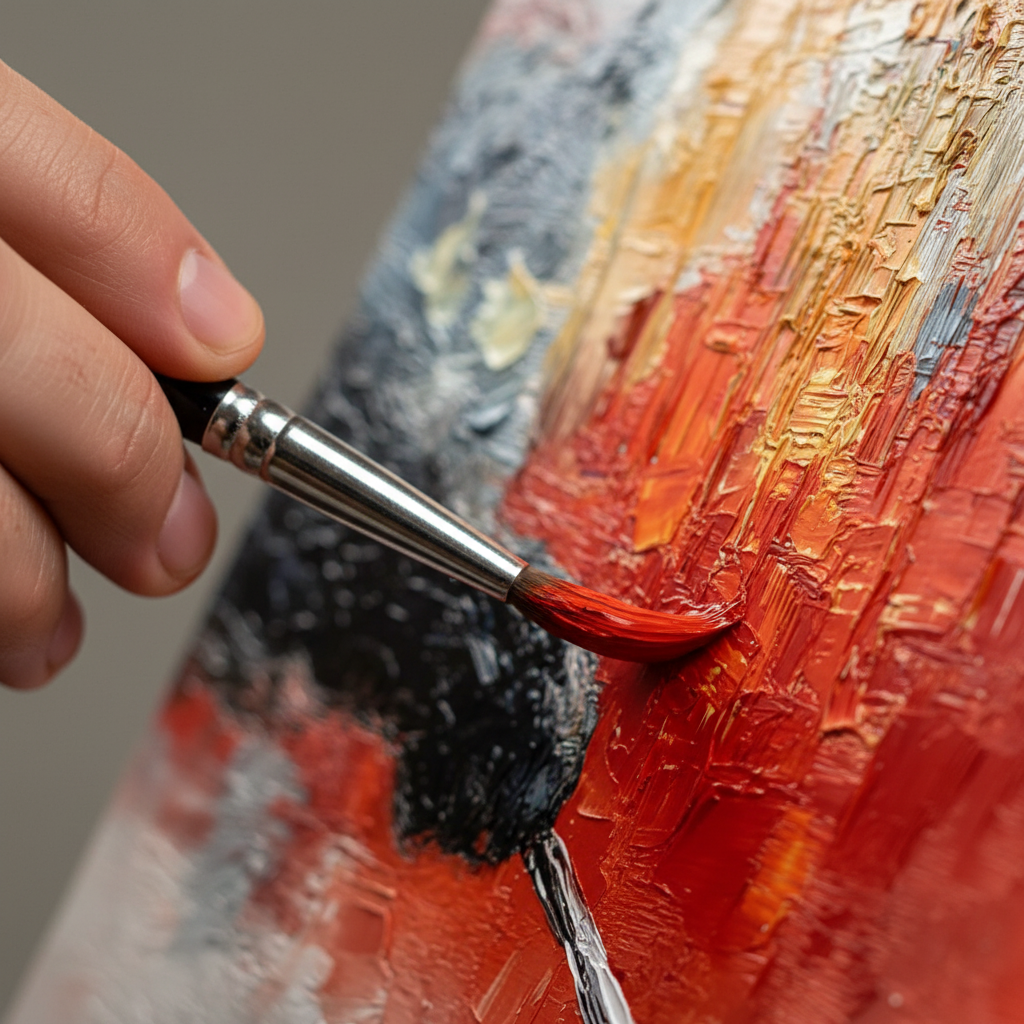
Furthermore, the physical relief of oil paint—the actual 3D topography of the brushstroke—stimulates the viewer’s brain in ways a flat print cannot. Tests at the MUNCH Museum confirm that interacting with physical relief textures exponentially increases intrinsic motivation and viewer satisfaction. In high-stakes environments like luxury hotel lobbies or private clinics, this tactile fruition is the difference between "decor" and a "healing environment."

Defining the Detail Spectrum: A Shared Vocabulary
In our studio practice, we’ve found that the most effective way to communicate "sharpness" is to align it with a modified version of the BIM (Building Information Modeling) Level of Development (LOD) framework. While typically used in architecture, applying LOD 100-500 concepts to brushwork provides a clear hierarchy of precision.
1. Conceptual / Loose (LOD 100-200)
- Visual Characteristic: Broad, "alla prima" style strokes where the gesture of the hand is visible. Edges are often soft or "lost," relying on the viewer's eye to bridge shapes.
- Best For: Large-scale murals viewed from 15+ feet, high-ceiling foyers, or "whimsical" 2026 design trends mentioned by Zillow.
- Time Efficiency: Typically requires 30-40% less production time than tight detail.
2. Schematic / Medium (LOD 300)
- Visual Characteristic: Recognizable forms with defined highlights and shadows, but without microscopic texture. Brushstrokes are controlled but not hidden.
- Best For: Living rooms and dining areas where the viewing distance is roughly 6 to 10 feet.
- The 10-Foot Heuristic: For spaces viewed from over 10 feet, medium detail often provides the best value. Tight detail often becomes imperceptible at this range, making the extra investment redundant.
3. High-Fidelity / Tight (LOD 400-500)
- Visual Characteristic: Fine-line realism, hidden brushwork, and high-frequency color transitions.
- Best For: Intimate settings under 6 feet, such as powder rooms or bedside art. According to the National Kitchen & Bath Association (NKBA), "wrapping mural wallpaper entirely around the walls" in powder rooms is a dominant trend for 2025, requiring high-fidelity execution to maintain escapism in close quarters.
Methodology Note (Detail-to-Time Correlation): Our scenario modeling for project management assumes that increasing from "Medium" to "Tight" detail increases production labor by ~50% due to the "bottom-up" neural control required for fine-motor precision. This is not a linear cost increase but a compounding one based on the total square footage.
The Physics of Sharpness: Why Pigments Matter
A common mistake in specification is assuming "sharpness" is purely a matter of the artist's skill. In reality, it is heavily dictated by the chemistry of the pigments.
Industrial particle sizing is the "lifeline" of modern quality control. According to Beckman Coulter, the tinting strength and color depth of a painting are dominated by the Particle Size Distribution (PSD). High-end pigments are milled using laser diffraction to ensure extreme fineness. When a pigment particle approaches half the wavelength of visible light, its optical scattering capability reaches a theoretical extreme, resulting in the "sharp," vibrant colors that distinguish professional work from amateur attempts.
The Lightfastness Standard
Designers must also specify lightfastness to ensure that "sharp" edges don't blur into faded ghosts over time. We recommend requiring paints that meet the ASTM D4303 standard, which uses xenon-arc testing to simulate years of sunlight exposure behind glass. This ensures the "Essential Identity" of the piece remains intact for decades.
| Parameter | Loose Detail (LOD 200) | Medium Detail (LOD 300) | Tight Detail (LOD 400+) |
|---|---|---|---|
| Viewing Distance | > 15 Feet | 6 - 10 Feet | < 6 Feet |
| Brushstroke Width | 10mm - 25mm | 3mm - 10mm | < 3mm |
| Edge Sharpness | Soft / Blended | Defined | Crisp / Fine-line |
| Labor Multiplier | 1.0x (Baseline) | 1.4x | 2.1x |
| Primary Use Case | Commercial Exteriors | Residential Living | Luxury Powder Rooms |
Health, Safety, and the "IAQ Promise"
For commercial designers, specifying the safety of the sharpness is just as important as the aesthetic. Traditional oil paints often rely on VOC-emitting solvents like turpentine, which Princeton University warns can cause central nervous system damage with chronic exposure.
To achieve LEED or WELL certification, designers should specify low-VOC acrylics or "Green" oils. Aalto University research proves that coatings on wood with 16% moisture emit significantly lower toxic VOCs than dry wood, plummeting during the curing process. By selecting artists who use eco-friendly binders—like walnut oil or hemp canvases which consume half the water of cotton—you protect the indoor air quality (IAQ) of your client's home.

The ROI of Custom Murals: Beyond Aesthetics
Commissioning hand-painted art isn't just a design choice; it’s a strategic investment in property value. A Royal Society analysis found that neighborhoods with higher "art" geo-tags saw greater relative house price gains. In the commercial sector, the impact is even more staggering. The Americans for the Arts reports that government tax investments in the arts yield a 7:1 ROI.
For developers facing high post-pandemic office vacancy rates, custom murals act as "marketing trump cards." According to NAIOP, top real estate titans are using unique public art to lease up millions of square feet of office space. Transforming a "blighted" or vacant wall with a community-focused mural can reduce neighborhood assaults by up to 40%, creating a "Busy Streets" effect that attracts responsible long-term tenants.
Implementation: How to Specify Detail Successfully
To ensure your next commission meets the "Detail Tolerance Window," follow this professional protocol:
- Visual Anchoring: Never use terms like "more detailed." Instead, maintain a library of 5-7 reference images showing brushstroke close-ups rather than finished compositions.
- The Distance Check: Determine the primary viewing distance of the piece. If it’s over 10 feet, prioritize "Medium" detail and reallocate the remaining budget to higher-quality, lightfast pigments.
- Specify the Substrate: Ensure the artist uses a primer that prevents "Support Induced Discoloration" (SID). As Golden Artist Colors notes, impurities in cotton canvas can be drawn out by thick mediums, causing catastrophic yellowing.
- Verify the Ethics: Align with brands that support fair artist compensation. A Wharton School survey found that 87% of consumers strongly agree artists should receive fair pay. This ethical alignment is a powerful narrative for your socially conscious millennial clients.
A Note on Biophilic Design
If the goal is stress reduction, specify "Biophilic" landscapes. Research from the University of Central Arkansas shows that nature-themed murals produce the same stress-reduction effects in the brain as being outdoors, accelerating healing in clinical settings and reducing cognitive fatigue in high-density office spaces.
Delivering Absolute Authenticity
The future of interior design lies in the fusion of avant-garde contemporary design with authentic handcrafting. As the European Crafts Alliance states, top-tier consumers now view this fusion as the "ultimate luxury." By mastering the vocabulary of detail and sharpness, you move from being a purchaser of decor to a curator of cultural heritage.
Whether you are specifying a panoramic mural for a high-end powder room or a large-scale abstract for a corporate headquarters, clarity in "sharpness" ensures that the final brushstroke is exactly where you—and your client—envisioned it.
Disclaimer: This article is for informational purposes only and does not constitute professional health, legal, or financial advice. Pigment toxicity and indoor air quality should be evaluated on a project-specific basis by qualified environmental health professionals. Always consult local building codes and LEED/WELL standards for commercial compliance.
References
- The expensive art market continues to struggle | Marketplace
- Human-Made vs. AI Art: Consumer Perception Study | Columbia Business School
- Neurological mechanisms of creative arts | PMC
- Quantifying the link between art and property prices | Royal Society
- BIM Level of Development (LOD) | United BIM
- Paint and Coating Hazards | CDC NIOSH
- Arts & Economic Prosperity 5 | Americans for the Arts