The Collector’s Dilemma: Precision in Physical Art Handling
The global art market, which reached a valuation of approximately $65 billion in 2023 according to The Art Basel and UBS Art Market Report 2024, is undergoing a structural shift. As high-end auction sales for purely financial assets saw a 44% decline in 2024, as noted by Marketplace, serious collectors are returning to "real application value." This means a renewed focus on high-quality, hand-painted works—pieces that possess what researchers at the University of Chicago call an "essential identity" that digital replicas simply cannot replicate.
For the modern collector, interior designer, or gallery professional, this shift brings a critical responsibility: preservation. A hand-painted oil or acrylic work is not a static object; it is a complex chemical matrix of pigments, binders, and substrates. Every time a human hand approaches the canvas, a risk-benefit analysis must occur. The debate between "cotton gloves or bare hands" is not merely a matter of tradition—it is a technical decision rooted in material science and risk mitigation.
The Chemistry of the Human Touch: Skin Oils and Pigment Stability
The primary adversary in art handling is the "acid mantle"—the thin, slightly acidic film on human skin made of lipids (sebum), amino acids, and sweat. While this mantle protects our skin, it is inherently destructive to the delicate surface of a painting.
When bare skin contacts an unvarnished oil painting, the fatty acids and salts in skin oils can trigger several deleterious effects:
- Chemical Softening: The oils can act as a mild solvent, potentially softening the binder over decades of repeated contact.
- Oxidation Catalysis: Trace salts can accelerate the oxidative aging of linseed oil, leading to localized yellowing or embrittlement.
- Metameric Shifts: Even microscopic deposits can alter the surface refractive index. As noted by the Getty Conservation Institute, pigment reflection is dominated by absorption and scattering coefficients; surface oils disrupt this geometry, potentially causing "geometric metamerism" where colors look different under varying light angles.
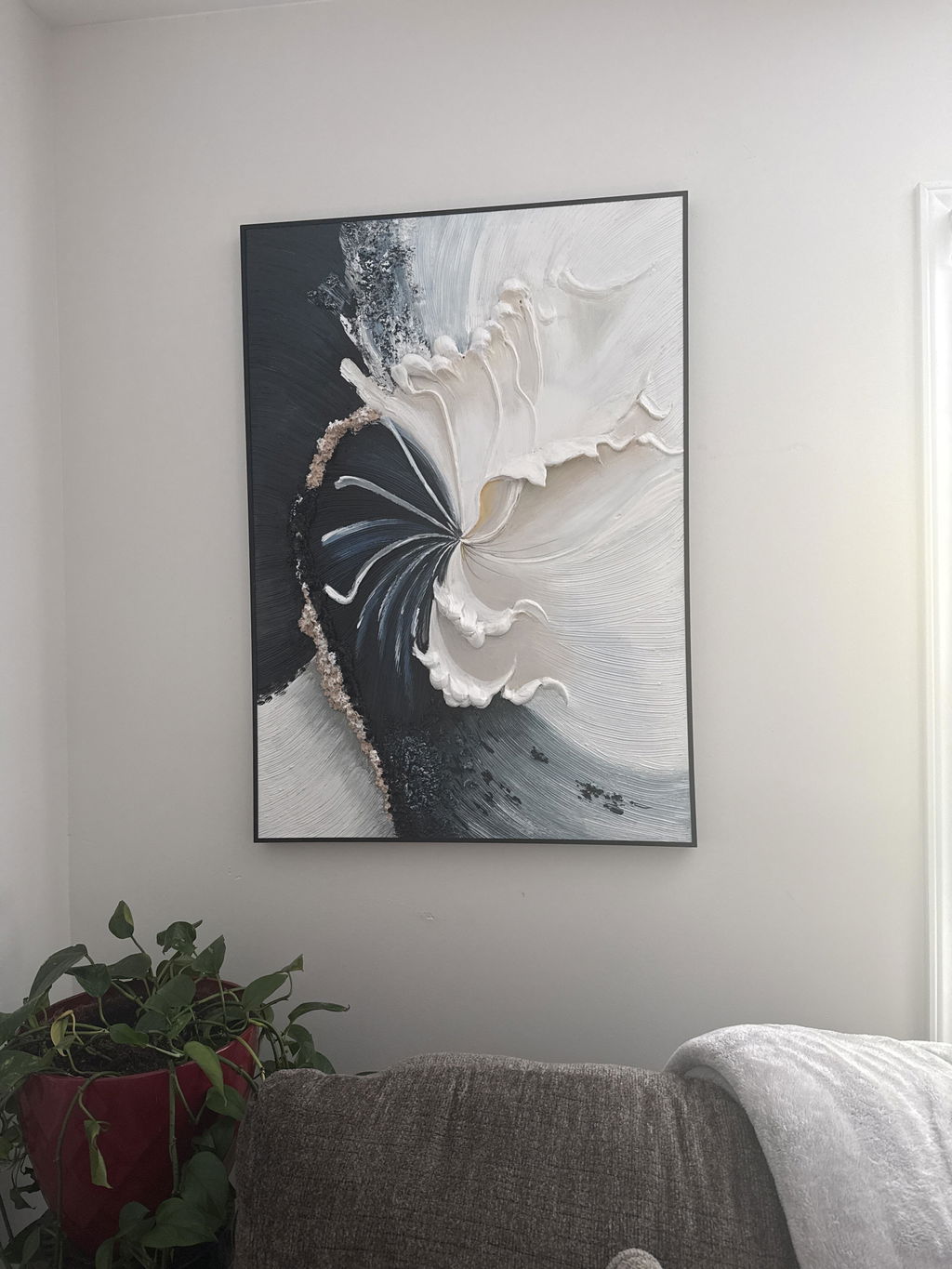
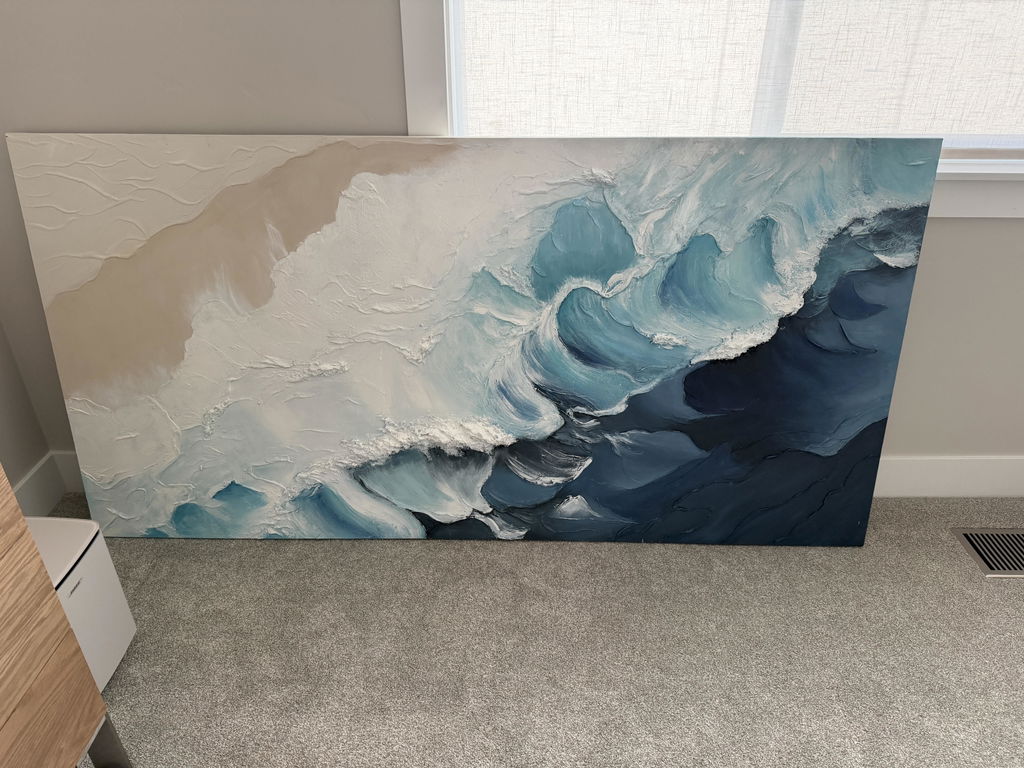
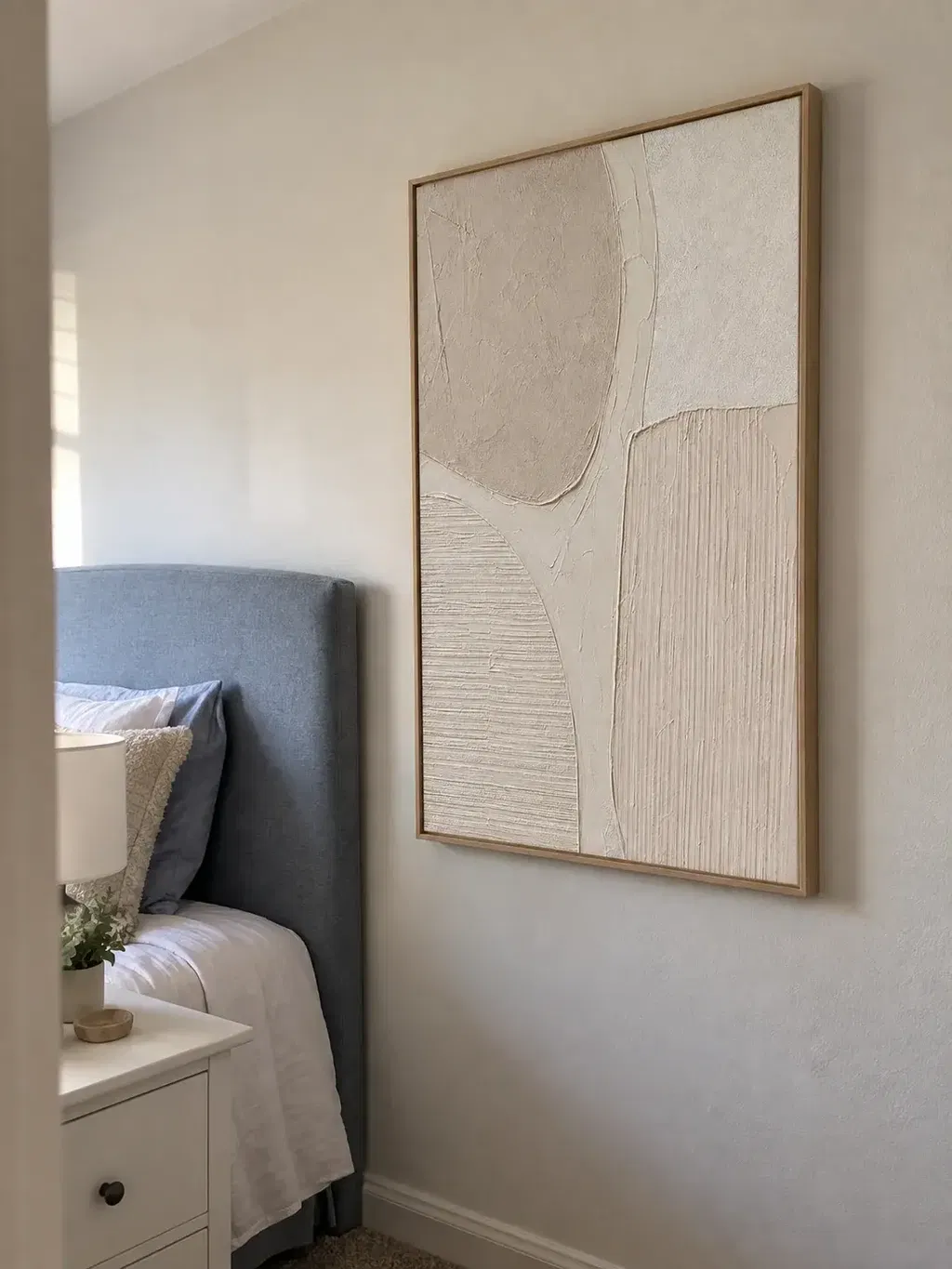
For collectors of contemporary impasto works, where thick "relief" textures are a core aesthetic feature, the risk is amplified. Research in Frontiers in Computer Science confirms that physical relief textures exponentially stimulate viewer satisfaction. However, these peaks are the most vulnerable to the mechanical pressure and chemical transfer of bare-hand handling.

The Glove Spectrum: Cotton vs. Nitrile vs. Bare Hands
The choice of hand protection is situational. There is no universal "best" method, only the method most appropriate for the specific medium and condition of the artwork.
1. White Cotton Gloves: The Traditional Standard
Cotton gloves are the hallmark of the "gallery-quality" experience. They are ideal for handling stable, fully cured, and varnished oil paintings. The soft fibers prevent the transfer of skin oils and provide a buffer against minor abrasions.
- When to Use: Handling frames, moving varnished works, or during formal presentations to clients.
- The "Gotcha": Cotton is porous. A study titled "To glove or not to glove?" reveals that clean cotton gloves can become permeable after just one hour of use, potentially transferring "second-hand contamination" from other surfaces. Furthermore, cotton lint can snag on "toothier" canvases or flaking paint.
2. Powder-Free Nitrile Gloves: The Conservator’s Choice
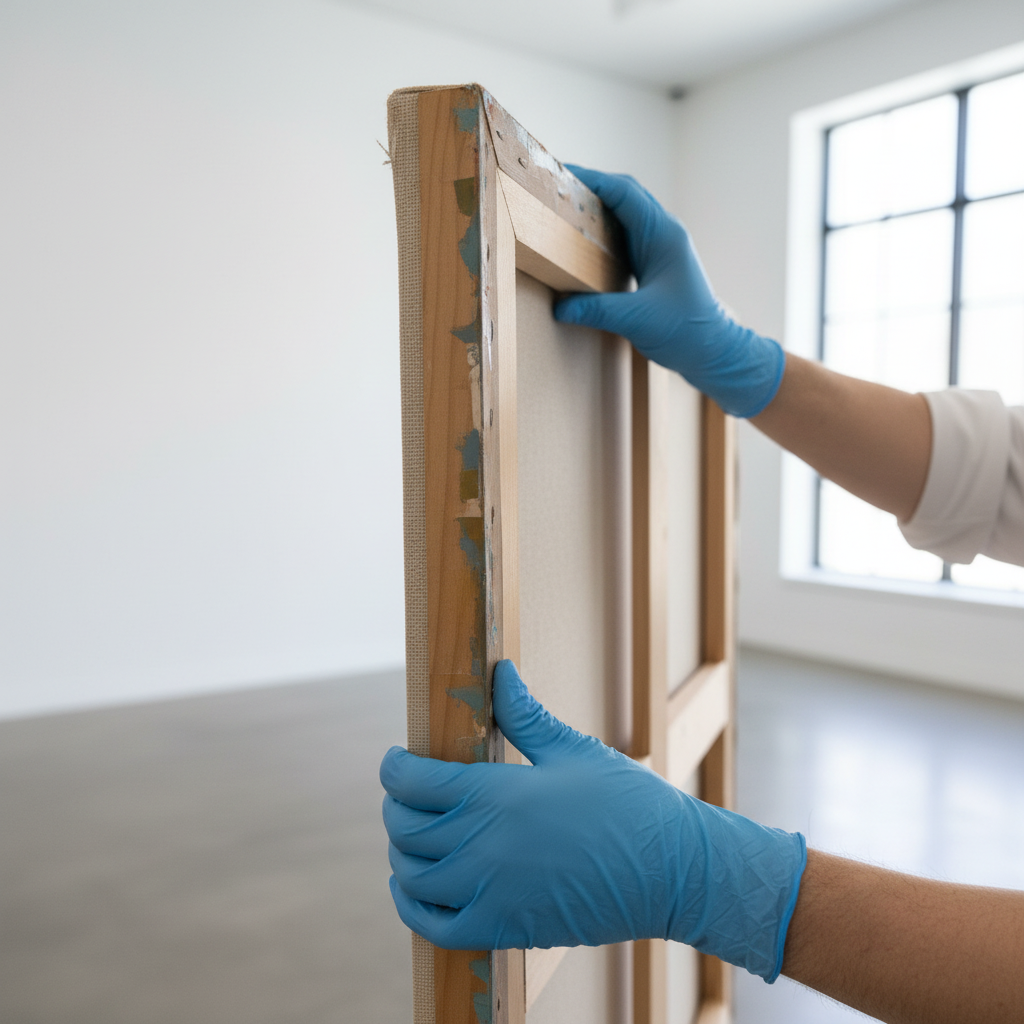
In modern conservation, nitrile has largely superseded cotton for unvarnished or matte surfaces. Nitrile provides a total chemical barrier and superior tactile sensitivity.
- When to Use: Handling fresh works, unvarnished acrylics, or paintings with high-texture impasto.
- The Protocol: Always "glove up" away from the artwork. This prevents the microscopic dust released when snapping on a glove from settling on the paint film.
3. Bare Hands: The Precision Exception
Some master conservators work with bare hands to achieve the necessary sensitivity for delicate repairs. However, this is only done after a rigorous cleaning protocol using pH-neutral soaps.
- The Risk: For the average collector, bare-hand handling is generally discouraged. Even "clean" hands carry moisture that can trigger Support Induced Discoloration (SID). As Golden Artist Colors technical bulletins explain, water-soluble impurities in the canvas can be drawn to the surface, causing permanent yellow or brown staining.
Logic Summary: Our handling recommendations are based on a "Material-Specific Protocol" heuristic. We prioritize chemical barrier integrity (Nitrile) for porous surfaces and mechanical buffer (Cotton) for non-porous frames.
| Handling Method | Surface Type | Primary Risk | Tactile Sensitivity |
|---|---|---|---|
| Cotton Gloves | Varnished/Frame | SNAGS/LINT | Moderate |
| Nitrile Gloves | Unvarnished/Matte | SWEAT BUILDUP | High |
| Bare Hands | Specialized Repair | ACID TRANSFER | Maximum |
| Barrier Cream | Heavy Frames | SLIPPAGE | High |
Structural Integrity: Supporting the "Essential Identity"
Handling art is as much about physics as it is about chemistry. A common error among new collectors is treating the stretcher bars—the wooden skeleton behind the canvas—as a handle.
The "Rigid Frame Edge" Rule
Pressure should only ever be applied to the rigid edges of the frame or the outer perimeter of the stretcher. Applying pressure to the center of the canvas, even with gloves, can cause "craquelure" (fine cracking) in the paint film. This is especially true for oil paintings, which, unlike acrylics, become increasingly brittle as they age through oxidative cross-linking (a process detailed in JustPaint).
When moving large-scale works—such as the custom murals increasingly used by commercial developers to boost property values—teamwork is non-negotiable. A minimum of two people should support the work from the bottom and sides, ensuring the frame does not flex. Flexing the frame puts immense stress on the corner joints and can lead to canvas sagging.

Material Science: Why Medium Matters
The handling protocol changes based on whether the work is oil-based or acrylic. This distinction is vital for long-term preservation.
Acrylics: The "Dust Magnet" Problem
Acrylic paints are thermoplastic; they soften as temperature and humidity rise. Furthermore, research from Tate shows that surfactants (PEG-type molecules) can migrate to the surface of acrylic films, creating a slightly "tacky" feel that attracts dust. Handling acrylics with cotton gloves can leave microscopic fibers embedded in this surfactant layer, leading to a permanent "hazy" appearance.
Oils: The Heavy Metal Factor
Professional-grade oil paints often utilize traditional pigments that require careful handling for health reasons. While Titanium Dioxide dominates 90% of the white pigment market today, many "gallery-quality" works still utilize Cadmium or Cobalt for their incomparable depth.
- Safety Warning: The International Agency for Research on Cancer (IARC) classifies cadmium compounds as Group 1 carcinogens. While stable when bound in a dried oil film, any flaking or "chalking" of the paint surface poses a risk. Gloves are a mandatory safety barrier, not just an aesthetic choice, when handling older or damaged works containing these pigments.
Modeling the Risk: Glove Contamination Scenario
To demonstrate the importance of glove hygiene, we modeled a typical gallery "handling session" based on common industry heuristics.
Modeling Note: This is a scenario model based on standard contamination transfer rates, not a controlled lab study. It assumes a "High-Touch" environment where a handler touches five different surfaces (door handles, packing tape, smartphones) before touching the artwork.
| Parameter | Value | Unit | Rationale |
|---|---|---|---|
| Glove Type | Standard Cotton | N/A | High porosity baseline |
| Surface Dwell Time | 60 | Minutes | Time until "saturation" |
| Transfer Coefficient | ~0.45 | Ratio | Estimated oil/dirt transfer per touch |
| Ambient Humidity | 55% | RH | Standard gallery condition |
| Pressure Applied | 2.5 | N/cm² | Typical grip pressure |
Boundary Conditions: This model does not account for anti-static treatments or specialized "low-lint" cotton blends. Results may vary significantly if the handler uses alcohol-based sanitizers on the gloves (which is strictly forbidden as it degrades the fibers).
The Environmental Moat: Beyond the Hand
Preservation does not end when the painting is hung. The environment acts as a "constant handler" of the art.
- VOC Monitoring: For indoor installations, particularly in healthcare or maternal environments, using low-VOC materials is critical. The EPA warns that indoor air pollution can be more concentrated than outdoor. Ensuring that your art is painted with pigments that pass strict air quality tests is a prerequisite for LEED-certified spaces.
- Lightfastness: When placing art in sunlit foyers, verify the lightfastness ratings. According to ASTM D4303 standards, high-quality paints are tested under accelerated aging conditions to ensure they can withstand decades of filtered UV exposure without significant color shifts.
Ethical and Economic Value: The Human Element
Investing in hand-painted art is also an investment in human labor. While AI-generated prints are flooding the market, a Columbia University study found that consumers value human-created art 62% higher than AI alternatives. This "human premium" is tied to the moral demand for fair artist compensation—a sentiment shared by 87% of consumers.
By following professional handling protocols, you are not just protecting a physical object; you are honoring the "invisible labor" of the artist. As revealed by the Cincinnati Artist Report, the mental and physical output of artists is often undervalued. Rigorous care is the ultimate form of respect for that labor.
Summary of Best Practices for Collectors
- Assess the Surface: Use nitrile for unvarnished/matte/acrylic; cotton for varnished oils and frames.
- Clean the Perimeter: Wash hands with pH-neutral soap even if using gloves to prevent accidental transfer during the "gloving" process.
- Support the Frame: Never touch the front or back of the canvas. Support only from the rigid outer edges.
- Team Transport: For works over 36 inches, always use two people to prevent frame torque.
- Zone Control: Handle art in a clean, dedicated space away from food, liquids, and high-traffic dust.
Handling gallery-quality art is a skill that bridges the gap between the aesthetic and the technical. By understanding the chemical interactions between your hands and the canvas, you ensure that your investment remains a vibrant, "essential" legacy for generations to come.
Disclaimer: This article is for informational purposes only and does not constitute professional conservation advice. Art handling involves inherent risks to both the artwork and the handler. For high-value or damaged pieces, always consult a professional conservator certified by organizations such as the American Institute for Conservation (AIC) or the International Institute for Conservation (IIC). Handling pigments containing heavy metals (e.g., Lead, Cadmium) requires specific safety equipment and training to prevent toxic exposure.
Sources
- The Art Basel and UBS Art Market Report 2024
- Tate: Conservation Concerns for Acrylic Emulsion Paints
- ASTM D4303 Standard Test Methods for Lightfastness
- WHO: Cadmium Environmental Health Criteria
- Golden Artist Colors: Support Induced Discoloration (SID)
- Columbia University: Human-Made vs. AI Art Perception Study