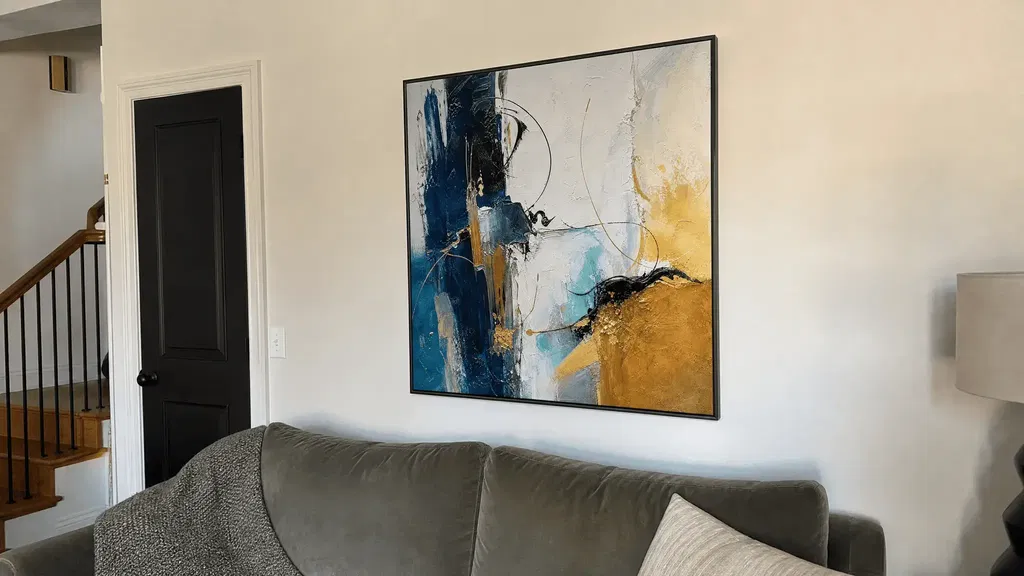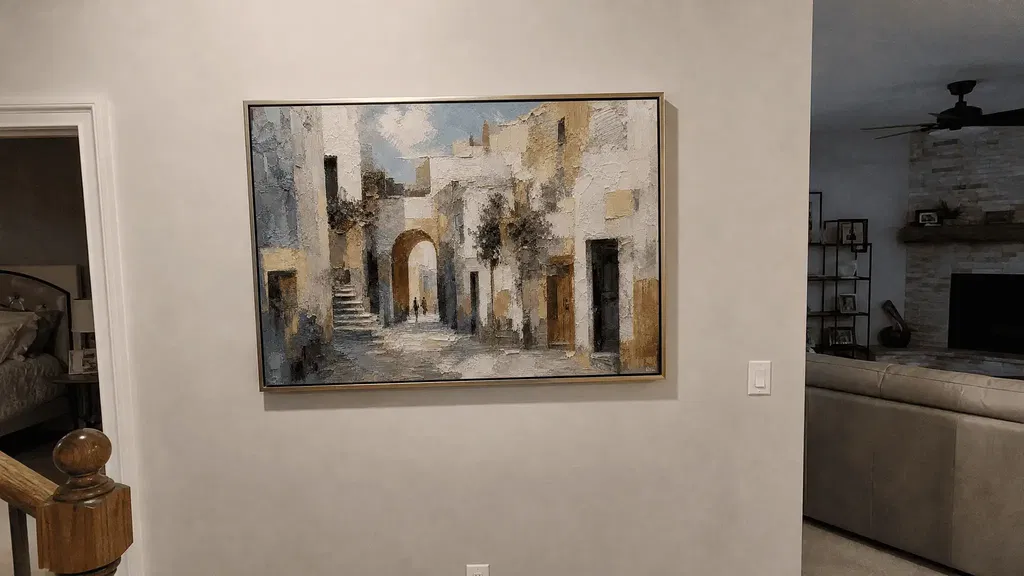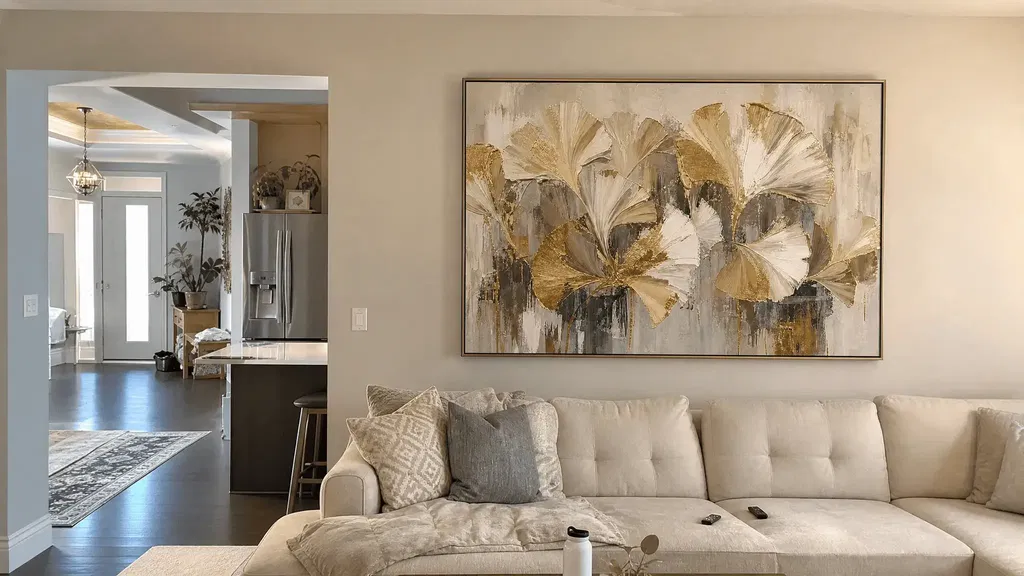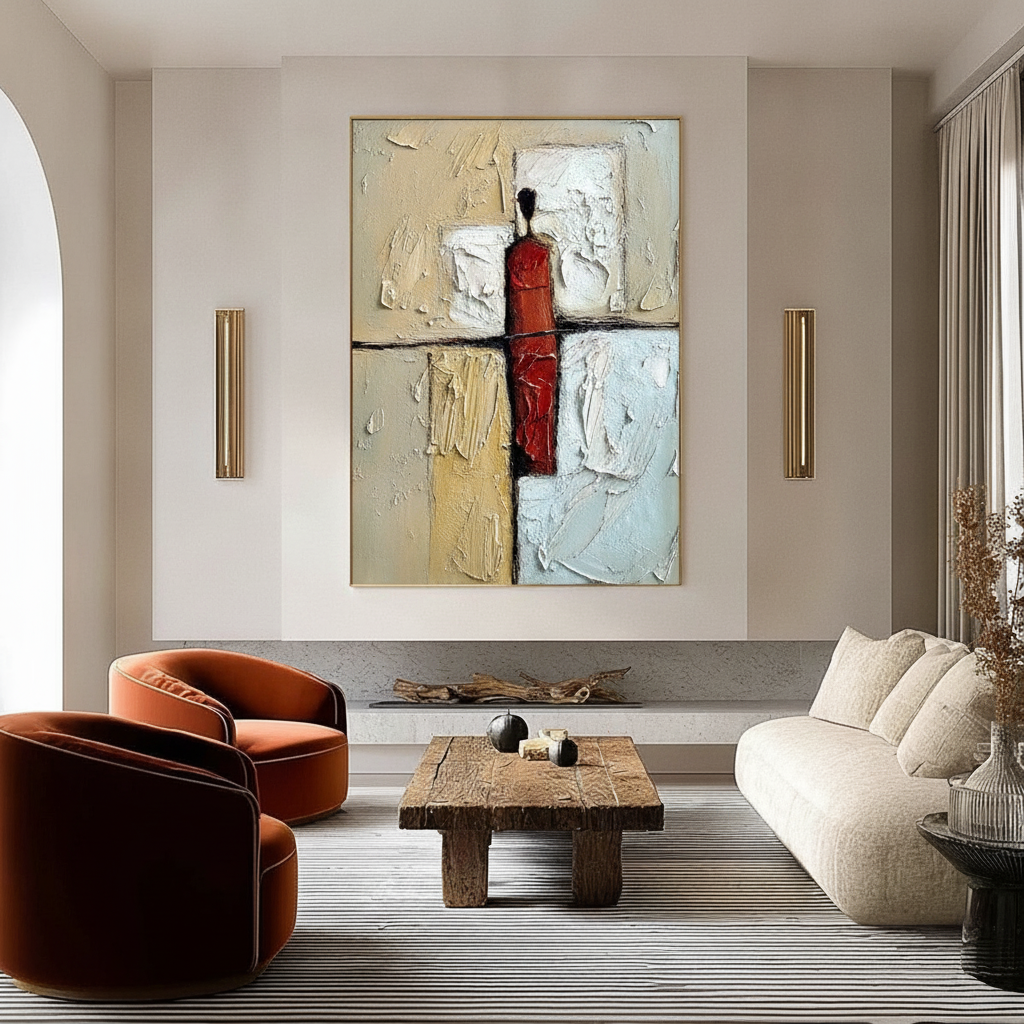
The New Era of Performative Authenticity in Home Design
The global art market is undergoing a structural correction. While high-end auction sales for purely financial art assets plummeted 44% year-over-year in 2024, according to Marketplace, a new trend is emerging. Modern homeowners are retreating from "vanity" pieces and returning to works with real application value. This shift, which we call "performative authenticity," prioritizes the tactile, high-end feel of original oil textures over the flat predictability of digital prints.
For the aesthetic-driven homeowner, "decision safety" is paramount. You want the soul of a hand-painted piece, but you need it to harmonize with your existing high-end furnishings—specifically your textiles. The relationship between the physical texture of oil paint and the sheen of a velvet sofa or the coarse weave of a linen chair is not merely aesthetic; it is a matter of optical physics and material chemistry.
The Physics of Refraction: LRV and the 30-Point Rule
In our design consultations, we often see a common mistake: ignoring the Light Reflectance Value (LRV) of adjacent materials. LRV measures the percentage of light a surface reflects. According to industry heuristics used by Chieftain Fabrics, successful material coordination typically requires a variance in LRV to prevent visual "mud."
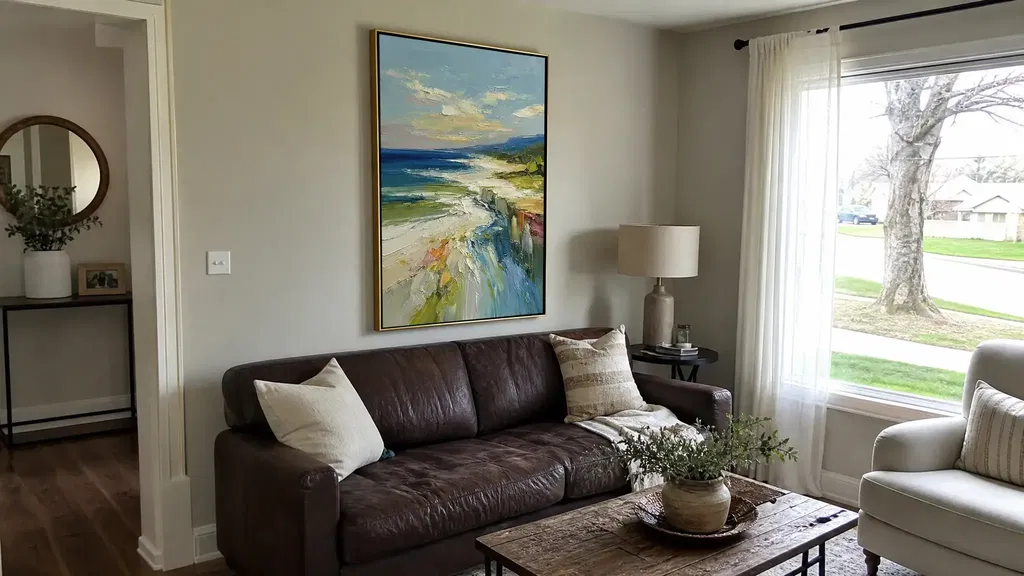
However, a specific conflict arises with oil paintings. A glossy oil finish can have an LRV between 60% and 80%. When paired with a high-sheen textile like velvet, which can experience a 40% reflectivity boost depending on the nap direction, the result is often visual chaos.
Logic Summary: Our coordination model assumes that adjacent materials should maintain a 30-point LRV variance to ensure visual clarity. This is a heuristic derived from common interior design practices and optical standards (not a controlled lab study).
| Material Pair | Typical Oil LRV | Textile Reflectivity | Interaction Risk |
|---|---|---|---|
| Gloss Oil + Velvet | 70% | High (Variable) | Specular glare; visual fatigue |
| Matte Oil + Silk | 20% | High (Static) | "Chalky" dissonance; looks unfinished |
| Impasto + Coarse Linen | 45% (Shadowed) | Low (Diffuse) | High harmony; balanced visual weight |
| Satin Oil + Cotton | 50% | Moderate | Safe baseline; low risk |

The "Shadow Play" Effect: Managing Impasto and Velvet
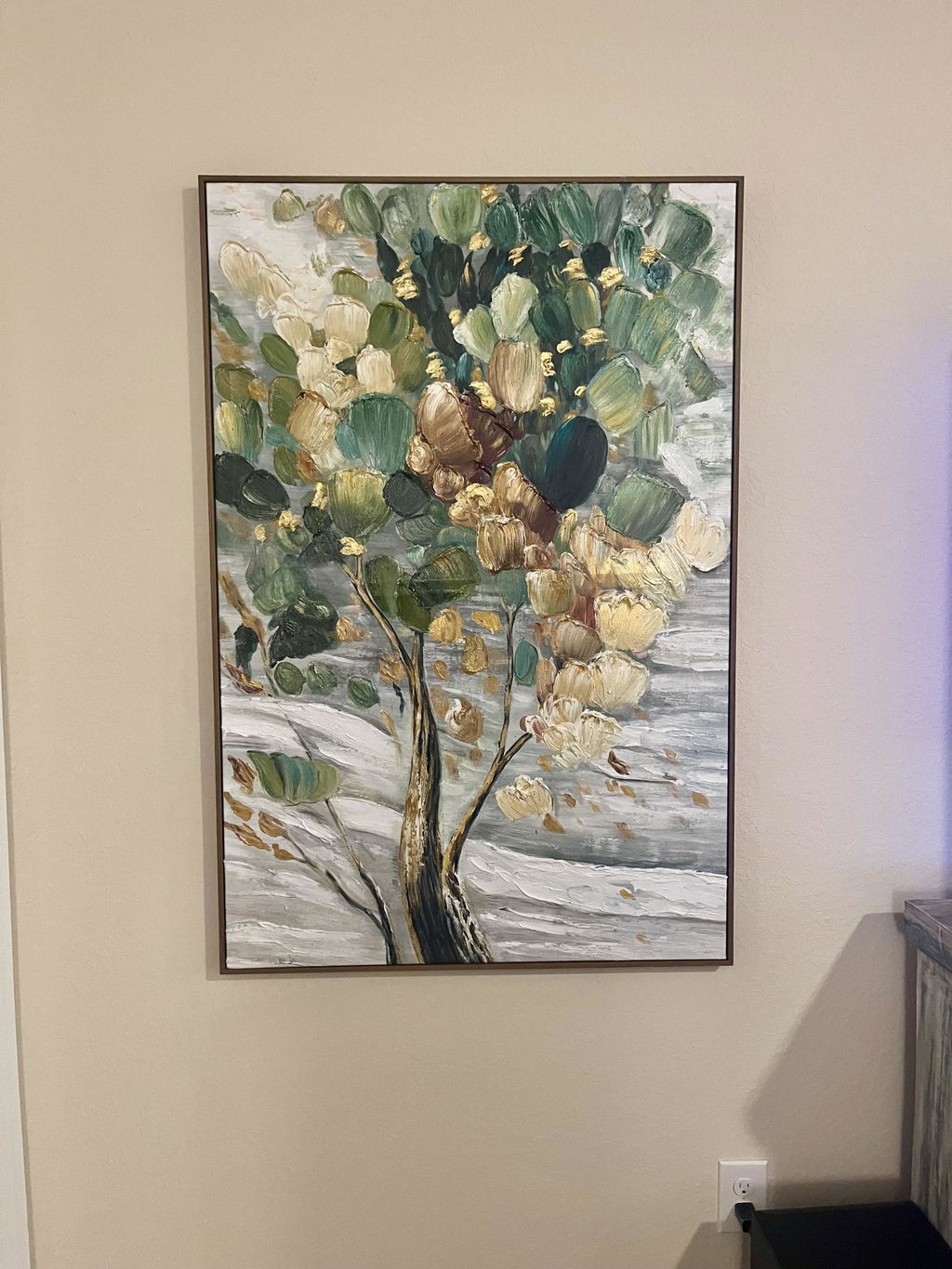
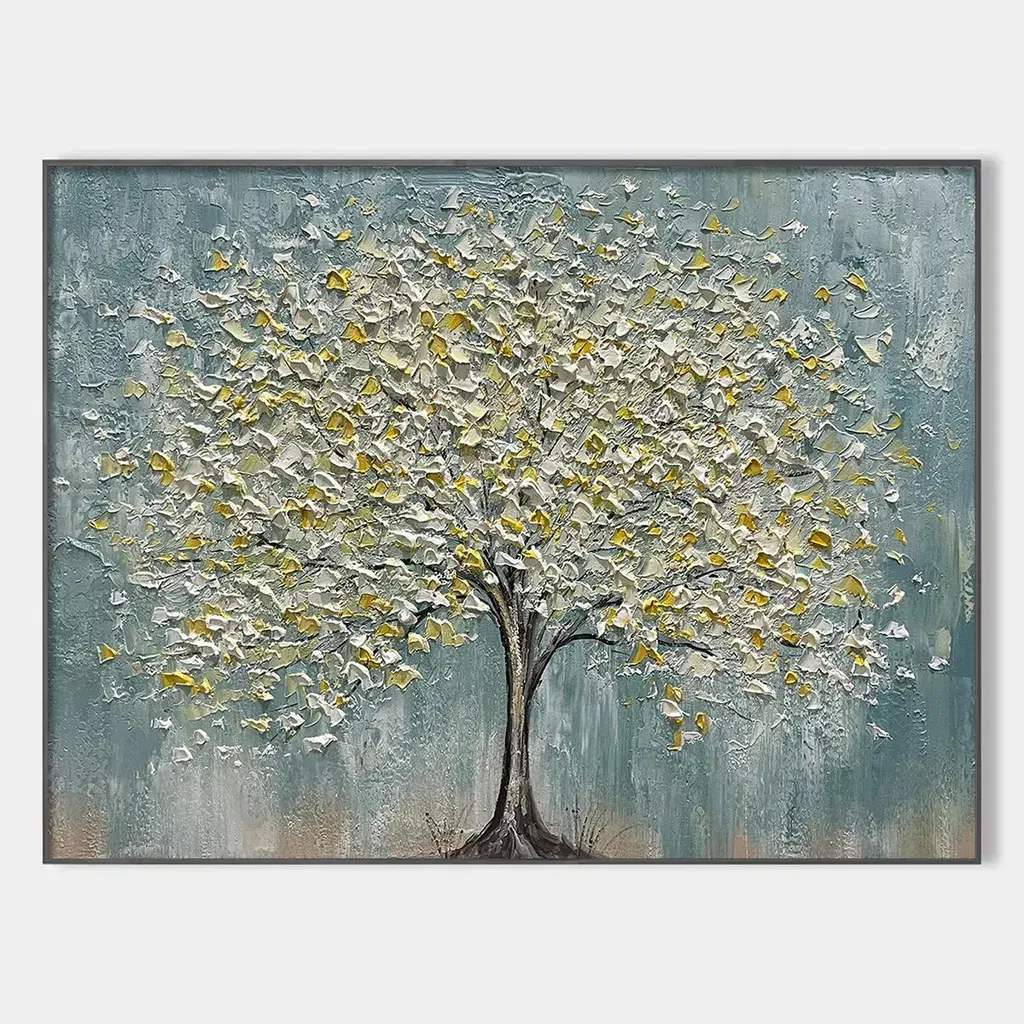
One of the most striking features of original oil art is impasto—the technique of laying paint on so thickly that it stands out from the surface. While this creates a luxurious, tactile depth, it also introduces "Shadow Play." Heavy impasto creates its own micro-shadows.
Based on our observations from staging high-visibility residential zones, these micro-shadows can clash with the directional nap of velvet upholstery. If your light source is positioned directly overhead, the painting’s texture may look jagged, while the velvet looks patchy.
The 45-Degree Rule: To harmonize these surfaces, we recommend positioning accent lighting at a 45-degree angle to the artwork. This angle optimizes the "specular highlights" of the oil paint (measured at a 45°/0°/45° geometry) without creating the harsh shadows that compete with the diffuse reflection of your furniture. This is aligned with standard glossmeter measurement protocols used to quantify surface finish.

Visual Weight: Fat-over-Lean vs. Coarse Linen
In rooms dominated by heavy, natural textiles like linen or wool, a thin, "flat" painting often looks underpowered. To provide enough visual weight to compete with a coarse weave, experienced designers suggest oil paintings that utilize the "fat-over-lean" layering technique.
"Fat-over-lean" involves increasing the oil content in each successive layer of paint. This doesn't just improve the structural integrity of the paint film; it creates a physical "presence" on the canvas. When a painting has visible, layered volume, it anchors the wall against the heavy texture of a linen-draped window or a chunky knit rug.
Conversely, a common pitfall is pairing "dry" or matte impasto with high-sheen silks. Without a finishing glaze, the art can appear "chalky" or unfinished against the silk's luster. A light varnish or glaze acts as a bridge, giving the paint a subtle sheen that mirrors the luxury of the fabric.
Environmental Dynamics: The Fireplace Dilemma
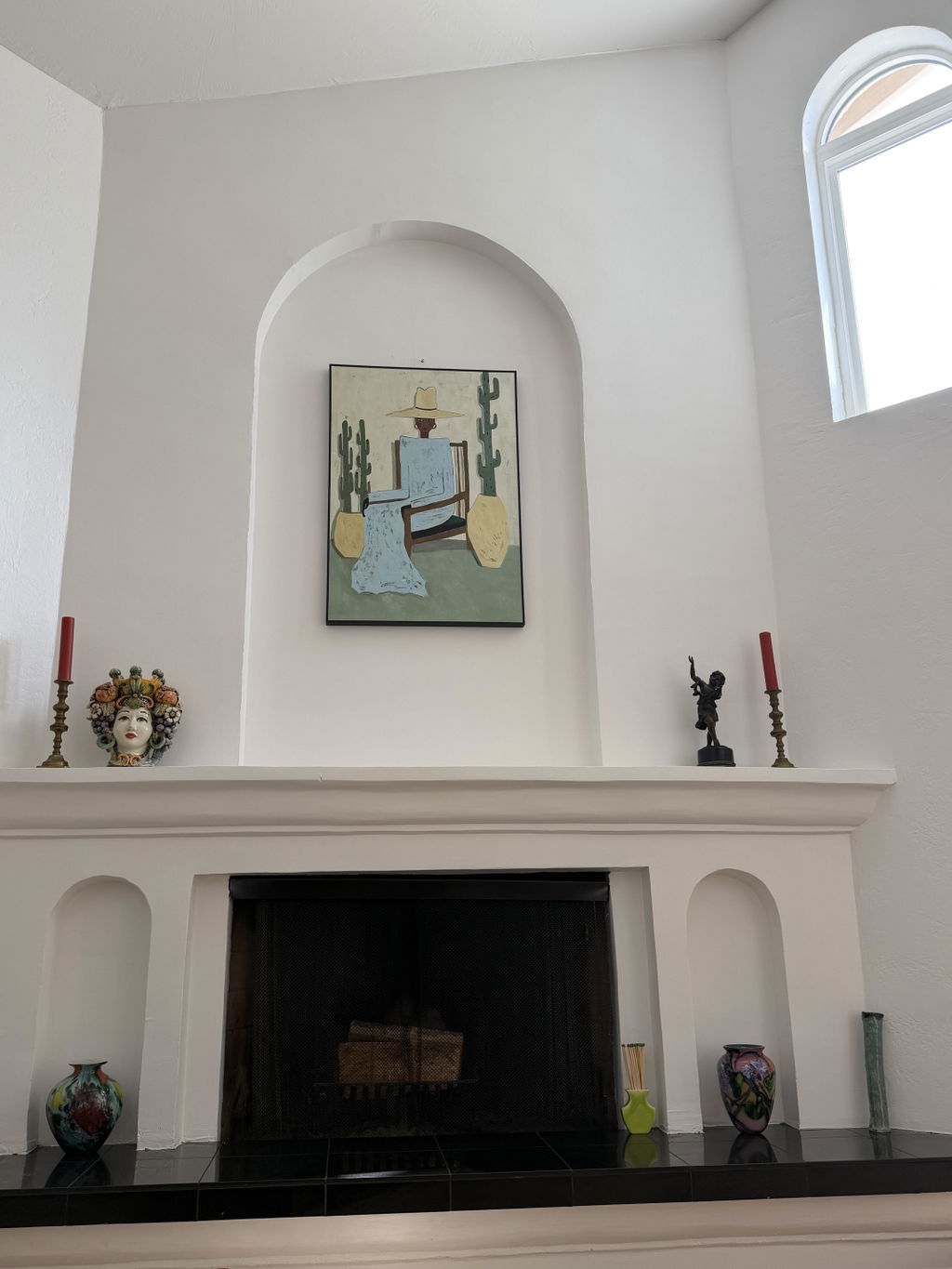
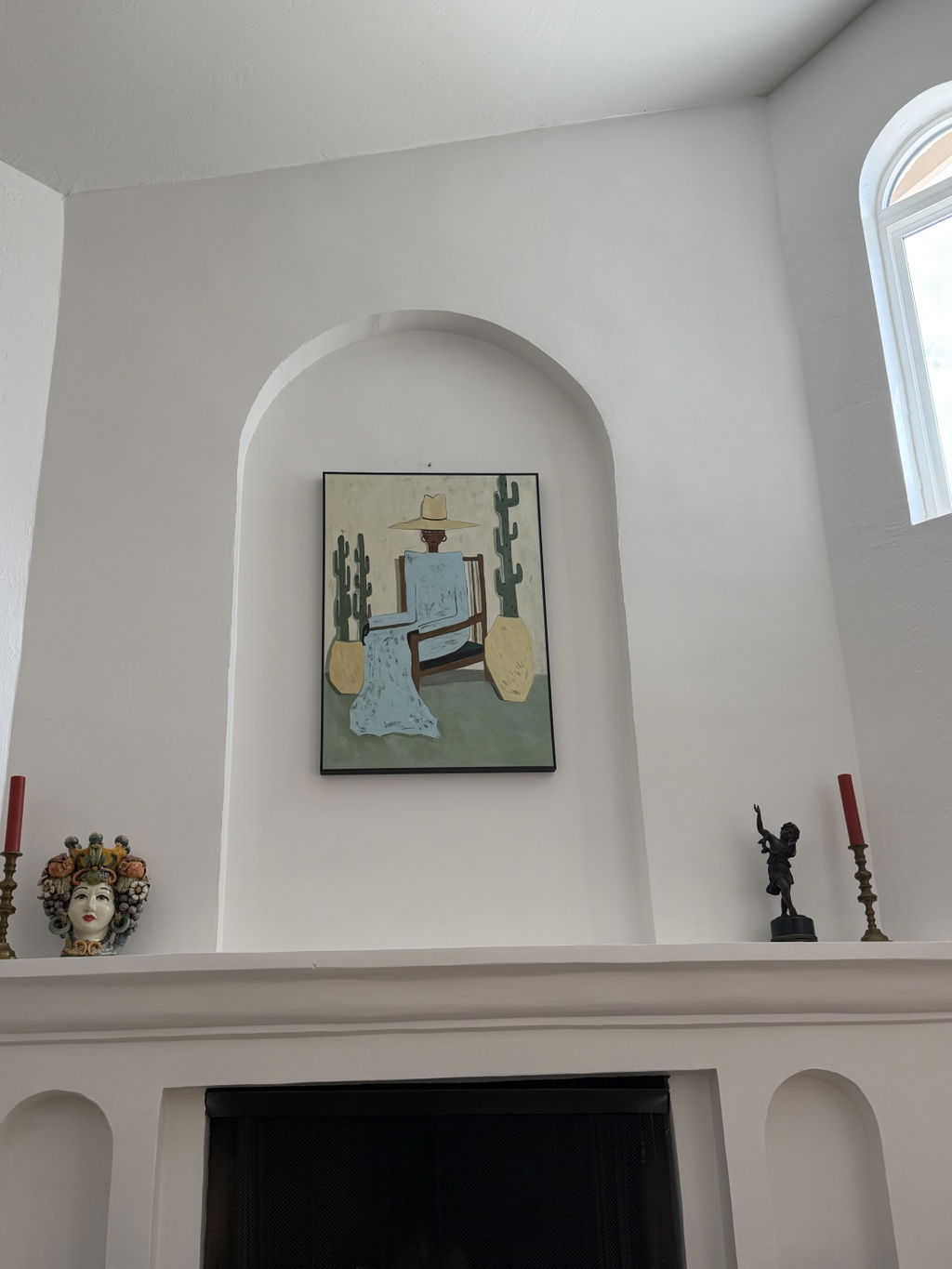
High-visibility zones often include a fireplace, a popular spot for a focal piece of art. However, this creates a unique material conflict. Research from Aalto University shows that coatings on wood (and by extension, canvas) react significantly to temperature and moisture changes.
Heat from a fireplace can subtly increase the "tack" or stickiness of certain oil mediums. In a room with high-pile rugs or shedding textiles, this tackiness can act as a magnet for airborne fibers. Over time, these fibers become embedded in the paint film, dulling the color and ruining the texture.
Pro Tip: If placing art near a heat source, ensure the painting is fully cured (which can take 6–12 months for heavy oils) and protected by a non-tacky varnish. This reduces the risk of "Support Induced Discoloration" (SID), a phenomenon where impurities are drawn out of the canvas by the medium, as noted in technical bulletins from Golden Artist Colors.
The Human Premium: Neuroscience and Essential Identity
Why does a hand-painted oil mural feel more "comfortable" than a high-definition print? The answer lies in our neurobiology. A systematic review of 85 records published in PMC shows that viewing authentic art consistently activates the medial prefrontal cortex (mPFC) and the amygdala, optimizing emotional regulation circuits.
Furthermore, a study by Columbia University confirmed that consumers value art labeled as "AI-generated" 62% lower than authentic human-created art. This is because digital replicas lack what University of Chicago researchers call the artist's "essential identity." The canvas retains an irreplicable soul that a printer cannot mimic.
When you choose a hand-painted piece, you aren't just buying decor; you are investing in a "cultural heritage asset." This mindset shift, supported by mural conservation research, significantly increases the long-term value of your home’s interior.

Safety and Longevity: The Technical Baseline
For the health-conscious homeowner, the "Indoor Air Quality (IAQ) Promise" is vital. While historical oil paints were often toxic, modern professional-grade pigments have evolved.
VOCs and Off-Gassing
Indoor air pollution is a major concern, with the EPA warning that indoor air can be more polluted than outdoor air. We prioritize low-VOC paints and walnut oil mediums, which replace toxic solvents like turpentine. Walnut oil is not only safer but also avoids the "narcosis" risks associated with mineral spirits, as warned by Princeton University EHS.
Lightfastness Standards
To ensure your investment doesn't fade, look for materials tested under ASTM D4303. This standard uses xenon-arc tests to simulate years of indoor light exposure. However, be aware that the ASTM D-4236 label on a paint tube only means the warning labels comply with regulations, not that the paint is non-toxic. Always verify the specific pigment safety data.
Heavy Metal Awareness
While pigments like Titanium White have replaced toxic Lead White (which now captures 90% of the market share), some colors still require caution. Cadmium pigments, for instance, are classified as Group 1 carcinogens by the IARC. For homes with children, we recommend water-based acrylics or cadmium-free oils that pass the BS EN 71-3 heavy metal migration tests.
Maintenance: The Tate Museum Insight
A common myth is that you can never clean an original painting. However, research from the Tate Modern Paints Project suggests that gently wiping surfaces with water-based cotton swabs can effectively remove surfactants that attract dirt.
For oil paintings, the key is "oxidative cross-linking." Unlike acrylics, which form films through physical coalescence, oils chemically bond over time, making them more durable but also more prone to embrittlement if exposed to extreme heat.
Maintenance Heuristic: For every 10 degrees of temperature increase above 25°C (77°F), the rate of chemical decay in an oil binder roughly doubles. Keep your art in climate-controlled zones to preserve the "fat-over-lean" structure.
Investing in Spatial Wellness
The integration of hand-painted art into the built environment is more than a luxury; it is a wellness intervention. The World Health Organization (WHO) has confirmed through over 3,000 studies that art interventions effectively alter clinical indicators for mental health. In hospital settings, nature-themed murals have been shown to reduce stress in 61% of patients, according to University of Pennsylvania research.
By coordinating the physical textures of your art with the textile finishes of your home, you create a cohesive, restorative environment. You move beyond "buying a picture" and toward "curating an experience" that honors both the artist's labor and your personal sanctuary.
Disclaimer: This article is for informational purposes only and does not constitute professional medical, legal, or financial advice. Always consult with a qualified interior designer or art conservator for specific installation and safety requirements, especially regarding chemical sensitivities or high-value asset management.
Sources
- Marketplace - The expensive art market continues to struggle
- World Health Organization - Scoping Review on Arts and Health
- Columbia University - Human-Made vs. AI Art Study
- ASTM International - D4303 Standard for Lightfastness
- Tate - The Tate AXA Art Modern Paints Project
- EPA - Indoor Air Quality and Low-VOC Paints
- Royal Society - Quantifying the link between art and property prices