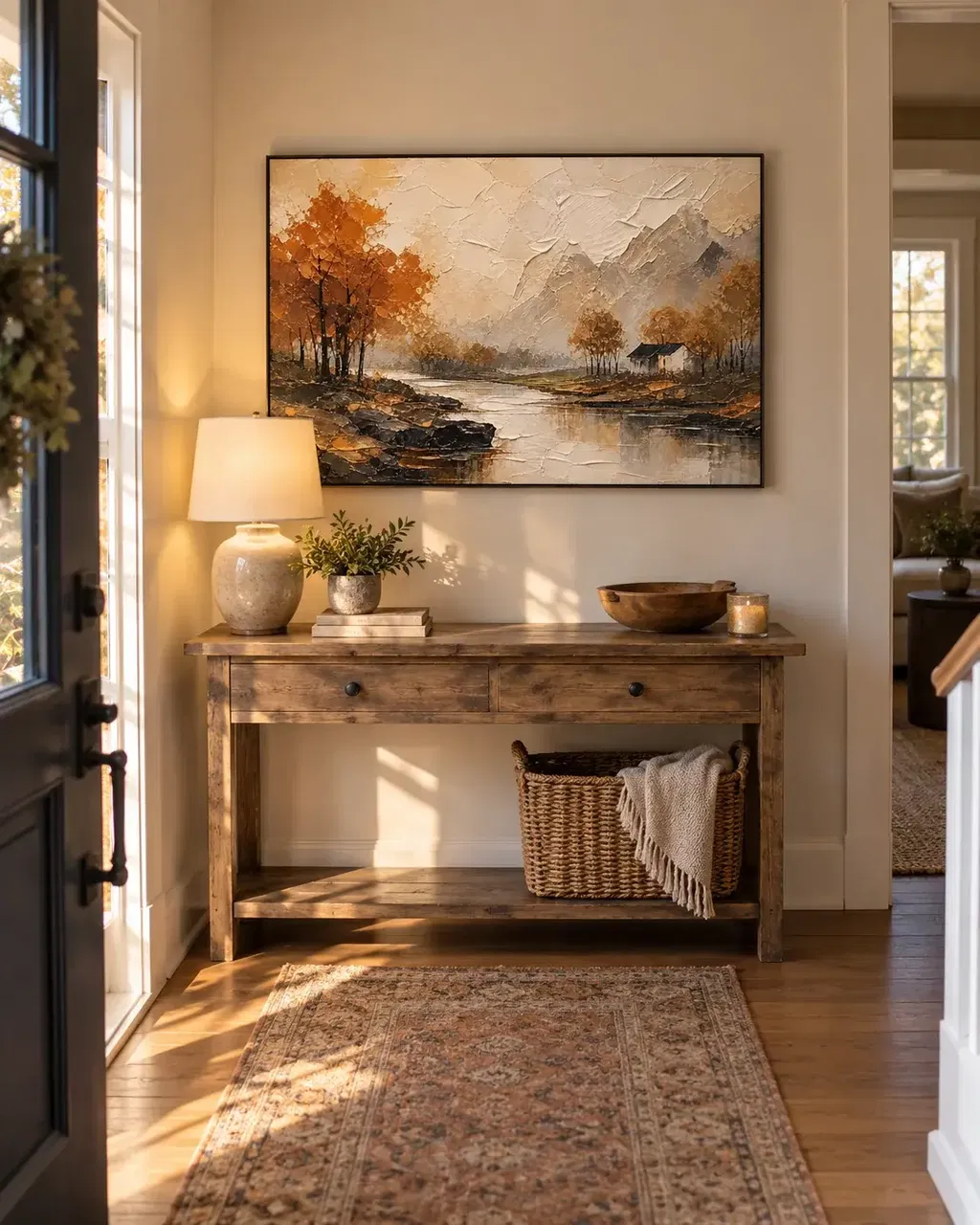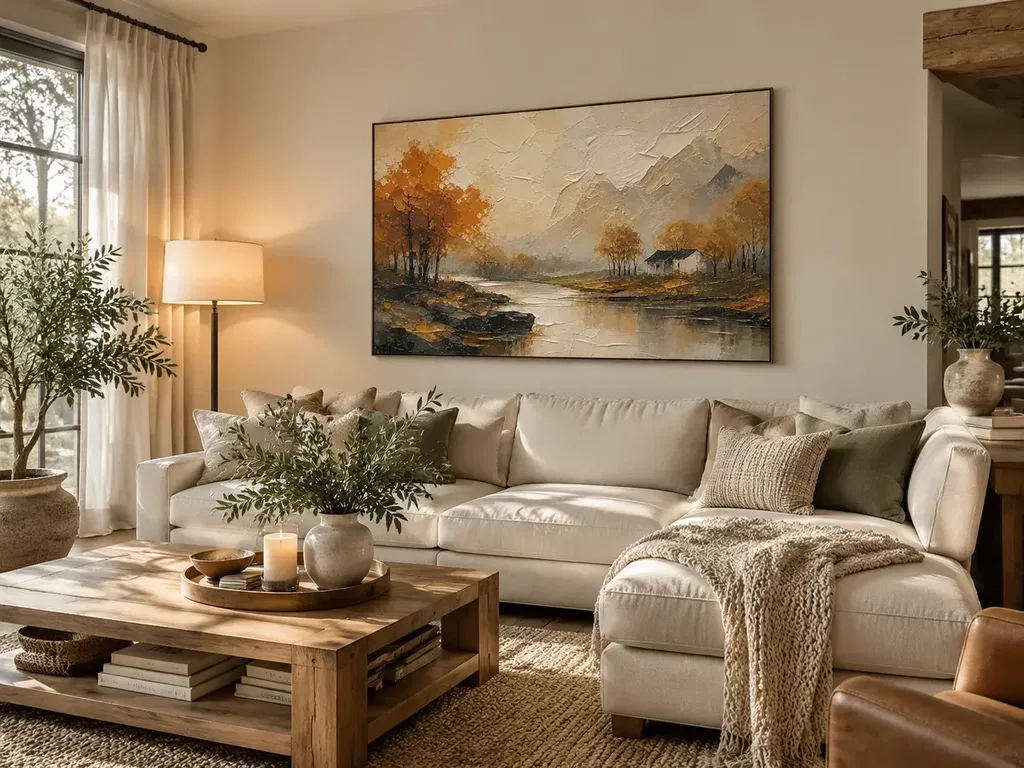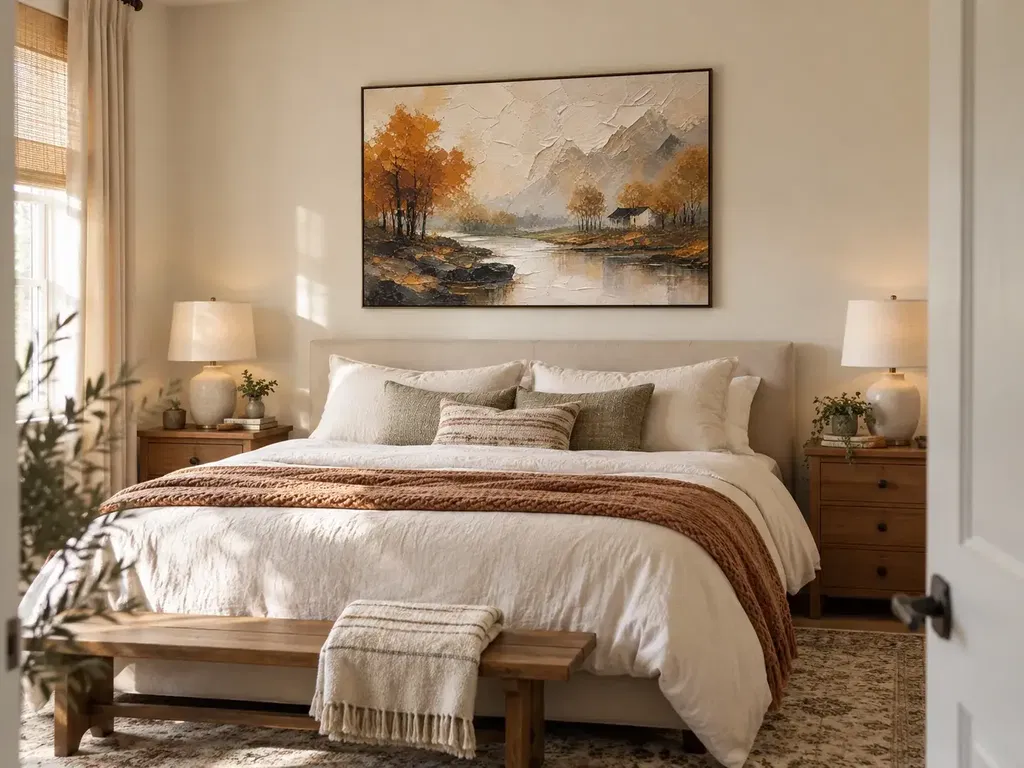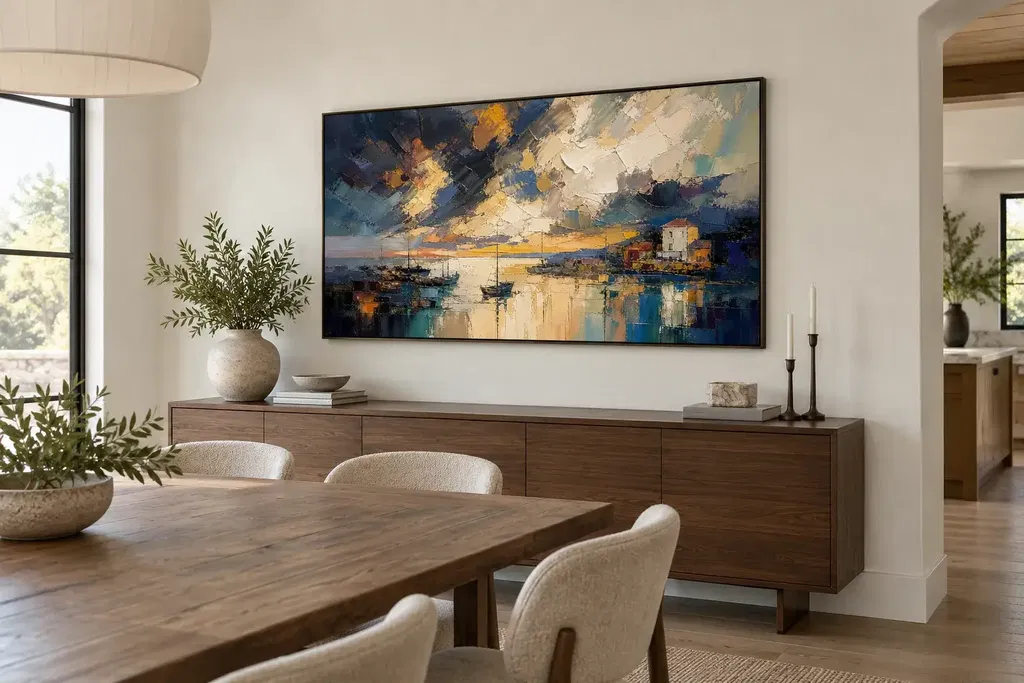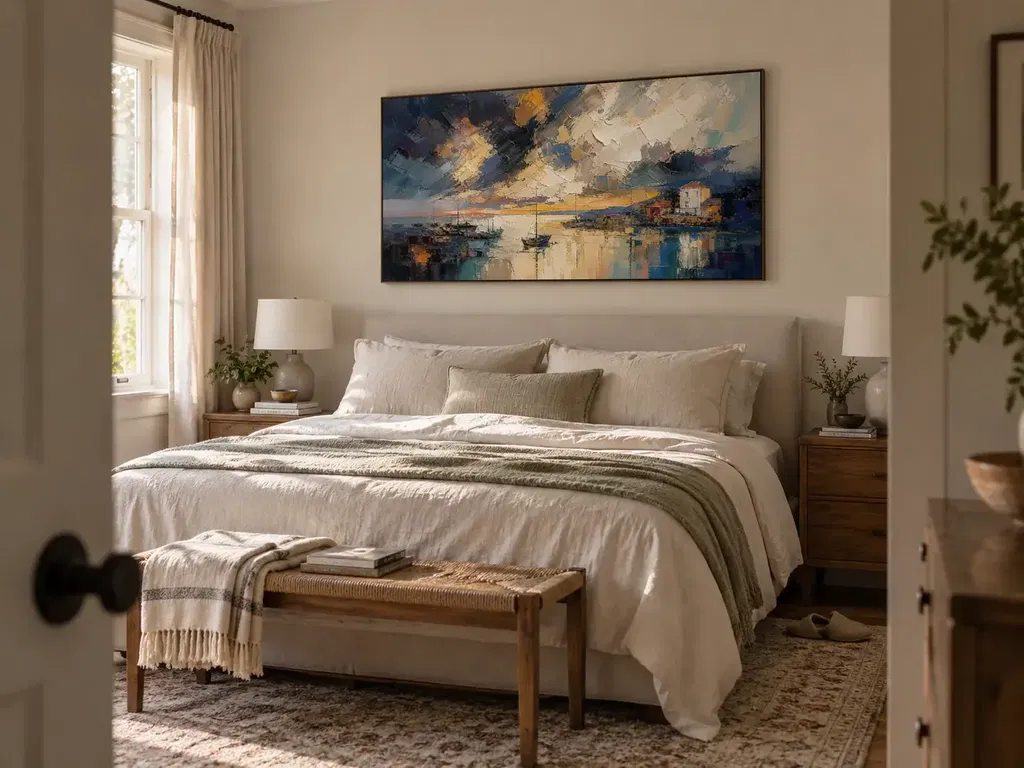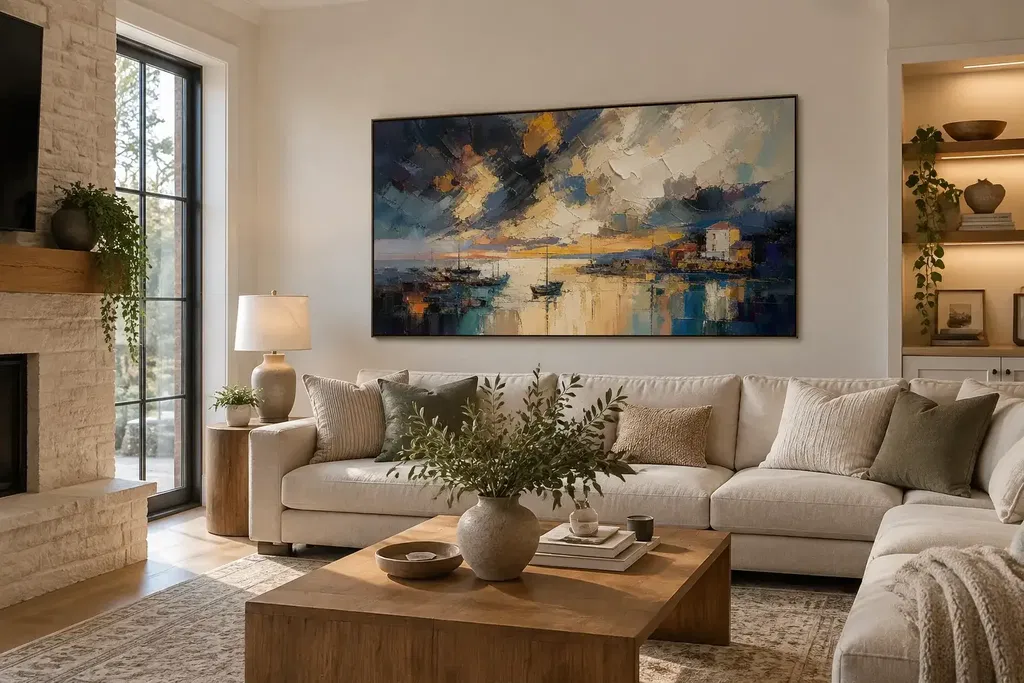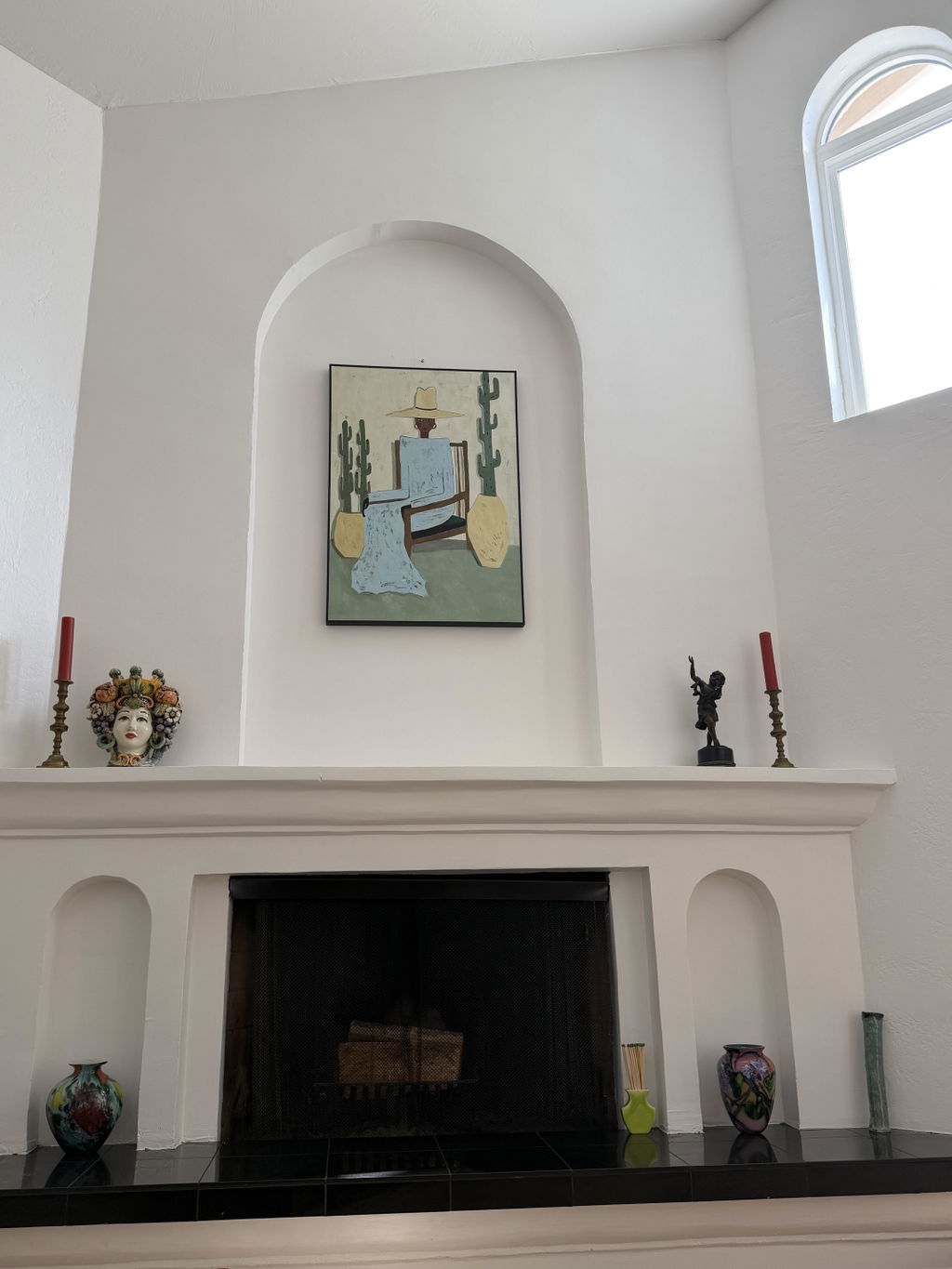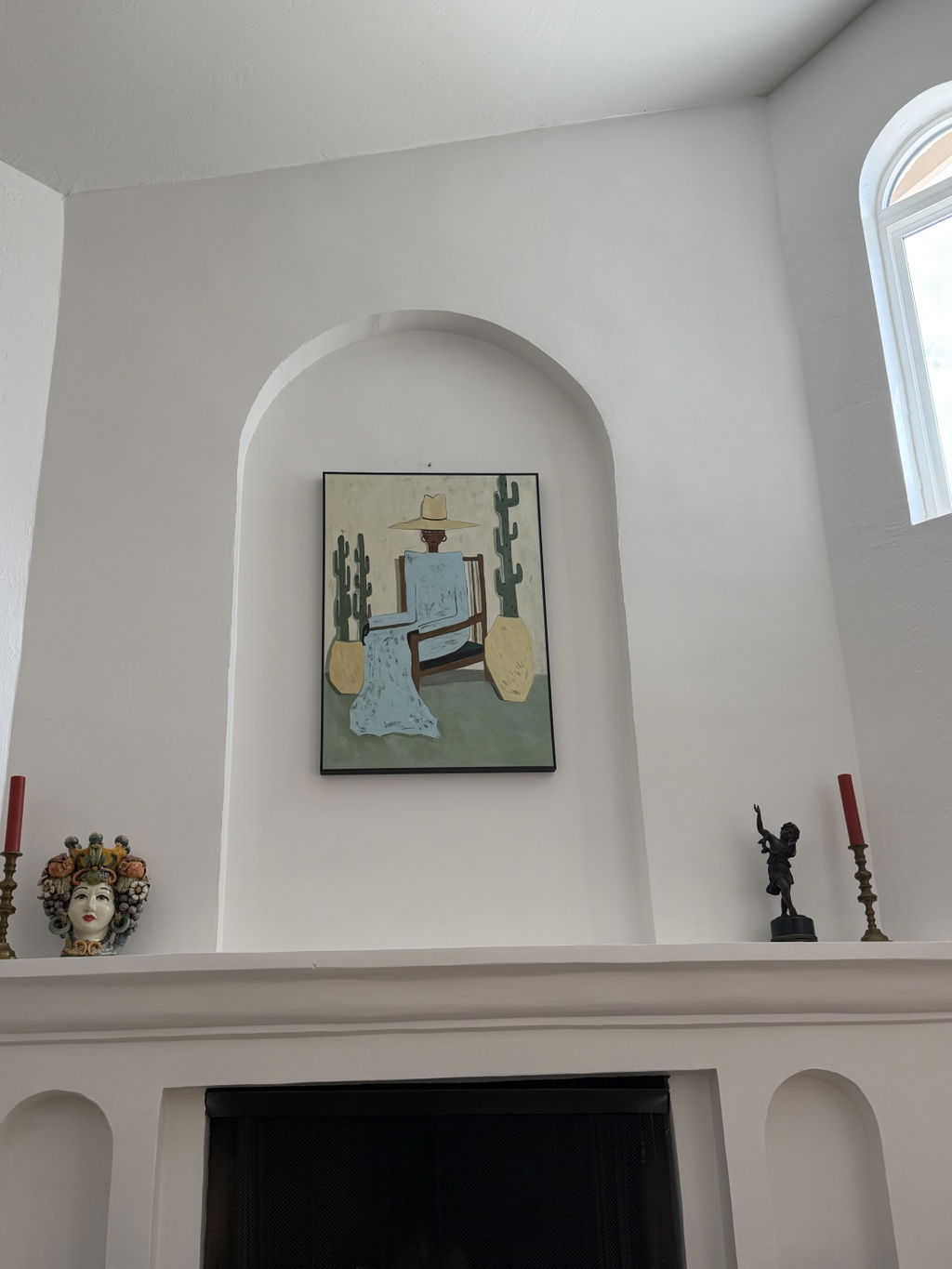
The High-Stakes Environment of Luxury Lobby Art
For interior designers and commercial trade professionals, the lobby is more than a transition space; it is a high-performance environment where aesthetic decisions carry significant financial and psychological weight. Recent data suggests a fundamental shift in how corporations and luxury developers approach art. According to Marketplace, high-end auction sales for purely financial art assets plummeted 44% in 2024, signaling a retreat from "vanity pieces" toward art with real application value.
In a commercial lobby, "application value" is defined by how a piece of art survives 24/7 LED exposure and how its physical texture interacts with varying viewing angles. The challenge is technical predictability. When a 100% human-hand-painted mural is commissioned—which consumers value 62% higher than AI-generated alternatives, according to Columbia University—the primary risk is not the artist's skill, but the "mirror effect" of high-gloss varnishes and the "Kelvin Shift" of modern lighting.
This guide provides a decision-safety framework for specifying oil art in commercial environments, grounded in optical physics and commercial real estate ROI.
The Physics of Sheen: Managing Specular Reflection
The most common frustration we encounter in trade consultations is the "blinding" effect of overhead LED fixtures on large-scale oil canvases. In a lobby, where lighting is often designed for safety and task-visibility, the intensity can reach several hundred lux.
The 60-Inch Rule and the Mirror Effect
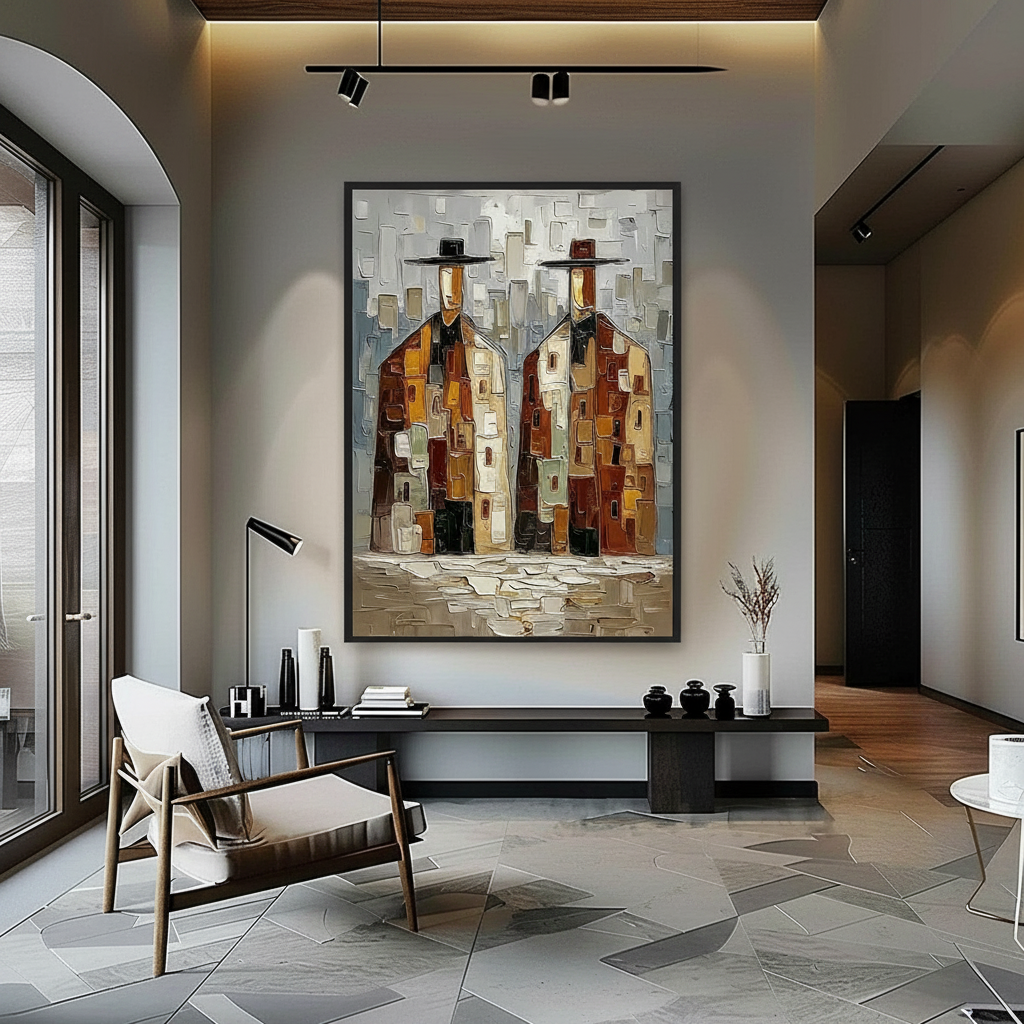
As a heuristic based on common patterns in high-traffic installations, we advise against high-gloss varnishes on any canvas larger than 60 inches. On large surfaces, the paint film acts as a semi-specular mirror. High-gloss finishes can completely obscure the artwork's details from primary walking paths, leaving visitors with a view of the ceiling's light fixtures rather than the pigment.
Standard practice for these environments involves a satin or matte finish. A satin finish provides the necessary depth for pigments—especially dark umbers and blacks—while diffusing specular reflection. According to ASTM D523, specular gloss is measured at specific angles (20, 60, and 85 degrees). In commercial lobbies, the 60-degree geometry is most relevant for pedestrians.
Logic Summary: Our analysis of lobby viewing habits assumes a standard pedestrian eye level of 5'2" to 5'10" and a viewing distance of 10–15 feet. Under these parameters, a satin finish minimizes the "hot spot" reflection from 4000K LED downlights.

The Kelvin Shift: How LED CCT Alters Oil Pigments
Most commercial lobbies utilize LED lighting between 4000K and 5000K (Cool White to Daylight). While this is excellent for alertness and cleanliness, it presents a significant "Kelvin Shift" for traditional oil paintings, which are often composed under warmer studio lights (2700K–3000K).
The Metamerism Trap
Oil paints, particularly those using organic binders, exhibit "geometric metamerism." This means the color appearance changes based on the light source's Correlated Color Temperature (CCT) and the angle of illumination. Cool LEDs can make warm-toned oils—such as those featuring sienna or ochre—appear sterile, "muddy," or washed out.
To counter this, we recommend that trade professionals request video approval steps using specific lighting setups. Observing how light "travels" across the surface texture via video allows for a more accurate assessment than static photography, which often flattens the color profile.
Pigment Scattering and Opacity
The optical performance of oil art is dominated by the scattering (S) and absorption (K) coefficients of the pigments. According to the Getty Conservation Institute, differences in the surface refractive index are the root cause of color saturation shifts. In high-lumen environments, pigments with high refractive indices, such as Titanium Dioxide, are preferred for their "hiding power" and stability. Data from NCBI confirms that Titanium White now dominates 90% of the market due to its chemical inertness compared to historical lead-based whites, which are prone to darkening in the presence of atmospheric pollutants.
Texture (Impasto) and the 30-Degree Rule
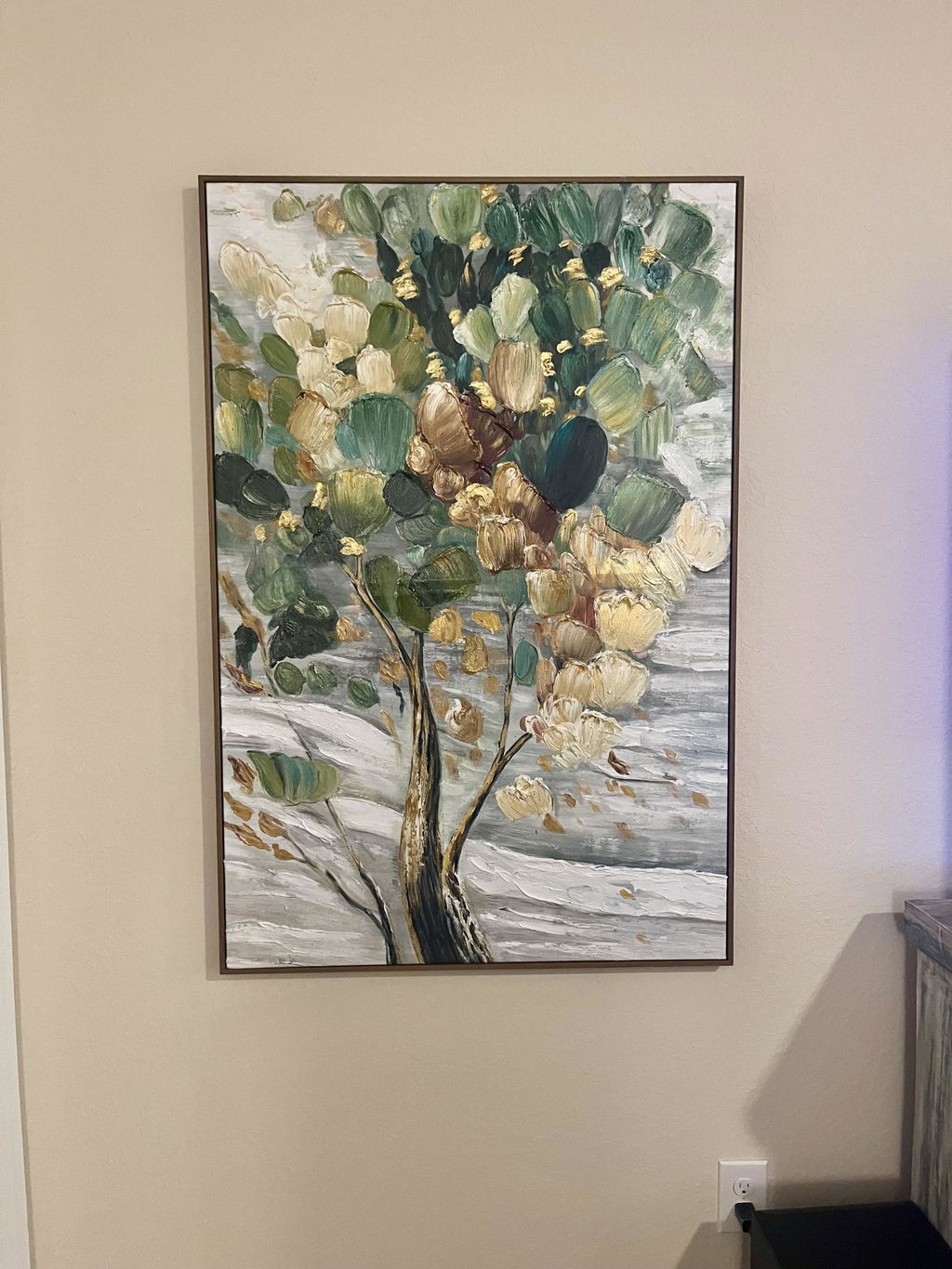
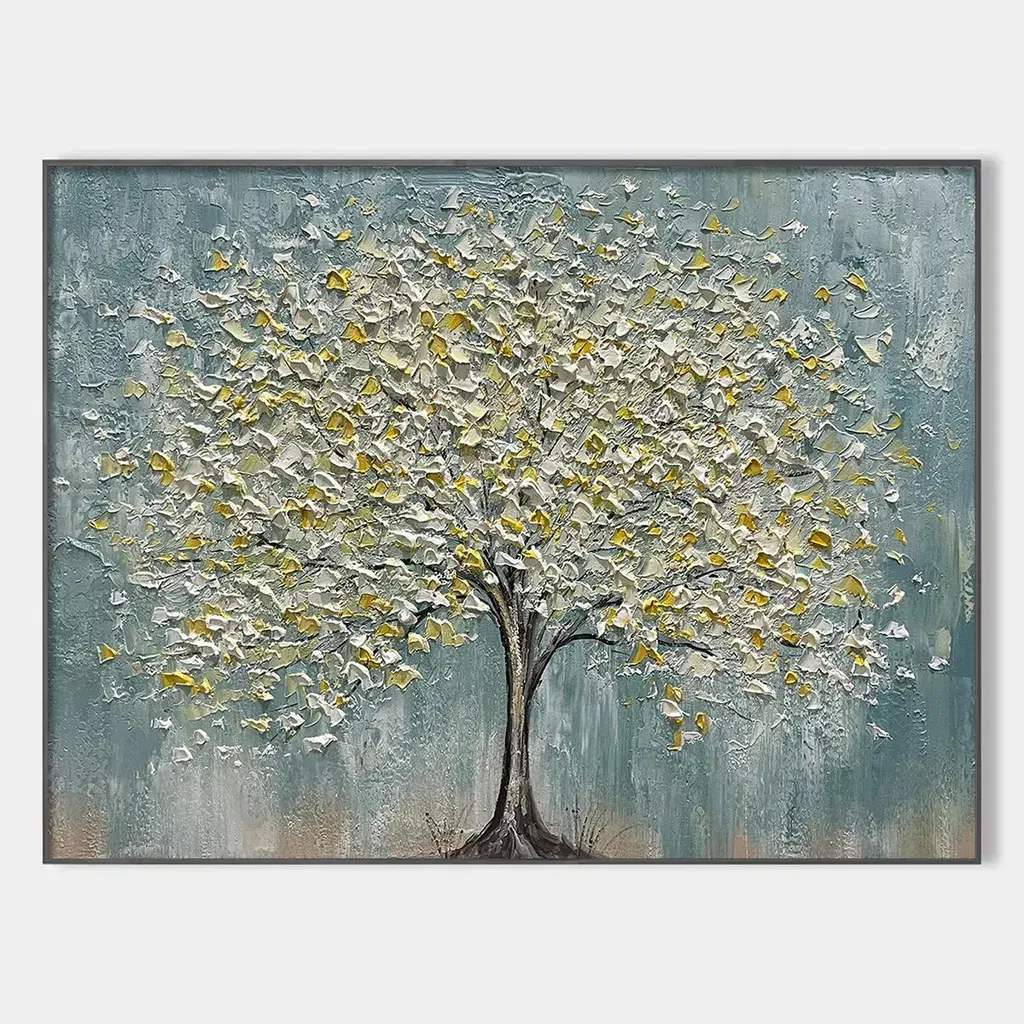
Heavy impasto is a hallmark of premium hand-painted art, providing a tactile "essential identity" that digital prints cannot replicate (University of Chicago). However, texture creates micro-shadows.
The Problem of Grazing Light
If overhead lobby lighting is too steep (grazing light), these micro-shadows elongate, making the painting appear significantly darker and more aggressive than intended. Conversely, flat, frontal lighting can "kill" the texture, making an expensive impasto piece look like a flat print.
The Professional Heuristic: Aim for a 30-to-35-degree lighting angle. This angle is steep enough to create subtle highlights on the ridges of the paint without sacrificing the legibility of the underlying color.
| Parameter | Recommended Value | Rationale |
|---|---|---|
| Lighting Angle | 30° - 35° | Balance between texture highlight and color legibility. |
| Color Temperature | 3000K - 3500K | Preserves warmth of oil binders while remaining "commercial." |
| CRI (Color Rendering Index) | 95+ | Essential for accurate representation of complex pigment mixes. |
| Finish | Satin / Matte | Prevents "mirror effect" in high-traffic zones. |
| Varnish Type | UV-Protective | Mitigates photochemical aging from 24/7 exposure. |
Modeling Note: These values are estimated ranges based on common practice in museum-grade installations and trade-standard lighting design (not a controlled lab study).

The Economic and Wellness Argument for Lobby Murals
Beyond aesthetics, the integration of hand-painted art into commercial spaces is a proven driver of property value and occupant well-being.
Property Value and Foot Traffic
A study by the Royal Society found that neighborhoods with higher "art" geo-tags saw greater relative gains in property prices. In the commercial sector, the NAIOP reports that top CRE developers use unique public art installations as "marketing trump cards" to lease up millions of square feet of office space in a post-pandemic market.
Furthermore, high-quality murals act as foot traffic generators. University of Cincinnati regression analysis shows a direct correlation between murals and increased pedestrian traffic, which is vital for ground-floor retail in luxury developments.
Biophilic Design and Stress Reduction
For lobbies in healthcare or high-stress corporate environments, nature-themed "biophilic" murals are more than decor. A review by the University of Pennsylvania noted that 73% of patients reported significant mood improvements when exposed to environmental artworks. Passive art viewing consistently activates the mPFC (medial prefrontal cortex), optimizing emotional regulation circuits (PMC).
Safety, Sustainability, and LEED Certification
In the modern commercial landscape, "decision safety" also involves environmental compliance. Standard oil paints can emit Volatile Organic Compounds (VOCs) that interfere with Indoor Air Quality (IAQ) and LEED certification.
The Low-VOC Promise
The EPA warns that indoor air pollution can be significantly higher than outdoor levels. For trade professionals, specifying art that uses walnut oil binders instead of toxic turpentine solvents is a critical step toward sustainability. Aalto University research proves that coatings on properly prepared substrates emit significantly lower VOCs during the curing process.
Durability and Maintenance
Commercial art must endure 24/7 lighting and environmental fluctuations. While oil films undergo oxidative cross-linking that makes them harder over time, they are susceptible to heat. Research in ResearchGate shows that oil yellow pigments can experience binder separation under high thermal stress (approaching 100°C), which can occur near poorly ventilated, high-wattage lighting. Modern LED fixtures, which run cooler, have significantly mitigated this risk, but proper ventilation remains a "gotcha" for recessed art niches.
Procurement Ethics: The Human Element
Finally, the value of a hand-painted piece is inextricably linked to the ethics of its creation. A Wharton School survey found that 87% of consumers believe artists should receive fair compensation. In the B2B world, luxury boutique hotels are increasingly rejecting "assembly-line" art in favor of authentic pieces that provide travelers with a sense of "local authenticity" (Hospitality White Paper 2025).
Supporting the creative economy is also a matter of fiscal leverage. The Americans for the Arts report that government and private tax investments in the arts yield an astonishing 7:1 ROI. For developers, a single mural investment can trigger "catalytic effects," attracting further private investment into a district.

Summary of Trade Recommendations
To ensure technical predictability and visual impact in a 24/7 lobby environment, we recommend the following workflow:
- Specify Finish Early: Opt for satin or matte varnishes on large-scale works to prevent the mirror effect.
- Audit the Kelvin Shift: Test pigments under the specific CCT (e.g., 4000K) of the lobby’s LED fixtures.
- Optimize Lighting Angles: Set fixtures at 30–35 degrees to balance texture and color.
- Verify Environmental Compliance: Ensure the use of low-VOC materials to align with LEED/WELL standards.
- Utilize Video Previews: Observe how light moves across the impasto before the final crating.
By managing these technical variables, trade professionals can move from "buying decor" to "investing in a cultural heritage asset" (PMC) that enhances property value and human well-being.
YMYL Disclaimer: This article is for informational purposes only and does not constitute professional lighting engineering, architectural, or health advice. For specific installations, especially in healthcare or public infrastructure, consult with a certified lighting designer and environmental health professional. Ensure all materials meet local fire safety and building codes.
Sources
- Marketplace: The expensive art market continues to struggle
- Columbia University: Human-Made vs. AI Art Study
- Royal Society: Quantifying the link between art and property prices
- UPenn: Visual Art in the Built Environment Review
- ASTM International: D523 Standard Test Method for Specular Gloss
- EPA: Indoor Air Quality and Low-VOC Paints
- Getty Conservation: Color Science and Pigment Mixture
- Americans for the Arts: Arts & Economic Prosperity III
- NCBI: Titanium Dioxide Pigment Toxicity & Market
- Hospitality Design Trends 2025 White Paper