
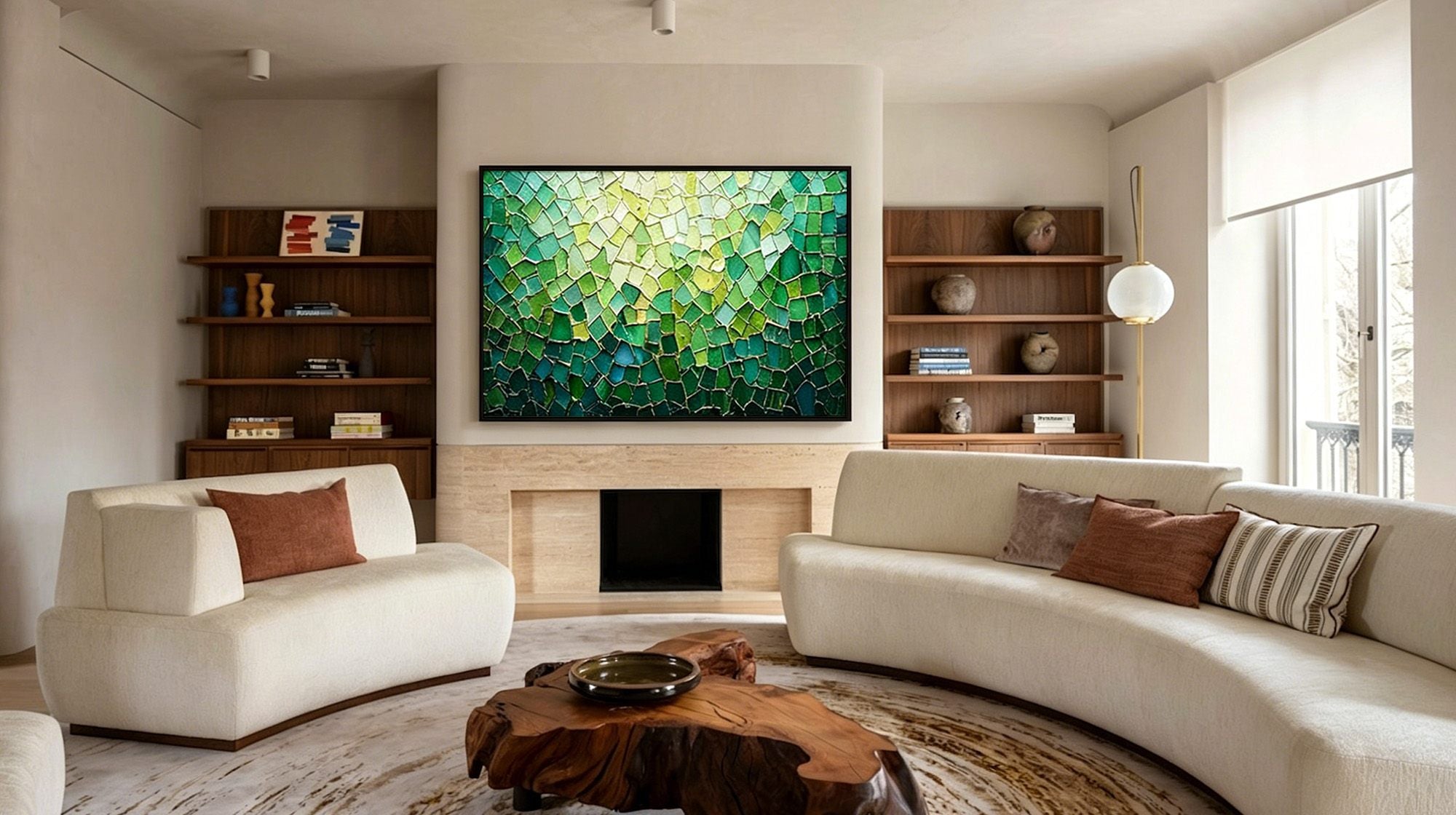
The Quick Verdict: How to Choose at a Glance
Choosing the right wall paintings for your home is more than an aesthetic decision; it is a practical one that affects how a room feels and how long your investment lasts. Whether you are looking for a wall piece online or browsing abstract art websites, the debate usually centers on two formats: canvas and framed art.
For those needing an immediate answer, the choice depends on your room's environment and your preferred style. Canvas paintings are the gold standard for modern, large-scale, and glare-free displays. Framed wall art is superior for traditional polish, detailed photography, and maximum protection of the artwork.
| Feature | Canvas Paintings | Framed Wall Art |
|---|---|---|
| Aesthetic | Modern, textured, and seamless | Traditional, polished, and structured |
| Glare | None (ideal for bright rooms) | Moderate to high (unless using anti-glare glass) |
| Weight | Lightweight (easy to hang) | Heavy (requires sturdy hardware) |
| Cost | More economical for oversized pieces | Can be expensive due to glazing and mats |
| Protection | Exposed to dust and humidity | Shielded from environmental pollutants |
| Best For | Large abstract art, oil paintings | Photography, sketches, formal portraits |
Canvas Paintings: The Modern, Glare-Free Aesthetic
Canvas has become a staple in contemporary art and home decor because of its tactile nature and versatility. Unlike traditional paper prints, oil paint on canvas or high-quality canvas prints provide a textured surface that absorbs light rather than reflecting it. This makes it the premier choice for huge wall art decor in rooms with expansive windows.
One of the most common finishes for this format is the "gallery wrap." In a gallery wrap, the canvas is stretched around a thick wooden frame (stretcher bars), and the image continues around the sides. This eliminates the need for an external frame, allowing the wall art abstract painting to feel like an extension of the wall itself.
Cost-Effectiveness for Oversized Art
When searching for huge wall art for sale or large format art for sale, canvas is almost always the more budget-friendly option. Because canvas does not require heavy glass or intricate matting, the weight remains low even at massive scales. This reduces both the purchase original artwork price and the associated shipping costs for extra large wall art canvas.
Vulnerability to the Environment
While canvas is durable, it is not invincible. Because the surface is exposed, it is more susceptible to accidental punctures and the accumulation of dust. The Canadian Conservation Institute (CCI) notes that unprotected paintings are vulnerable to cooking grease and soot if kept in open-concept spaces or near fireplaces. Furthermore, while acrylic paint is generally flexible, it can become hard and brittle at low temperatures, making climate control essential for long-term preservation.

Framed Wall Art: Traditional Polish and Protection
Framed abstract wall art and framed landscape art offer a sense of completion and "seriousness" that an unframed canvas might lack. The frame acts as a visual window, drawing the eye into the piece while providing structural stability. For those looking to buy art paintings for a formal dining room or a modern law office decor, a frame is often the preferred choice.
The Role of Glazing and Matting
Two key components elevate framed art: glazing (the glass or acrylic layer) and matting. Matting—the cardboard border between the art and the frame—creates visual "breathing room" and prevents the artwork from touching the glass. This is crucial for landscape paintings for sale on paper, as it prevents moisture from getting trapped against the surface.
Superior Longevity and UV Protection
The primary advantage of framing is protection. A frame shields the work from humidity, dust, and physical contact. More importantly, professional-grade glazing can offer UV protection. The Library of Congress warns that light damage is cumulative and irreversible, leading to fading and brittleness. By using UV-filtering acrylic, you can significantly extend the life of colorful abstract wall art or black and white paintings.
The Floater Frame: The Best of Both Worlds
If you love the texture of a 3d textured painting but want the polished look of a frame, the canvas floater frame is the perfect hybrid. In this setup, the canvas is mounted inside a wooden or metal frame with a small gap between the edge of the canvas and the frame. This makes the original canvas art for sale appear as if it is "floating" within the structure.
- Maintain Texture: You keep the glare-free, tactile look of texture wall art or plaster paintings.
- Added Structure: The frame protects the corners of the canvas from bumps and fraying.
- Modern Aesthetic: It fits perfectly with modern minimalist abstract art and japanese wabi sabi art.
- Visibility: Unlike traditional frames, a floater frame does not hide the edges of the artwork.
Room-Specific Considerations: Lighting and Environment
When you purchase paintings online, you must consider where they will live. A living room wall art piece has different environmental stressors than a piece for a hallway or office.
Sun-Drenched Rooms and Lighting
If your room has many windows, a framed piece with standard glass will turn into a mirror. In these scenarios, canvas wall art or textured modern art is superior. The Smithsonian MCI notes that light can permanently alter unvarnished paint surfaces, so even a glare-free canvas should be kept out of direct sunlight.
Humidity and Kitchens
In bathrooms or kitchens, humidity and grease are the enemies. Framed art is generally better here, provided it has a sealed backing board to reduce exposure to moisture.

Photography vs. Paintings: Which Format Suits Your Media?
The content of the art often dictates the format. Detailed photography usually looks best framed, while abstract and textured art thrives on canvas. For white minimalist painting or beige texture art, the raw edge of a canvas often complements the "less is more" philosophy.
Making the Final Choice: A Decision Checklist
- Is the room very bright? Choose canvas to avoid glare.
- Is the artwork larger than 40 inches? Choose canvas to save on cost and weight.
- Is it a detailed photograph? Choose a frame for protection and clarity.
- Are you decorating a formal space? A frame adds the necessary "finish."
- Is the wall in a high-traffic area? Choose canvas for safety.
Frequently Asked Questions
Which is more affordable: canvas or framed art?
Canvas is generally more economical, especially for large sizes, as framing costs scale significantly with glass and specialized shipping.
Can I add a frame to a canvas painting later?
Yes, canvas paintings can be fitted into floater frames or custom frames at any time to update their look.
How do I reduce glare on framed art in a sunny room?
Opt for anti-reflective or non-glare glazing (acrylic or glass) to minimize reflections in brightly lit spaces.
Which format lasts longer?
Framed art typically offers better longevity by shielding the piece from UV rays, dust, and physical contact, though canvas is durable in low-humidity environments.











