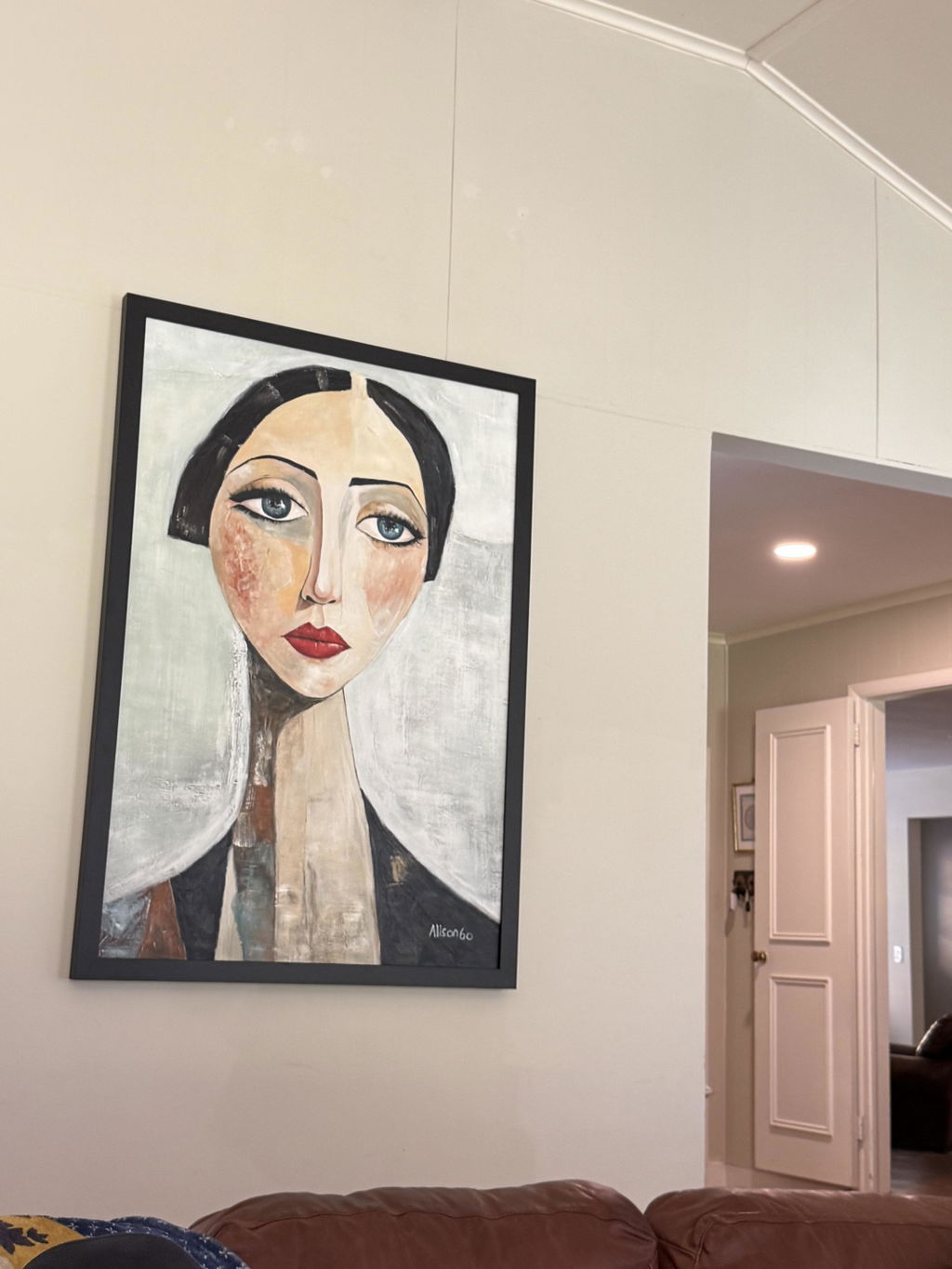
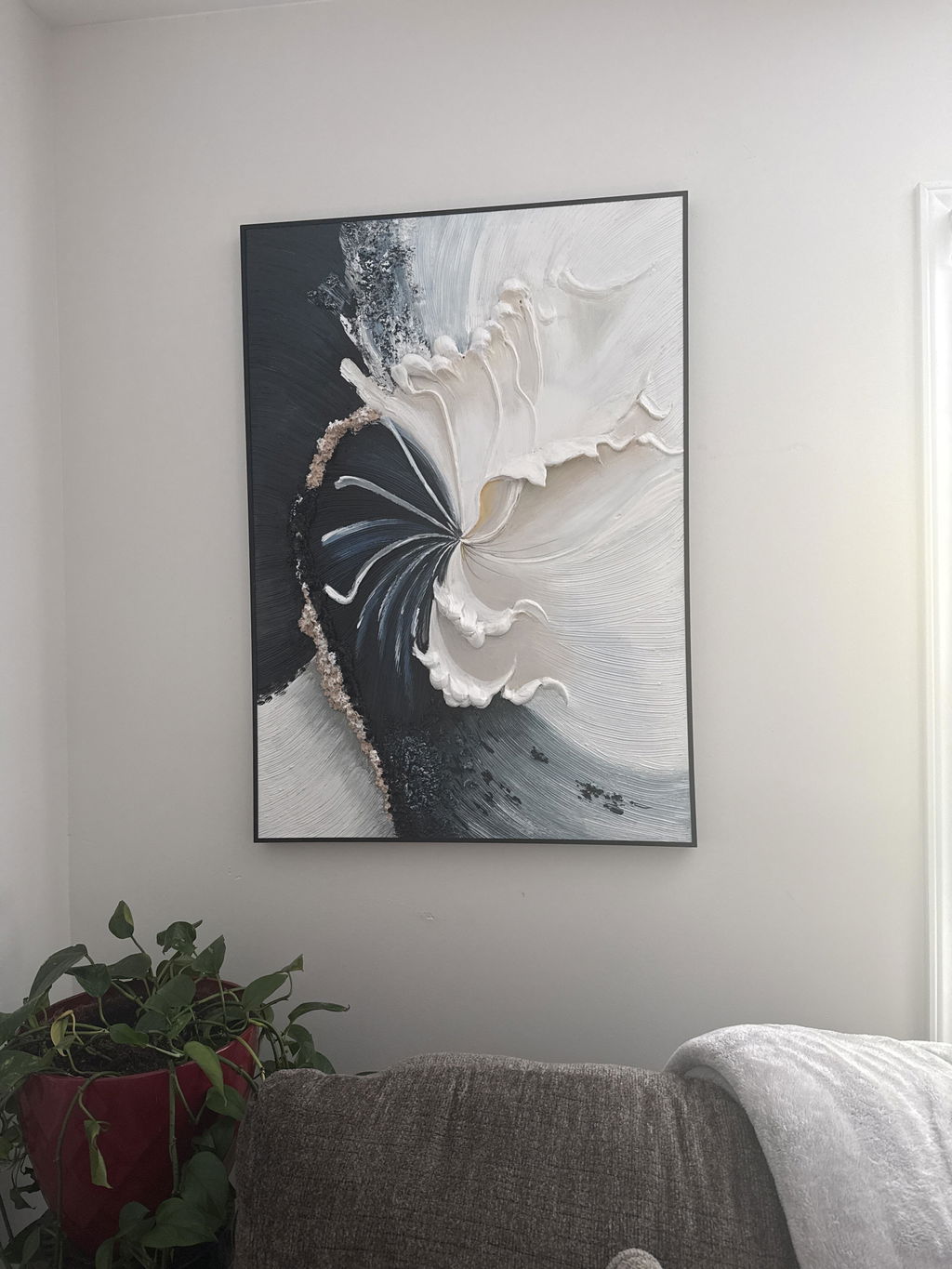
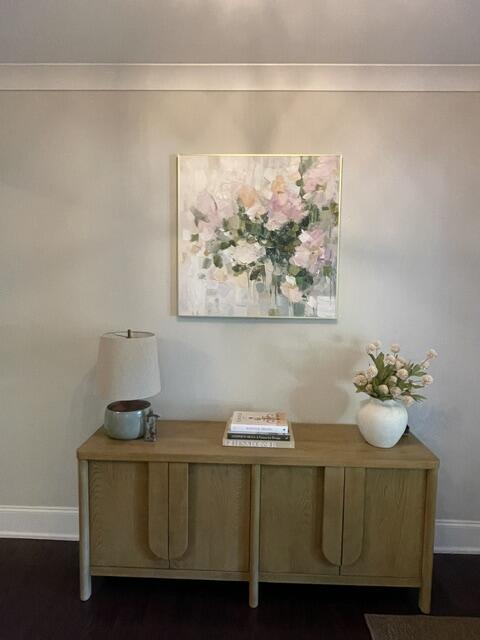
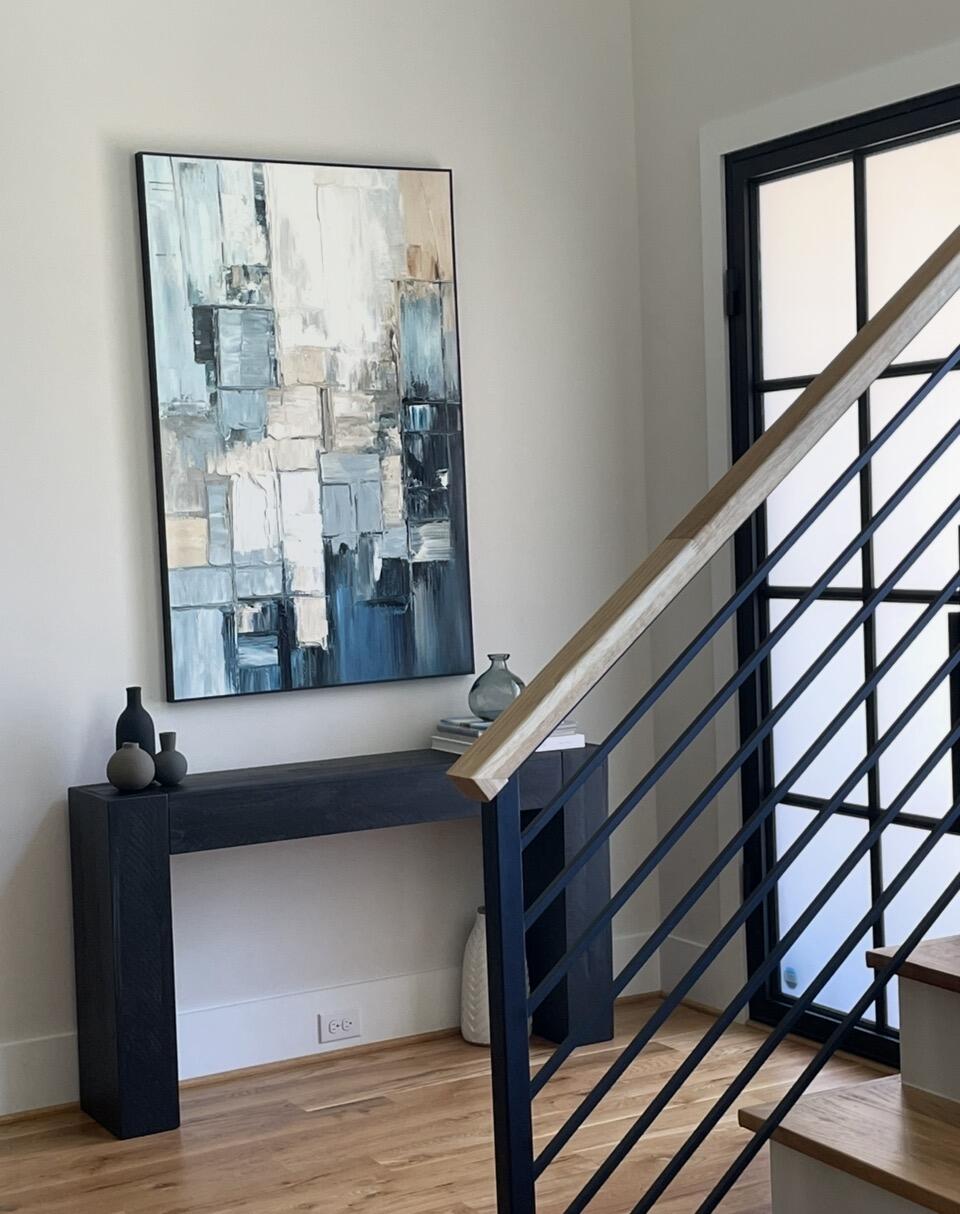
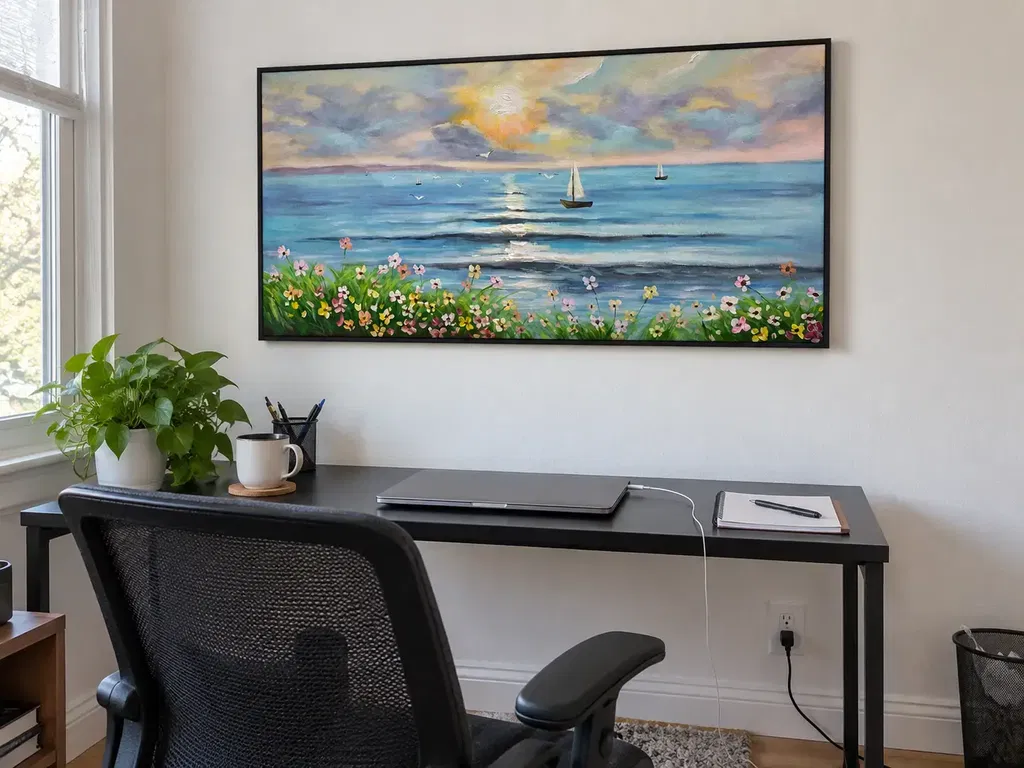
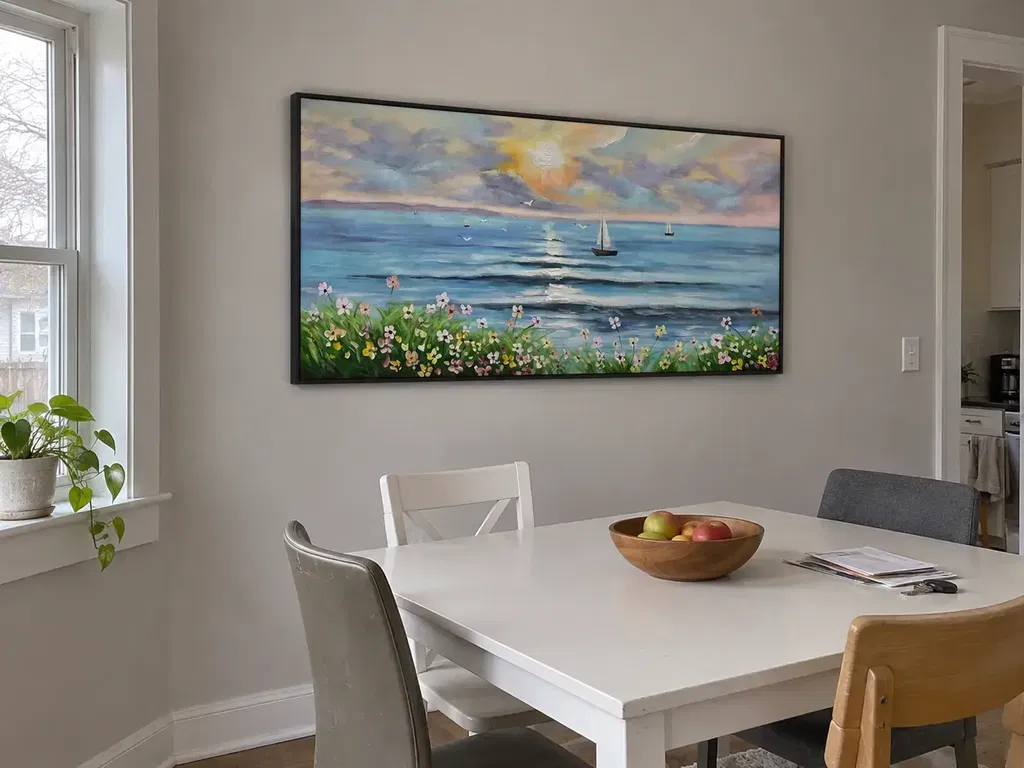
A vertical painting works well above an entryway console because it fills tall, narrow wall space that a wide horizontal piece cannot use. The fastest way to pick the right size is to work from your console width, not the artwork you happen to like first. Start by measuring the tabletop, calculate a starting finished width, check it against the clear wall opening, and only then evaluate hanging height and fixtures.
That sequence matters because a painting that fits your tabletop can still be too wide for the wall once you count door trim, switch plates, or sconces. Measure first, calculate second, and treat every ratio below as a starting point to test with tape before you buy.
Choose the Artwork Width From Your Console and Usable Wall
A good starting width for a vertical painting is about two-thirds of your console width, measured as the complete finished piece rather than the raw canvas alone. Framed pieces, gallery wraps, and matting all add inches, so the visible outer footprint is what counts against your wall.
This two-thirds figure comes from general furniture-to-art scale guidance rather than a fixed industry rule, so treat it as a place to begin rather than a target you must hit exactly. Design writers commonly suggest sizing wall art to furniture width at approximately two-thirds of the piece below before adjusting for the room.
| Console width | Starting finished-artwork width | Reader action |
|---|---|---|
| 30 in | 20 in | Measure the clear wall opening and compare |
| 36 in | 24 in | Measure the clear wall opening and compare |
| 42 in | 28 in | Measure the clear wall opening and compare |
| 48 in | 32 in | Measure the clear wall opening and compare |
| 60 in | 40 in | Measure the clear wall opening and compare |
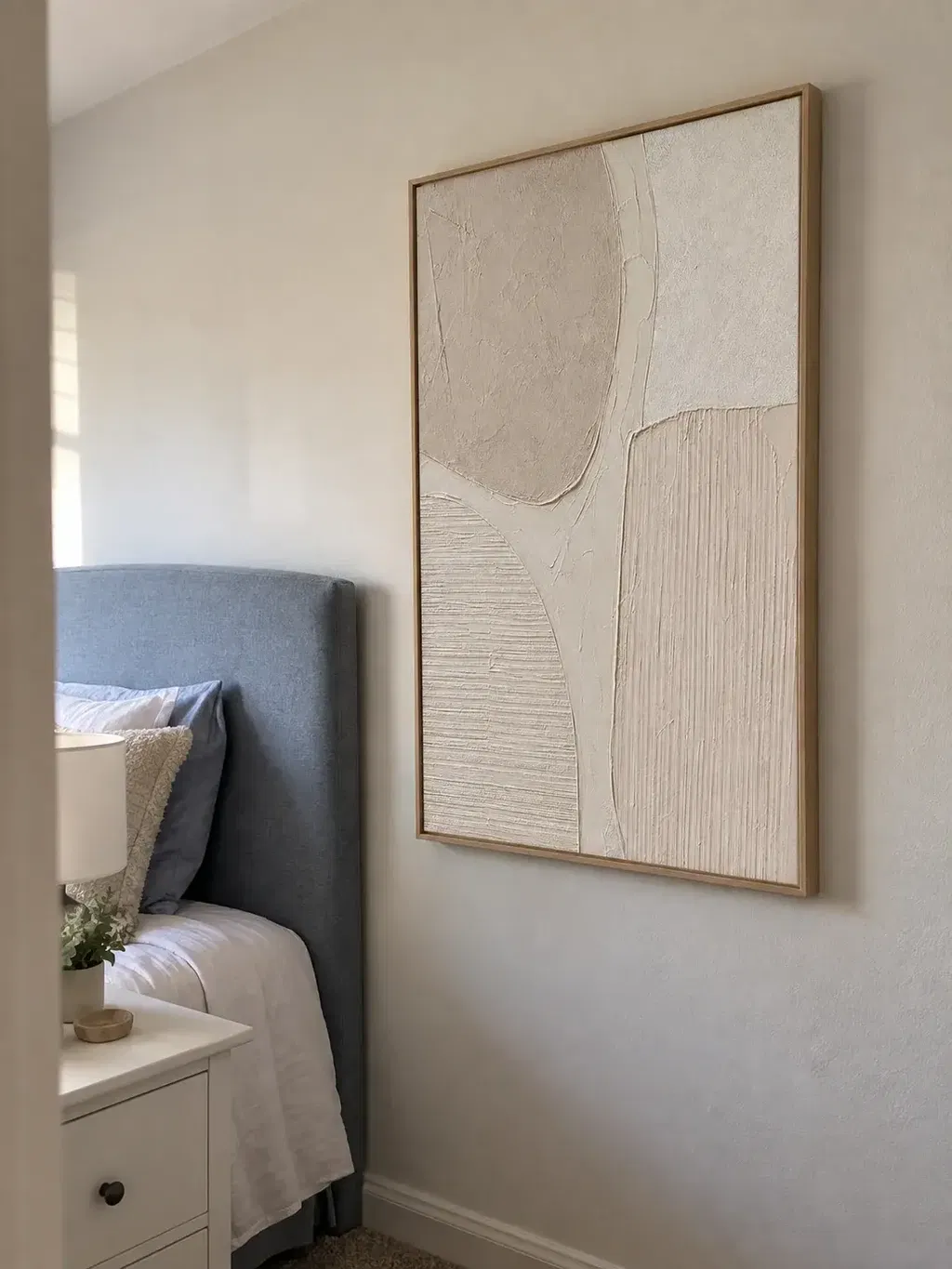
These numbers are calculations from the console widths above, not guaranteed fits for any specific product. If your wall opening is narrower than the calculated width because of a nearby door, trim, or a sconce, the opening wins. For example, our Urban Abstract painting is available in several portrait sizes, so a 36-inch console pointing to a 24-inch starting width can be compared directly against the nearest listed option before deciding. For more on matching canvas proportions to your room, see this vertical art placement guide.
Set the Bottom Edge, Standing Viewpoint, and Ceiling Relationship
Once you know the target width, set the bottom edge first, then judge the whole piece from where you actually stand in the entryway. Height decisions come after width because a painting that is the right width can still look unbalanced if hung too high or too low.
Start with the furniture gap
Begin with a 6 to 12 inch gap between the top of the console and the bottom edge of the painting. This range is a bounded starting test for large art rather than a mandatory rule, and it works best when tabletop accessories, like a lamp or a small tray, stay visually separate from the artwork instead of blending into it. Use the finished frame's actual bottom edge for this measurement, not the raw canvas dimension, since mats and frames shift where the visible art begins.

Check the standing viewpoint and ceiling
A common starting check places the center of the artwork around 57 inches from the floor, which approximates average standing eye level. That number is a useful starting point for hanging height rather than a fixed entryway standard, and it can shift once you work with a genuinely tall portrait piece. For an especially tall canvas, it can look more balanced when the upper third of the piece lands near eye level instead of forcing the geometric center to 57 inches. Step back to your normal entry approach and check the top edge against the ceiling and trim together. Comparing your candidate artwork on the wall at this stage helps confirm the right vertical scale once your target width and height range are set.
Recalculate the Composition When Sconces Share the Wall
Sconces change the real math because they shrink the usable space even when your console math suggested a wider painting. The wall opening between fixtures, not the console alone, becomes the controlling limit once lighting is part of the composition.
Measure the opening that remains
Measure the clear gap between the two sconces, or between one sconce and the nearest door, trim, or corner. Compare that number with your console-based starting width from the table above. When the two numbers disagree, use the smaller one. A wide console can still call for a narrower painting if the sconces sit close together.
Keep the artwork visually centered
Center the painting within the actual clear opening, not the console centerline, if the sconces are offset or uneven. Check the top and bottom relationships from the angle you actually use when walking in the front door, not only head-on. No numeric clearance threshold is established for sconce-to-art spacing, so a full-size paper or tape template is the practical way to confirm the fit. If no portrait size leaves a calm, uncrowded opening between the fixtures, that is a sign to size down or skip wall art on that particular stretch rather than force it.
Choose Between a Vertical Painting and a Mirror in a Narrow Foyer
Choose a single vertical painting when the wall offers a clear, tall run without competing fixtures; choose a mirror when reflection or a last-look function matters more than a height-focused piece. This is a decision about function, not a matter of applying the same ratio to both objects.
When a single vertical canvas is the better fit
A tall painting creates upward visual emphasis without needing a wide gallery wall, which suits a narrow foyer that has one clean vertical stretch. Keep the finished frame inside the usable width you calculated earlier so it does not crowd door trim or a nearby fixture. This works best as a single focal piece rather than a stacked arrangement in tight quarters.
When a mirror is more practical
A mirror earns its spot when the entry is dark or feels boxed in, since it can bounce light and reflect surrounding decor in a way a painting cannot. It also serves a last-look function before heading out the door. No numeric mirror-to-console ratio is supported by the available evidence, so judge a mirror by its actual reflection and margins in place rather than borrowing the two-thirds painting rule. On one especially tight console wall, pick the single object that solves your bigger problem, brightness or focal art, instead of stacking both. For more narrow-space layout ideas, see these welcoming entryway wall art ideas.
Run One Full-Size Mockup Before You Buy
Before you order anything, tape the complete finished footprint on the wall and check it against five conditions at once. This is the step that turns your calculations into a real go or no-go decision.

Tape the finished footprint
- Measure your console width, the clear wall opening, and the space up to the ceiling.
- Calculate the starting finished width using the two-thirds guideline.
- Tape the actual width and height, including any frame, directly on the wall.
- View the taped footprint from your normal entry approach and standing distance.
- Revise the width or height if it crowds the ceiling, a sconce, or a doorway.
A candidate passes only if it fits inside the clear opening, keeps a reasonable gap above the console, stops short of the ceiling, and stays visually separate from any sconce or trim.
Choose the next size to evaluate
If your taped footprint passes, move to the nearest supported portrait size to compare against it. Our Urban Abstract painting offers portrait-oriented options from 20-by-28 inches through 48-by-80 inches, in presentation choices including frameless stretched canvas and several stretched frame finishes, though the exact outer dimensions of a framed option should still be confirmed before you finalize a purchase. If the taped mockup fails on width, test the next smaller size; if it fails on height, try a shorter portrait proportion or reconsider a mirror for that wall instead of forcing the art into an awkward position.
FAQs
Does the 57-inch art-center rule always apply in an entryway?
No. Fifty-seven inches is a general eye-level starting check for average standing height, not a fixed entryway requirement. For a tall portrait piece, compare the composition from where you actually stand at the entry and consider whether the upper third of the artwork sits closer to eye level than the geometric center. Tape the actual height before drilling any holes.
How should I size a mirror when I know the console width?
There is no supported formula that scales a mirror the same way as a painting's two-thirds width guideline. Instead, choose the mirror based on how much reflection or last-look function you need, then test its actual width and margins against the console and the surrounding wall. A mirror that looks right in a photo can still crowd a narrow console once it is in place.
What if sconces leave less room than the starting artwork width?
Let the clear opening between the sconces, not your console calculation, set the limit. Test a smaller finished width that fits comfortably between the fixtures. If no portrait size leaves a calm, uncrowded gap, consider a single mirror instead, or leave that wall section without hung art rather than crowding the lighting.
Can a narrow foyer use both a mirror and a vertical painting?
Only when they occupy clearly separate wall planes, or when you have tested a deliberate grouping with enough visual breathing room between them. On one tight console wall, pick the object that solves your primary need, brightness and function versus a height-focused focal point, rather than stacking two competing pieces into the same small space.
Measure your console and the clear wall opening today, tape the calculated footprint, and check it from your entry approach before you commit to a specific portrait size.