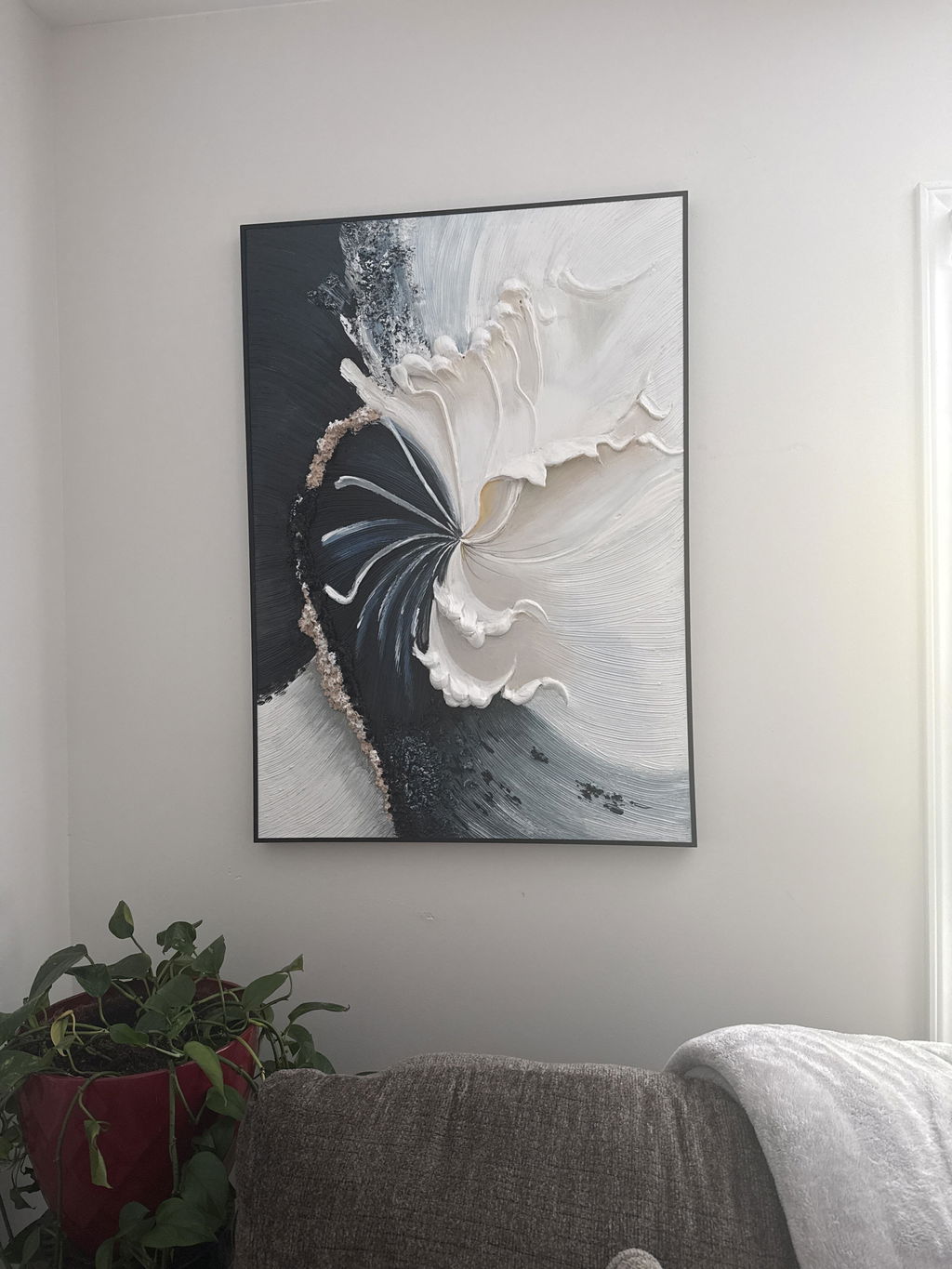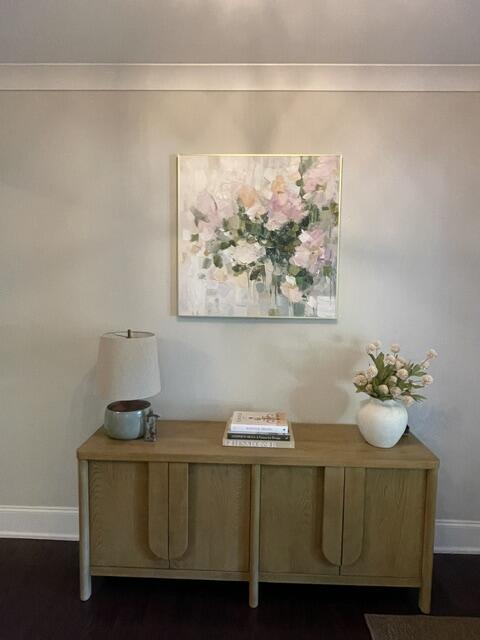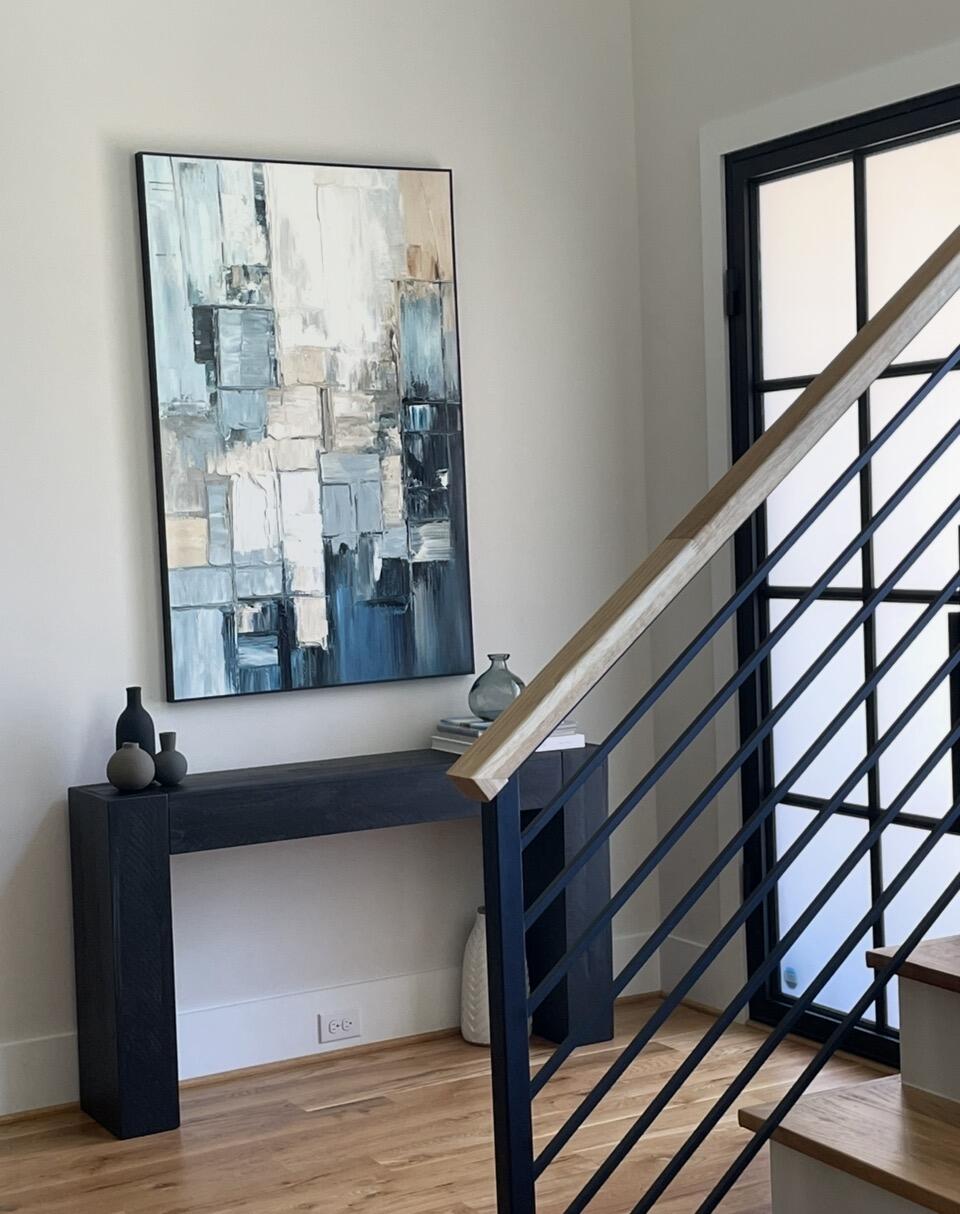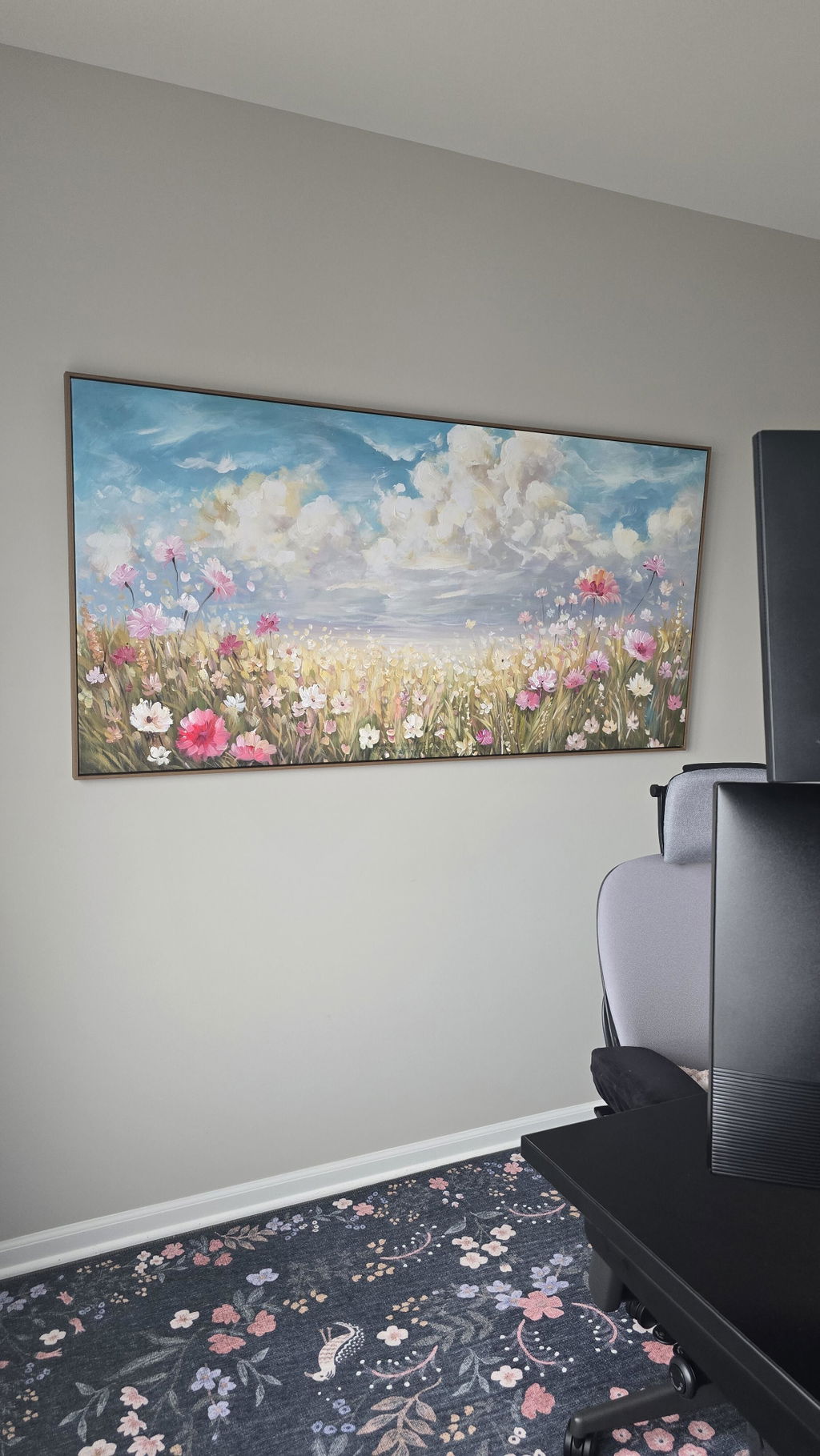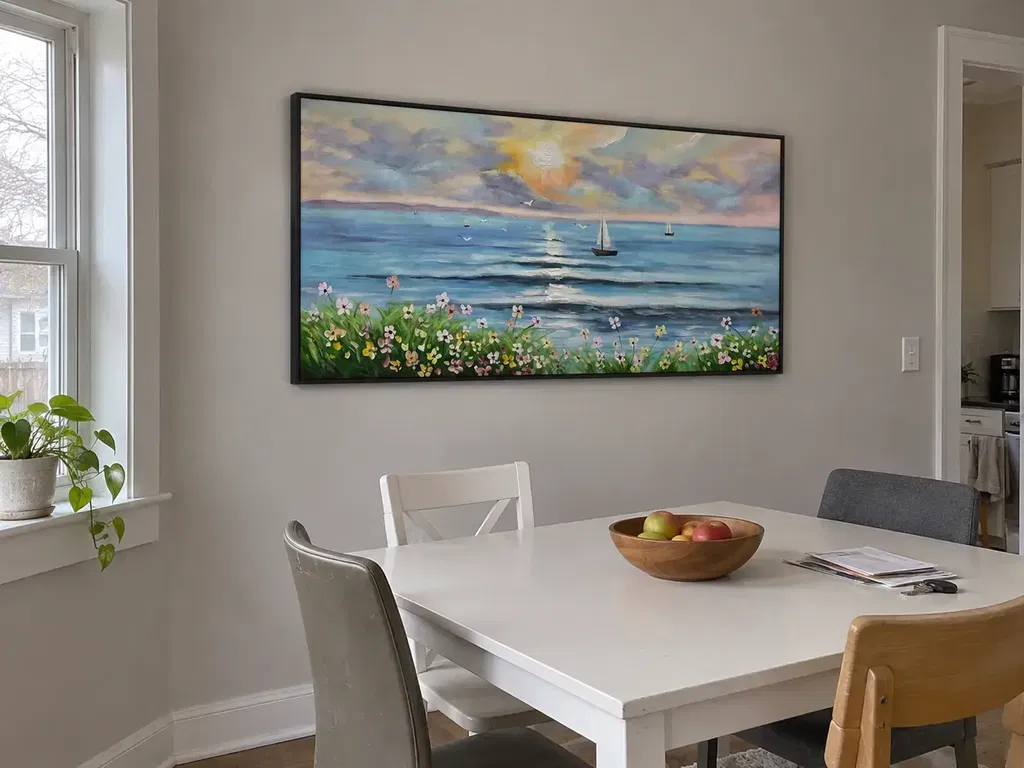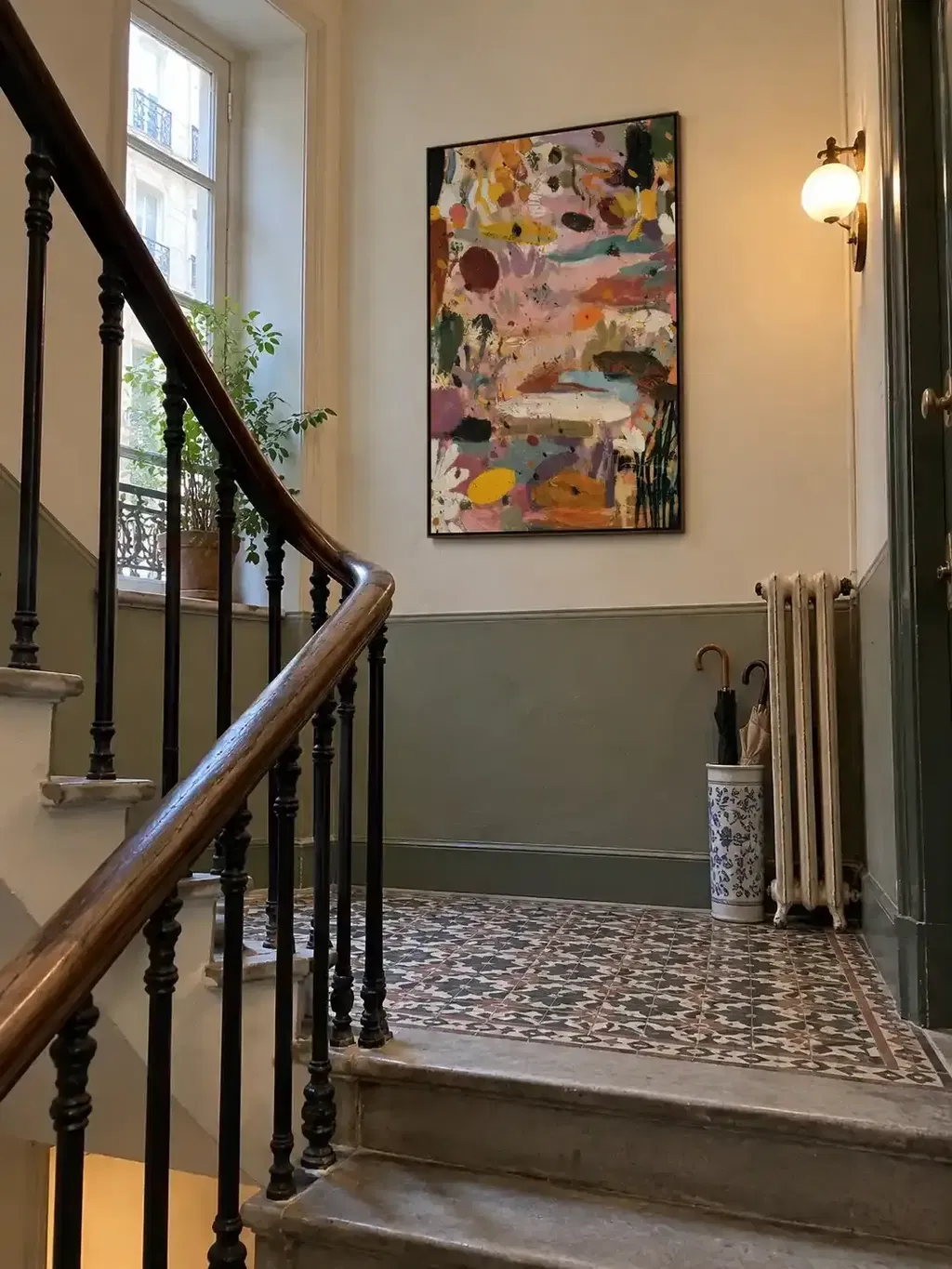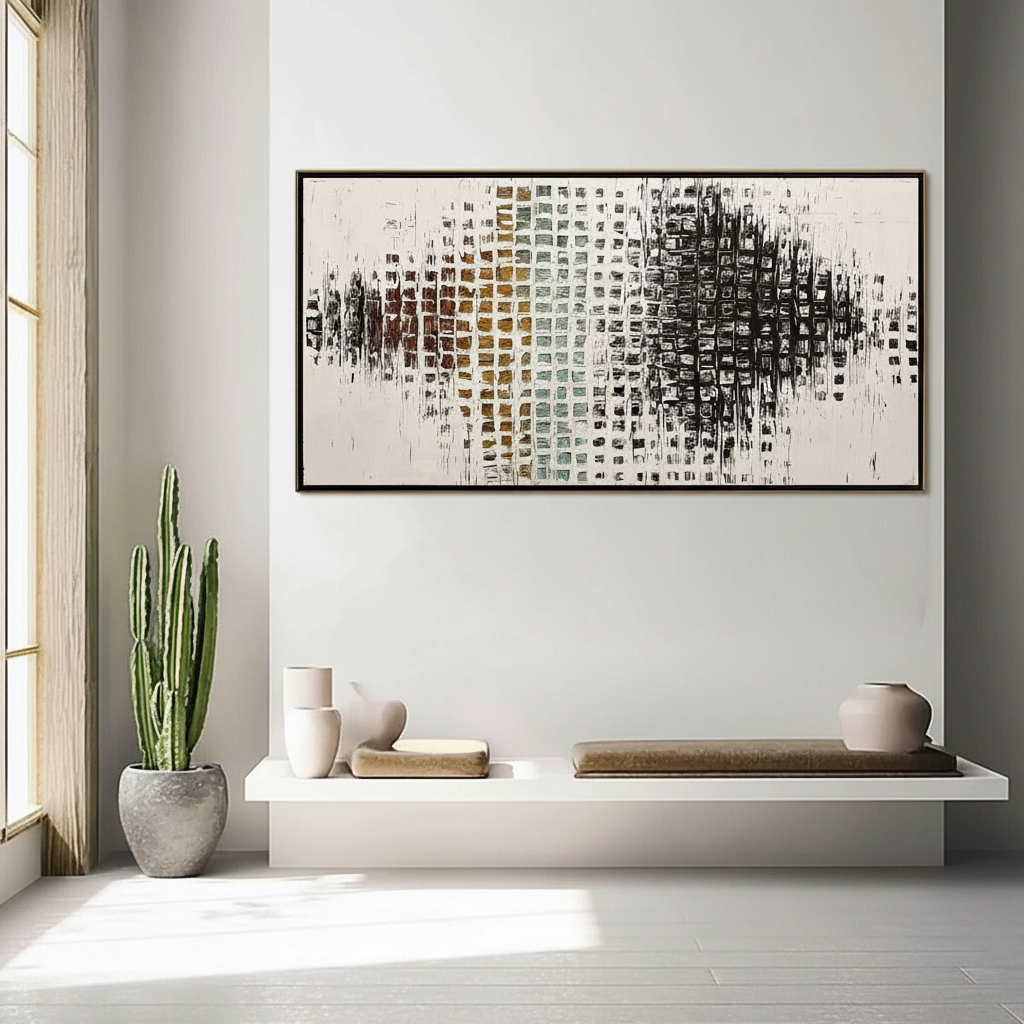
Selecting Abstract Acrylics for Minimalist Living Spaces
In recent years, we have observed a fundamental shift in how high-net-worth individuals and design-conscious homeowners approach art acquisition. The era of purchasing overpriced "vanity" assets at auction simply for financial speculation is receding. According to Marketplace, high-end auction sales for pieces over $10 million plummeted by 44% year-over-year in 2024. This retreat from purely financial art assets signals a return to "real application value"—where the primary motivation for owning art is its emotional impact and its role as an intentional design element within the home.
For the minimalist decorator, this shift is particularly relevant. Minimalism is not merely about the absence of things; it is about the presence of the right things. In a space defined by clean lines and negative space, a single abstract acrylic painting often becomes the soul of the room. However, the challenge lies in selecting a piece that adds character without introducing visual clutter.
We often see homeowners struggle with the "predictability gap"—the fear that a piece viewed online won't translate its tactile essence to their physical walls. This guide leverages neuro-aesthetic research, material science, and professional design heuristics to help you navigate the selection of hand-painted abstract acrylics that respect and enhance minimalist principles.
Logic Summary: Our analysis of current market trends assumes that the decline in speculative art buying correlates with a rise in "experiential" home curation. We model the following recommendations on the premise that minimalist spaces require higher-quality material integrity because there are fewer objects to distract the eye.
The Value of the Human Touch: Beyond the Digital Print
One of the most frequent questions we encounter in our design consultations is whether a high-quality digital print can achieve the same aesthetic goal as a hand-painted acrylic. From a psychological and commercial standpoint, the answer is a resounding no.
A landmark study by Columbia University confirmed that consumers value art labeled as "AI-generated" 62% lower than authentic human-created art. This "human premium" isn't just sentimentality; it is rooted in what researchers at the University of Chicago call "essential identity." Their empirical research shows that digital replicas and NFTs lack the artist’s "soul" in the eyes of the viewer, which causes a collapse in perceived value.
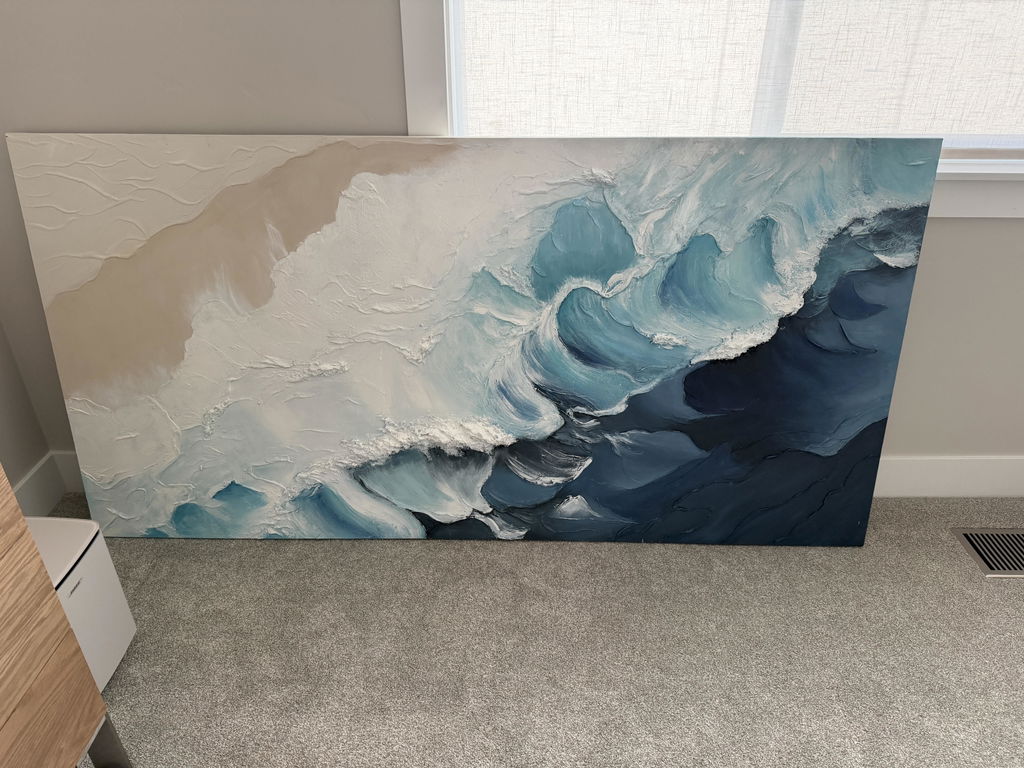
In a minimalist room, where every texture is magnified, the physical relief of acrylic paint—the "microtopography"—is crucial. Research published in Sensors proves that the millimeter-scale texture of a painting is essential to its aesthetic identity. Tactile exploration, even if only through the eyes, reveals data that flat prints simply cannot replicate.

Room-Specific Curation: Living Areas vs. Tranquil Sanctuaries
Successful art integration in minimalist design follows a strict "one focal point per visual zone" rule. When we assist clients in room-specific curation, we prioritize emotional harmony over simple color matching.
The High-Energy Living Area
In communal spaces, art should act as a "catalytic anchor." We recommend abstract acrylics with subtle texture variations rather than complex, multi-colored compositions.
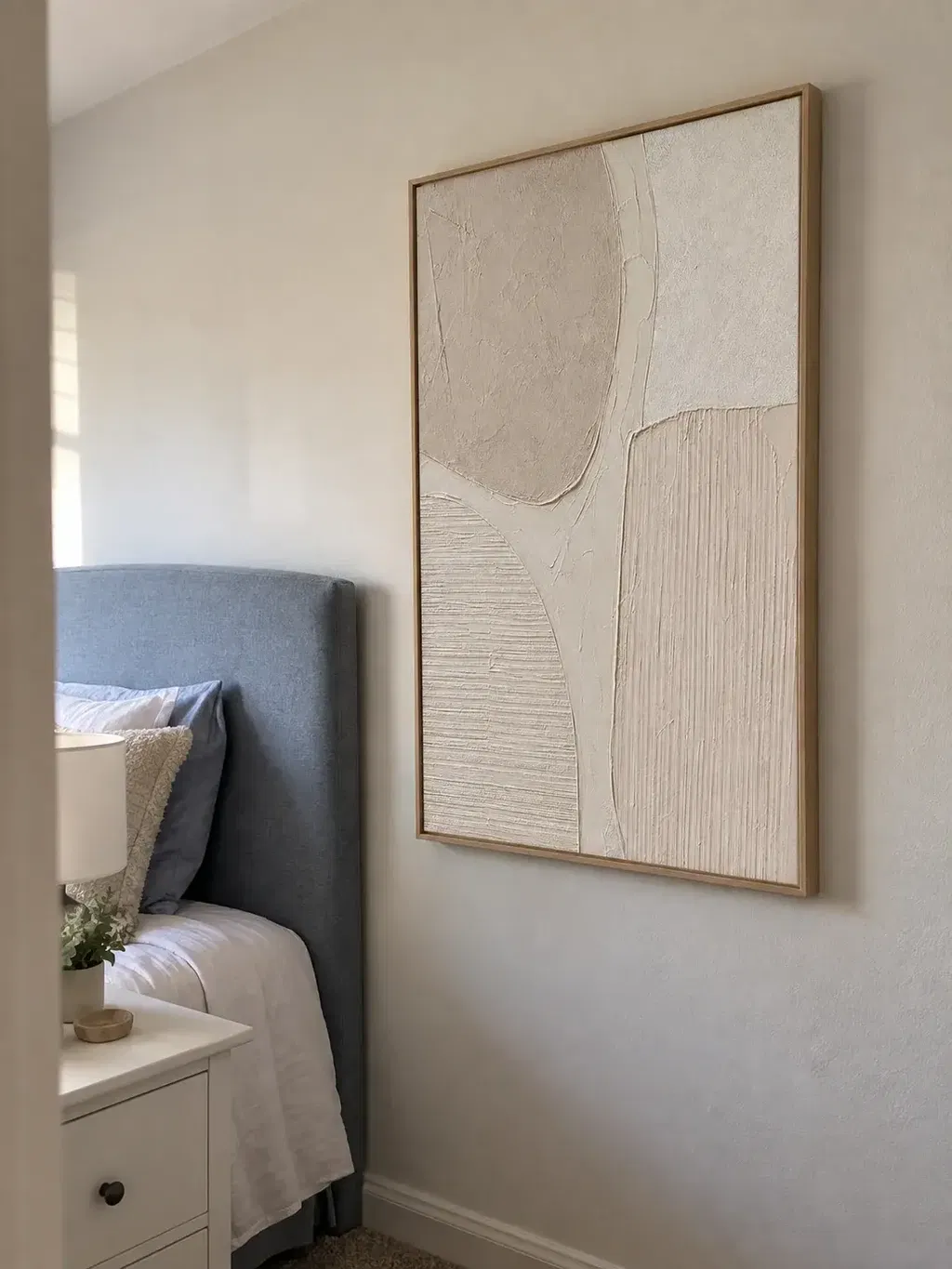
- The 30-40% Rule: A common professional heuristic is that art should occupy approximately 30-40% of the available wall space. This leaves 60-70% as negative space, preventing the room from feeling "closed in."
- Color Limitation: Limit the palette to 2-3 colors maximum—one dominant hue and one or two subtle accents.
- Neuro-Aesthetic Placement: Research suggests that the human brain responds more strongly to spatial harmony and "golden ratio" placements than to color coordination alone. We typically suggest centering the art 57 to 60 inches from the floor (eye level) to trigger subconscious satisfaction.
The Tranquil Bedroom or Spa
For private retreats, the goal shifts to stress reduction. This is where "Biophilic Design" becomes essential. According to a University of Pennsylvania review, 73% of individuals reported significant mood improvements when exposed to environmental artworks.
For these spaces, we suggest "nature-themed" abstracts. These don't need to be literal landscapes; rather, they should use the colors and organic rhythms found in nature. The World Health Organization (WHO) has reviewed over 3,000 studies confirming that art interventions effectively alter clinical indicators for stress and mental well-being.
Methodology Note (Scenario Modeling):
Parameter Standard Living Room Tranquil Bedroom Unit Wall Coverage 35-40% 25-30% Percentage Color Count 3 2 Max Palette Texture Depth High (Impasto) Low (Glazing) Subjective Lighting Angle 30° (Accent) Diffuse (Ambient) Degrees Dominant Hue Warm/Neutral Cool/Earthy Category
The Physics of Color: Why Quality Pigments Matter
Minimalist art often relies on large fields of single colors. This makes the quality of the pigment and the binder non-negotiable. If you choose a low-quality acrylic, the "scattering" of light will look uneven, resulting in a "plastic" or "cheap" appearance.
The Getty Conservation Institute uses the Kubelka-Munk equation to explain that pigment reflection is dominated by absorption and scattering coefficients. In high-end hand-painted art, the physical difference in the surface refractive index is what creates deep color saturation.
Furthermore, durability is a major concern for homeowners. We advise looking for pigments that meet ASTM D4303 standards for lightfastness. This testing involves using xenon-arc lamps to simulate years of indoor illumination. High-quality acrylics use a physical "coalescence" process where long-chain molecules form a film that is more resistant to embrittlement than traditional oils, making them a highly effective choice for modern, bright living spaces.

Health, Safety, and Indoor Air Quality
For many of our clients, particularly those with young families, the "health" of the art is just as important as its look. Minimalist homes often feature open-concept designs with high air circulation, meaning any off-gassing from art materials will be noticed.
A common misconception is that "hand-painted" always means "safe." However, the CDC NIOSH warns that chronic inhalation of volatile compounds in certain paints can lead to central nervous system issues.
To ensure a safe environment, we prioritize water-based acrylics over solvent-heavy oils. A study by Aalto University proved that coatings on wood (a common substrate or frame material) emit significantly lower toxic VOCs during the curing process when properly formulated. Furthermore, the EPA emphasizes that low-VOC paints are a prerequisite for achieving LEED certification in modern buildings.
When selecting art for a nursery or a bedroom, we recommend checking for the ASTM D-4236 label. As noted by the EPA, this ensures the formulation has been reviewed by a toxicologist, though it is important to remember this is a labeling standard, not a "non-toxic" guarantee. We suggest a 28-day "curing window" for any new painting before placing it in a poorly ventilated room, as VOC emissions plummet after this initial period.
Lighting the Minimalist Masterpiece
Even the most exquisite abstract acrylic will fail to impress if the lighting is incorrect. In minimalist design, lighting is not an afterthought; it is a structural component.
We consistently recommend a 30-degree beam angle for spotlighting art. According to technical guides from Max Foster Photography, this specific angle is essential to prevent glare and shadow distortion. If the light is too steep, it creates harsh "hot spots" on the texture; if it is too flat, the painting loses its three-dimensional depth.
For acrylics, which are softer and more sensitive to heat than oils, LED lighting is the preferred choice. LEDs emit minimal UV radiation, which helps prevent the "photochemical aging" process described by PMC research.
The Economic Case for Hand-Painted Art
While minimalist decor is often associated with "less," it is frequently an investment in "better." Beyond the immediate aesthetic pleasure, hand-painted art serves as a tangible asset for property value.
The Royal Society conducted a 10-year data analysis which found that neighborhoods with higher "art" density saw greater relative house price ranking gains. On a smaller scale, this applies to individual properties. A custom mural or a large-scale original painting transforms a "room" into a "landmark," a strategy used by top developers to lease up millions of square feet of office space, according to NAIOP.
Strategic Selection Checklist
To help you finalize your decision, we have developed this checklist based on our experience with hundreds of minimalist installations:
- Scale Verification: Does the piece occupy 30-40% of the wall? Use a laser measure to confirm.
- Texture Check: View the piece from a 45-degree angle. Does the texture create depth, or is it distracting?
- Color Harmony: Does the piece contain more than 3 distinct colors? If so, ensure they are within the same tonal family to avoid "clutter."
- Safety Documentation: Is the paint water-based acrylic? Does it have ASTM D-4236 labeling?
- Lighting Plan: Do you have a dedicated light source at a 30-degree angle?
Logic Summary: This checklist is a heuristic designed to reduce "decision fatigue." It assumes that by checking these five parameters, you eliminate 90% of the common "placement errors" observed in residential design.

A Final Perspective on Authenticity
Selecting art for a minimalist space is a balancing act between purity and personality. By choosing hand-painted abstract acrylics, you are not just buying a decorative item; you are acquiring a "biochemical crystallization of human attention," as Stockton University researchers might describe it. The neural control required by a master painter to suppress visual illusions and create a balanced composition is something the human brain recognizes and rewards with a sense of calm.
In a world increasingly saturated with digital replicas, the presence of a "human-made" object on your wall is the ultimate luxury. It provides the "absolute authenticity" that modern travelers and homeowners crave, as noted in the 2025 Hospitality Design Trends. By following these technical and aesthetic guidelines, you ensure that your investment in art enhances your home’s tranquility, health, and value for years to come.
This article is for informational purposes only and does not constitute professional interior design, medical, or financial advice. Always consult with a qualified professional regarding specific structural installations or health concerns related to indoor air quality.
Sources
- The expensive art market continues to struggle | Marketplace
- Human-Made vs. AI Art: Consumer Perception Study | Columbia University
- Visual Art in the Built Environment: A Critical Review | UPenn
- WHO Scoping Review on Arts and Health | Harvard Repository
- VOC Emissions from Painted Wood | PubMed
- Quantifying the link between art and property prices | Royal Society
- ASTM D4303 Standard Test Methods for Lightfastness | ASTM
- Color Science and Pigment Mixture | Getty Conservation Institute
- Wall Art Lighting Calculator | Max Foster Photography